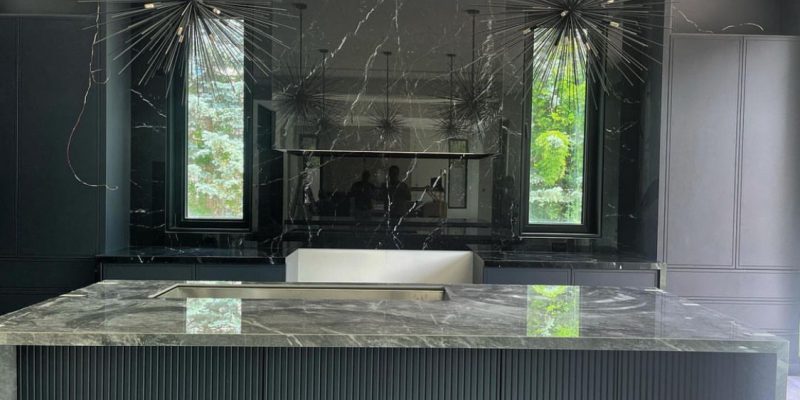
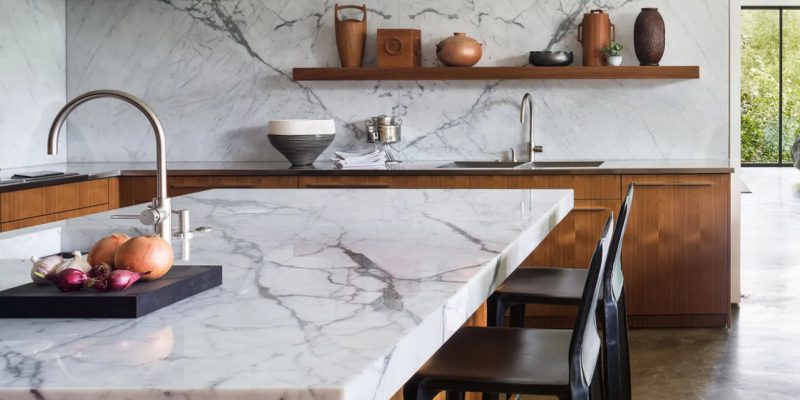
White marble countertop alternatives give homeowners the opportunity to create a bright, elegant kitchen without necessarily accepting every maintenance requirement associated with natural marble. Genuine white marble remains one of the most distinctive countertop materials available, but quartz, porcelain, granite and quartzite can offer related design characteristics with different levels of consistency, durability and care.
The right choice depends on what attracts you to white marble in the first place. Some homeowners want natural veining and one-of-a-kind slab movement. Others are mainly looking for a clean white background, dramatic grey veins or a luxury-inspired surface that is easier to maintain in an active kitchen.
This guide explains the main types of white marble, the design decisions that affect their appearance and the best alternatives for homeowners who want a similar aesthetic. It also helps distinguish genuine natural marble from engineered or printed marble-look surfaces so you can choose a countertop that fits both the kitchen design and everyday use.
Quick Answer
Choose white marble when natural variation, mineral depth and unique veining are the priorities. Choose marble-look quartz when lower maintenance and more predictable patterns matter most. Porcelain can work well for coordinated countertops and vertical surfaces, while selected granite and quartzite slabs may suit homeowners who still prefer natural stone.
Compare Natural and Marble-Look Surfaces
Browse the marble slab collection or review the complete marble vs quartz countertop comparison before selecting a surface for your kitchen.
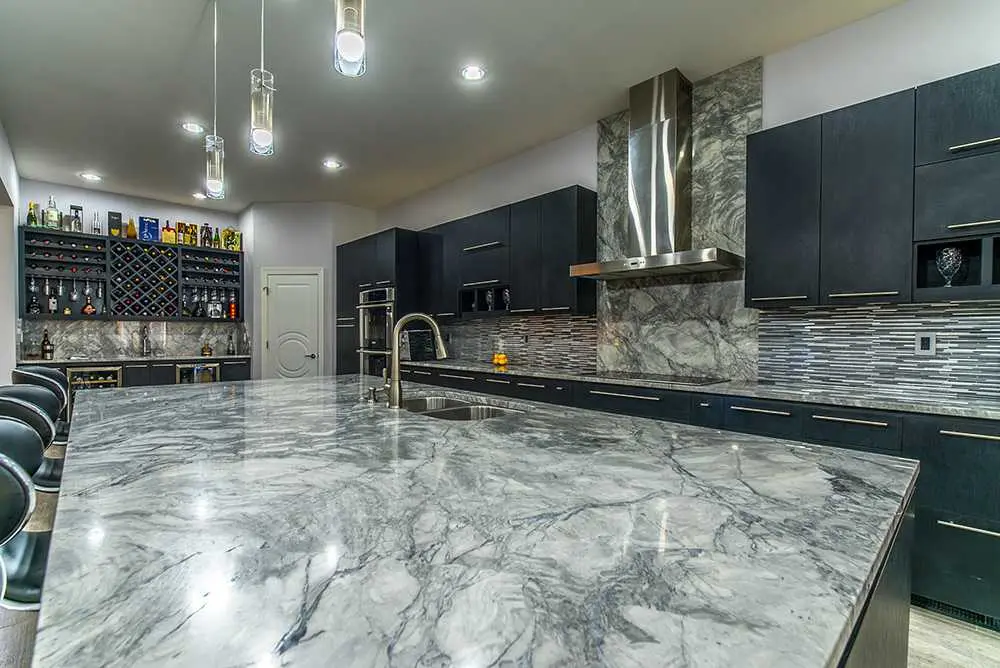
White marble is not one uniform material. The term describes a broad group of natural marble varieties with white, off-white, cream or light-grey backgrounds and mineral veining that may range from subtle lines to bold, dramatic movement.
Because marble is quarried rather than manufactured, each slab displays its own combination of:
The appearance seen in a small sample may not represent the full slab. A complete slab can include quiet areas, heavily veined sections, warmer tones or mineral details that are not visible in a showroom sample or online photograph.
For this reason, homeowners should review the actual slab before fabrication, particularly when the marble will be used on a large island, full-height backsplash or waterfall panel.
Carrara marble is commonly associated with a soft white-to-grey background and fine, relatively gentle veining. Its appearance is often more subtle than Calacatta or Statuario marble, making it suitable for kitchens where the countertop should complement the cabinetry rather than become the dominant design feature.
Carrara can work well in:
The name Carrara does not guarantee one exact colour or pattern. Individual slabs may appear cooler, warmer, darker or more heavily veined than expected. Full-slab inspection remains necessary.
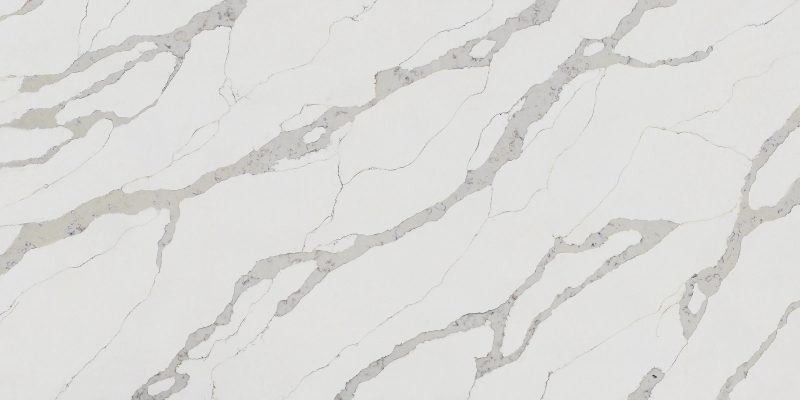
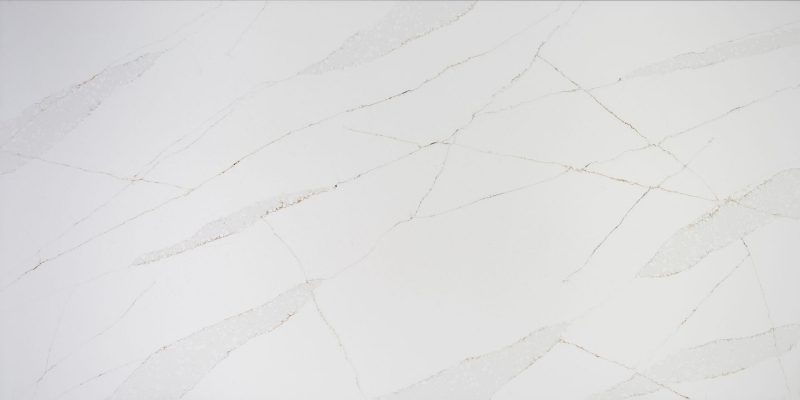
Calacatta marble is generally selected for stronger contrast and more dramatic veining. Many slabs display a brighter background with broad grey, beige or gold-toned movement.
Because of its more expressive pattern, Calacatta is often used for:
Large-scale veining requires careful layout planning. Sink openings, cooktop cutouts, seams and waterfall transitions can interrupt the most visually important sections of the slab if the design is not planned before cutting.
Statuario marble is known for a light background and clearly defined grey veining. It is often used in design-driven projects where the stone is expected to function as an architectural feature.
Availability, pattern and slab quality vary. Homeowners should avoid selecting material based only on the variety name because two slabs sold under a similar description can display substantially different veining and background tones.
Statuario-inspired quartz and porcelain surfaces are also widely available, so it is important to confirm whether a selected product is genuine natural marble or an engineered marble-look design.
White and light marble options extend beyond Carrara, Calacatta and Statuario. Some slabs include warmer cream backgrounds, soft beige movement, linear grey veins, cloudy mineral patterns or more dramatic dark contrast.
The most suitable slab should be chosen according to the actual kitchen rather than the popularity of a material name. Cabinet colour, flooring, backsplash, lighting and metal finishes can all change how the marble appears after installation.
Slab Selection Reminder
Natural marble should be approved from the full slab whenever possible. Variety names describe general characteristics, but they do not guarantee an identical background, vein pattern or level of variation.
White marble has remained desirable because it combines a light colour palette with natural movement that cannot be reproduced exactly by manufactured surfaces.
Every marble slab is different. Even slabs extracted from the same block may display changes in vein direction, colour intensity and mineral composition.
This variation allows the countertop to become part of the kitchen’s identity. A carefully selected slab can make a large island, backsplash or fireplace feel custom rather than standardised.
Natural marble often displays visual depth that changes according to viewing angle and lighting. Veins may appear stronger under direct light and softer under ambient light.
Engineered and printed materials can produce attractive marble-inspired patterns, but they generally provide more controlled and repeatable movement.
White marble works across several design styles because its neutral background can coordinate with a wide range of cabinetry and finishes.
Common combinations include:
The result depends on undertone matching. A cool white slab may appear disconnected beside warm cream cabinetry, while a beige or gold-veined marble may conflict with very cool grey finishes.
Light marble surfaces can make compact kitchens appear brighter by reflecting natural and artificial light. This can be useful in condos, galley kitchens and spaces with limited windows.
A polished finish reflects more light, while a honed finish creates a softer and more diffused appearance. The preferred effect should be evaluated under the kitchen’s actual lighting conditions.
Selecting white marble involves more than choosing a variety. Background tone, vein scale, finish and slab layout all affect how the completed kitchen will look.
Some white marble slabs contain blue-grey or cool silver veining, while others include beige, taupe, cream or gold movement.
Cool white marble commonly coordinates with:
Warm white marble may coordinate more naturally with:
Samples of cabinetry, flooring and backsplash material should be compared directly with the slab before final approval.
Fine veining creates a quieter and more continuous appearance across perimeter countertops. It can also reduce visual competition in kitchens with detailed cabinetry, patterned flooring or prominent backsplashes.
Dramatic veining works well when the countertop is intended to become the main focal point. Large islands and full-height wall panels provide enough space for broad movement to remain visible.
When bold marble is used on both the countertop and backsplash, vein scale and direction should be coordinated carefully to prevent the kitchen from feeling visually crowded.
Polished marble provides a glossy surface that increases contrast and colour depth. It can make the stone feel more formal and reflective, but etching may become noticeable where acidic substances alter the sheen.
Honed marble has a matte or low-sheen appearance. It may allow light etching and patina to blend more naturally, although oils, fingerprints and uneven moisture marks can still become visible.
Neither finish eliminates the need for appropriate cleaning and realistic expectations. Finish selection should be based on the desired appearance and the homeowner’s tolerance for natural surface changes.
Vein direction should be planned before fabrication. The same slab can produce very different results depending on how sections are positioned across the kitchen.
Important layout decisions include:
Detailed slab planning is especially important for projects that require more than one slab. Adjacent slabs should be evaluated together for background tone, vein direction and pattern compatibility.
White marble can be used throughout a kitchen, but it performs best when the application matches the homeowner’s expectations for maintenance and natural aging. Strategic placement often allows the stone’s veining and colour to remain visually prominent without exposing every work surface to heavy daily use.
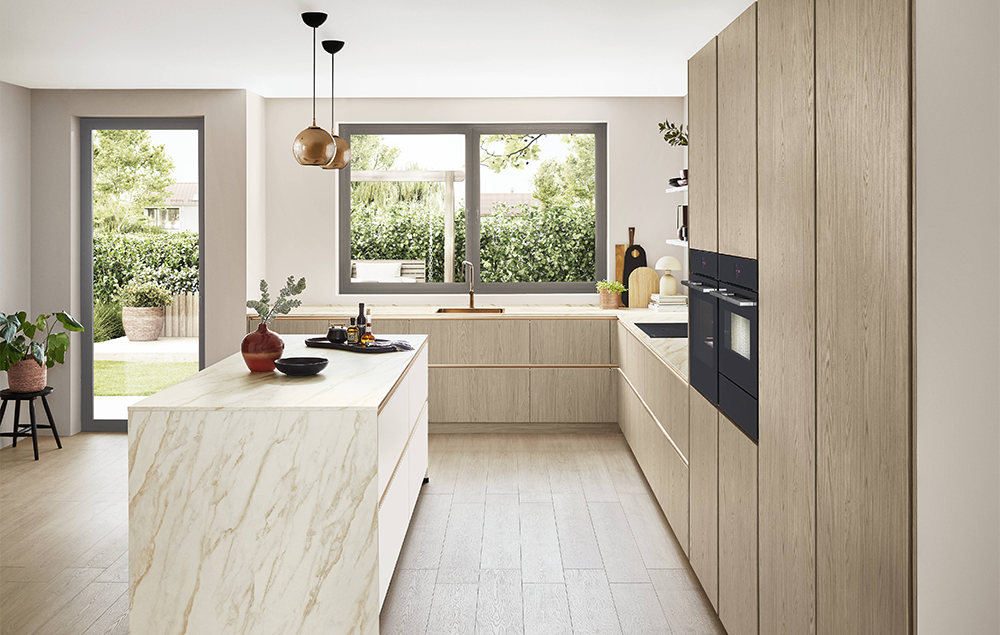
Large islands are among the strongest applications for white marble because they provide enough uninterrupted surface area to display natural veining.
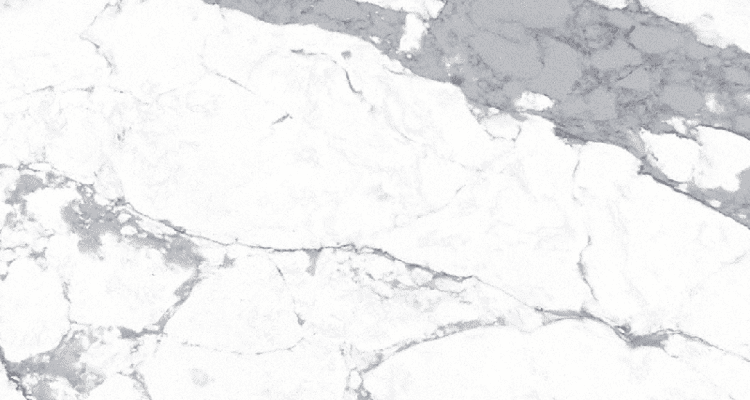




Before selecting marble for an island, consider how the surface will be used. An island intended mainly for dining, entertaining or baking may be easier to maintain than one containing the primary sink, cooktop and food-preparation area.
Island planning should account for:
Homeowners planning a feature surface can review TecCorp Stone’s kitchen island countertop fabrication and installation service.
White marble can be installed across perimeter countertops when the homeowner is comfortable with etching, possible staining and gradual patina. Areas around sinks, coffee machines and food-preparation zones typically experience the greatest exposure to water, oils, acids and repeated cleaning.
A quieter marble with subtle veining may work well across several countertop sections because it creates visual continuity without overwhelming the cabinetry or backsplash.
Marble’s naturally cool surface has traditionally made it popular for pastry and dough preparation. A dedicated baking counter can introduce genuine marble into the kitchen without using it across every high-traffic surface.
Cutting boards and protective mats should still be used where oils, acidic ingredients, sharp tools or hot bakeware may contact the stone.
A white marble backsplash can display natural veining with less impact and abrasion than a horizontal work surface. Using a slab backsplash rather than small tiles also reduces grout lines and allows the pattern to remain continuous.
The backsplash may be:
Cooking oils and food splashes can still affect marble, so the finish and cleaning requirements should be considered before installation.
White marble also works well for bathroom vanities, fireplace surrounds, wall cladding and decorative furniture surfaces. These applications can deliver natural stone character without the same exposure to food acids and heavy kitchen activity.
For bathrooms, homeowners should still consider cosmetics, soaps, cleaners, standing water and the suitability of the selected finish.
White marble can remain in service for many years, but homeowners should understand that it behaves differently from non-porous engineered surfaces. Its appearance may change through normal use even when it is professionally fabricated and maintained appropriately.
Marble contains calcite, which reacts with acids such as lemon juice, vinegar, wine and tomato products. This reaction alters the finish and may leave a dull or lighter mark.
Etching is not the same as staining. A penetrating sealer may reduce absorption, but it does not prevent acidic substances from reacting with the stone.
Etching is usually more noticeable on polished marble because the affected area no longer reflects light in the same way as the surrounding surface.
Natural marble can absorb oils, coffee, wine and strongly coloured liquids. The level of absorption varies according to the slab, finish, porosity and previous treatment.
Homeowners should follow recommendations for the specific stone rather than assuming every marble countertop needs sealing on the same schedule.
Prompt spill removal, appropriate cleaners and protective accessories can reduce risk, but they do not make marble completely stain-proof.
Marble is softer than many granite and quartzite varieties. Cutting directly on the surface, dragging cookware or using abrasive cleaning pads may leave scratches or changes in sheen.
Some homeowners accept this gradual patina as part of the material’s character. Others may prefer an alternative surface that retains a more uniform appearance.
Natural marble may contain veins, mineral deposits, filled areas and fissure-like features. These characteristics should be reviewed during slab selection and fabrication planning.
They do not automatically indicate poor-quality material, but their position can affect where the fabricator places edges, cutouts and seams.
Routine care should normally involve warm water, mild soap or a suitable pH-neutral stone cleaner and a soft cloth. Acidic cleaners, vinegar-based products, abrasive powders and harsh chemicals should be avoided.
White marble is usually not the best choice for homeowners who want a countertop that requires almost no attention and remains visually unchanged.
Important Expectation
Sealing helps reduce absorption and staining, but it does not prevent marble from etching. Natural surface changes should be considered before choosing marble for a heavily used kitchen.
The best alternative depends on whether the priority is lower maintenance, more predictable veining, natural-stone character, heat performance or coordinated use across countertops and vertical surfaces.
Marble-look quartz is often the most practical alternative for homeowners who want a white background and flowing veining without marble’s porosity and sensitivity to acids.
Quartz is an engineered surface made from mineral components, resins, pigments and other materials. Its manufacturing process allows greater control over colour, pattern and consistency.
Advantages for modern kitchens include:
Quartz does not reproduce the mineral depth and unique variation of genuine marble exactly. It also contains resin components and should be protected from direct or prolonged heat.
Homeowners can explore available quartz countertop surfaces or read the full Marble vs Quartz comparison for a more detailed performance review.
Porcelain slabs can reproduce white marble patterns through printed surface designs. They are available in subtle veining, bold Calacatta-inspired patterns and other contemporary styles.
Porcelain can be useful when the project includes:
The appearance of the edge and pattern continuity differs from natural stone. Depending on the product, the printed design may not continue through the full thickness of the slab, making edge fabrication and mitred details especially important.
Professional handling is also necessary because large porcelain slabs can be vulnerable during transportation and fabrication, particularly around openings and narrow sections.
Available styles can be reviewed through the porcelain countertop collection.
Selected granite slabs offer light backgrounds, grey mineral movement and natural variation that may coordinate with kitchens designed around a white marble aesthetic.
Granite generally provides stronger scratch resistance than marble and does not react to common kitchen acids in the same way. However, performance and porosity vary between slabs, and some materials may still benefit from sealing.
White granite often contains more visible mineral speckling and granular movement than traditional marble. It may therefore suit homeowners who want a light natural stone rather than an exact marble replica.
Browse available granite slabs and countertops to compare colour, movement and finish options.
Quartzite is a natural stone that can offer white, cream, grey or softly veined patterns. Certain slabs visually resemble marble while providing different mineral composition and performance characteristics.
Quartzite should not be confused with engineered quartz. Genuine quartzite is quarried and cut into individual slabs, so each piece displays natural variation.
Homeowners considering quartzite should:
Not every light quartzite resembles marble, and not every slab has identical performance. The actual material should be evaluated rather than relying only on its trade name.
Natural options can be compared through the quartzite countertop collection.
Marble-look quartz and porcelain usually provide the most controlled imitation of a white marble pattern. Quartz is often selected for conventional kitchen countertops, while porcelain can be useful for projects that coordinate countertops with full-height vertical panels.
Light granite and quartzite do not necessarily imitate marble exactly, but they offer genuine natural variation and may appeal to homeowners who want natural stone with different performance characteristics.
The following comparison summarizes the main differences between white marble and the most relevant alternatives for modern kitchens.
| Material | Appearance | Maintenance | Best Fit |
|---|---|---|---|
| White Marble | Natural mineral depth and unique veining | Higher; vulnerable to etching and possible staining | Design-focused kitchens and statement surfaces |
| Quartz | Controlled marble-inspired patterns | Low; no sealing required | Busy kitchens needing predictable care |
| Porcelain | Printed marble-look designs | Low routine maintenance | Countertops, backsplashes and coordinated wall panels |
| Granite | Light natural stone with more granular movement | Depends on the slab and finish | Natural-stone kitchens requiring stronger everyday performance |
| Quartzite | Natural variation with some marble-like slabs | Slab-specific care and sealing assessment | Homeowners wanting natural stone with distinctive movement |
Choose the material according to the way the kitchen will be used rather than appearance alone.
Before ordering, compare full slabs or large-format samples under the kitchen’s actual lighting. Cabinet colour, flooring, backsplash materials and metal finishes can all affect how white backgrounds and veining appear.
They can be, but homeowners should accept possible etching, staining and patina. Marble is better suited to people who value natural character over perfect consistency.
Marble-look quartz and porcelain usually provide the closest controlled visual alternatives. Natural quartzite may also resemble marble, depending on the slab.
Yes. Sealing can reduce absorption and staining, but it does not prevent acids from reacting with marble.
No. Engineered quartz is non-porous and does not normally require sealing.
Honed marble may make some etching and patina less noticeable, but it can still show oils, marks and uneven changes in sheen.
Yes. Full-slab viewing helps confirm background tone, veining, natural variation and the sections that will appear in the finished installation.
White marble remains the strongest choice for genuine natural movement and one-of-a-kind design. Quartz and porcelain provide more predictable marble-inspired patterns with lower maintenance, while granite and quartzite offer alternative forms of natural-stone character.
The final decision should balance appearance, daily use, maintenance expectations and fabrication requirements. Reviewing the actual material and planning the slab layout before cutting are especially important for islands, waterfalls and full-height backsplashes.
Compare White Marble and Marble-Look Surfaces
Send your kitchen dimensions, photos and preferred design to compare suitable marble, quartz, porcelain, granite and quartzite options.