Welcome to the Tec Corp Stone Inc. Shop! Explore our extensive selection of premium stones, from elegant marble to durable granite. Whether you’re planning a renovation or a new build, find the perfect materials to elevate your space. Shop now for high-quality stones and bring your design dreams to life.
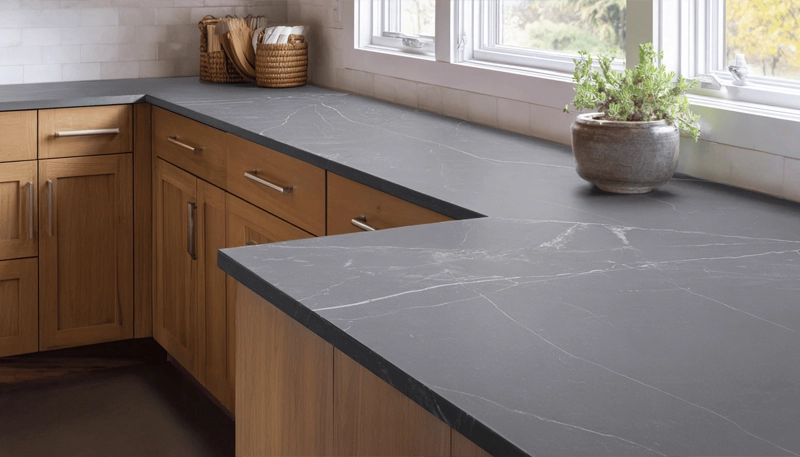
Soapstone countertops in Toronto offer a distinctive alternative to polished granite, engineered quartz and other conventional countertop materials. Their smooth matte texture, restrained grey-to-charcoal colour range and gradual development of patina make them especially appealing for homeowners who want natural stone with visible character.
TecCorp Stone supplies, fabricates and installs soapstone surfaces for kitchens, islands, vanities, fireplaces and custom projects across Toronto and the GTA. Because soapstone slabs vary in dimensions, veining and tone, the selection process should begin with the actual available material rather than a small sample alone.
This page introduces available soapstone countertop applications, slab-selection considerations, fabrication and installation planning, pricing factors and the process of requesting a project-specific quote. For other natural and engineered materials, explore the complete Stone Surfaces collection.
Quick Answer
Soapstone is a low-absorption natural stone with strong heat performance, a smooth matte finish and a developing patina. It generally does not require a penetrating sealer, but it is softer than granite and may show scratches, dents and tonal changes. It is best suited to homeowners who value natural ageing more than a perfectly uniform surface.
Soapstone is a natural metamorphic stone containing talc and other minerals that influence its colour, texture and hardness. Countertop-grade soapstone is selected for architectural use, but it remains softer than granite and quartzite.
This softness gives the stone its characteristic smooth feel. It also means that knives, metal tools, rough-bottomed appliances and concentrated impact can leave visible marks. For many owners, those changes become part of the patina rather than evidence that the countertop is deteriorating.
Soapstone can be used throughout a full kitchen or reserved for a feature island, preparation zone, vanity, fireplace surround or custom architectural element. The best application depends on slab dimensions, layout, support, expected use and the homeowner’s tolerance for natural ageing.
Soapstone is usually recognized by its low-sheen surface and understated appearance. Unlike highly polished granite or marble, it has a soft visual quality that reduces glare and emphasizes texture rather than reflection.
Common soapstone characteristics include:
The stone pairs naturally with wood cabinetry, painted finishes, brushed metal fixtures and restrained architectural details. It can support farmhouse and heritage interiors, but it also works in contemporary kitchens where muted colour and material texture are preferred.
Soapstone offers a narrower palette than granite, quartz or porcelain. Its visual distinction comes primarily from vein pattern, tone, mineral movement and the way the surface changes over time.
Some slabs are relatively uniform, while others include stronger white, cream or green-toned veining. The location of these features affects how the completed countertop will appear around:
A small sample cannot show the full slab composition. Reviewing the complete slab allows the homeowner and fabricator to identify preferred areas, plan seam transitions and determine whether more than one slab can be coordinated successfully.
Natural features should not automatically be treated as flaws. However, their location and suitability for cutouts, narrow rails or exposed edges must be evaluated during layout planning.
Soapstone does not remain visually unchanged after installation. Contact with hands, cooking oils, cleaners and daily activity gradually creates tonal variation and patina.
Untreated soapstone commonly begins with a lighter grey appearance and darkens naturally in frequently used areas. Some homeowners apply mineral oil or a compatible soapstone treatment to create a deeper and temporarily more uniform charcoal tone.
This treatment is optional and aesthetic. It does not function as a penetrating sealer, does not make the stone harder and does not prevent scratches.
Homeowners who prefer an evolving, lived-in surface often consider this patina one of soapstone’s main advantages. Those who want the countertop to remain close to its original showroom appearance should evaluate whether a harder or more visually consistent material would better match their expectations.
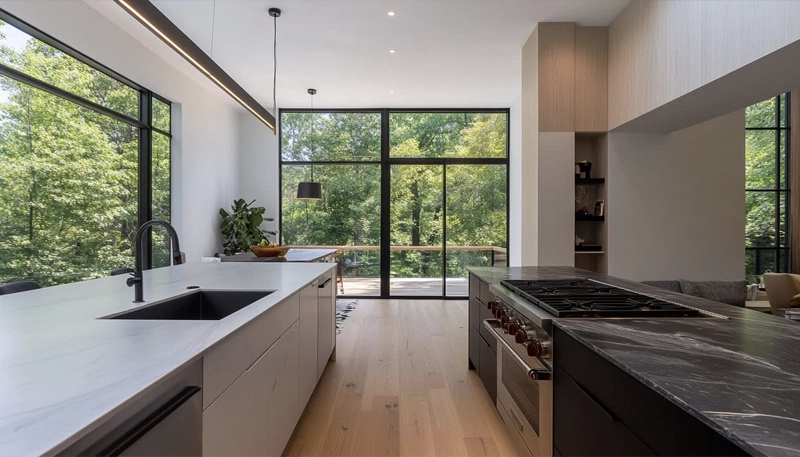
Soapstone is selected for a combination of functional performance and natural appearance. It is not the hardest countertop stone, but hardness is only one part of material suitability.
Its strongest advantages are low liquid absorption, heat performance, resistance to common food acids and the absence of routine penetrating-sealer requirements in most countertop applications.
Countertop-grade soapstone generally absorbs very little liquid. This makes it practical around sinks, food-preparation zones, vanities and other areas where water or common household spills are expected.
Wine, coffee, cooking oil and sauces should still be removed promptly. Even when liquids do not penetrate deeply, they can leave residue or create temporary darkening on the surface.
Low absorption also does not protect cabinetry, seams or adjoining construction from leaks. Plumbing connections, sink caulking and wall joints still require correct installation and periodic inspection.
Soapstone performs well around normal cooking heat and is more resistant to common food acids than calcite-based stones such as marble. Lemon juice, vinegar and tomato-based foods do not generally produce the same etching reaction associated with marble.
Trivets are still recommended beneath hot cookware. Although the stone itself has strong heat performance, concentrated heat can affect seam adhesives, caulking, repaired areas, cabinet finishes and other components within the complete countertop assembly.
Soapstone generally does not require a penetrating sealer. Its low absorption comes from the material itself rather than a protective surface treatment.
This distinguishes soapstone from natural stones that may benefit from slab-specific sealing. It also simplifies long-term ownership for homeowners who prefer not to evaluate recurring sealer applications.
Mineral oil and soapstone-specific treatments should not be confused with sealing products. They primarily influence colour and visual uniformity.
Soapstone’s softness is an important consideration before purchase. Scratches may appear as lighter lines, particularly after the stone has darkened. Appliance feet, metal cookware and rough objects can also create marks or shallow dents.
Some shallow surface marks may be reduced through controlled refinishing, but repair methods depend on the existing finish and depth of the damage. Aggressive or isolated sanding can create an uneven patch.
Homeowners should choose soapstone because they appreciate its patina—not because they expect the material to remain visually flawless. For a detailed evaluation of care, mineral oil and surface wear, review the guide to soapstone countertop pros, cons and care.
Is Soapstone Right for Your Project?
Soapstone is a strong choice when you want natural stone, low absorption, heat performance and a matte surface that develops character. It may be less suitable when maximum scratch resistance, bright colours or long-term visual uniformity are the primary goals.
The next section covers the main residential and architectural applications for soapstone, followed by slab selection, fabrication, measurement, installation and project access requirements.
Soapstone can be used across several residential and architectural applications, but each project should be planned around the actual slab, expected use and support conditions. Its low absorption and heat performance make it versatile, while its softer surface requires realistic expectations around scratches, edges and patina.
Soapstone is particularly well suited to working kitchens where cooking, food preparation and frequent cleaning are part of daily use. Common food acids do not normally create the same etching associated with marble, and the stone generally does not require a penetrating sealer.
For complete kitchen countertops in Toronto, planning should consider:
Cutting boards should be used because knives and metal tools can mark the surface. Protective pads beneath small appliances also reduce scratching caused by trapped grit or rough equipment feet.
A soapstone island can create a strong visual centre without relying on a glossy finish or dramatic manufactured pattern. Large uninterrupted areas allow subtle veining and tonal variation to remain visible across the surface.
Planning a kitchen island countertop may involve:
A large island may appear simple in plan but still require careful handling because of its weight, dimensions and any narrow stone sections around appliances or sinks.
Soapstone’s very low absorption makes it suitable for bathroom vanity countertops. Its matte texture also works well in bathrooms designed around natural wood, muted finishes and understated materials.
Soapstone does not eliminate the need for proper bathroom construction. Sink joints, faucet holes, wall transitions and plumbing connections must still be sealed and maintained correctly. Water that bypasses the countertop can damage cabinets and surrounding materials even when the stone itself absorbs very little moisture.
Soapstone has a long association with heat-related architectural applications and may be considered for appropriate fireplace surrounds and feature panels.
The installation must still comply with:
Heat resistance of the stone should not be used to override the specifications of the complete fireplace system.
Soapstone can also be considered for shelves, benches, desks, bar surfaces, backsplashes and other custom stone features.
Custom pieces may require more fabrication planning than standard countertops because exposed edges, attachment methods and unusual dimensions can influence material performance. Each detail should be designed around the selected slab rather than adapted from a generic drawing after fabrication begins.
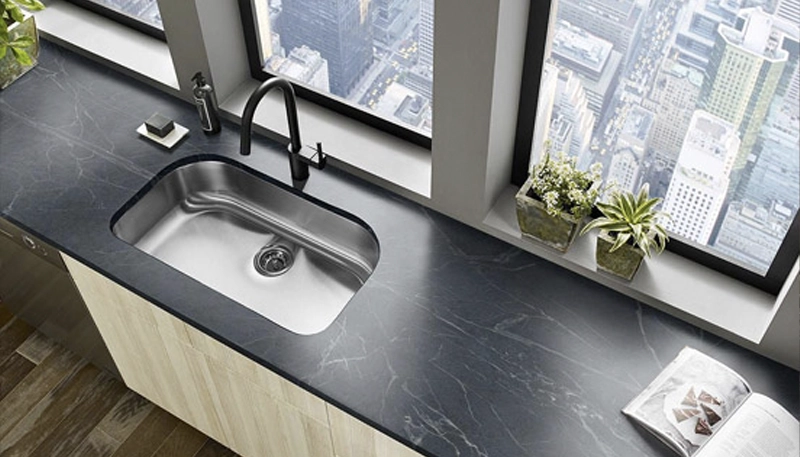
The quality of a soapstone project depends on more than the stone itself. Slab selection, measurement, layout, fabrication and installation must work together to produce a countertop that fits the space and responds appropriately to daily use.
The actual slab should be selected before final fabrication decisions are confirmed. Full-slab review helps identify:
A sample can show general colour and texture but cannot represent the full movement of a natural slab. Projects requiring multiple slabs should also consider how closely the pieces coordinate.
Accurate measurement should generally take place after the cabinets are installed, levelled and secured. During a professional countertop survey and measurement, the project team may document:
Final appliance and fixture models should be confirmed before cutting. Changing a sink, cooktop or faucet configuration after templating can require layout revisions.
Cutouts create narrow stone sections that require controlled fabrication and support. An undermount sink also requires a finished visible edge around the opening.
The fabricator should review:
Manufacturer specifications are more reliable than estimated appliance dimensions and should be available before fabrication begins.
Simple eased or softly rounded edges usually complement soapstone and may be more forgiving than delicate sharp profiles in busy areas. More complex edges, mitred construction and extra-thick visual details require additional fabrication.
Seams may be necessary because of:
A seam cannot be guaranteed to disappear completely. Good slab layout, colour coordination and installation can reduce its prominence, but the joint remains a physical part of the countertop.
Support requirements depend on overhang dimensions, cabinet configuration, cutouts and the actual stone section. Standard assumptions should not replace project-specific fabricator review.
Large countertop sections must travel from the fabrication facility to the final installation position. The access route should be evaluated for:
If a fabricated section cannot be transported safely through the available route, the design may require another seam or revised dimensions.
During installation, fabricated pieces are positioned, levelled, joined and secured according to the project design. Sink attachment, seam assembly and final fit should be checked before separate trades reconnect plumbing, electrical systems or appliances.
Countertop installation does not automatically include:
These responsibilities should be confirmed in the quotation before work is scheduled.
Project Planning Principle
Successful soapstone installation begins with the actual slab, confirmed cabinet conditions and final fixture specifications. Layout, cutouts, seams, support and access should all be resolved before fabrication.
The final section covers soapstone pricing, material comparisons, slab-selection criteria, Toronto and GTA project service, frequently asked questions and the quote process.
The cost of soapstone countertops in Toronto depends on the actual slab, usable material yield, countertop layout, fabrication details and installation conditions. A general square-foot figure cannot accurately represent every project because the quoted scope may or may not include templating, cutouts, finished edges, delivery and installation.
Important cost variables include:
For a complete explanation of material, fabrication and installation pricing, review the soapstone countertop cost guide.
Comparing Soapstone Quotes
Compare complete project scope rather than slab rates alone. Confirm whether each quote includes the selected material, measurement, fabrication, cutouts, edges, delivery, installation and any removal or trade coordination.
Soapstone is not the right material for every design or household. Comparing its ownership characteristics with other surfaces can help determine whether its patina, softness and restrained appearance suit the project.
| Material | Main Advantage | Main Consideration |
|---|---|---|
| Soapstone | Low absorption, heat performance and natural matte character | Scratches more readily and develops visible patina |
| Granite | Greater hardness and broad colour selection | Some slabs may benefit from penetrating sealer |
| Quartz | Consistent patterns and broad design availability | Contains resin and requires protection from concentrated heat |
| Marble | Distinctive natural veining and traditional appearance | Calcite-based surface can etch from common food acids |
| Quartzite | Generally harder and more scratch-resistant | Actual stone identity and slab-specific care should be verified |
For a detailed natural-stone comparison, read Soapstone vs Granite Countertops.
Selecting soapstone should involve more than choosing a preferred shade from a sample. The complete slab must work with the countertop dimensions, cutouts, seams and visual priorities of the project.
Before reserving material, review:
Material selection should be coordinated with the countertop layout before cutting begins. This allows the fabricator to use the slab efficiently while positioning important visual features intentionally.
TecCorp Stone provides soapstone slab selection, custom fabrication and countertop installation for residential and custom projects in Toronto and the GTA. Project availability and scheduling depend on the selected material, fabrication scope and installation location.
Homeowners searching for soapstone suppliers or fabricators near them should confirm that the company can manage the complete process, including:
Providing approximate dimensions, cabinet plans and fixture specifications can help establish the initial scope. Final pricing should be based on the selected slab and confirmed measurements.
TecCorp Stone can help homeowners review available soapstone slabs and plan fabrication and installation for projects in Toronto and the GTA. Contact the team to confirm current material availability.
Yes. The project scope may include slab planning, templating, fabrication, delivery and installation. Included services should be confirmed in the written quotation.
Full-slab review is recommended because natural veining, tone and usable dimensions cannot be evaluated accurately from a small sample alone.
Countertop-grade soapstone generally does not require penetrating sealer. Optional mineral oil or soapstone treatment is used to alter colour rather than create stain protection.
Yes. Slab dimensions, seating overhangs, cutouts, support and installation access must be evaluated for the specific island design.
Cost is based on the selected slab, usable material yield, project dimensions, fabrication, cutouts, edges, seams, delivery and installation requirements.
Soapstone may be used for bathroom vanities, suitable fireplace surrounds and custom stone features when the complete installation system is properly designed.
Submit your approximate dimensions, project location, cabinet plans and sink or appliance details where available. Final pricing follows slab selection and confirmed project measurements.
Soapstone is a distinctive natural surface for homeowners who value low absorption, heat performance, matte texture and visible patina. Choosing the right slab and planning the layout before fabrication are essential to achieving a cohesive result.
Contact TecCorp Stone to discuss soapstone countertops, islands, vanities, fireplace features or custom fabrication in Toronto and the GTA.

At Tec Corp Stone Inc., we pride ourselves on delivering exceptional craftsmanship and unmatched quality. With years of experience in stone fabrication, our dedicated team ensures every project is executed with precision and care. We offer personalized service, innovative solutions, and a commitment to customer satisfaction. Choose us for your stone needs and experience the Tec Corp Stone Inc. difference.