
Choosing the right material for a new shower is an important decision that affects not only the appearance of your bathroom but also long-term maintenance, durability, and overall project value. Many homeowners compare natural stone and engineered stone when planning custom shower walls, surrounds, and feature areas.
Both options can create a high-end shower design, but they offer different characteristics in terms of appearance, maintenance requirements, installation considerations, and design flexibility. Understanding these differences helps you select a material that matches your lifestyle, aesthetic preferences, and renovation goals.
Custom Stone Fabrication | Precision Installation | Toronto & GTA Service | Professional Guidance
When comparing materials for shower applications, the first step is understanding how natural stone and engineered stone are created and how those differences influence their performance.
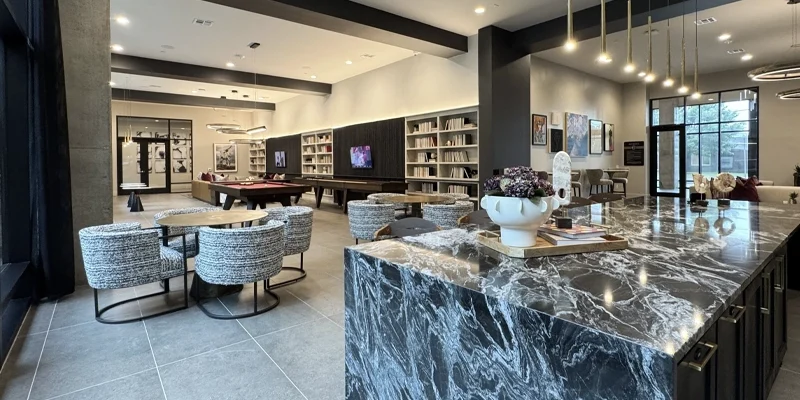
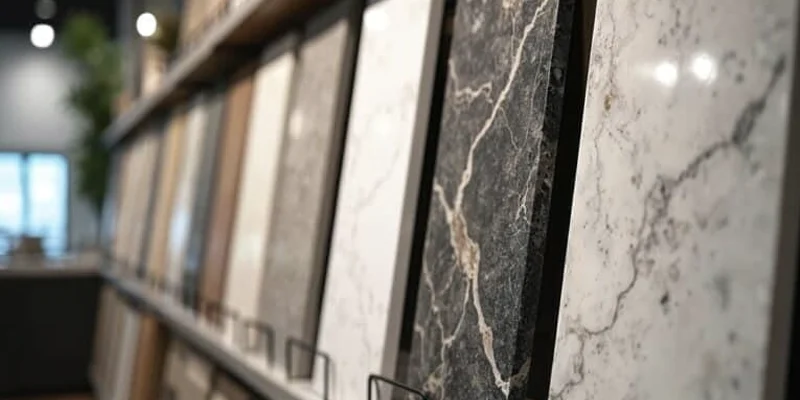
Natural stone is quarried directly from the earth and includes materials such as marble, granite, and quartzite. Each slab has its own natural patterns, colour variations, and characteristics, creating a one-of-a-kind appearance that is often associated with luxury bathroom design.
Engineered stone is manufactured by combining natural mineral content with engineered components to create a more controlled and consistent surface. This allows homeowners to achieve a modern, uniform appearance with a wide range of available colours and patterns.
For shower walls and surrounds, both materials can provide an elegant and durable solution when they are selected correctly and installed by experienced professionals. The best choice depends on factors such as design preference, maintenance expectations, and the specific requirements of the project.
A shower environment creates unique demands compared with other areas of the home. Constant exposure to water, humidity, cleaning products, and daily use means the chosen material should be evaluated beyond appearance alone.
One of the most important considerations for any shower material is how it performs in a wet environment. Proper fabrication, waterproofing, sealing where required, and professional installation all play essential roles in creating a reliable shower system.
The stone itself is only one part of the complete installation. Correct preparation and attention to detail help ensure the finished surface performs as expected over time.
The visual impact of a shower is often one of the main reasons homeowners choose stone surfaces. Natural stone offers unique veining and organic variation, while engineered options provide more predictable patterns and colour consistency.
The choice often depends on whether the project goal is a highly individual luxury look or a more controlled contemporary design.
Natural stone has been used in luxury bathroom projects for decades because of its unique appearance and timeless character. Every slab offers natural variations in colour, movement, and veining, allowing homeowners to create shower spaces with a distinctive and premium look.
For custom shower applications, several natural stone materials are commonly considered depending on the desired design style and performance requirements.
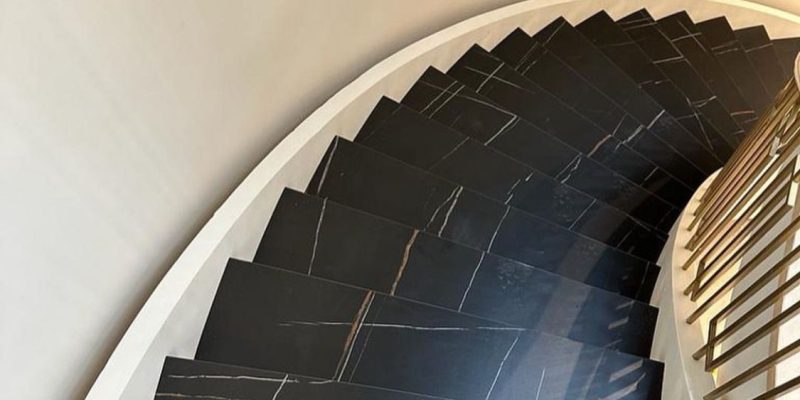
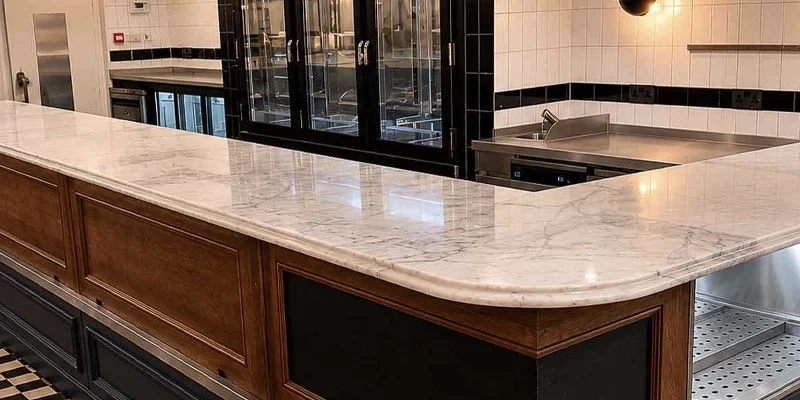
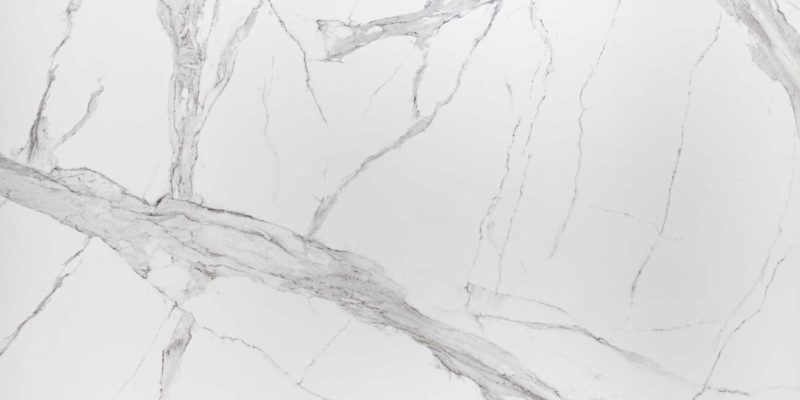
Marble is one of the most recognized choices for elegant shower designs. Its natural veining and soft colour variations create a sophisticated appearance that is difficult to replicate with manufactured materials.
Many homeowners choose marble for feature shower walls, accent areas, and full-height installations where the goal is to create a high-end spa-inspired atmosphere.
Because marble is a natural stone, proper selection, sealing, and maintenance are important considerations for long-term performance in a shower environment.
Quartzite is another natural stone option that combines distinctive natural patterns with excellent durability. It is often selected for projects where homeowners want the appearance of natural stone while looking for a harder surface option.
With its unique textures and colour variations, quartzite can create dramatic shower designs while maintaining a natural aesthetic.
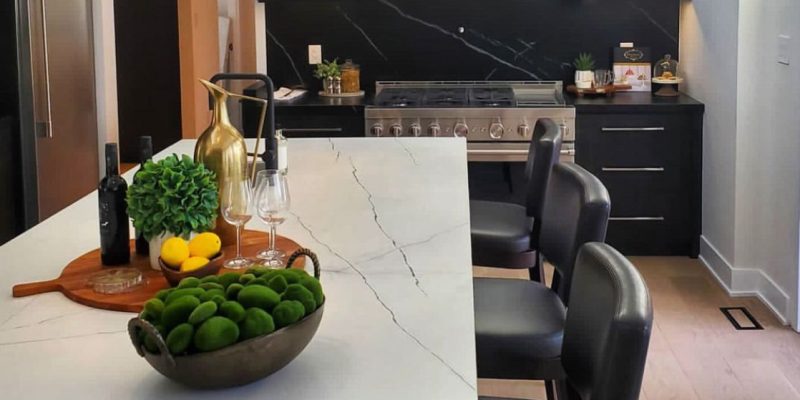
Granite is known for its strength and durability. While it is more commonly associated with kitchen countertops, selected granite varieties can also be used successfully in shower applications.
Its wide range of colours and patterns allows designers and homeowners to achieve different styles, from traditional bathrooms to more contemporary spaces.
Engineered stone has become a popular choice for modern bathroom renovations because it provides a consistent appearance and a wide range of design options.
Unlike natural stone, which is formed through geological processes, engineered stone is manufactured to create more predictable patterns and colour consistency. This can be beneficial for homeowners who prefer a clean and uniform shower design.
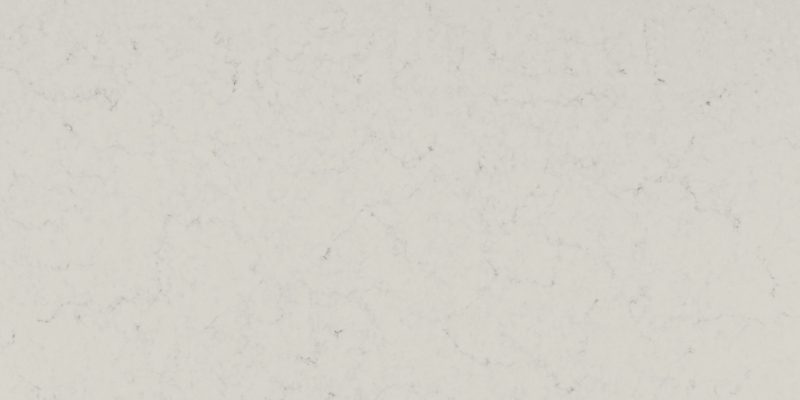
Engineered quartz is one of the most common choices for contemporary shower applications. It offers a modern appearance with many available colours, textures, and patterns.
Many homeowners choose quartz shower panels because they can complement existing bathroom elements such as vanities, flooring, and cabinetry while creating a seamless visual design.
However, proper product selection is important because not every engineered stone product is suitable for every shower application. Professional guidance helps ensure the selected material matches the intended use and installation requirements.
Both natural and engineered stone can create beautiful shower spaces, but they differ in several important areas. The right choice depends on the priorities of each project, including appearance, maintenance preferences, and overall design goals.
| Factor | Natural Stone | Engineered Stone |
|---|---|---|
| Appearance | Unique natural patterns and one-of-a-kind character | Consistent colours and controlled patterns |
| Design Style | Ideal for luxury and natural aesthetic designs | Suitable for modern and uniform designs |
| Maintenance | May require specific care depending on stone type | Generally offers easier colour consistency and care expectations |
| Customization | Each slab provides unique visual characteristics | More predictable material selection |
Custom Shower Fabrication | Precision Stone Cutting | Professional Installation | Toronto & GTA Service
There is no universal winner between natural and engineered stone for shower applications. The better choice depends on what matters most in the specific bathroom: natural variation, design consistency, maintenance expectations, available products, fabrication requirements, and how the shower is intended to look as part of the complete space.
Rather than choosing a material based on a single advantage, homeowners can compare the priorities of the project and narrow the options accordingly.
Natural stone is often the stronger design direction when the goal is to make the shower a distinctive architectural feature. Marble, granite and quartzite can provide variation that cannot be reproduced exactly from one slab to another.
This makes natural stone particularly suitable for projects where the material itself is intended to become a focal point. Large-format shower walls, feature panels and coordinated bathroom surfaces can use the movement of the selected slab as part of the design.
Natural stone may be a good fit when the project prioritizes:
Care requirements should still be considered before material selection. Different natural stones have different surface characteristics, and sealing needs should be determined according to the specific material, finish, exposure and condition rather than a universal schedule.
Engineered surfaces can be attractive for bathrooms where a more controlled design is preferred. Manufactured patterns make it easier to coordinate colour and movement across several bathroom elements without relying on the natural variation of individual stone slabs.
This can work particularly well in contemporary bathrooms where the design depends on clean lines, restrained colour palettes and predictable surface patterns.
Engineered stone may be worth considering when the project prioritizes:
However, the term “engineered stone” covers different products and formulations. Suitability for shower applications should therefore be confirmed for the specific product rather than assumed from the material category alone.
Planning Note: Choose the exact shower product before final fabrication decisions are made. Material category alone is not enough; slab specifications, installation requirements and manufacturer guidance can affect whether a particular surface is appropriate for the intended application.
A shower material rarely exists in isolation. Vanity countertops, shower jambs, niches, benches, flooring, cabinetry and wall finishes all contribute to the final bathroom design.
Material selection can therefore be more effective when the shower is considered as part of the complete room. For example, a strongly veined natural stone shower may work best with quieter surrounding surfaces, while a more restrained shower material can allow a vanity or other architectural element to become the focal point.
Custom stone details can also help create visual continuity between different parts of the bathroom.



Maintenance expectations should be evaluated before the material is installed rather than after the shower is completed. A material that looks ideal in a showroom may require a care routine that does not match the homeowner’s preferences.
Useful questions include:
Natural stone should not be treated as one uniform maintenance category. Marble, granite and quartzite can have different characteristics, while engineered products should be maintained according to the guidance provided for the specific surface.
Material selection is only one part of a successful stone shower project. Large-format wall pieces, shower jambs, niches, benches and other fabricated components must also be measured, planned and produced for the actual dimensions of the space.
This becomes especially important where several stone elements meet each other or interact with glass, plumbing fixtures, wall transitions and other bathroom finishes.
Custom stone components should reflect the dimensions and geometry of the actual shower area. Walls and openings may not always be perfectly square, particularly in renovation projects, so fabrication should be based on verified project conditions rather than assumed dimensions.
Relevant measurements can include:
The exact measurement scope depends on the stone components included in the project.
When natural stone or directional manufactured patterns are used across large shower surfaces, slab layout becomes part of the design process.
Planning can consider where the strongest movement appears, how adjoining panels relate visually, and whether the material will continue into benches, jambs or other fabricated elements.
Perfect pattern continuation is not always possible or necessary. The goal is to make intentional decisions before the material is cut so that the final arrangement reflects the design priorities of the project.
A stone slab or engineered panel is part of a larger shower assembly. The finished surface should not be treated as a substitute for the underlying construction and waterproofing required for a wet environment.
Stone-related fabrication and installation need to coordinate with the surrounding shower system and the work performed by the relevant trades. The exact scope should be established for each project rather than assuming that every task associated with a bathroom renovation is included with stone fabrication.
For broader custom fabrication requirements, homeowners and project teams can review Teccorp Stone’s custom stone services.
One reason homeowners consider slab-based shower surfaces is the ability to create larger uninterrupted areas than conventional small-format tile layouts. Fewer visible joints can produce a cleaner architectural appearance, particularly in contemporary bathrooms.
That visual simplicity places more importance on fabrication details. Panel dimensions, corners, openings, transitions and adjoining components become highly visible when the design relies on large continuous surfaces.
For this reason, material selection and fabrication planning should be considered together rather than as separate decisions.
Natural stone can be used for shower walls when the selected material, finish, fabrication and installation method are appropriate for the application. Care requirements vary between stone types, so the specific material should be evaluated rather than assuming that all natural stone performs identically.
There is no single natural stone that is best for every shower. Marble may appeal to homeowners who prioritize distinctive veining, while granite or quartzite may offer different visual and material characteristics. The choice should reflect the selected slab, desired design, maintenance expectations and project requirements.
Some engineered surfaces may be suitable for certain shower applications, but suitability should be verified for the exact product and intended use. Manufacturer guidance and project-specific installation requirements should be reviewed before selecting engineered quartz for shower walls or related components.
Sealing requirements vary according to the specific stone, finish, exposure and condition of the surface. There is no universal resealing interval that applies to every natural stone shower. Product- and material-specific care guidance should be followed.
Many engineered surfaces are designed with relatively predictable care requirements, while natural stone maintenance varies by material. However, the exact comparison depends on the products being considered. Homeowners should review cleaning and maintenance guidance for the specific surfaces rather than relying only on the broader material category.
In some projects, coordinating the shower and vanity with the same or complementary material can create a cohesive bathroom design. Suitability should still be assessed separately for each application because a vanity countertop and a shower wall are exposed to different conditions.
Porcelain is a manufactured surface but should not automatically be treated as identical to engineered quartz. The materials have different compositions and product characteristics. When comparing shower surfaces, each product category should be evaluated according to its own specifications.
Neither format is universally better. Large-format stone or slab surfaces can reduce the number of visible joints and create a more continuous appearance, while tile systems provide different design and installation options. The better choice depends on the desired aesthetic, project conditions, material and installation strategy.
Material selection and project measurement need to be coordinated because slab dimensions, thickness, edge treatment and fabrication requirements can influence the finished design. Final fabrication should be based on the approved material and the measurements relevant to the stone scope.
The decision between natural and engineered stone for a new shower is ultimately a balance between appearance, product characteristics, maintenance expectations and project requirements.
Natural stone offers individual slab variation and organic movement that can make the shower a distinctive architectural feature. Engineered surfaces can provide greater visual predictability and a controlled contemporary appearance. Neither category is automatically the right choice for every bathroom.
The most reliable decision comes from evaluating the exact material rather than relying on broad assumptions. Review the slab or product, understand its care requirements, confirm that it is appropriate for the intended shower application, and coordinate fabrication details before irreversible work begins.
When those decisions are made together, the selected surface can support both the visual direction of the bathroom and the practical requirements of the finished shower.
Plan Your Custom Shower Stone Project
Share your shower dimensions, project photographs, preferred materials and location with Teccorp Stone to discuss the stone components and fabrication requirements for your bathroom project.