Are marble countertops practical for a busy family kitchen? They can be—but only when the household understands how natural marble reacts to spills, acidic foods, scratches and everyday wear. Marble is not a maintenance-free surface, and it will not remain visually unchanged in a heavily used kitchen. For families who appreciate natural stone and are comfortable with gradual patina, however, it can still be a successful and long-lasting choice.
The decision depends less on whether marble is generally “good” or “bad” and more on how the kitchen is used. A family that cooks daily, serves meals on the island and expects every surface to remain flawless may prefer a lower-maintenance material. A design-focused household that cleans spills promptly and accepts natural aging may be satisfied with carefully selected marble countertops.
This guide evaluates marble specifically for active family kitchens. It explains how the surface responds to common foods, children, frequent cleaning, hot cookware and daily movement, while also identifying where marble works best and when another countertop material may be more practical.
Quick Answer
Marble can work in a busy family kitchen when the household accepts etching, possible staining, minor scratches and natural patina. It is less suitable for families who want a consistently flawless, very low-maintenance countertop. Using marble selectively on an island, baking area or feature surface can provide a practical compromise.
A practical countertop should support the way a household cooks, cleans, eats and moves through the kitchen. For some families, practicality means maximum resistance to spills and minimal maintenance. For others, it means choosing a natural material they enjoy and adapting a few daily habits to protect it.
Before selecting marble, consider how often the kitchen is used for:
Marble can tolerate regular household use, but it responds differently from quartz, porcelain and many granite varieties. Its calcium-based composition makes it vulnerable to acidic substances, while its natural porosity means some liquids may be absorbed if spills remain on the surface.
The household’s expectations are just as important as the level of use. Two families can install the same marble and have very different experiences.
One family may view subtle etching and small surface marks as part of the stone’s developing character. Another may see the same changes as damage. Marble is generally a better fit for the first household because natural aging is difficult to avoid completely in an actively used kitchen.
Families considering a complete kitchen countertop fabrication and installation should decide whether they want a surface that develops patina or one that is expected to maintain a more consistent appearance.
No countertop material is completely resistant to heat, impact, scratches or improper cleaning. Marble simply requires greater awareness because some forms of wear become visible sooner.
The most important question is therefore not whether marble can be used in a family kitchen. It is whether the family is willing to:
When these habits already match the household’s routine, marble may be reasonably practical. When they feel unrealistic, another material may provide a better long-term experience.
Busy kitchens expose countertops to repeated spills, food preparation, cleaning, appliances and impact. Understanding how marble responds to each condition helps prevent unrealistic expectations after installation.
Etching is one of the most important considerations for marble countertops. Marble contains calcite, which reacts with acids commonly found in kitchens.
Potential sources of etching include:
When an acidic substance contacts marble, it can alter the surface finish and leave a dull or lighter area. This change is called etching and should not be confused with staining.
A penetrating sealer may reduce liquid absorption, but it does not prevent the chemical reaction that causes etching. Even properly sealed marble can develop dull spots when exposed to acidic ingredients.
Important Marble Care Distinction
Sealing can help reduce staining, but it does not stop marble from etching. Families who cook frequently with citrus, vinegar, wine or tomatoes should expect to use cutting boards and wipe spills promptly.
Staining occurs when a liquid or pigment penetrates the stone and changes its colour. Oil, coffee, wine, sauces, spices and food colouring may create stains when they remain on an absorbent marble surface.
The absorption rate varies according to the specific slab, finish and previous treatment. This is why sealing requirements should be evaluated for the actual marble rather than assigned according to a universal annual schedule.
In a family kitchen, prompt spill cleanup is more important than trying to follow an arbitrary calendar. Coasters, placemats and trays beneath frequently used bottles or countertop appliances can also reduce repeated exposure.
Marble is softer than several other countertop materials and can be scratched by knives, abrasive objects or items dragged across the surface. Cutting directly on marble should be avoided—not only to protect the stone but also because the surface can quickly dull knife blades.
Chipping is more likely around:
Simple edge profiles, stable cabinetry and professionally fabricated openings can reduce avoidable damage. Families with young children may also prefer eased or gently rounded edges over highly decorative profiles with projecting details.
Marble generally tolerates kitchen heat well, but hot cookware should still be placed on a trivet or heat-resistant pad.
The complete countertop installation includes more than the stone itself. Seams, adhesives, sealants, cabinetry and nearby finishes may react differently to concentrated heat. Trivets also reduce the risk associated with sudden temperature changes.
Heat-producing appliances such as air fryers, electric skillets, slow cookers and coffee machines should be used according to the appliance manufacturer’s clearance requirements. Protective pads may be appropriate where heat remains concentrated for extended periods.
The finish changes how marble reflects light, how visible surface wear becomes and how the countertop should be maintained. Both polished and honed marble can be used in family kitchens, but neither finish removes the risk of etching, staining or scratching.
The most suitable finish depends on the household’s design preferences and tolerance for visible changes over time.
Polished marble has a smooth, reflective surface that strengthens colour contrast and makes natural veining appear more pronounced. It is often selected for formal kitchens, statement islands and luxury interiors where visual depth is a priority.
In a busy family kitchen, polished marble may show:
The reflective finish does not make marble more resistant to acidic reactions. In fact, etching may become more noticeable because the affected area no longer reflects light in the same way as the surrounding polished surface.
Polished marble may be a good fit when the countertop is used selectively, cleaned carefully and viewed primarily as a design feature.
Honed marble has a matte or low-sheen finish.




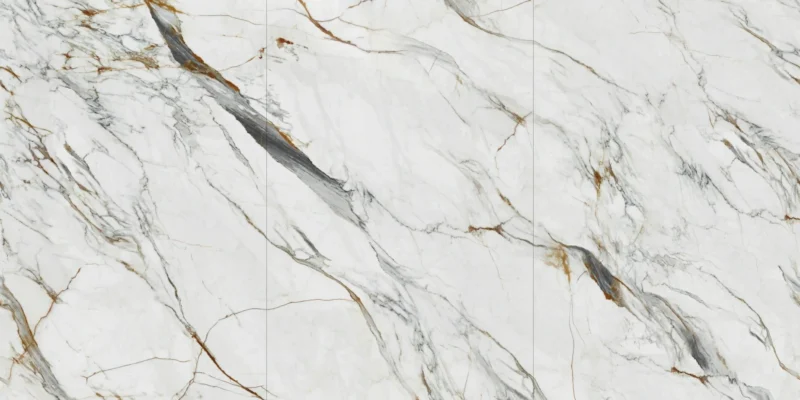
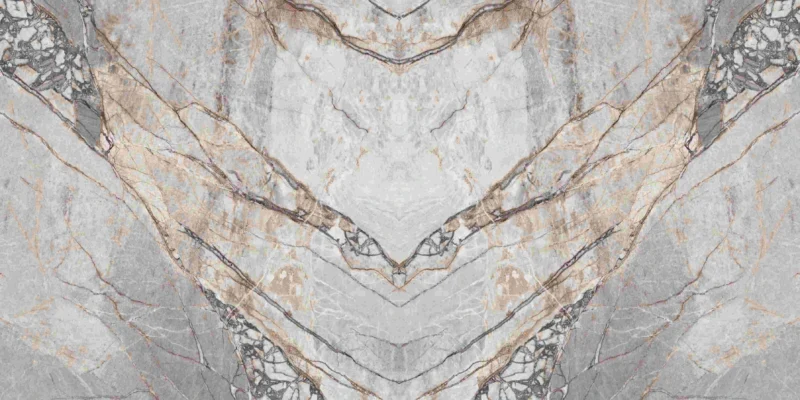
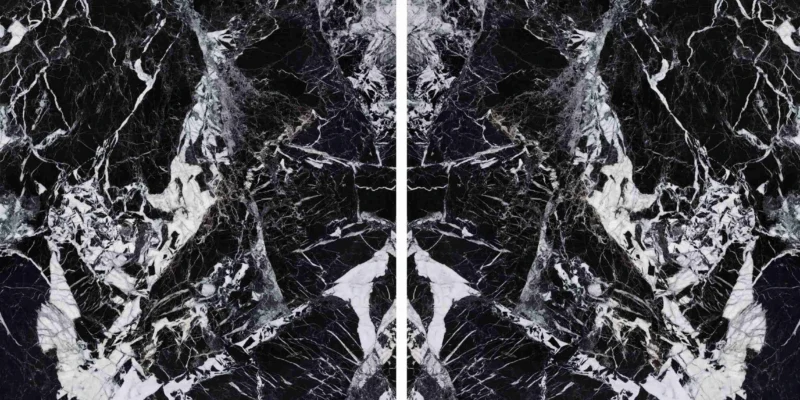

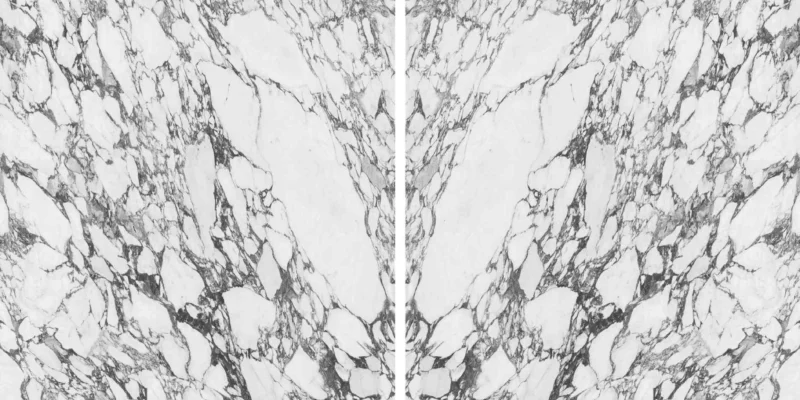



Minor etching and surface wear may blend more naturally into a honed finish because the surface is already less reflective. However, this does not mean honed marble is stain-proof or maintenance-free.
Some honed marble may show:
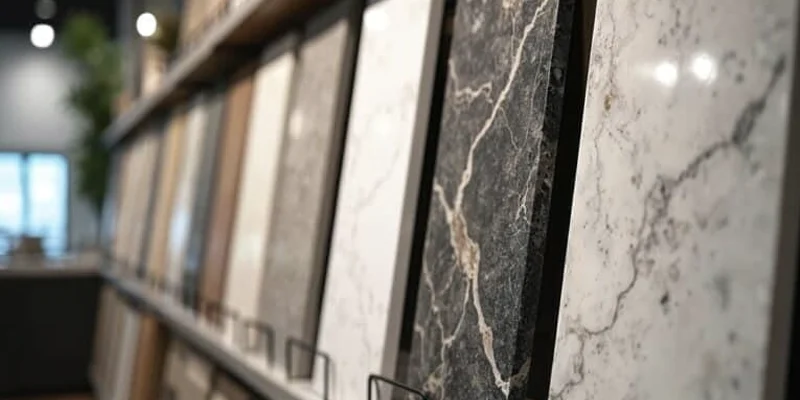
The actual slab and finish should be reviewed under realistic lighting before approval. A small showroom sample may not reveal how the complete surface will respond to fingerprints, oils and repeated cleaning.
Honed marble is often described as more forgiving because light etching and patina may be less visually disruptive than on polished marble. That does not automatically make it easier to maintain.
Polished marble may be easier to wipe because of its smoother surface, while honed marble may require more attention when oils or darker marks become visible.
For busy families, the better finish is the one that matches realistic expectations:
| Marble Finish | Appearance | Family-Kitchen Consideration |
|---|---|---|
| Polished | Glossy, reflective and colour-rich | Etching and fine surface changes may be more visible |
| Honed | Matte, soft and lower-sheen | Patina may blend more naturally, but oils and marks can remain visible |
Marble does not have to cover every countertop surface to become a meaningful part of the kitchen. Selective use often provides the strongest balance between natural beauty and everyday practicality.
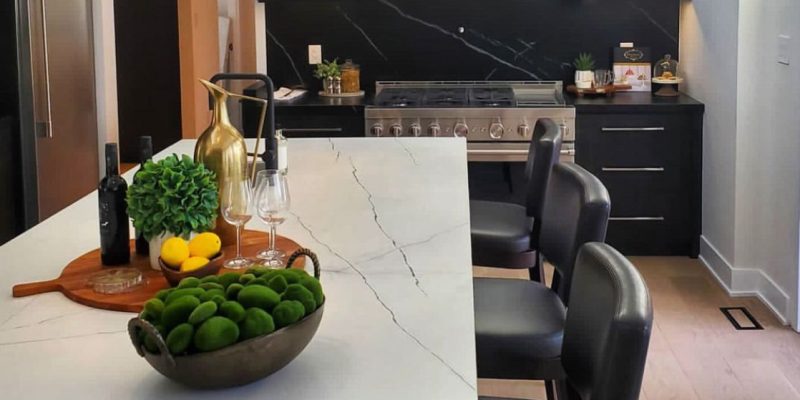
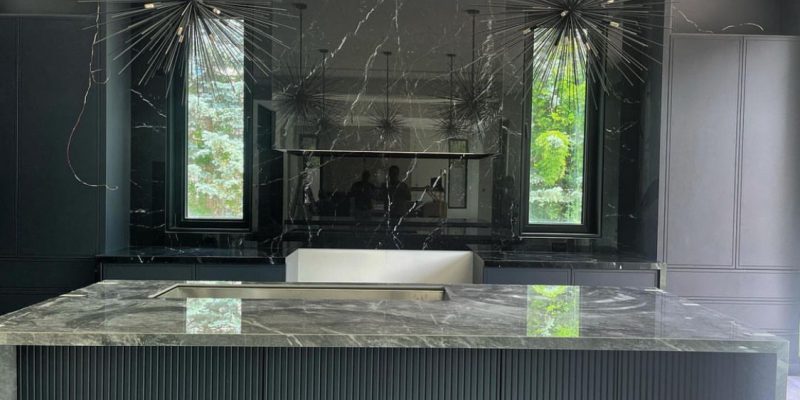
A marble island can become the visual centre of a family kitchen. Large uninterrupted surfaces display natural veining more effectively than several small countertop sections.
Before using marble on an island, consider how the surface will function. An island used mainly for entertaining, dining or baking may be a better fit than one that also contains the primary sink, cooktop and children’s activity area.
Island planning should account for:
Families considering a feature island can review TecCorp Stone’s kitchen island countertop service for measurement, slab layout, support and fabrication planning.
Marble’s naturally cool surface is traditionally valued for rolling pastry, working with dough and preparing temperature-sensitive ingredients.
A dedicated baking zone may be a practical way to use marble without installing it across the entire kitchen. The surface should still be protected from acidic ingredients, oils, sharp utensils and concentrated heat.
Marble may work well on secondary counters that are not exposed to constant meal preparation or sink activity.
Examples include:
A beverage area should still be planned carefully because coffee, wine, citrus and drink ingredients can stain or etch marble if spills are not cleaned promptly.
Marble backsplashes and wall panels provide natural movement with less direct contact than horizontal work surfaces. They can coordinate with an island or introduce marble into the kitchen without exposing it to the same level of impact and abrasion.
Vertical marble may still encounter cooking oils, steam and splashes. The selected finish, seam layout and cleaning method should therefore be reviewed before installation.
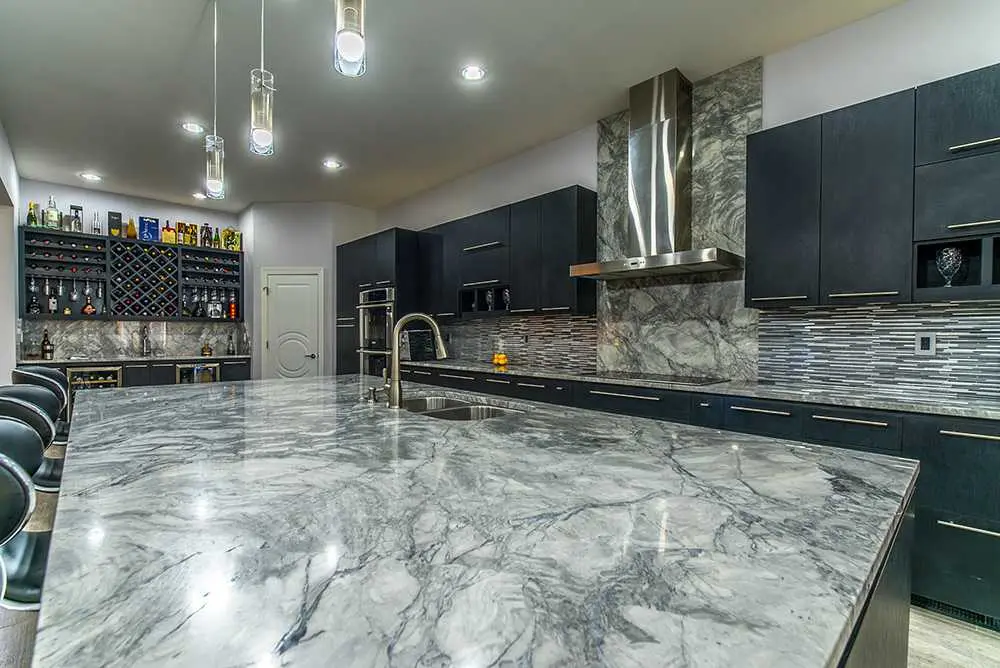
Marble is less likely to provide a satisfying long-term experience when the household expects a nearly maintenance-free surface that remains visually consistent.
Natural marble changes with use. Etching, minor scratches, surface wear and patina may appear even when the countertop is cleaned and maintained correctly.
Families who view every visible mark as a defect may find marble frustrating, particularly when it is installed throughout a heavily used kitchen.
In a kitchen where juice, tomato sauce, wine, coffee or oil may remain on the counter for extended periods, marble carries a greater risk of staining and etching.
This does not mean the countertop requires constant supervision, but the household should be able to remove significant spills within a reasonable period.
Vinegar-based products, lemon cleaners, abrasive powders and harsh bathroom cleaners can damage marble’s finish. A household that prefers strong multipurpose cleaners without checking surface compatibility may be better served by another material.
An island used for cooking, washing, homework, crafts, entertaining and appliance storage experiences more concentrated wear than a single-purpose surface.
Marble can still be used, but the family should decide whether natural wear is acceptable in such a visible location. Otherwise, marble may be better reserved for a backsplash, baking area or lower-traffic feature.
When the household’s main goal is minimal maintenance, predictable patterning and strong resistance to common kitchen spills, quartz or porcelain may provide a more suitable everyday surface.
The complete marble vs quartz countertop comparison explains the performance and maintenance differences in greater detail.
Realistic Expectation Rule
Marble is usually a poor fit when the homeowner wants natural stone beauty but expects engineered-surface consistency and very low maintenance.
Yes. A mixed-material kitchen can preserve marble’s visual character while placing lower-maintenance materials in the most demanding work zones.
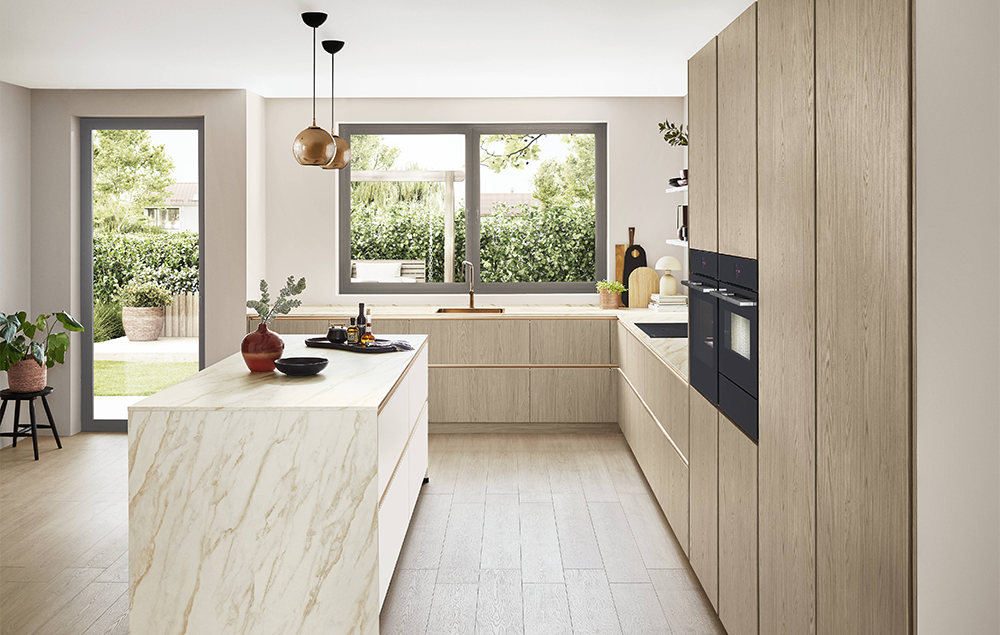
This is one of the most practical combinations for family kitchens. Marble becomes the central design feature, while quartz is used around the sink, cooktop and primary preparation areas.
The two materials should be coordinated according to:
A heavily veined marble island usually works best with a quieter perimeter surface. Competing patterns can make the kitchen feel visually crowded.
Porcelain may be considered for high-use counters, full-height backsplashes or other surfaces where low absorption and controlled marble-inspired patterns are preferred.
The fabrication and edge appearance of porcelain differ from natural marble, so thickness and transitions should be planned carefully.
Granite can provide a natural-stone companion for higher-use preparation areas while marble remains dedicated to pastry work or a feature counter.
Successful mixed-material design should look intentional rather than appearing to be a compromise made after the project was planned.
Material transitions affect countertop thickness, support, seams, edge profiles and installation sequence. The final material allocation should be confirmed before measurement and fabrication.
Mixed surfaces should also be reviewed together under the kitchen’s actual lighting. Two materials that appear coordinated in separate photographs may display different undertones when placed side by side.
Families who like the appearance of marble but are uncertain about etching, sealing or visible patina can compare it with quartz, porcelain and selected natural stones.
This is not a complete material comparison. The purpose is to identify which surface may better match a busy household’s expectations.
| Material | Maintenance | Etching Risk | Best Family-Kitchen Fit |
|---|---|---|---|
| Marble | More careful cleaning and slab-specific sealing assessment | High around acidic foods | Design-focused families comfortable with patina |
| Quartz | Low; no sealing required | Does not etch like marble | Busy kitchens needing predictable care |
| Porcelain | Low routine maintenance | Not affected like calcite-based marble | Modern kitchens and coordinated vertical surfaces |
| Granite | Depends on the slab and finish | Generally lower than marble | Families wanting natural stone with stronger everyday performance |
Quartz is usually the most straightforward alternative for families wanting a marble-inspired appearance with lower maintenance. Porcelain may suit projects involving countertops, backsplashes and waterfall panels, while granite may appeal to homeowners who still prefer natural stone.
For a detailed two-material evaluation, review the complete marble vs quartz countertop guide.
Marble may be suitable for your household when most of the following statements are true:
Another material may provide a better experience when the household expects a flawless appearance, frequently leaves spills unattended or wants the lowest possible maintenance.
Simple Decision Rule
Choose marble when natural character matters more than perfect consistency. Choose a lower-maintenance alternative when the household wants stronger resistance to everyday spills and fewer visible surface changes.
Yes, but the household should expect spills, scratches and possible etching. Marble may be easier to manage when used selectively rather than across every work surface.
Yes. Sealing may reduce liquid absorption and staining, but it does not prevent acidic foods or cleaners from reacting with marble.
Staining risk depends on the slab, finish, treatment and how quickly spills are cleaned. Oils, wine, coffee and strongly coloured foods should be removed promptly.
Honed marble may make some etching and patina less visually obvious, but it can still show oils, fingerprints and uneven cleaning. It is not automatically lower maintenance.
Yes. Using marble on an island, baking station or feature surface while selecting another material for high-use perimeter counters is a common practical strategy.
Generally, yes. Quartz does not require sealing and does not etch like marble. Marble requires greater care around acidic foods and unsuitable cleaning products.
Direct heat is not recommended. Trivets help protect the stone, seams, treatments, adhesives and surrounding cabinetry.
Yes. Etching, minor scratches and changes in sheen can gradually create a lived-in appearance. Some homeowners appreciate this character, while others prefer a more consistent surface.
Marble can be practical for a busy family, but it is not the most forgiving countertop material. The best result depends on the household’s expectations, cleaning habits and willingness to accept natural aging.
Marble is a good fit for design-focused families who appreciate unique veining and are comfortable with patina.
Marble is a conditional fit for active households that use it selectively on an island, baking area, backsplash or lower-traffic surface.
Marble is usually a poor fit for families wanting a flawless, highly stain-resistant and very low-maintenance countertop.
Before making a final decision, review the actual marble slab, finish, layout and intended use. Professional measurement and fabrication planning are especially important when the project includes large islands, sink openings, waterfall panels or directional veining.
Considering Marble for Your Family Kitchen?
Compare available marble slabs and discuss where natural marble will work best within your kitchen layout and daily routine.