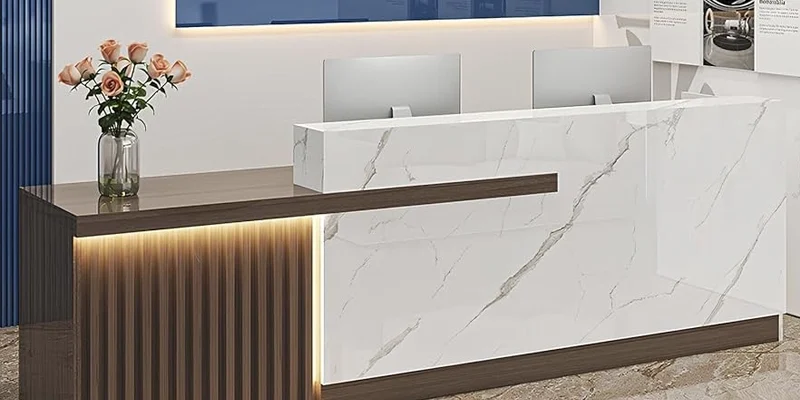
Granite countertop cost in Toronto varies according to the selected slab, granite level, countertop dimensions, fabrication requirements, edge profile, cut-outs and installation conditions. Although many homeowners begin by comparing a price per square foot, the final project cost depends on how efficiently the slab can be used and how much custom work the kitchen requires.
For planning purposes, professionally fabricated and installed granite countertops in Toronto and the Greater Toronto Area commonly fall within a broad range of approximately $55 to $140+ per square foot. Level 1 granite generally occupies the lower end of this range, Level 2 provides a broader balance of colour and price, and Level 3 includes more distinctive, limited or fabrication-sensitive slabs.
However, granite levels are not universal geological quality grades. They are commercial pricing categories used by suppliers and fabricators to organize slabs according to availability, sourcing cost, visual characteristics, slab dimensions and other project-related factors. A Level 1 slab is not automatically weak or low quality, and a Level 3 slab is not automatically more durable.
This guide explains how Level 1, Level 2 and Level 3 granite pricing works, what may be included in an installed quote and which factors can move a Toronto granite countertop project above or below the typical price range.
Important Pricing Note
Granite levels describe commercial price categories, not standardized measures of strength or stone quality. Final pricing should be based on the exact slab, measured kitchen layout and approved fabrication scope.
The average installed price of granite countertops in Toronto generally ranges from approximately $55 to $140+ per square foot. Common and widely available slabs may remain near the lower end, while distinctive colours, uncommon movement, premium finishes or inefficient slab layouts may move the project into a higher range.
The following figures provide a practical starting point for comparing the three granite levels.
| Granite Category | Typical Installed Range | Common Characteristics | Best Suited For |
|---|---|---|---|
| Level 1 Granite | Approximately $55–$80 per sq. ft. | Widely available colours, repeatable patterns and efficient slab sourcing | Budget-conscious renovations, rental properties and secondary kitchens |
| Level 2 Granite | Approximately $75–$110 per sq. ft. | Broader colour selection, more visible movement and less common slab options | Primary family kitchens and design-focused renovations |
| Level 3 Granite | Approximately $100–$140+ per sq. ft. | Distinctive colours, dramatic movement, limited availability or premium finishes | Statement islands, luxury kitchens and custom natural-stone projects |
These ranges are planning figures rather than fixed quotations. Two kitchens using the same granite level may have different final costs because of their dimensions, slab yield, sink and cooktop openings, edges, seams, access and installation requirements.
A straightforward perimeter countertop using an efficiently allocated Level 2 slab may cost less than a smaller Level 1 project containing a waterfall panel, several cut-outs and a complex edge profile.
For a kitchen requiring approximately 40 square feet of finished countertop area, the basic installed material comparison may look like this:
These calculations are based only on the broad installed square-foot ranges. Additional work such as removal, plumbing coordination, full-height backsplashes, waterfall panels, structural reinforcement or difficult property access may affect the total project budget.
Homeowners planning a complete renovation can review TecCorp Stone’s kitchen countertop fabrication and installation service before requesting a project-specific estimate.
Granite levels are supplier or fabricator pricing classifications used to organize available slabs. They help homeowners compare broad price positions, but the meaning of each level can differ between companies.
A slab identified as Level 2 by one supplier may appear in another supplier’s Level 1 or Level 3 category. For this reason, the level number should not be evaluated without reviewing the actual slab, included services and final installed price.
Granite levels may be influenced by:
The level does not necessarily indicate whether the stone is structurally stronger, more heat resistant or better suited to everyday use. Granite performance depends on the actual mineral composition, slab condition, fabrication, support, installation and maintenance.
Terms such as “level,” “grade,” “group” and “tier” are sometimes used interchangeably in countertop quotations. However, there is no single universal Level 1, Level 2 and Level 3 classification followed by every Toronto supplier.
Homeowners should therefore ask what the quoted level includes rather than assuming that every company uses the same system.
Questions to confirm include:
Level 1 granite usually includes common and consistently available slabs that can be sourced efficiently. Typical installed pricing may begin around $55 per square foot and extend to approximately $80 per square foot, depending on the project.
These slabs often contain relatively consistent speckling, mineral distribution or repeating natural movement. Colours may include common whites, greys, blacks, browns and warm neutrals, although the exact selection depends on current supplier inventory.
Level 1 granite is not necessarily less durable. Its lower price is commonly connected to:
Level 1 granite may provide strong value when the project requires a practical natural-stone surface without a rare colour or highly dramatic pattern.
It is often suitable for:
A well-selected Level 1 granite can still offer the heat tolerance, natural mineral character and service life associated with granite countertops.
Level 2 granite generally represents the middle of the market, with installed pricing commonly ranging from approximately $75 to $110 per square foot.
This category often provides a wider choice of colours, more noticeable movement and slabs that are less widely available than Level 1 options. For many Toronto homeowners, Level 2 provides the strongest balance between material character, design flexibility and overall project cost.
Level 2 granite may include:
Because these slabs may contain stronger visual features, homeowners should review the complete slab rather than relying on a small sample. The fabricator should identify which sections will appear on the island, perimeter runs and areas surrounding sink or cooktop openings.
Level 2 granite is often appropriate for:
Level 3 granite commonly begins around $100 per square foot installed and may exceed $140 per square foot when the slab is rare, visually distinctive, difficult to source or requires detailed fabrication planning.
This category may include slabs with dramatic movement, contrasting mineral deposits, unusual colours, limited supply or premium surface treatments. Some Level 3 slabs are selected primarily because the countertop is intended to become a central architectural feature.
Higher pricing may reflect:
Level 3 granite is often used for:
The higher price should be evaluated against the actual visual and project benefit. A distinctive slab may justify additional investment when it will be displayed across a large uninterrupted island. The same slab may provide less value when divided into several small sections with multiple cut-outs.
Homeowners planning a prominent island can also review TecCorp Stone’s kitchen island countertop service to understand how slab size, overhangs, openings, waterfall panels and pattern placement affect fabrication.
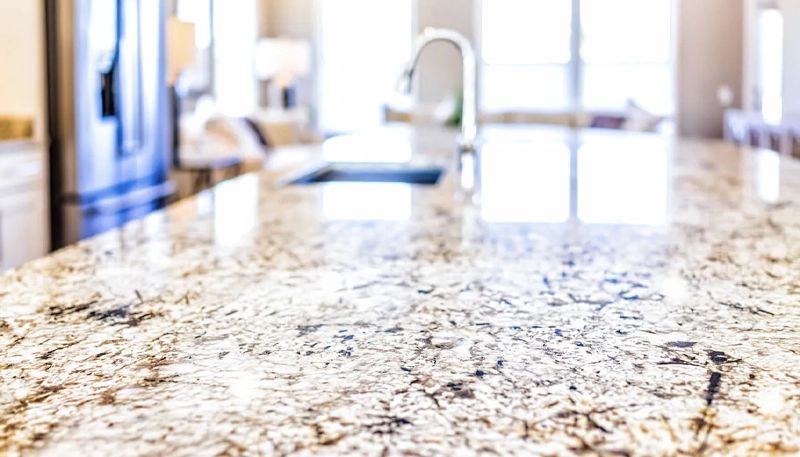
The next step is to compare the three levels directly and identify which project variables can change the final installed price even after the granite category has been selected.
The most important difference between granite levels is usually the slab’s price position, availability and visual character—not its basic suitability as a countertop material.
| Comparison Factor | Level 1 Granite | Level 2 Granite | Level 3 Granite |
|---|---|---|---|
| Typical Installed Range | $55–$80 per sq. ft. | $75–$110 per sq. ft. | $100–$140+ per sq. ft. |
| Availability | Commonly available | Moderately available | More limited or shipment-dependent |
| Visual Character | Controlled speckling or repeatable movement | More noticeable colour and mineral variation | Distinctive movement, contrast or rare colours |
| Layout Planning | Usually straightforward | Full-slab review recommended | Detailed slab allocation often essential |
| Best Application | Practical and budget-controlled projects | Primary kitchens balancing design and value | Statement islands and luxury renovations |
Level 2 is often the most balanced choice for homeowners who want visible natural-stone character without moving into the highest granite price tier. Level 1 can still provide excellent performance, while Level 3 is most valuable when the slab will remain highly visible and central to the kitchen design.
The selected granite level establishes a starting price, but several fabrication and installation decisions determine the final quotation.
Larger kitchens generally require more material, but finished square footage does not always equal the amount of slab that must be purchased. Sink openings, corners and unused slab areas may reduce material yield.
A large island may also require a separate slab when the preferred section cannot be cut efficiently from the material used for the perimeter counters.
A slab that fits the project efficiently may reduce waste and keep the price within the expected level range.


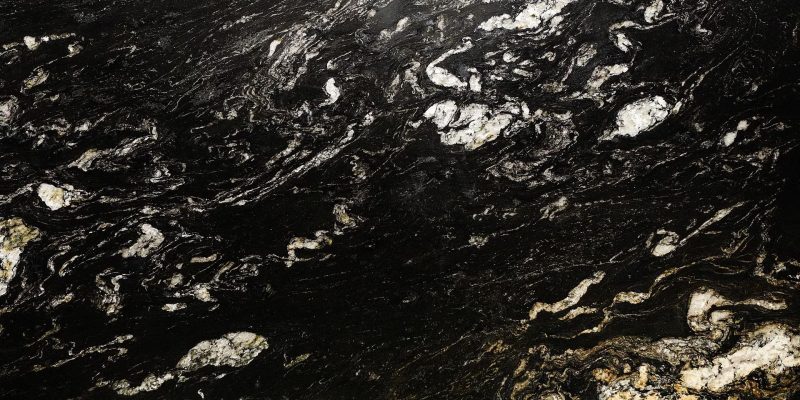

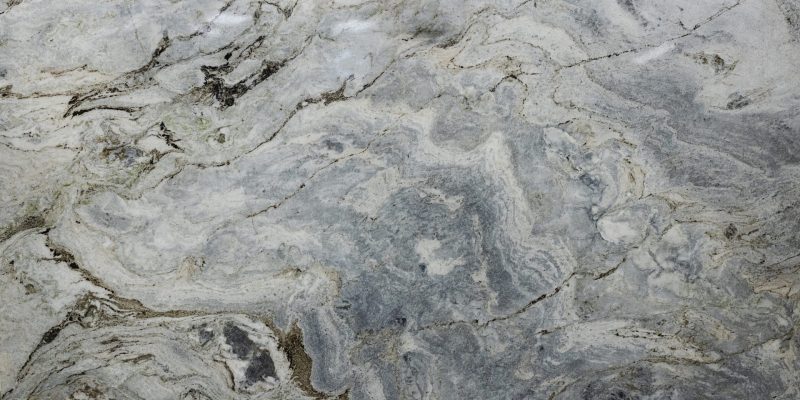
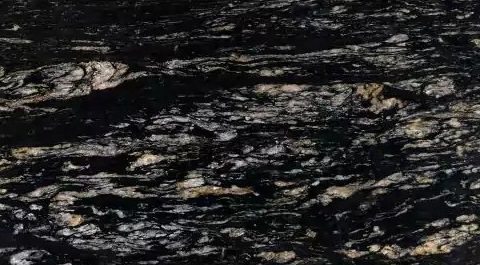




This is why a project should not be priced only by multiplying finished countertop area by a square-foot rate.
Simple eased or small bevel edges are commonly included within standard fabrication. Decorative profiles, built-up edges and mitered construction require more labour and may increase the total price.
A thicker-looking island edge can create strong visual impact, but it should be approved after its effect on material use and fabrication cost has been reviewed.
Undermount sinks, cooktops, faucet holes and accessory openings require precise cutting and finishing. Projects with several openings or narrow stone sections may require additional fabrication and reinforcement.
The exact fixture models should be confirmed before final measurement.
Seams may be required because of slab dimensions, layout geometry or property access. Strongly patterned granite may require more detailed planning so colour movement remains controlled between adjoining pieces.
For a detailed explanation of seam planning, review the guide to granite countertop seams.
Waterfall island ends and full-height granite backsplashes increase slab requirements and fabrication complexity. They may also require specific sections of the slab to preserve visual continuity.
These features can provide strong design value, but they may move an otherwise mid-range project into a higher total budget.
Removing existing countertops, carrying large pieces through stairs or elevators, restricted parking and difficult building access can affect labour and installation planning.
Toronto condo projects should be assessed for elevator dimensions, loading schedules and maximum piece size before fabrication.
Cost-Control Tip
A simpler edge, efficient slab layout and fewer decorative vertical pieces can allow more of the budget to be directed toward a higher-level granite slab.
The following examples illustrate how granite level and project complexity can affect the final budget.
| Project Type | Approximate Area | Likely Granite Level | Planning Range |
|---|---|---|---|
| Small condo kitchen Simple perimeter layout and one sink opening |
25–30 sq. ft. | Level 1 | Approximately $1,400–$2,400 |
| Standard family kitchen Perimeter counters, standard island and basic cut-outs |
40–50 sq. ft. | Level 2 | Approximately $3,000–$5,500 |
| Feature kitchen Large island, distinctive slab and upgraded edge details |
55–70 sq. ft. | Level 3 | Approximately $5,500–$9,800+ |
These examples are not fixed quotations. Waterfall panels, full-height backsplashes, demolition, premium edges and unusual access conditions may increase the final cost.
An installed quote may include some or all of the following:
The quotation should identify exactly what is included. A low square-foot price may exclude templating, sink polishing, delivery or installation, making direct comparisons between suppliers misleading.
Teccorp Stone’s countertop survey and measurement service helps confirm dimensions, openings, seams, supports and access conditions before production.
Additional charges may apply for:
Before approving a quote, homeowners should request a written scope that separates the granite material, fabrication, installation and work assigned to other trades.
The best granite level is not necessarily the most expensive one. It is the option that fits the kitchen’s visibility, layout, design priorities and total fabrication budget.
Level 1 granite can be suitable for condos, rental upgrades, secondary kitchens and practical family renovations. Its lower price does not automatically mean that the stone is structurally inferior.
Level 2 is often the most balanced category for a primary Toronto kitchen because it provides more distinctive movement while remaining suitable for a controlled overall project budget.
Level 3 granite provides the greatest value when its distinctive visual character can be displayed properly. Using a premium slab across several narrow, interrupted or low-visibility sections may not provide the same design benefit.
Important Pricing Note
Level 1, Level 2 and Level 3 are supplier pricing categories—not universal geological grades or official measures of granite quality. Classification can vary between fabricators and slab suppliers. The actual stone should still be evaluated for suitability, finish, dimensions, natural characteristics and project-specific fabrication requirements.
Homeowners can often reduce the final granite countertop cost without selecting an unsuitable or visually disappointing slab.
The lowest square-foot price does not always produce the lowest completed project cost. A quotation should be evaluated according to the exact granite, included services, fabrication details and installation conditions.
No. They are commonly used supplier or fabricator pricing categories. One supplier’s Level 2 granite may appear in a different category elsewhere. The levels usually reflect availability, colour, pattern, sourcing and price position rather than a universal quality standard.
Not necessarily. Level 1 granite is often more affordable because it is widely available or has a more repeatable appearance. The actual slab should still be inspected for its dimensions, finish, natural characteristics and suitability for the planned countertop.
Level 2 often provides a useful balance between natural character and project cost, but it is not automatically the best option for every kitchen. A well-selected Level 1 slab may provide stronger value in a simple layout, while Level 3 may be justified for a highly visible statement island.
Yes. Decorative edges, multiple cut-outs, waterfall panels, slab backsplashes, demolition, difficult access, additional slabs and complex pattern alignment may increase the final project price.
Not automatically. The pricing level does not determine service life. Long-term performance depends on the actual stone, appropriate fabrication, cabinet support, installation quality, sealing requirements and everyday care.
Provide the kitchen layout or approximate dimensions, photographs, sink and appliance information, preferred edge, island details and selected granite direction. Final pricing should be confirmed after material selection and professional measurement.
Granite countertop cost in Toronto depends on more than whether a slab is labelled Level 1, Level 2 or Level 3. The final investment reflects the selected material, slab quantity, fabrication details, openings, edges, access conditions and installation scope.
Choose Level 1 when practical natural stone and budget control are the priorities. Consider Level 2 when you want a stronger balance of visual character and cost. Reserve Level 3 for projects where distinctive granite movement will remain visible and central to the kitchen design.
Get a Project-Specific Granite Estimate
Share your kitchen dimensions, photographs, preferred granite style and fabrication details to receive guidance based on the actual project scope.
Homeowners can also review Teccorp Stone’s kitchen countertop fabrication and installation services before finalizing the material and project scope.