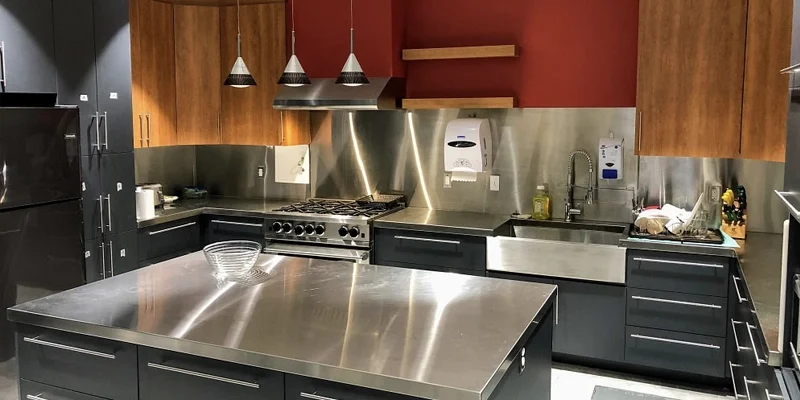
Stainless steel countertops are widely recognized for their professional-grade performance, sleek appearance, and unmatched hygiene. Originally developed for commercial kitchens, stainless steel has steadily made its way into residential homes across Canada — especially in modern, industrial, and minimalist kitchen designs.
In cities like Toronto and throughout the GTA, homeowners who value durability, cleanliness, and contemporary aesthetics are increasingly choosing stainless steel as an alternative to traditional stone surfaces. Its clean lines, reflective finish, and resistance to heat and bacteria make it a standout option for design-forward kitchens.
Stainless steel countertops are fabricated from high-grade steel alloys, most commonly 304 stainless steel, which is known for its corrosion resistance, strength, and food-safe properties. Unlike stone countertops, stainless steel surfaces are manufactured rather than quarried, allowing for precise customization and seamless integration.
These countertops are typically fabricated with a steel sheet bonded over a solid substrate, creating a rigid, durable surface suitable for both residential and commercial environments.
The popularity of stainless steel countertops in Canada is driven by both performance and lifestyle preferences. Homeowners looking for a surface that can handle heavy daily use without compromising hygiene often gravitate toward stainless steel.
Key reasons stainless steel performs exceptionally well in Canadian homes include:
For households that cook frequently, entertain often, or prioritize cleanliness, stainless steel offers performance similar to professional kitchens while adapting seamlessly to residential design.
Design-wise, stainless steel countertops are most often associated with industrial, modern, and minimalist kitchens. Their reflective surface enhances natural and artificial light, making kitchens feel open and streamlined.
In Toronto condos and loft-style homes, stainless steel is frequently paired with:
This material works particularly well in open-concept kitchens, where countertops act as both functional work surfaces and visual design elements.
One of stainless steel’s biggest advantages is hygiene. Because the surface is completely non-porous, it does not absorb liquids, oils, or bacteria. This makes it one of the safest materials available for food preparation.
Unlike natural stone surfaces that require sealing, stainless steel maintains its hygienic properties without chemical treatments. This is why it remains the standard surface in commercial kitchens, hospitals, and food-processing facilities.
For homeowners comparing stainless steel to stone options, it is often evaluated alongside materials such as quartz countertops and porcelain slabs, both of which also offer strong hygiene benefits but with different aesthetic characteristics.
Stainless steel countertops can withstand extremely high temperatures without cracking, scorching, or discoloring. Hot pots, pans, and baking trays can be placed directly on the surface without risk — a key advantage over engineered quartz and laminate.
This heat resistance makes stainless steel especially appealing for serious home cooks and households with high-performance appliances. When installed as part of a complete kitchen countertop installation, stainless steel delivers professional-level performance with long-term reliability.
In the next section, we’ll explore durability, scratch behavior, and how stainless steel ages over time in real Canadian homes.
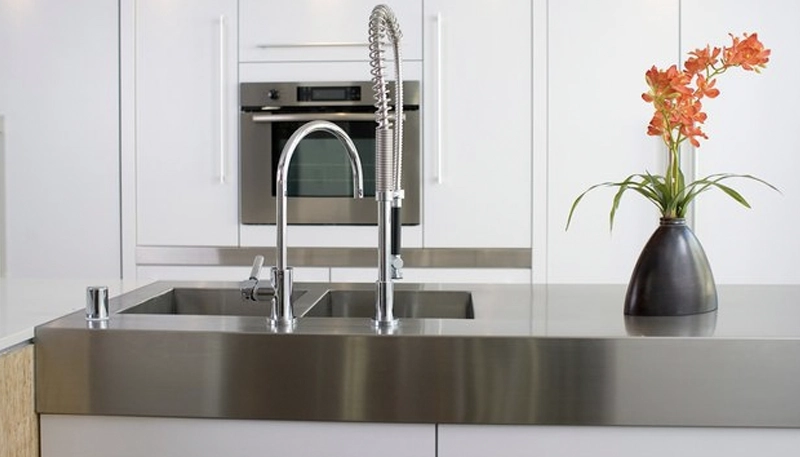
When considering stainless steel countertops for Canadian homes, durability is often the deciding factor. Unlike many traditional countertop materials that rely on surface coatings or sealants, stainless steel delivers performance through its inherent material properties.
In Toronto and GTA kitchens where daily cooking, frequent cleaning, and heavy appliance use are common, stainless steel offers a level of resilience that few surfaces can match.
Stainless steel is highly impact-resistant and will not crack or chip like stone. However, it is important to understand that stainless steel can scratch. These scratches are typically surface-level and do not affect structural integrity.
Rather than being considered damage, light scratches are often seen as part of stainless steel’s natural aging process. Over time, they blend into a uniform texture known as a patina, giving the countertop a lived-in, professional look.
In modern and industrial kitchen designs, this evolving surface character is often considered desirable — similar to how natural wood or leather develops character with age.
The finish you choose plays a major role in how scratches appear over time. In Canadian residential kitchens, the two most common finishes are:
Most homeowners in Toronto and surrounding areas choose brushed finishes because they balance aesthetics with practicality, especially in family kitchens or open-concept layouts.
Stainless steel countertops are extremely tough under impact. Dropped cookware, appliances, or heavy objects will not crack the surface. This makes stainless steel a reliable option for busy households and serious home cooks.
Because stainless steel countertops are fabricated over a solid substrate, they distribute weight evenly and do not require the same level of cabinet reinforcement as heavy natural stones like granite or quartzite.
This can be especially advantageous in condo renovations across downtown Toronto, where cabinet load limits and access logistics must be carefully managed.
Over time, stainless steel develops a consistent, matte-like appearance as micro-scratches accumulate. This aging process does not weaken the surface and does not reduce hygiene or performance.
Unlike stone surfaces that may stain, etch, or discolor, stainless steel maintains its functionality regardless of surface wear. For homeowners who prefer a countertop that looks better with use rather than worse, stainless steel is a strong candidate.
For clients comparing materials based on long-term appearance, stainless steel is often evaluated alongside porcelain countertops, which offer excellent durability with a more uniform aesthetic.
Canadian kitchens experience seasonal humidity changes, especially in Ontario where summers can be humid and winters dry. Stainless steel performs exceptionally well in these conditions.
Because it is non-porous and dimensionally stable, stainless steel does not expand, contract, or absorb moisture. This makes it resistant to warping, cracking, and mold growth — issues that can affect wood-based or laminated surfaces.
This stability also makes stainless steel suitable for use near sinks, dishwashers, and cooking zones without concern for long-term water damage.
A common concern among homeowners is whether stainless steel will make a kitchen feel cold or overly commercial. In practice, this depends entirely on how the material is paired with surrounding elements.
When combined with warm cabinetry, wood accents, or stone backsplashes, stainless steel countertops can feel balanced and inviting rather than sterile. This design approach is increasingly common in Toronto homes that blend modern aesthetics with comfort.
In the next section, we’ll explore maintenance, cleaning routines, and how stainless steel compares to other popular countertop materials in Canadian homes.
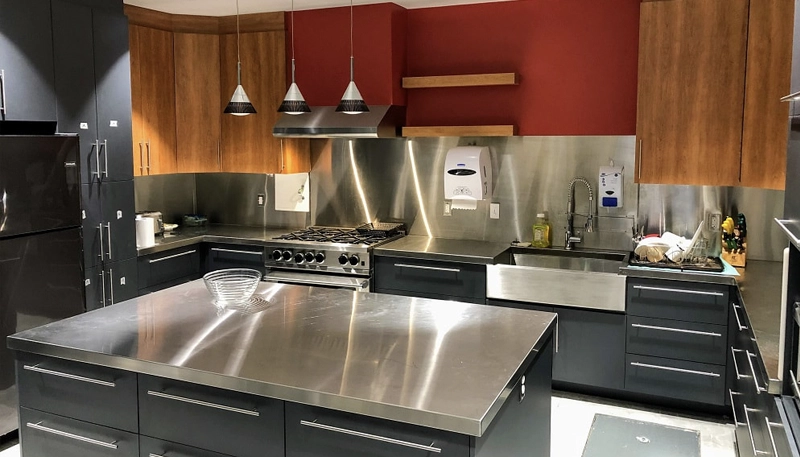
One of the strongest advantages of stainless steel countertops is how effortlessly they handle daily cleaning and long-term hygiene.
















Unlike natural stone surfaces that rely on sealers or engineered materials that can discolor over time, stainless steel remains hygienic and stable with minimal upkeep.
Stainless steel is completely non-porous. This means it does not absorb liquids, oils, bacteria, or food particles — a major advantage over materials like granite, marble, or butcher block.
Because of this property, stainless steel is widely used in professional kitchens, hospitals, and food preparation environments where sanitation standards are extremely high. That same benefit translates directly into residential kitchens.
For Canadian households concerned about cleanliness, allergens, or food safety, stainless steel offers peace of mind that few other countertop materials can match.
Maintaining stainless steel countertops is simple and does not require specialized products. A basic daily routine includes:
Unlike stone countertops, stainless steel does not need sealing, polishing compounds, or reconditioning treatments. This makes it an excellent choice for homeowners who want a low-maintenance surface without compromising performance.
Fingerprints are one of the most common concerns raised by homeowners considering stainless steel. In practice, the visibility of fingerprints depends heavily on the finish.
Brushed stainless steel — the most popular option for residential kitchens — naturally minimizes fingerprints and smudges due to its directional grain. Light marks are easily removed with a quick wipe and do not stain or damage the surface.
For homes with children or high daily use, brushed finishes offer the best balance between appearance and practicality.
Although stainless steel is extremely durable, improper cleaning products can dull the finish over time. To preserve the surface, homeowners should avoid:
These products are unnecessary and can compromise the visual finish, even though they will not structurally damage the countertop.
Stainless steel countertops handle heat exceptionally well. Hot pans, boiling pots, and countertop appliances can be placed directly on the surface without concern for scorching, cracking, or discoloration.
This makes stainless steel particularly attractive for homeowners who cook frequently or use professional-grade appliances — a common trend in Toronto renovations and custom kitchen projects.
In comparison, materials like engineered quartz can be sensitive to heat exposure, while natural stones may require protective measures. For this reason, stainless steel is often evaluated alongside porcelain countertops, which also offer excellent heat resistance.
For families with children or pets, stainless steel offers an added layer of reassurance. Its non-porous surface prevents bacteria buildup and allows for fast, thorough cleaning after spills, food prep, or pet-related messes.
This makes stainless steel an increasingly popular choice in modern Canadian homes that prioritize cleanliness, durability, and practical design.
Over the long term, stainless steel countertops require virtually no maintenance beyond routine cleaning. There is no need for resealing, refinishing, or professional restoration.
As the surface ages, minor scratches blend into the overall texture, creating a consistent and professional appearance rather than visible damage.
For homeowners seeking a countertop that stays hygienic, performs consistently, and ages gracefully, stainless steel stands out as one of the most practical choices available.
In the next section, we’ll compare stainless steel directly with other popular countertop materials and help determine where it makes the most sense in Canadian kitchen design.
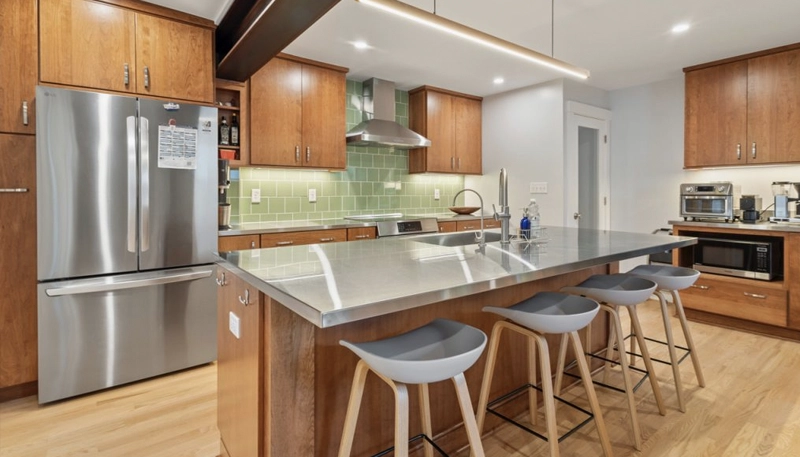
When evaluating stainless steel countertops, most Canadian homeowners naturally compare them with more common options such as quartz, granite, porcelain, and natural stone. Each material has its strengths, but stainless steel occupies a unique position focused on performance, hygiene, and long-term reliability.
Quartz countertops are popular across Toronto and the GTA due to their uniform appearance and low maintenance. However, quartz is an engineered surface that contains resins, which limits its heat resistance.
Stainless steel outperforms quartz in high-heat environments. Hot pots, pans, and countertop appliances can be placed directly on stainless steel without risk of damage, while quartz requires heat protection.
In terms of hygiene, stainless steel remains fully non-porous and bacteria-resistant, whereas quartz relies on resin bonding for its non-porous properties. For homeowners who prioritize cooking performance and food safety, stainless steel often offers a more professional-grade solution.
Those comparing options can review available quartz countertops alongside stainless steel to determine which aligns better with their lifestyle.
Granite and other natural stones provide unmatched natural beauty and uniqueness. However, they require periodic sealing and are vulnerable to staining and etching if not properly maintained.
Stainless steel eliminates these concerns entirely. It does not stain, does not require sealing, and cannot crack or chip under normal residential use.
For homeowners drawn to natural materials but seeking lower maintenance, stainless steel is often compared with granite countertops during the material selection process.
Porcelain countertops are one of the closest competitors to stainless steel in terms of durability. Both materials are heat-resistant, non-porous, and suitable for modern kitchens.
The key difference lies in aesthetics and aging. Porcelain maintains a consistent appearance over time, while stainless steel develops a natural patina that reflects use. Homeowners who prefer a surface that evolves with time often gravitate toward stainless steel.
Those seeking a more uniform, stone-inspired look may prefer porcelain countertops, while stainless steel appeals to industrial, modern, and professional-style kitchens.
In competitive real estate markets like Toronto, countertop selection can influence buyer perception. Stainless steel is generally viewed as a premium, niche material rather than a mass-market choice.
In modern condos, lofts, and custom homes, stainless steel is often seen as a high-end feature that appeals to design-savvy buyers. However, in more traditional homes, it may not have the same broad appeal as quartz or granite.
For homeowners planning to sell in the near future, stainless steel works best when paired with cohesive modern design elements and quality cabinetry.
Stainless steel countertops are best suited for:
They may be less ideal for homeowners seeking traditional warmth, heavy natural veining, or a classic stone appearance.
Because stainless steel countertops are custom-fabricated, precision measurement and installation are critical. Seam placement, edge detailing, and integration with sinks or backsplashes require professional planning.
For accurate layouts and flawless execution, stainless steel countertops are often installed as part of a full kitchen countertop project that includes templating and fabrication oversight.
Stainless steel countertops offer unmatched hygiene, heat resistance, and durability in Canadian kitchens. While they may not suit every design style, they excel in environments where performance, cleanliness, and longevity are top priorities.
For homeowners seeking a professional-grade surface with minimal maintenance and a bold modern presence, stainless steel remains one of the most technically advanced countertop options available.