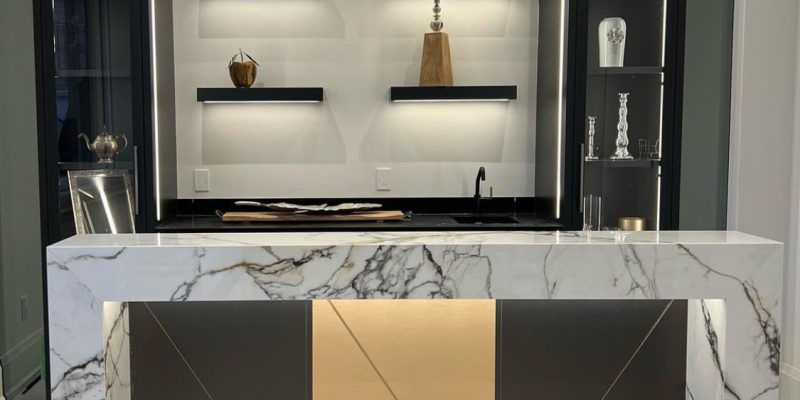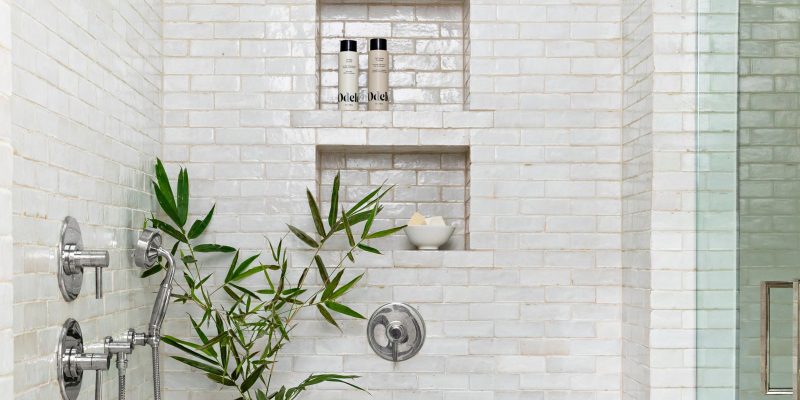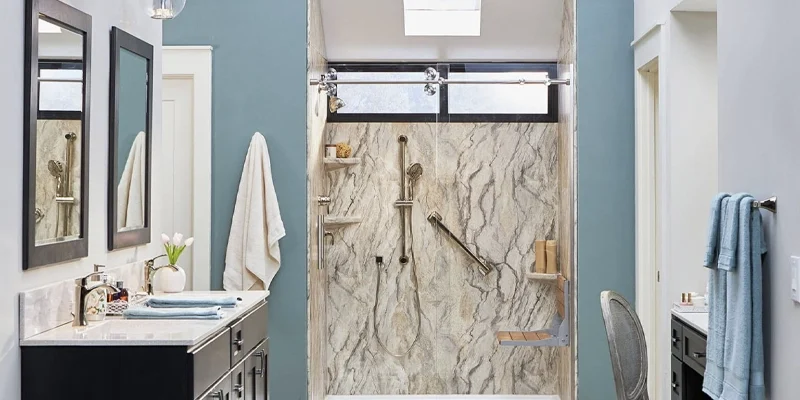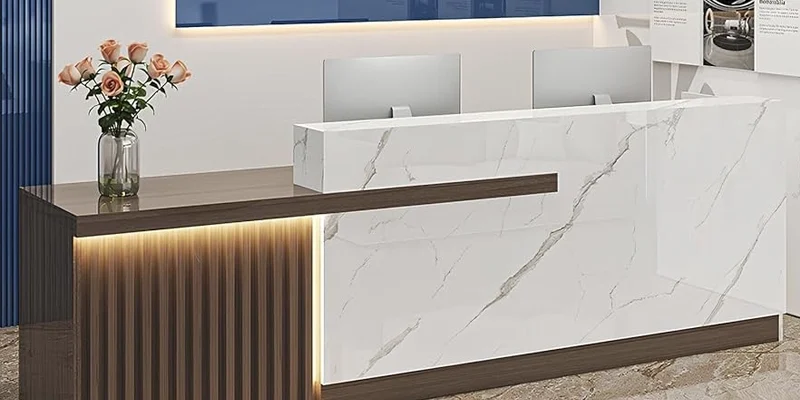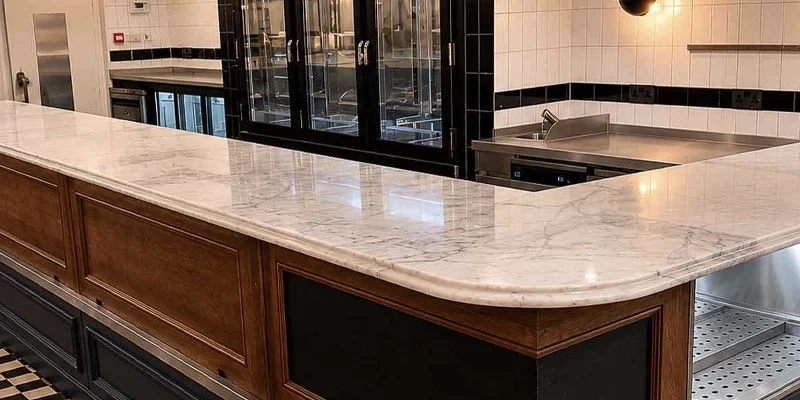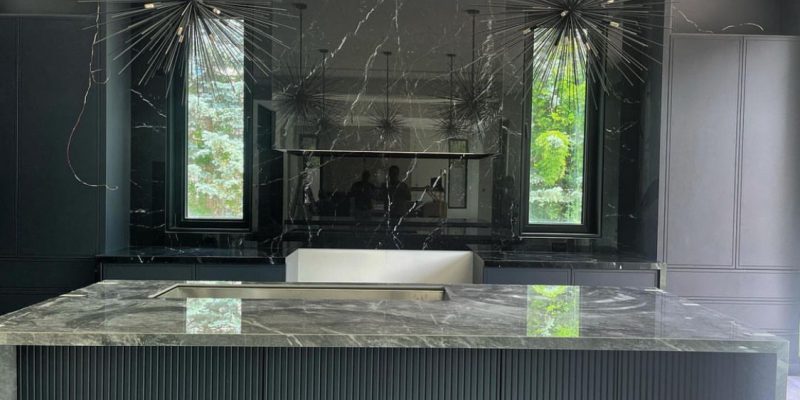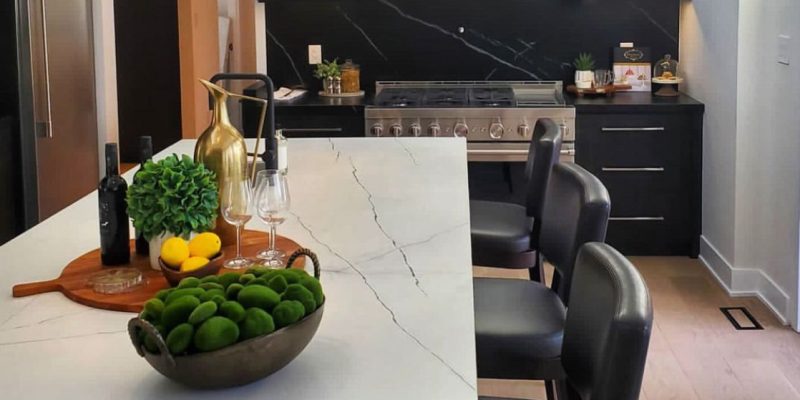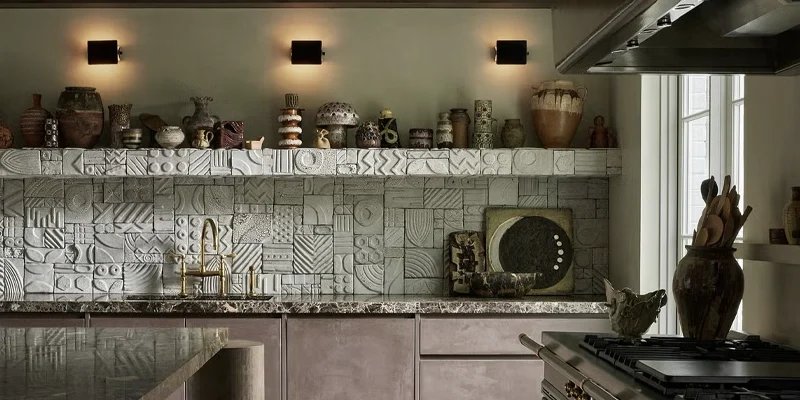
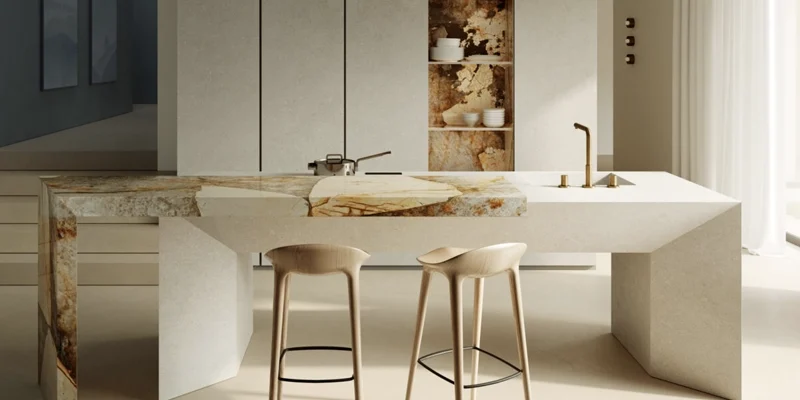
Porcelain countertops pros and cons should be weighed together before the material is selected for a kitchen, island, backsplash or vanity. Porcelain offers very low water absorption, strong material heat resistance, a hard wear-resistant surface and flexible large-format design options. Its limitations are concentrated around exposed edges, corners, cutouts, seams and fabrication complexity rather than the broad centre of the slab.
This makes porcelain a strong candidate for some projects, but not an automatic upgrade over quartz, granite or other surfaces. The right decision depends on the selected product, finish, thickness, edge construction, cabinet support, appliance layout and the experience of the fabricator.
This guide focuses on the practical advantages, disadvantages and best uses of porcelain countertops. Product colours, slab collections and purchasing options remain on the dedicated porcelain category page.
Quick Answer
Porcelain is well suited to homeowners who value low absorption, heat resistance, surface wear resistance and slim architectural details. It may be less suitable when the design includes impact-prone edges, highly complex cutouts, difficult delivery access or fabrication by a team without large-format porcelain experience.
Porcelain countertop slabs are dense ceramic products designed for large architectural surfaces. Their exact composition, reinforcement, finish and approved uses vary by manufacturer, so the product name alone does not provide enough information for a final specification.
For this guide, the important question is not how many colours or collections are available. It is how the selected slab performs within the proposed countertop design.
Before comparing advantages and disadvantages, confirm:
These details can change whether a particular porcelain product is suitable for a large island, narrow countertop section, full-height backsplash or impact-prone work area.
The finished countertop includes more than the slab. Seams, adhesives, supports, repairs, sink mounting, cabinet conditions and appliance clearances all affect performance. A benefit associated with the porcelain body should not automatically be applied to every component of the installation.
For example, the slab itself generally tolerates heat well, while a seam, repair compound or nearby cabinet finish may require greater protection. The same distinction applies to stain resistance and cleaning.
| Decision Factor | Main Benefit | Main Limitation | Confirm Before Ordering |
|---|---|---|---|
| Water and spills | Very low water absorption | Residue can remain on textured finishes or around joints | Finish-specific cleaning guidance |
| Heat | Strong material heat resistance | Seams, repairs and nearby finishes may be less tolerant | Appliance clearances and trivet guidance |
| Surface wear | Hard, wear-resistant surface | Not scratch-proof and may show metal transfer | Approved tools and care products |
| Edges and openings | Supports slim and mitred details | Edges, corners and narrow sections can chip | Edge construction, support and fabricator experience |
| Design continuity | Large-format countertop, island and backsplash applications | Vein and edge appearance require layout planning | Full-slab layout and exposed-edge treatment |
Countertop-grade porcelain generally absorbs very little liquid. This supports strong resistance to many common household spills and usually removes the need for penetrating sealer on the porcelain body itself.
Low absorption does not mean every visible mark is an absorbed stain. Dried food, hard-water deposits, metal transfer and cleaner residue can remain on the surface. Our guide to porcelain countertop stains and cleaning explains these differences in detail.
Porcelain generally performs well around heat, making it suitable for many active kitchen applications. Trivets are still advisable because seams, adhesives, repairs, appliances and surrounding cabinetry may respond differently from the slab.
Homeowners comparing materials can review the dedicated quartz, granite and porcelain heat-resistance guide.
The broad porcelain surface generally resists routine wear well. It can be practical for preparation areas and frequently cleaned kitchens when the selected finish is maintained correctly.
Porcelain should not be described as scratch-proof. Cutting boards remain recommended, and metal cookware or tools may leave visible transfer marks.
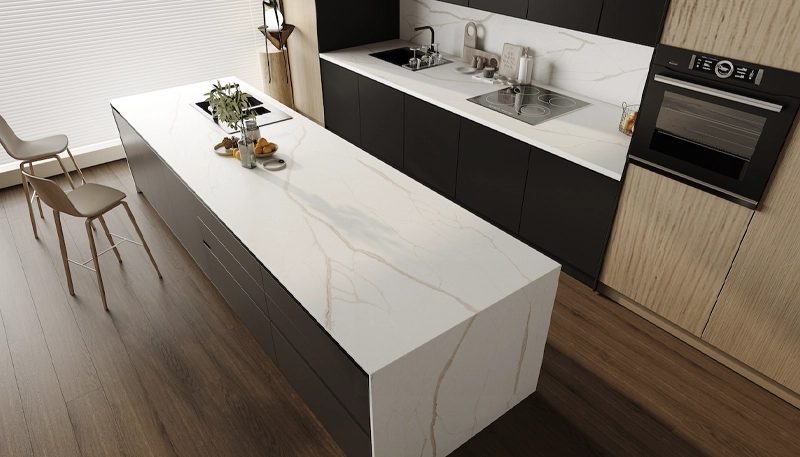
Porcelain can support slim profiles, waterfall panels and coordinated countertop-and-backsplash applications. This is a practical design advantage, but the benefit depends on slab dimensions, pattern direction, edge treatment and safe delivery access.
Because some designs are concentrated at the surface, exposed edges may not match the face pattern. Mitred construction or another approved edge solution may be needed to create the intended appearance.
Most porcelain countertops can be cleaned with warm water, a soft cloth and a mild product approved for the selected finish. Textured surfaces may require more detailed rinsing because residue can collect within the surface structure.
Seams, caulking and repaired areas may have separate care requirements and should not automatically be treated like the porcelain body.
Advantages in Context
Porcelain’s main advantages are strongest across the broad slab surface. Edge design, cutouts, seams, support and fabrication quality determine whether those benefits translate successfully into the completed countertop.
For complete measurement, fabrication and installation information, review TecCorp Stone’s kitchen countertop installation service.
The next section examines the disadvantages of porcelain countertops, including chipping risk, complex cutouts, seam visibility, repair limitations and the need for specialist fabrication.
Porcelain countertops pros and cons should be weighed together before the material is selected for a kitchen, island, backsplash or vanity. Porcelain offers very low water absorption, strong material heat resistance, a hard wear-resistant surface and flexible large-format design options. Its limitations are concentrated around exposed edges, corners, cutouts, seams and fabrication complexity rather than the broad centre of the slab.
This makes porcelain a strong candidate for some projects, but not an automatic upgrade over quartz, granite or other surfaces. The right decision depends on the selected product, finish, thickness, edge construction, cabinet support, appliance layout and the experience of the fabricator.
This guide focuses on the practical advantages, disadvantages and best uses of porcelain countertops. Product colours, slab collections and purchasing options remain on the dedicated porcelain category page.
Quick Answer
Porcelain is well suited to homeowners who value low absorption, heat resistance, surface wear resistance and slim architectural details. It may be less suitable when the design includes impact-prone edges, highly complex cutouts, difficult delivery access or fabrication by a team without large-format porcelain experience.
Porcelain countertop slabs are dense ceramic products designed for large architectural surfaces. Their exact composition, reinforcement, finish and approved uses vary by manufacturer, so the product name alone does not provide enough information for a final specification.
For this guide, the important question is not how many colours or collections are available. It is how the selected slab performs within the proposed countertop design.
Before comparing advantages and disadvantages, confirm:
These details can change whether a particular porcelain product is suitable for a large island, narrow countertop section, full-height backsplash or impact-prone work area.
The finished countertop includes more than the slab. Seams, adhesives, supports, repairs, sink mounting, cabinet conditions and appliance clearances all affect performance. A benefit associated with the porcelain body should not automatically be applied to every component of the installation.
For example, the slab itself generally tolerates heat well, while a seam, repair compound or nearby cabinet finish may require greater protection. The same distinction applies to stain resistance and cleaning.
| Decision Factor | Main Benefit | Main Limitation | Confirm Before Ordering |
|---|---|---|---|
| Water and spills | Very low water absorption | Residue can remain on textured finishes or around joints | Finish-specific cleaning guidance |
| Heat | Strong material heat resistance | Seams, repairs and nearby finishes may be less tolerant | Appliance clearances and trivet guidance |
| Surface wear | Hard, wear-resistant surface | Not scratch-proof and may show metal transfer | Approved tools and care products |
| Edges and openings | Supports slim and mitred details | Edges, corners and narrow sections can chip | Edge construction, support and fabricator experience |
| Design continuity | Large-format countertop, island and backsplash applications | Vein and edge appearance require layout planning | Full-slab layout and exposed-edge treatment |
Countertop-grade porcelain generally absorbs very little liquid.
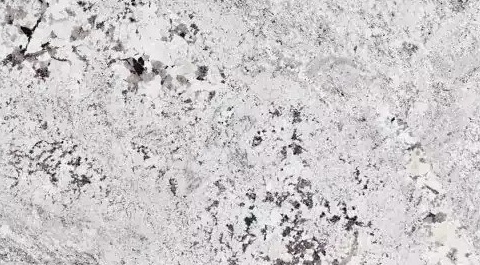






Low absorption does not mean every visible mark is an absorbed stain. Dried food, hard-water deposits, metal transfer and cleaner residue can remain on the surface. Our guide to porcelain countertop stains and cleaning explains these differences in detail.
Porcelain generally performs well around heat, making it suitable for many active kitchen applications. Trivets are still advisable because seams, adhesives, repairs, appliances and surrounding cabinetry may respond differently from the slab.
Homeowners comparing materials can review the dedicated quartz, granite and porcelain heat-resistance guide.
The broad porcelain surface generally resists routine wear well. It can be practical for preparation areas and frequently cleaned kitchens when the selected finish is maintained correctly.
Porcelain should not be described as scratch-proof. Cutting boards remain recommended, and metal cookware or tools may leave visible transfer marks.
Porcelain can support slim profiles, waterfall panels and coordinated countertop-and-backsplash applications. This is a practical design advantage, but the benefit depends on slab dimensions, pattern direction, edge treatment and safe delivery access.
Because some designs are concentrated at the surface, exposed edges may not match the face pattern. Mitred construction or another approved edge solution may be needed to create the intended appearance.
Most porcelain countertops can be cleaned with warm water, a soft cloth and a mild product approved for the selected finish. Textured surfaces may require more detailed rinsing because residue can collect within the surface structure.
Seams, caulking and repaired areas may have separate care requirements and should not automatically be treated like the porcelain body.
Advantages in Context
Porcelain’s main advantages are strongest across the broad slab surface. Edge design, cutouts, seams, support and fabrication quality determine whether those benefits translate successfully into the completed countertop.
For complete measurement, fabrication and installation information, review TecCorp Stone’s kitchen countertop installation service.
The next section examines the disadvantages of porcelain countertops, including chipping risk, complex cutouts, seam visibility, repair limitations and the need for specialist fabrication.
Porcelain countertop performance cannot be judged by thickness alone. A thinner slab is not automatically weak, and a thicker slab is not automatically more durable. Product construction, cabinet conditions, substrate requirements, cutout design and installation support all influence the completed surface.
Before selecting a thickness, confirm:
A straight edge can preserve a slim architectural profile, but it may reveal the slab body where the surface design does not continue through the full thickness.
A mitred edge joins separate pieces to create the appearance of a thicker countertop. This approach can improve pattern continuity across the front edge, but it adds fabrication complexity and creates a joint that requires accurate cutting, alignment and installation.
Neither edge type eliminates chipping risk. Exposed corners, appliance openings and high-contact areas should be detailed according to the selected product and expected use.
For a more detailed explanation of slab thickness, edge construction and application planning, review the guide to 12mm porcelain countertops and edge design.
Most porcelain countertops require straightforward routine cleaning. Fresh spills can generally be removed with warm water, a soft cloth and a mild cleaner approved for the selected finish.
Homeowners should still distinguish between the porcelain slab and other parts of the installation. Seams, silicone, adhesives and chip repairs may respond differently to cleaning products.
Most countertop-grade porcelain products have very low water absorption and generally do not require penetrating sealer. Applying an unsuitable sealer may leave haze, streaks or surface residue.
Product-specific instructions take priority, particularly for specialty or textured finishes. A treatment intended for nearby grout or natural stone should not automatically be applied across the porcelain surface.
Detailed guidance for coffee, oil, wine, metal transfer, hard-water deposits and textured finishes is available in our guide explaining whether porcelain countertops stain.
Porcelain should be fabricated from verified site measurements rather than approximate cabinet plans. Final dimensions, wall conditions, appliance specifications, overhangs and delivery access should be confirmed before the slab is cut.
Important planning details include:
Large panels may reduce the number of seams, but the largest possible section is not always the safest section. Transportation, carrying access and installation conditions may justify a planned joint.
Homeowners planning a complete kitchen project can review TecCorp Stone’s kitchen countertop measurement, fabrication and installation service.
Porcelain countertop cost should be evaluated as a completed project rather than through a material rate alone. A straightforward perimeter layout may require less material and fabrication than a project with waterfalls, mitred edges, several openings or difficult installation access.
Cost can be influenced by:
A lower material price does not necessarily produce a lower completed project cost when additional slabs, complex mitres or difficult handling are required.
For a focused budgeting explanation, review the guide to porcelain countertop cost and thickness considerations.
Porcelain may be a strong fit for homeowners who prioritize:
It may be less appropriate when the design contains many impact-prone corners, highly complex openings, difficult-to-replace material or an installation team without relevant porcelain experience.
The final decision should reflect the complete project rather than one performance advantage. Homeowners comparing alternatives can review the dedicated porcelain vs quartz comparison and porcelain vs granite guide.
Decision Summary
Choose porcelain when its low absorption, heat performance and architectural flexibility directly support the project. Reconsider it when edge exposure, repairability, access conditions or limited fabrication expertise create more risk than benefit.
They can be an effective choice when low absorption, heat resistance, surface wear resistance and large-format design are priorities. Their suitability depends on the product, layout and fabrication quality.
The main disadvantages are edge chipping, complex fabrication, visible seams, surface-pattern limitations and repairs that may remain noticeable.
They can chip under concentrated impact, particularly around exposed edges, corners, sink openings, cooktop cutouts and narrow sections.
Porcelain generally resists household staining well because it absorbs very little liquid. Surface residue, metal marks and discolouration around seams or repairs can still occur.
Most countertop-grade porcelain does not require penetrating sealer. The exact product and finish instructions should be checked before applying any treatment.
The porcelain body generally provides strong heat resistance, but trivets remain advisable to protect seams, adhesives, repairs and surrounding finishes.
No. The surface is hard and wear resistant, but it should not be described as completely scratch-proof. Cutting boards and appropriate care remain recommended.
A properly specified and supported 12mm product can be suitable for countertop applications. Suitability depends on manufacturer approval, cabinet support, openings, overhangs and fabrication details.
Some small chips may be filled or colour matched, but the repair may not reproduce the original pattern, texture or sheen exactly.
No material is universally better. Porcelain offers particular advantages in heat performance, low absorption and architectural design, while quartz and granite may better suit other priorities.
Understanding the pros and cons of porcelain countertops helps homeowners determine whether the material supports their design, maintenance expectations and installation conditions.
After evaluating the practical advantages and limitations, review available products on TecCorp Stone’s porcelain category page or request project-specific guidance before selecting a slab.