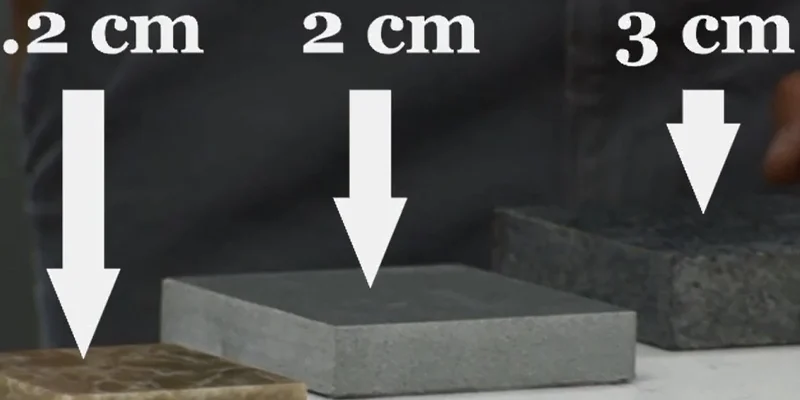
Countertop thickness affects more than the visual weight of a kitchen surface. It can influence edge construction, cabinet compatibility, support requirements, sink details, overhang planning and the way an island relates to the surrounding cabinetry.
Most kitchen countertop projects begin with a standard slab format, commonly described as 2 cm or 3 cm. However, the visible edge can be made slimmer or substantially thicker through product selection and fabrication techniques such as mitred or laminated edge construction.
A thicker-looking countertop is not necessarily a solid block of material, and a thinner slab is not automatically unsuitable for a kitchen. The correct choice depends on the exact surface, manufacturer requirements, cabinet condition, layout, openings and intended design.
This guide explains how to compare standard and custom countertop thicknesses for quartz, granite, quartzite, marble and porcelain. It also distinguishes actual slab thickness from visual edge thickness so homeowners can evaluate appearance and structural requirements separately.
Quick Selection Rule
Choose thickness only after confirming the exact material, cabinet design, edge construction, openings and support conditions. A visually thick edge may be fabricated from a standard slab, while a slim surface may still require carefully planned support.
The measurements used in countertop discussions are often nominal. Actual product dimensions can vary slightly by manufacturer, material and collection, so the selected slab specification should be confirmed before cabinets, appliances and edge details are finalized.
| Thickness Direction | Typical Design Effect | Main Planning Considerations |
|---|---|---|
| Slim profile | Light, minimal and visually precise | Product format, backing, edge finishing, support and cabinet alignment |
| Approximately 2 cm | Refined standard profile | Material-specific support, exposed edges, openings and installation system |
| Approximately 3 cm | Substantial standard appearance | Cabinet capacity, spans, overhangs, cut-outs and slab characteristics |
| Built-up or mitred edge | Creates a custom thick appearance | Joint quality, pattern alignment, corner construction and fabrication complexity |
| Mixed thicknesses | Separates island and perimeter design roles | Finished heights, material transitions, visual balance and appliance alignment |
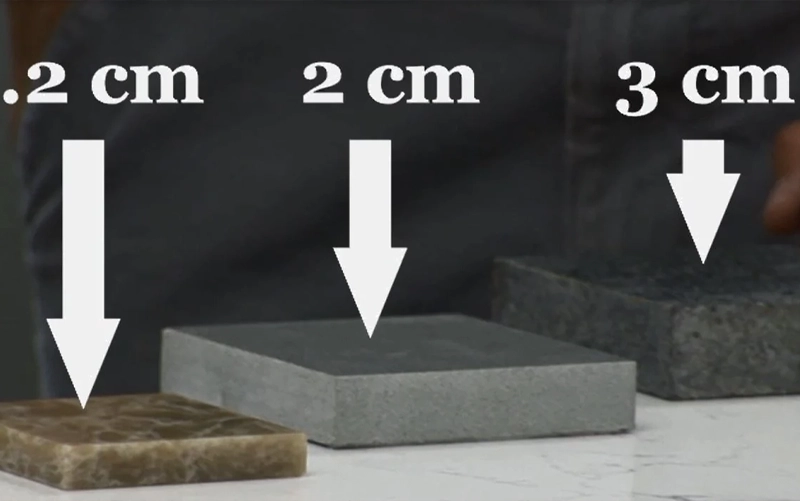
Actual slab thickness is the physical depth of the manufactured or quarried material. Visual edge thickness is the depth that appears at the finished front edge of the countertop.
These measurements are not always the same. A standard slab can be fabricated with an additional edge section to create the appearance of a deeper countertop without using a solid slab of the same visible thickness.
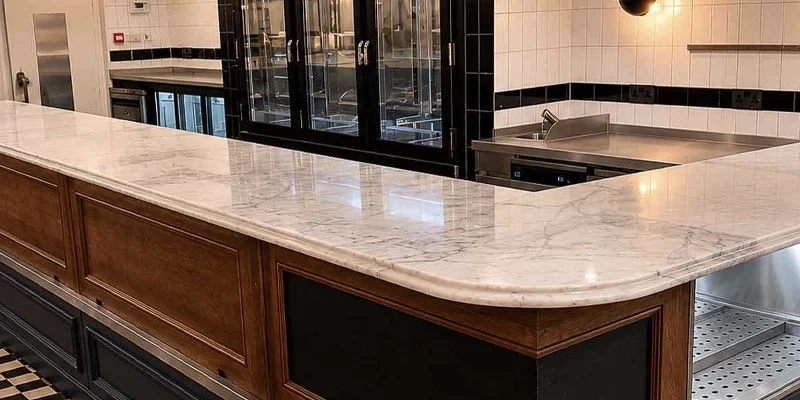
A mitred edge generally uses angled cuts to connect the horizontal countertop with a vertical edge section. When properly planned, the pattern can continue around the edge and create the appearance of a substantially thicker slab.
Mitred construction may be used for:
The result depends on fabrication precision, material characteristics, pattern placement and the quality of the finished joint. Strongly veined products require additional layout planning because an abrupt pattern change can make the joint more noticeable.
A laminated edge uses an additional material strip attached beneath the countertop edge to increase its visible depth. The exact method and suitability depend on the selected material and edge profile.
This construction should not be presented as a solid slab of the same thickness. Homeowners should review a finished sample or detailed edge drawing to understand where the joint will appear and how the pattern will align.
Approximately 2 cm and 3 cm slabs are common in quartz and many natural-stone projects, but availability varies between manufacturers, stone types and individual slabs.
A 2 cm surface can create a slimmer appearance and may suit modern cabinetry, compact kitchens and projects where the countertop should remain visually light.
Depending on the material and layout, additional backing or support may be required. This should be determined by the product specifications, cabinet design, openings, spans and fabrication plan rather than by one universal rule.
A 3 cm slab creates a more substantial standard edge and is widely used for kitchen countertops and islands. It may reduce the need for certain forms of continuous backing, but it does not eliminate support requirements around long spans, overhangs, openings or unstable cabinets.
Material thickness alone cannot compensate for poor cabinet preparation or an unsupported layout.
Countertop thickness affects how the surface relates to cabinet doors, appliance panels, backsplash height and the overall scale of the room.
Slim profiles can support flat-panel cabinetry, restrained hardware and integrated appliances. They may be particularly effective when the design emphasizes horizontal lines and minimal visual weight.
The cabinets and substrate must be accurately prepared because alignment issues can become more visible beneath a thin edge.
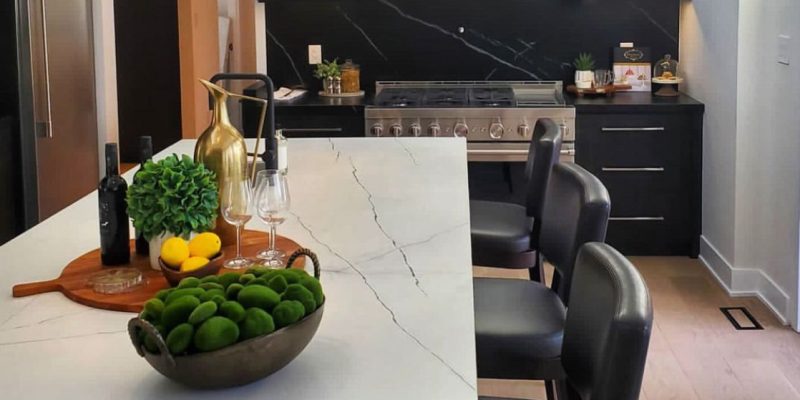
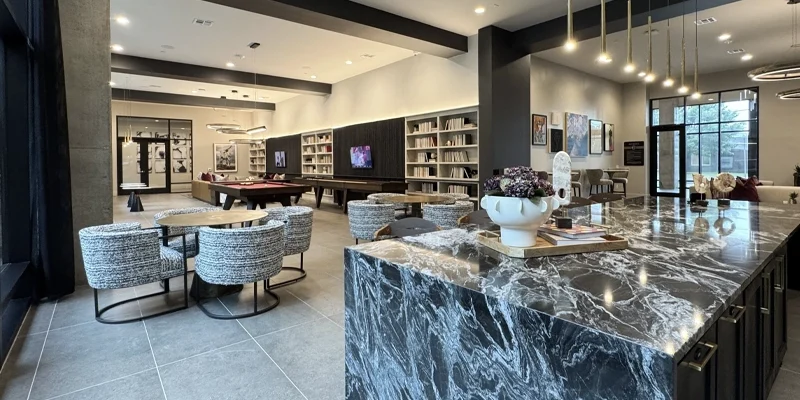
A thick-looking countertop can give an island greater visual weight and help it function as an architectural focal point. The effect is most successful when the edge depth is proportionate to the island, cabinetry and surrounding room.
Excessive visual thickness can overwhelm shallow cabinets or compact layouts. It can also affect the relationship between the finished counter height, seating and appliance openings.
Some kitchens use a more substantial island edge with a slimmer perimeter countertop. This can distinguish the island as a gathering or feature area without applying the same fabrication detail throughout the room.
The transition should be intentional. Finished heights, material patterns, edge profiles and cabinet proportions must still appear coordinated.
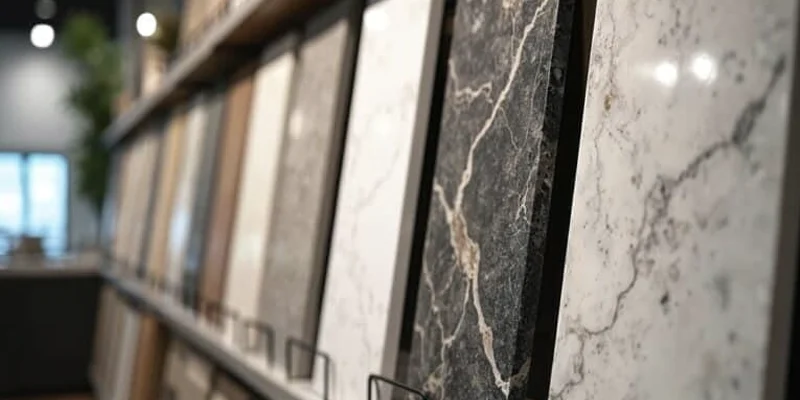
Countertop thickness cannot be selected independently from the material. Quartz, granite, quartzite, marble and porcelain differ in slab formats, edge construction, fabrication behaviour and support requirements.
The available thickness should be confirmed for the exact product or slab before the cabinet height, edge profile, sink details and appliance clearances are finalized.
Engineered quartz is commonly available in approximately 2 cm and 3 cm formats, although dimensions and availability vary by manufacturer and collection.
A 2 cm quartz slab can create a slimmer contemporary profile. Depending on the layout, it may use additional backing or a support system beneath the surface. The requirement should be determined from the product specifications, cabinet construction, openings and spans.
A 3 cm quartz slab creates a deeper standard edge and is frequently selected for kitchens and islands. It may simplify some edge and support details, but it still requires stable cabinets and suitable reinforcement where the layout includes long overhangs, large openings or unsupported sections.
Mitred or built-up quartz edges can create the appearance of a substantially thicker countertop. Large-scale veining should be planned carefully so the horizontal surface and vertical edge appear visually connected.
Browse available quartz countertop materials to compare product formats, colours and patterns.
Granite and quartzite are natural stones supplied as individual slabs. Approximately 2 cm and 3 cm formats may be available, but thickness, slab dimensions and material characteristics vary.
A thicker natural-stone slab is not automatically appropriate for every span or overhang. The selected slab may contain veins, fissures, mineral transitions or other natural features that influence where openings, seams and supports should be placed.
Thick-looking granite or quartzite edges are often created through mitred or laminated construction rather than by using a solid block of matching depth.
Actual slabs should be reviewed before fabrication because pattern direction and natural variation affect how successfully a built-up edge or waterfall panel can be aligned.
Marble thickness should be considered with the stone’s mineral structure, finish, edge profile and intended application. Decorative edges and narrow sections around openings may require additional planning because marble can be more susceptible to scratching, etching and edge damage than many granite or quartzite slabs.
A thicker visual edge can suit marble islands and feature surfaces, but it does not eliminate the need for careful handling, suitable support and slab-specific fabrication decisions.
Porcelain countertop products are often supplied in slimmer formats than quartz and natural stone. Exact thickness varies by manufacturer and application.
A thin porcelain slab can create a precise, contemporary appearance, but the complete installation may include a backing or support system specified for the product. Edge construction, inside corners and openings require careful fabrication.
When a deep porcelain edge is desired, mitred sections may be used to create the visible thickness. Pattern alignment and exposed edge treatment should be reviewed because the body of the slab may not visually match the printed surface.
A thin slab should not be assumed to be lightweight, simple to install or suitable for every unsupported layout. Product-specific fabrication and installation requirements remain essential.
Countertops depend on the cabinetry beneath them. Thickness can influence the support strategy, but it cannot correct cabinets that are unstable, out of level or poorly connected.
Before final measurement, base cabinets should generally be:
The required support depends on the material, slab thickness, cabinet construction, section dimensions, openings and overhangs. A universal rule should not be applied to every countertop project.
Some thinner countertop systems may use continuous backing or another approved substrate. The backing can influence finished height, edge appearance, sink mounting and the relationship between the countertop and cabinet doors.
The material and thickness of any substrate should follow the countertop manufacturer or fabricator’s requirements. Unsupported or uneven backing can transfer stress into the finished surface.
Sink and cooktop cut-outs remove material from the slab and create narrower sections around the opening.


Heavy sinks should use an appropriate support system rather than relying only on adhesive applied to the underside of the countertop.
Kitchen islands often make countertop thickness more visible because they include exposed edges, seating areas and longer sightlines. A substantial edge can help a large island feel proportionate, while a slim profile may suit a smaller or more minimal design.
The selected thickness should be coordinated with:
Countertop overhangs should not be approved based only on slab thickness. Material properties, span, cabinet structure, edge details and the location of nearby openings all affect the support requirement.
Supports may include brackets, concealed steel, structural panels, legs or other project-specific systems. The appropriate method should be confirmed before fabrication so the countertop, cabinets and seating design can be coordinated.
A visually thick edge does not necessarily increase the structural capacity of the horizontal slab. A mitred front section may change appearance without functioning as reinforcement for the overhang.
Increasing the actual or built-up thickness can affect the space available beneath an island overhang. Seating comfort depends on the finished countertop height, chair or stool height, support placement and clear knee space.
These dimensions should be evaluated together. A deep decorative edge or concealed support system should not interfere with comfortable seating or cabinet access.
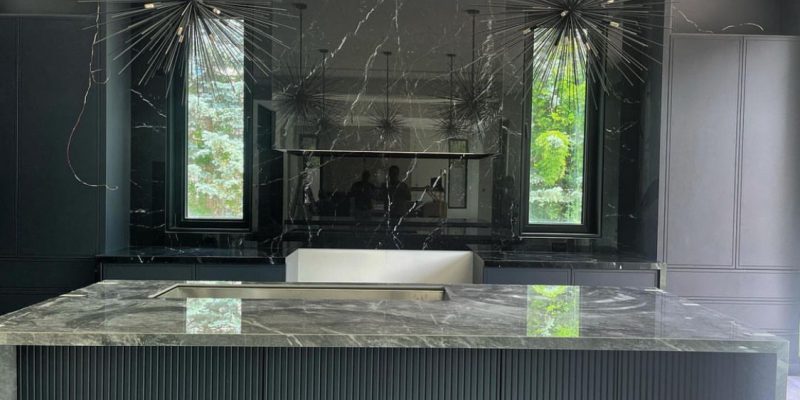
A waterfall countertop continues vertically from the horizontal surface toward the floor or side of the cabinetry. It is a design and fabrication feature rather than a standard edge profile.
Waterfall panels make slab thickness, pattern direction and joint quality highly visible. The horizontal and vertical sections should be planned together before the slab is cut.
Natural stone and strongly veined manufactured products require careful layout at the mitred joint. The pattern may be aligned to create continuity, but exact matching depends on slab dimensions, vein direction, available material and fabrication tolerances.
Bookmatching or seamless vein continuation should not be assumed unless it is specifically reviewed and approved during layout planning.
Walls, cabinet panels and floors may not be perfectly straight or square. These conditions can affect the visible joint and the way the waterfall panel meets the floor.
The panel should not be expected to correct cabinet or flooring irregularities. Final measurement should identify conditions that may require adjustment, controlled gaps or additional finishing details.
A deep mitred edge can give an island greater visual weight without requiring a solid slab of the same apparent thickness. The depth should remain proportionate to the cabinet face, island size and surrounding kitchen.
Fabrication complexity increases when the design includes:
Countertop thickness affects how sinks, faucets, cooktops and appliance panels relate to the finished surface. Product specifications should be reviewed before the slab is fabricated.
With an undermount sink, the finished countertop edge around the opening remains visible. Material thickness and edge finishing influence the appearance of the sink reveal and the perceived depth of the work surface.
The sink support method should be planned independently from the decorative edge. A thick-looking mitred edge at the front of the countertop does not provide support beneath the sink opening.
Drop-in sinks cover part of the countertop opening, but the cut-out still requires accurate sizing and suitable support around narrow sections.
Apron-front sinks affect both the cabinet and countertop. The cabinet opening, sink position and countertop thickness should be coordinated before final measurement.
Cooktops have manufacturer-defined cut-out, clearance and support requirements. Countertop thickness, backing and cabinet construction can affect whether the appliance sits correctly and receives adequate ventilation.
Built-in ovens, dishwashers and cabinet panels should also be reviewed because changes in finished countertop height can influence appliance alignment and adjacent reveals.
Technical Planning Rule
Finalize the sink, cooktop, appliance specifications, cabinet design and intended edge construction before countertop measurement and fabrication.
Countertop thickness affects project cost through material format, fabrication complexity, edge construction, support requirements and installation details. A thicker-looking countertop does not always require a thicker solid slab, but mitred and laminated edges add fabrication work.
Cost may be influenced by:
A standard 2 cm or 3 cm edge may require less fabrication than a deep custom edge. However, the lowest-cost slab format is not always the most economical choice when additional backing, edge treatment or support must be added.
Material thickness is only one component of the quotation. A standard slab with a complex mitred edge may require more labour than a thicker slab with a simple eased edge.
Homeowners should compare quotations based on the complete scope, including:
For broader project pricing considerations, review the countertop installation cost guide.
Countertop thickness does not directly determine stain resistance, porosity or cleaning requirements. Those characteristics depend mainly on the selected material, finish and product specifications.
Thickness can, however, influence edge shape, visible joints and vulnerability around corners and openings.
Sharp exposed corners can be vulnerable to concentrated impact regardless of slab thickness. A deeper edge may appear more substantial, but it is not automatically resistant to chipping.
Durability depends on:
Softened, eased or subtly bevelled edges may reduce sharpness and make minor impact less noticeable. Decorative and built-up edges should be evaluated for cleaning access and visible joint lines.
A well-fabricated mitred or laminated edge should create a controlled finished joint. Cleaning requirements depend on the edge shape, surface finish and quality of the connection.
Highly decorative profiles may require more detailed wiping than a simple eased edge. Residue can become more visible where curves, grooves or textured finishes are used.
For a detailed comparison of edge shapes, review the countertop edge profiles guide.
Final Selection Checklist
Confirm the material, actual slab thickness, visible edge depth, cabinet condition, support system, overhangs, openings, appliance specifications and finished countertop height before fabrication begins.
Neither thickness is universally better. The appropriate choice depends on the material, cabinet design, support requirements, openings, edge construction and desired appearance.
Some 2 cm countertop systems may require backing or another approved support method, while others use different installation details. The requirement should follow the selected product and project design.
Thickness alone does not determine whether an overhang is adequately supported. Material, overhang depth, span, cabinet structure and nearby openings must also be evaluated.
Many extra-thick appearances are created using mitred or laminated edge sections attached to a standard slab. The finished edge may look substantially deeper than the actual horizontal material.
Yes. A deeper porcelain edge may be created using mitred fabrication. The joint, pattern alignment, support and appearance of the slab body should be reviewed before approval.
Yes. Actual slab thickness, backing and built-up construction can influence the finished work-surface height and its relationship to appliances, seating and cabinet doors.
It can be, but it is a design choice rather than a requirement. A thicker-looking island edge may create a focal point, while slimmer perimeter countertops maintain visual balance.
Not automatically. Long-term performance depends on the material, support, fabrication, installation, edge design and daily care rather than thickness alone.
The right countertop thickness should support the kitchen design without creating unnecessary weight, fabrication complexity or conflicts with cabinets and appliances.
Share the project dimensions, cabinet drawings or photographs, preferred material, sink and appliance information, island details and desired edge appearance to support a more accurate review.
Plan the Right Countertop Thickness
Compare actual slab thickness, visible edge depth, cabinet support, overhangs and material requirements before final fabrication.
Request a Project Quote
Browse Countertop Materials
Explore Kitchen Countertop Services