Choosing the best countertop colors for small kitchens in Toronto & GTA is one of the most effective ways to visually expand limited space, improve natural light reflection, and create a more balanced kitchen layout. In compact Toronto condos and urban homes, color selection is not just a design preference—it directly impacts how large, open, and functional the kitchen feels on a daily basis.
Unlike large suburban kitchens, small kitchens in Toronto and the Greater Toronto Area face unique challenges: tighter layouts, limited natural light, shorter sightlines, and close visual proximity between cabinets, countertops, flooring, and walls. Because countertops occupy a central visual plane, their color plays a critical role in defining spatial perception.
Homeowners planning kitchen countertop installations in smaller kitchens must think beyond trends and focus on how color interacts with light, cabinetry, and surrounding finishes. A well-chosen countertop color can make a compact kitchen feel airy and refined, while the wrong choice can visually shrink the space and create visual clutter.
Color has a direct psychological and visual impact on spatial perception. In small kitchens, lighter colors tend to reflect more light, creating the illusion of openness and depth. Darker colors absorb light, which can make a space feel more enclosed if not used carefully.
In Toronto condos, where kitchens are often integrated into living areas, countertop color also affects how smoothly the kitchen blends with adjacent spaces. A countertop that visually recedes allows the eye to travel further, making the overall space feel larger and more cohesive.
Another important factor is contrast. High-contrast combinations—such as very dark countertops with very light cabinets—can visually break up a small kitchen into segments. While this may work in large kitchens, it often makes compact kitchens feel fragmented. Softer contrast and tonal harmony tend to work better in limited square footage.
Surface finish also influences perception. Polished surfaces reflect more light, enhancing brightness, while matte finishes absorb light and create a more subdued look. In many GTA condos with limited daylight, reflective finishes can significantly improve brightness without additional lighting.
Light-colored countertops are the most common choice for small kitchens in Toronto & GTA, and for good reason. Whites, soft creams, light greys, and warm neutrals help maximize light reflection and visually open up the kitchen.
Light countertops also reduce visual weight. When combined with full-height cabinetry or integrated appliances, they prevent the kitchen from feeling top-heavy. This is particularly important in galley kitchens and L-shaped condo layouts.
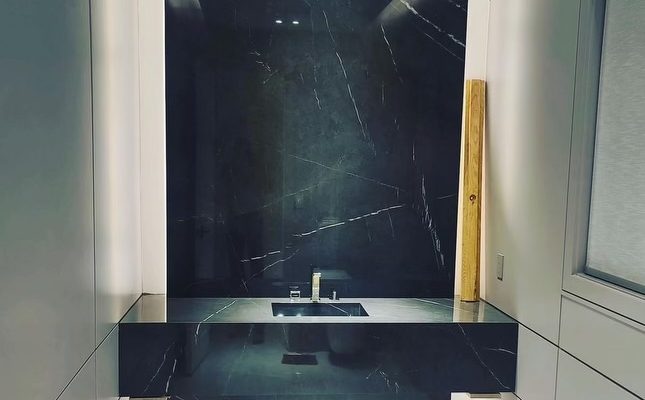
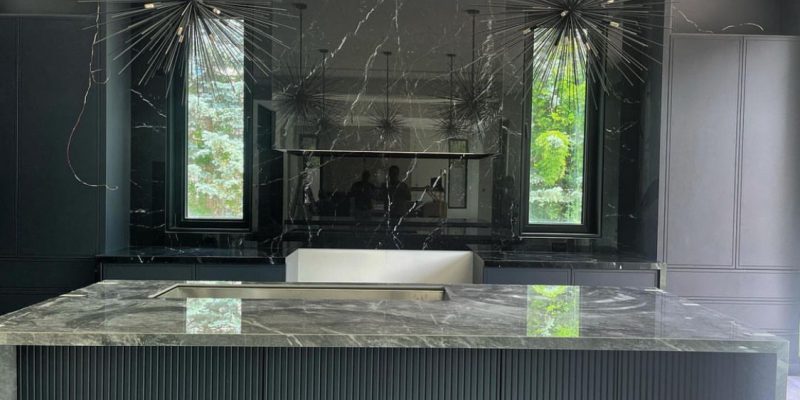
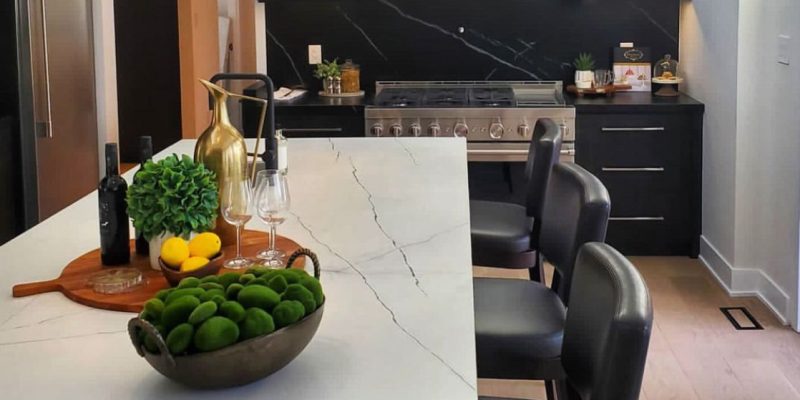
That said, dark countertops are not automatically a mistake in small kitchens—but they must be used strategically. Dark surfaces can work when paired with very light cabinetry, strong lighting, and minimal visual clutter. In modern condo kitchens, a dark island countertop paired with light perimeter surfaces can create a focal point without overwhelming the space.
Material choice matters as well. Dark quartz or porcelain with subtle veining often performs better than flat, solid dark colors, as natural movement prevents the surface from feeling too heavy.
In recent Toronto and GTA projects, color trends for small kitchens have shifted toward warm, light neutrals rather than stark whites or dramatic contrasts. Homeowners are prioritizing softness, continuity, and long-term appeal.
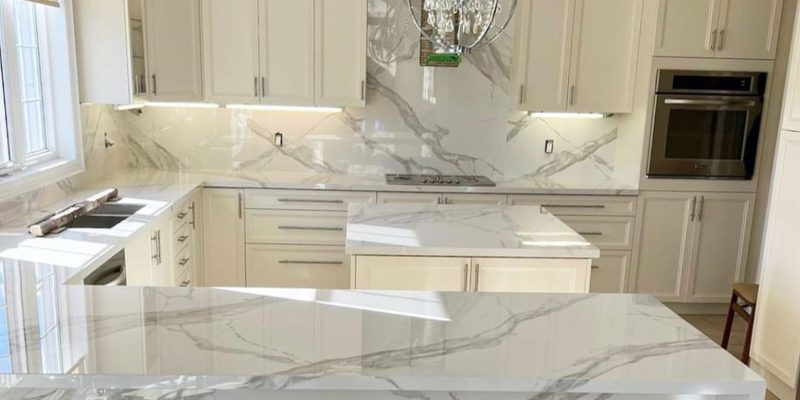
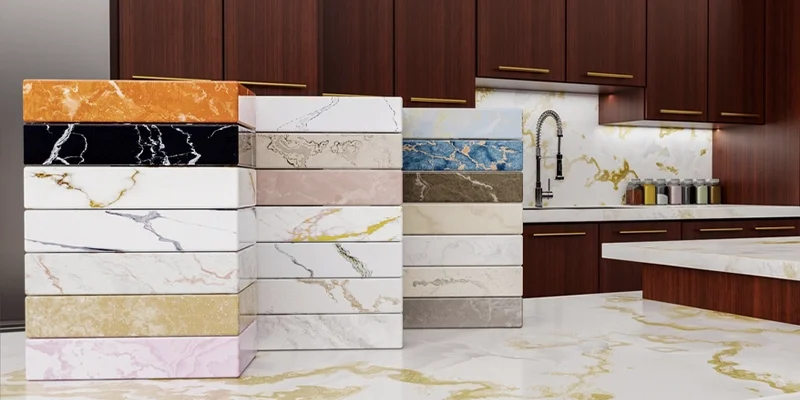
Quartz countertops remain the most popular choice for compact kitchens due to their consistency and wide color range. Popular quartz colors include soft white with subtle veining, warm off-white tones, light concrete greys, and beige-infused neutrals that add warmth without darkening the space.
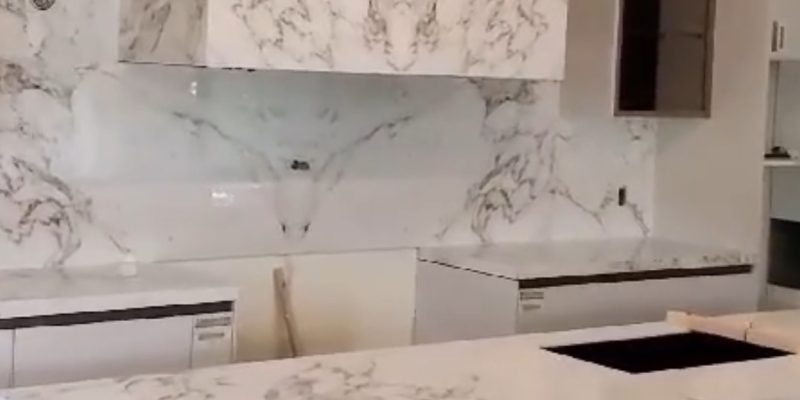
Porcelain countertops are gaining popularity in Toronto condos for their ultra-thin profiles and contemporary aesthetics. Light porcelain slabs that mimic marble or limestone offer visual elegance without the maintenance concerns of natural stone.
Another growing trend is tone-on-tone design. Rather than strong contrast, countertops are selected within one or two shades of cabinet color, creating a seamless visual flow that expands perceived space.
Successful countertop color selection always considers cabinetry. In small kitchens, countertops and cabinets should work together as a unified visual system rather than competing elements.
For white or off-white cabinets, light quartz or porcelain with subtle veining provides depth without overpowering the space. This pairing is extremely common in Toronto condos because it reflects light evenly and feels timeless.
For wood-tone cabinets, especially warm oak or walnut finishes popular in modern GTA interiors, countertops in soft greys or warm creams create balance and prevent the kitchen from feeling too dark or too yellow.
In kitchens with darker cabinetry, countertops should generally be lighter to maintain brightness. If dark countertops are chosen, they should be paired with strong under-cabinet lighting and minimal backsplash contrast.
Backsplash coordination is also critical. In compact kitchens, slab backsplashes in the same color family as the countertop reduce visual breaks and make walls feel taller and cleaner.
One of the most common mistakes in small Toronto kitchens is choosing countertop colors based solely on showroom appeal. A color that looks stunning on a large slab may feel overwhelming once installed in a tight space.
Another frequent issue is excessive contrast. High-contrast countertops, cabinets, backsplashes, and flooring can visually chop up a small kitchen, making it feel crowded.
Ignoring lighting conditions is also a critical error. Kitchens with limited natural light should avoid overly dark or matte finishes that absorb brightness.
Finally, some homeowners select trendy colors without considering resale value. In Toronto’s competitive real estate market, neutral and timeless countertop colors consistently perform better for long-term value.
For best results, countertop color selection should be finalized after reviewing real lighting conditions, cabinet finishes, and layout dimensions—often with guidance from a professional countertop survey & measurement service.
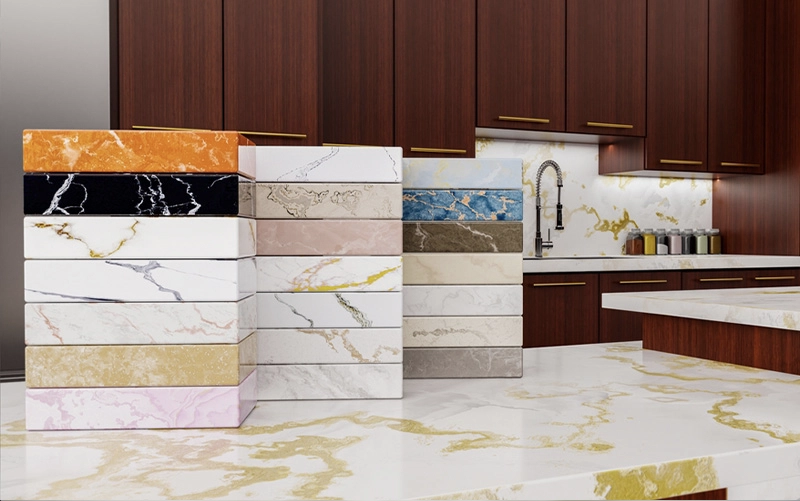
Small kitchens in Toronto & GTA are rarely identical, but they share common spatial challenges that directly influence countertop color selection.












Galley kitchens, for example, benefit most from light and continuous countertop colors that visually extend the corridor. When both sides of a galley kitchen use the same light-toned quartz or porcelain surface, the eye perceives the space as wider and more open. Introducing dark or contrasting countertops in this layout often exaggerates the narrowness.
L-shaped kitchens, common in downtown Toronto condos, require careful balance. A lighter countertop helps soften corner transitions and prevents the kitchen from feeling boxed in. In these layouts, subtle veining can add interest without interrupting visual flow.
Open-concept kitchens that share space with living or dining areas rely heavily on color continuity. Countertops that blend seamlessly with surrounding finishes allow the kitchen to feel like part of the overall space rather than a separate, enclosed zone. This is one reason why many homeowners coordinate countertop color with flooring and nearby surfaces when planning kitchen countertop upgrades.
While color is the primary factor in visual perception, veining and pattern play a secondary but important role in small kitchens. Completely flat, solid colors can sometimes appear lifeless or clinical, while overly dramatic veining can overwhelm limited space.
The most effective approach for small kitchens in Toronto & GTA is subtle, low-contrast veining. Soft linear patterns that move horizontally can visually widen a space, while gentle diagonal movement adds depth without distraction. This is particularly effective in quartz surfaces designed to mimic natural stone.
Texture also matters. Polished surfaces reflect light and enhance brightness, which is ideal for compact kitchens with limited windows. Honed or matte finishes can still work, but they should be paired with lighter colors and strong artificial lighting.
Porcelain slabs with fine, stone-inspired textures are increasingly popular because they provide visual interest without heavy contrast. Their thin profile also contributes to a lighter, more refined appearance in tight layouts.
Lighting conditions in Toronto kitchens vary widely depending on building orientation, window placement, and surrounding structures. In many condos, natural light is limited or indirect, making countertop color selection even more important.
Light-colored countertops amplify both natural and artificial light, helping reduce shadows and dark corners. This effect is especially noticeable under upper cabinets, where darker countertops can create a cave-like appearance.
Under-cabinet lighting works best when paired with reflective countertop surfaces. Quartz and polished porcelain bounce light upward, improving overall brightness without increasing fixture count.
In kitchens with warmer lighting temperatures, cool-toned countertops can appear dull or greyed out. Conversely, warm-toned neutrals often feel more inviting and balanced under typical Toronto condo lighting setups.
While design trends influence color choices, small kitchens demand a more cautious approach. Trend-driven colors that feel exciting today may quickly feel dated, especially in compact spaces where surfaces are highly visible.
In Toronto’s competitive real estate market, neutral countertop colors consistently deliver stronger resale performance. Buyers tend to prefer kitchens that feel bright, clean, and adaptable to different design styles.
This does not mean kitchens must feel generic. Subtle variations in tone, gentle veining, and refined finishes allow homeowners to personalize their space without sacrificing long-term appeal.
Materials like quartz countertops are particularly effective for balancing trend sensitivity with durability and timelessness, which is why they dominate small-kitchen renovations across the GTA.
Although light countertops are generally recommended, there are scenarios where darker surfaces can work in compact kitchens. The key is controlled application and strong contrast management.
Dark countertops perform best when used on a single surface, such as an island or peninsula, while perimeter counters remain light. This creates a focal point without enclosing the space.
Another successful strategy is pairing dark countertops with full-height light cabinetry and reflective finishes. This ensures that the visual weight remains balanced and the space does not feel compressed.
Porcelain slabs with deep tones but fine patterning can be more forgiving than solid dark quartz, as they introduce movement that prevents the surface from appearing too heavy.
Even the best countertop color can underperform if fabrication, layout planning, or installation details are overlooked. Slab orientation, seam placement, and edge profiles all influence how color is perceived in a small kitchen.
In compact layouts, poorly placed seams or inconsistent color flow can disrupt visual continuity and make the kitchen feel cluttered. This is why professional templating and fabrication are critical.
Many Toronto homeowners finalize countertop color only after a professional survey & measurement to evaluate real lighting conditions, cabinet alignment, and layout constraints.
Edge profiles also affect perception. Slim, eased edges tend to look lighter and more modern in small kitchens, while thick or ornate profiles add visual weight that may overwhelm limited space.
Selecting the best countertop colors for small kitchens in Toronto & GTA requires a balance of light reflection, material performance, and design cohesion. Light, neutral surfaces with subtle patterning consistently deliver the best results in compact spaces.
Rather than focusing on a single trend or showroom sample, homeowners should consider how countertop color interacts with layout, cabinetry, lighting, and long-term value. When chosen thoughtfully, the right countertop color can transform a small kitchen into a space that feels open, functional, and refined.
Whether renovating a downtown condo or upgrading a compact family kitchen, professional material selection and fabrication ensure that countertop color works with the space—not against it.