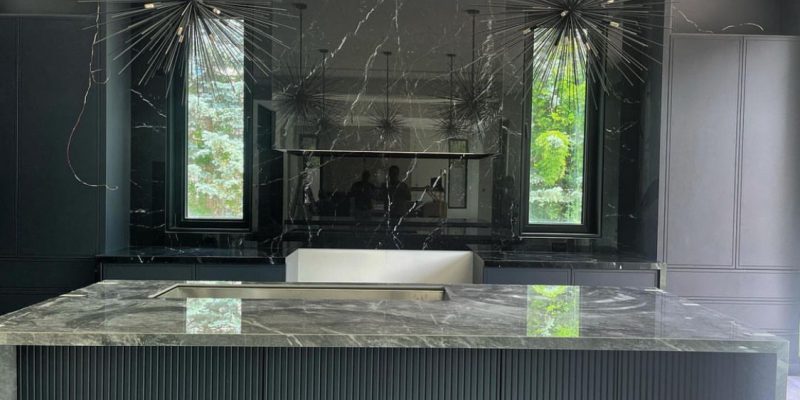
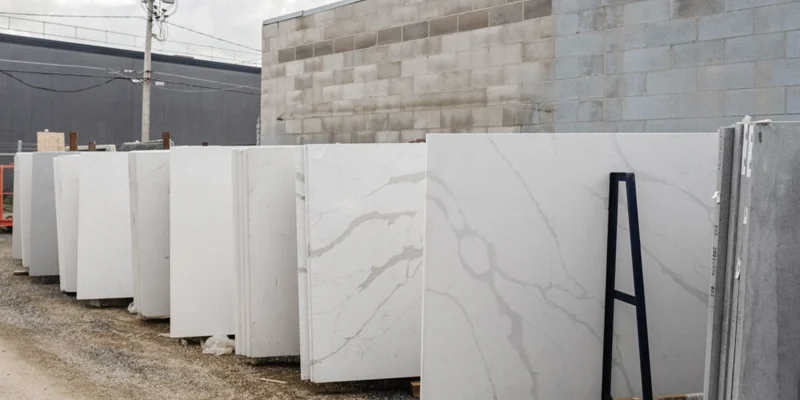
High-quality stone fabrication depends on much more than cutting a slab to size. The quality of the finished work is shaped by the accuracy of the project measurements, the clarity of the approved specifications, the way the slab is planned, and how precisely openings and visible details are prepared before installation.
A premium quartz, granite, marble, quartzite or porcelain slab does not automatically produce a high-quality finished surface. Even an expensive material can deliver a disappointing result if dimensions are incorrect, fixture information is incomplete, slab layout is poorly considered or the fabrication plan does not reflect the actual project conditions.
For custom countertops and architectural stone applications across Toronto and the GTA, fabrication quality is best evaluated as a coordinated process. Teccorp Stone’s custom stone fabrication services support residential and commercial projects that require project-specific measurement, fabrication and stone-related installation. This guide focuses specifically on the characteristics that help distinguish carefully planned fabrication from poor execution.
Stone fabrication transforms a slab or manufactured surface into components made for the exact requirements of a project. Depending on the application, these components can include kitchen countertops, vanity tops, backsplashes, waterfall panels, fireplace pieces, benches, shelves or architectural stone elements.
The key difference between basic fabrication and high-quality fabrication is not simply the equipment used. Quality depends on whether each fabricated component accurately reflects the approved dimensions, material characteristics and project requirements.
| Fabrication Area | What to Evaluate |
|---|---|
| Measurements | Whether fabrication is based on verified dimensions and relevant site conditions. |
| Specifications | Whether fixture, appliance, edge and related fabrication details are confirmed before affected pieces are produced. |
| Slab Planning | How visible pattern, usable material and component relationships are considered before cutting. |
| Cutouts | Whether openings correspond to approved fixtures and surrounding project geometry. |
| Edges & Seams | Consistency of specified profiles and the preparation of adjoining fabricated pieces. |
| Inspection | Whether finished components are reviewed against the approved fabrication scope before installation. |
These areas are closely connected. Accurate machining cannot compensate for an incorrect template, and polished edges cannot correct an opening fabricated from the wrong sink specification. The strongest results come from controlling the project information before irreversible fabrication work begins.
Quality check: Material price and fabrication quality should be evaluated separately. A premium slab can still be poorly fabricated, while a more understated material can produce an excellent finished result when the project is measured, planned and finished carefully.
Reliable fabrication begins with accurate project information. Measuring a countertop or other stone component involves more than recording overall length and depth. The fabricated pieces must relate correctly to the actual cabinetry, walls, fixtures, appliances and architectural conditions surrounding them.
Depending on the project, relevant site conditions can include:
Measurements should therefore represent the conditions that will actually govern fabrication. If cabinetry, fixtures or other relevant elements change after measurements are approved, the production information may no longer reflect the installation environment.
For projects requiring site documentation before fabrication, Teccorp Stone’s Countertop Survey & Measurement service covers the measurement stage in greater detail.
Dimensions alone do not provide enough information to fabricate every stone component correctly. Specifications that affect the finished surface should also be confirmed before the corresponding work is completed.
These can include:
A sink opening, for example, should be based on the approved sink information rather than an assumed standard dimension. The same principle applies to cooktops, faucets and other components that directly affect the geometry of the fabricated stone.
Stone fabrication involves decisions that can become difficult to reverse once a slab has been cut. Confirming fabrication-dependent details at the appropriate stage helps reduce conflicts between the finished stone and other project components.
This does not require every design decision to be finalized at the same time. It means that any information affecting a specific fabrication operation should be established before that operation becomes irreversible.
For stone and slab products with visible veining, directional movement or natural variation, fabrication quality also depends on how the available material is distributed across the project.
Natural granite, marble and quartzite can vary substantially within a single slab. Manufactured quartz and porcelain often provide greater design consistency, but many products still have directional patterns that become important across large islands, adjoining countertops or vertical panels.
Before cutting begins, slab layout planning can consider:
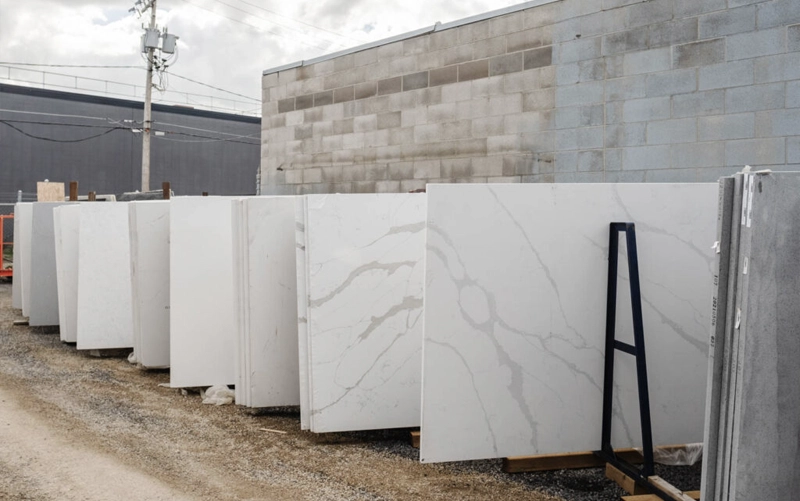
When adjoining pieces contain visible veining or directional pattern, their visual relationship should be considered before fabrication. Once major components have been cut, opportunities to change pattern placement become limited.
The objective is not always perfect vein continuity. Slab size, project geometry, required openings and material availability can limit what is practical. A stronger indicator of fabrication quality is whether the important visual relationships were considered deliberately before cutting.
Detailed decisions about yield optimization, waterfall sequencing and multi-slab pattern placement belong to dedicated slab-layout planning. Within this guide, slab planning is considered specifically as one of the factors used to evaluate overall fabrication quality.
Material selection naturally receives significant attention because colour, pattern and texture define the visual character of the finished project. However, the appearance of the slab should not be confused with the quality of the fabrication performed on it.
A distinctive natural stone can still produce a poor finished result if components are incorrectly positioned, openings are inaccurate or visible details are inconsistently finished. Likewise, a more restrained surface can look highly refined when fabrication is carefully planned and executed.
Evaluating a finished stone project therefore requires looking at both the material itself and the workmanship applied to it.
Sink openings, faucet holes, cooktop cutouts and other penetrations are among the most technically sensitive areas of countertop fabrication because they must coordinate with both the approved component and the surrounding stone geometry.
Depending on the project, cutout planning can involve:
Different sink configurations place different requirements on the fabricated countertop. An undermount sink, for example, creates an exposed finished opening that becomes part of the visible countertop detail, while other configurations may interact with the stone differently.
The correct opening should be based on the approved sink configuration and project requirements rather than a generic assumption about sink dimensions.
Bathroom projects that are still at the sink-selection stage can refer to the Bathroom Vanity Sink Options guide for a comparison of common sink configurations. The fabrication concern here is limited to ensuring the selected configuration is correctly reflected in the finished stone.
Where faucets, dispensers, cooktops or other components require openings through the countertop, approved specifications should be coordinated with the fabrication information before cutting.
Good fabrication does not depend on making unnecessary corrections at the installation stage. The objective is for the fabricated opening to correspond as closely as practical to the approved component and surrounding layout from the outset.
Once measurements, specifications and slab layout have been established, fabrication quality becomes easier to evaluate in the visible details of the finished stone. Edge profiles, adjoining pieces and seams are among the areas where consistency, planning and finishing quality become most apparent.
The goal is not to make every project look the same. A simple eased edge can be fabricated to a very high standard, while a more elaborate profile may still appear poor if its geometry, polish or alignment varies from one piece to another. Quality should therefore be judged against the approved design and the characteristics of the selected material.
A finished edge should appear deliberate and consistent with the intended design. Depending on the material and application, useful quality indicators include:
Natural stone can reveal mineral variation, colour shifts or other characteristics along a cut edge that are different from the polished face of the slab. These material characteristics should be distinguished from avoidable fabrication inconsistencies.
Mitered and built-up edges are often used when the design calls for a thicker visual profile or a continuous transition between horizontal and vertical stone surfaces. Because multiple fabricated faces must align, these details require more coordination than a standard single-thickness edge.
Quality considerations can include:
The value of a mitered edge comes from how well it supports the overall design, not from the detail itself being more complex.
Seams are sometimes necessary in countertops and other fabricated stone installations. Slab dimensions, access conditions, project geometry, transportation limits and installation requirements can all influence whether a surface can be produced as one continuous piece.
A required seam should therefore be evaluated by how it has been planned and executed rather than by whether it exists at all.
Relevant considerations can include:
Quality check: A seam should not be judged against a universal promise of being completely invisible. Material colour, pattern, lighting, joint position and site conditions can all affect how visible a finished seam appears.
Although the final joint is completed during installation, its location and relationship to the slab should be considered earlier. Once the primary pieces have been cut, options for changing seam placement or pattern relationships become much more limited.
This is why seam quality depends on coordination between fabrication planning and installation rather than being an installation-only concern.
High-quality fabrication also depends on recognizing that quartz, granite, marble, quartzite and porcelain do not behave identically.












The fabrication approach should therefore be adapted to the selected material rather than based on one universal method.
| Material | Key Fabrication Considerations |
|---|---|
| Quartz | Product specifications, cutouts, edge details and manufacturer guidance should be considered before fabrication. |
| Granite | Natural variation, visible pattern and the characteristics of the selected slab can influence layout and finishing decisions. |
| Marble | Veining, surface characteristics and intended use should be considered when planning cuts, edges and adjoining pieces. |
| Quartzite | The actual slab should be assessed individually because natural characteristics can vary substantially between materials sold within this category. |
| Porcelain | Slab thickness, handling, edge treatment and the requirements of the specific product system can affect fabrication planning. |
Quartz is a manufactured surface, which can provide greater consistency in colour and pattern than many natural stones. However, fabrication requirements can still vary between products and manufacturers.
Openings, edge details, support conditions and other production decisions should be based on the selected product and its technical guidance rather than broad assumptions about all quartz surfaces.
Granite is a natural stone and can contain visible mineral variation, grain movement and other slab-specific characteristics. These features can affect how the material is positioned and divided across visible components.
Fabrication planning should therefore consider the actual slab rather than treating every section as visually interchangeable.
Marble is also a natural material with distinctive veining and surface characteristics. Because its visible movement often plays a major role in the design, the placement of openings, adjoining components and exposed edges can be especially noticeable.
The fabrication plan should reflect the specific slab and application instead of applying the same assumptions used for granite or quartz.
Quartzite can vary considerably in structure and visual character from one slab to another. For this reason, fabrication decisions should be based on the specific material being used, its thickness, condition and project geometry.
Broad claims about all quartzite behaving the same way should be avoided.
Porcelain slabs can differ from conventional natural stone and engineered quartz in thickness, handling and edge-treatment requirements. The selected product system and intended application should guide fabrication decisions.
Because porcelain products are not identical, manufacturer or supplier instructions can be important when planning openings, edges and other fabricated details.
Modern CNC equipment can support accurate and repeatable fabrication when it is working from verified measurements and approved production information. Computer-controlled machinery can reproduce digital geometry consistently across a wide range of project components.
Depending on the equipment and project, CNC systems may be used for:

CNC machinery is a production tool rather than an independent measure of quality. If incorrect dimensions, fixture specifications or layout information are entered into the production workflow, precise equipment can reproduce those errors just as accurately.
Strong fabrication therefore combines technology with:
This distinction is particularly important when comparing fabrication capabilities. Advanced machinery can support precision, but the completed result still depends on the quality of the full workflow around it.
Installation should not be the first stage at which major fabrication discrepancies are identified. Before finished components are prepared for delivery, they should be reviewed against the project information relevant to their fabrication.
The exact inspection process varies by material, application and complexity, but quality control can include checking:
Projects with several related pieces may require additional attention because the quality of one component can affect the appearance or fit of another.
This can be relevant for:
The appropriate verification method depends on the project. Physical dry fitting may be useful in some situations but is not a universal requirement for every fabrication job. What matters is that the finished components are checked appropriately before they reach the installation stage.
Inspection is most useful when the fabricated pieces can be compared against clear project information. Approved measurements, drawings, fixture specifications and fabrication details create the reference points needed to identify discrepancies before delivery.
This makes fabrication quality more objective. Instead of relying only on broad descriptions such as “premium workmanship,” the finished work can be evaluated against what was actually specified and approved.
A well-fabricated piece still requires appropriate installation, and skilled installation cannot fully compensate for stone that was produced from incorrect measurements or specifications. The two stages are connected, but they should not be treated as the same process.
Some adjustments may still be necessary on site because existing walls, cabinetry or surrounding construction can contain real-world irregularities. The important distinction is whether those adjustments are reasonable responses to site conditions or attempts to correct avoidable fabrication discrepancies.
Possible signs that an issue should be reviewed more closely include:
The source of a problem should still be established before assigning responsibility. Site conditions can change after measurement, cabinets can be repositioned, fixtures can be substituted and other trades can alter the installation environment after fabrication information has been approved.
For that reason, high-quality fabrication is best understood as part of a documented sequence in which project information, production decisions and final components remain aligned as closely as practical before installation begins.
Evaluating a stone fabrication project requires looking beyond the material itself. A high-quality result is usually the outcome of several connected decisions, from the first measurement through final preparation before installation.
The following checklist provides a practical framework for reviewing important fabrication considerations:
| Area | Quality Consideration |
|---|---|
| Project Measurements | Fabrication information should reflect verified project dimensions and relevant site conditions. |
| Specifications | Fixtures, appliances, openings, edge details and other fabrication-dependent decisions should be confirmed before production. |
| Slab Planning | Visible patterns, material characteristics and component placement should be considered before cutting. |
| Cutouts | Sink, cooktop and accessory openings should correspond to approved project requirements. |
| Edges | Finished profiles should be consistent with the approved design and material characteristics. |
| Seams | Joint locations and adjoining pieces should be considered as part of the overall fabrication plan. |
| Inspection | Finished components should be reviewed against project information before installation. |
This checklist does not replace professional evaluation, but it helps homeowners, designers and contractors understand which details typically influence the quality of a finished stone project.
Many fabrication issues are not caused by the stone itself. They often result from missing information, unclear specifications or insufficient coordination between project stages.
Understanding common mistakes can help identify where attention is needed before fabrication begins.
Fabricating stone components from incomplete or outdated measurements can create conflicts during installation. Cabinet adjustments, fixture changes or site modifications after measurement can affect whether the fabricated pieces still match the actual conditions.
A reliable process requires measurement information to represent the conditions that will govern the final installation.
Every slab has its own visual and physical characteristics. Treating natural stone or patterned surfaces as completely uniform can lead to unexpected results after cutting.
Reviewing the actual slab and considering how its features relate to visible areas helps create a more intentional finished appearance.
Countertops interact directly with sinks, faucets, cooktops and other components. Fabrication details should reflect approved specifications whenever those components affect the finished stone.
Making assumptions about dimensions or configurations can create avoidable conflicts later in the project.
Advanced machinery can improve accuracy and repeatability, but equipment alone does not define fabrication quality. The quality of the information provided to the production process and the expertise used throughout the workflow remain essential factors.
Large surface areas often receive the most attention, but smaller details can strongly influence the final impression of a project. Edges, corners, openings and transitions are areas where fabrication consistency becomes especially visible.
Choosing a stone fabricator involves more than comparing material options or looking only at finished photographs. A strong evaluation should consider the process used to transform the selected material into the final installed component.
Useful questions to consider include:
The objective is not simply to find a company with specific equipment or a large material selection. It is to understand whether the entire fabrication workflow supports accuracy, communication and consistent execution.
Before fabrication begins, homeowners and project teams can clarify several important points:
Clear answers to these questions help create a shared understanding between the customer, designer, fabricator and installation team.
High-quality stone fabrication combines accurate measurements, confirmed specifications, thoughtful slab planning, appropriate material handling, consistent finishing and proper review before installation. No single tool or material determines quality by itself.
No. The selected material influences appearance and characteristics, but the finished result also depends on fabrication planning, accuracy, finishing details and installation conditions.
CNC equipment can support precision and repeatability, but quality depends on the complete workflow, including accurate measurements, correct production information, machine operation and finishing processes.
Not necessarily. Some projects require seams because of slab dimensions, access limitations, project geometry or design requirements. The quality of the seam depends on planning, placement and execution.
Slab layout can be particularly important for materials with visible veining, directional patterns or natural variation. Planning helps determine how major components relate visually after cutting.
No. Quartz, granite, marble, quartzite and porcelain have different characteristics and product requirements. Fabrication decisions should consider the specific material being used.
A successful stone project is built on decisions made before the finished surface reaches the room. Accurate measurements, confirmed specifications, thoughtful slab planning and careful finishing all contribute to a result that reflects the intended design.
High-quality fabrication is not defined by a single feature such as a specific machine, material price or production method. It is the result of a coordinated process where information, craftsmanship and project requirements remain aligned from planning through installation.
For homeowners and project teams evaluating custom stone work, focusing on fabrication quality provides a clearer way to compare options and make informed decisions. The right questions are not only about what stone is selected, but also how that stone will be measured, planned, fabricated and prepared for its final application.
To discuss a custom stone project in Toronto and the GTA, Teccorp Stone provides fabrication and installation services tailored to residential and commercial stone applications.