Knowing how to choose the right kitchen countertop starts with understanding that no single material is automatically best for every home. A countertop that works well for a busy family may not be the first choice for someone who prioritizes dramatic natural stone, frequent baking, minimal maintenance or a specific architectural design.
Quartz, granite, quartzite, marble, porcelain and soapstone all bring different combinations of appearance, maintenance, surface characteristics and fabrication requirements. The most useful buying process therefore begins with your own priorities—not with a ranking of countertop materials.
This kitchen countertop buying guide explains how to compare those options based on daily use, care expectations, cooking habits, design, slab characteristics and project requirements so you can narrow the selection before committing to a material.
Best Starting Point: Before asking which countertop material is “best,” decide what matters most in your kitchen: easy maintenance, natural stone character, cooking performance, design impact, project complexity or a balance of several priorities.
It is easy to begin a countertop search by comparing colours or asking whether quartz is better than granite. A more useful approach is to first define how the finished surface needs to perform in your particular kitchen.
A lightly used kitchen and a kitchen where several meals are prepared every day place different demands on a countertop.
Think about how often you cook, how much prep space you use, whether hot cookware frequently moves between the oven and countertop, and how often ingredients such as oils, coffee, wine, tomatoes or citrus reach the work surface.
Households that cook frequently may place greater value on easy cleaning and practical work zones, while occasional-use kitchens may give more weight to visual character or a particular stone pattern.
The objective is not to find an indestructible surface—there is no premium countertop that should be treated without reasonable care—but to choose one whose characteristics fit your habits.
Maintenance expectations can quickly narrow the choices.
Many quartz products are nonporous and generally do not require routine sealing. Porcelain also has very low water absorption and does not depend on the same type of sealing regime associated with some natural stones.
Natural stone requires a more material-specific approach. Granite and quartzite vary in porosity, so sealing needs should be determined for the actual stone and finish rather than assumed on a universal schedule.
Marble introduces another consideration: acidic ingredients can etch calcium-based stone even when the surface has been properly maintained.
Neither approach is inherently better. The important question is whether the surface care fits the way you want to use the kitchen.
Countertop marketing often reduces performance to labels such as “heat resistant,” “scratch resistant” or “stain resistant.” These terms are useful only when interpreted realistically.
Heat resistance does not mean every material should receive extremely hot cookware directly from an oven. Scratch resistance does not eliminate the value of cutting boards. Stain resistance does not mean spills should remain indefinitely on the surface.
Instead of looking for absolute claims, compare how each material responds to the conditions that occur most frequently in your kitchen and what protective habits are recommended for the specific product.
One of the biggest differences between countertop categories is how predictable the finished surface will look.
Natural stones such as granite, quartzite and marble can contain substantial changes in veining, mineral pattern and colour across the slab. For some homeowners, that individuality is one of the main reasons to choose natural stone.
Engineered quartz offers greater control over colour and pattern, while porcelain can provide a wide range of manufactured designs including stone-inspired and more architectural surfaces.
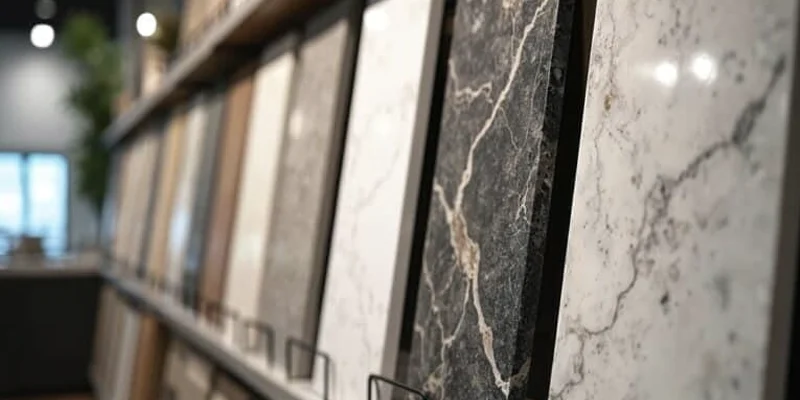
If natural variation matters to you, review the actual slab whenever possible rather than selecting solely from a small sample.
Decision Tip: Write down your top three priorities before visiting a showroom. For example: low maintenance, natural appearance and light colour. This makes it easier to eliminate materials or slabs that do not fit the project, even if they look attractive in isolation.
The following table is a decision aid rather than an absolute ranking. Individual stone, finish, product specifications and manufacturer guidance can affect performance and maintenance.
| Material | Main Strength in the Buying Decision | Main Consideration | Often Worth Considering When |
|---|---|---|---|
| Quartz | Controlled appearance and straightforward daily care | Heat protection should follow manufacturer guidance | Low-maintenance convenience is a priority |
| Granite | Natural variation and established kitchen use | Porosity and care vary by stone | You want natural stone with individual slab character |
| Quartzite | Expressive natural movement | Individual stone characteristics and fabrication planning matter | The slab is intended to become a design feature |
| Marble | Distinctive natural veining and material character | Acid sensitivity and patina expectations | Natural ageing is acceptable to the homeowner |
| Porcelain | Low absorption and controlled contemporary designs | Fabrication and edge details are product-specific | A clean architectural surface is preferred |
| Soapstone | Nonporous natural stone with an evolving appearance | Softer surface can develop scratches and patina | You prefer natural ageing over a pristine appearance |
Quartz is often considered by homeowners who want predictable colour and pattern combined with relatively straightforward everyday care.
Because engineered quartz is available in solids, subtle patterns and marble-inspired designs, it can work across a wide range of kitchen styles without relying on the natural variation of an individual slab.
Its nonporous surface also means routine sealing is generally not required. The important trade-off is heat management: quartz contains binders, so hot cookware should be placed on appropriate heat protection according to the manufacturer’s guidance.
Quartz is therefore worth comparing when easy routine cleaning and controlled appearance rank highly in your countertop priorities.
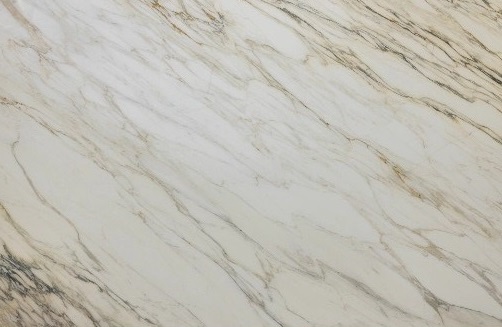
Granite is worth considering when natural stone character is an important part of the buying decision. Each slab can vary in colour, mineral pattern and movement, which gives the finished countertop a less uniform appearance than engineered surfaces.
For kitchen use, the main consideration is that granite should be evaluated slab by slab. Porosity, finish and care requirements are not identical across every granite, so sealing should be based on the specific stone rather than an assumed universal schedule.
Granite may suit homeowners who want a natural working surface and are comfortable following material-specific care recommendations instead of prioritizing a completely uniform appearance.
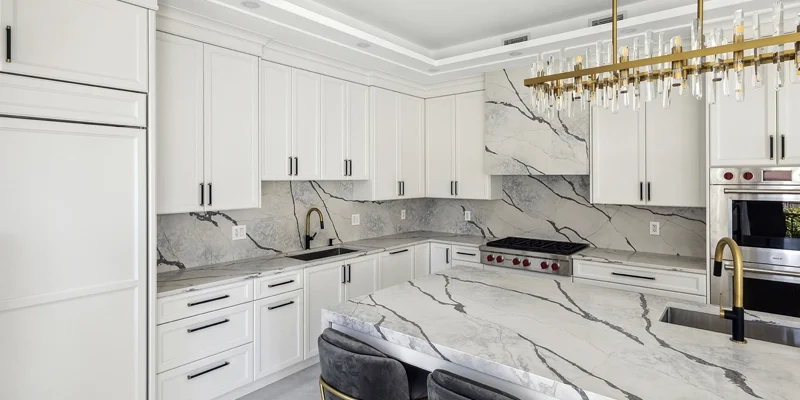
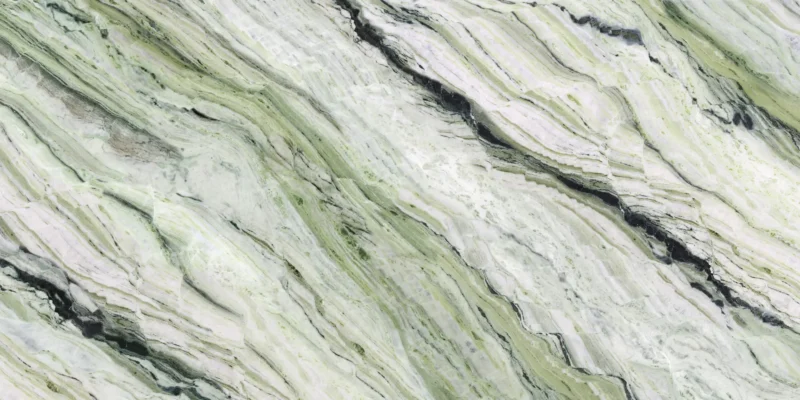
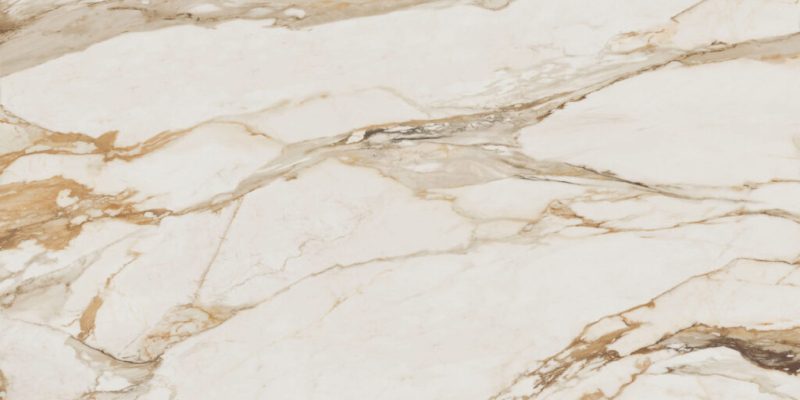
Quartzite can be a strong option when the countertop itself is intended to become a major design feature. Many slabs contain directional movement, veining and natural transitions that are especially noticeable across large islands and long countertop runs.
The actual slab should be reviewed before purchase because pattern, colour and fabrication planning can affect the finished result. Vein direction, waterfalls, seams and the relationship between adjoining pieces may need to be considered before cutting begins.
Quartzite characteristics can also vary between individual stones. Care and sealing recommendations should therefore be confirmed for the selected slab and finish rather than generalized across the entire category.
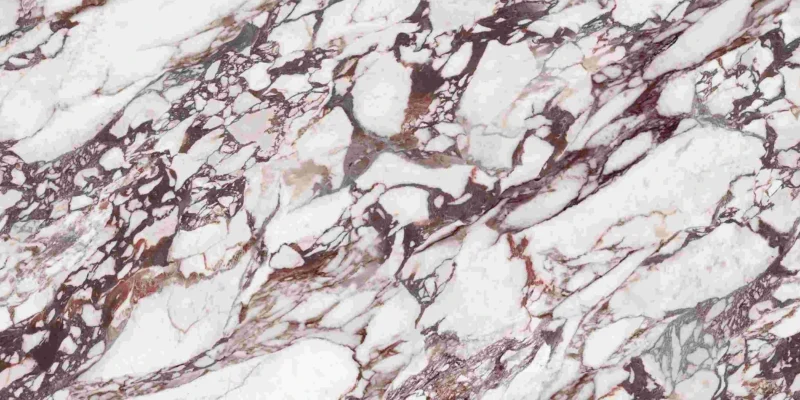
Marble is often chosen because its natural veining and surface character are difficult to reproduce exactly in manufactured materials. It can create a strong focal point or a softer tonal kitchen depending on the slab.
The trade-off is that marble requires realistic expectations about daily use. As a calcium-based stone, it can etch when exposed to acidic ingredients such as citrus or vinegar. Surface changes and patina may therefore become part of the material over time.
Marble is most appropriate when the homeowner values its natural appearance enough to accept material-specific care and gradual visual change.
Porcelain offers a different buying proposition. Large-format porcelain surfaces provide very low water absorption and are available in marble-inspired, stone-inspired, concrete-look and more restrained architectural designs.
For buyers, the important consideration is fabrication. Slab thickness, exposed edges, miters, cutouts and handling requirements can vary between porcelain systems, so installation quality and product-specific fabrication planning matter.
Porcelain may be especially relevant when a low-absorption surface and contemporary appearance are priorities and the project is being planned with an experienced fabricator.
Soapstone is naturally nonporous and develops a distinctive appearance as it ages. Unlike harder natural stones, its softer surface can acquire scratches and marks through everyday use.
For some homeowners, that changing appearance is part of the appeal.



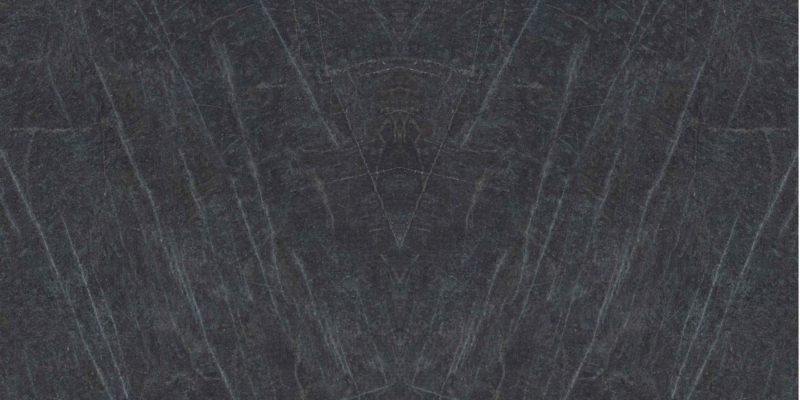



Soapstone is therefore best evaluated not simply by performance specifications, but by whether its natural patina fits your expectations for how a countertop should look over time.
Buying Principle: Do not eliminate or select a material based on one characteristic alone. Compare appearance, care, cooking habits, fabrication requirements and your tolerance for natural variation as a complete decision.
Once the material categories are clear, the buying decision becomes easier when you compare them against the way your household actually uses the kitchen.
| Household Priority | Materials Worth Comparing | Why | Main Trade-Off |
|---|---|---|---|
| Busy Family Kitchen | Quartz, porcelain, granite | Practical options for frequently used work surfaces when maintained appropriately | Heat guidance, stone-specific care or fabrication details still matter |
| Frequent Home Cooking | Granite, quartz, quartzite, porcelain, soapstone | Different options can suit heat, spill and prep priorities | Cooking habits should determine which trade-offs matter most |
| Lowest Routine Maintenance | Quartz, porcelain | Nonporous or very low-absorption surfaces reduce routine sealing concerns | Product-specific heat and fabrication guidance still applies |
| Natural-Stone Character | Granite, quartzite, marble, soapstone | Each slab has individual variation and natural material character | Variation, patina or material-specific maintenance may be part of ownership |
| Statement Island / Feature Surface | Quartzite, marble, expressive granite, selected quartz or porcelain | Large surfaces provide enough area for pattern and movement to become a focal point | Slab layout and fabrication planning become more important |
In a busy household, everyday cleaning and predictable maintenance often become more important than achieving the most dramatic possible slab.
Quartz is worth comparing because of its nonporous surface and broad design range. Porcelain may also appeal to buyers looking for a low-absorption surface, while granite remains a practical natural-stone alternative for homeowners comfortable with stone-specific care.
The best choice is the one that fits the household’s habits—not simply the material with the strongest marketing claim.
For households that cook extensively, evaluate how the countertop will interact with hot cookware, sauces, oils, acidic foods, repeated cleaning and large prep areas.
Different materials solve different parts of that problem, so frequent cooks should avoid choosing from scratch resistance or heat resistance alone. The entire cooking workflow matters.
If reducing routine surface maintenance is a major priority, quartz and porcelain are logical categories to compare first.
That does not mean either material is maintenance-free. Quartz still requires appropriate heat protection and manufacturer-specific care, while porcelain needs correct fabrication and edge planning. The advantage is primarily that routine sealing is generally not part of normal ownership.
When individuality and natural variation rank above uniformity, granite, quartzite, marble and soapstone become more relevant.
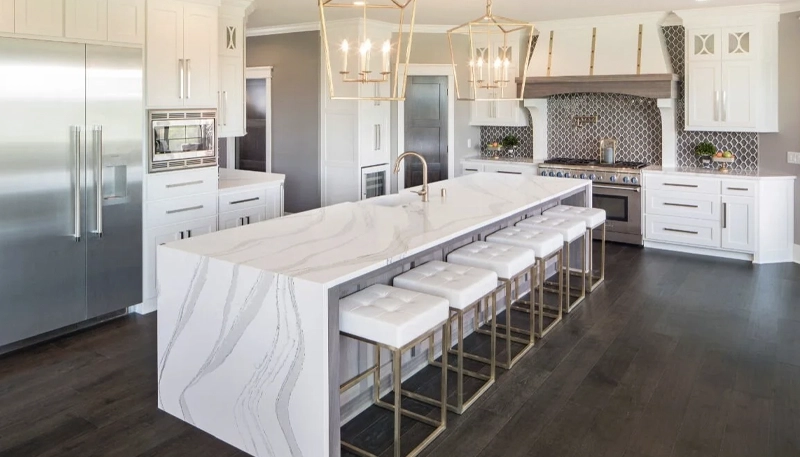
For highly expressive slabs, review the full stone before approval and consider where the most distinctive movement will appear across the finished countertop. Islands, waterfalls and long uninterrupted runs can make slab selection and layout particularly important.
Decision Shortcut: Start with lifestyle, then material. If easy routine care matters most, compare quartz and porcelain first. If natural variation is the priority, start with granite, quartzite, marble or soapstone and then narrow the choice based on care and project requirements.
Material selection should not happen independently from kitchen layout. Islands, long countertop runs, corners, waterfalls, sinks and cooktops can affect how much material is required and how individual slab sections need to be fabricated.
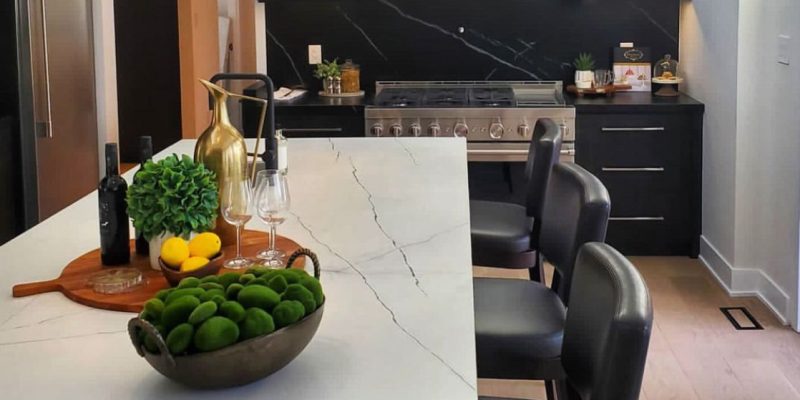
A large island gives stone more visual presence, but it can also make slab dimensions, pattern direction and piece planning more important. If the design includes waterfall panels, consider how the horizontal and vertical sections should relate before fabrication begins.
For strongly veined natural stone or patterned surfaces, slab orientation can have a significant effect on the finished appearance. The Stone Slab Layout Planning Guide explains this stage in greater detail.
Some layouts require multiple countertop pieces. Seam locations can depend on slab dimensions, countertop geometry, openings, access and fabrication requirements, so buyers should avoid assuming that every design can or should be produced without seams.
Our Countertop Seam Placement Guide covers the factors involved without turning seam count into a simple measure of countertop quality.
Sinks, cooktops and countertop-mounted fixtures create openings that become part of the fabrication plan. Final product information should therefore be confirmed before the relevant pieces are cut.
This is particularly important when comparing countertop options because different materials and slab systems may involve different fabrication considerations around edges, cutouts and adjoining components.
The price of the slab is only one part of a countertop purchase. The complete project can also be influenced by measurement, material quantity, fabrication, cutouts, edge details, seams, waterfalls, backsplashes, delivery, access and installation.
Two kitchens using the same countertop material can therefore have different total project costs because their layouts and fabrication requirements differ.
Before comparing options, make sure you know whether a quoted figure refers to material only, fabrication only or a more complete installed scope. For a detailed pricing discussion, see the Kitchen Countertop Cost guide.
Buying Tip: Compare complete project scope rather than slab price alone. A material that appears less expensive initially may require a different quantity of slabs, fabrication details or installation work for your specific layout.
Once you have narrowed the material choices, complete a final review before approving the surface for fabrication.
| Check Before Approval | Why It Matters |
|---|---|
| Actual slab or representative surface | Small samples may not show full-scale colour or pattern variation. |
| Colour & undertone | The countertop should work with cabinets, flooring, backsplash and lighting. |
| Surface finish | Polished, honed or other finishes can change appearance and care expectations. |
| Edge design & thickness | These details affect both appearance and fabrication. |
| Sink & appliance information | Approved models can affect cutouts and countertop geometry. |
| Material-specific care guidance | Maintenance expectations should be understood before purchase. |
Before making the purchase, make sure you can answer the following questions confidently:
If the answer to those questions is yes, the choice is based on the complete project rather than a single product feature.
There is no universal best material. Quartz, granite, quartzite, marble, porcelain and soapstone have different strengths and trade-offs. The best choice depends on use, maintenance preferences, design priorities and project requirements.
Quartz and porcelain are useful categories to compare when low routine maintenance is a priority because routine sealing is generally not required. Product-specific cleaning and heat guidance should still be followed.
Choose based on priorities rather than category alone. Quartz offers greater pattern consistency and straightforward care, while natural stones provide individual slab variation and require material-specific expectations.
For natural stone and strongly patterned surfaces, reviewing the actual slab is highly useful because small samples cannot represent the full distribution of colour, veins and mineral movement.
It is often useful to establish the countertop first because it occupies a large visual area and may contain significant pattern. The final decision should still consider cabinets, flooring, backsplash and lighting together.
It can. Large islands, waterfalls, seams, cutouts and slab dimensions may influence material quantity, fabrication planning and how patterns appear across the finished project.
The most reliable way to choose the right kitchen countertop is to work from your priorities toward the material, rather than starting with a material and trying to justify it afterward.
Consider how you cook, how much maintenance you want, whether natural variation matters, how the kitchen is laid out and what the complete fabrication and installation scope involves. Once those factors are clear, comparing quartz, granite, quartzite, marble, porcelain and soapstone becomes much easier.
Explore available Stone Surfaces or review your project through Teccorp Stone’s Kitchen Countertops service.
Ready to Compare Countertop Options?
Share your kitchen layout, material preferences and project requirements to review countertop options for your space.