Are granite countertops out of style? Not automatically. Granite can still look current, distinctive and appropriate in a modern kitchen, but its appearance depends on the slab colour, pattern, finish and relationship with the cabinets, backsplash, flooring and lighting.
Granite is no longer the automatic choice for every renovation. Engineered quartz, quartzite, porcelain and other surfaces now offer homeowners more design options. This does not make granite obsolete. It means the material must be selected and integrated more deliberately.
A quiet black granite with a leathered finish can support a contemporary kitchen, while a strongly speckled brown slab combined with dark cabinets, decorative edges and a busy backsplash may appear dated. In many cases, the issue is not granite itself—it is the complete design around it.
This guide explains which granite colours and patterns continue to work, what can make an installation feel outdated and how existing granite can be modernized without automatically replacing it.
Quick Answer
Granite countertops are not inherently outdated. Granite tends to look current when the slab has a controlled colour palette, the surrounding finishes share compatible undertones and the design avoids unnecessary visual competition. A dated appearance usually comes from the combination of stone, cabinets, backsplash and decorative details—not from the material name alone.
Granite remains a practical natural-stone countertop material, but the way it is used has changed. Earlier kitchen designs often combined highly patterned granite with ornate cabinetry, decorative edges and multi-coloured backsplashes. Current designs generally rely on clearer visual hierarchy and fewer competing finishes.
This means granite can still work effectively when it supports the overall design rather than becoming one of several dominant elements.
The distinction is important: a dated installation does not prove that all granite is outdated.
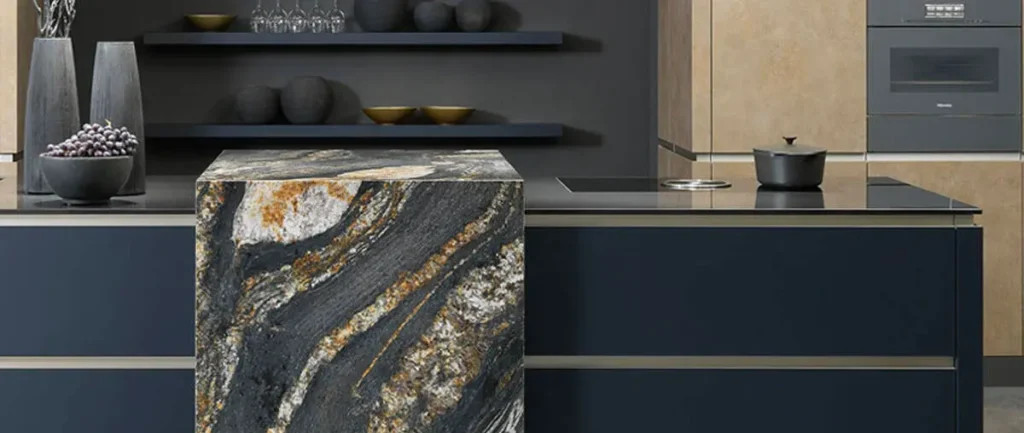
Granite once occupied a more dominant position because it offered natural variation, durability and a clear upgrade from older laminate surfaces. Homeowners now have access to a broader range of countertop materials with different aesthetics and maintenance characteristics.
Quartz offers controlled patterns and does not normally require sealing. Quartzite provides natural veining with a different visual character. Porcelain supports thin architectural profiles and large vertical applications. These alternatives have expanded the market without eliminating granite’s role.
Homeowners increasingly evaluate:
Granite performs best when it is selected as a deliberate natural-stone feature rather than treated as the automatic premium option.
Unlike manufactured surfaces, each granite slab has its own mineral structure and pattern. This can create a distinctive kitchen, but it also requires full-slab review and careful layout planning.
Homeowners who prefer predictable repetition may favour engineered surfaces. Those who value unique movement, mineral depth and natural variation may continue to find granite highly relevant.
Granite usually feels dated because of its design context rather than its age alone.
A strongly patterned granite may already contain several colours and mineral movements. Combining it with decorative tile, active flooring and detailed cabinet grain can make the kitchen feel visually crowded.
A better approach is to choose one primary pattern and allow the remaining surfaces to provide visual rest.
Warm beige granite may appear disconnected beside cool grey cabinets. Blue-grey stone may conflict with yellow flooring. Undertone compatibility matters more than whether each individual material looks attractive on its own.
Dark granite can look sophisticated, but pairing it with dark cabinets, limited lighting and dark flooring may reduce visual openness.
The same stone may appear more current when combined with:
Complex edge profiles, ornate cabinet doors and several metal finishes can make the countertop installation feel tied to a specific design period.
Simple eased, pencil or small bevel edges generally create a cleaner relationship with both modern and transitional cabinets.
Design Diagnosis
Before replacing granite, identify whether the actual problem is the slab, the backsplash, the cabinet colour, the lighting or the combination of all four.
Current-looking granite is not limited to one colour. The strongest options are usually those that create a clear relationship with the surrounding materials.
White, cream and pale grey granite can support bright kitchens when the mineral movement remains balanced with the cabinets and backsplash.
These slabs may work well in:
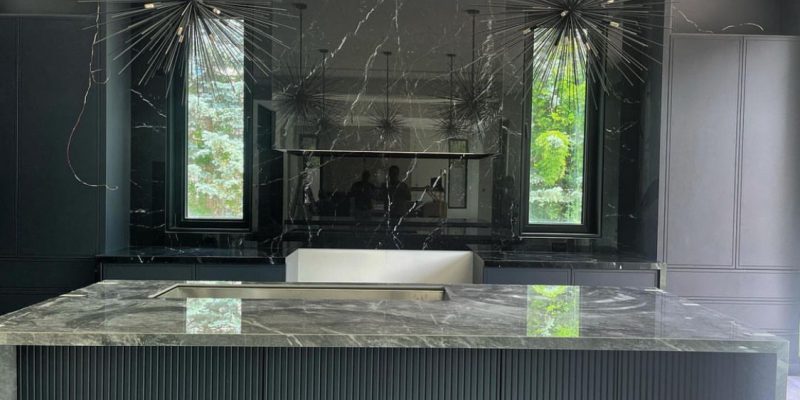
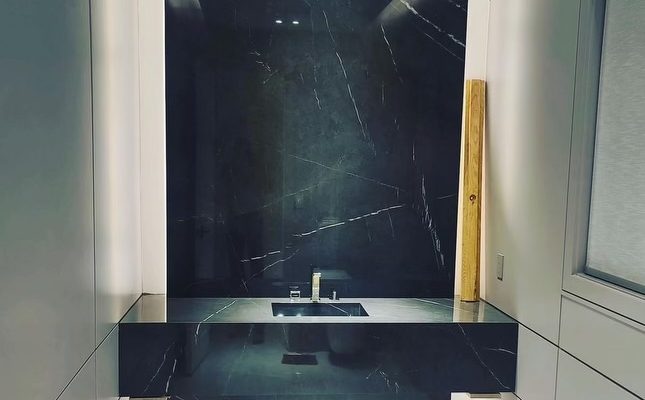
Black granite can create a current architectural appearance, particularly with a honed or leathered finish. It may work effectively with light oak, walnut, off-white or warm neutral cabinetry.
Polished black granite may show fingerprints, dust and water marks more clearly, so finish and maintenance expectations should be considered.
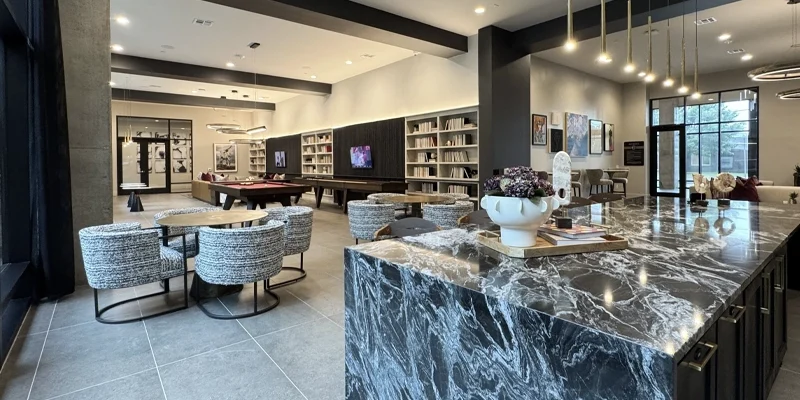
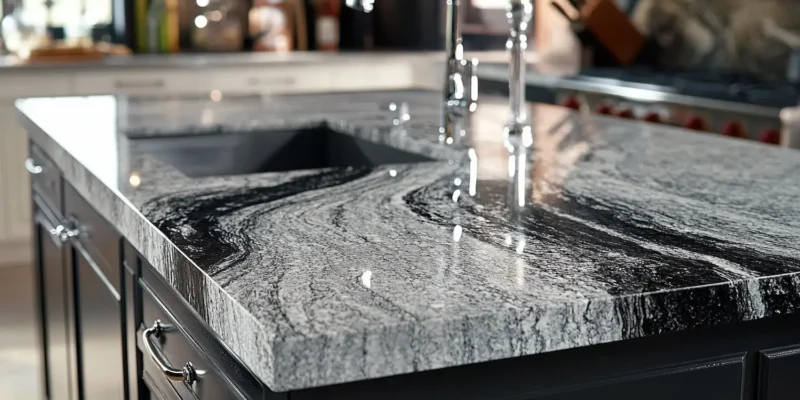
Granite with larger mineral fields or directional movement may suit a feature island where the pattern can be seen without excessive interruption.
The island may use the strongest slab section while the perimeter remains visually quieter.
Beige, brown and gold granite are not automatically outdated. They may still work when:
The goal is not to remove all warmth. It is to control the number and intensity of warm finishes in the same space.
The finish changes how granite reflects light, displays colour and interacts with the rest of the kitchen. It can also influence whether the stone feels formal, contemporary or more natural.
Polished granite has a reflective surface that strengthens colour and mineral contrast. It can still look current, particularly when the slab pattern is controlled and the surrounding finishes remain simple.
Polished granite may suit:
Highly reflective dark granite may show fingerprints, water spots and overhead lighting more clearly. Its visual effect should be reviewed in the actual room rather than under showroom lighting alone.
Honed granite has a lower-reflectivity surface and a softer architectural appearance. It can reduce the formal look associated with highly polished stone and may work well in modern or transitional kitchens.
However, honed finishes may show oil marks, fingerprints or uneven cleaning more readily on some dark stones. The exact slab should be reviewed for appearance and care requirements.
Leathered granite has a textured, low-sheen surface that can emphasize natural mineral movement. It is often used to give black, charcoal or strongly structured granite a more contemporary character.
The texture may conceal some fingerprints and reflections, but it can require more detailed cleaning than a smooth polished surface.
| Finish | Visual Character | Design Consideration |
|---|---|---|
| Polished | Reflective, formal and colour-rich | Dark slabs may show reflections and fingerprints |
| Honed | Soft, matte and understated | Some colours may show oils or uneven marks |
| Leathered | Textured, natural and architectural | Texture may require more detailed cleaning |
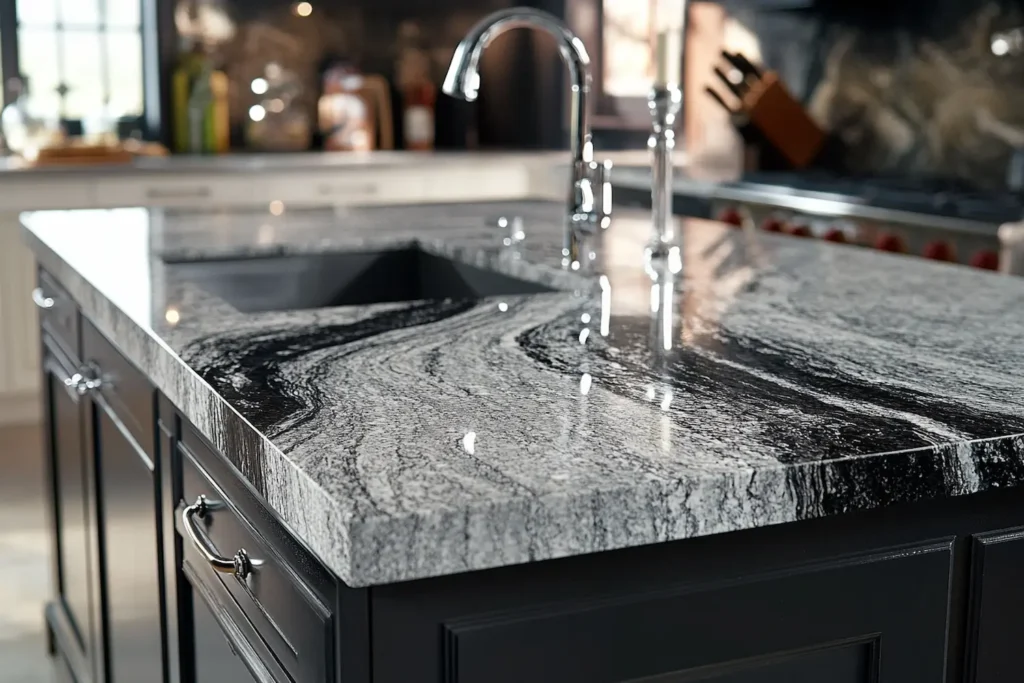
Cabinet colour and door style strongly influence whether granite feels current or dated. The same slab can appear completely different beside dark raised-panel cabinets than beside light wood or simple painted fronts.
Identify the dominant undertones in the granite before selecting cabinet paint or wood.
Examples include:
The cabinets do not need to match every colour in the slab.



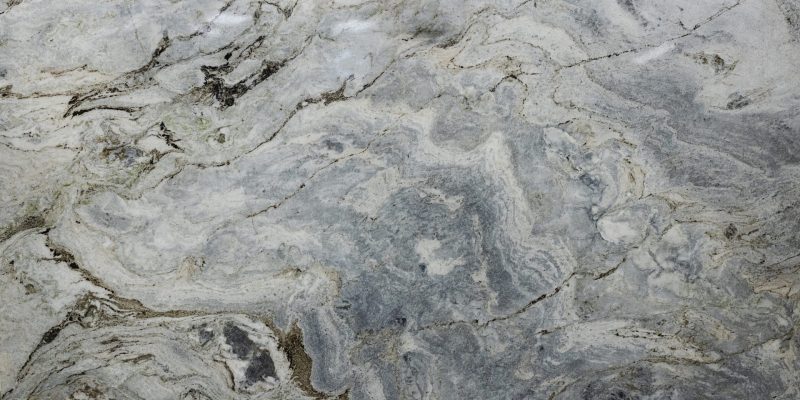
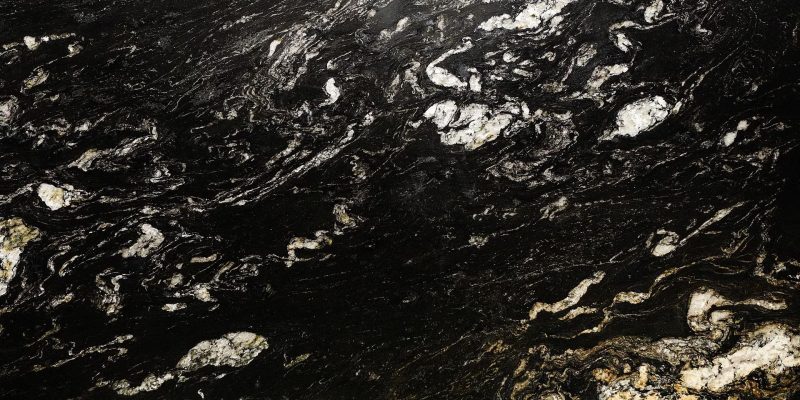
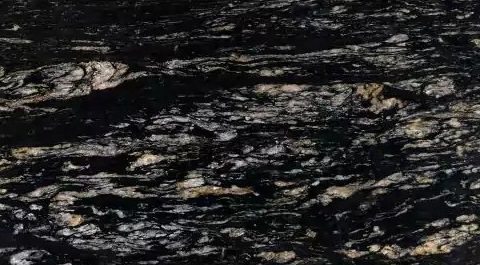


When the granite contains strong colour variation or movement, simple cabinet fronts usually create a clearer visual balance.
Flat-panel, Shaker or lightly detailed doors can allow the stone to remain the main pattern without adding unnecessary competition.
Dark granite may feel more current when paired with:
Dark stone does not always require white cabinetry. Natural oak, walnut and warm neutral colours can create a less severe contrast.
The backsplash is one of the most common reasons an otherwise functional granite countertop feels dated.
When granite contains several colours or strong mineral movement, consider:
Avoid trying to repeat every colour in the granite through a multi-coloured mosaic. This often increases visual noise rather than creating unity.
A stronger backsplash may work with black, white or subtly patterned granite. In that case, the countertop acts as a stable background rather than a competing focal surface.
Review:
Backsplash Rule
When the granite is visually active, the backsplash should usually provide contrast through simplicity—not through another strong pattern.
Edge profiles affect the visual period of a granite installation. Highly decorative edges may suit specific traditional interiors, but simpler profiles generally adapt more easily to modern and transitional kitchens.
A mitered edge should be selected deliberately. Excessive visual thickness can make a smaller kitchen feel heavy, particularly when the granite is dark or strongly patterned.
Ogee and other detailed profiles are not automatically wrong. They may remain appropriate in a formal traditional kitchen where cabinetry, mouldings and hardware use a similar design language.
The problem arises when an ornate edge is retained while the rest of the kitchen is being simplified into a modern design.
Granite does not need to cover every countertop surface to remain relevant. Using it selectively can give the material a clearer role and reduce visual competition.
A granite island may work well when:
This approach can preserve the character of natural stone while keeping the overall kitchen controlled.
One granite may also be used on the island and perimeter when:
Mixed countertops should not look accidental. The island and perimeter materials can connect through:
The decision should create visual hierarchy rather than divide the kitchen into unrelated surfaces.
An existing granite countertop does not always need to be removed because the kitchen feels dated. In many renovations, the surrounding finishes create more visual age than the stone itself.
A busy mosaic or multi-coloured backsplash can amplify every colour in the granite. Replacing it with a quieter tile or a controlled neutral surface may make the countertop appear more current.
Choose a backsplash that connects with one stable tone in the granite rather than trying to match every mineral colour.
Cabinet colour can change the visual character of granite significantly.
Possible directions include:
Always test cabinet samples beside the countertop and flooring under the kitchen’s actual lighting.
Updated cabinet pulls, faucets and lighting can reduce the visual weight of an older installation.
Use a controlled metal palette rather than introducing several unrelated finishes. Improved under-cabinet lighting can also clarify the granite’s colour and reduce dark or yellow-looking areas.
Strongly patterned granite appears busier when covered with appliances, containers and decorative objects. Improving appliance storage and leaving more visible work surface can make the design feel cleaner without changing the material.
An existing decorative edge normally cannot be changed substantially without refinishing or replacing the countertop. However, removing an unnecessary short granite upstand during a backsplash renovation may create a simpler transition when the installation conditions permit it.
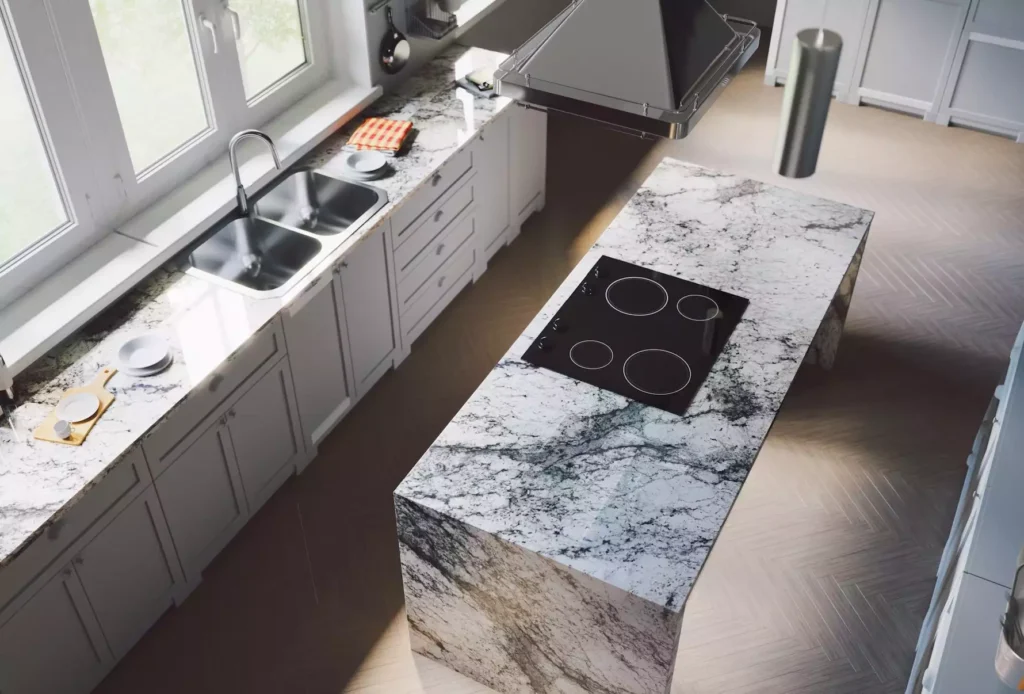
Modernization Priority
Before replacing granite, test changes to the backsplash, cabinet colour, hardware and lighting. These elements may be responsible for most of the dated appearance.
Replacement may be appropriate when the existing countertop cannot support the planned renovation or when its colour and layout prevent a coherent design.
Trends change more quickly than a professionally installed stone countertop. If the granite remains structurally sound and can be coordinated with the renovated kitchen, replacing it only to follow a temporary style may add cost without improving function.
Review the complete renovation scope before deciding. Countertop removal may also affect cabinets, backsplash, plumbing and appliances.
Modern kitchens generally benefit from:
Transitional design can accommodate a broader range of granite because it combines traditional warmth with simplified detailing.
Granite may work with:
Warm, richly patterned granite and decorative edges may remain appropriate in a deliberately traditional interior. The objective is consistency rather than making every traditional element appear contemporary.
A traditional granite installation can still feel intentional when the cabinet detailing, lighting, hardware and architectural character support the same style.
Granite may remain attractive to buyers who value natural stone, durability and unique slab variation. However, the material name alone does not guarantee a higher property value or stronger buyer response.
Resale appeal also depends on:
A well-coordinated granite kitchen may appeal more broadly than a newer but poorly matched surface. Conversely, a highly specific colour combination may limit buyer compatibility even when the countertop itself remains functional.
No. Some granite combinations may look dated, but the material can still work in modern, transitional and traditional kitchens.
White, soft grey, black, charcoal and controlled warm-neutral granite often integrate easily with current cabinetry. The correct choice depends on the complete room.
No. Brown and gold granite may still work with compatible warm cabinets, restrained backsplash materials and appropriate lighting.
No. Polished granite remains appropriate when its reflectivity and colour suit the design. Honed and leathered finishes provide lower-sheen alternatives.
Yes. Updating the cabinet colour, backsplash, hardware, lighting and countertop styling may change the appearance significantly.
Not necessarily. It can be used as a feature island or across the entire kitchen. Pattern scale and visual balance should guide the decision.
Quartz often provides more controlled patterning, but material alone does not determine whether a kitchen looks modern. Granite can also support contemporary design when selected and detailed appropriately.
Replacement depends on the new layout, countertop condition, openings and whether the stone can be removed safely. Existing granite is not always reusable.
Granite countertops are not going out of style as a material category. What has changed is how they are selected and combined with the rest of the kitchen.
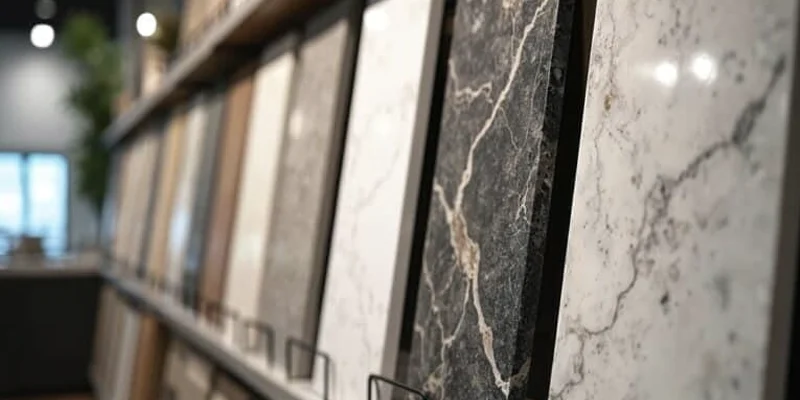
A granite slab can look current when its colour, pattern, finish and edge profile support the cabinetry, backsplash and architectural style. Before replacing an existing countertop, determine whether the stone itself is the problem or whether the surrounding design needs to be simplified.
Considering Granite for Your Kitchen?
Compare full slabs, finishes and pattern scale alongside your cabinet, flooring and backsplash selections before approving the design.