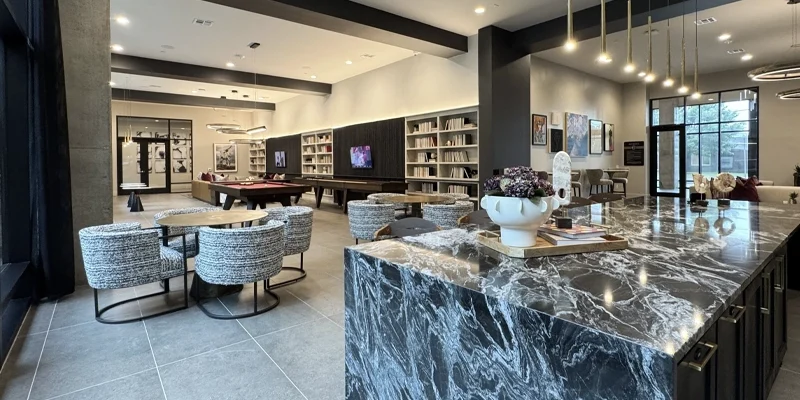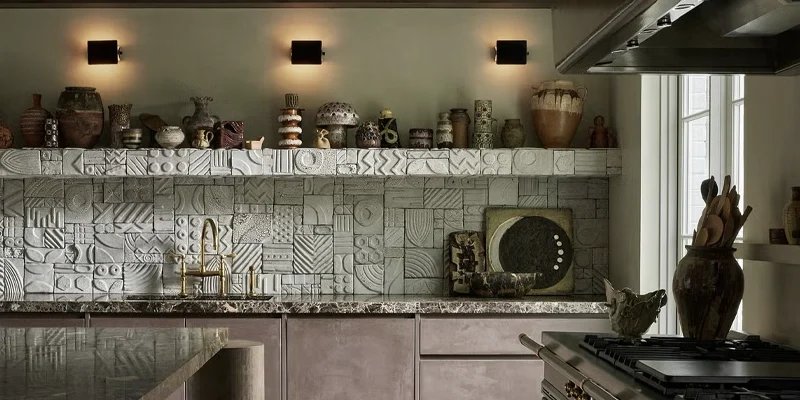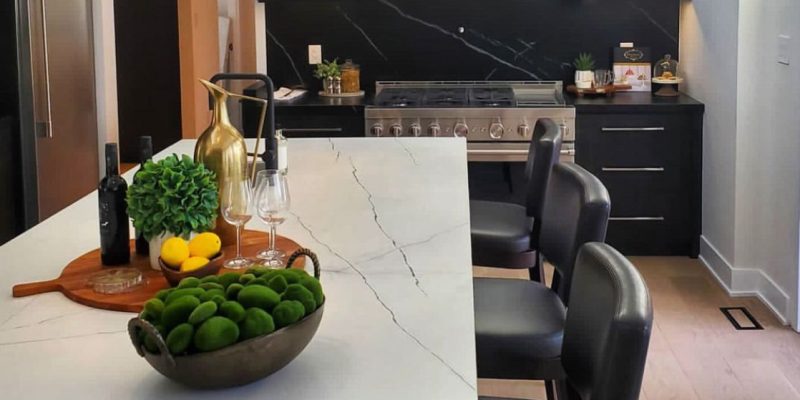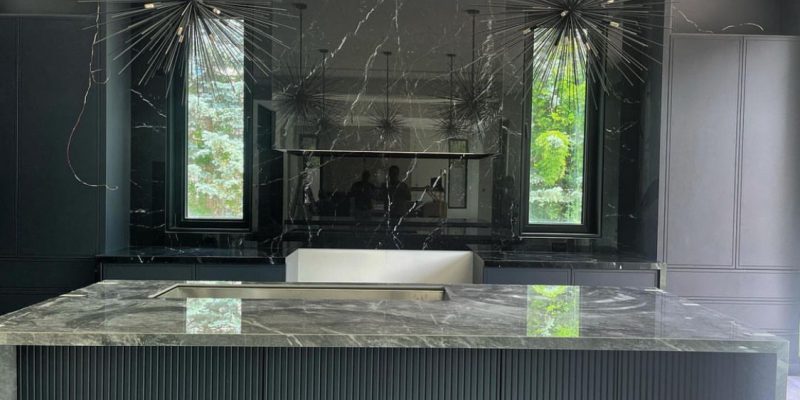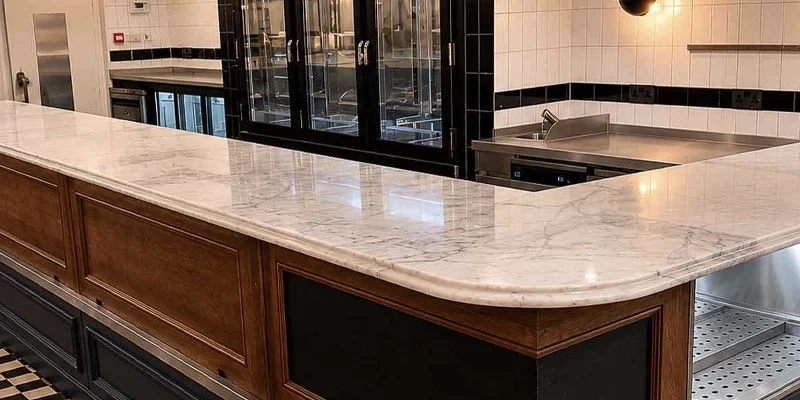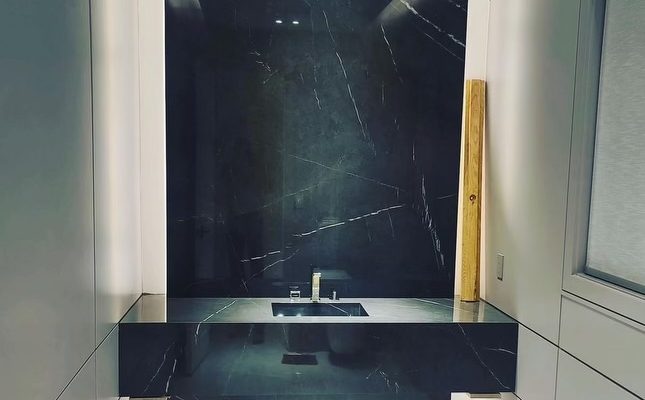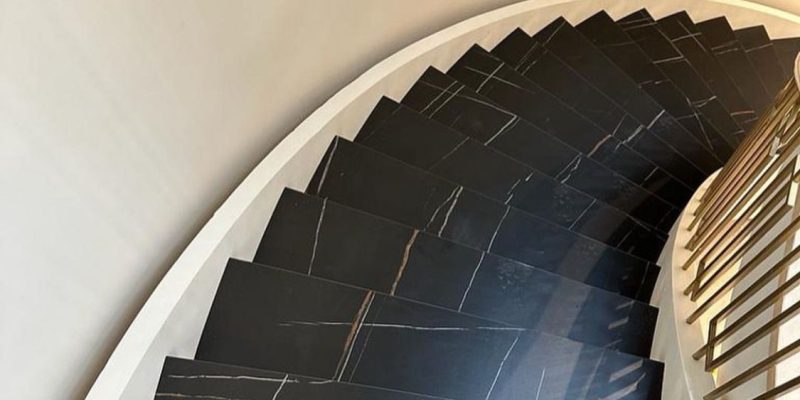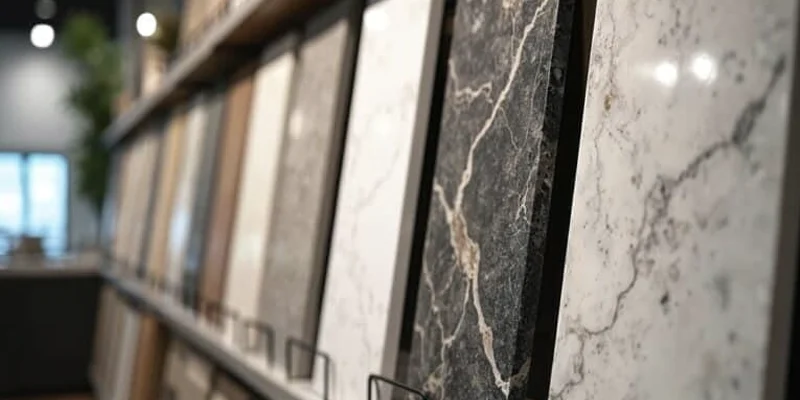
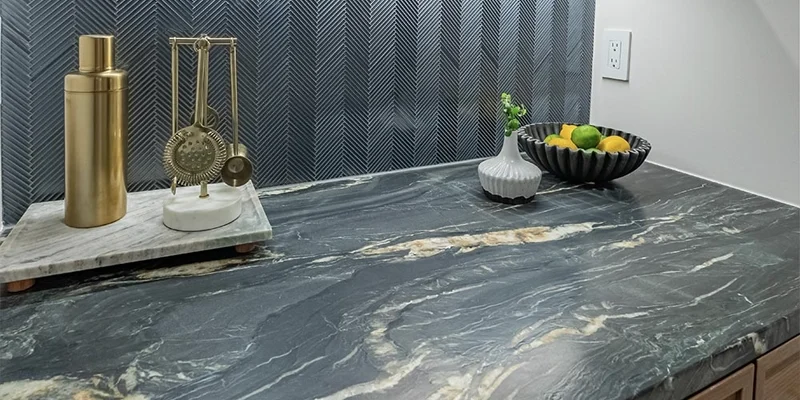
Best granite countertop options are not defined by price alone. The right granite depends on the slab’s colour, pattern scale, mineral movement, finish, kitchen lighting, cabinetry and the amount of visible countertop surface.
Granite is a natural stone, which means every slab is different. Two slabs sold under the same colour name may still vary in background tone, crystal distribution, veining and overall movement. For this reason, homeowners should evaluate the full slab rather than making a final decision from a small sample or online photograph.
For Toronto and GTA kitchens, granite remains especially valuable when homeowners want natural variation, practical heat resistance and a surface that can work in modern, transitional or traditional interiors.
This guide explains how to compare granite colours, patterns and finishes, coordinate the stone with cabinetry and choose the strongest slab sections for islands, perimeter countertops and other visible surfaces.
Homeowners can begin by browsing the Teccorp Stone granite collection or reviewing available options during the planning stage of a kitchen countertop project.
Quick Selection Rule
Choose granite by reviewing the complete slab against the actual cabinetry, lighting and countertop dimensions—not by relying only on a colour name or small sample.
A good granite option should support both the appearance and everyday function of the kitchen. The most expensive or dramatic slab is not automatically the best choice.
The selection should be evaluated according to:
Granite with strong visual movement can become the primary design feature in a simple kitchen. A quieter granite may be more appropriate when the cabinetry, backsplash or flooring already contains noticeable texture or pattern.
The goal is not to select the most visually active slab. It is to choose a slab whose scale and colour remain balanced after fabrication.
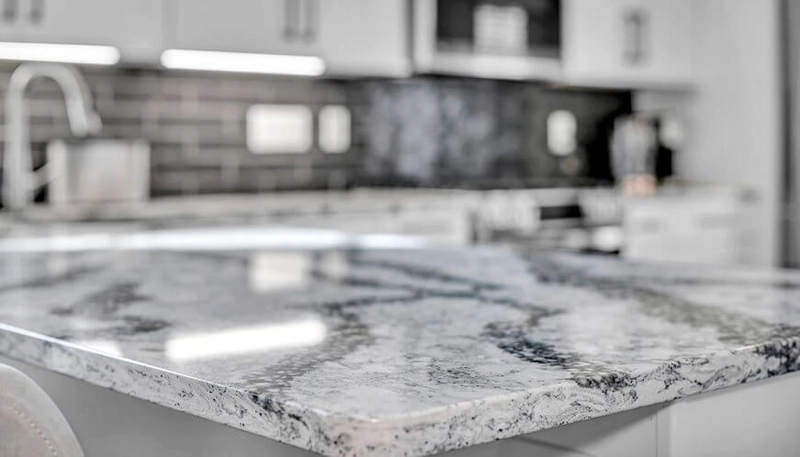
Granite colour should be evaluated in relation to fixed kitchen elements rather than selected in isolation.
Important surrounding finishes include:
A granite slab may look neutral in a showroom but appear noticeably warmer or cooler beside the installed cabinetry. Grey granite can reveal blue, green or brown undertones. White granite may contain cream, silver, black or burgundy mineral deposits.
Samples of cabinet doors, flooring and backsplash materials should therefore be reviewed beside the actual slab whenever possible.
Pattern intensity becomes more important as the amount of visible surface increases.
A compact kitchen with short countertop runs may benefit from a controlled, fine-grained granite because the pattern will be divided by appliances, corners and cabinetry.
A large island or uninterrupted countertop run can display stronger movement more successfully because the slab has enough space to show its natural pattern.
Natural stone can change significantly under warm, cool and natural light.
Before approval, review whether the slab:
This is especially important in Toronto condos and open-concept homes where the countertop may be visible under several lighting conditions throughout the day.
White and light granite can brighten a kitchen while preserving the natural character of stone. Unlike solid white engineered surfaces, light granite normally includes visible crystals, speckling, mineral deposits or flowing movement.
These slabs work particularly well in:
Light granite does not always create a subtle appearance. Some varieties contain strong black, brown, blue or burgundy minerals that become highly visible across a large island.
Homeowners seeking a quiet design should look for a controlled background with relatively even mineral distribution. Those who want the countertop to become a focal point may prefer broader movement or stronger contrast.
White-on-white combinations work best when the undertones are coordinated.
A cool white cabinet may clash with granite containing a strong cream or gold background. A warm off-white cabinet may look disconnected from granite with a blue-grey base.
The two surfaces do not need to match exactly. A slight contrast often produces a more intentional result than attempting to create an imperfect colour match.
Light granite can create strong contrast against navy, charcoal, espresso or black cabinetry. This combination helps prevent the kitchen from feeling visually heavy and can make the natural granite pattern more noticeable.
The level of contrast should still be controlled. A light slab with excessive dark movement may create a busy result when paired with detailed cabinet doors or a patterned backsplash.
Grey and black granite provide a stronger architectural appearance and can work in both modern and traditional kitchens.
Grey granite may range from pale silver backgrounds to deep charcoal tones. The stone can contain fine crystals, cloud-like movement or contrasting mineral deposits.
Black granite generally creates a cleaner and more dramatic surface. Some slabs appear nearly uniform, while others contain silver crystals, gold movement or subtle texture that becomes more visible under direct light.
Grey granite is often suitable when homeowners want:
The undertone should be reviewed carefully. Some grey granites lean blue, while others contain warmer brown or green minerals.
Black granite can create a refined and highly defined appearance, particularly on islands, bar areas and kitchens with light cabinetry.
It is often effective in:
Highly polished black granite may show dust, fingerprints, water spots and streaks more clearly than patterned or leathered surfaces. Homeowners who prefer a softer appearance may consider a leathered or honed finish where appropriate.
Warm granite includes beige, cream, gold, tan, brown and mixed earth-tone backgrounds. These colours are particularly effective in kitchens that use natural wood, warm white paint, bronze fixtures or traditional cabinet detailing.
Warm granite can create a comfortable and established appearance without relying on highly dramatic veining.
It commonly suits:
The main risk is combining too many warm finishes without enough visual separation. Beige granite, warm flooring, wood cabinetry and a cream backsplash can blend together if they all sit within a similar value range.
Contrast can be introduced through darker cabinet hardware, a simpler backsplash, defined edge details or a granite slab containing controlled black or grey mineral deposits.
Design Tip
When the cabinetry and flooring are both warm, choose granite with enough contrast to remain visible rather than selecting another surface with nearly identical beige or brown tones.
Exotic granite generally contains stronger colour transitions, larger mineral formations or broad natural movement. These slabs are often selected when the countertop is intended to become a central design feature rather than a quiet supporting surface.
High-movement granite may include:
These characteristics can create a highly individual kitchen, but they also require more careful slab-layout planning. Sink openings, cooktops, seams and corners may interrupt an important section of the pattern if their placement is not reviewed before fabrication.
Exotic granite works best when the kitchen provides enough uninterrupted surface to display the stone properly. A large island, extended peninsula or long perimeter run usually presents dramatic movement more effectively than several short countertop sections.
A high-movement granite may be appropriate when:
When several strong design features already exist, dramatic granite can make the kitchen feel overcrowded. Detailed cabinet doors, patterned flooring, decorative tile and expressive granite should be coordinated through a clear visual hierarchy.
One major focal surface is usually more effective than several competing patterns.
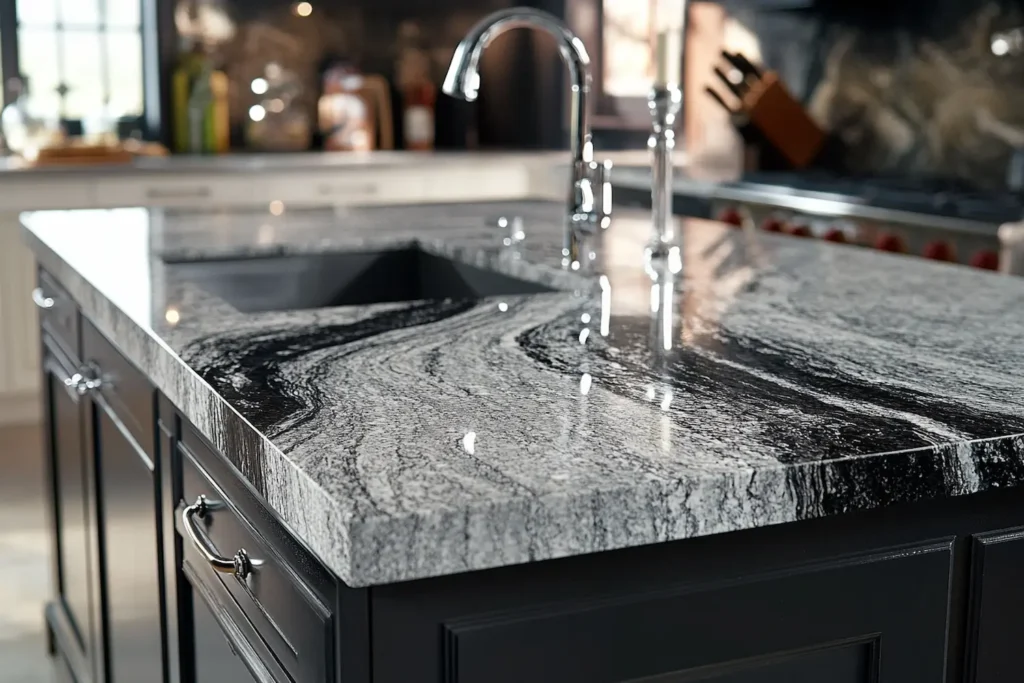
Granite pattern scale affects how the countertop appears after it is divided into individual pieces. A pattern that looks balanced across a full slab may appear very different after sink and appliance cut-outs are added.
Fine-grain granite contains smaller crystals, speckling or relatively controlled movement. It creates a more consistent appearance across separate countertop sections and is often easier to coordinate around corners, seams and appliance openings.
Fine-grain granite may suit:
Controlled patterns can also help disguise crumbs, light water marks and minor daily residue better than completely solid dark or white surfaces.
Medium-movement granite offers a balance between visual character and layout flexibility. It may include visible mineral clusters, soft waves or colour variation without one dominant vein controlling the entire slab.
This category is often practical for Toronto kitchens because it provides natural-stone character while remaining adaptable to perimeter counters, islands and connected sections.
Large-scale granite includes prominent veins, broad colour transitions or concentrated mineral formations. It should be treated as a directional design material.
Before fabrication, the layout should determine:
The most expressive section should generally be assigned to the surface with the greatest visibility. Less distinctive areas may work better around cut-outs, short returns or supporting countertop runs.
Pattern-Scale Rule
Use finer patterns across divided or compact layouts. Reserve broad granite movement for islands and long surfaces where the natural pattern can remain visible.
The selected finish affects colour depth, reflection, texture, maintenance and how clearly fingerprints or surface marks appear.
Not every granite variety is available or equally effective in every finish. The final decision should be based on the actual slab and the finish options recommended for that material.
Polished granite has a smooth, reflective surface that increases colour depth and highlights crystals and natural movement.
It is the most familiar granite finish and works well when homeowners want:
Polished surfaces reflect surrounding lighting and may make a darker kitchen feel brighter.


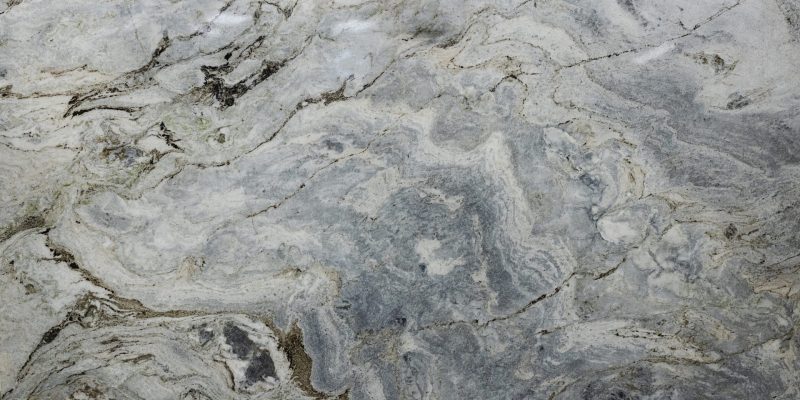

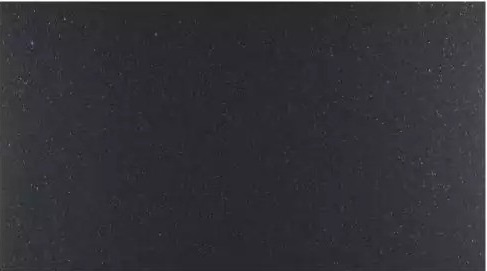
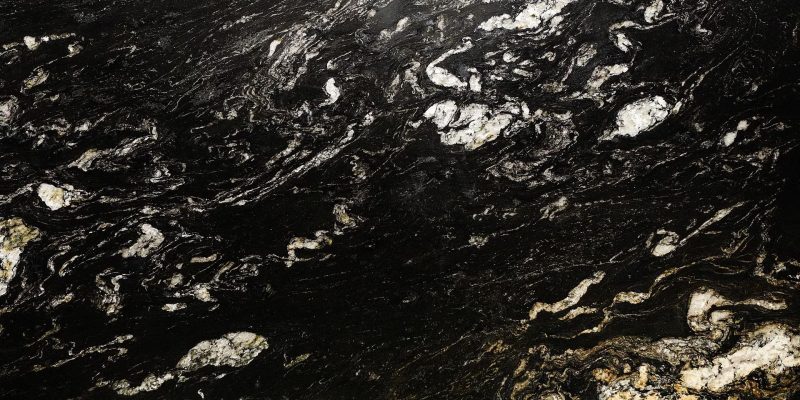



Honed granite has a smooth matte or low-sheen finish. It reduces reflection and gives the surface a softer, more understated appearance.
Honed finishes may suit:
Honing can make the granite colour appear lighter or less saturated than it does when polished. On some darker stones, oils, fingerprints or uneven marks may also become more noticeable.
The appearance and maintenance expectations should therefore be reviewed on an actual finished sample rather than assumed from a photograph.
Leathered granite has a textured, low-reflection surface created by brushing the stone after initial finishing. It emphasizes natural mineral structure and produces a tactile appearance that works especially well with dark or strongly patterned granite.
Leathered granite can:
Because the surface is textured, cleaning may require slightly more attention than a completely smooth polished finish. The amount of texture also varies between materials and finishing processes.
| Finish | Appearance | Main Advantage | Consideration |
|---|---|---|---|
| Polished | Glossy and colour-rich | Highlights mineral depth and reflects light | May show glare, fingerprints and water marks |
| Honed | Smooth with low sheen | Creates a softer contemporary appearance | May show oils or handling marks on some stones |
| Leathered | Textured and low-reflection | Adds tactile character and reduces glare | Textured areas may require more detailed cleaning |
Homeowners can compare polished and leathered options such as Black Pearl, Cambrian Black, Belvedere and other available materials through the granite slab collection.
The strongest granite and cabinet combinations are based on controlled contrast, compatible undertones and an intentional balance of pattern.
The countertop does not need to match the cabinetry exactly. In many kitchens, a clear but coordinated contrast produces a stronger result.
White cabinetry can support nearly every granite colour, but the stone’s undertone remains important.
Possible directions include:
When both the cabinets and granite are light, the backsplash or hardware may need to provide additional definition.
Grey cabinets can have blue, green, violet or brown undertones. Granite should be reviewed beside the actual cabinet finish to prevent an unintended conflict.
Light granite can brighten charcoal cabinetry, while black or darker grey granite can create a controlled monochrome design. Warm granite may also balance cool grey cabinets when the flooring or surrounding finishes contain natural wood tones.
Natural wood cabinetry already contains grain and colour variation. Granite should complement this character without creating excessive visual activity.
For oak, maple, walnut or cherry cabinets:
Navy, green, charcoal and black cabinetry can support both light and dramatic granite.
Light granite provides contrast and helps maintain brightness. Dark granite creates a more immersive appearance but requires sufficient lighting and visual separation from the cabinets.
When coloured cabinetry is used, small mineral tones within the granite can create a useful connection. However, the countertop should not depend on matching one minor colour visible only in a small sample. The complete slab must still coordinate with the overall cabinet finish.
Cabinet Coordination Tip
When the cabinet doors contain visible grain, colour variation or decorative detail, choose a more controlled granite pattern. When the cabinetry is simple, the granite can carry more visual movement.
The best granite option may differ according to where the stone will be installed. A kitchen island usually has greater visibility and fewer interruptions, while perimeter countertops often contain corners, appliances, sinks and several shorter sections.
A large island can display natural granite movement more effectively than most perimeter layouts. It may justify a slab with stronger contrast, larger mineral formations or a more distinctive finish.
When selecting granite for an island, review:
The most expressive section of the slab should generally be directed toward the most visible part of the island. If the island includes a large sink or cooktop, the pattern should be mapped so an important feature is not removed during fabrication.
Homeowners planning a feature surface can review TecCorp Stone’s kitchen island countertop service before approving the slab layout.
Perimeter countertops usually benefit from patterns that remain balanced after being divided into several pieces.
Fine-grain or medium-movement granite may be easier to coordinate around:
Strongly directional granite can still work on perimeter counters, but each section should be reviewed as part of one connected layout. A dramatic vein may lose its effect when repeatedly interrupted by corners and openings.
Yes, but the combination should appear intentional. One approach is to use restrained granite on the perimeter and a more expressive slab on the island.
When combining materials or granite varieties, coordinate:
The two surfaces should complement each other rather than compete for attention.
A small sample cannot show the complete colour movement, mineral distribution or natural characteristics of a granite slab. Full-slab review is particularly important when the stone contains broad veins, contrasting areas or substantial variation.
During slab review, identify:
Natural fissures and mineral variation are not automatically defects. They are part of many granite slabs, but the fabricator should evaluate whether any feature affects cutting, support, seam placement or the final appearance.
Selecting the slab is only the first step. The proposed cutting layout determines where its strongest and quietest areas will appear after fabrication.
The layout should confirm:
For highly patterned granite, approving the layout before fabrication can prevent important slab features from appearing in low-visibility areas or being removed unnecessarily.
Full-Slab Review Rule
Approve the exact granite slab and proposed piece layout—not only the colour name. Natural stone can vary substantially between slabs sold under the same product name.
Avoiding a few common mistakes can improve both the appearance and long-term satisfaction of the completed countertop.
Before approving granite for fabrication, confirm the following:
Professional countertop survey and measurement helps connect the selected slab with the kitchen dimensions, openings, seam locations and installation conditions.
There is no universal best colour. The right granite should coordinate with the cabinetry, flooring, backsplash, lighting and amount of visible countertop surface.
Both can work across several kitchen styles. Light granite can brighten the space, while black granite creates stronger contrast and definition. The slab’s undertone and pattern are more important than the general colour category alone.
Polished granite offers stronger colour depth and reflection. Leathered granite provides texture and lower glare. The better finish depends on the selected slab, desired appearance and cleaning expectations.
Yes. Controlled granite patterns, dark leathered slabs, light natural stone and simple edge profiles can all work in modern and minimalist kitchens.
It can be, but it is not required. Some kitchens use one granite throughout, while others combine a restrained perimeter surface with a more expressive island.
Full-slab review is strongly recommended because natural movement, colour variation and mineral features cannot be evaluated accurately from a small sample.
Not automatically. Higher pricing may reflect rarity, sourcing, visual movement or limited availability. Performance depends on the actual stone, fabrication, support, installation and care.
The best granite countertop option is the slab that supports the kitchen’s colours, proportions, lighting and intended focal points.
Choose fine or controlled movement for compact and divided layouts. Consider stronger natural patterns for large islands and uninterrupted surfaces. Compare polished, honed and leathered finishes on actual samples, and review the complete slab layout before fabrication begins.
Compare Granite Options for Your Kitchen
Share your cabinetry, kitchen layout, preferred colours and project details to receive guidance on granite slabs, finishes and placement.