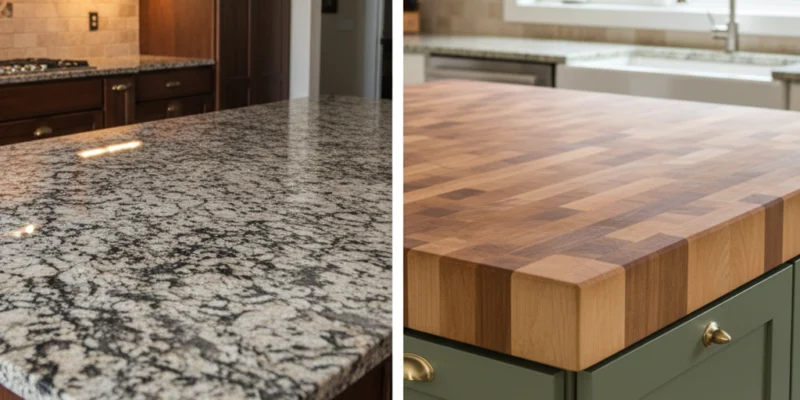
Butcher block vs granite countertops is a practical comparison for homeowners deciding between the warmth of natural wood and the durability of natural stone. Both materials can create an attractive kitchen, but they perform very differently around water, heat, scratches, stains and everyday maintenance.
Butcher block may provide a warmer appearance, lower initial material cost and the ability to sand or refinish visible wear. Granite generally offers stronger resistance to moisture, heat and routine kitchen use, but it is heavier and requires professional fabrication, cabinet support and installation.
The better choice depends on where the countertop will be installed, how frequently the kitchen is used and how much maintenance the household is prepared to manage. Some kitchens may also benefit from combining the two materials—for example, granite around the sink and cooking areas with butcher block on a lower-risk island or serving surface.
Quick Answer
Choose granite when moisture resistance, heat tolerance and lower routine maintenance are the priorities. Choose butcher block when warmth, repairability and natural wood character matter more—and regular protection from water, heat and staining is acceptable.
Butcher block and granite are both natural-material countertop options, but they create different design effects and require different care strategies.
| Comparison Factor | Butcher Block Countertops | Granite Countertops |
|---|---|---|
| Appearance | Warm, natural and wood-grained | Mineral-rich, varied and stone-based |
| Water Performance | More sensitive to standing water and failed finishes | Generally more suitable for sink areas when properly fabricated and maintained |
| Heat | Can scorch or damage the finish | Usually tolerates heat better, but trivets are still recommended |
| Surface Wear | Can scratch, dent or stain, but may be sanded and refinished | More scratch-resistant, but exposed edges may chip under severe impact |
| Maintenance | Requires closer attention to water, finish and surface condition | Care depends on the slab, finish and sealing needs |
| Weight | Usually lighter than granite | Heavy and dependent on secure, level cabinet support |
| Repairability | Many scratches and stains may be sanded or refinished | Minor repairs may be possible, but damaged stone is not refinished like wood |
| Best Use | Islands, serving areas and kitchens prioritizing wood character | Sink zones, cooking areas and high-use perimeter surfaces |
Granite is usually the lower-risk option for a busy sink or cooking zone. Butcher block may be more attractive where tactile warmth, natural wood grain and future refinishing are more important than maximum moisture resistance.
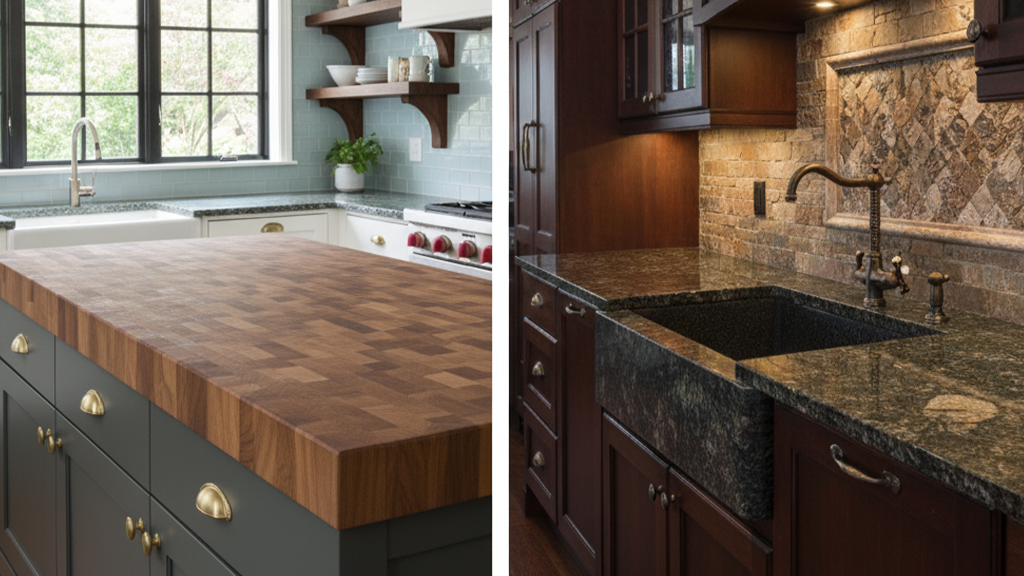
A butcher block countertop is made by joining pieces of solid wood into a larger work surface. The wood may be arranged in long strips, edge-grain sections or end-grain blocks depending on the product and intended appearance.
Common wood species may include maple, oak, walnut, cherry, beech and other hardwoods. The species, construction method, thickness and finish can all affect price, colour, hardness and maintenance.
Butcher block should not be treated as a completely maintenance-free surface. Water around sinks, seams, faucets and exposed edges requires particular attention. An unsuitable finish, damaged coating or neglected spill can allow moisture to affect the wood.
Edge-grain butcher block is formed from long wood strips placed on their edges. It is commonly used for full countertops because it provides a relatively consistent appearance and efficient construction.
End-grain butcher block exposes the ends of the wood fibres in a block-like pattern. It may be thicker, more visually distinctive and more expensive. It is often associated with cutting surfaces, but a countertop should not automatically be used for direct food preparation unless its finish, maintenance and hygiene plan are appropriate for that purpose.
A decorative butcher block countertop is not always intended to function as a cutting board. Many installed wood countertops use protective finishes designed to control moisture and staining. Cutting directly on the surface may damage that finish and create visible knife marks.
The selected product and finish should determine whether direct food contact or cutting is appropriate. Manufacturer or fabricator guidance should take priority over generic assumptions about butcher block.
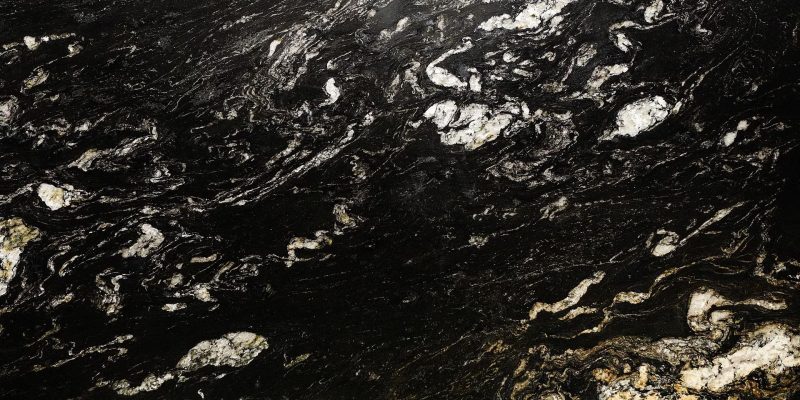
Granite is a natural stone cut into slabs and fabricated according to the kitchen layout. Each slab contains its own mineral distribution, colour movement and natural characteristics.
Granite countertops are commonly selected for their combination of natural appearance, surface hardness and heat tolerance. They can be used across perimeter counters, islands, vanities and other stone applications when supported and installed correctly.
Granite is not completely resistant to damage. Exposed edges, corners and narrow areas around sink or cooktop cut-outs can chip under concentrated impact. Some slabs may also benefit from sealing, depending on their absorption, finish and existing treatment.
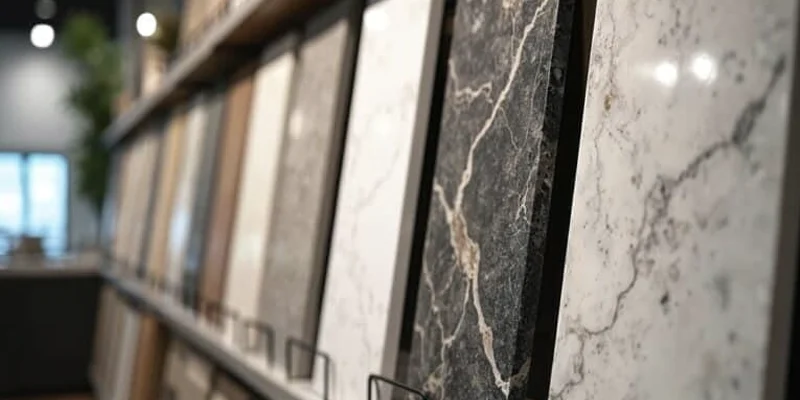
The full slab should be reviewed before fabrication because colour and movement may vary substantially across the material. Homeowners can browse available granite countertop options before comparing the selected stone with cabinetry, flooring and the planned countertop dimensions.
Butcher block may have a lower starting material price than professionally fabricated granite, but the final cost depends on the wood species, construction, thickness, finish, layout and installation requirements.
Granite pricing depends on the selected slab, material level, slab quantity, fabrication, edges, cut-outs, seams, delivery and installation. A simple granite layout may cost less than a highly customized butcher block project using premium wood, thick construction or complex finishing.
| Cost Factor | Butcher Block | Granite |
|---|---|---|
| Material Variables | Wood species, grain construction, thickness and finish | Slab variety, level, finish, dimensions and availability |
| Fabrication | Cutting, joining, sanding, finishing and sink treatment | Templating, cutting, polishing, edges and cut-outs |
| Installation | May be simpler for basic sections, but moisture detailing remains important | Requires professional handling, secure support and seam installation |
| Long-Term Cost | May include refinishing, resealing or repairs to water-damaged areas | May include sealing where appropriate and repair of chips or damaged seams |
Homeowners comparing granite price levels can review the dedicated guide to granite countertop cost in Toronto. This comparison page focuses on the practical difference between wood and stone rather than repeating detailed granite pricing.
TecCorp Stone fabricates and installs granite and other stone countertop surfaces. Butcher block is discussed in this guide as a comparison material and may require a separate wood-countertop supplier or contractor.
Cost Comparison Rule
Compare the complete material, fabrication, finishing, installation and long-term care requirements. Butcher block is not always the lower-cost option, and granite pricing should not be judged from the slab price alone.
Butcher block and granite can both remain functional for many years, but they respond differently to impact, moisture and everyday wear.
Butcher block is resilient rather than rigid. It can absorb some everyday impact without chipping, but heavy cookware, sharp tools and concentrated pressure may create dents, cuts or compressed areas.
Its main advantage is repairability. Many surface scratches, stains and shallow dents can be reduced through sanding and refinishing when the wood and finish remain in suitable condition.
However, repair becomes more difficult when damage includes:
Long-term performance depends heavily on the wood species, construction method, finish and maintenance of exposed edges and openings.
Granite is harder and generally more resistant to routine scratching, denting and surface wear than wood. It is well suited to high-use preparation areas when the slab is fabricated, supported and installed correctly.
Its rigidity also creates specific vulnerabilities. Concentrated impact may chip:
Granite cannot be sanded and refinished in the same way as butcher block. Some chips and surface damage may be repaired by a stone professional, but the result depends on the location, stone pattern and severity of the damage.
Durability Summary
Granite generally resists daily wear better, while butcher block offers greater potential for sanding and refinishing. Neither material is immune to damage.
Moisture exposure is one of the most important differences in the butcher block vs granite countertop comparison.
Butcher block can be installed near a sink, but this area requires careful detailing and consistent maintenance. Water may collect around the faucet, sink rim, seams and exposed cut-out edges.
Potential problems include:
The sink cut-out, underside and surrounding edges must be finished according to the wood-countertop supplier’s requirements. Spills should be wiped promptly, and the protective finish should be maintained before it fails.
An undermount sink can leave the wood edge more directly exposed to water. Its suitability depends on the countertop construction, finish and installation details.




Granite is generally the lower-risk option for wet kitchen zones. It does not swell or warp like wood, and professionally finished sink openings can provide a durable countertop edge.
Performance still depends on:
Water should not be allowed to remain around faucets, seams or failed sealant. Although granite handles moisture better than butcher block, the complete installation still includes cabinet, sink and sealant components that require protection.
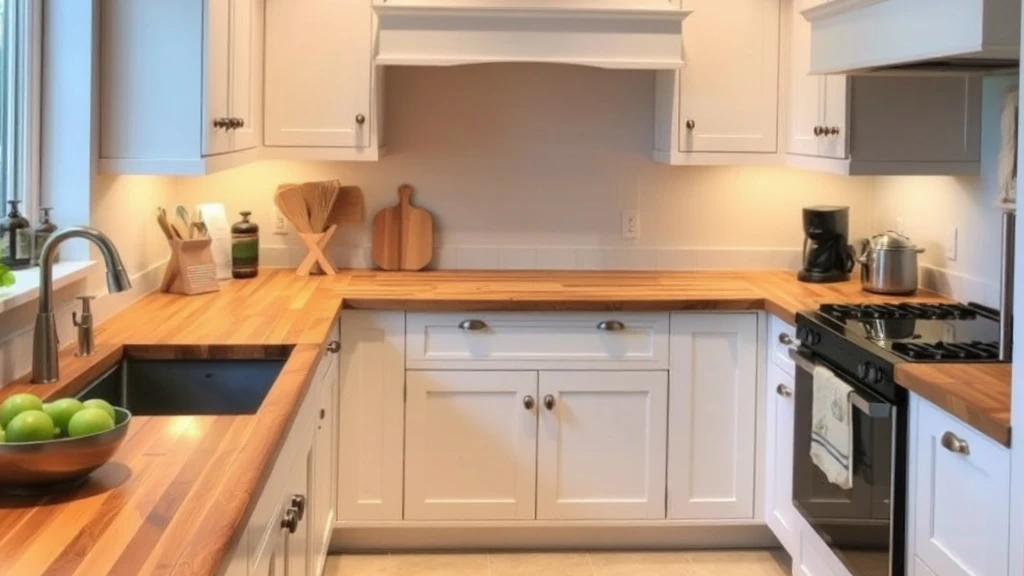
Neither countertop should be used as a permanent substitute for a trivet, but granite and butcher block respond differently to hot cookware.
Hot pots, pans and appliances may scorch the wood, darken the surface or damage the protective finish. Heat can also dry or alter the wood unevenly.
Use heat-resistant pads beneath:
A scorched wood surface may sometimes be sanded and refinished, but repair may change the surrounding colour or finish.
Granite generally tolerates surface heat better than wood and resin-based engineered countertops. However, placing very hot cookware directly on the surface is still not recommended.
Trivets help protect:
Sudden temperature differences may also create unnecessary stress, especially near cut-outs or existing weaknesses. Granite’s heat tolerance should therefore be treated as a performance advantage, not permission for uncontrolled direct heat.
Knife marks, dragged cookware and abrasive objects can scratch butcher block. Some homeowners accept these marks as part of a developing wood patina, while others prefer a consistently refinished appearance.
Many shallow marks can be reduced through sanding, but the repair process depends on the finish. A localized repair may not blend perfectly with an older surrounding surface.
Cutting directly on a finished butcher block countertop is not automatically recommended. It may damage the coating, create grooves and increase maintenance requirements. A separate cutting board is usually the safer choice.
Granite is generally more resistant to ordinary scratching, but it can still be marked by abrasive minerals or damaged through concentrated impact.
Chipping is more likely at:
Small chips may be repaired professionally, although colour and pattern matching can affect how visible the repair remains.
Butcher block is generally easier to sand and refinish when damage is limited to the surface. Granite resists more everyday wear, but repairs usually require specialized stone products and professional work.
The choice therefore involves a trade-off:
Granite generally requires less routine intervention than butcher block, but neither material should be described as maintenance-free.
Care depends on the finish applied to the wood. Some butcher block is treated with penetrating oil, while other countertops use a film-forming protective finish.
Routine care may include:
Generic maintenance schedules should be avoided because an oiled worktop and a sealed decorative countertop do not require identical care.
Granite should be cleaned with a soft cloth and a product suitable for natural stone. Abrasive cleaners and acidic household products may affect the finish or applied treatment.
Some granite slabs may benefit from sealing, while others absorb very little and may not require frequent treatment. The need should be assessed according to:
A universal annual or 12-month sealing schedule should not be assumed.
| Maintenance Task | Butcher Block | Granite |
|---|---|---|
| Daily spills | Remove promptly, especially near sinks | Remove promptly to protect the surface and seams |
| Protective treatment | Depends on oil or finish system | Depends on slab absorption and existing sealer |
| Surface renewal | May be sanded and refinished | Usually requires stone-specific repair or refinishing |
| Water sensitivity | Higher | Lower, but installation components still require care |
Butcher block is better suited to homeowners who accept active surface care and periodic renewal. Granite is generally easier for households that want a lower-maintenance preparation and sink area.
Butcher block and granite create very different visual effects. Butcher block introduces warmth, visible wood grain and a softer residential character. Granite provides natural mineral variation, stronger contrast and a more substantial stone appearance.
Butcher block may work well in:
The wood species and finish should coordinate with the cabinetry and flooring without creating an unintended near-match. When the kitchen already contains visible wood grain, introducing another wood tone requires careful undertone and pattern coordination.
Granite can support traditional, transitional and modern kitchens depending on its colour, pattern and finish.
It may be appropriate when:
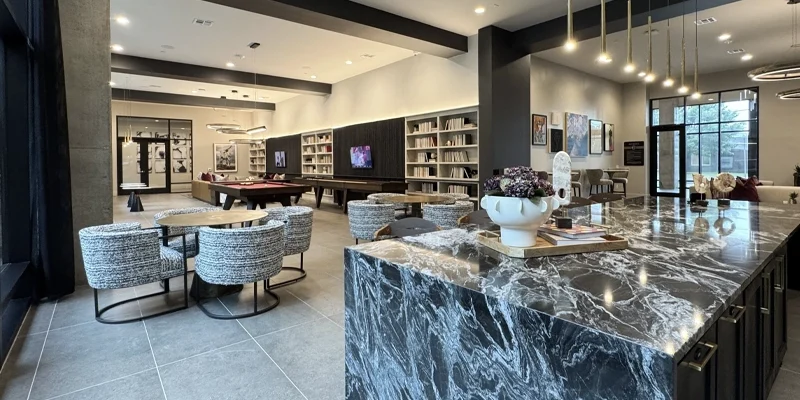
Fine-grain granite can provide a quieter surface across divided layouts, while larger mineral movement is often better displayed on islands and long uninterrupted runs.
Granite is substantially heavier than butcher block and normally requires professional templating, fabrication, transportation and installation. The cabinets must be secure, level and properly supported before final measurement.
Installation planning may need to account for:
Butcher block is generally lighter and may be easier to handle, but it still requires accurate fitting, controlled expansion allowances and proper protection around sinks, seams and exposed edges.
Wood can respond to changes in moisture and environmental conditions. Installation methods should allow for the characteristics of the selected wood product rather than fastening the surface without regard to possible movement.
Before either material is measured or installed, confirm that:
Professional countertop survey and measurement helps connect the selected stone with cabinet conditions, openings, seams and installation access.
A mixed-material kitchen can use each surface where its strengths provide the greatest value.
One practical configuration is:
This approach is not automatically suitable for every kitchen. The materials should be coordinated according to:
A butcher block island may work well when the surface is used for serving, seating or light preparation and the household accepts regular maintenance.
Additional care is necessary when the island includes a sink or cooktop. Water exposure, heat and cut-outs can introduce the same risks found on perimeter wood countertops.
Granite may be the stronger option when the island includes:
Review TecCorp Stone’s kitchen island countertop service when the design includes stone overhangs, appliance openings, seams or waterfall panels.
Mixed-Material Rule
Use granite in the areas exposed most frequently to water, heat and heavy preparation. Use butcher block where warmth and repairability justify its additional maintenance.
Granite is generally the more practical option for a heavily used family kitchen because it handles moisture, heat and daily preparation with less routine intervention.
Butcher block may still be used successfully on a secondary surface or island when spills are managed promptly and the finish is maintained.
Granite may create fewer maintenance variables in a rental kitchen. Butcher block can be refinished, but water damage or neglected finish maintenance may require more substantial repair.
The decision should also consider the property budget, cabinet condition and access to appropriate maintenance between tenants.
Butcher block has the advantage when visible surface marks and shallow scratches need to be renewed through sanding and refinishing. Granite generally resists more wear initially but requires stone-specific repair when chipped or damaged.
It can have a lower starting price, but the final cost depends on wood species, construction, thickness, finish and installation. Custom butcher block may cost more than some commonly available granite options.
Granite is generally the lower-risk option because it does not swell or warp like wood. Butcher block can be used near a sink only when the product, finish and installation details are appropriate and maintained consistently.
Granite generally tolerates heat better than butcher block, but trivets are still recommended to protect the stone, sealer, seams and surrounding installation components.
Many scratches, shallow stains and visible surface marks can be reduced through sanding and refinishing. Deep moisture damage, warping or separated joints may require more extensive repair or replacement.
Not necessarily. Sealing requirements depend on the actual slab, absorption, finish and existing treatment. A fixed annual schedule should not be assumed.
Yes. Granite may be used around sinks and cooking zones, while butcher block can introduce warmth on an island or secondary surface. The materials should be coordinated intentionally.
Both can last for many years when installed and maintained correctly. Granite generally resists everyday wear more effectively, while butcher block offers greater potential for periodic refinishing.
Choose granite when moisture performance, heat tolerance and lower routine maintenance are the main priorities. Choose butcher block when natural warmth, tactile wood character and surface renewal are more important.
A mixed-material design may provide the best balance in some kitchens, but each surface should be selected according to its actual location, use and maintenance requirements.
Considering Granite for Your Kitchen?
Share your kitchen layout, cabinet condition and preferred stone style to review granite options for perimeter counters, islands and high-use surfaces.
Discuss Your Countertop Project
Explore Kitchen Countertop Services