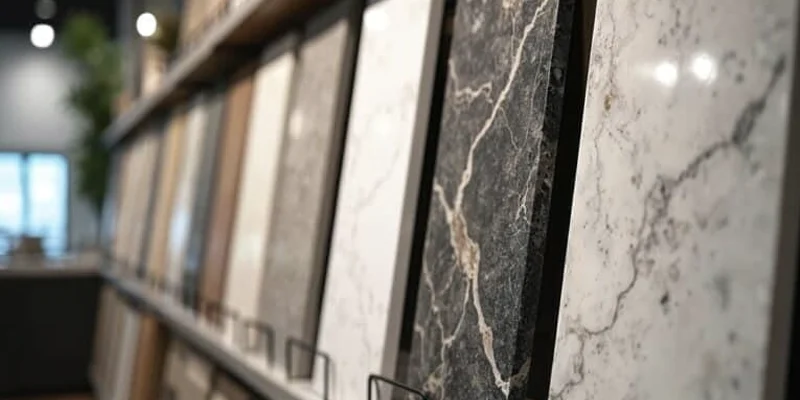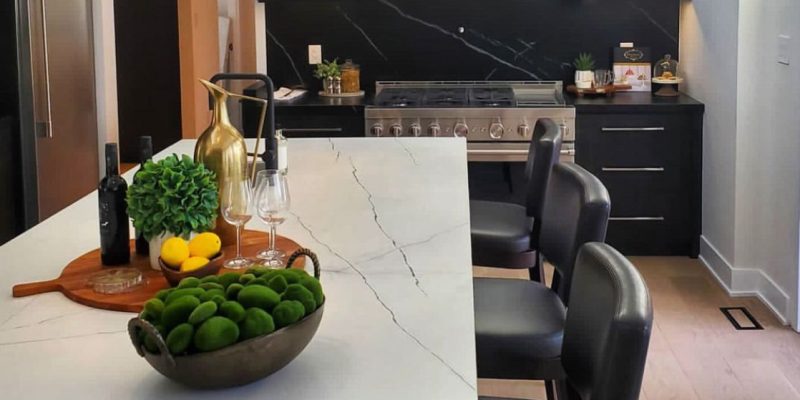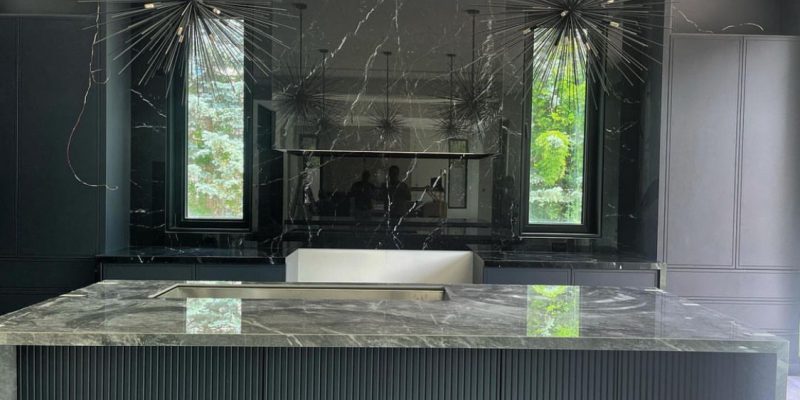
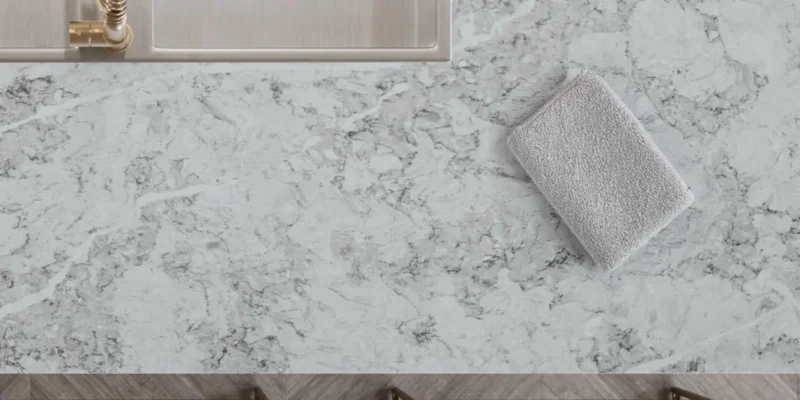
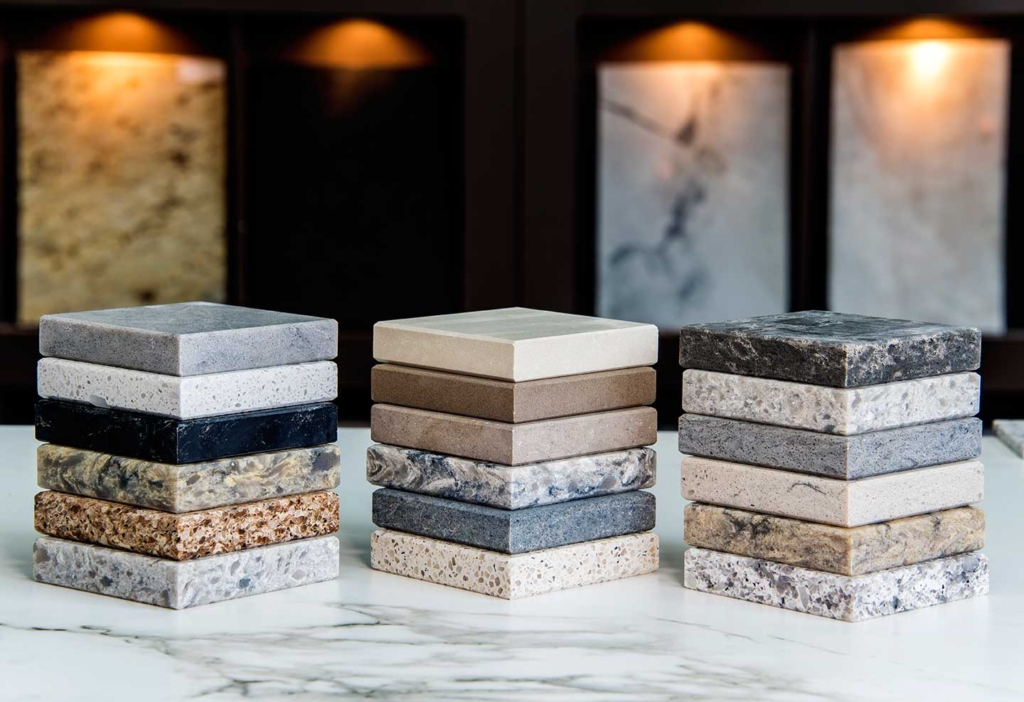
Learning how to clean stone countertops safely starts with identifying the surface correctly. Granite, engineered quartz and marble may appear similar in a showroom, but they react differently to acids, abrasives, sealers, stain removers and disinfectants.
Granite is a natural stone whose absorption and sealing needs vary by slab. Quartz is an engineered surface containing mineral particles and resin, so its care instructions should follow the manufacturer. Marble is a calcium-based natural stone that can be etched by acidic foods and cleaners even when it has been sealed.
Using the same cleaner on all three surfaces can cause dull spots, damaged finishes, chemical residue or permanent etching. The safest routine is to use warm water, a soft cloth and a small amount of mild cleaner appropriate for the exact countertop—and to treat stains, residue and etching as different problems.
This guide explains which products are generally safe for granite, quartz and marble, how to clean each material and when a stain or damaged finish requires professional attention.
How to Clean Stone Countertops: Quick Answer
For routine cleaning, use warm water, a soft microfiber cloth and a small amount of mild liquid dish soap or an approved surface cleaner. Avoid abrasive pads. Keep vinegar, lemon and acidic cleaners away from marble and other calcium-based stones. For quartz, follow the care guide for the exact brand and product line.
The correct cleaning method depends on whether the countertop is natural stone, engineered quartz or another manufactured surface. Appearance alone is not always enough to identify it.
Granite is a natural stone cut from individual slabs. It commonly displays mineral crystals, colour variation and natural movement that does not repeat in a perfectly controlled pattern.
Granite may be:
Its care requirements depend on the actual slab and finish. A cleaning product suitable for one granite countertop may not be appropriate for every natural stone.
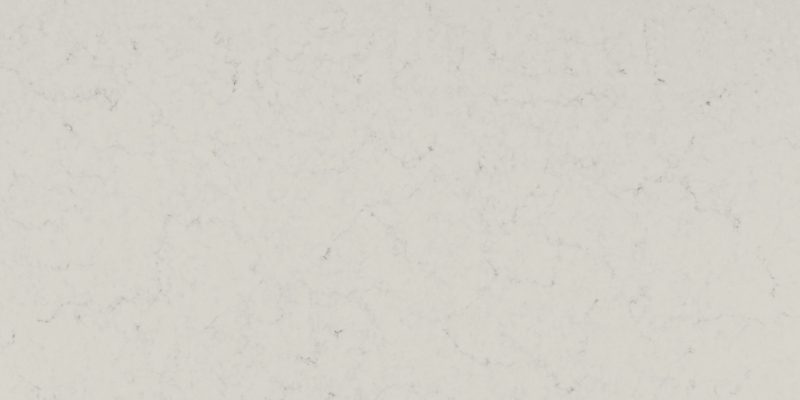
Quartz countertops are manufactured from mineral particles, pigments and resin binders. Patterns may appear controlled or repeat across the slab, although premium designs can resemble natural stone closely.
Quartz does not normally require sealing. However, the resin system can react to excessive heat, strong solvents, harsh alkaline products or cleaners not approved by the manufacturer.
Because quartz formulations vary by brand, the product-care document for the exact collection should take priority over generic internet advice.
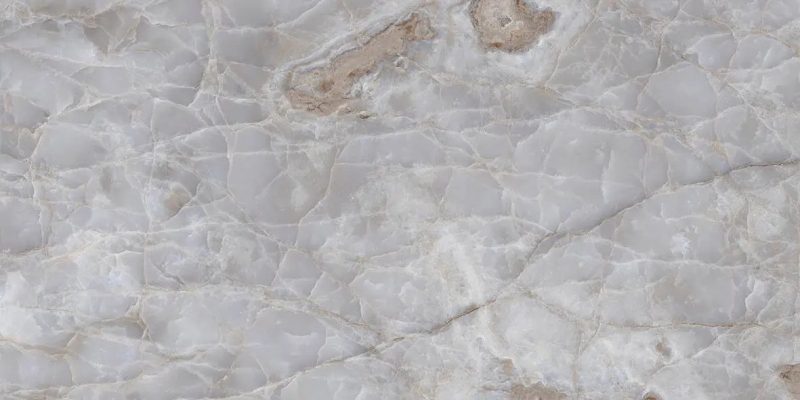
Marble is a calcium-based natural stone. It may display soft veining, cloudy movement or crystalline characteristics depending on the variety and finish.
Its most important care limitation is acid sensitivity. Lemon juice, vinegar, wine, tomato products and acidic cleaners may react with the surface and create a dull or lighter mark known as etching.
Sealing may reduce absorption, but it does not prevent acid-related etching.
Quartzite is a natural stone, while quartz is an engineered surface. The two materials should not automatically share the same cleaning products, sealing assumptions or repair methods.
If the material is uncertain, check:
Avoid testing unknown chemicals on the visible countertop. When necessary, consult the fabricator or a stone-care professional.
The table below provides a conservative starting point. Product labels, manufacturer instructions and the actual countertop finish should always be reviewed before applying a new cleaner.
| Cleaner or Method | Granite | Engineered Quartz | Marble |
|---|---|---|---|
| Warm water and soft cloth | Generally safe | Generally safe | Generally safe |
| Mild liquid dish soap | Usually appropriate in a small amount | Usually appropriate if allowed by the manufacturer | Usually appropriate in a small amount |
| pH-neutral stone cleaner | Generally appropriate | Use only if approved for engineered quartz | Generally appropriate |
| Vinegar or lemon cleaner | Not recommended as a general routine | Manufacturer-specific | Avoid; may cause etching |
| Abrasive powder or scouring pad | Avoid | Avoid unless explicitly approved | Avoid |
| Sealer | Depends on slab absorption and finish | Not normally required | Depends on the stone and finish |
| Poultice | May be appropriate for a diagnosed stain | Not normally the first method | May be appropriate after identifying the stain |
| Stone polishing powder | Product- and finish-specific | Do not use as a generic quartz treatment | May be used for specific restoration work |
Important Product Distinction
Mild liquid dish soap used for hand-washing dishes is not the same as dishwasher detergent. Dishwasher powders, tablets and concentrated machine-cleaning products may contain stronger chemicals and should not be used as generic countertop cleaners.
The safest daily routine is simple. Frequent use of aggressive “deep-cleaning” products is rarely necessary and may leave residue or alter the finish.
Allowing water and cleaner residue to dry naturally may leave:
Drying is particularly useful around sinks, faucets and areas exposed to hard water.
Prompt cleaning is important for every surface, but the reason differs:
When a spill contains oil, wine, coffee, juice or a strong colourant, blot it first with a clean absorbent cloth. Wiping immediately across a wide area may spread the material and increase the affected surface.
A cloth previously used with vinegar, bathroom cleaner, abrasive cream or stainless-steel polish may transfer chemical residue to the countertop.
Use clean cloths reserved for food-preparation surfaces and rinse them thoroughly after use.
Granite should be cleaned with a product appropriate for natural stone. Its care requirements depend on the slab, finish and whether it has an existing sealer.
For everyday cleaning:
Unless specifically approved for the stone and treatment, avoid:
Sealer may reduce liquid absorption, but it does not remove existing stains, improve scratch resistance or replace routine cleaning.
Applying additional sealer without confirming that the stone needs it may leave residue or an uneven finish. Sealing requirements are covered later in this guide.
Cooking oil, furniture polish or wax should not be used as a generic method for creating shine. These products may leave residue, attract dirt or alter the appearance of the surface.
The visible finish should come from the stone’s original fabrication and appropriate maintenance—not a temporary oily coating.
Engineered quartz should be cleaned according to the care instructions for the exact manufacturer and product line. Although most quartz surfaces are non-porous and do not require sealing, their resin binders may react to excessive heat, strong solvents, abrasive products or prolonged chemical exposure.
For ordinary cleaning:
Quartz does not normally require polishing compounds, wax or sealer. Products intended to add a temporary coating may leave film or create uneven reflectivity.
Dried food, adhesive residue or hardened spills should not be removed with a knife or sharp metal blade unless the manufacturer specifically permits a suitable scraper.
A conservative approach is to:
Strongly textured, matte and polished quartz finishes may respond differently to cleaning pressure and residue removal.
Unless the manufacturer specifically approves them, avoid:
Quartz does not benefit from natural-stone sealer. It also should not be polished or restored using products intended for granite or marble.
If a quartz surface develops dullness, discolouration or heat damage, first confirm whether the problem is removable residue or a permanent change in the resin system.
Quartz Care Rule
Non-porous does not mean chemically indestructible. Use the exact manufacturer’s care guide before applying solvents, disinfectants, stain removers or abrasive products.
Marble requires the most cautious cleaning routine of the three materials because acids can react directly with its calcium-based composition.
A polished marble surface may become dull, lighter or rougher after contact with acidic foods or cleaners. This change is called etching and should not be confused with ordinary dirt or staining.
For everyday care:
Spills containing citrus, vinegar, wine, tomato, soft drinks or other acids should be blotted and cleaned immediately.
Avoid:
Even brief exposure can alter a polished marble finish.
A penetrating sealer may reduce the absorption of oil or coloured liquids, but it cannot stop an acid from reacting with the marble itself.
When a dull mark remains after the surface has been cleaned and dried, adding sealer will not restore the original polish.
Repeated aggressive cleaning may enlarge the dull area or create uneven texture. If the mark is an etch rather than residue, the correct solution may involve professional polishing or refinishing.
Before choosing a treatment, determine whether the visible problem is a stain, etch or removable surface film. Using the wrong method can make the condition worse.
| Condition | Typical Appearance | What Happened | Likely Response |
|---|---|---|---|
| Surface residue | Cloudy film, streak, sticky area or dried deposit | Cleaner, soap, grease or minerals remain on top of the surface | Appropriate cleaning and rinsing may remove it |
| Stain | Darkened or coloured area that remains after cleaning | A substance entered or affected the material | Treatment depends on the stain and countertop material |
| Etch | Dull, lighter, rough or less reflective patch | Acid reacted with a calcium-based stone such as marble | May require polishing or professional restoration |
| Heat or chemical damage | Discolouration, altered gloss or permanent-looking mark | The surface or resin system was physically or chemically changed | Cleaning alone may not correct it |
Begin with the least aggressive method:
If the mark disappears when wet but returns after drying, it may be mineral film, soap residue, etching or a change in finish rather than an absorbed stain.
Do not continue increasing chemical strength without identifying the surface and condition.
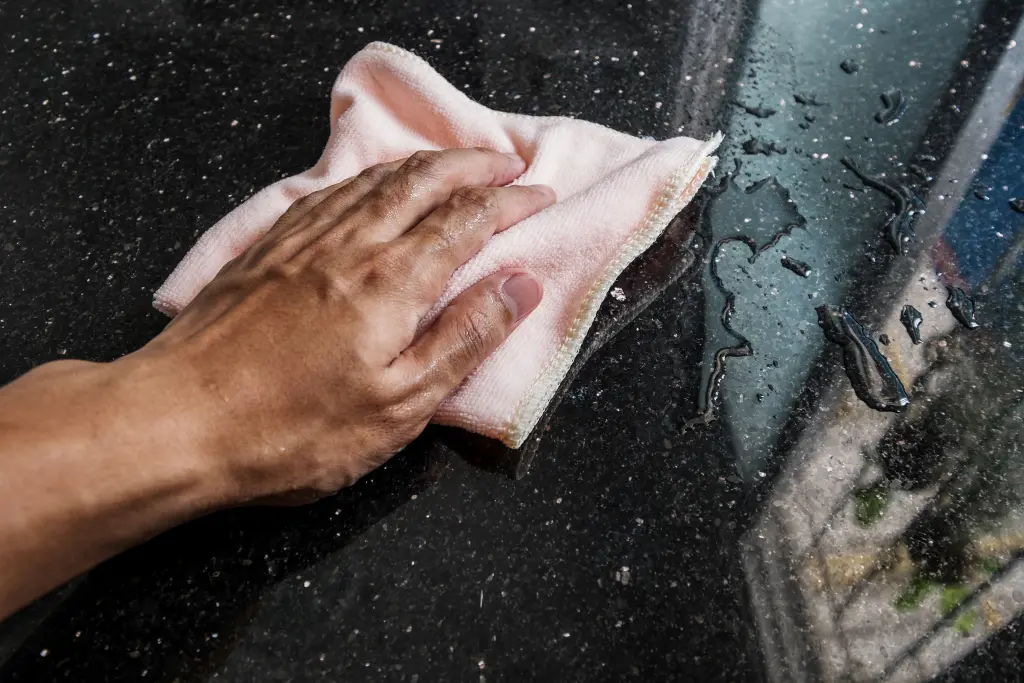
Grease and dried food should be removed gradually. Aggressive scraping or strong degreasers can damage finishes, sealers or quartz resin systems.
On natural stone, a darkened area that remains after the surface dries may indicate oil absorption rather than surface residue.
Soften dried residue before trying to remove it.
Do not use knives, metal scouring pads or aggressive scraping on polished stone or engineered quartz.
White, cloudy or rough deposits around faucets may be caused by hard-water minerals rather than a stain inside the countertop.
Acidic limescale removers may damage marble and may be inappropriate for granite or its sealer. For quartz, use only products approved by the manufacturer.
Persistent mineral buildup near fixtures may require product-specific treatment or professional cleaning.
Do not assume that a strong solvent is safe.



Consult the fabricator or product manufacturer before applying acetone, paint thinner, adhesive remover or other concentrated solvents.
A poultice is an absorbent treatment intended to draw certain stains from porous natural stone. It is not a universal cleaner and is not normally the first treatment for engineered quartz.
A poultice may be considered when:
Oil, organic colour, rust, ink and biological staining do not require identical chemicals.
An unsuitable poultice may:
Baking soda is sometimes used as part of a poultice medium, but naming it alone does not create a complete or safe stain-removal method. The active liquid, stain type, stone sensitivity, application thickness and dwell time all affect the result.
Generic recipes should not be used on valuable stone without first confirming the stain and material.
A poultice may help remove an absorbed stain, but it cannot reverse a chemical etch in marble. Etching changes the surface finish and usually requires polishing or restoration rather than extraction.
Stop DIY treatment and seek professional advice when:
Poultice Safety Rule
Identify the countertop and stain before selecting a poultice. A treatment designed for oil in granite may be unsuitable for rust, marble or engineered quartz.
Vinegar, bleach and alcohol should not be treated as universally safe or universally unsafe for every countertop. The correct answer depends on whether the surface is granite, engineered quartz or marble, as well as the product concentration, contact time and manufacturer instructions.
Vinegar, lemon juice and acidic limescale removers should not be used on marble. Acids react with calcium-based stone and may create dull, lighter or rough areas known as etching.
Routine vinegar cleaning is also not recommended for granite. Although granite is generally more acid-resistant than marble, acidic cleaners may affect certain minerals, an existing sealer or nearby grout and sealant.
For engineered quartz, guidance varies by manufacturer. Some brands may permit a specific diluted solution for selected residue, while others advise against acidic products. The care document for the exact quartz product should take priority.
Bleach may discolour surfaces, affect sealers, damage nearby materials or alter the resin system of engineered quartz when used at an unsuitable concentration or left in contact too long.
Do not use concentrated bleach as a routine countertop cleaner.
When a manufacturer permits a diluted bleach-based disinfectant, follow its instructions for:
Never mix bleach with vinegar, ammonia, alcohol or other cleaning chemicals.
Alcohol may be permitted on some engineered quartz products and may be included in selected stone-safe disinfectants. However, repeated use, high concentrations or prolonged contact may affect coatings, sealers, adhesives or surrounding finishes.
Before using alcohol:
| Product | Granite | Engineered Quartz | Marble |
|---|---|---|---|
| Vinegar | Not recommended for routine care | Manufacturer-specific | Avoid; may etch the stone |
| Concentrated bleach | Avoid as a routine cleaner | Avoid unless the manufacturer permits a specified dilution | Avoid as a routine cleaner |
| Alcohol-based disinfectant | Use only when approved for the stone and sealer | Follow the exact brand instructions | Use only when approved for marble |
Chemical Safety Rule
Do not combine cleaners or increase their concentration to improve performance. Product compatibility, dilution and contact time matter as much as the chemical name.
Routine cleaning removes food, grease and visible residue. Disinfection is a separate process intended to reduce microorganisms and may not be necessary after every normal kitchen use.
A disinfectant works more effectively on a surface that is already free of crumbs, grease and dried residue.
Wiping a disinfectant away immediately may prevent it from working as intended. Leaving it much longer than directed may increase the risk of surface damage.
Follow the product label for:
Use a disinfectant specifically identified as suitable for natural stone and compatible with the existing finish or sealer.
Avoid assuming that a bathroom, glass or general-purpose disinfectant is automatically safe for polished granite or marble.
Consult the manufacturer’s current care guide. Different quartz brands may permit different disinfectants, concentrations and contact times.
The non-porous surface does not eliminate the need to follow chemical restrictions related to the resin system.
Sealing is intended to reduce liquid absorption in suitable natural stone. It is not a cleaning treatment, stain remover, polish or repair method.
Some granite countertops may benefit from a penetrating sealer, while low-absorbing slabs may need little or no additional treatment.
The decision depends on:
A universal annual or 12-month sealing schedule should not be assumed.
Many marble countertops may benefit from an appropriate penetrating sealer, especially where absorption and food-related staining are concerns.
However, sealer does not protect marble from:
Engineered quartz is manufactured as a non-porous surface and does not normally require stone sealer.
Applying sealer may leave streaks, haze or a coating that does not bond properly to the surface.
A natural-stone professional or fabricator may evaluate whether:
Do not apply multiple coats of sealer simply because the surface looks dull. Dullness may be caused by residue, etching, wear or an incompatible product rather than a lack of sealer.
The safest approach is to use the least aggressive product capable of completing the cleaning task.
Unless specifically approved for the surface and finish, avoid:
Abrasives may scratch polished stone, alter the sheen of quartz or create an uneven finish on marble.
Products marketed for glass, bathrooms, ovens, floors or limescale may contain acids, strong alkalis, solvents or abrasives unsuitable for countertops.
Check the label for the exact surface rather than relying on terms such as “natural,” “powerful” or “all-purpose.”
These products may:
Steam cleaners should not be assumed safe for every stone or quartz countertop. Heat and moisture may affect seams, sealants, resin systems or nearby cabinetry.
Use steam only when the countertop manufacturer and installation system specifically allow it.
Cleaning cannot correct every visible mark. Professional assessment may be appropriate when the problem involves physical or chemical alteration of the surface.
Before contacting a fabricator or restoration specialist, record:
This information can help distinguish removable residue from staining, etching or permanent surface damage.
Warm water, a soft microfiber cloth and a small amount of mild liquid dish soap or an approved pH-neutral cleaner provide a conservative routine for many countertops. Quartz care should still follow the exact manufacturer instructions.
A small amount of mild liquid dish soap is generally suitable for routine granite cleaning. Rinse the surface afterward to prevent soap film and dry it to reduce streaks.
Vinegar is not recommended as a general granite cleaner. It may affect certain minerals, sealers or nearby installation materials.
Quartz recommendations vary by manufacturer. Use vinegar only when the exact product-care guide permits the specified dilution and method.
The mark may be an etch caused by acid rather than dirt or staining. If cleaning and drying do not restore the reflection, polishing or professional restoration may be required.
No. Sealer may reduce absorption but does not stop acid from reacting with marble.
Not necessarily. Sealing requirements depend on the slab’s absorption, finish and existing treatment.
No. Quartz does not normally require sealing, and stone sealer may leave residue or haze.
No. A successful stain treatment depends on the type of stain, countertop material and appropriate active chemical. Baking soda alone is not a complete universal method.
A stain usually changes the colour of the material. An etch changes the finish, often creating a dull, lighter or rough area on marble. Surface residue may feel sticky, cloudy or disappear after suitable cleaning.
Only when the countertop manufacturer or stone-care guidance permits a specified product, dilution and contact time. Concentrated bleach should not be used as a generic routine cleaner.
Seek professional advice for deep staining, etching, cracked stone, damaged seams, heat marks, chemical damage or unsuccessful repeated treatments.
Safe countertop cleaning begins with correct material identification. Granite, engineered quartz and marble should not be cleaned, sealed or restored using one universal method.
Use mild products for routine care, clean spills promptly and diagnose whether a persistent mark is residue, staining, etching or physical damage before applying a stronger treatment.
When product instructions are unavailable or the surface has already changed, professional assessment is safer than repeated experimentation with household chemicals.
Not Sure How to Care for Your Countertop?
Share the countertop material, product name and clear photographs of the affected area before applying additional cleaners or stain treatments.
Ask About Your Countertop
Explore Kitchen Countertop Services