
Eco-friendly countertops in Ontario should be evaluated through more than a green label or a recycled-material claim. The environmental impact of a countertop depends on its sourcing, manufacturing, transportation, expected service life, maintenance requirements, fabrication waste and potential for repair, reuse or replacement.
A surface with recycled content may still require energy-intensive manufacturing or long-distance transportation. A natural material may last for decades but involve significant extraction and shipping. An engineered surface may provide low maintenance and efficient fabrication, while its binder composition and end-of-life options vary by product.
For this reason, there is no single countertop material that is automatically the most sustainable choice for every Ontario kitchen. The most responsible selection is usually the surface that fits the household’s actual use, remains available through qualified fabricators and can perform for a long period without premature replacement.
This guide compares natural stone, quartz, porcelain, recycled composites, wood, concrete, paper composite and recycled metal surfaces. Specialty materials outside TecCorp’s verified stone and porcelain range may require separate suppliers and fabricators.
Quick Sustainability Rule
Compare the exact product rather than assuming that every natural, recycled or engineered surface has the same environmental profile.
The table below provides a general framework. Environmental claims, recycled content and emissions performance should always be verified through current product documentation.
| Material Category | Potential Sustainability Advantages | Important Questions |
|---|---|---|
| Natural stone | Long service life, repair potential and possible reuse | Where was it quarried and processed? What maintenance does the specific stone require? |
| Engineered quartz | Low routine maintenance, consistent slabs and selected recycled-content products | What is the binder composition? Is recycled content documented? What emissions testing is available? |
| Porcelain | Low absorption, thin formats and selected indoor or exterior applications | What are the manufacturing, transportation and specialist fabrication requirements? |
| Recycled composites | May incorporate reclaimed glass, stone or industrial material | How much recycled content is verified? What binder is used? Can the surface be repaired? |
| Wood and paper composite | Selected products may use renewable or recycled inputs and allow refinishing | Is the sourcing documented? What finishes, resins and maintenance are required? |
| Concrete and metal | Potential for local production, recycled inputs or long service life | What is the mix or alloy? How energy-intensive is production? Is specialist fabrication locally available? |
Countertop sustainability should be considered across the complete product lifecycle. No single characteristic—such as natural composition or recycled content—provides a complete environmental assessment.
Sourcing information can include quarry location, recycled inputs, forestry certification or manufacturer disclosures about raw materials. Reliable documentation is more useful than broad claims such as “green,” “natural” or “environmentally friendly.”
A locally stocked product may reduce some transportation requirements, but local availability does not automatically prove a lower total environmental impact. Manufacturing energy, processing, material yield and service life still matter.
A countertop that remains functional for a long period may reduce replacement material, demolition waste and repeated fabrication. However, lifespan should not be expressed as a universal number for an entire material category.
Service life depends on:
Cleaning products, sealing, refinishing and repair can affect a countertop’s long-term environmental profile. A low-maintenance surface may require fewer ongoing treatments, but that does not automatically make it more sustainable than every material requiring periodic care.
Product-specific instructions should identify approved cleaners, sealing recommendations, heat precautions and repair procedures.
A repairable surface may remain in service after localized damage instead of requiring complete replacement. Natural stone, solid surface, wood, concrete and selected composites may allow different forms of repair, but the result depends on the type and location of damage.
Reuse is also influenced by original dimensions, cut-outs, seam locations and removal methods. A countertop may be technically reusable but unsuitable for another kitchen layout.
Manufacturing energy, resin or binder content, slab thickness, shipping distance and packaging can influence environmental impact. These factors vary widely between brands and production facilities.
General statements such as “porcelain has lower transportation emissions” or “natural stone requires minimal processing” should not be made without comparing specific supply chains and products.
Third-party documentation can help distinguish verified characteristics from marketing language. Not every countertop requires the same certifications, and no single label proves that a product is environmentally preferable in every category.
Useful documentation may include:
Certifications should be confirmed for the exact product, colour or collection where applicable. A manufacturer may offer one certified product line while other products from the same company have different compositions or documentation.
Homeowners planning a complete kitchen countertop project in Ontario should request current product information before finalizing material, edge and fabrication decisions.
Natural stone can support a long-service-life countertop when the slab is suitable for the application, fabricated correctly and maintained according to its specific characteristics. Granite, quartzite, marble and soapstone differ in absorption, hardness, acid sensitivity and maintenance, so they should not receive one universal sustainability rating.
Natural composition alone does not make every stone countertop environmentally preferable. Quarrying, processing, slab yield, transportation distance and maintenance must also be considered.
Granite and quartzite are often selected for heavily used kitchens, while marble may suit homeowners who accept etching and patina. Browse available granite countertop materials and compare actual slabs rather than relying only on material-category claims.
Engineered quartz combines mineral content with resins, pigments and other manufacturer-specific components. Its sustainability cannot be assessed from the word “quartz” alone.
Potential advantages include consistent slab dimensions, low routine maintenance and no general requirement for periodic sealing. Selected products may also contain documented recycled material or carry indoor-emission testing.
Quartz should not automatically be described as recyclable, zero-emission or environmentally superior to natural stone. Its environmental profile varies by manufacturer, product composition, production process and transportation.
Homeowners prioritizing predictable appearance and low daily upkeep can compare available quartz countertop options while requesting product-specific environmental documentation.
Porcelain slabs are manufactured from mineral-based materials under high-temperature production conditions. They are generally low-absorption surfaces and may be available in thinner formats than conventional stone slabs.
Thin construction can reduce the quantity of material within an individual panel, but this does not prove that every porcelain product has lower environmental impact. Manufacturing energy, backing systems, shipping, breakage risk and specialist fabrication also affect the complete project.
Porcelain can require specialist cutting, handling and edge construction. Breakage during transport or fabrication can increase waste, particularly when local experience with the selected product is limited.
Before selection, confirm slab thickness, backing, edge design, sink and cooktop limitations, local inventory and qualified fabrication. Review available porcelain countertop options using the exact product specifications.
Recycled-glass and recycled-stone countertops may incorporate post-consumer or post-industrial material within cement, resin or another binder. The recycled component can reduce demand for some virgin inputs, but the percentage and source should be verified.
The binder strongly affects performance and environmental characteristics.



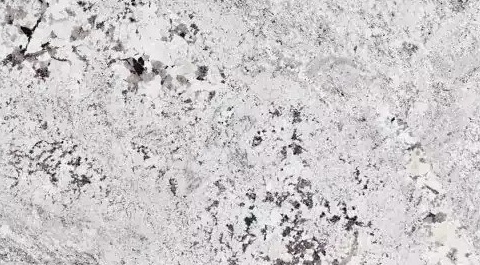


These surfaces may offer distinctive aggregate patterns, but they should not automatically be described as low-carbon, recyclable or maintenance-free.
Wood, paper-composite and concrete countertops are frequently presented as sustainable alternatives, but each requires careful product and supplier evaluation.
Reclaimed or responsibly sourced wood may support renewable-material goals and can sometimes be refinished. Sustainability depends on forestry documentation, adhesives, finishes, maintenance and expected service life.
Wood is sensitive to moisture, heat and movement. It may work better as an island accent or secondary surface than around heavily used sinks. TecCorp does not represent wood fabrication as part of its verified stone countertop services.
Paper-composite products may contain recycled paper fibres combined with resin. Their environmental profile depends on recycled content, binder chemistry, production location, heat limitations and replacement availability.
These products can provide a matte and visually warm surface but may require specialist sourcing and fabrication.
Concrete can be produced with custom shapes and selected recycled aggregates or supplementary materials. However, cement content, reinforcement, curing, sealing, weight and cracking behaviour influence its environmental and practical performance.
Claims that concrete is automatically local or lower-impact should be supported by the actual fabricator and mix design.
Recycled metal and aluminum countertops are specialty surfaces that may use reclaimed content and can provide an industrial or contemporary appearance. Search interest in recycled aluminum countertops indicates that some Canadian homeowners are actively considering this category.
Potential advantages may include:
Environmental performance depends on alloy composition, recycled-content verification, production energy, substrate materials and transportation. Aluminum production can be energy-intensive, so recycled content alone should not be treated as complete proof of sustainability.
Metal countertops require a specialist fabricator. Sheet thickness, finish, seams, substrate, dents, scratches and repair methods should be confirmed before design approval. TecCorp does not currently present recycled aluminum countertop fabrication as a verified service.
Material Comparison Rule
A recycled or natural input is only one part of sustainability. Compare manufacturing, service life, maintenance, repairability, fabrication waste and local availability together.
Durability is an important sustainability factor because premature replacement creates additional material use, fabrication, transportation and demolition waste. However, no countertop material has one guaranteed lifespan.
Long-term performance depends on:
A durable material can still fail early when cabinets are unstable, unsupported sections are excessive or fabrication details are unsuitable. Sustainability therefore depends on the complete countertop system rather than the surface alone.
Localized chips, scratches, stains, seam issues or finish damage do not always require a complete countertop replacement. Natural stone, wood, solid surface, concrete and selected composites may allow different forms of repair or refinishing.
Repairability should be discussed before purchase because the result depends on colour, pattern, finish, damage location and access to qualified specialists. Highly directional patterns and discontinued manufactured colours can be difficult to match.
A sustainable countertop should have a care routine that the household can follow consistently. Surfaces requiring inappropriate cleaners, frequent refinishing or difficult maintenance may lose some of their practical advantage over time.
Compare the recommended daily cleaner, sealing requirements, sensitivity to acids and heat precautions for each product. Mild soap and water may suit many surfaces, but manufacturer instructions should remain the primary reference.
Avoid assuming that one cleaner is suitable for quartz, granite, marble, porcelain, wood and recycled composites. Review the guide to countertop cleaning mistakes before using acidic, abrasive or high-strength cleaning products.
Indoor-emission performance is most relevant for products containing resins, binders, adhesives, finishes or sealants. Documentation should relate to the exact product rather than the general material category.
Homeowners concerned about indoor air quality can request:
Terms such as low-VOC or zero-VOC should not be used without clear documentation identifying what was tested and under which standard.

Countertop sustainability is influenced by how efficiently slabs or panels are used. Sink openings, cooktop cut-outs, seams, waterfall panels, directional patterns and oversized islands can affect material yield.
Efficient planning may include:
Low waste should not come at the expense of structural support, safe openings or acceptable pattern layout. The goal is to use material efficiently while maintaining fabrication quality.
Understanding the complete countertop measurement and installation process can help prevent late design changes and unnecessary remanufacturing.
Local availability can simplify slab inspection, replacement and fabrication coordination. It may also reduce some transportation requirements, but it does not automatically prove that a product has a lower total environmental impact.
Before selecting a material based on local sourcing, confirm:
A widely available material with established fabrication support may sometimes produce less project waste than a specialty product requiring long-distance shipping, unfamiliar fabrication or replacement after breakage.
The most sustainable option is usually the material that meets the project’s functional requirements, can be fabricated correctly and is likely to remain in use for a long time.
Determine whether your main concern is recycled content, responsible sourcing, low maintenance, repairability, indoor emissions, local availability or long service life. One material may not lead in every category.
Consider cooking habits, spills, children, cleaning frequency, direct sunlight, sink placement and willingness to accept patina. A surface that conflicts with household use may require premature repair or replacement.
Review actual slabs or samples together with current technical documents. Do not make the final decision using generic material descriptions or sustainability labels alone.
Ensure that a qualified fabricator can cut, finish, transport and install the selected product. Specialty materials may require separate providers outside TecCorp’s verified stone and porcelain services.
Request written care instructions and ask how chips, stains, scratches or finish changes would be addressed. A practical repair path can extend the usable life of the countertop.
Final Sustainability Checklist
Confirm the product composition, sourcing, documented recycled content, emissions information, maintenance, fabrication availability, expected service conditions and repair options before ordering.
There is no universal winner. The best choice depends on sourcing, manufacturing, service life, maintenance, repairability, transportation and how well the material suits the kitchen.
Natural stone can provide long service life and may be repairable or reusable. Quarrying, processing, transportation, slab yield and maintenance should also be considered.
Some quartz products contain documented recycled material or indoor-emission certifications. Sustainability varies according to the manufacturer, binder composition, production process and transportation.
Porcelain can offer low absorption, minimal routine maintenance and thin formats. Its total environmental impact also includes high-temperature manufacturing, shipping, fabrication and breakage risk.
No. Recycled content is useful information, but binder composition, manufacturing energy, durability, transportation and end-of-life options must also be evaluated.
Sometimes. Reuse depends on removal condition, dimensions, cut-outs, seams, material strength and whether the old layout fits a new application.
No. Local stocking or fabrication may reduce some transportation, but raw-material sourcing, manufacturing and product lifespan still influence the total impact.
Eco-friendly countertop selection requires balancing environmental priorities with real kitchen use. Natural stone, quartz and porcelain each have potential advantages, while recycled glass, wood, concrete, paper composite and metal surfaces require product-specific assessment and specialist availability.
TecCorp can help homeowners compare available stone, quartz and porcelain options based on appearance, maintenance, fabrication and project requirements. Specialty non-stone surfaces may require separate qualified suppliers.
Compare Countertop Materials for Your Ontario Kitchen
Share your layout, approximate dimensions, cabinet finishes and sustainability priorities for an initial countertop review.