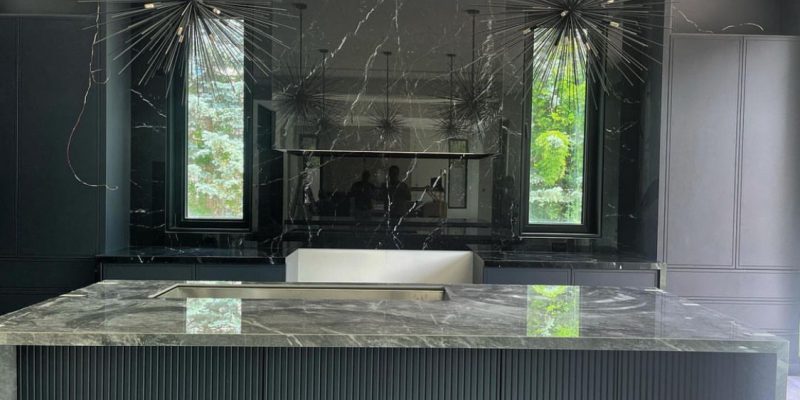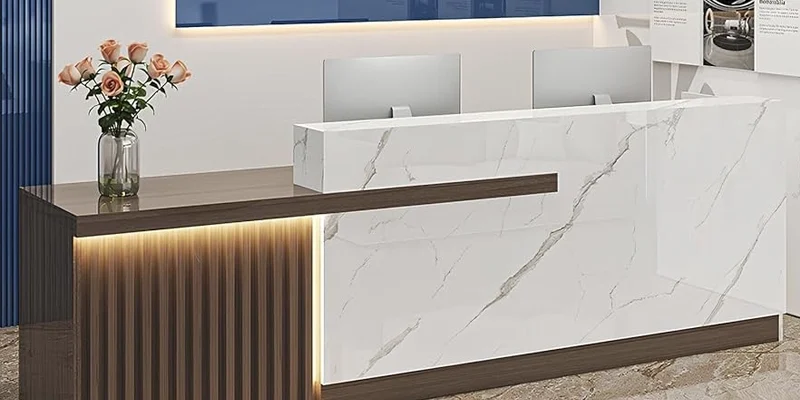
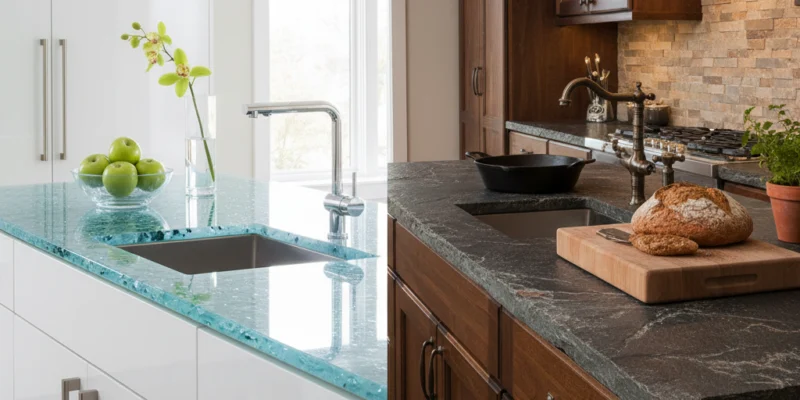
Glass vs natural stone countertops is a useful comparison for Ontario homeowners considering a modern specialty surface alongside established materials such as granite, marble and quartzite.
Glass can create a smooth, reflective and highly customized countertop with controlled colours, translucent effects or back-painted finishes. Natural stone provides geological variation, mineral depth and an individual slab pattern that cannot be reproduced exactly.
The decision involves more than choosing between a modern and traditional appearance. Heat exposure, scratching, edge damage, surface repair, seams, sink openings, cleaning routines and access to an experienced fabricator all affect long-term suitability.
Glass countertops are a specialized product category, and their performance depends on the exact construction. Tempered, laminated, back-painted, textured and recycled-glass products should not automatically be treated as identical. Natural stone also varies considerably between granite, marble and quartzite.
This guide compares the two material categories for educational purposes. Homeowners considering a glass countertop should confirm product specifications and installation capabilities with a specialist who works with the selected glass system. TecCorp Stone can assist with the comparison and fabrication of suitable natural-stone options for kitchen projects.
Quick Comparison
Choose glass when a controlled modern appearance, reflective surface or custom colour effect is the priority. Choose natural stone when individual slab character, mineral variation and established stone fabrication options matter more. Product specifications should guide performance claims for both categories.
The following comparison is general. Glass performance varies by construction and manufacturer, while natural-stone performance varies by the selected granite, marble or quartzite slab.
| Comparison Factor | Glass Countertops | Natural Stone Countertops |
|---|---|---|
| Material | Specialized glass panel or glass-based countertop system | Quarried granite, marble, quartzite or another natural stone |
| Appearance | Modern, reflective, translucent, textured or back-painted | Natural mineral movement, veining and individual slab variation |
| Porosity | Smooth glass surfaces are non-porous, although joints and surrounding materials still matter | Varies according to the stone, finish and slab |
| Routine Sealing | The glass surface itself does not normally require sealing | Some slabs may benefit from sealing based on absorption and use |
| Heat | Depends on glass type, manufacturing and product specifications | Stone body may tolerate heat well, but rapid change, seams and installation components remain relevant |
| Scratching | Can show scratches, abrasion and surface marks | Varies by mineral hardness and finish |
| Impact | Edges, corners and openings may be vulnerable to concentrated impact | Edges and narrow areas may chip under heavy impact |
| Repairability | Repair options depend on construction; significant damage may require section replacement | Some chips and surface damage may be repaired, although matching can remain visible |
| Fabrication Access | Requires a specialist experienced with the selected glass system | Supported by established stone measurement and fabrication methods |
| Best Fit | Modern feature surfaces, bars, islands or controlled accent applications | Kitchen perimeters, islands, vanities and projects emphasizing natural slab character |
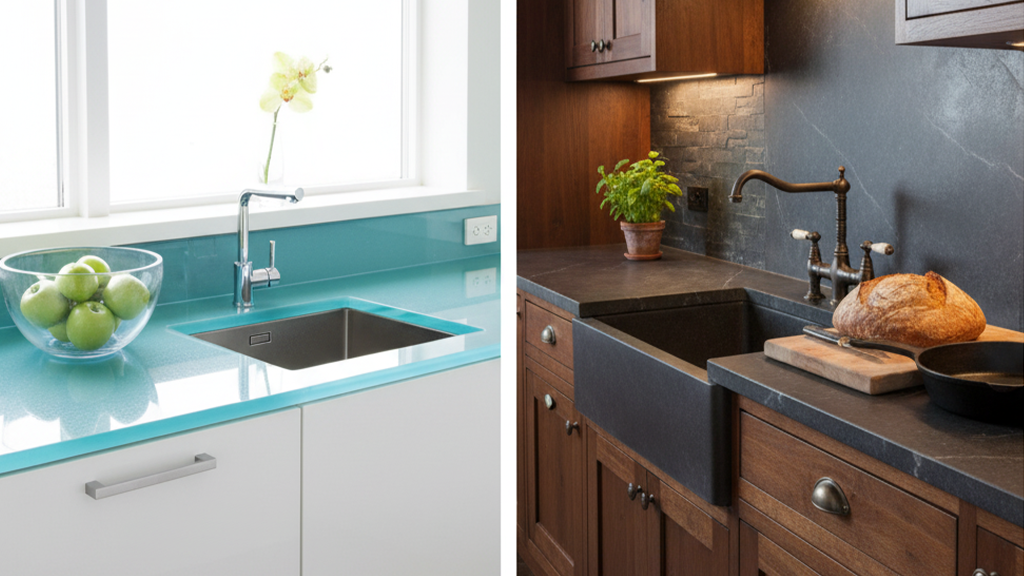
A glass countertop is a specialized surface manufactured from glass panels or a glass-based construction designed for horizontal use. Products may be tempered, laminated, textured, back-painted, translucent or manufactured with other decorative treatments.
The term should not be confused with recycled-glass composite countertops. Composite products combine glass particles with a binder or cementitious matrix and behave differently from a solid glass panel.
Tempered glass undergoes controlled heat treatment intended to increase its strength compared with ordinary annealed glass. Its suitability for a countertop still depends on thickness, edge preparation, openings, support and manufacturer approval.
Tempering does not make a countertop immune to scratching, edge impact or thermal stress. Once a tempered panel has been manufactured, later drilling or cutting may not be possible without damaging it. Openings and dimensions therefore need to be finalized before production.
Back-painted glass uses colour applied behind the visible surface, allowing the glass to create depth and a controlled appearance. Translucent or textured products can also be combined with lighting or decorative layers.
Colour samples should be reviewed with the selected glass thickness, backing and lighting conditions. A small sample may appear different when expanded across a large island or countertop run.
Natural stone countertops are fabricated from quarried slabs. Their appearance and performance depend on the stone’s mineral composition, absorption, finish, natural features and individual slab structure.
Granite, marble and quartzite should not be grouped together as though they provide identical heat, stain, scratch and maintenance performance.
Granite is widely used for kitchen countertops because many slabs provide practical resistance to daily wear. Colours, mineral patterns, porosity and sealing recommendations vary between stones.
Marble provides distinctive veining and visual depth but is sensitive to acidic substances that can alter the finish through etching. Sealing may help manage absorption but does not prevent chemical etching.
Quartzite may combine pronounced natural movement with a hard mineral structure. Products sold within this category can still differ in absorption, composition and care requirements, so the actual slab should be evaluated.
Glass is selected for visual control, reflected light and a contemporary manufactured finish. Natural stone is selected for geological movement and the individuality of the actual slab.
Glass can create solid colours, frosted effects, translucent surfaces, textured patterns or illuminated features. Its controlled design may work well in minimalist interiors where a consistent finish is preferred.
Reflective glass can visually brighten a room, but it may also emphasize fingerprints, water spots, overhead lighting and surrounding objects. Samples should be reviewed in the actual kitchen lighting whenever possible.
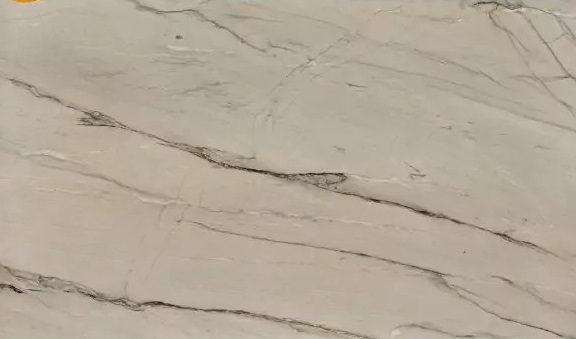
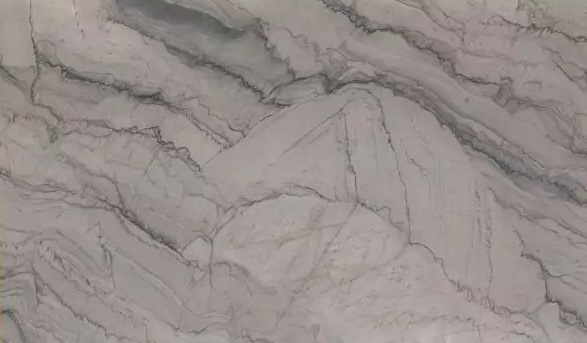
Natural stone contains veins, crystals, colour transitions and other geological features. These variations influence the placement of sinks, seams, islands, backsplashes and waterfall panels.
Homeowners should review the actual slab before fabrication, particularly when the pattern is dramatic or several slabs are required.
Glass is often promoted as a hygienic countertop because its smooth visible surface is non-porous. Liquids do not normally penetrate the glass itself, and routine residue can generally be removed without applying a penetrating sealer.
This does not make the complete installation free from hygiene concerns. Seams, sink joints, wall connections, textured areas and damaged sealant can still collect moisture or debris. The cleaning method must also suit any coatings, painted backing or decorative treatment used in the product.
Glass can show fingerprints, grease, water spots and streaks more visibly than many patterned stone surfaces. Reflective, dark or highly polished finishes may require more frequent wiping to maintain a uniform appearance.
General care may include:
Textured glass may require additional attention because residue can collect within the surface pattern. The product supplier should confirm the recommended cleaning method.
Natural-stone care depends on the selected granite, marble or quartzite. A soft cloth, warm water and a mild cleaner approved for natural stone provide an appropriate starting point for many surfaces.
Acidic or aggressive cleaners can affect certain stones and finishes. Marble is particularly vulnerable to acidic substances that may produce etching even when the surface has been sealed.
Some natural-stone slabs may benefit from a suitable penetrating sealer, but sealing does not replace regular cleaning or make the countertop immune to stains and chemical damage.
A smooth glass surface has lower absorption than many natural stones, but hygiene depends on the complete installation and cleaning routine rather than porosity alone.
A properly maintained natural-stone countertop with intact joints and suitable care can provide a practical kitchen surface. A glass countertop with damaged sealant or difficult-to-clean joints can still develop maintenance problems.
Hygiene Consideration
Compare the complete surface, seams, sink details and cleaning requirements rather than assuming that one material category automatically creates a more hygienic kitchen.
Heat performance depends on the exact glass product or natural stone. Neither category should be described as completely heat-proof.
Tempered glass may provide greater thermal resistance than ordinary annealed glass, but the permitted temperature exposure depends on the product specifications, thickness, edge treatment and installation system.
Concentrated heat or rapid temperature change can place stress on the panel. Painted backing, laminated layers, adhesives, joints and surrounding support materials may also have different heat limitations from the glass itself.
Hot cookware and heat-producing countertop appliances should be placed on a suitable trivet or protective pad unless the manufacturer explicitly confirms otherwise.
Granite, marble and quartzite do not contain the manufactured resin binders used in engineered quartz, but natural stone can still be affected by thermal shock, existing fissures, seams, sealants and rapid temperature changes.
The stone body may tolerate ordinary kitchen heat relatively well, but direct placement of hot cookware creates unnecessary risk to the surface and surrounding installation components.
Heat protection is recommended for both materials, particularly near:
Protective pads should allow the appliance to receive the airflow required by its manufacturer.
Glass and natural stone are both hard countertop materials, but hardness does not eliminate scratching, chipping or impact damage.
Glass can develop scratches from abrasive debris, ceramic objects, metal tools and direct cutting.


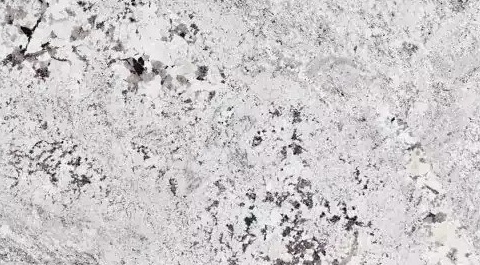


Some minor surface marks may be evaluated by a glass specialist, but polishing options depend on the glass construction and depth of damage. A repair that changes the local sheen may remain visible.
Cutting boards should always be used. They reduce surface damage and protect knife edges.
Tempered glass is stronger than ordinary glass under many conditions, but edges, corners, drilled openings and cut-outs remain sensitive areas. Concentrated impact from heavy cookware or tools may chip or damage the panel.
Damage to tempered glass can sometimes affect an entire section rather than remaining as a small local chip. Replacement requirements depend on the panel construction and location of the damage.
Natural-stone performance varies by mineral composition. Many granite and quartzite slabs provide practical resistance to ordinary scratching, while marble is more susceptible to scratches, abrasion and finish changes.
All natural stones can chip around exposed edges, corners, sink openings and narrow countertop sections. Edge profile, slab thickness, support and fabrication quality influence the risk.
Repairs may be possible using stone-specific materials and finishing methods, although colour, mineral pattern and sheen may not match perfectly.
Glass generally avoids routine sealing, but it may require frequent cosmetic cleaning when fingerprints, streaks or water marks are visible. Natural stone may hide minor surface residue more effectively because of its pattern, although some slabs require sealing or more material-specific care.
Glass maintenance focuses on preventing abrasion, protecting edges and using compatible cleaning products. Sealant around sinks, walls and adjoining surfaces should be inspected periodically.
Back-painted or laminated systems may include layers that cannot be repaired using methods intended for plain glass. The fabricator should explain which components are replaceable and how damage should be assessed.
Natural-stone maintenance depends on the slab and finish. Granite, marble and quartzite should not be assigned one universal sealing schedule.
Maintenance may involve:
Repairability depends on the type and location of damage. Small natural-stone chips may sometimes be filled and refinished, although the repair can remain visible.
Minor glass scratches may be assessed for polishing, but deeper scratches, chipped edges, damaged backing or panel failure may require replacement of the affected section.
Before selecting either material, homeowners should ask how local damage is handled, whether replacement material can be matched and which specialist is responsible for future repairs.
Glass and natural stone both require accurate measurement and project-specific fabrication, but they are produced and handled through different specialist processes.
Glass dimensions, cut-outs, drilled openings and edge details normally need to be finalized before the panel is tempered or otherwise completed. Tempered glass generally cannot be cut or drilled after production without damaging the panel.
Planning should confirm:
The selected fabricator should have experience with horizontal countertop applications rather than only windows, shower enclosures or decorative wall glass.
Natural stone is measured, laid out and fabricated from the approved slab. Veins, colour changes, fissures and mineral features may influence the placement of sinks, seams and exposed edges.
Stone fabrication may include:
The actual slab should be reviewed before cutting, particularly when strong movement or several connected sections are involved.
Both materials require stable, level cabinets and suitable support. Large glass panels and stone slabs can be heavy, difficult to rotate and vulnerable during transportation.
The carrying route should be checked for doorways, stairs, elevators, hallways and tight corners before fabrication. Section size and seam planning may need to reflect the property’s actual access conditions.
TecCorp Stone provides measurement, fabrication and installation services for suitable stone countertop projects. Glass countertop fabrication should be confirmed with a specialist who supplies and installs the selected glass system.
Glass and natural stone countertops do not have one reliable price category. Final cost depends on the exact product, dimensions, fabrication details, access and installation scope.
Glass project pricing may be affected by:
Replacement risk should also be considered. Damage to a custom panel may require reproducing an entire section rather than completing a small local repair.
Natural-stone pricing may depend on:
Quotes should be compared using the same project scope. A material-only price does not reflect measurement, fabrication, transportation, installation, sink mounting or site preparation.
Glass may suit:
Its suitability for a heavily used kitchen perimeter should be confirmed using the exact product specifications, edge design and repair options.
Natural stone may suit:
Granite, marble and quartzite should be evaluated separately. A stone that works well in one application may not suit another homeowner’s maintenance expectations.
Yes. A mixed-material layout can use glass as a controlled feature while natural stone handles broader working surfaces.
Possible combinations include:
The materials should be coordinated by colour, thickness, edge treatment, lighting and maintenance requirements.
Choose glass when a controlled contemporary appearance, reflective finish or specialty colour effect is central to the project and a qualified glass countertop specialist is available.
Choose natural stone when individual slab variation, established stone fabrication and a broader range of traditional countertop applications are the main priorities.
Simple Decision Rule
Choose glass for a specialist-designed contemporary feature. Choose natural stone for individual slab character and a more established full-countertop fabrication system.
Many glass countertops use tempered or laminated systems, but construction varies. The supplier should confirm the exact glass type, thickness, backing and intended horizontal use.
Glass has a smooth, non-porous visible surface, but hygiene also depends on seams, sink joints and cleaning. Properly maintained natural stone can also provide a practical kitchen surface.
Direct heat should not be assumed safe. Heat tolerance depends on the exact product and installation system. A suitable trivet is the safer general practice.
Some slabs may benefit from sealing, while others have relatively low absorption. Recommendations should be based on the selected stone rather than a universal schedule.
Glass can show fine scratches clearly, particularly under strong lighting. Natural-stone scratch behaviour varies, with marble generally more susceptible than many granite and quartzite slabs.
Minor marks may sometimes be assessed by a specialist, but deep scratches, edge damage or panel failure may require replacement. Repairability depends on the glass construction.
Natural stone is generally supported by more established kitchen fabrication options. Glass may work as a feature surface, but suitability for heavy use should be confirmed with the product supplier.
This comparison is provided for educational purposes. TecCorp Stone’s confirmed services focus on suitable stone countertop materials. Glass projects should be discussed with a specialist glass countertop fabricator.
Material selection should consider more than appearance. Review surface care, edge vulnerability, heat exposure, fabrication access, repair options and the way the countertop will be used every day.
For a natural-stone project, share the kitchen dimensions, photographs, preferred colours, sink information and design requirements to support material and slab selection.
Compare Natural Stone Options for Your Kitchen
Review granite, marble, quartzite and other stone options by appearance, maintenance, fabrication and project requirements.
Request a Project Quote
Browse Stone Materials
Explore Kitchen Countertop Services