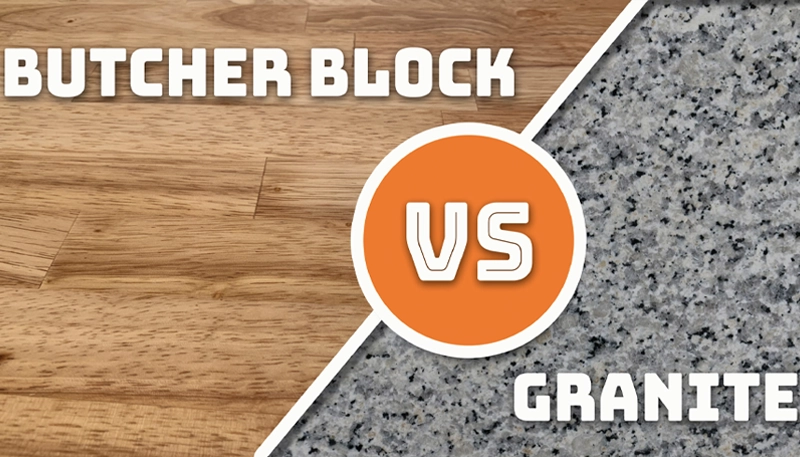
Choosing the right countertop material is one of the most important decisions in any kitchen renovation, especially for homeowners in Toronto and the GTA where resale value, durability, and daily performance all matter. Two popular but very different options that homeowners often compare are granite countertops and butcher block countertops. While granite represents strength, longevity, and natural stone luxury, butcher block offers warmth, character, and a handcrafted aesthetic.
This comparison explores how granite and butcher block perform in real Toronto kitchens — from durability and maintenance to design impact and long-term value — helping you determine which surface truly fits your lifestyle.
At their core, granite and butcher block are fundamentally different materials. Granite is a 100% natural igneous stone formed under extreme heat and pressure over millions of years, while butcher block is a solid wood surface typically made from maple, oak, walnut, or beech arranged in strips or blocks.
This difference in composition directly affects how each countertop behaves in a kitchen environment — especially in high-use Toronto homes where cooking frequency, temperature changes, and moisture exposure are common.
Granite is one of the most durable countertop materials available for residential use. Ranking between 6 and 7 on the Mohs hardness scale, granite resists scratches, heat, and impact far better than wood surfaces. This makes it especially well-suited for busy family kitchens, rental properties, and homes where cooking is frequent.
In Toronto and GTA homes, granite is commonly selected for full kitchen countertop installations where homeowners want a surface that can handle heavy daily use without constant maintenance.
Granite is also a strong choice for large kitchens and open-concept layouts common in Vaughan, Markham, Richmond Hill, and Oakville, where countertops serve as both functional surfaces and design focal points.
You can explore available options in our Granite Countertops collection, featuring a wide range of colors, patterns, and finishes suitable for Ontario homes.
Butcher block countertops bring a very different kind of value to a kitchen. Made from natural hardwood, they introduce warmth, texture, and a handcrafted feel that stone surfaces cannot replicate. In Toronto homes with farmhouse, Scandinavian, or transitional designs, butcher block often becomes a defining visual feature.
Many homeowners choose butcher block for specific areas such as islands or prep zones, where its softer surface and tactile quality enhance everyday kitchen use.
However, wood is naturally more vulnerable to moisture, heat, and scratching. In Toronto’s climate — with humid summers and dry winters — butcher block requires consistent care to prevent warping, staining, or cracking.
When comparing granite vs butcher block in terms of durability, granite clearly leads. Granite’s stone structure allows it to handle:
Butcher block, while durable for wood, is more susceptible to knife marks, water damage, and heat exposure. This does not mean it is unsuitable — but it does require a different mindset. Homeowners must be comfortable with routine oiling, careful cleaning, and accepting natural wear as part of the material’s character.
For households prioritizing long-term durability with minimal upkeep, granite remains the more practical choice. For those who value warmth and are willing to maintain the surface, butcher block offers a distinct aesthetic reward.
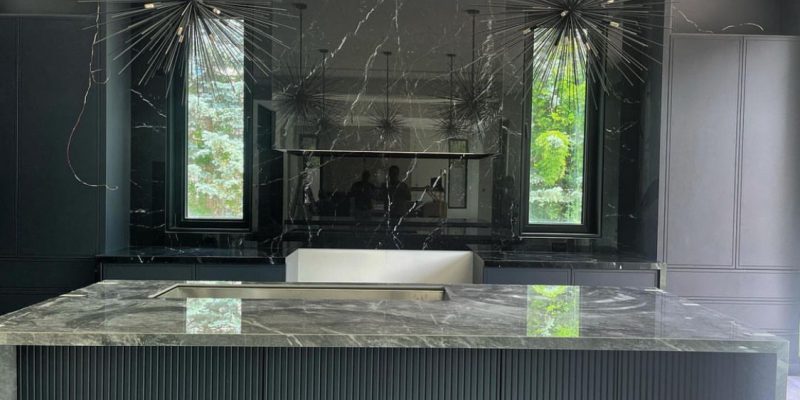
Granite delivers a polished, high-end look that aligns well with modern, luxury, and transitional kitchens across the GTA. Its natural veining, mineral depth, and reflective finish elevate resale value and complement both contemporary and classic cabinetry.
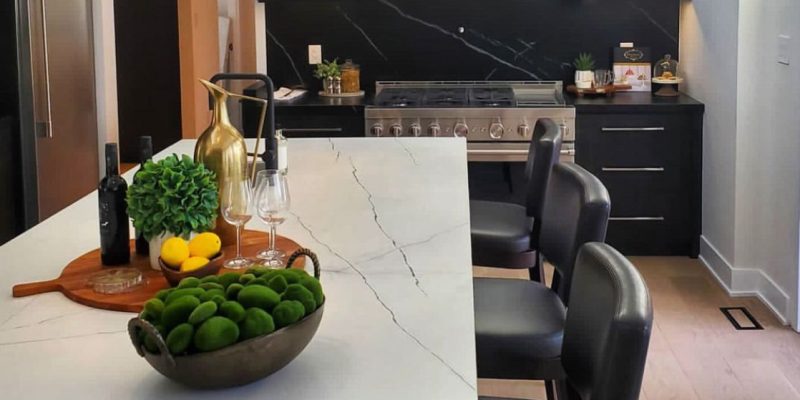
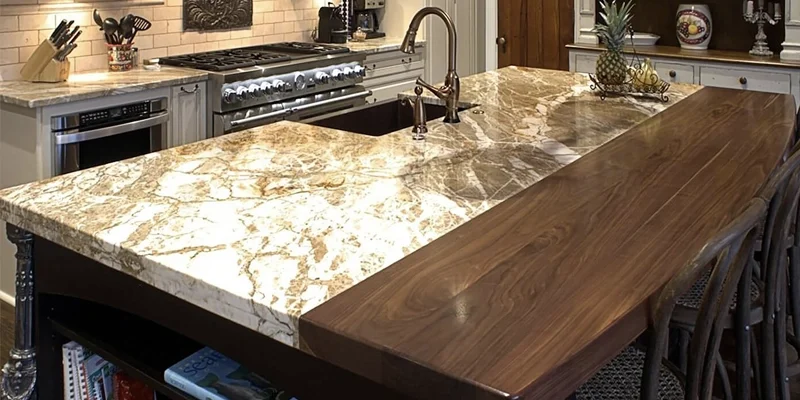
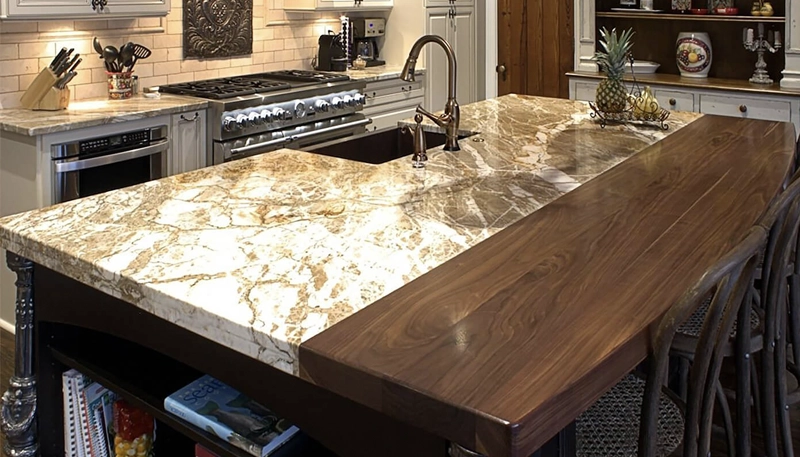
Butcher block, by contrast, softens a kitchen’s appearance. It works exceptionally well when paired with stone or engineered surfaces, creating visual contrast and balance. A common Toronto design trend is using butcher block on a kitchen island while keeping granite or quartz on perimeter counters.
For homeowners planning statement islands, combining butcher block with a stone perimeter or selecting granite for a full kitchen island countertop remains a popular design strategy.
Beyond appearance and durability, one of the most important factors when choosing between granite and butcher block countertops is maintenance. In real Toronto kitchens — where humidity shifts between seasons and daily cooking is common — the level of care a surface requires can significantly impact long-term satisfaction.
Granite is considered a relatively low-maintenance natural stone, especially when compared to wood surfaces. While granite is technically porous, proper sealing dramatically reduces its ability to absorb liquids, oils, and bacteria.
In most Ontario homes, granite countertops only require sealing once every 12 to 18 months, depending on the stone’s density and kitchen usage. Daily cleaning is simple and typically involves mild soap and warm water.
Because granite resists heat and scratches, homeowners in Toronto often prefer it for high-use areas such as main prep zones and cooking surfaces. This is one reason granite remains a top choice for complete kitchen countertop installations across the GTA.
Butcher block countertops require significantly more attention than granite. As a natural wood product, butcher block is sensitive to moisture, temperature changes, and surface damage if not properly maintained.
In Toronto’s climate — with humid summers and dry winters — butcher block must be regularly oiled to prevent cracking, warping, and drying out. Depending on usage, oiling may be required monthly or quarterly.
While butcher block can be sanded and refinished, this process adds to long-term maintenance demands. Homeowners choosing butcher block should be comfortable with hands-on care and accepting natural wear as part of the material’s character.
Moisture exposure is a critical factor in kitchen environments. Granite performs exceptionally well in this regard, especially when sealed properly. It does not swell, warp, or harbor bacteria, making it suitable for areas near sinks, dishwashers, and cooktops.
Butcher block, by contrast, absorbs moisture if left unprotected. Standing water or repeated spills can cause staining, swelling, or even mold growth if maintenance is neglected. For this reason, butcher block is often avoided around sinks in Toronto kitchens.
From a hygiene perspective, granite offers a more predictable and sanitary surface. Once sealed, it resists bacteria penetration and is approved for food preparation in residential kitchens.
Granite is naturally heat-resistant and can tolerate hot pots and pans without damage. This makes it ideal for households that cook frequently or use professional-style appliances.
Butcher block does not offer the same heat tolerance. Hot cookware can scorch or permanently damage the wood surface. Trivets and heat pads are essential when using butcher block in active kitchens.
In many Toronto renovations, homeowners combine materials — using butcher block in low-risk prep zones while selecting stone surfaces for high-heat areas.


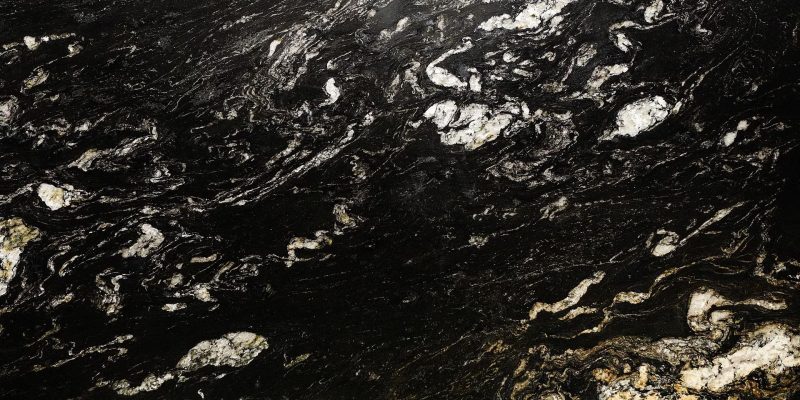




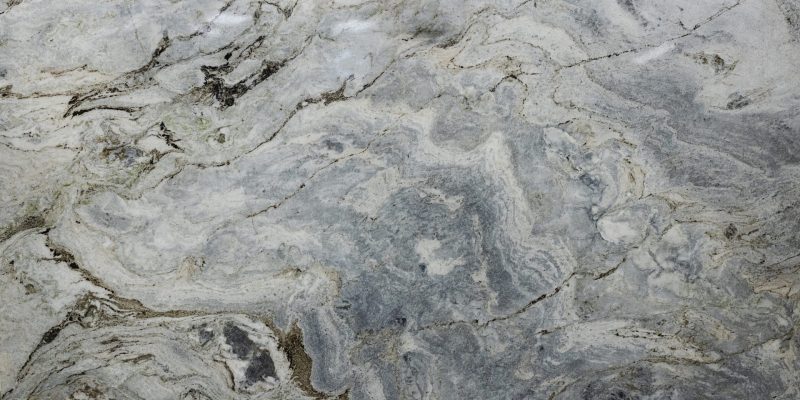




This is why granite is often selected for high-performance areas such as kitchen island countertops, where durability and heat resistance are non-negotiable.
Granite tends to maintain its appearance over time with minimal visible wear. Small chips or edge damage are rare and usually associated with heavy impact rather than normal use.
Butcher block ages differently. Knife marks, dents, and color changes are expected and often embraced as part of its charm. Some homeowners appreciate this evolving character, while others prefer surfaces that remain visually consistent.
For Toronto homeowners focused on resale value and longevity, granite’s ability to look nearly unchanged after many years is a major advantage.
Cost is one of the deciding factors for many Toronto homeowners when choosing between granite and butcher block countertops. While butcher block is often perceived as the more affordable option, the true cost difference becomes clearer when considering installation, maintenance, lifespan, and long-term value.
Granite is considered a premium natural stone, and its pricing reflects the quality, durability, and resale value it offers. In Toronto and surrounding GTA cities, granite countertop pricing typically depends on slab quality, thickness, edge profiles, and installation complexity.
Higher-end or exotic granite slabs can exceed these ranges, especially when bookmatching, waterfall edges, or large islands are involved. However, granite’s long lifespan often offsets the initial investment.
Many homeowners exploring pricing options begin with our Granite Countertops collection, where slab variety and design flexibility directly influence final cost.
Butcher block countertops generally come with a lower upfront cost, making them appealing for budget-conscious renovations or secondary spaces. Pricing varies based on wood species, thickness, and whether the surface is pre-finished or custom fabricated.
Premium hardwoods such as walnut can push pricing closer to stone alternatives, especially when custom edges or integrated sink cutouts are required.
The real cost difference between granite and butcher block becomes more apparent over time. Granite requires occasional sealing, typically once every 12–18 months, with minimal cost and effort. Beyond sealing, maintenance expenses are negligible.
Butcher block, on the other hand, requires ongoing oiling, surface protection, and occasional refinishing. While individual maintenance tasks are not expensive, the cumulative cost and time commitment add up over years of use.
For homeowners who value low-maintenance living, granite often proves more economical in the long run despite its higher initial price.
Granite countertops can last several decades when properly installed and sealed. In many Toronto homes, granite installed 20–30 years ago remains fully functional and visually appealing today.
Butcher block has a shorter practical lifespan, particularly in busy kitchens. While it can be refinished multiple times, repeated wear eventually reduces thickness and structural integrity.
From a resale perspective, granite is widely recognized as a premium feature in Toronto’s real estate market. Buyers often associate stone countertops with quality and durability, which can positively influence property value.
Choosing between granite and butcher block ultimately depends on how the kitchen will be used:
For homeowners planning full renovations or premium upgrades, granite is often selected as part of a comprehensive kitchen countertop project, ensuring consistent performance and design longevity.
In contrast, butcher block works best as a complementary surface — such as an accent island or prep station — rather than a full kitchen solution in high-use Toronto homes.
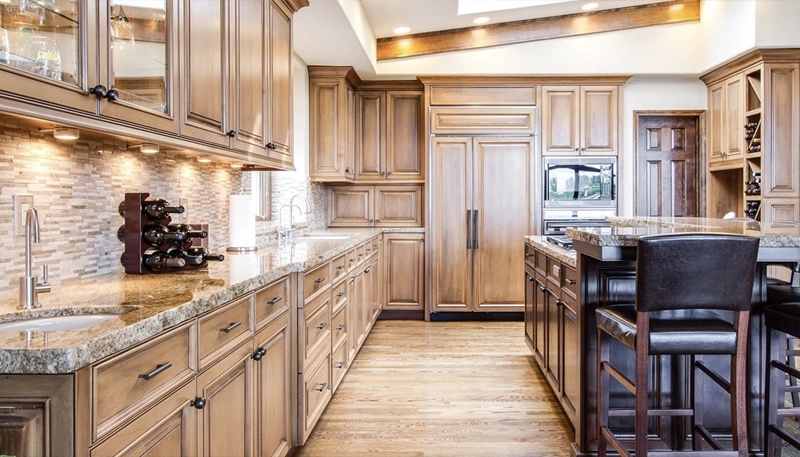
When deciding between granite and butcher block countertops, the best choice often depends on how the space is used, lifestyle preferences, and long-term goals. In Toronto and GTA homes, kitchens vary widely—from compact condos to large open-concept family homes—making material selection a strategic decision rather than a purely aesthetic one.
Granite is the preferred choice for homeowners who prioritize durability, low maintenance, and long-term performance. In busy Toronto households where cooking happens daily, granite consistently outperforms wood-based surfaces.
Granite’s resistance to scratches, heat, and stains makes it ideal for primary work zones. It is especially common in Toronto condos and suburban homes where space efficiency and longevity matter.
For homeowners comparing slab options, our Granite Countertops collection provides a wide range of colors and finishes suitable for both modern and traditional kitchens.
Butcher block excels in kitchens where warmth, texture, and character are central to the design. While not ideal for every application, it works exceptionally well in specific scenarios.
In Toronto lofts and custom homes, butcher block is often used intentionally as a design feature rather than a full-surface solution.
One of the most effective design approaches in modern Toronto kitchens is combining granite and butcher block. This hybrid strategy balances performance with warmth and visual interest.
This combination is especially popular in open-concept homes, where the kitchen island serves as both a functional workspace and a social focal point.
If you are planning a mixed-material layout, our Kitchen Island Countertops service helps ensure proper material transitions, structural support, and seamless integration.
In Toronto’s competitive real estate market, countertop choice can influence buyer perception. Granite is widely viewed as a premium, low-risk investment that appeals to a broad audience.
Butcher block, while visually appealing, is more subjective. Some buyers love its warmth, while others see maintenance as a drawback. For this reason, butcher block performs best when used selectively rather than as the primary countertop material.
Homes featuring granite countertops tend to photograph better, show cleaner during viewings, and signal long-term quality—factors that matter in fast-moving GTA markets.
Granite requires minimal ongoing effort. Annual or bi-annual sealing and simple daily cleaning keep the surface looking new for decades.
Butcher block demands more attention. Regular oiling, careful moisture control, and periodic refinishing are essential to prevent warping, staining, and bacterial growth.
For homeowners seeking a “set-it-and-forget-it” surface, granite is clearly the more practical choice.
Choose granite countertops if you want a durable, low-maintenance surface that enhances resale value and performs reliably in busy kitchens.
Choose butcher block countertops if you value warmth, natural texture, and are comfortable with ongoing maintenance—especially when used as an accent material.
For many Toronto homeowners, the ideal solution is not choosing one over the other, but using each where it performs best. Thoughtful material placement delivers both beauty and functionality.
If you’re planning a renovation and want expert guidance on material selection, layout planning, and installation, our kitchen countertop services help ensure your investment delivers lasting value.