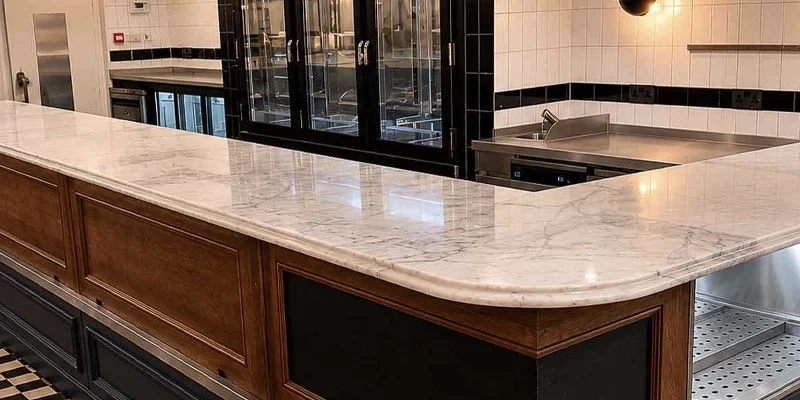
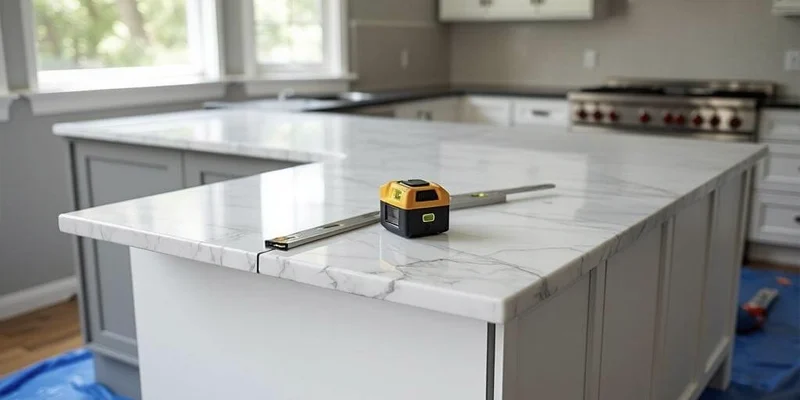
Learning how to prepare for countertop installation helps prevent inaccurate measurements, installation delays and avoidable changes after fabrication has begun. Countertops are made to fit the completed cabinet layout, sink, appliances, walls and access conditions, so the kitchen must reach the correct stage before professional templating and installation are scheduled.
Preparation begins before measurement day—not on the morning the installers arrive. Cabinets must be installed and secured, the sink and cooktop must be confirmed, islands must be in their permanent positions and any required structural support must be completed. Once the countertop template is approved, changes to these conditions may affect dimensions, cutouts, seams and overhangs.
Homeowners should also prepare the property for delivery. Fabricated countertop sections can be heavy and difficult to manoeuvre through narrow doors, stairs, elevators and finished living areas. A clear carrying route, confirmed building access and coordination with plumbers or other trades are essential parts of the installation plan.
This guide provides a practical Ontario countertop installation checklist covering measurement readiness, cabinet preparation, appliance confirmation, site access, trade coordination and installation-day expectations. For a full explanation of the stages after preparation, review the kitchen countertop installation process in Ontario.
The following checklist provides a quick overview of the conditions that should be reviewed before countertop measurement and installation.
Before Measurement and Templating
Before Installation Day
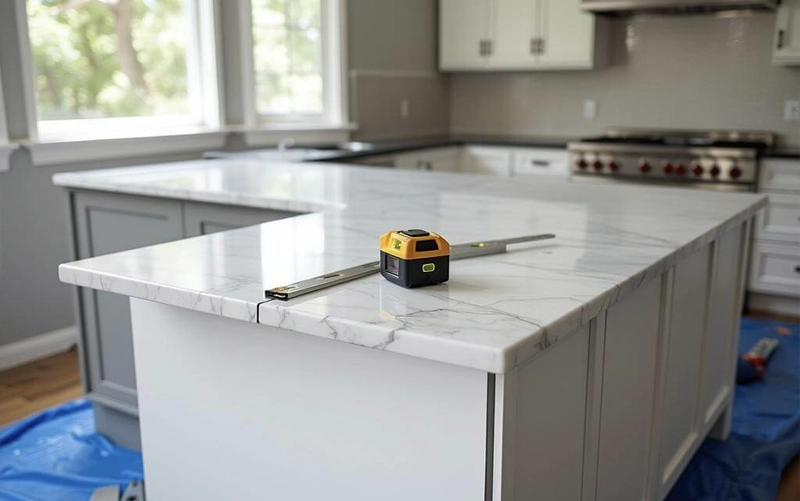
Professional templating records the finished kitchen conditions that will be used to fabricate the countertop. The measurements are therefore only reliable when the cabinets, island, fixtures and design details are in their final approved positions.
Approximate dimensions, architectural drawings and cabinet plans can support preliminary quotations, but custom fabrication should be based on confirmed site measurements.
Base cabinets must be installed, securely fastened and positioned permanently before final templating. The kitchen island must also be fixed in its approved location because even a small movement can affect countertop dimensions, overhangs, seams and alignment with the rest of the kitchen.
Before the measurement appointment, confirm that:
Countertop measurement should not be used to compensate for incomplete, unstable or significantly uneven cabinetry. Required cabinet corrections should be completed before the template becomes the production reference.
The exact sink, cooktop and countertop-mounted appliance specifications should be confirmed before templating. Fabricated openings depend on product-specific dimensions, mounting requirements and clearances.
Provide the final model information for:
Changing a sink or cooktop after the template has been approved may affect the opening dimensions, cabinet preparation and surrounding countertop material. A replacement product should not be assumed to fit simply because it appears similar to the original selection.
The fabricator should know whether the project includes tile, a short countertop upstand, a full-height slab backsplash or no new backsplash. This decision can affect wall measurements, fabrication sequencing and the relationship between the countertop and surrounding finishes.
Before templating, confirm:
For coordinated slab applications, review Teccorp Stone’s kitchen stone backsplash service.
Kitchen islands, breakfast bars and extended seating areas may require brackets, concealed steel or other structural support. Required support should be designed and installed before the countertop is placed.
The final overhang dimensions should also be approved before templating. Increasing an overhang after measurement can affect material requirements, balance, support and section dimensions.
Finished cabinet panels are particularly important for waterfall islands and exposed countertop ends. Their thickness and final position influence the dimensions and alignment of adjacent stone sections.
Teccorp Stone’s countertop survey and measurement service can confirm fabrication-ready dimensions after the cabinet layout and project details are finalized.
Once the countertop template and project details are approved, the kitchen conditions recorded during measurement should remain unchanged. The approved template becomes the reference used for slab layout, openings, edges, seams and fabrication.
Avoid changing any of the following after templating:
If a change becomes necessary, notify the fabricator before production continues. Depending on the change, revised measurements, updated approvals or modified fabrication may be required.
After-Template Rule
Do not move cabinets, replace fixtures or change countertop design details after template approval without confirming the effect on fabrication. Even small changes can alter openings, seams, overhangs or final fit.
Installation-day preparation should make it possible for the crew to move fabricated countertop sections safely from the delivery vehicle to the kitchen and work without unnecessary obstruction. Stone sections are heavy, rigid and difficult to manoeuvre through narrow entrances, stairs and finished living areas.
Before the scheduled arrival, confirm the installation time, access instructions and responsibilities stated in the approved project scope. The kitchen and carrying route should be ready before the crew reaches the property.
Remove loose items from the countertop area and from cabinets or drawers that could be affected by installation work. This creates working space and protects household items from dust, movement and accidental damage.
Before installation day:
Items should not be stored directly beside the installation zone, because installers may need temporary space to position tools, countertop sections and protective materials.
The route from the unloading area to the kitchen should be open, stable and wide enough for the planned countertop sections. Access conditions can affect delivery, crew requirements and whether a section can be moved into the property safely.
Review the complete route, including:
Remove boxes, furniture, rugs, shoe racks and other movable obstacles before delivery. Doors that restrict movement may need to be opened fully or temporarily removed, but any such requirement should be confirmed with the installer in advance.
Snow, ice, water and outdoor debris should also be cleared from exterior paths during winter or wet-weather installations. The carrying route must remain safe for the crew and the fabricated material.
Countertop installation is an active construction process.














Protection may be required for:
The written project scope should clarify which protective materials are supplied by the installer and which building or homeowner requirements must be arranged separately.
Avoid using loose coverings that can slide or create a tripping hazard. Any floor protection should remain secure while allowing the crew to transport countertop sections safely.
Children and pets should remain outside the installation area and carrying route throughout delivery and installation. Large sections may be moved through several rooms, and installers need uninterrupted access to complete the work safely.
Plan a separate room, supervised area or temporary off-site arrangement before the crew arrives. Gates, pet beds, toys and feeding stations should also be removed from the working route.
Installation-Day Access Check
Walk the entire route from the delivery point to the kitchen before installation day. Confirm that doors, stairs, elevators, floors and turning areas can accommodate the planned countertop sections.
Countertop installation may require coordination with plumbers, electricians, gas technicians, cabinet contractors and appliance installers. The written project scope should identify which services are included and which must be arranged separately.
For replacement projects, confirm who will disconnect and reconnect the sink, faucet, drain, garbage disposal, cooktop and other connected appliances. The final sink and cooktop models must also be approved before templating because their dimensions determine the fabricated openings and required cabinet clearances.
Before installation day, confirm:
Waiting periods and reconnection timing depend on the sink mounting method, installation system and products used. Follow the instructions provided for the specific project rather than assuming a universal schedule.
Countertop installation in a condominium or multi-unit building may require advance coordination with property management. Access conditions should be confirmed before fabrication because elevators, corridors and loading restrictions can affect countertop section sizes and seam planning.
Confirm the following requirements:
A countertop section that fits the kitchen may still be too large for the building’s elevator, hallway or unit entrance. Access details should therefore be provided before the final section layout is approved.
Building approvals and reservations are generally the homeowner’s or project manager’s responsibility unless the written project scope states otherwise. Incomplete access arrangements may require rescheduling.
Replacement projects require additional preparation because the existing countertop, sink, backsplash and cabinet conditions must be addressed before the new surface can be installed.
Before scheduling the project, confirm who is responsible for:
The complete condition of the cabinet tops may not be visible until the old surface is removed. Water damage, uneven cabinets, missing support, adhesive residue or backsplash damage may require correction before installation can continue.
The kitchen may also be without a usable sink, cooktop or countertop for part of the project. Prepare an alternative food-preparation area and confirm whether removal, installation and trade reconnections occur on the same or separate dates.
For detailed replacement scope and pricing considerations, review the guide to kitchen countertop replacement cost in Toronto and the GTA.
Confirm Your Site Is Ready for Measurement
Share kitchen photographs, cabinet conditions, sink and appliance details and known access restrictions before scheduling final templating or installation.
Installation day generally involves delivery, movement of the fabricated sections, positioning, fit verification, seam finishing and review of the completed countertop scope.
Before the installers arrive, confirm that:
Minor on-site adjustments may be possible, but fabricated stone cannot compensate for significant cabinet movement, incomplete support, incorrect fixtures or substantial design changes made after templating.
After installation, review the visible surfaces, edges, seams, openings and agreed scope with the installation team. Follow the project-specific instructions regarding sink mounting, appliance reconnection, cleaning and any remaining backsplash or trade work.
For a complete step-by-step explanation, review the kitchen countertop installation process in Ontario.
Many installation delays and fitting problems begin with incomplete site conditions or changes made after measurement.
Preparation Priority
Complete and secure the cabinet layout, finalize fixtures and appliances, confirm all trade responsibilities and disclose access restrictions before templating and installation are scheduled.
Use this final checklist on the day before installation to confirm that the property and kitchen are ready.
| Preparation Area | Final Confirmation |
|---|---|
| Cabinets and island | Installed, secured, stable and unchanged since templating |
| Sink and appliances | Final approved models are available and specifications have not changed |
| Existing countertop | Removal responsibility and timing are confirmed |
| Plumbing and other trades | Disconnection and reconnection appointments are arranged |
| Work area | Countertop area, cabinets and nearby rooms are cleared as required |
| Carrying route | Entrances, hallways, stairs and turning areas are unobstructed |
| Floor and property protection | Required homeowner or building arrangements are complete |
| Condo access | Elevator, loading, parking and building approvals are confirmed |
| Children and pets | A separate safe area has been arranged |
| Project contact | An authorized person is available to answer questions and review the completed scope |
Yes. Base cabinets, islands, finished panels and fillers should be installed, secured and in their permanent positions before final measurements are taken.
Yes. Exact product specifications are required to confirm fabricated openings, mounting requirements, clearances and cabinet compatibility.
Changes may affect cutouts, dimensions and cabinet preparation. Contact the fabricator before production continues so the impact can be reviewed.
Items should be removed from affected drawers, upper cabinet areas and base cabinets near the work zone. The sink cabinet should also be cleared when plumbing access is required.
Responsibility varies by project. Plumbing work may be excluded or completed by a separately scheduled qualified trade, so the written quotation should be reviewed in advance.
Not always. Some replacement projects can be measured while the existing surface remains in place, while others may require removal or additional verification. Follow the fabricator’s project-specific instructions.
Keep them outside the kitchen, carrying route and work area. Heavy sections and active installation work require clear, uninterrupted access.
Reserve the required elevator or loading area, confirm permitted work hours, arrange building documentation and disclose elevator, corridor and parking restrictions before fabrication.
The countertop may be in place, but the sink, faucet, cooktop, backsplash or appliances may still require reconnection or finishing. Follow the timing provided for the specific project.
Required cabinet corrections may need to be completed before installation can proceed. Countertops should not be used to conceal major movement, damage or unsuitable support.
Successful countertop installation begins with accurate project information and a site that is ready for measurement, fabrication and delivery.
Teccorp Stone provides countertop measurement, custom fabrication and professional installation for kitchen projects across Toronto, the GTA and its Ontario service areas.
Share photographs of the kitchen, approximate dimensions, cabinet plans, sink and appliance specifications, preferred material and known access conditions so the project requirements can be reviewed before final templating.
Plan Your Countertop Installation
Provide your kitchen details, fixture specifications and site conditions for a project-specific countertop review.
Request an Installation Quote
Explore Kitchen Countertop Services
Review the Installation Process