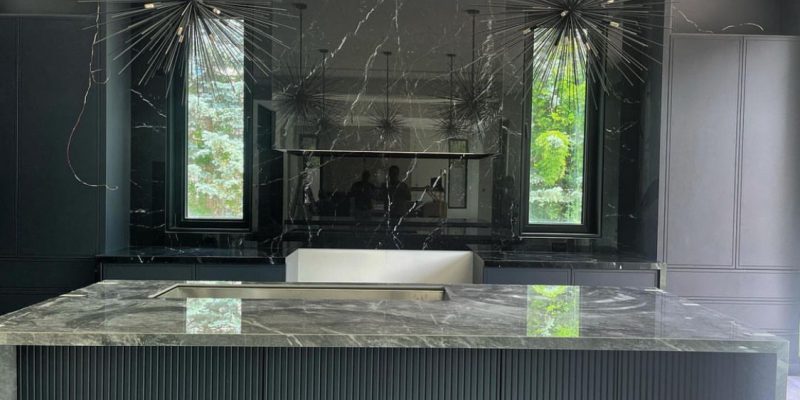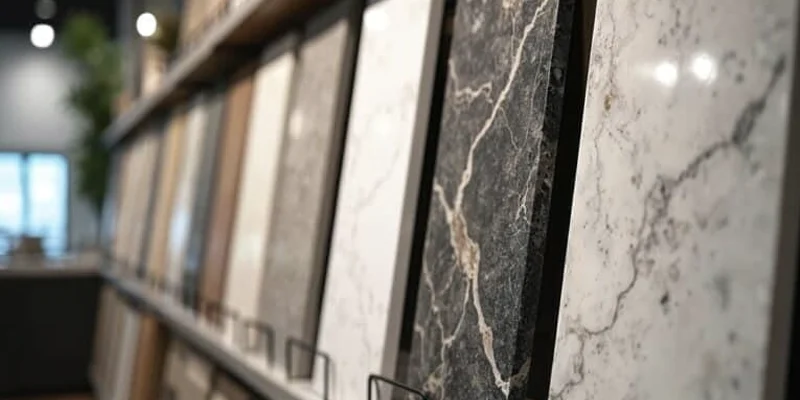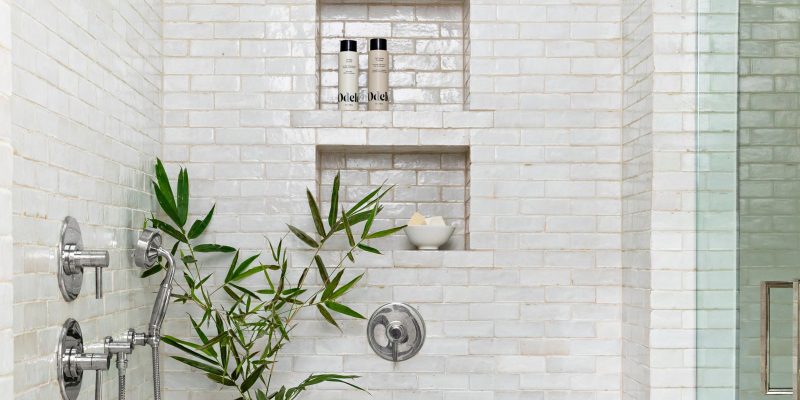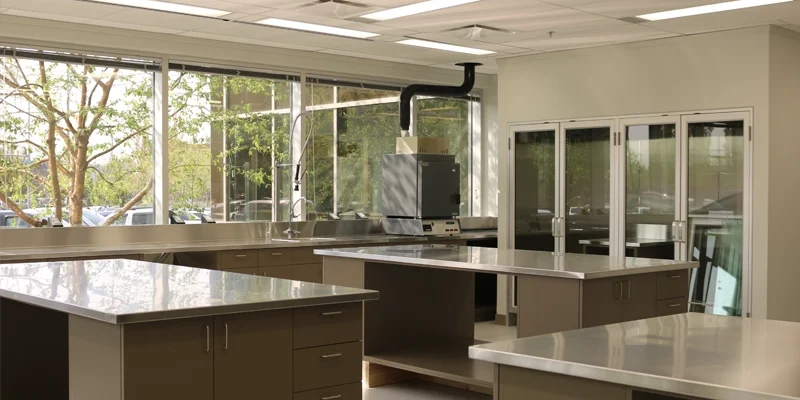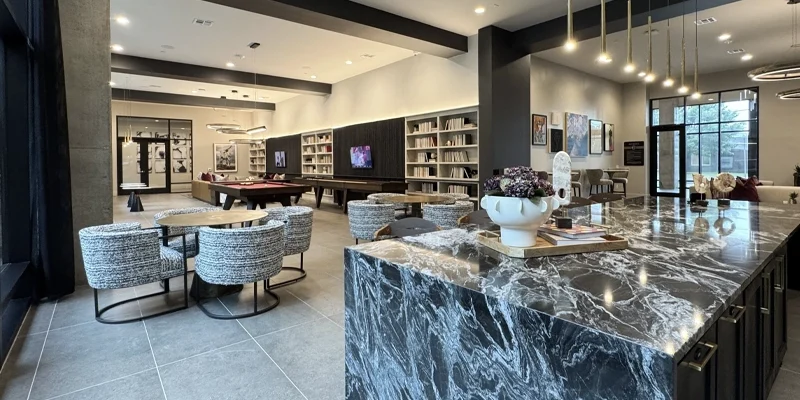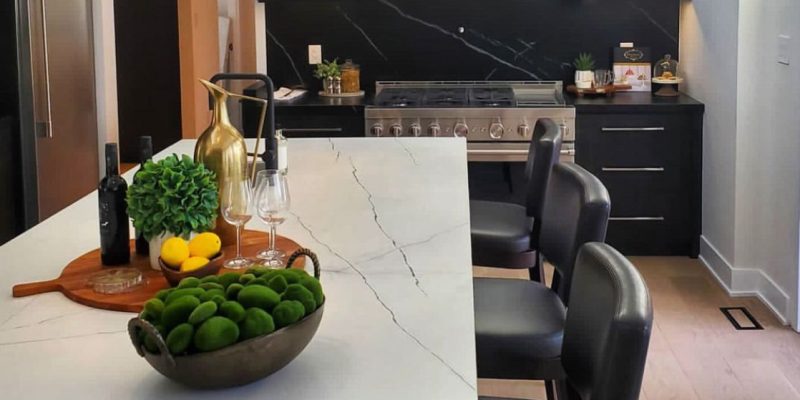
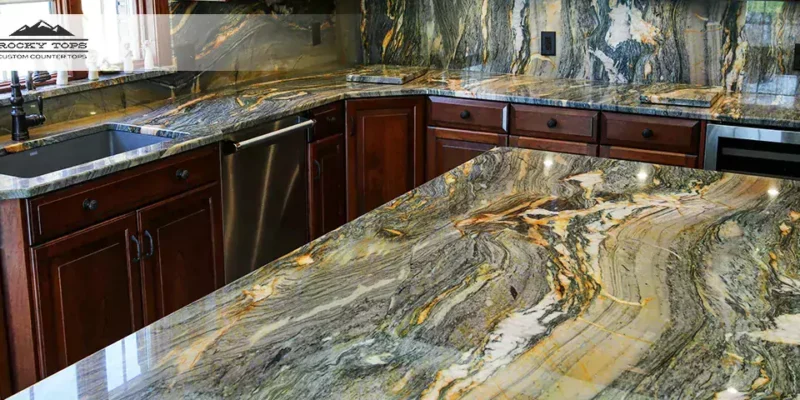
Countertop types and materials vary considerably in appearance, durability, maintenance requirements and suitability for different spaces. Natural stone, engineered quartz, porcelain and other manufactured surfaces can all provide effective work surfaces, but each category responds differently to heat, moisture, staining, impact and daily cleaning.
The right countertop therefore depends on more than colour or pattern. A heavily used kitchen, a bathroom vanity, a healthcare facility and an outdoor cooking area each place different demands on the selected surface. Material choice must account for the intended application, expected level of use, maintenance preferences, surrounding finishes and complete project scope.
This guide provides a practical introduction to the main countertop categories, commonly used materials and typical applications. It is designed to help homeowners, designers, builders and commercial clients understand the available options before moving into detailed material comparisons, fabrication planning or installation decisions.
Countertop surfaces can be grouped according to how they are produced, how much variation they contain and how they perform under normal use. The table below provides a high-level comparison before each category is examined in more detail.
| Surface Category | Common Materials | Typical Characteristics | Common Applications |
|---|---|---|---|
| Natural stone | Granite, quartzite, marble, soapstone and onyx | Natural variation, unique slabs and material-specific care requirements | Kitchens, vanities, islands, fireplaces and feature applications |
| Engineered quartz | Quartz surfaces produced with minerals, binders and pigments | Consistent appearance, low routine maintenance and broad design selection | Residential kitchens, bathroom vanities and many commercial interiors |
| Porcelain and sintered surfaces | Large-format porcelain and compact slab products | Low porosity, thin profiles and suitability for several interior and exterior uses | Countertops, wall cladding, backsplashes and outdoor applications |
| Other manufactured or custom surfaces | Solid surface, concrete, laminate, wood and specialty products | Performance and maintenance vary considerably by product and construction method | Residential, commercial and specialized design applications |
This comparison is a starting point rather than a material ranking. Products within the same category can vary in composition, finish, thickness and recommended use. Final selection should be based on the specific material and the conditions of the project.

A countertop is a finished horizontal work surface installed in kitchens, bathrooms, commercial facilities and other interior or exterior spaces. It may be supported by cabinets, frames, walls, brackets or specialized structures depending on the application and layout.
Countertops provide a functional surface for activities such as food preparation, washing, serving, storage, customer service, laboratory work or product display. They also form a major visual connection between cabinetry, flooring, wall finishes, backsplashes, fixtures and lighting.
The performance requirements vary by application. Kitchen countertops may be exposed to spills, heat, impacts, food preparation and frequent cleaning. Bathroom vanities encounter moisture, cosmetics and personal-care products. Commercial surfaces may experience continuous public use, specialized cleaning procedures or project-specific hygiene requirements.
For this reason, the term countertop does not describe one product or one performance standard. It covers a broad range of natural, engineered and manufactured surfaces selected according to the needs of each project.
Understanding the main material categories helps narrow the available options before comparing individual products. The most important differences involve how the surface is produced, the amount of natural variation, porosity, maintenance and recommended applications.
Natural stone countertops are fabricated from slabs quarried from geological formations. Each slab contains natural colour variation, mineral deposits, veining and structural characteristics created during the formation of the stone.
Granite, quartzite, marble, soapstone and onyx are all natural stones, but they should not be treated as interchangeable materials. Their hardness, absorption, sensitivity to acids, maintenance requirements and suitable applications differ.
Natural stone is often selected when individual slab character and authentic geological variation are important to the design. Depending on the material and finish, sealing or other material-specific care may be recommended.
Because every natural slab is different, reviewing the actual slab before fabrication can help confirm colour, pattern, usable areas and potential layout considerations.
Engineered quartz surfaces are manufactured using quartz minerals combined with binders, pigments and other components. The controlled production process allows manufacturers to offer a broad range of colours, patterns and relatively consistent designs.
Quartz countertops generally do not require routine sealing and are commonly selected for kitchens, vanities and commercial interiors where predictable appearance and straightforward maintenance are priorities.
Despite the name, engineered quartz is not the same material as natural quartzite. Quartzite is quarried natural stone, while quartz countertops are manufactured slab products. Their heat response, appearance, care requirements and fabrication characteristics are different.
Porcelain and related compact slab surfaces are manufactured under controlled heat and pressure. They are available in large formats, varied thicknesses and designs that may resemble stone, concrete, metal or other materials.
These surfaces are valued for low porosity, resistance to many common stains and suitability for several indoor and outdoor applications. Their thin profiles and fabrication requirements differ from those of thicker natural stone or quartz slabs.
Edge construction, cut-outs, transportation and installation should be planned by fabricators familiar with the selected product because performance during fabrication is not identical across all slab categories.
The countertop market also includes solid surface, concrete, laminate, wood and other specialty products. These options differ significantly in composition, appearance, repairability, heat tolerance and maintenance.
Solid surface materials may allow visually continuous joints and integrated features. Concrete can be custom cast in different shapes and finishes but requires appropriate reinforcement, curing and sealing. Laminate and wood provide different aesthetic and budget directions but have their own limitations around moisture, heat and long-term wear.
These materials should be considered according to the project rather than grouped together as either inferior or superior to stone. The correct choice depends on the intended use, desired appearance, available fabrication methods and maintenance expectations.
Important Material Distinction
Natural stone, engineered quartz and porcelain are separate surface categories. Compare the specific product rather than assuming all stone-look countertops have the same composition or performance.
Material categories provide a useful starting point, but the final decision usually comes down to the characteristics of individual surfaces. The following overview explains where the most common countertop materials generally fit without replacing a detailed product comparison.
Quartz countertops are engineered slabs produced with quartz minerals, binders and pigments. They are available in consistent colours, subtle patterns and designs that reproduce the appearance of marble, concrete or natural stone.
Quartz is commonly used in kitchens, bathroom vanities and commercial interiors because it generally requires no routine sealing and offers straightforward day-to-day maintenance. Direct exposure to very hot cookware should still be avoided because the binders within the surface can respond differently to heat than natural stone.
Granite is a natural stone known for its mineral variation, distinctive slab patterns and suitability for many heavily used surfaces. Its appearance ranges from quiet and uniform to highly patterned, depending on the geological composition of the slab.
Granite is frequently selected for kitchens, islands, vanities and some outdoor applications. Absorption and maintenance requirements vary between stones, so sealing recommendations should be based on the specific slab and finish rather than a fixed schedule applied to every granite countertop.
Quartzite is a quarried natural stone and should not be confused with manufactured quartz. Many quartzite slabs combine prominent natural movement with strong surface performance, making them attractive for kitchens and statement islands.
Appearance and material behaviour can vary between products sold under the quartzite category. The actual slab should be reviewed for porosity, pattern, usable areas and recommended maintenance before fabrication.
Marble is selected primarily for its natural veining, depth and architectural character. It is used for countertops, bathroom vanities, fireplace surrounds, feature islands and decorative applications.
Compared with many other countertop materials, marble is more sensitive to acidic substances and may develop etching, staining, scratching or patina with use.
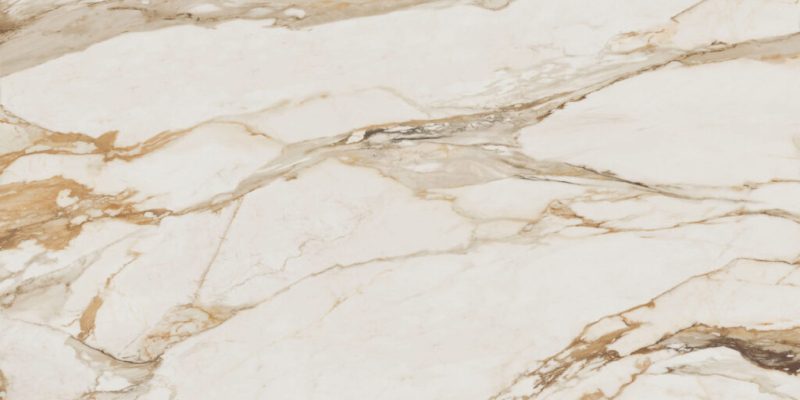

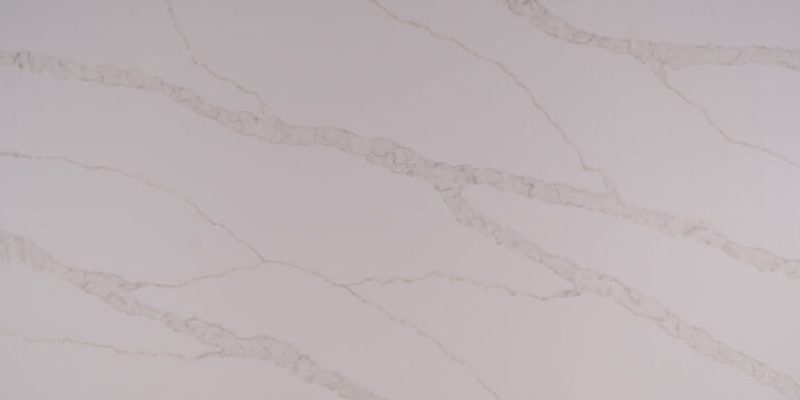
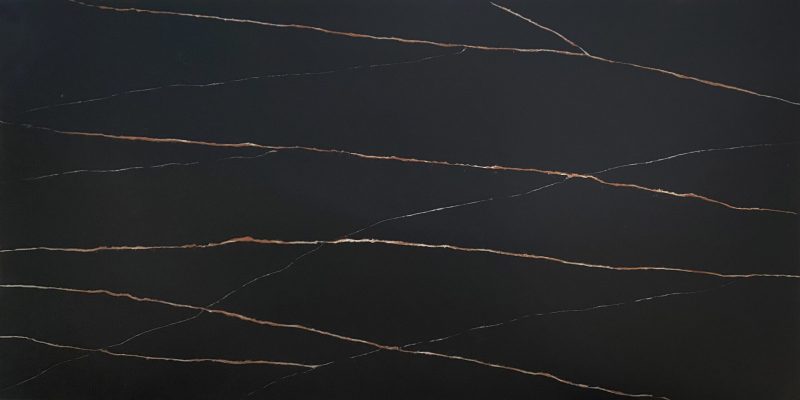
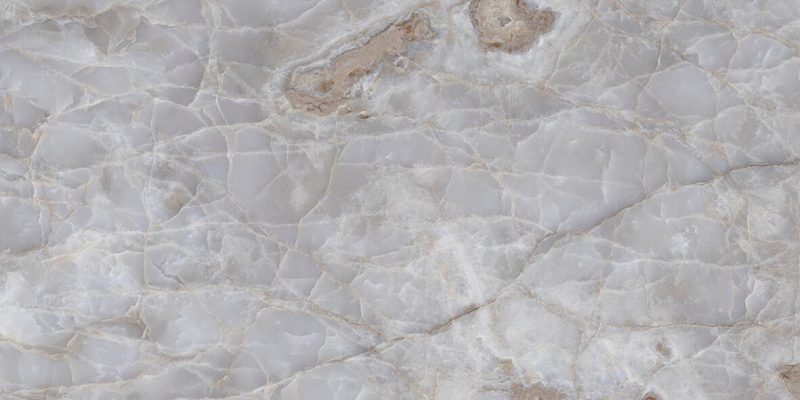
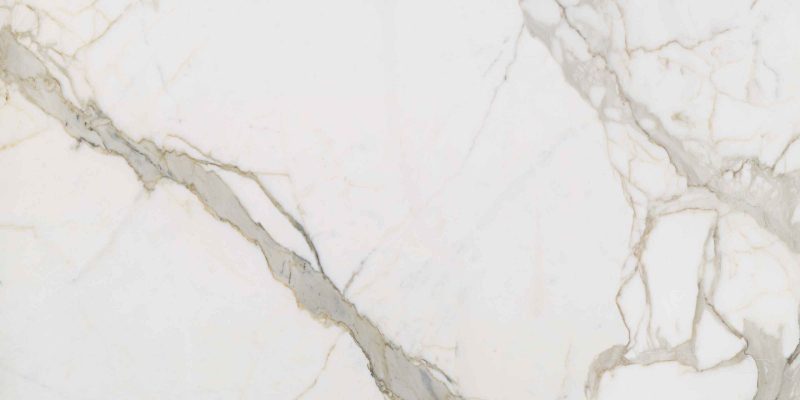
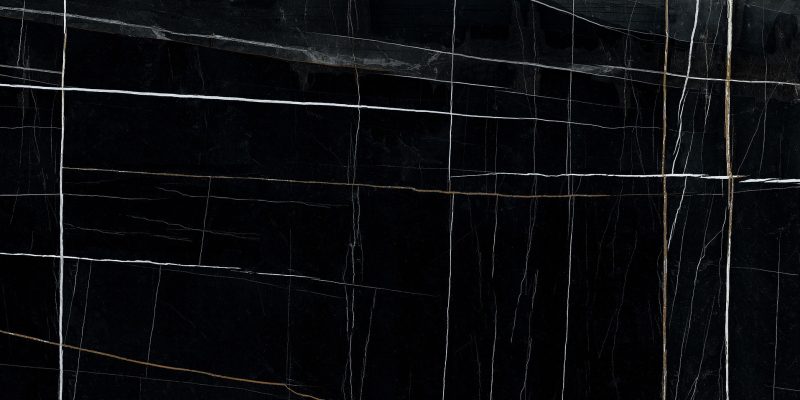


Porcelain slabs are manufactured surfaces available in large formats and a wide range of stone-look, concrete-look and solid-colour designs. Their low porosity and resistance to UV exposure make selected porcelain products suitable for interior and exterior applications.
Porcelain can also be used for countertops, backsplashes and wall cladding, allowing the same visual direction to continue across several surfaces. Because slab thickness, edge construction and fabrication methods differ by product, experienced handling is important around corners, cut-outs and exposed edges.
Soapstone and onyx are specialized natural stones with very different roles. Soapstone has a soft, matte appearance and gradually develops visible patina, while onyx is valued for colour variation, translucency and dramatic decorative impact.
Soapstone may suit selected kitchens, vanities and feature surfaces where natural aging is acceptable. Onyx is more commonly used for decorative walls, illuminated panels, bars and statement applications than for heavily used work surfaces.
Explore Soapstone
|
Explore Onyx
Solid surface products are manufactured from mineral fillers and resin-based components. They can provide visually continuous joints, integrated sinks and repairable finishes, although their response to heat and scratching differs from stone or porcelain.
Concrete countertops can be custom cast in varied shapes, colours and thicknesses. Their finished performance depends heavily on the mix, reinforcement, curing, sealing and fabrication process.
Laminate, wood and other specialty surfaces may also suit particular budgets or design applications. They should be evaluated separately because moisture resistance, repairability, heat tolerance and maintenance vary considerably between products.
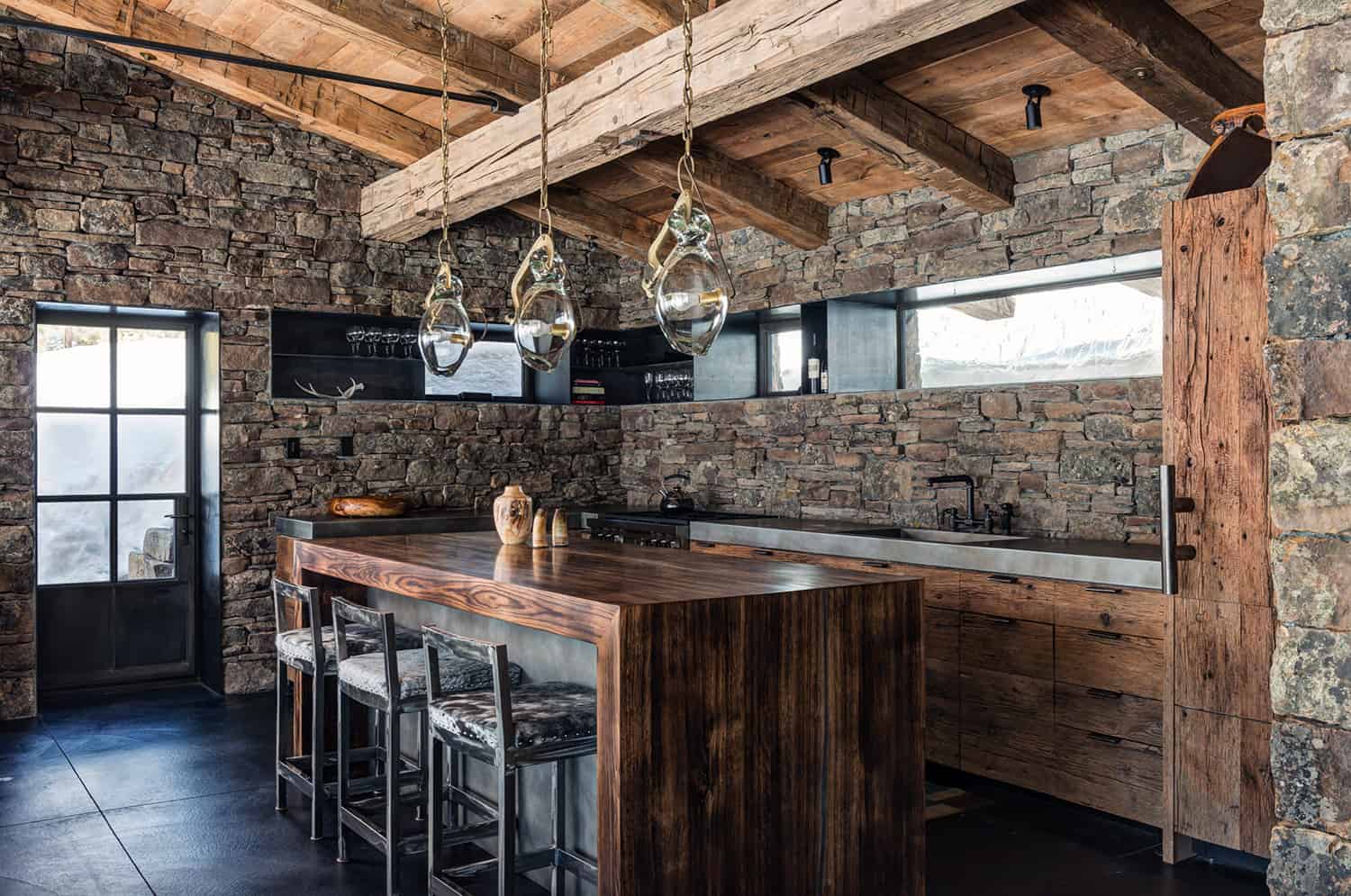
The same material may perform differently depending on where it is installed. Exposure to water, heat, sunlight, public use, cleaning products and structural conditions should therefore be considered before a surface is approved.
Kitchen countertops must support food preparation, appliances, sinks, frequent cleaning and everyday household use. Material selection should consider stain exposure, heat precautions, edge durability, maintenance and compatibility with cabinetry and fixtures.
Quartz, granite, quartzite and porcelain are commonly considered for kitchen projects, while marble and other specialty stones may suit clients who prioritize natural character and accept additional care.
Explore Kitchen Countertop Services
Vanity surfaces are regularly exposed to water, cosmetics, soap and cleaning products. Low porosity, practical cleaning and compatibility with sink openings are important considerations.
Quartz, porcelain, granite and selected marble surfaces can all be used, depending on the desired appearance and maintenance expectations.
Commercial countertop requirements vary by industry. Healthcare, hospitality, office and retail environments may prioritize hygiene procedures, durability, repairability, visual consistency or resistance to continuous use.
Material selection should be based on the project specification rather than assuming one countertop type is appropriate for every commercial setting.
Outdoor surfaces must tolerate sunlight, moisture and changing temperatures. Granite and suitable porcelain products are commonly considered because selected products can perform well under exterior exposure.
Engineered quartz is generally intended for indoor use unless the manufacturer explicitly approves the product for exterior installation. Product specifications should always be confirmed before selection.
Stone and porcelain slabs can also be fabricated for fireplaces, wall cladding, reception desks, shower components, backsplashes and other custom architectural features.
These applications may require different thicknesses, support systems, attachment methods and fabrication details than standard horizontal countertops.
Application Before Appearance
Confirm where the surface will be installed and what it will be exposed to before comparing colours, patterns and finishes.
Countertop materials should be compared against the actual requirements of the project rather than ranked using one general standard. A surface that works well in a bathroom, decorative feature or lightly used kitchen may not be the best choice for a heavily used cooking area or exterior application.
Begin by identifying how frequently the surface will be used and what types of activity it must support. Consider food preparation, appliances, public use, cleaning frequency, potential impacts and whether the countertop will contain large sink or cooktop openings.
Durability includes more than surface hardness. Edge construction, slab thickness, support, seams, cut-outs and installation quality can all affect long-term performance.
Different materials respond differently to direct heat, oils, acidic substances, standing water and cleaning products. The intended use should determine which forms of resistance are most important.
Quartz may provide practical stain resistance and low routine maintenance, but direct contact with hot cookware should be avoided. Granite and quartzite may tolerate heat differently, while marble requires greater care around acidic foods and liquids. Exterior surfaces must also be approved for sunlight and changing weather conditions.
Some surfaces require little more than routine cleaning, while others may need sealing, refinishing or material-specific care. Maintenance recommendations can vary even within the same material category.
Before ordering, confirm:
Natural stone slabs can vary significantly in colour, pattern, mineral deposits and usable areas. Engineered surfaces are usually more consistent, but large-scale patterns and veining may still appear different from small samples.
Review the actual slab or a sufficiently large sample whenever possible. The surface should be compared with cabinetry, flooring, backsplash, wall colour, lighting and other permanent finishes before fabrication begins.
For detailed colour coordination, review the guide to matching countertop colours with kitchen cabinets.
Material selection affects more than appearance. Slab dimensions, thickness, pattern direction, edge details, openings, seams, overhangs and transportation requirements all influence fabrication and installation planning.
Some surfaces require specialized handling around cut-outs, exposed edges or large unsupported sections. Cabinet condition, appliance specifications and sink details should therefore be confirmed before final measurements and fabrication.
The cost of a countertop project is not limited to the selected slab. The complete scope may include measurement, fabrication, edge profiles, sink and cooktop cut-outs, backsplashes, delivery, installation and additional support requirements.
Quotes should be compared using the same scope. A lower material price may not represent a lower completed project cost when essential fabrication or installation items are excluded.
For a detailed breakdown, review the kitchen countertop cost guide.
Comparison Principle
Compare countertop materials using the same application, maintenance expectations, project details and complete fabrication scope.
A custom countertop project generally moves through several connected stages. The precise process depends on the material, layout, project readiness and service scope.
Changes made after final measurement may affect fit, fabrication or scheduling. Cabinets, appliances and fixtures should therefore be finalized according to the project requirements before fabrication begins.
For a detailed explanation of each stage, review the kitchen countertop installation process.
This introductory guide provides an overview of countertop types and applications. The following resources cover specific decisions in greater depth:
The main categories include natural stone, engineered quartz, porcelain and sintered surfaces, along with other manufactured or custom options such as solid surface and concrete.
Quartz is a manufactured slab containing quartz minerals and binders. Quartzite is a natural stone quarried in slabs. Their appearance, heat response, maintenance and fabrication characteristics are different.
Engineered quartz and porcelain are generally selected for relatively straightforward routine care. Maintenance still depends on the specific product, finish and application.
Granite, quartzite, marble, soapstone and other natural stones may be used in kitchens, but each material has different sensitivities and care requirements. The specific slab should be evaluated for the intended use.
Selected granite and porcelain products are commonly considered for exterior applications. Suitability should be confirmed using the product specifications and local installation conditions.
The material direction may be explored early, but final measurement and fabrication normally require the cabinet layout, sink, appliances and support details to be confirmed.
The most suitable countertop depends on the application, preferred appearance, maintenance expectations and fabrication requirements of the project.
Teccorp Stone provides countertop measurement, custom fabrication and installation for residential, commercial and custom stone projects within its Ontario service areas.
Provide photographs, approximate dimensions, cabinet or layout information, preferred materials and project location to support a more useful initial review.
Compare Countertop Materials for Your Project
Review material type, application, maintenance, design and fabrication requirements before making the final selection.
Request a Countertop Quote
Browse Countertop Materials
Contact Teccorp Stone