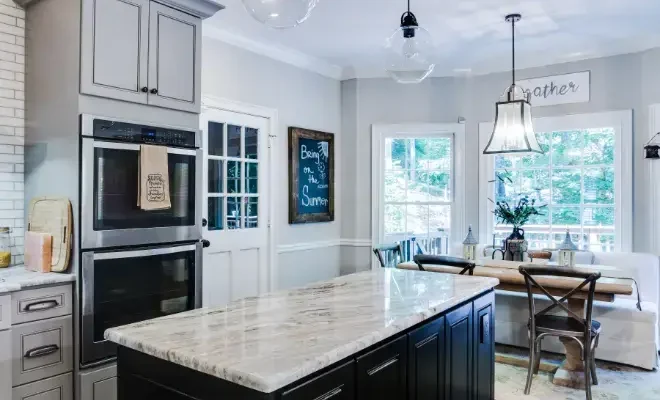
Kitchen island countertops have become the defining feature of modern kitchens across Toronto and the Greater Toronto Area. In contemporary Ontario homes, the island is no longer just a prep surface—it functions as a social hub, storage solution, dining area, and architectural centerpiece. Choosing the right kitchen island countertop requires careful consideration of layout, material performance, structural support, and how the island integrates with the rest of the kitchen.
From compact Toronto condos to large open-concept homes in Vaughan, Markham, and Oakville, kitchen islands play a critical role in both functionality and resale value. Because the island often occupies the most visible position in the kitchen, its countertop material, thickness, and design details have a greater visual impact than perimeter surfaces.
This guide explores how to design kitchen island countertops that balance aesthetics, durability, and everyday usability while meeting the unique needs of Ontario kitchens.
In today’s kitchen layouts, the island naturally becomes the focal point because it sits at the intersection of cooking, dining, and social interaction. Open-concept designs, which are increasingly common across Ontario, place the island at the visual center of the space, often visible from living and dining areas.
Unlike perimeter countertops, island countertops are exposed on multiple sides. This makes edge profiles, slab continuity, and surface finishes far more noticeable. A well-designed island countertop can elevate the entire kitchen, while a poorly planned one can feel disconnected or visually heavy.
In Toronto condos, islands often replace traditional dining tables, serving as a multifunctional surface for meals, remote work, and entertaining. In larger GTA homes, islands frequently act as statement features with oversized dimensions, waterfall edges, or contrasting materials that set them apart from surrounding countertops.
Because of this prominence, island countertops are often where homeowners invest in higher-end materials or custom fabrication details through professional kitchen countertop services in Ontario.
Selecting the right material for a kitchen island countertop depends on how the island will be used. Islands experience a unique combination of activities—food preparation, serving, seating, and sometimes heavy appliance use—so material performance is just as important as appearance.
Quartz remains one of the most popular choices for island countertops in Ontario homes. Its non-porous surface, stain resistance, and consistent appearance make it ideal for families and high-use kitchens. Quartz also performs well in large-format island slabs, making it a common choice for waterfall designs and extended overhangs. Many homeowners pair quartz islands with full installations through quartz countertop collections.
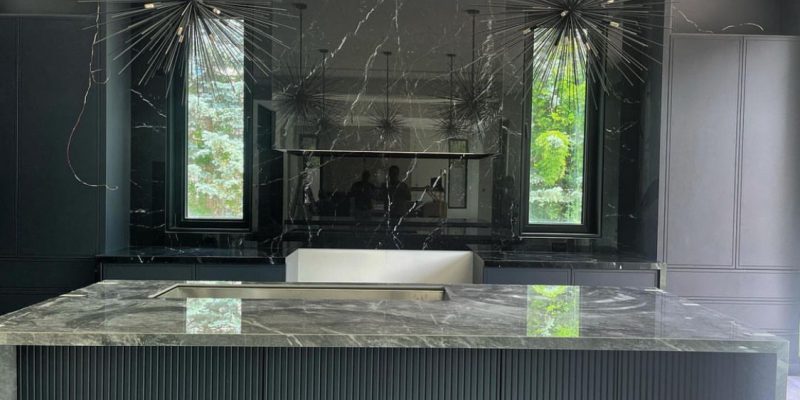
Granite is frequently selected for island countertops in detached homes and luxury kitchens across the GTA. Its natural heat resistance and durability make it suitable for cooking-heavy households. Granite islands often serve as visual anchors in open kitchens, especially when natural veining and darker tones are used. Granite islands are commonly combined with lighter perimeter surfaces for contrast.
Porcelain is gaining popularity for modern island countertops due to its slim profile, exceptional heat resistance, and contemporary aesthetic. Porcelain slabs allow for large islands with minimal visual bulk, making them especially appealing in modern Toronto condos and architectural homes. Porcelain is also well suited for integrated sinks and seamless island surfaces.
Natural stones such as marble or quartzite are sometimes used selectively on islands to create a luxury focal point. In these cases, the island material is chosen for visual impact, while perimeter countertops use more practical surfaces.
One of the most important design decisions for kitchen island countertops is choosing between a standard overhang design and a waterfall edge. Each option offers distinct visual and functional benefits depending on kitchen size, layout, and style.
Standard island countertops feature a horizontal surface with exposed cabinet faces below. This design is more traditional and often more cost-effective. It works well in smaller kitchens where visual simplicity is preferred and where the island needs to blend seamlessly with perimeter cabinetry.
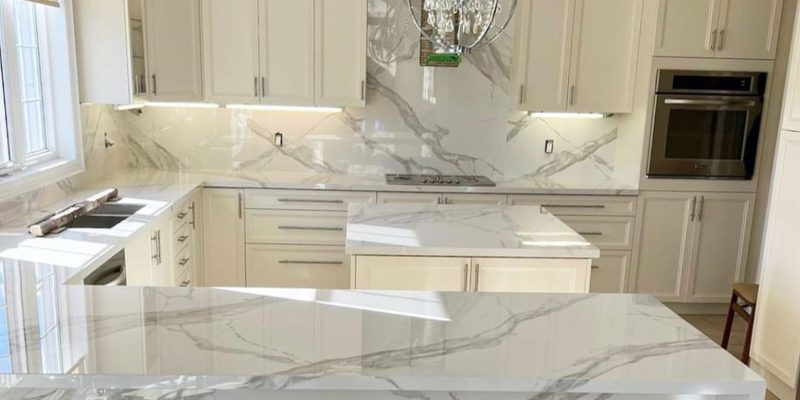
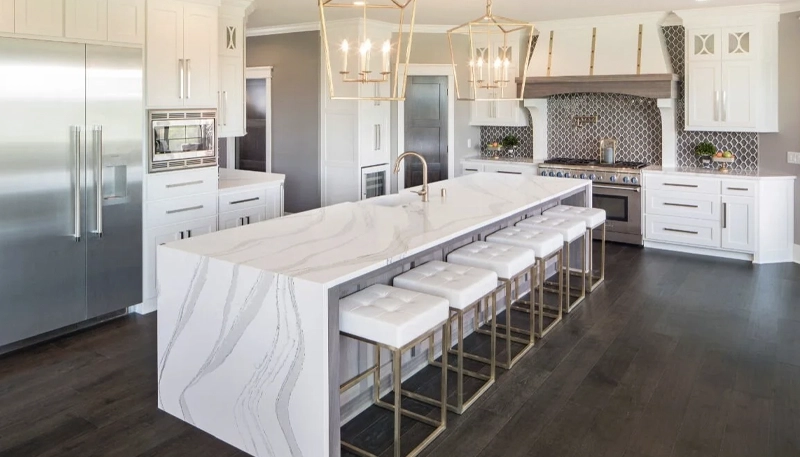
Waterfall island countertops extend the countertop material vertically down one or both sides of the island, creating a continuous slab effect. This design has become increasingly popular in Toronto and GTA homes because it emphasizes material quality and creates a clean, architectural look.
Waterfall islands are particularly effective in open-concept kitchens where the island is visible from multiple angles. They also help protect cabinet ends from wear and impact. However, waterfall designs require precise fabrication and additional structural planning, especially for heavier materials like granite.
Many Ontario homeowners choose waterfall islands as part of custom kitchen island countertop installations to ensure proper slab alignment, support, and long-term durability.
Island overhangs play a major role in comfort, safety, and structural integrity. In kitchens where the island doubles as a seating area, proper overhang depth and support planning are essential.
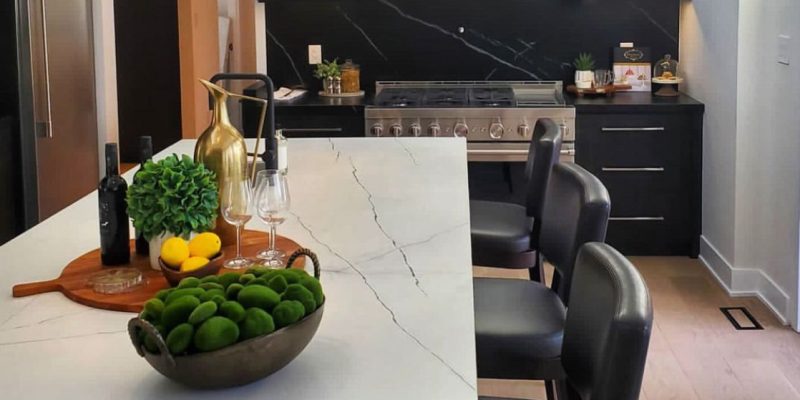
Typical seating overhangs range from 10 to 15 inches, depending on stool height and seating style. Extended overhangs beyond this range require hidden supports such as steel brackets or reinforced substrates to prevent sagging or cracking over time.
Material choice directly affects how much overhang is possible. Quartz and porcelain often allow for cleaner overhangs due to their uniform structure, while natural stones may require additional reinforcement. Thicker countertops can support larger overhangs but also increase visual weight.
In family homes, rounded or eased edge profiles are often recommended for island seating areas to improve safety and comfort. Professional planning during a countertop survey and measurement ensures that seating layouts align with both design goals and structural requirements.
One of the most effective ways to elevate kitchen design is through thoughtful coordination between island and perimeter countertops. While matching materials create a cohesive look, contrasting surfaces can add depth and visual interest when done correctly.
In many Ontario kitchens, homeowners choose a statement island material paired with more neutral perimeter countertops. For example, a marble or quartzite island may be combined with quartz perimeter surfaces to balance luxury and practicality.
Color coordination is equally important. Light-colored islands can make small kitchens feel more open, while darker island countertops ground large open spaces. Veining direction, finish consistency, and edge profiles should also be considered to maintain visual harmony.
Matching island and perimeter countertops does not always mean using identical slabs. Strategic variation, when professionally planned, can enhance design while maintaining continuity across the kitchen.
In the next section, we’ll explore advanced layout strategies, maintenance considerations, and how island countertop choices influence long-term value in Ontario homes.
The size and placement of a kitchen island countertop directly affect how efficiently a kitchen functions. In Ontario homes, especially in Toronto condos and open-concept GTA houses, poor island sizing can disrupt traffic flow and make even a large kitchen feel cramped.
A well-planned island must allow clear walkways around all sides.














In compact Toronto condos, island size should be scaled carefully to avoid blocking appliance doors or reducing usable storage. Slimmer island profiles paired with durable materials like porcelain or quartz help preserve movement while still providing prep and seating space.
In larger GTA homes, oversized islands are common, but size alone does not guarantee functionality. Islands that are too deep or too long can create inefficient work zones, forcing unnecessary steps between cooking, cleaning, and serving areas. Strategic layout planning ensures that the island supports the kitchen workflow rather than becoming an obstacle.
Kitchen islands experience a different type of wear compared to perimeter countertops. Because they are used from multiple sides, islands are more exposed to spills, impact, foot traffic, and casual use throughout the day.
In busy Ontario households, islands often serve as homework stations, dining tables, and entertaining surfaces. This makes stain resistance, scratch resistance, and ease of cleaning especially important. Materials like quartz and porcelain perform exceptionally well in these environments because they resist staining from food, drinks, and everyday messes without requiring sealing.
Natural stone islands, such as granite or marble, require more thoughtful maintenance. Granite performs well under heavy use but should be sealed periodically to protect against staining. Marble islands, while visually striking, are best suited for lower-impact uses such as serving or baking zones rather than heavy prep areas.
Choosing the right finish also affects maintenance. Honed or leathered finishes tend to hide fingerprints and minor scratches better than polished surfaces, making them a popular choice for islands in family homes.
Many modern kitchens in Toronto and the GTA incorporate sinks, cooktops, or prep zones directly into the island countertop. While this enhances functionality, it also adds complexity to material selection and fabrication.
Islands with integrated sinks require materials that handle constant moisture exposure. Quartz and porcelain are commonly chosen because they resist water absorption and staining around sink cutouts. Seam quality and edge finishing are critical in these installations to prevent long-term damage.
Cooktop installations place additional demands on island countertops. Heat resistance becomes a primary concern, especially in kitchens where high-temperature cooking is frequent. Granite and porcelain handle heat better than most engineered surfaces, making them suitable for island cooktops in Ontario homes.
Proper planning during the fabrication stage ensures that appliance cutouts, ventilation requirements, and structural supports are integrated seamlessly into the island design. This level of coordination is typically handled during professional custom stone fabrication services to avoid costly adjustments later.
Kitchen islands play a significant role in how buyers perceive a home’s value, particularly in competitive real estate markets like Toronto and the GTA. A well-designed island countertop can elevate the entire kitchen and create a strong emotional response during showings.
From a resale perspective, islands that feel oversized, impractical, or overly customized can actually reduce appeal. Buyers tend to prefer islands that balance visual impact with everyday usability. Neutral materials, timeless finishes, and functional layouts generally perform best across a wide range of buyer preferences.
Quartz island countertops consistently deliver strong resale performance due to their durability, low maintenance, and modern appearance. Porcelain islands are also gaining traction in newer builds and contemporary homes, especially where a sleek, architectural aesthetic is desired.
Natural stone islands can add significant perceived value when used appropriately. A granite or quartzite island in a high-end home often signals quality craftsmanship, while overly delicate materials may raise maintenance concerns for buyers.
Island design strategies differ significantly between Toronto condos and detached homes across the GTA. In condos, space efficiency is the top priority. Islands often need to combine multiple functions—prep space, dining, storage—within a limited footprint.
Condo islands typically benefit from lighter colors, slimmer profiles, and materials that visually recede rather than dominate the space. Porcelain and quartz are frequently selected because they offer strength without visual bulk.
In detached homes, islands are often larger and more expressive. Homeowners have greater freedom to incorporate waterfall edges, contrasting materials, and integrated appliances. Structural planning becomes more important at this scale, especially for extended overhangs and thick slab designs.
Understanding these differences ensures that island countertops feel appropriate to the property type and enhance rather than overwhelm the kitchen.
Despite their popularity, kitchen islands are often the source of design mistakes that impact both usability and long-term satisfaction. One of the most common errors is prioritizing appearance over function. An island that looks impressive but lacks sufficient clearance or seating comfort quickly becomes frustrating.
Another frequent mistake is choosing materials that do not align with lifestyle. High-maintenance stones may look stunning initially but can become a burden in busy households. Poor overhang support is another critical issue, leading to sagging or cracking over time.
Inconsistent material transitions between island and perimeter countertops can also disrupt visual flow. Successful kitchens feel intentional, with clear relationships between surfaces, finishes, and proportions.
Kitchen island countertops are more than a design trend—they are a central component of how modern Ontario kitchens function and feel. When thoughtfully planned, an island enhances workflow, supports daily living, and adds long-term value to the home.
By carefully selecting materials, planning layout and support, and coordinating island design with the rest of the kitchen, homeowners can create island countertops that remain beautiful and practical for years to come. Professional fabrication and installation play a critical role in achieving this balance, ensuring that the island performs as well as it looks.