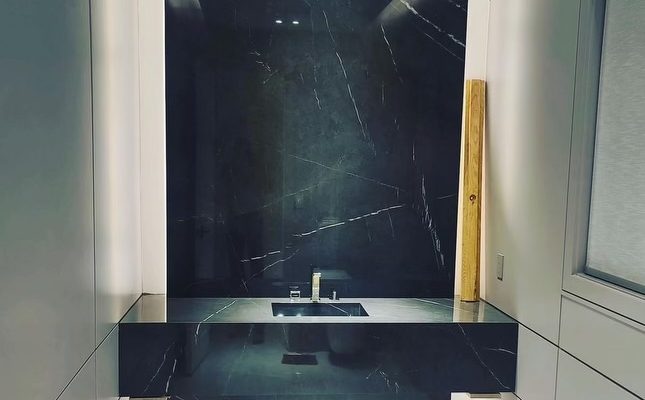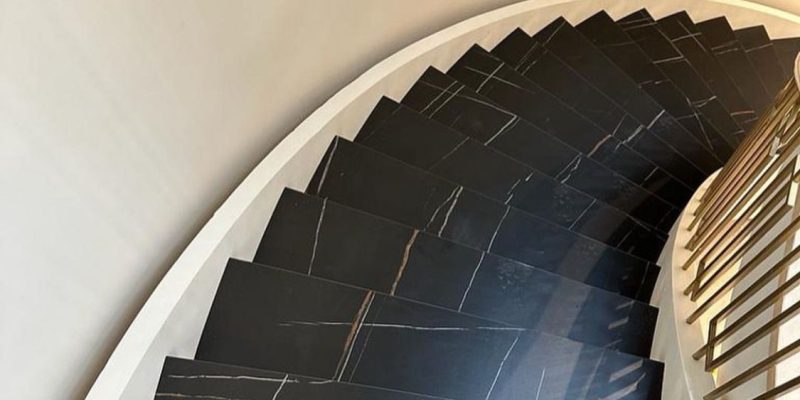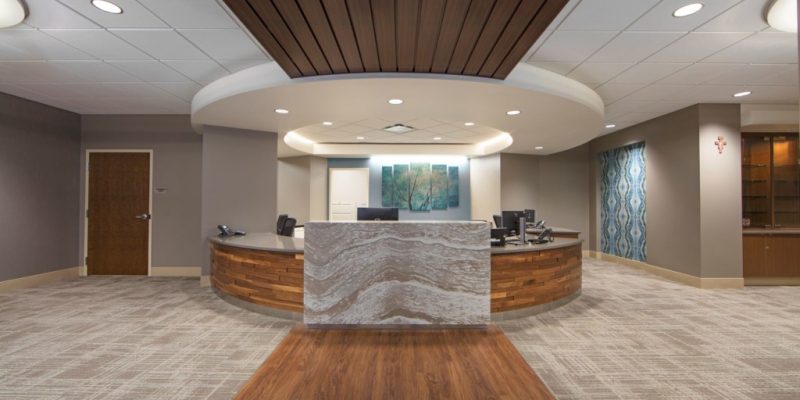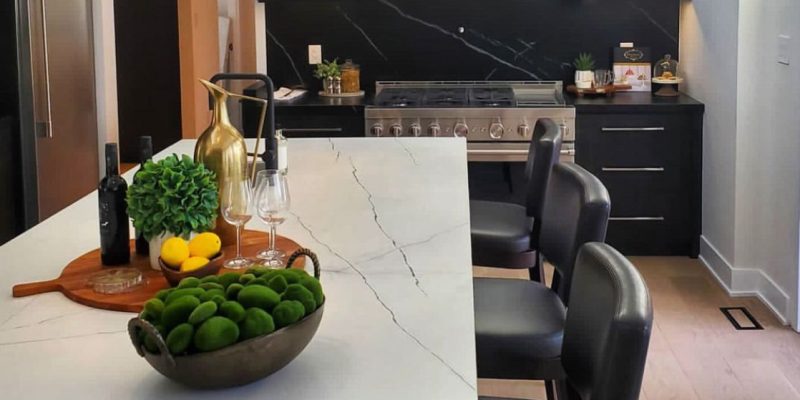
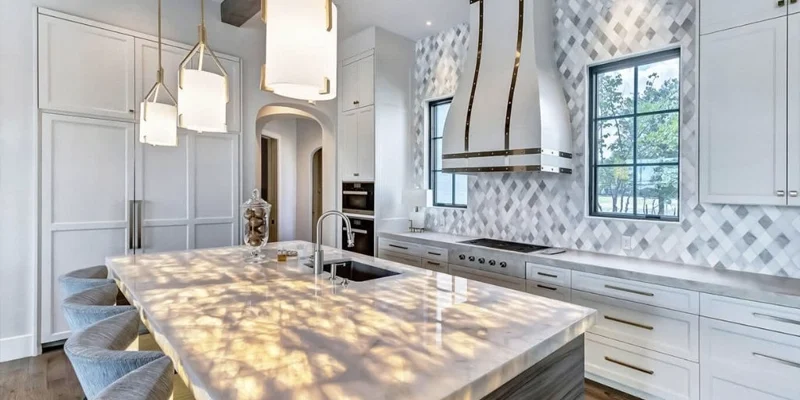
Onyx countertops are among the most visually striking natural stone surfaces available in Canada. Known for their translucency, dramatic veining, and ability to be backlit, onyx is often chosen for luxury kitchens, statement islands, and high-end bathroom designs across Ontario.
However, onyx is also one of the most delicate natural stones used in residential interiors. In humid climates — such as Toronto, the GTA, and many parts of Southern Ontario — maintaining the shine and integrity of onyx requires a clear understanding of its properties and proper care techniques.
Unlike granite, quartzite, or porcelain, onyx is a calcium-based natural stone formed from mineral-rich water deposits. This formation process gives onyx its signature translucency but also makes it significantly softer and more porous than many other countertop materials.
Because of this composition, onyx is more sensitive to:
In Canadian homes with fluctuating humidity levels, especially during summer months, understanding these sensitivities is essential to preserving onyx’s polished appearance.
Humidity plays a critical role in how onyx surfaces age over time. In areas like Toronto and the GTA, seasonal humidity changes can affect porous stones more than homeowners expect.
High humidity can:
Unlike non-porous materials such as quartz or porcelain, onyx requires proactive care to maintain its shine in humid environments.
Because of its delicate nature, onyx is typically used in controlled, design-focused areas rather than high-traffic work surfaces. In Ontario homes, onyx is most commonly installed as:
For kitchens, onyx is usually combined with more durable materials on perimeter counters, while reserved for visual focal points. When integrated into a complete kitchen countertop design, proper placement is key to long-term satisfaction.
When comparing onyx to other countertop materials commonly used in Canada, its maintenance requirements stand out:
Onyx vs Granite: Granite is significantly harder and more forgiving in humid environments. Onyx requires more frequent sealing and careful cleaning.
Onyx vs Quartz: Quartz is non-porous and unaffected by humidity, making it easier to maintain. Onyx offers unmatched visual impact but demands more attention.
Onyx vs Marble: Both stones are sensitive to acids, but onyx is generally softer and more vulnerable to moisture-related dulling.
Onyx is best suited for homeowners who prioritize design impact and understand the responsibility that comes with maintaining a delicate natural stone. In humidity-prone regions of Ontario, onyx can perform beautifully when installed correctly and cared for consistently.
For precise planning, material placement, and long-term performance, professional services such as countertop survey & measurement are strongly recommended before installation.
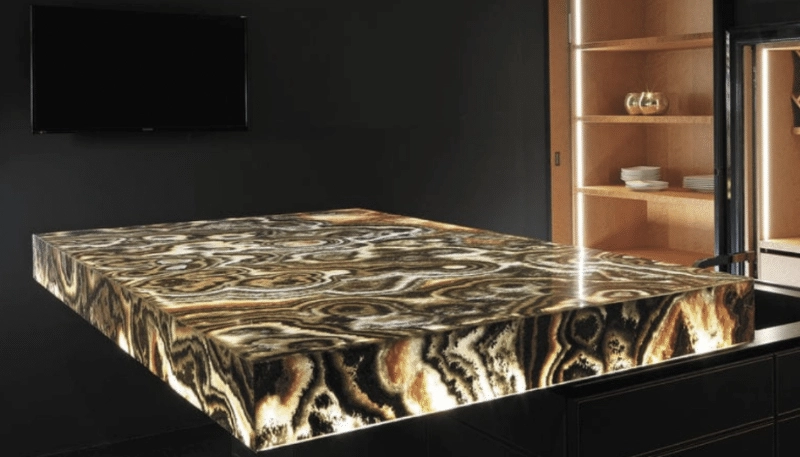
One of the biggest challenges with onyx countertops in Canadian homes is controlling the impact of humidity on the stone’s surface. In regions such as Toronto, the GTA, and Southern Ontario, seasonal humidity fluctuations can gradually affect the clarity, polish, and overall appearance of onyx if proper precautions are not taken.
Because onyx is more porous and softer than stones like granite or quartzite, moisture exposure plays a direct role in how well it maintains its shine over time.
When humidity levels are high, unsealed or improperly sealed onyx can absorb moisture from the surrounding air. This moisture does not always create visible stains, but it can slowly dull the surface by interfering with the polished finish.
Over time, this leads to:
In Ontario kitchens and bathrooms, where steam, cooking heat, and water use are frequent, humidity control becomes an essential part of onyx maintenance.
Sealing is the single most important step in protecting onyx countertops from humidity-related damage. Unlike harder stones, onyx requires high-quality penetrating sealers that create a moisture barrier without altering the stone’s appearance.
In most Ontario homes, onyx countertops should be sealed:
A properly sealed onyx surface repels moisture, reduces the risk of etching, and preserves the stone’s natural shine for significantly longer periods.
Routine cleaning habits play a major role in how well onyx countertops perform in humid environments. Many common household cleaners contain acidic or abrasive ingredients that can damage onyx even with minimal exposure.
For daily care in Ontario homes, onyx countertops should be cleaned using:
Avoid vinegar, citrus-based cleaners, bleach, and multi-purpose sprays, as these products can strip sealers and dull the stone’s finish over time.
In kitchens where onyx is installed, proper ventilation significantly reduces long-term moisture exposure. Using range hoods, exhaust fans, and adequate airflow helps prevent steam and condensation from settling on the stone.
Homes with open-concept layouts — common across Toronto and the GTA — benefit from consistent air circulation, which helps stabilize indoor humidity levels. In more enclosed kitchens or bathrooms, humidity control becomes even more critical.
When onyx is part of a full kitchen countertop installation, ventilation planning should be considered alongside material selection to ensure long-term performance.
Improper installation can significantly shorten the lifespan of onyx countertops in humid climates. Poor seam placement, inadequate sealing, or incorrect substrate preparation can all contribute to moisture-related issues.
Professional installers understand how to:
Accurate measurements and layout planning are especially important for onyx slabs.

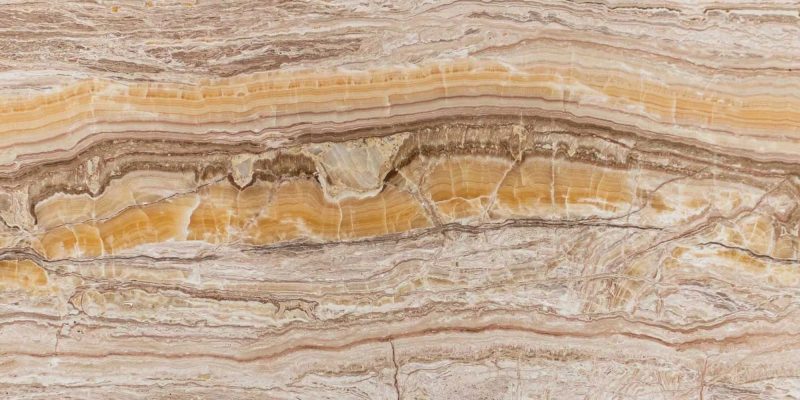
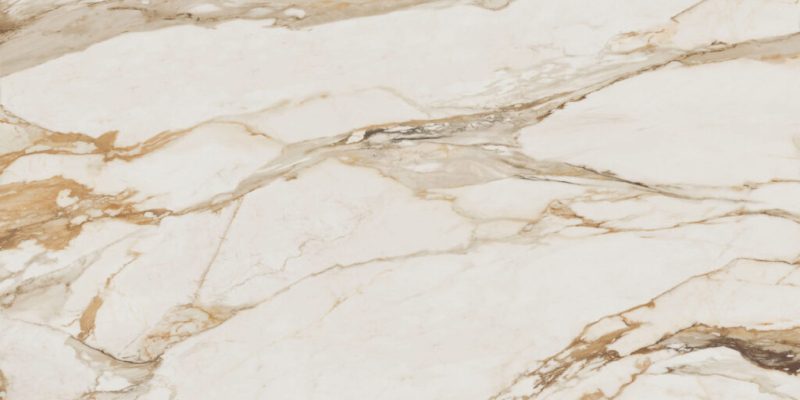
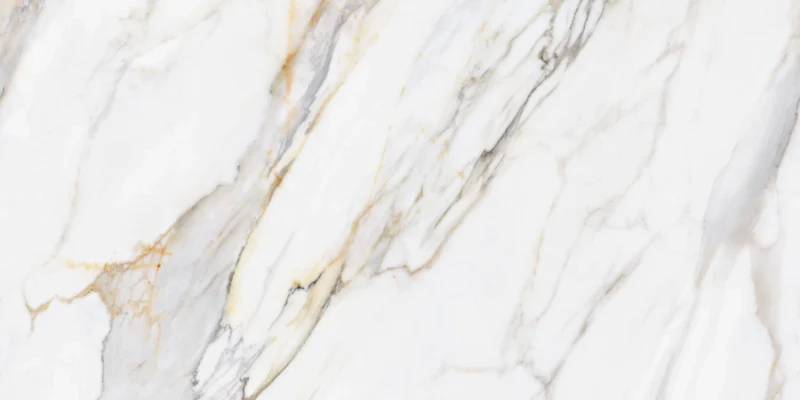
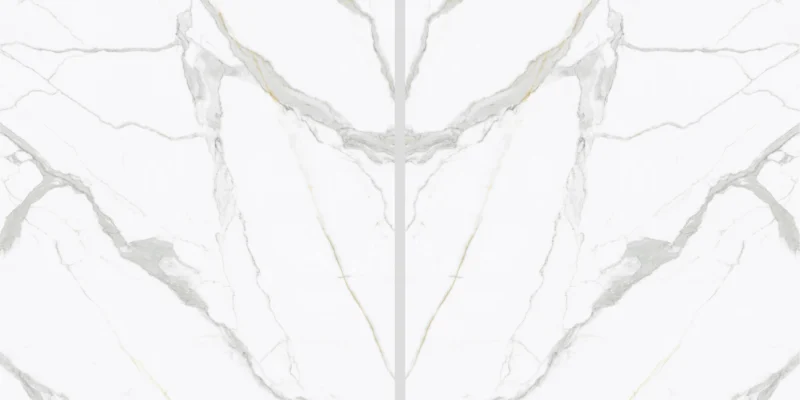
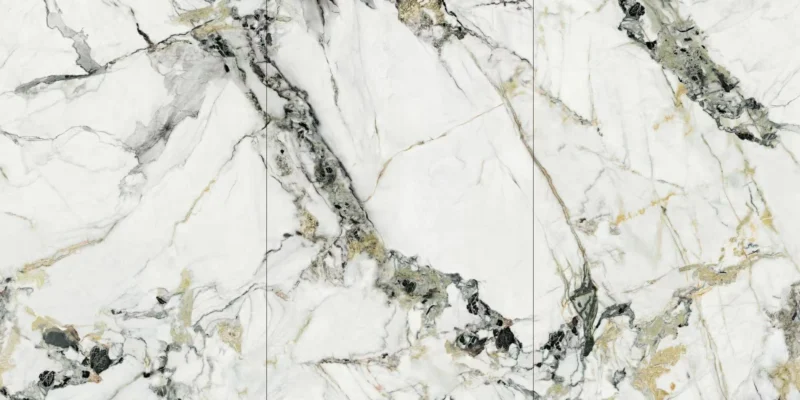
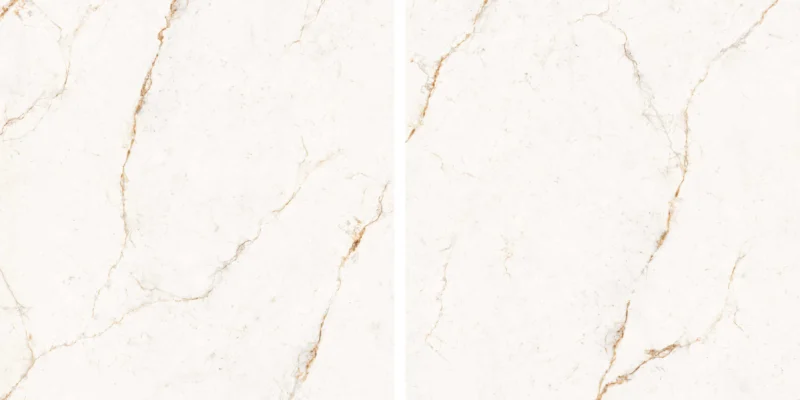
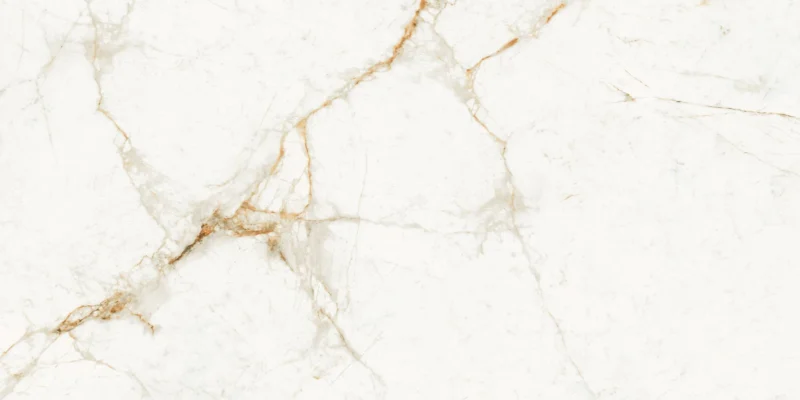
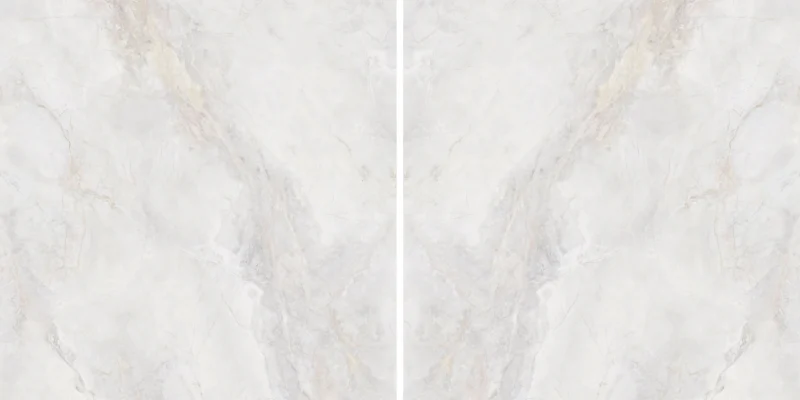
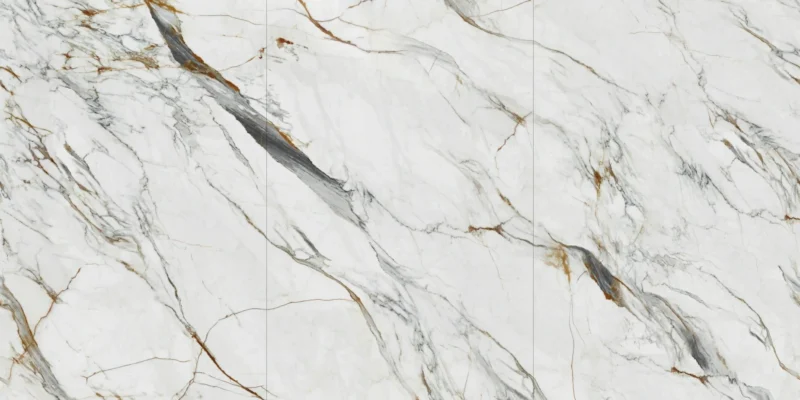
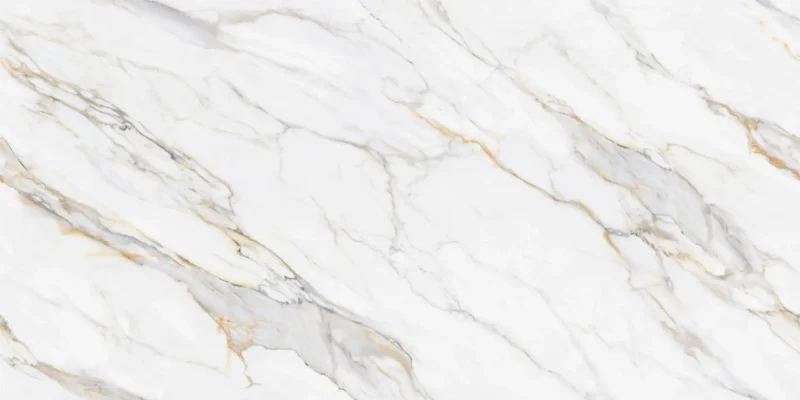
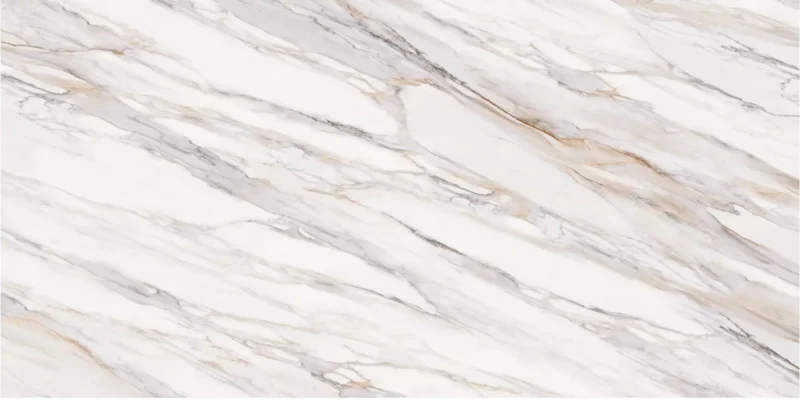
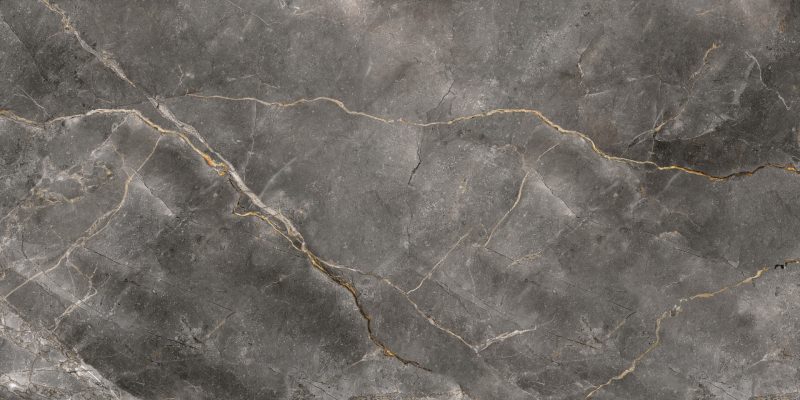


Compared to granite or quartzite, onyx requires more attention to maintain its shine. However, when cared for properly, onyx can retain its polished appearance and visual depth for many years.
Homeowners who are prepared to follow a structured maintenance routine often find the visual payoff of onyx well worth the extra effort — especially in feature-driven designs where aesthetics are a top priority.
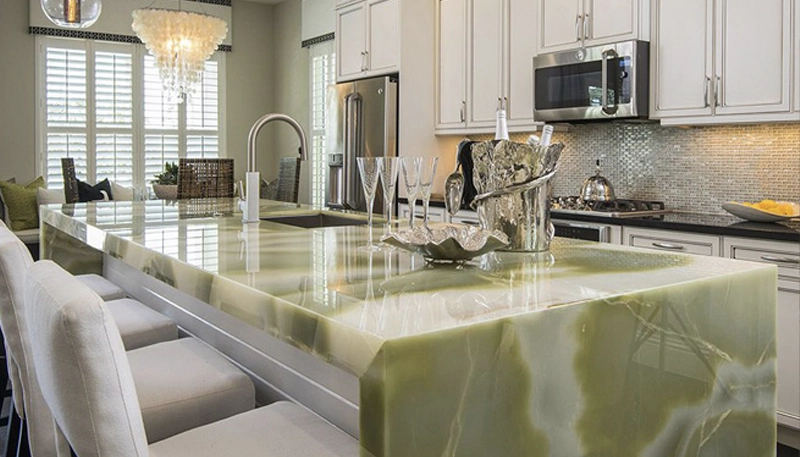
Maintaining the natural shine of onyx countertops in Ontario homes goes beyond daily cleaning and sealing. Over time, even well-maintained onyx surfaces may require professional polishing or refinishing to restore their original clarity and depth.
Because onyx is a softer, calcium-based stone, its surface responds differently to wear compared to granite or quartzite. Understanding when and how to refinish onyx is key to preserving its luxury appearance.
Onyx countertops typically show signs of surface wear sooner than harder stones. In Ontario kitchens and bathrooms, professional polishing may be needed if you notice:
These issues are cosmetic rather than structural, and in most cases can be corrected without replacing the slab.
Many homeowners attempt to restore shine using over-the-counter polishing products. While these may offer temporary improvement, they often leave residue or create uneven gloss — especially in humid climates like Toronto and the GTA.
Professional stone polishing uses:
This process restores clarity without damaging the stone’s structure or altering its natural translucency.
Etching is one of the most common issues with onyx countertops. It occurs when acidic substances react with the calcium content of the stone, leaving dull or matte spots on the surface.
In Ontario homes, etching is most often caused by:
Professional refinishing removes these etched areas by lightly resurfacing the stone, followed by polishing and resealing. This restores a uniform finish and prevents further deterioration.
Any polishing or refinishing process removes part of the existing sealant. For this reason, resealing is essential after surface restoration.
In Ontario’s climate, a freshly polished onyx countertop should be sealed using:
This step ensures moisture resistance and protects the surface from future humidity-related issues.
For homeowners who want to keep onyx countertops looking pristine long term, a structured care schedule is highly recommended:
This approach is particularly important for onyx installations in kitchens, bathrooms, and high-humidity spaces across Toronto and Southern Ontario.
Many Ontario homeowners choose to use onyx strategically rather than as a full work surface. Common applications include:
When used alongside more durable materials, onyx maintains its beauty with less maintenance pressure. Pairing onyx features with a full kitchen countertop system allows homeowners to balance performance and visual impact.
Onyx requires precise fabrication due to its translucency and fragility. Incorrect cutting or poor edge finishing can weaken the slab and increase the risk of cracks or moisture intrusion.
Professional fabrication ensures:
This level of precision is especially important in custom applications such as islands and waterfall panels, where structural integrity and visual continuity must work together.
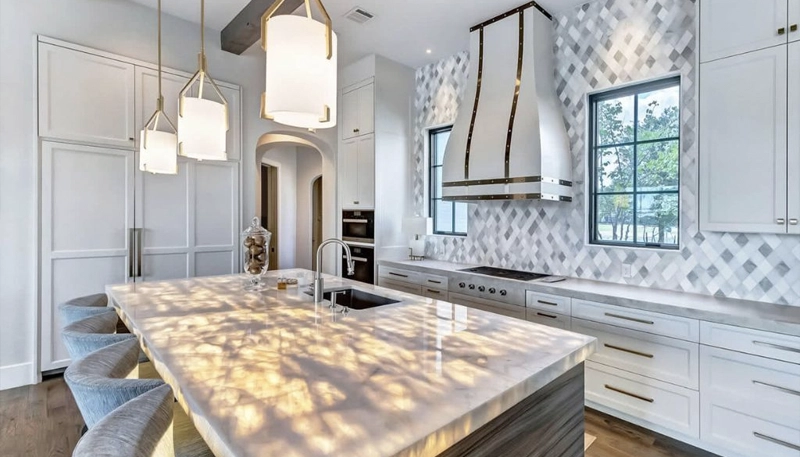
Onyx countertops are not designed to compete with granite, quartz, or porcelain in terms of heavy-duty performance. Instead, onyx occupies a different category — one where visual impact, exclusivity, and artistic expression are the primary goals.
For homeowners in Toronto, the GTA, and Southern Ontario who prioritize luxury design and statement surfaces, onyx offers an experience no other stone can replicate. Its natural translucency, depth, and ability to be backlit make it one of the most visually striking materials available for interior spaces.
Onyx is best suited for Ontario homeowners who:
Luxury homes, custom renovations, and design-driven projects benefit most from onyx, especially when paired with professional fabrication and installation.
Based on real-world performance, onyx excels in the following applications:
In these settings, onyx maintains its beauty while avoiding the wear and tear common in high-traffic kitchen work zones.
When comparing onyx to other popular countertop materials used in Ontario homes, the differences are clear:
For homeowners who want both performance and design, onyx is often combined with more durable materials as part of a complete kitchen countertop strategy, allowing each surface to perform its ideal role.
One of the smartest ways to use onyx in Ontario homes is through strategic placement rather than full-surface installation.
Common design combinations include:
This approach allows homeowners to enjoy onyx’s visual power while relying on more durable materials for everyday functionality.
Onyx is not a low-maintenance stone, and it is not intended to be. Its value lies in exclusivity, craftsmanship, and design impact rather than convenience.
When properly fabricated, sealed, and maintained, onyx countertops can remain stunning for decades. However, homeowners should expect:
For clients who understand these requirements, onyx becomes a rewarding long-term investment rather than a maintenance burden.
Onyx countertops are ideal for Ontario homeowners seeking a bold, luxurious surface that transforms a space into a visual statement. While not suited for heavy daily abuse, onyx excels as a design centerpiece when used thoughtfully and supported by expert fabrication.
If your project prioritizes elegance, individuality, and architectural impact — and you are prepared for proper care — onyx remains one of the most breathtaking natural stone options available.
To explore available slabs and design possibilities, visit our Onyx Stone Collection or consult with our specialists to compare materials before final selection.