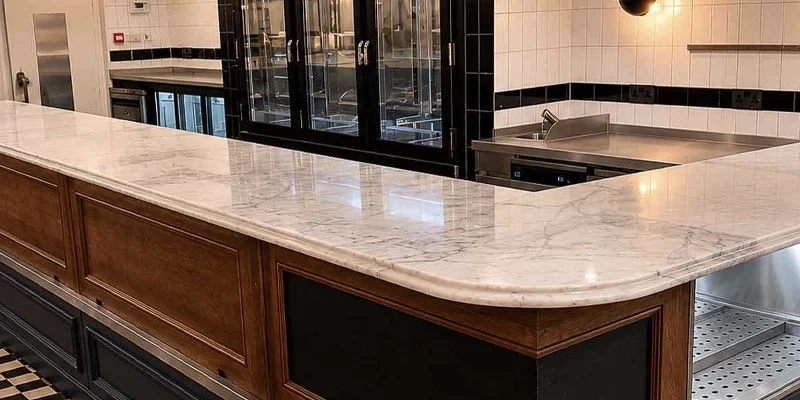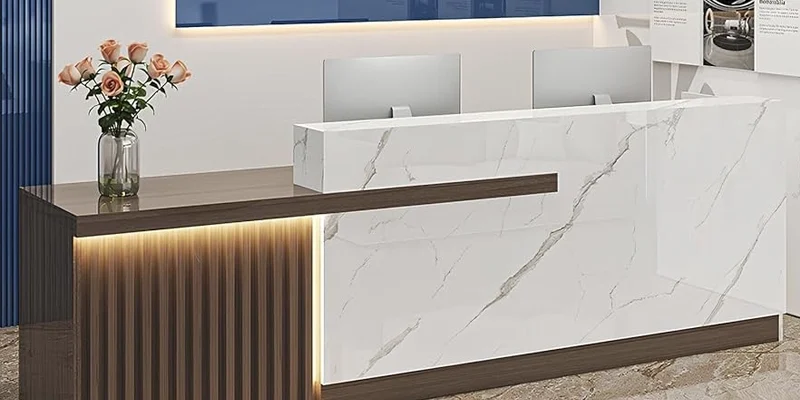
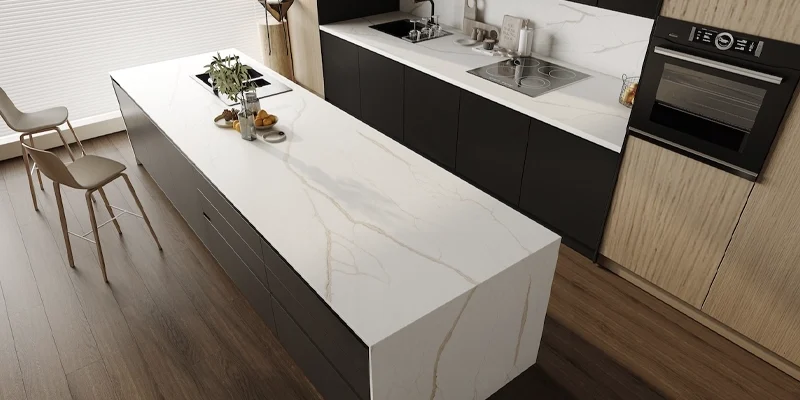
Porcelain countertop cost in Toronto depends on the selected product, slab thickness, material yield, fabrication details and installation conditions—not only the number of square feet in the kitchen. Two projects with similar countertop areas can have substantially different costs when one includes mitred edges, waterfall panels, multiple cutouts or difficult delivery access.
The choice between 12mm and 20mm porcelain also affects the quotation, but thickness alone does not determine which option is cheaper, stronger or better. A 12mm slab may use less material weight while requiring detailed edge construction or additional support. A 20mm slab may create a more substantial profile but still involve complex fabrication, pattern alignment and handling.
This guide explains how porcelain countertop pricing is structured, how 12mm and 20mm slabs differ and which project details should be included in a complete Toronto and GTA quotation.
Quick Answer
There is no universal installed price for porcelain countertops. Final cost depends on the actual slab, thickness, quantity, layout, edges, cutouts, pattern alignment, delivery and installation. A 12mm countertop is not automatically less expensive than 20mm because specialist fabrication and mitred construction can offset any difference in material thickness.
A reliable porcelain countertop price should be based on the complete project scope. Advertised slab rates or general price-per-square-foot figures may exclude fabrication, finished edges, sink cutouts, delivery, installation or removal of the existing countertop.
Before comparing prices, confirm whether the quotation includes:
A lower initial figure may become more expensive once omitted services are added. Comparing complete installed scope is therefore more useful than comparing a single material rate.
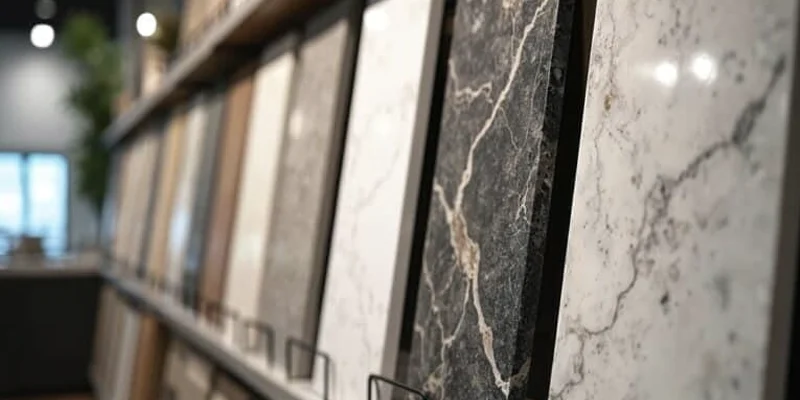
Porcelain slabs are available from different manufacturers in various formats, thicknesses, finishes and design collections. A simple solid colour may have different material and fabrication requirements from a large-format marble-look slab with directional veining.
The same slab can also produce different project costs depending on how it is used. A straight countertop run with a simple edge is generally less complex than a kitchen containing:
For this reason, the selected product and final layout should be evaluated together.
The slab is only one component of the completed countertop. Porcelain requires appropriate tooling, cutting methods, drilling procedures, handling equipment and installation experience.
A complete project price may include four broad components:
Plumbing, gas, electrical work, cabinet modification and wall finishing may be separate unless specifically included in the written quotation.
Porcelain can overlap with premium quartz, granite and other high-performance countertop products. The final installed cost may be affected more by fabrication complexity than by the material category alone.
Porcelain often requires specialist handling, particularly around thin edges, internal corners, sink openings and large-format panels. A competitively priced slab can therefore produce a higher completed project cost when the design includes complex mitres, waterfalls or coordinated wall applications.
Homeowners should compare porcelain with other surfaces according to the completed design, expected use and full installation scope—not only the initial slab price.
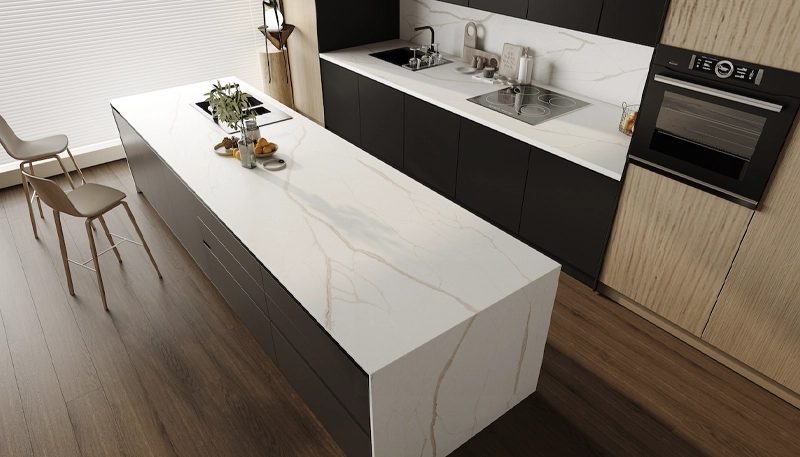
Both 12mm and 20mm porcelain can be used successfully for countertop projects when the selected product is fabricated, supported and installed according to its technical requirements.
Thickness influences appearance, material weight, edge construction, handling and product availability. It does not independently determine the completed countertop’s durability.
| Comparison Factor | 12mm Porcelain | 20mm Porcelain |
|---|---|---|
| Visual profile | Slim and architectural | More substantial visible thickness |
| Material weight | Generally lower for the same surface area | Generally higher for the same surface area |
| Edge construction | Can remain slim or use mitres to create a thicker appearance | May provide more visible depth without additional edge build-up |
| Handling | Large thin panels require specialist support and transport | Heavier sections require controlled lifting and access planning |
| Support requirements | Product and application-specific support may be required | Cabinet, overhang and cutout support must still be reviewed |
| Potential cost influence | Mitres, substrates, handling and complex detailing may increase fabrication cost | Material availability, weight, handling and design complexity may increase cost |
No. A thinner slab does not automatically produce a lower installed price. A 12mm project may require mitred edge construction, specialist support, additional handling or detailed pattern alignment.
Waterfall islands and full-height backsplashes can also increase the amount of fabrication and installation work, even when a thin slab is used.
No. Thickness alone does not determine durability. The selected product, support, cutout design, edge details, transport and installation quality all affect performance.
A correctly designed 12mm countertop may perform better than a poorly supported or incorrectly fabricated 20mm installation. Thickness should therefore be selected according to the product specifications and project design rather than a general assumption that thicker always means stronger.
Thickness Decision
Choose between 12mm and 20mm porcelain according to the desired profile, available product, edge design, support, layout and total fabrication scope—not thickness or slab price alone.
The next section explains the specific material, layout, edge, cutout and pattern details that affect the final porcelain countertop quotation.
The final cost of a porcelain countertop is shaped by the selected slab and the amount of work required to convert it into a finished, installed surface. Material price matters, but fabrication complexity, slab yield and site conditions can have an equal or greater effect on the quotation.
Porcelain collections vary by manufacturer, slab format, thickness, finish and pattern. Premium marble-look designs, textured surfaces, bookmatched options and limited collections may cost more than standard colours or simpler patterns.
The finish can also influence fabrication and care requirements. Polished, matte and textured surfaces may require different handling methods, especially around exposed edges and cutouts.
Material yield describes how efficiently the required countertop sections fit within the available slab dimensions. A project may require an additional slab even when only a small section exceeds the usable area of the first panel.
Yield is affected by:
Efficient layout planning can reduce waste, but material should not be forced into an unsuitable layout simply to avoid purchasing another slab.
A straight countertop run is generally simpler to fabricate than an L-shaped or U-shaped kitchen with multiple corners, seams and appliance openings.
Project complexity may increase when the layout includes:
More sections can mean additional cutting, edge finishing, seam preparation and installation labour.
A simple exposed edge generally requires less fabrication than a mitred edge designed to create the appearance of a thicker countertop.
Mitred construction may involve:
Waterfall islands often use mitred joints where the horizontal countertop meets the vertical panel. The quality of this transition depends on accurate fabrication and alignment, which can increase the project cost.
Every opening adds fabrication work and creates narrower sections that require careful handling. Undermount sinks also require a finished visible edge around the opening.
Cost may be influenced by:
Final appliance and fixture specifications should be confirmed before fabrication. Changing the sink or cooktop after measurement can require revised templates or additional work.
Waterfall panels and porcelain backsplashes extend the material beyond the horizontal countertop and can substantially increase slab usage.
A waterfall island may require:
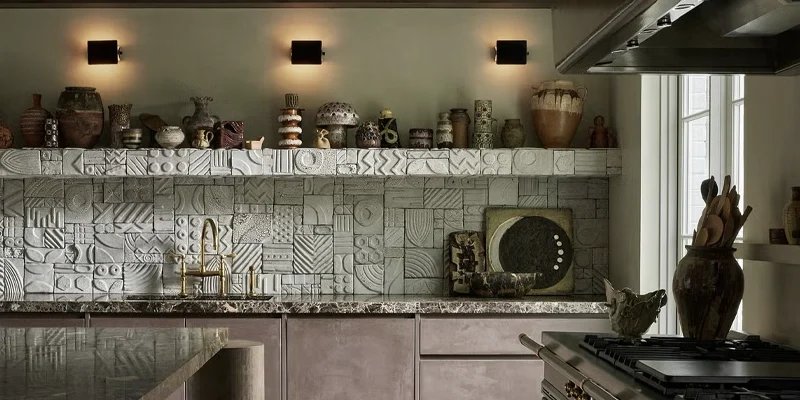
A full-height backsplash may also require outlet cutouts, wall preparation and coordination with upper cabinets, range hoods and other fixtures.
Homeowners planning these details can review TecCorp Stone’s kitchen island countertop services and stone backsplash services.
Large marble-look porcelain designs often contain directional movement. Aligning that pattern across seams, waterfall panels or backsplashes can reduce the number of usable layout options.
Pattern planning may require:
Pattern continuity should be reviewed before fabrication rather than assumed after the material has been cut.
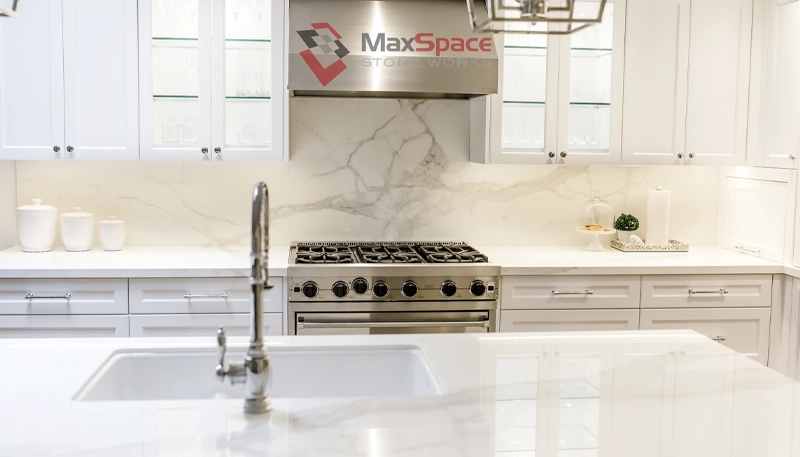
Porcelain fabrication requires suitable tooling, support and handling methods. The installed price should reflect the technical requirements of the selected product rather than treating porcelain like a standard stone slab.
Professional countertop measurement and templating records the final cabinet dimensions, walls, overhangs, cutouts, seams and installation access.
Cabinets should generally be installed, level and secured before final measurement.
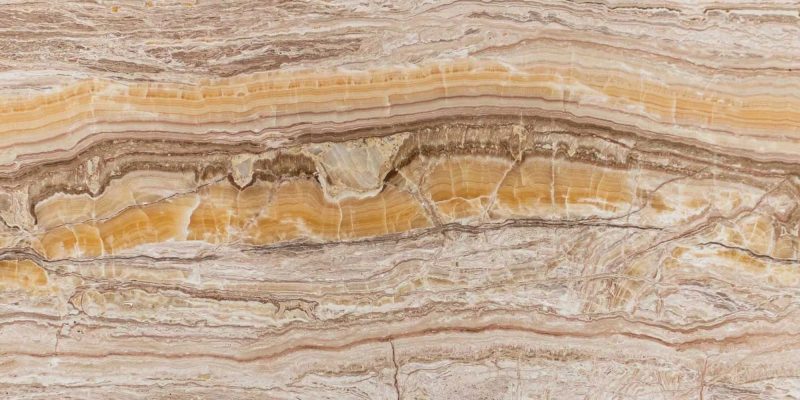
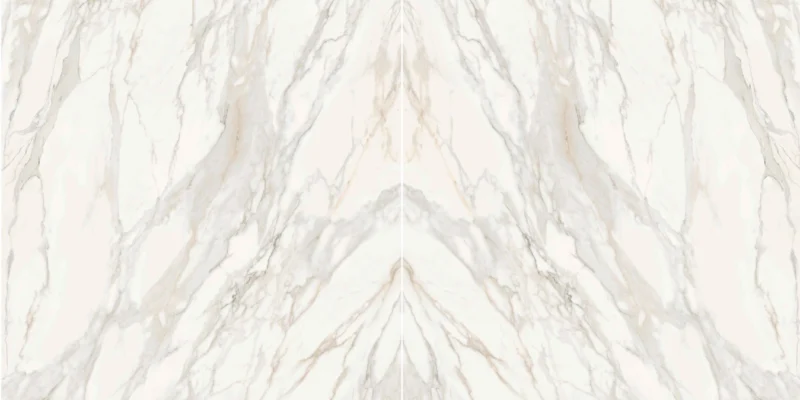
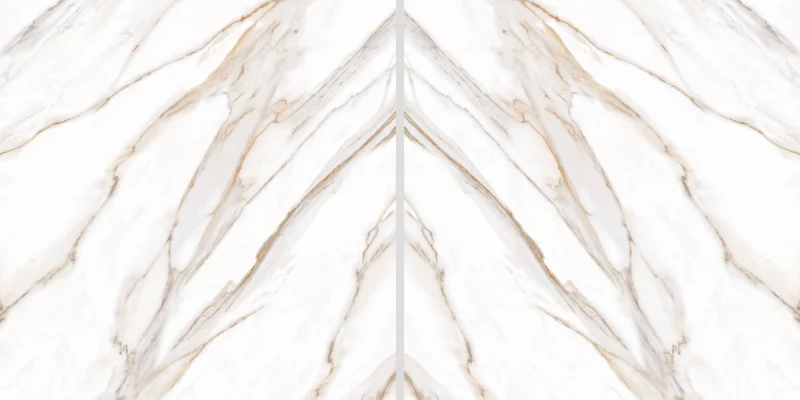
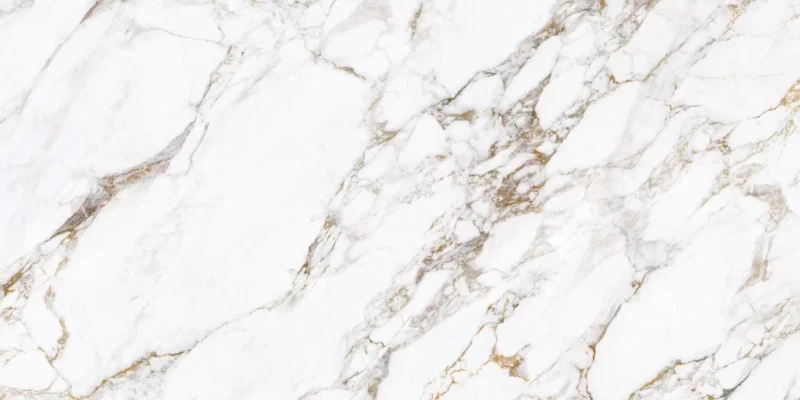
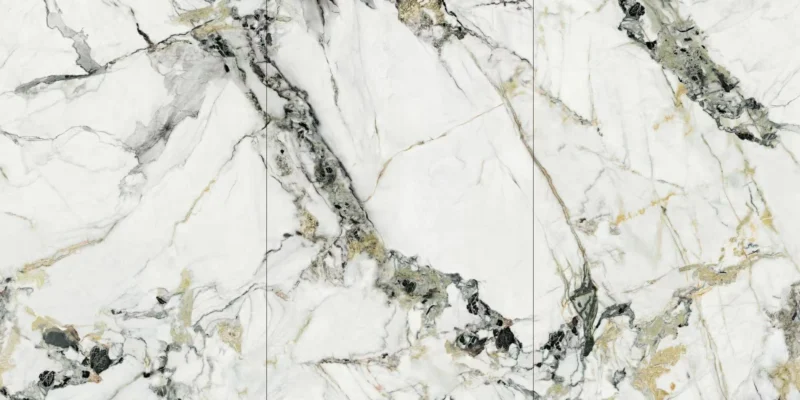
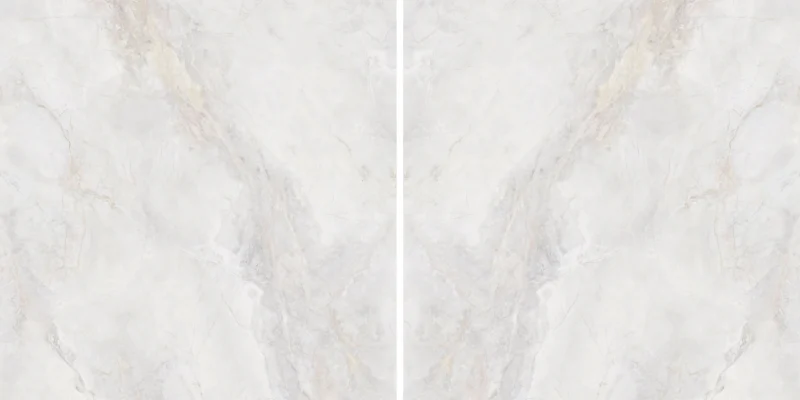

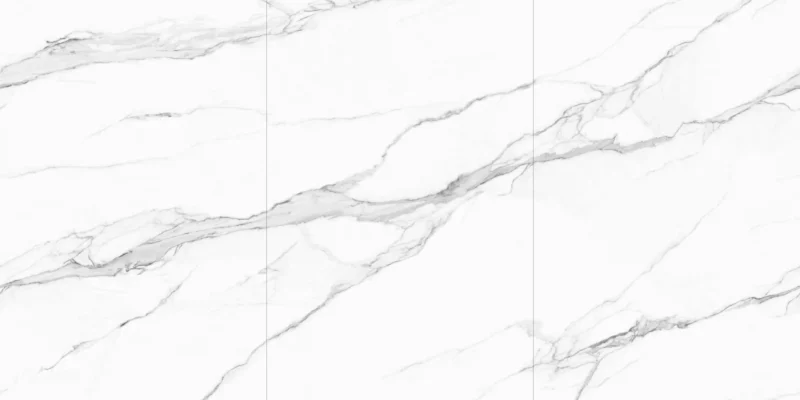

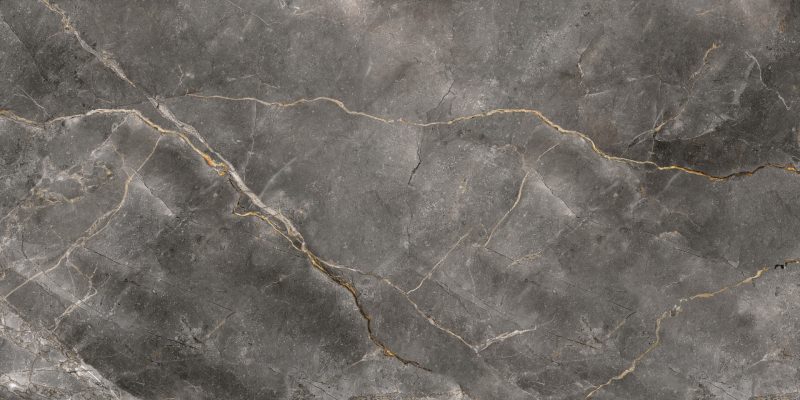
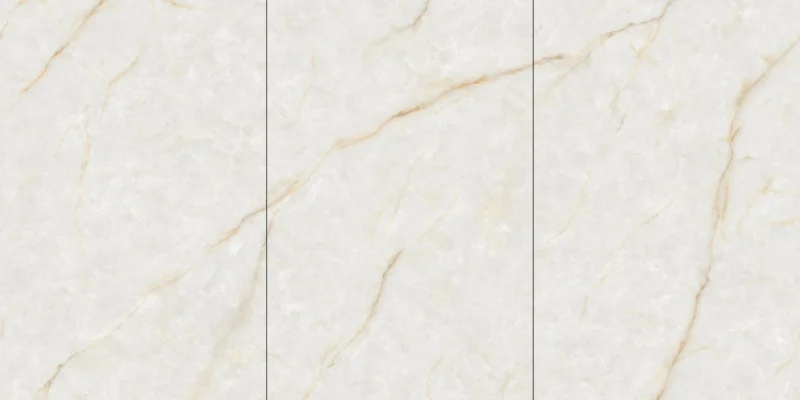


Porcelain requires compatible blades, drilling tools, support systems and cutting procedures. Internal corners, sink openings and narrow sections must be fabricated carefully to reduce concentrated stress.
Complexity increases with:
The selected manufacturer’s fabrication guidance should be followed because requirements can vary by product and thickness.
Thin porcelain may weigh less than a thicker slab of the same area, but large panels can still be difficult to transport safely. Heavier 20mm sections also require controlled lifting and adequate access.
Delivery cost may be influenced by:
Toronto condominium projects may require elevator reservations, loading-dock coordination, delivery time windows and protection of common areas.
If a large section cannot move safely through the building, the layout may require another seam or smaller fabricated pieces. Access should therefore be reviewed before final slab cutting.
Cabinets must be stable, level and suitable for the selected countertop system. Some thin-format applications may require a specific substrate or support arrangement based on the product and layout.
Cabinet repair, levelling, reinforcement or substrate preparation may be charged separately if the site is not ready for installation.
Cost Planning Principle
Porcelain pricing should account for the complete path from slab selection to final installation. A low slab rate does not guarantee a low completed project cost when fabrication, support, access or pattern requirements are complex.
The final section explains cost considerations for different project types, practical ways to control the budget and the items that should appear in a complete porcelain countertop quotation.
Porcelain countertop cost changes according to how the material is used. A compact countertop with simple edges has a different material yield and fabrication scope from a large island, waterfall installation or full-height backsplash.
A smaller kitchen may use less porcelain overall, but the project can still require sink and cooktop cutouts, several short sections and condominium delivery coordination. A small floor plan does not always produce the lowest price per square foot because measurement, fabrication, delivery and installation are still required.
A complete kitchen may include perimeter countertops, several corners, seams, appliance openings and backsplash sections. Cost depends on how efficiently these pieces fit within the available slab dimensions.
Long countertop runs and directional patterns may require additional material to maintain a practical seam layout.
A porcelain kitchen island countertop may require a large uninterrupted panel. Cost can increase when the selected slab cannot accommodate the island dimensions without a seam or when the design includes seating overhangs, sink cutouts or cooktop openings.
A waterfall design adds one or two vertical porcelain panels to the island. These panels increase material use and commonly require mitred joints, pattern alignment and precise floor-to-countertop measurements.
The cost is affected by:
A full-height backsplash can create visual continuity between the countertop and upper cabinets, but it adds material, fabrication and installation work.
Outlet openings, range-hood details, window returns and uneven walls can increase complexity. Wall preparation and electrical work may be separate from the porcelain quotation.
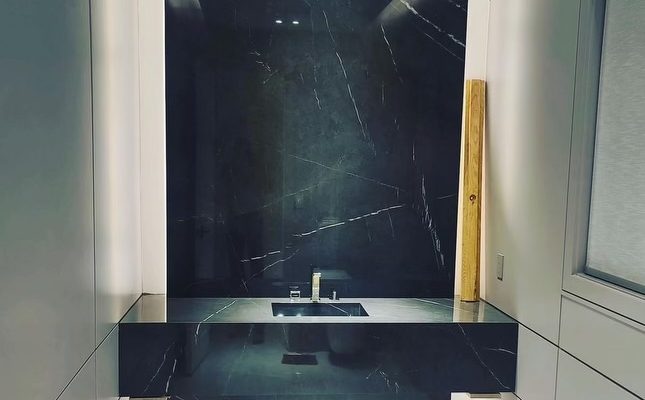
Bathroom vanities, bar tops, shelves, wall panels and other custom porcelain applications may use less material than a full kitchen but still require project-specific fabrication.
Small projects can have a higher effective cost per square foot because fixed services such as measurement, setup, transport and installation are distributed across a smaller surface area.
Cost control should begin before the slab is reserved or the final measurement is completed. Changes made after templating or fabrication can create additional work and material waste.
Confirm the porcelain manufacturer, collection, finish and thickness before finalizing edges, overhangs and support. Designing around a generic porcelain slab can lead to revisions when the selected product has different dimensions or technical requirements.
Ask the fabricator to review the planned sections against the actual slab dimensions. Efficient material yield may reduce waste, but seam quality, pattern direction and structural requirements should not be sacrificed solely to avoid another slab.
A slim exposed edge is generally less complex than a thick mitred build-up. Where the design permits, simplifying edge details can reduce cutting, assembly and finishing work.
Final sink, cooktop, faucet and accessory specifications should be available before fabrication. Changing models after measurement may require revised drawings or new cutout work.
Adding a waterfall panel, changing the backsplash height or modifying an island after slab layout has been approved can affect material quantity and fabrication.
Do not select a contractor using the slab rate alone. Compare what each proposal includes, excludes and assumes about site conditions.
Budget Tip
The most economical quotation is not always the one with the lowest material rate. Confirm the complete scope, product, slab quantity, fabrication details and installation responsibilities before comparing totals.
| Quote Item | What to Confirm |
|---|---|
| Material | Manufacturer, collection, colour, finish and product code |
| Thickness and quantity | 12mm or 20mm and number of slabs or panels included |
| Measurement | Whether site measurement or templating is included |
| Fabrication | Cutting, drilling, seams, pattern planning and finishing |
| Edges | Exposed edge type, mitred construction and waterfall joints |
| Cutouts | Sink, cooktop, faucet, outlets and accessories |
| Delivery and installation | Service area, handling, access assumptions and installation scope |
| Removal | Whether existing countertop removal and disposal are included |
| Separate trades | Plumbing, gas, electrical, cabinetry and wall finishing responsibilities |
| Exclusions | Conditions or services that may create additional charges |
There is no reliable universal rate. A meaningful price must clarify whether the slab, fabrication, edges, cutouts, delivery and installation are included.
Not necessarily. Material pricing may differ, but mitred edges, support, handling, waterfalls and pattern alignment can make a 12mm project as expensive as or more expensive than a simpler 20mm installation.
Thickness alone does not determine countertop durability. Product specifications, support, cutout design, fabrication, handling and installation all affect performance.
Support requirements depend on the selected product, cabinet layout, cutouts, overhangs and application. The manufacturer’s technical instructions and fabricator’s assessment should determine the system.
They generally require more cutting, alignment, adhesive assembly and finishing than a simple exposed edge, which can increase fabrication cost.
It depends on the quotation. Confirm whether measurement, delivery and installation are included rather than assuming the advertised rate represents a completed project.
Porcelain and premium quartz prices can overlap. Porcelain may cost more to fabricate when the design requires specialist cutting, thin-panel handling, mitred edges or large vertical installations.
Provide approximate dimensions, project photos, location, preferred porcelain product, sink and appliance models, edge details, backsplash plans and any waterfall panels. Final pricing should follow confirmed measurement and slab planning.
A dependable porcelain quotation should reflect the actual material, 12mm or 20mm thickness, slab quantity, fabrication details and installation conditions. Comparing full project scope helps prevent unexpected costs and makes different proposals easier to evaluate.
TecCorp Stone provides porcelain slab planning, measurement, custom fabrication and installation for kitchens, islands, backsplashes and custom projects across Toronto and the GTA.