Choosing the right countertop material is one of the most important decisions homeowners make during a kitchen renovation in the Greater Toronto Area. Two materials that consistently dominate modern kitchen design discussions are porcelain countertops and granite countertops. Both are premium surfaces, both offer exceptional durability, and both are widely used across Toronto, Vaughan, Markham, Mississauga, and the broader GTA. However, they perform very differently in real-world kitchens.
In this guide, we’ll break down the key differences between porcelain and granite countertops based on what actually matters for GTA homeowners: durability, heat resistance, maintenance, design flexibility, and long-term value. Whether you’re renovating a downtown Toronto condo or upgrading a detached home in Oakville or Richmond Hill, this comparison will help you make a confident, informed decision.
The popularity of porcelain and granite countertops in the GTA is driven by a mix of lifestyle needs, climate conditions, and design trends. GTA kitchens experience heavy daily use, frequent temperature changes, and increasing demand for low-maintenance yet visually striking materials. Both porcelain and granite meet these expectations—but in different ways.
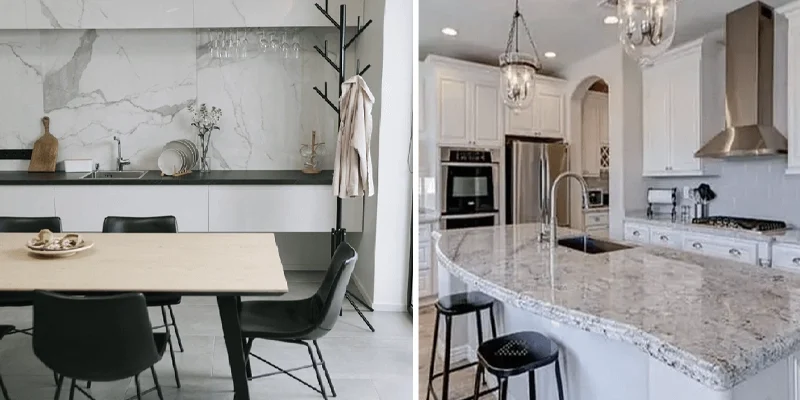
Granite countertops have long been considered a symbol of natural luxury. Each slab is unique, formed over millions of years, and offers unmatched natural character. On the other hand, porcelain countertops represent modern engineering—ultra-dense, non-porous surfaces designed for performance, consistency, and contemporary aesthetics.
One of the biggest differences between porcelain and granite lies in how they are made.
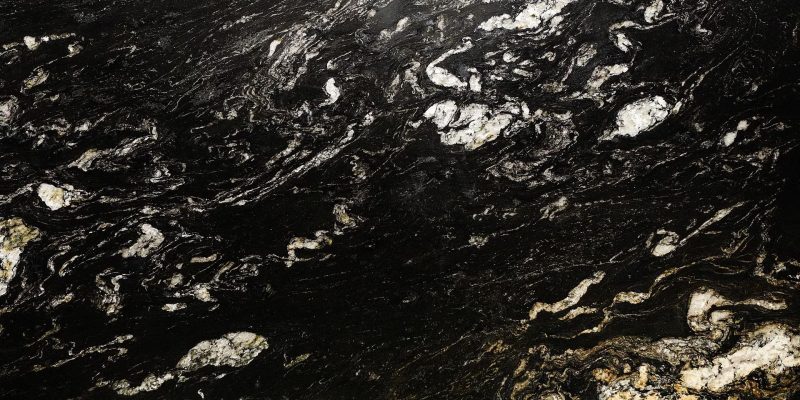
Granite is a 100% natural igneous stone composed primarily of quartz, feldspar, and mica. Its crystalline structure gives it exceptional hardness and natural variation in color and pattern. No two granite slabs are ever identical, which is why many GTA homeowners choose granite for its organic, one-of-a-kind appearance.
Because granite is quarried and cut into slabs, it requires professional fabrication and installation. It is widely used in kitchen countertops, islands, and even outdoor kitchens across Ontario.
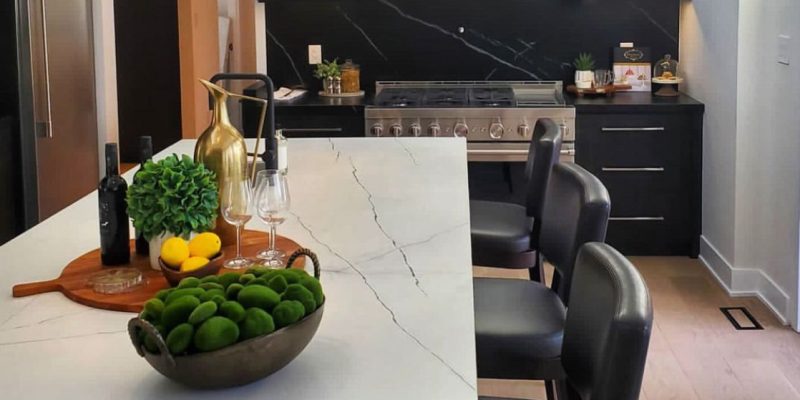
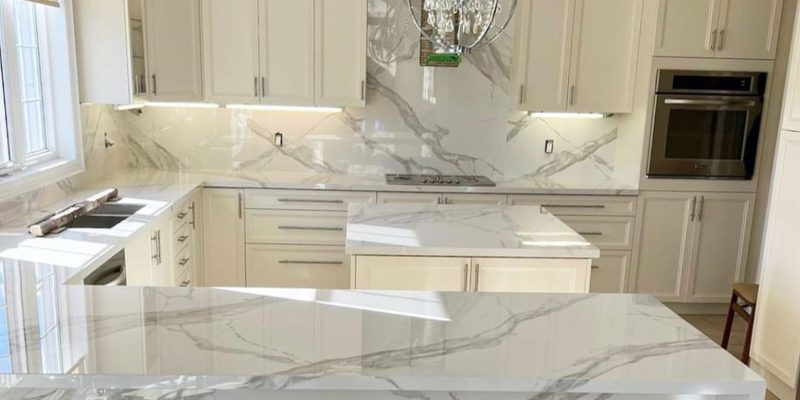
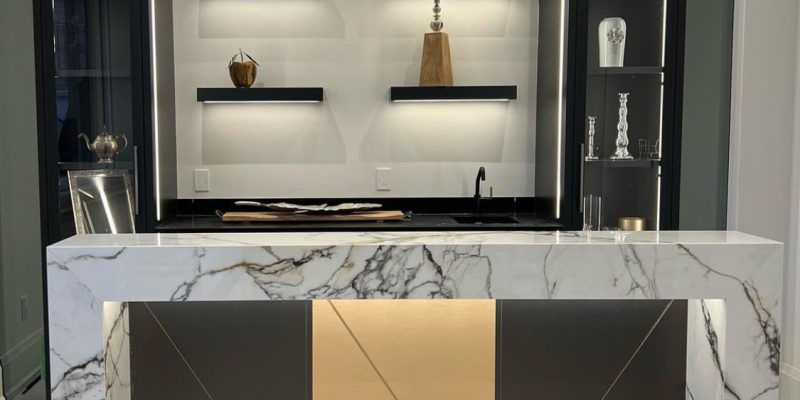
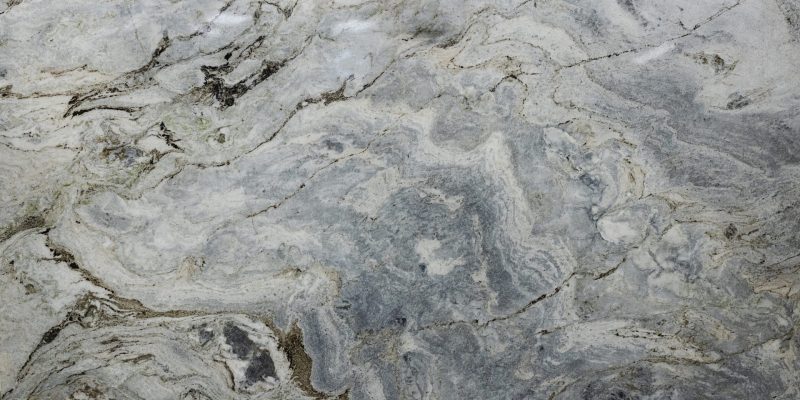
Porcelain countertops are engineered from refined clay and natural minerals, fired at extremely high temperatures. The result is an ultra-dense, non-porous slab that is thinner, lighter, and more uniform than natural stone. Modern porcelain slabs can mimic marble, granite, or concrete with stunning realism.
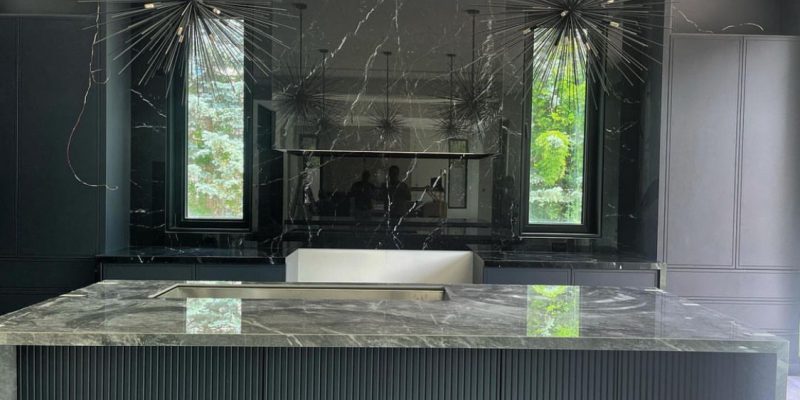
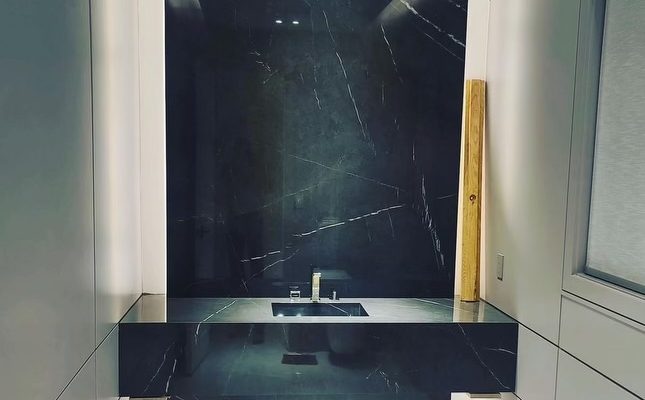
In GTA kitchens where minimalism and clean lines dominate—especially in Toronto condos—porcelain has become a top choice for waterfall islands, full-height backsplashes, and seamless modern designs.
Durability is non-negotiable for GTA homeowners. Kitchens are high-traffic environments exposed to heat, spills, sharp objects, and constant cleaning.
Granite ranks 6–7 on the Mohs hardness scale, making it highly scratch-resistant and capable of handling heavy cookware. It performs exceptionally well in busy family kitchens, particularly in detached and semi-detached homes.
Porcelain, however, is even harder and virtually immune to scratches, stains, and UV exposure. It does not require sealing and is completely non-porous—an advantage for homeowners seeking minimal maintenance and maximum hygiene.
For GTA kitchens that prioritize long-term performance with minimal upkeep, porcelain often has the edge. For those who value natural character and proven durability, granite remains a strong contender.
Heat resistance is a critical factor in kitchen countertop selection.
Granite countertops are naturally heat-resistant and can handle hot pots and pans without damage, making them ideal for serious home cooks. This is one reason granite remains popular in traditional and transitional GTA kitchens.
Porcelain countertops are also highly heat-resistant and outperform many engineered surfaces. Unlike quartz, porcelain is not affected by direct heat, making it suitable for both indoor and outdoor kitchen applications across Ontario.
From a heat-performance standpoint, both materials perform exceptionally well, and neither requires constant worry during daily cooking.
When choosing between porcelain and granite countertops for Toronto and GTA homes, durability and daily performance are often more important than appearance alone. GTA kitchens experience heavy use — from high-heat cooking to frequent entertaining — and the countertop material must withstand years of wear without losing its appeal.
Porcelain countertops are manufactured under extreme heat using advanced sintering technology, resulting in a surface that is exceptionally dense, non-porous, and resistant to physical stress. This makes porcelain an excellent option for busy households in areas like Vaughan, Richmond Hill, Markham, and Oakville, where large kitchens and open-concept layouts are common.
Granite, on the other hand, is a 100% natural stone formed over millions of years. It is known for its impressive hardness and long-term structural strength, making it a popular choice for traditional and transitional kitchens across Mississauga, North York, and Etobicoke.
One of the most important performance differences between porcelain and granite is heat resistance. Porcelain slabs can tolerate extremely high temperatures without discoloration, cracking, or structural damage. Hot pans, baking trays, and countertop appliances can be placed directly on porcelain surfaces without concern — a major advantage for serious home cooks.
Granite is also heat-resistant, but it is not completely immune to thermal shock. Sudden temperature changes, especially near seams or thinner edges, can increase the risk of micro-fractures over time. While granite performs well in most residential kitchens, homeowners in Toronto condos and modern homes often prefer porcelain for its higher tolerance to intense, repeated heat exposure.
Porcelain countertops are among the most scratch-resistant surfaces available today. Their ultra-hard composition makes them ideal for high-traffic kitchens, rental properties, and homes with children. Even sharp kitchen tools and daily food preparation rarely leave visible marks.
Granite is also highly durable but slightly more vulnerable at edges and corners. Heavy impacts or dropped cookware can cause chipping, particularly on thinner granite slabs. Proper edge profiling and professional installation reduce this risk, which is why working with experienced fabricators is essential.
For professional fabrication and precise installation across Toronto & GTA, homeowners often rely on specialized teams like Custom Stone Services to ensure long-term durability regardless of material choice.
Porcelain is completely non-porous, meaning it does not absorb liquids, oils, or bacteria. This makes it one of the most hygienic countertop options available and eliminates the need for sealing. Spills from wine, coffee, oils, or acidic foods can be wiped away without leaving stains — a major advantage for family kitchens in Toronto.
Granite, while relatively dense, is still a natural stone and contains microscopic pores. To maintain stain resistance, granite requires periodic sealing, typically every 12–18 months depending on usage. When properly sealed, granite performs very well, but it does require ongoing maintenance that porcelain does not.
Porcelain countertops are commonly installed in thinner profiles such as 12mm or 20mm, creating a sleek, modern aesthetic that aligns with contemporary GTA design trends. These thinner slabs are also lighter, making them ideal for Toronto condos and high-rise installations where weight restrictions may apply.
Granite is traditionally installed in thicker slabs (typically 30mm), which gives it a more substantial, classic appearance. Many homeowners prefer this visual weight in larger suburban homes, particularly when pairing granite with detailed cabinetry or traditional kitchen designs.
For large kitchens with islands, thickness selection becomes especially important. You can explore layout-specific considerations on our Kitchen Island Countertops service page.
From a performance standpoint, porcelain is often the superior choice for homeowners who prioritize low maintenance, maximum heat resistance, and long-term durability. It is particularly well-suited for modern Toronto kitchens, open-concept homes, and properties with heavy daily use.
Granite remains a strong contender for those who value natural beauty, organic variation, and proven longevity.







Ultimately, the right choice depends on how your kitchen is used, your maintenance preferences, and the overall design direction of your home. In the next section, we’ll compare porcelain and granite in terms of visual style, colour trends, and resale value within the Toronto & GTA real estate market.
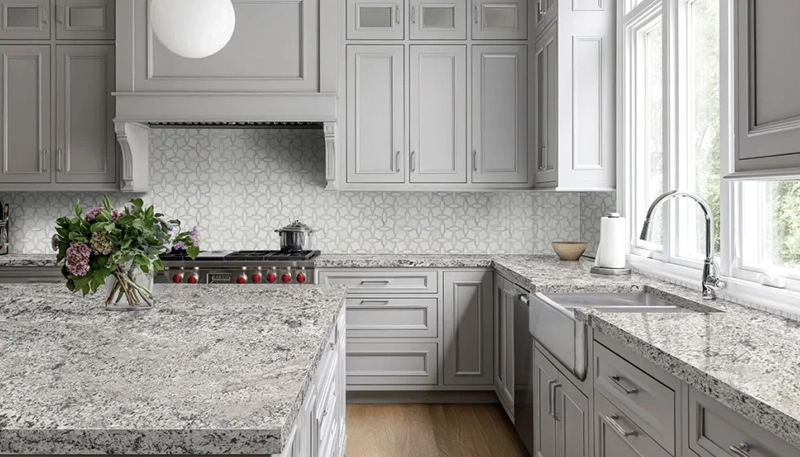
When comparing porcelain vs granite countertops for kitchens in Toronto and the GTA, durability and daily performance are often the deciding factors. GTA homes experience a wide range of usage patterns—from compact downtown condo kitchens with heavy appliance use to large suburban family kitchens designed for frequent cooking and entertaining. Understanding how each material performs under real conditions is critical before making an investment.
Porcelain countertops are manufactured at extremely high temperatures, which gives them outstanding heat resistance. In real GTA kitchens, this means hot pots, baking trays, and countertop appliances can be placed on porcelain surfaces with minimal risk of damage. This is particularly beneficial in modern Toronto condos where space is limited and countertops often double as prep, serving, and appliance zones.
Granite is also naturally heat-resistant and performs well under normal cooking conditions. However, sudden temperature changes—such as placing a very hot pan directly from the stove—can sometimes cause thermal shock along natural fissures. While rare, this is something homeowners in high-use kitchens should be aware of when choosing granite countertops.
Granite is one of the hardest natural stones available and resists scratches exceptionally well during normal kitchen use. Cutting boards are still recommended, but granite handles daily wear in family kitchens across Mississauga, Vaughan, and Markham without issue.
Porcelain, however, takes durability a step further. Ultra-thin porcelain slabs are extremely dense and resistant to scratches, chips, and impact. This makes porcelain an excellent choice for waterfall islands, large kitchen islands, and high-traffic cooking zones commonly found in open-concept GTA homes.
One of the most important differences between porcelain and granite lies in porosity. Porcelain is completely non-porous, meaning it does not absorb liquids, oils, or bacteria. Coffee, wine, oils, and acidic foods will not stain porcelain surfaces, making maintenance incredibly simple for busy Toronto households.
Granite is naturally porous and requires proper sealing to prevent staining. When sealed correctly, granite performs very well, but periodic resealing is necessary—typically every 12 to 18 months depending on usage. Homeowners who prefer minimal maintenance often lean toward porcelain, while those who appreciate natural stone aesthetics are comfortable with granite care routines.
Porcelain countertops excel in both indoor and outdoor environments. Their UV resistance and zero water absorption make them ideal for outdoor kitchens, BBQ areas, and patio installations across the GTA. Seasonal temperature changes, snow, and moisture do not affect porcelain slabs, making them a long-term solution for exterior applications.
Granite can also be used outdoors, but certain varieties may require additional sealing and care to withstand freeze-thaw cycles common in Southern Ontario. For homeowners planning combined indoor-outdoor kitchen designs, porcelain often provides greater peace of mind.
Granite slabs are typically thicker and heavier, which can add a sense of solidity and luxury to traditional kitchens. However, the weight of granite requires strong cabinetry and careful installation—especially in older Toronto homes and condos.
Porcelain slabs are lighter and thinner, allowing for sleek modern designs without excessive structural reinforcement. This makes porcelain particularly suitable for condo renovations, large islands, and full-height backsplashes. Our Custom Stone Services team fabricates and installs both materials with precision to ensure long-term performance.
For homeowners who cook frequently, entertain often, or want maximum durability with minimal maintenance, porcelain offers superior performance. Granite remains an excellent choice for those who value natural stone character, warmth, and traditional elegance.
Both materials perform exceptionally well when fabricated and installed correctly. The best choice depends on how your kitchen is used, your design preferences, and your willingness to maintain natural stone surfaces over time.
Choosing between porcelain vs granite countertops ultimately comes down to how your kitchen is used, your design preferences, and your long-term expectations. Both materials perform exceptionally well in Toronto and GTA homes when professionally fabricated and installed, but each one serves a slightly different type of homeowner.
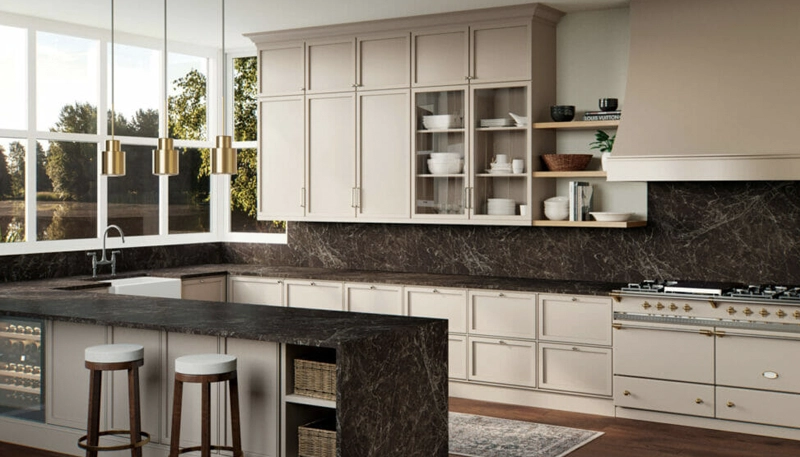
For downtown Toronto condos and modern GTA homes where space efficiency, durability, and low maintenance are priorities, porcelain countertops are often the better fit. Their ultra-thin profile, lightweight structure, and non-porous surface make them ideal for compact kitchens, waterfall islands, full-height backsplashes, and contemporary open-concept layouts.
Porcelain is especially well-suited for condo kitchens in areas like Downtown Toronto, North York, Vaughan, and Richmond Hill, where large windows, high appliance usage, and modern cabinetry designs are common. Homeowners who want a surface that resists heat, stains, scratches, and daily wear with minimal upkeep consistently prefer porcelain.
Granite remains an excellent option for larger detached homes across Mississauga, Markham, Oakville, and Brampton. Its natural depth, unique patterns, and substantial feel complement traditional, transitional, and luxury kitchen designs. Many GTA homeowners value the character of natural stone and are comfortable with periodic sealing as part of routine maintenance.
Granite also performs very well in family kitchens with heavy daily use, especially when professionally sealed and installed. Its ability to handle heat, impact, and long-term wear makes it a reliable and time-tested material for homeowners prioritizing natural aesthetics.
Both porcelain and granite countertops add strong resale value in Toronto’s competitive real estate market. Porcelain often appeals to buyers looking for modern, low-maintenance finishes, while granite continues to attract those seeking natural stone luxury. In many high-end GTA renovations, homeowners combine both materials—using porcelain for islands or backsplashes and granite for perimeter countertops—to maximize visual impact and buyer appeal.
If resale value is a priority, choosing a reputable fabricator and installer is just as important as the material itself. Precision fabrication, proper seam placement, and flawless installation directly affect how countertops are perceived by future buyers.
Regardless of whether you choose porcelain or granite, professional fabrication and installation determine long-term performance. Poor installation can lead to cracking, uneven seams, or structural issues—even with premium materials. Our Kitchen Countertops Toronto & GTA service includes accurate measurement, in-house CNC fabrication, and expert installation to ensure both materials perform at their best.
For custom designs, waterfall edges, bookmatched slabs, or mixed-material kitchens, our Custom Stone Services allow homeowners to fully customize their countertop layout while maintaining structural integrity and visual balance.
If you’re still deciding, an in-person consultation and slab viewing often makes the choice clear. Seeing porcelain and granite side by side helps homeowners visualize how each material will function and feel in their space.
To explore material options, pricing, and real installations across Toronto and the GTA, request a professional consultation through our Free Countertop Quote page. Our team will help you select the right surface based on your kitchen layout, lifestyle, and design goals.