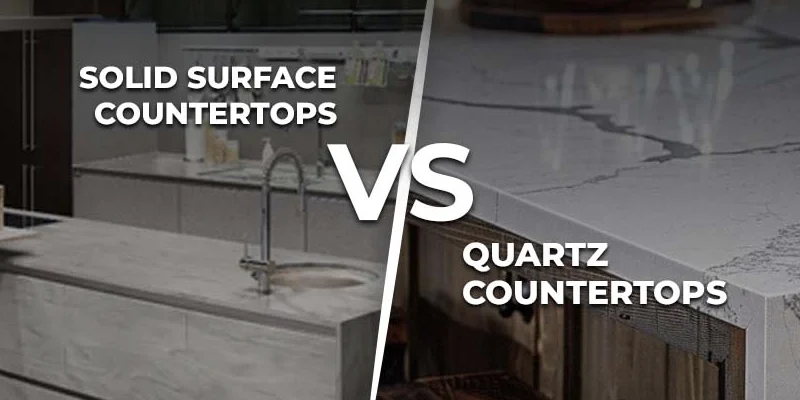
When planning a kitchen or bathroom renovation in Canada, choosing the right countertop material is one of the most important decisions homeowners face. Two of the most commonly compared options are solid surface countertops and quartz countertops. While both are engineered materials, they differ significantly in durability, appearance, maintenance, and long-term value.
In Canadian homes—especially in markets like Toronto, the GTA, and Southern Ontario—countertops must perform well under daily use, temperature changes, humidity, and long-term wear. Understanding the real differences between solid surface and quartz helps homeowners avoid costly mistakes and select a surface that matches both lifestyle and budget.
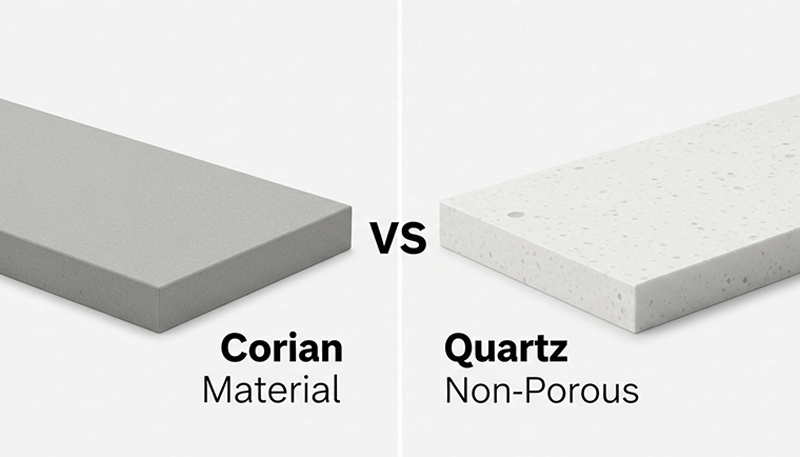
Solid surface countertops are man-made materials composed primarily of acrylic or polyester resins combined with natural mineral fillers. Popular solid surface brands include Corian and similar products designed to offer a seamless, uniform appearance. These countertops are non-porous, meaning they resist moisture and bacteria without the need for sealing.
One of the defining features of solid surface is its ability to be fabricated with invisible seams. This makes it a popular choice for integrated sinks, curved designs, and minimalist interiors where visual continuity is a priority.
Quartz countertops are engineered stone surfaces made from approximately 90–95% natural quartz combined with resins and pigments. Unlike solid surface materials, quartz offers the look and feel of natural stone while maintaining consistency in color and pattern.
Because quartz is extremely hard and dense, it has become one of the most popular countertop materials for Canadian kitchens. Homeowners often choose quartz for full kitchen countertop installations where durability, scratch resistance, and long-term value are top priorities.
Although both materials are engineered, their performance characteristics differ in important ways:
These differences directly affect how each material performs in Canadian kitchens, bathrooms, and high-use areas.
Durability is often the deciding factor when comparing solid surface and quartz. Quartz is significantly harder and more scratch-resistant than solid surface, making it better suited for busy kitchens where cutting, heavy cookware, and frequent use are common.
Solid surface countertops are softer by comparison. While minor scratches can be sanded and repaired, the material is more susceptible to heat damage, dents, and surface wear over time. This makes solid surface better suited for low-impact areas such as bathrooms, laundry rooms, or secondary kitchens.
For homeowners seeking maximum durability in high-traffic spaces, quartz countertops from our Quartz collection are typically the preferred choice.
In Canadian kitchens, heat resistance is a major concern. Quartz countertops can tolerate moderate heat but should not be exposed to direct high temperatures without protection. Solid surface materials, however, are more vulnerable to heat and can scorch or deform if hot pots are placed directly on the surface.
For households that cook frequently or use high-heat appliances, quartz offers better overall performance and peace of mind.
From a design perspective, solid surface countertops appeal to homeowners who prefer clean, modern, and seamless aesthetics. Their uniform appearance works well in contemporary interiors and healthcare or commercial settings where hygiene and simplicity are emphasized.
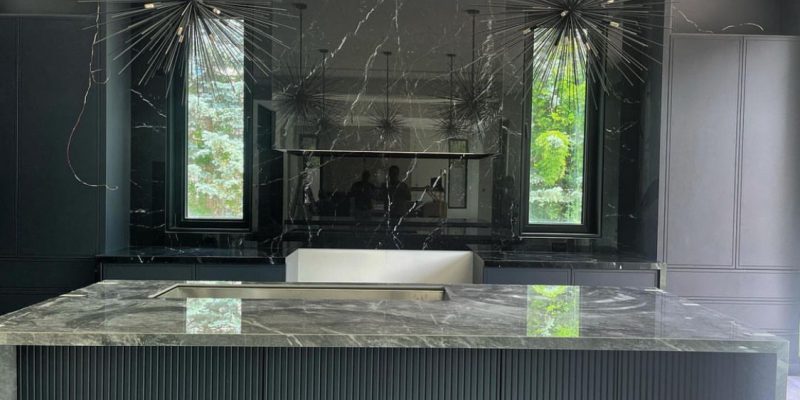
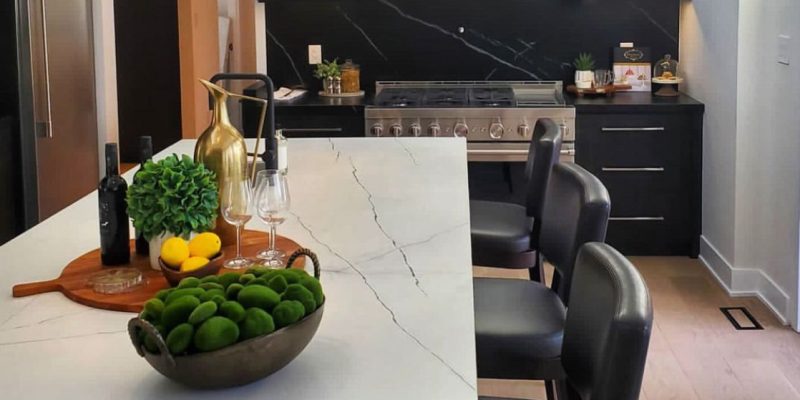
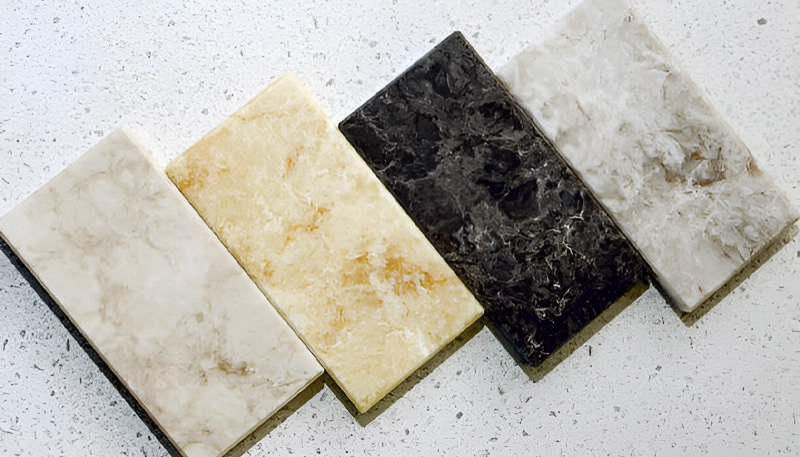
Quartz, on the other hand, provides greater visual variety. With options that mimic marble, granite, and concrete, quartz allows homeowners to achieve a high-end stone look without the maintenance challenges of natural materials.
In competitive real estate markets across Canada, quartz countertops are often associated with higher perceived value and broader buyer appeal, while solid surface is typically viewed as a functional but mid-range solution.
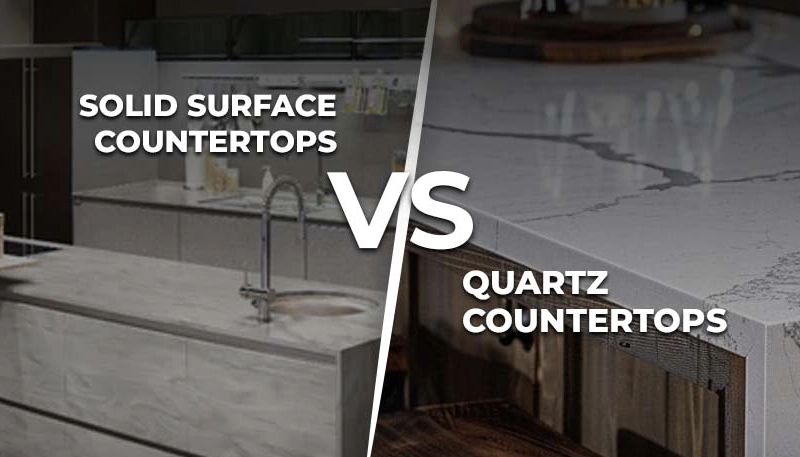
When comparing solid surface and quartz countertops for Canadian homes, long-term maintenance is just as important as initial appearance. Climate conditions, daily usage, and household habits all influence how well a countertop performs over time.
One of the strongest advantages of solid surface countertops is their repairability. Because the material is uniform throughout its thickness, minor scratches, burns, or stains can often be sanded and refinished by a professional. This makes solid surface appealing for homeowners who value the ability to restore the surface rather than replace it.
Daily maintenance is simple. Solid surface countertops are non-porous, meaning they do not require sealing and resist bacteria and moisture naturally. Cleaning typically involves mild soap and water or non-abrasive cleaners, which makes them popular in bathrooms, laundry rooms, and healthcare-style environments.
However, solid surface materials are more sensitive to heat and impact. In Canadian kitchens where hot cookware, slow cookers, or air fryers are used regularly, extra care is required. Trivets and cutting boards are essential to prevent damage.
Quartz countertops are also non-porous and do not require sealing, which makes them extremely low-maintenance for Canadian homeowners. Routine cleaning with mild soap and water is usually sufficient to keep the surface looking new.
Unlike solid surface, quartz is significantly harder and more resistant to scratches and dents. This durability makes quartz a better long-term solution for busy kitchens, family homes, and properties with high daily use.
While quartz cannot be refinished like solid surface, its resistance to wear means repairs are rarely needed when installed and used correctly. For most homeowners, quartz offers a “set it and forget it” experience.
Both materials perform well in terms of stain resistance due to their non-porous composition.



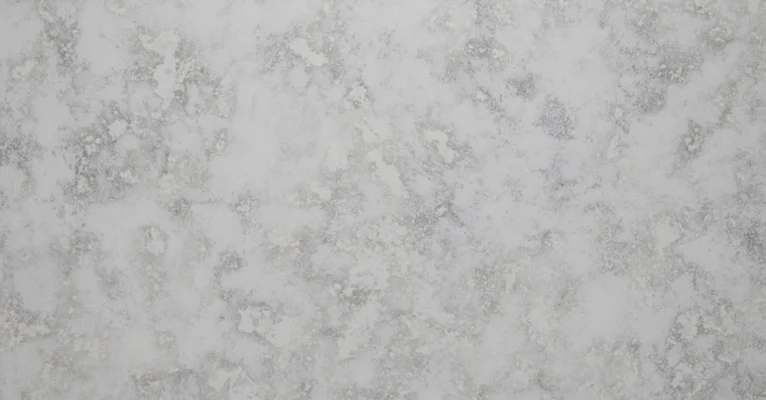
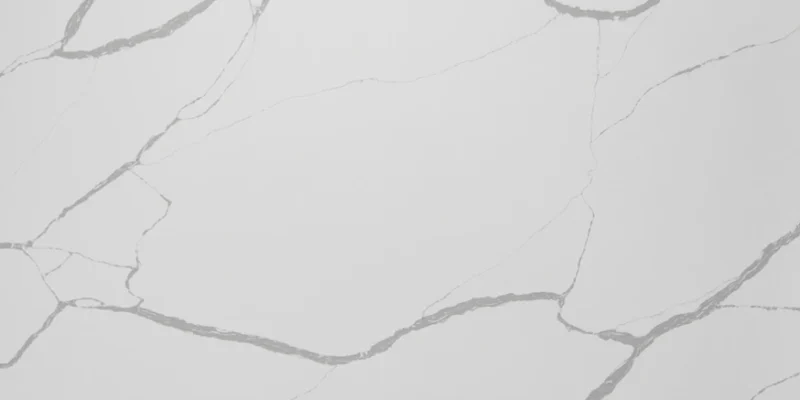
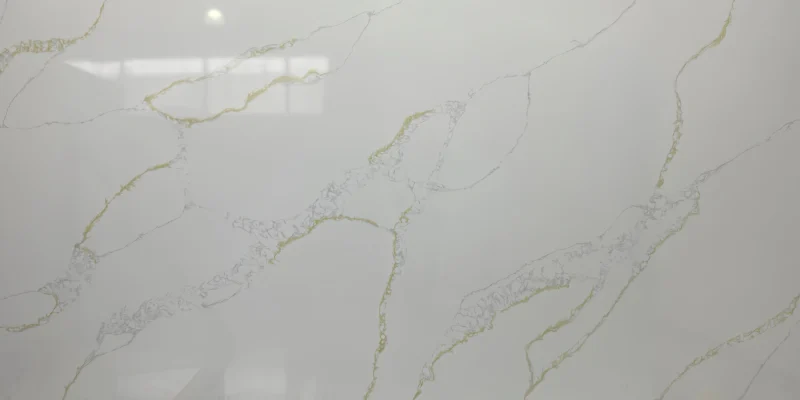

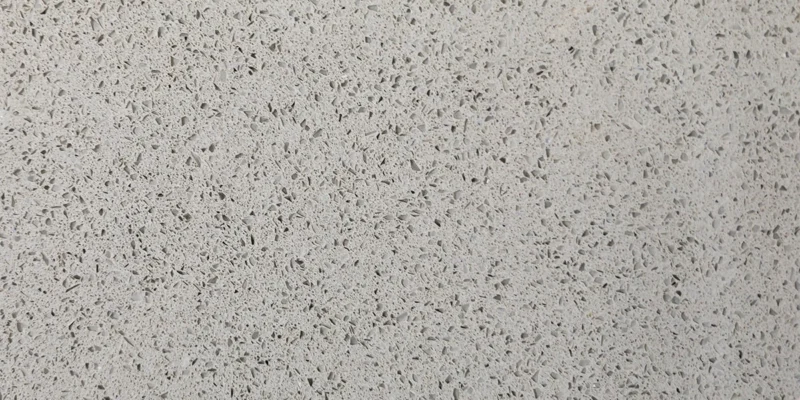
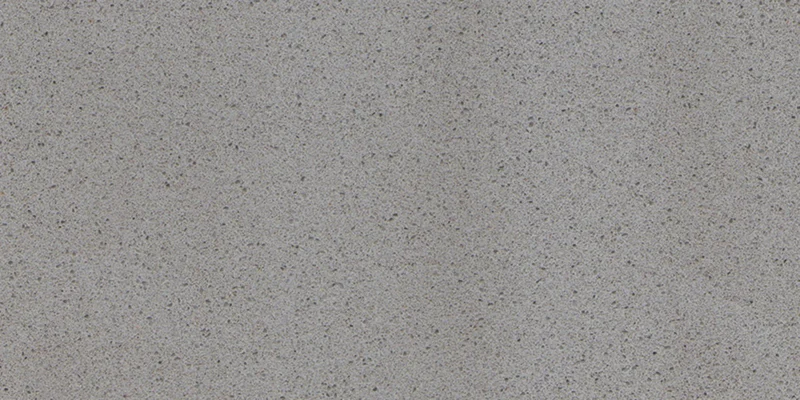







From a hygiene standpoint, both surfaces are suitable for kitchens and bathrooms, as they do not harbor bacteria or mold. However, quartz’s harder surface is less likely to develop micro-scratches over time, which helps maintain a cleaner appearance in high-use areas.
Canadian homes experience seasonal temperature shifts, indoor heating during winter, and varying humidity levels throughout the year. Quartz countertops perform extremely well under these conditions due to their dense composition and dimensional stability.
Solid surface materials are also stable indoors, but they are more sensitive to prolonged heat exposure. In homes with large south-facing windows or heavy appliance use, quartz tends to maintain its appearance better over the long term.
For homeowners planning full renovations, quartz is most often selected as part of a complete kitchen countertop installation, while solid surface is used strategically in supporting spaces.
In Canadian real estate markets, countertop material plays a noticeable role in buyer perception. Quartz countertops are widely associated with durability, premium quality, and long-term value. This makes them especially attractive for homeowners who plan to sell or upgrade in the future.
Solid surface countertops are viewed as practical and functional, but they typically do not carry the same resale impact as quartz. For budget-conscious renovations or non-primary spaces, solid surface remains a sensible option.
For homeowners prioritizing long-term performance and resale appeal, quartz from our Quartz Countertops collection is often the stronger investment.
For many Canadian homeowners, the decision between solid surface and quartz countertops ultimately comes down to budget, installation complexity, and long-term value. While both materials are positioned as modern, non-porous solutions, their pricing structures and installation requirements differ in important ways.
Solid surface countertops are generally positioned as a mid-range option. Pricing varies depending on brand, thickness, edge profile, and whether integrated features such as seamless sinks are included.
Because solid surface can be thermoformed and joined seamlessly, it is often chosen for projects where visual continuity and integrated design are priorities rather than maximum durability.
Quartz countertops are positioned as a premium surface and are priced accordingly. Costs are influenced by brand, slab design, thickness, and fabrication complexity.
While quartz has a higher upfront cost, many Canadian homeowners see it as a long-term investment due to its durability, low maintenance, and strong resale appeal.
Installation requirements differ significantly between solid surface and quartz. Solid surface is lighter and easier to handle, which can reduce labor complexity in certain applications.
Quartz, on the other hand, is significantly heavier and requires precise measurement, reinforced cabinetry, and professional fabrication. Because of this, quartz installations are almost always handled as part of a full-service fabrication and installation process.
For accurate planning and pricing, professional measurement is essential. Our Countertop Survey & Measurement service ensures both materials are specified correctly before fabrication begins.
Where the countertop will be installed plays a major role in material selection:
In Canadian homes with open-concept layouts, quartz countertops are frequently paired with statement islands. These designs are commonly completed through our Kitchen Island Countertops service, where durability and visual impact are critical.
Solid surface offers lower upfront costs and design flexibility, making it suitable for homeowners focused on immediate budget control. However, its softer composition may result in higher maintenance or refinishing needs over time.
Quartz requires a higher initial investment but delivers superior resistance to scratches, impacts, and wear. In long-term ownership scenarios, quartz often proves more cost-effective due to reduced repair needs and stronger market perception.
For Canadian homeowners planning to stay in their home long-term or preparing a property for resale, quartz is often the stronger financial decision. Solid surface remains a practical solution for controlled budgets, secondary spaces, or projects prioritizing seamless design over maximum durability.
To explore premium quartz options suitable for Canadian kitchens, visit our Quartz Countertops collection.
Choosing between solid surface and quartz countertops ultimately depends on how your home is used, how long you plan to stay, and what level of performance you expect from your kitchen or bathroom surfaces. While both materials offer modern, non-porous benefits, they serve different priorities within Canadian homes.
Solid surface countertops are best suited for homeowners who value seamless design, integrated sinks, and flexibility in shaping. They are particularly effective in:
Because solid surface can be repaired and refinished, it remains a practical choice for controlled-use areas. However, its softer composition means it may not be ideal for high-impact or heavy-cooking environments.
Quartz countertops are the preferred option for Canadian homeowners who prioritize durability, long-term value, and strong resale appeal. Quartz performs exceptionally well in:
Quartz’s resistance to scratches, impacts, and staining makes it one of the most reliable countertop materials for long-term ownership. For full installations, quartz is commonly selected as part of a complete kitchen countertop solution that emphasizes both performance and aesthetics.
In real-world Canadian homes, maintenance expectations often determine long-term satisfaction:
Homeowners seeking a “set-it-and-forget-it” solution typically gravitate toward quartz, while those who value repairability and seamless design may prefer solid surface.
In markets such as Toronto, the GTA, and major Canadian cities, quartz countertops are widely recognized as a premium upgrade. They are commonly associated with modern kitchens and higher resale value.
Solid surface remains respected for its clean appearance and hygienic properties but is generally perceived as a functional rather than luxury material in residential real estate.
If your goal is maximum durability, long-term value, and minimal maintenance, quartz is the stronger choice for most Canadian homes. Solid surface remains an excellent option for specific applications where seamless integration and budget control are the primary drivers.
For homeowners comparing materials side by side, professional guidance is essential. Our Countertop Survey & Measurement service ensures accurate material selection, proper layout planning, and realistic pricing before fabrication begins.
You can explore available materials and compare finishes through our curated collections:
Whether you choose solid surface or quartz, selecting the right fabricator and installer is just as important as choosing the material itself. Professional fabrication ensures proper support, seamless edges, and long-term performance in real Canadian living conditions.