
A practical kitchen sink buying guide should help you compare more than colour and bowl shape. The sink must fit the cabinet, coordinate with the countertop, support daily washing and food preparation, and provide enough clearance for the faucet, plumbing and surrounding appliances.
Material, mounting style, bowl configuration, depth and drain position all affect how the sink performs after installation. A model that looks suitable online may not fit the cabinet or countertop opening once the actual specifications are reviewed.
Stainless steel, granite composite, fireclay, ceramic and enamelled sinks each provide different combinations of appearance, weight, maintenance and impact resistance. The right choice depends on how the kitchen is used and which characteristics matter most to the household.
This guide explains the main sink materials, installation styles and sizing decisions that should be confirmed before the countertop is measured or fabricated.
A sink should be selected before final countertop fabrication whenever its model and opening affect the project. The fabricator may require the manufacturer’s specifications, installation instructions or physical sink to prepare the cut-out accurately.
Daily habits should guide the choice of bowl size, depth and configuration. A household that regularly washes large cookware may prioritize a wide single bowl, while someone who separates washing and rinsing may prefer two bowls.
Consider:
A larger sink provides more bowl space but may reduce usable countertop area and storage inside the cabinet. Size should therefore be evaluated within the complete kitchen layout.
The sink must fit within the base cabinet while leaving adequate room for mounting hardware, plumbing, waste disposal equipment and accessories.
Before purchase, confirm:
Nominal cabinet width does not always equal the usable interior space. Cabinet walls, frames, hinges and plumbing may reduce the area available for the sink.
Sink Selection Principle
Choose the sink using confirmed cabinet, countertop and plumbing information rather than relying only on the advertised bowl dimensions.
The following table compares common kitchen sink materials. Performance varies by manufacturer, construction, finish and installation method.
| Material | Main Advantage | Main Consideration | Common Applications |
|---|---|---|---|
| Stainless Steel | Broad availability and practical daily use | Water marks, scratches, noise and construction quality | Most kitchen styles and high-use sinks |
| Granite Composite | Matte stone-like appearance and controlled colours | Weight, surface deposits and product-specific care | Contemporary and coordinated kitchens |
| Fireclay or Ceramic | Classic glazed appearance | Weight, impact chipping and dimensional variation | Traditional and apron-front designs |
| Enamelled Cast Iron or Steel | Glossy finish and traditional colour options | Chipping, weight and exposed metal if damaged | Classic kitchens and feature sinks |
Homeowners comparing specific sink materials can review our detailed guides to granite composite vs stainless steel sinks and porcelain vs ceramic sinks. Once the material has been narrowed down, the guide to undermount vs drop-in kitchen sinks explains how the mounting method affects cleaning, countertop fabrication, support and future replacement.
Stainless steel is one of the most versatile kitchen sink materials. It is available in many sizes, mounting styles and bowl configurations and can coordinate with a wide range of countertops and appliances.
Stainless steel thickness is commonly described using gauge. A lower gauge number generally indicates thicker steel, but gauge alone does not determine the complete quality of the sink.
Also review:
Tight-radius corners create a sharper contemporary appearance but may require more detailed cleaning. Rounded corners are generally easier to wipe and rinse.
Stainless steel is relatively lightweight compared with many composite, fireclay or cast-iron sinks. It can be used in both undermount and drop-in installations when the selected model and countertop support the mounting method.
Potential advantages include:
Stainless steel can show water marks, mineral deposits and scratches. Fine surface scratching may become part of the sink’s appearance over time, particularly in frequently used kitchens.
Products commonly described as granite sinks are usually granite composite sinks rather than bowls carved from solid granite slabs. They are manufactured using mineral particles combined with binding materials.
The exact mineral content, resin composition and manufacturing process vary by brand. Product specifications should therefore be reviewed rather than assuming that all granite composite sinks perform identically.
Granite composite sinks may provide:
Dark composite sinks may show light mineral deposits, while lighter colours may make certain food or liquid residues more visible. Routine cleaning should follow the manufacturer’s instructions.
Hot cookware should not be left directly in the sink unless the product documentation confirms the permitted temperature and use conditions. Thermal change, impact and harsh chemicals may affect individual products differently.
Composite sinks are generally heavier than stainless steel models. Cabinet support and mounting requirements should be confirmed before installation.
Fireclay, ceramic and enamelled sinks are often grouped together because they can share a glossy traditional appearance, but their construction is not identical.
Fireclay and ceramic sinks use fired clay-based materials with a glazed surface. Enamelled sinks apply a vitreous coating over a metal body such as cast iron or steel.
These sinks may suit homeowners who value:
Important considerations include weight, cabinet preparation, possible dimensional variation and the risk of chipping from heavy impacts. A damaged enamel coating may expose the underlying metal, while a chipped fireclay or ceramic surface can be difficult to conceal completely.
Apron-front models often require cabinets designed or modified for the sink. The exact product should be available before cabinet and countertop dimensions are finalized.
The mounting style affects the countertop opening, cabinet preparation, cleaning routine and finished appearance. It should be selected before final countertop measurement because changing the mounting method later may require a different cut-out or cabinet configuration.
An undermount sink is supported beneath the countertop, leaving the cut-out edge visible. This creates a continuous countertop surface and allows water or crumbs to be wiped directly into the bowl.
Undermount installation is commonly used with quartz, granite, quartzite and marble because these materials can receive a finished cut-out edge. Selected porcelain products may also support undermount installation when the product and fabrication method are appropriate.
Before approving an undermount sink, confirm:
The sink should not rely only on adhesive for support. Mounting hardware or another approved support method should be coordinated with the sink, cabinet and countertop.
A drop-in sink is lowered into an opening from above, with its rim resting on the countertop. The rim covers the cut-out edge, making this style compatible with a broad range of countertop systems.
Drop-in sinks can simplify replacement in some renovations, but the visible rim creates an additional joint where water and residue may collect. The rim profile, sealant and faucet-hole arrangement should be reviewed before purchase.
This style may be practical when:
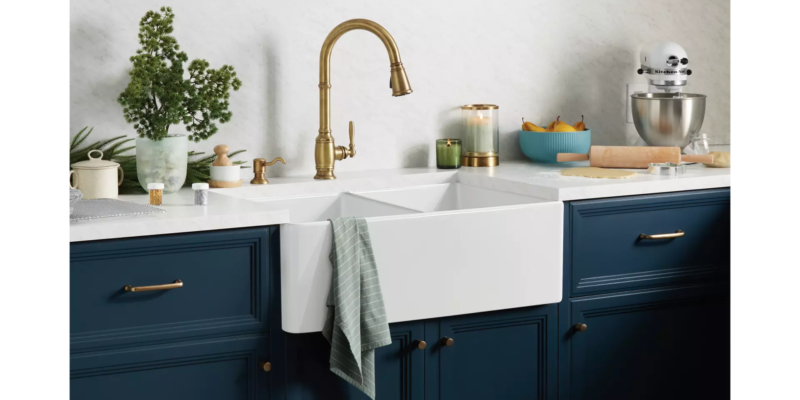
An apron-front or farmhouse sink extends through the front of the sink cabinet. It can be manufactured from fireclay, stainless steel, granite composite, enamelled metal or other materials.
These sinks usually require cabinet preparation that differs from a standard sink base. The cabinet opening, support platform, finished height and relationship with the doors should be planned using the exact sink specifications.
Apron-front sinks can vary slightly in dimensions, particularly with some fired products. Cabinets and countertops should not be finalized using only a nominal width.
A workstation sink includes an internal ledge designed to support accessories such as cutting boards, drying racks, colanders or serving trays. Workstation models may be undermount, drop-in or apron-front rather than representing one mounting method.
They can increase usable preparation space, especially in compact kitchens, but the accessories, ledge dimensions and bowl depth should suit the household’s actual workflow.
Confirm whether replacement accessories are available and whether the sink size leaves enough countertop and cabinet space for the rest of the kitchen layout.
Bowl configuration affects how easily the sink accommodates cookware, separates tasks and uses the available cabinet width.
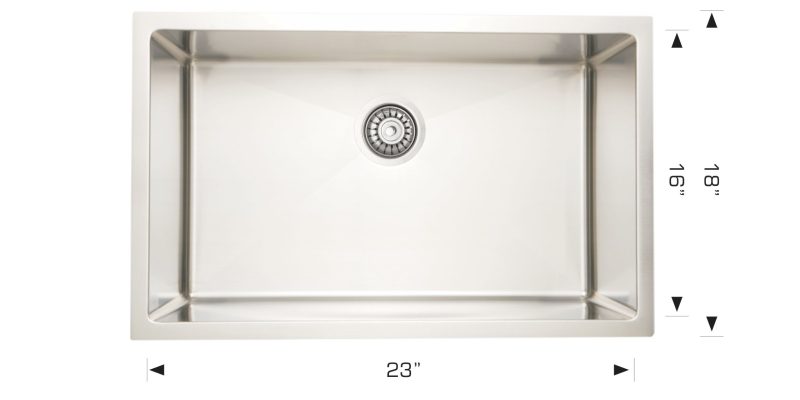
A single-bowl sink provides one uninterrupted washing area. It may be useful for large pots, baking trays and cookware that would not fit easily within divided bowls.
Potential advantages include:
A large single bowl does not automatically provide better function. Bowl depth, drain position and cabinet storage should still be considered.
A double-bowl sink divides the available width into two sections.
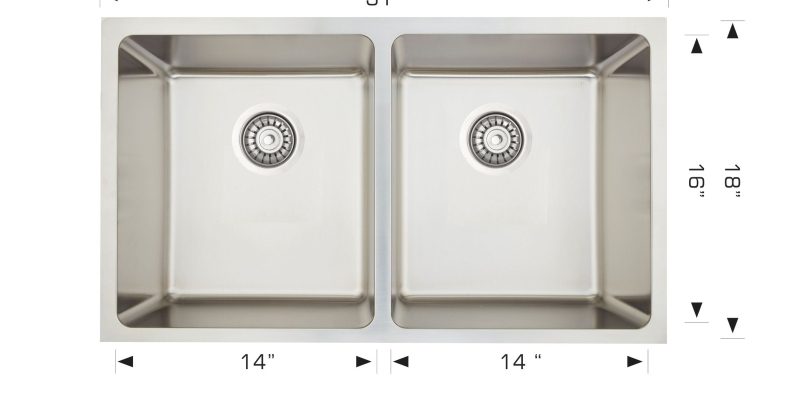


This arrangement may suit homeowners who prefer to separate washing, rinsing, soaking or food-preparation tasks. However, each bowl provides less uninterrupted space than a similarly sized single-bowl sink.
Before selecting a double bowl, check whether the larger bowl can accommodate the cookware used most frequently. The divider height and drain locations can also affect usability and plumbing space.
Bowl Configuration Rule
Choose the bowl arrangement according to the items washed and the way tasks are separated, not simply according to the overall sink width.
Sink size should be evaluated against the base cabinet, countertop layout, faucet position and under-sink equipment. The largest sink that fits physically may still reduce storage, weaken surrounding countertop sections or create difficult clearances.
Manufacturers commonly specify a minimum cabinet width for each sink. This measurement should be checked against the actual usable cabinet interior rather than only the nominal cabinet size.
Available space may be reduced by:
The installer also needs room for mounting clips, rails or support components around the bowl.
A deep sink can contain large cookware and reduce splashing, but it also lowers the working surface and occupies more cabinet space.
For some users, an excessively deep bowl may make washing less comfortable. Sink depth should be considered together with countertop height, user preferences and the height of the drain connection.
Deeper sinks may also interfere with waste bins, drawers or filtration equipment beneath the countertop.
Drain placement affects both sink use and cabinet organization. A rear-positioned or offset drain may preserve more continuous storage space beneath the bowl, depending on the plumbing configuration.
The drain position can also influence:
Drainage performance depends on the complete bowl design and slope, not only whether the opening is centred or offset.
The countertop material affects which mounting styles and edge details are practical. Sink selection and countertop selection should therefore be coordinated rather than handled as separate decisions.
Quartz, granite, quartzite and marble are commonly fabricated for undermount and drop-in sinks. The opening removes material from the countertop, so enough surface must remain around the sink for the selected layout, faucet holes and surrounding seams.
Porcelain requires product-specific planning around openings, corners and exposed edges. The fabricator should confirm whether the selected slab and construction method are appropriate for the proposed sink.
Laminate and other layered countertop systems are commonly paired with drop-in sinks, although specialized undermount systems may exist for specific products. Compatibility should be confirmed with the countertop manufacturer and installer.
Apron-front sinks affect both the cabinet and countertop. The countertop may terminate at the sides and rear of the sink rather than continuing across its front edge.
Before fabrication, provide the exact sink information and confirm:
For projects requiring final site dimensions, review the countertop survey and measurement service.
Sink selection should be coordinated with the faucet, soap dispenser, filtered-water faucet and any accessories that require countertop or sink-deck openings.
Some drop-in sinks include factory-prepared faucet holes, while undermount sinks usually require the faucet and accessories to be installed through the countertop or an adjoining deck.
Before fabrication, confirm:
A pull-down faucet may require additional space beneath the sink for its hose and counterweight. Storage bins, plumbing and filtration equipment should not interfere with the hose movement.
Workstation sinks can support accessories over the bowl, helping convert part of the sink into a preparation or drying area.
Common accessories include:
These features can be useful in compact kitchens, but the accessory dimensions and storage requirements should be considered. A sink with many included accessories may not provide practical value when those components are rarely used or difficult to store.
Before purchasing a workstation sink, check whether replacement accessories are available and whether the internal ledges are easy to clean.
The sink model should be finalized before the countertop is fabricated. The fabricator may require the actual sink, its template or official manufacturer specifications to prepare the opening accurately.
The installation plan should identify:
Undermount sinks require a finished cut-out edge because the countertop remains visible around the bowl. The reveal may be positive, neutral or negative depending on the sink, material and project preference.
The selected reveal should be confirmed before fabrication because it changes the cut-out dimensions and the relationship between the countertop and sink rim.
The sink should be supported using a method appropriate for its weight, material and mounting style. Heavy composite, fireclay and enamelled cast-iron sinks may require more substantial support than lightweight stainless steel models.
Sink weight increases when the bowl contains water, cookware or a waste-disposal unit. The support system should therefore account for the complete installed load rather than the empty sink alone.
Adhesive and sealant help create the connection and manage moisture, but they should not automatically be treated as the only structural support for an undermount sink.
The sink opening removes a significant section of countertop material. Faucet holes, seams and narrow strips of material around the bowl should be planned carefully.
Potential concerns include:
The final layout should be reviewed as a complete countertop and cabinet system rather than treating the sink opening as an isolated cut-out.
Every kitchen sink requires regular cleaning, but the appropriate products and methods depend on the material and finish.
Clean stainless steel using a soft cloth or sponge and a suitable non-abrasive cleaner. Wiping in the direction of the visible grain can help maintain a consistent appearance.
Water spots and mineral deposits should be removed regularly, especially where hard water is present. Steel wool and products that may leave iron particles should be avoided because they can contribute to surface contamination.
Granite composite sinks should be cleaned according to the manufacturer’s instructions. Dark surfaces may show pale mineral deposits, while light surfaces may display certain food stains or residues more clearly.
Avoid assuming that every composite sink tolerates the same chemicals, abrasive pads or heat exposure. Product-specific guidance should determine the cleaning routine.
Glazed sinks are generally straightforward to wipe clean, but heavy cookware can chip or damage the surface if dropped.
Avoid aggressive abrasives that may dull the glaze. If an enamel coating is damaged deeply enough to expose the underlying metal, the affected area may require repair to limit corrosion.
There is no single best material for every kitchen. Stainless steel offers broad compatibility and practical daily use, while granite composite provides a matte stone-like appearance. Fireclay, ceramic and enamelled sinks may suit homeowners seeking a more traditional design.
A single bowl provides more uninterrupted space for large cookware. A double bowl can help separate washing, rinsing and preparation tasks. The better option depends on how the sink is used.
Check the sink manufacturer’s minimum cabinet-width requirement and compare it with the cabinet’s actual usable interior. Allow space for mounting hardware, plumbing, hinges and under-sink equipment.
Most products sold as granite kitchen sinks are granite composite sinks manufactured from mineral particles and binding materials. Their composition and performance vary by brand.
No. The sink must be designed for undermount installation, and the countertop material and support method must be compatible with that mounting style.
Yes, the sink model should generally be finalized before countertop measurement and fabrication. The fabricator may need the sink, its official template or manufacturer specifications.
The appropriate depth depends on cookware size, countertop height, user comfort, cabinet storage and plumbing. A deeper bowl provides more capacity but may not be comfortable or practical for every kitchen.
They can be useful where preparation space is limited or accessories are used regularly. Their value depends on the quality of the accessories, bowl size and compatibility with the household’s workflow.
Undermount sinks should use an approved support system suitable for the sink material, weight and cabinet. Adhesive should not automatically be considered sufficient on its own.
Selecting a kitchen sink requires coordination between the bowl, base cabinet, countertop, faucet, plumbing and installation method.
Before ordering, confirm the complete product specifications and provide the sink information needed for countertop measurement and fabrication.
Choose a Sink That Fits the Complete Kitchen
Compare materials, mounting styles, bowl configurations and dimensions before the countertop opening is finalized.
Browse Kitchen Sinks
Browse Countertop Materials
Request a Project Quote