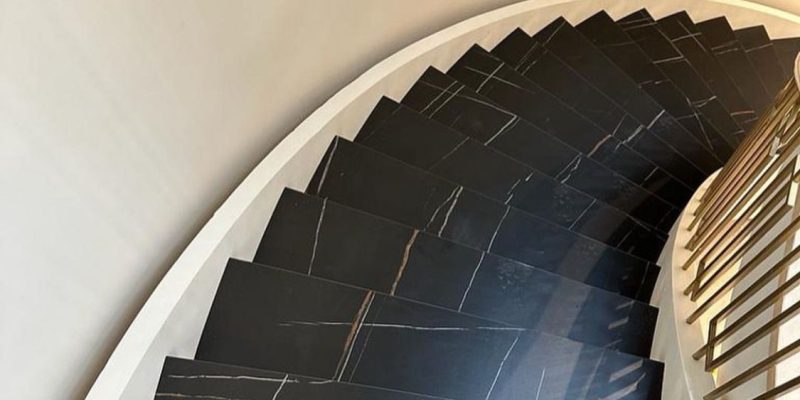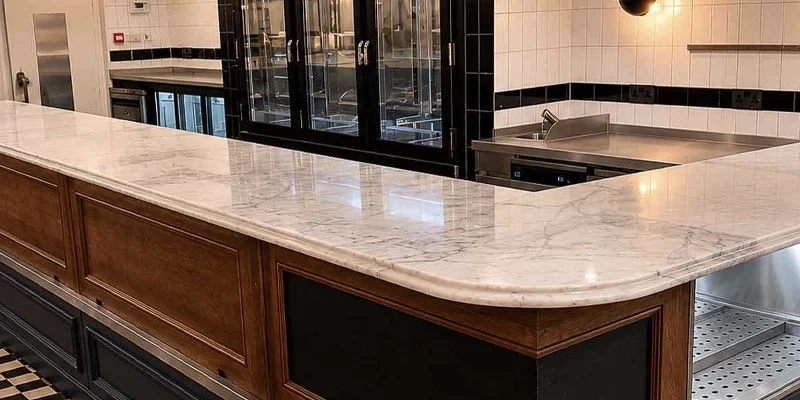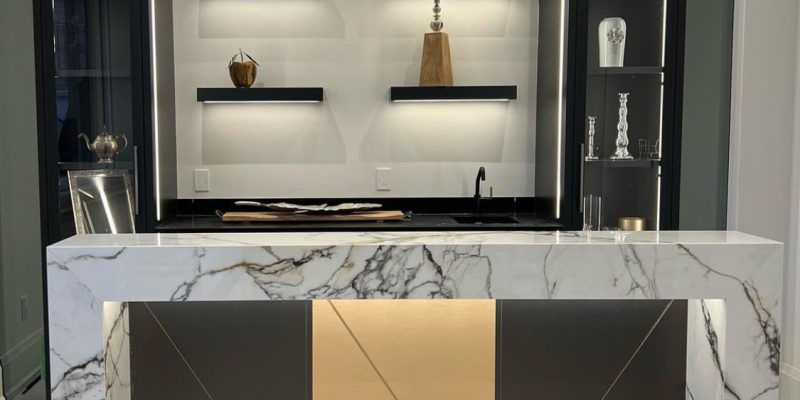
Soapstone countertop cost depends on much more than the advertised price of a slab. The final project total may include material selection, usable slab yield, templating, fabrication, sink and cooktop cutouts, edge work, delivery, installation and site-specific preparation.
In Toronto and across Ontario, soapstone may be priced differently from more widely stocked materials because local inventory, slab dimensions and matching requirements can vary. A simple vanity or compact countertop section will not carry the same cost structure as a full kitchen, oversized island or multi-slab layout.
This guide explains the main factors that affect soapstone countertop pricing, what should be included in a complete quote and how to compare proposals without relying on an incomplete square-foot rate.
Quick Answer
There is no single reliable price for every soapstone countertop project. Cost depends on the selected slab, local availability, project size, usable material yield, cutouts, edge details, seams, delivery access and installation requirements. The most accurate comparison is a complete project quote that clearly separates material, fabrication and installation.
A soapstone countertop should be priced as a complete fabricated and installed project rather than as raw stone alone. Two homeowners may select similar-looking slabs but receive different totals because their layouts, cutouts, edges, access conditions and installation scope are different.
Published square-foot figures can provide general market context, but they rarely show whether the rate includes:
A lower advertised rate may therefore produce a higher final invoice once required fabrication and installation items are added.
Soapstone is a natural material, and each slab has its own dimensions, veins, colour distribution and usable areas. Pricing can also vary according to how much soapstone is available through local suppliers at the time of the project.
Unlike highly standardized engineered products, natural soapstone cannot always be ordered in unlimited quantities with identical pattern and colour. A project requiring several closely matched slabs may involve more selection work and less flexibility than a small countertop using one available piece.
The final cost may also change when a layout requires:
The slab price represents only the raw material. A completed countertop requires the stone to be measured, planned, cut, finished, transported and installed.
A complete quote should distinguish between three main cost groups:
| Cost Group | What It May Include |
|---|---|
| Material | Soapstone slab, reserved material and required slab quantity |
| Fabrication | Templating, layout, cutting, edges, cutouts, seams and finishing |
| Installation | Delivery, handling, placement, seam assembly and installation labour |
Plumbing reconnection, electrical work, appliance modifications and cabinet repair may be handled by separate trades unless specifically included.
Soapstone is often evaluated alongside premium natural stones, but it is not automatically more expensive than every granite, quartz or quartzite project. A common granite with a simple layout may cost less, while a rare granite or complex engineered surface installation may cost more.
Soapstone cost is often influenced by its more limited inventory, the number of usable slabs available and the fabrication needed for the selected layout. The material may be financially practical for a compact island or vanity while becoming more substantial in a large multi-slab kitchen.
The better question is not simply whether soapstone is expensive, but whether the completed project cost matches the homeowner’s priorities. Soapstone offers very low absorption, strong heat performance and no routine penetrating sealer, but it also develops patina and scratches more readily than granite.
Homeowners still deciding between the two materials can review the full soapstone vs granite countertop comparison.
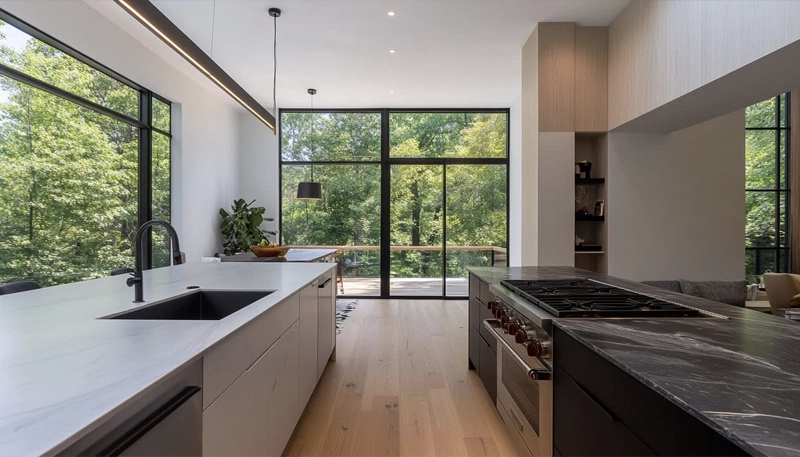
The material name alone cannot determine the budget. A reliable estimate requires evaluation of the actual slab and the complete countertop design.
Local soapstone selection may be more limited than granite or quartz inventory. Availability can affect the number of slabs from which a homeowner can choose, the ability to match multiple pieces and the time required to source a suitable option.
A currently stocked slab may be more straightforward to purchase than a specific variety that must be specially sourced. However, source alone should not be treated as a quality guarantee. The slab’s condition, dimensions, appearance and suitability for fabrication matter more than a marketing name.
The total square footage of the countertop does not always equal the amount of stone that must be purchased. Slabs contain fixed dimensions, and the fabricator must arrange every countertop section within those boundaries.
Usable yield may be reduced by:
A project may require an additional slab even when the remaining countertop area appears relatively small. Thickness can also affect material weight, edge appearance, handling and support requirements.
Soapstone usually appears in grey, charcoal, near-black and occasional green-grey tones. Some slabs have subtle movement, while others show stronger contrasting veins.
A homeowner who accepts natural variation may have more layout flexibility. A project requiring precise vein continuation, bookmatching or closely coordinated slabs may involve additional material selection and fabrication planning.
A larger project generally uses more material, but size alone does not determine complexity. A long rectangular countertop may be simpler to fabricate than a smaller design with several corners, cutouts and narrow sections.
Cost can increase when the project includes:
Professional countertop survey and measurement helps identify these conditions before fabrication and reduces the risk of inaccurate assumptions in the quote.
Budget Planning Principle
Compare complete project scope rather than the lowest square-foot figure. A reliable soapstone quote should account for the actual slab, usable yield, fabrication details, delivery conditions and installation requirements.
The next section examines fabrication and installation costs, including templating, cutouts, edge profiles, seams, cabinet support and site access.
Fabrication converts a selected slab into finished countertop sections that fit the cabinets, appliances and architectural layout. The cost depends on the amount of work required—not simply on the countertop’s total square footage.
Soapstone is softer than granite, but this does not automatically make fabrication cheaper or easier. Its edges, narrow sections and cutouts still require controlled handling, suitable tooling and careful layout planning.
Accurate measurement is necessary before the slab is cut. The fabricator must document:
Irregular walls, out-of-square corners and uneven cabinet runs may require more detailed templating than a straightforward rectangular layout. Final measurements should normally be completed after cabinets are installed, secured and ready to receive the countertop.
Changing the sink, cooktop or cabinet layout after templating may require revisions and can affect fabrication cost.
Every opening adds fabrication work and creates a structurally sensitive area in the countertop. Cost may vary according to:
Undermount sinks usually require finished and visible cutout edges. Narrow rails around large sinks or cooktops also require suitable support and careful handling during transportation and installation.
Appliance and fixture specifications should be supplied before fabrication begins. Approximate dimensions are not a reliable substitute for confirmed model information.
A standard eased or subtly rounded edge is usually more straightforward than a complex decorative profile. Soapstone’s softer character often complements restrained edge treatments that reduce vulnerable sharp corners.
Fabrication requirements may increase when the design includes:
A thicker-looking edge does not necessarily mean the entire slab is thicker. Some designs use fabricated edge construction to create additional visual depth.
Seam quantity and location depend on slab dimensions, room access and the size of each countertop section. Large islands and long runs may require additional planning even when the total project area is moderate.
Seam planning considers:
A seam should not be promised as invisible. Skilled layout, colour coordination and installation can reduce its visual prominence, but a fabricated joint remains part of the completed surface.
Waterfall ends, matching backsplashes and full-height wall panels require additional material and fabrication. Their cost can be affected by:
A full-height backsplash may also change slab yield. Material that appears sufficient for the countertop alone may not accommodate large wall panels without an additional slab.
Fabrication Cost Principle
Two projects with the same countertop area can have different fabrication costs.
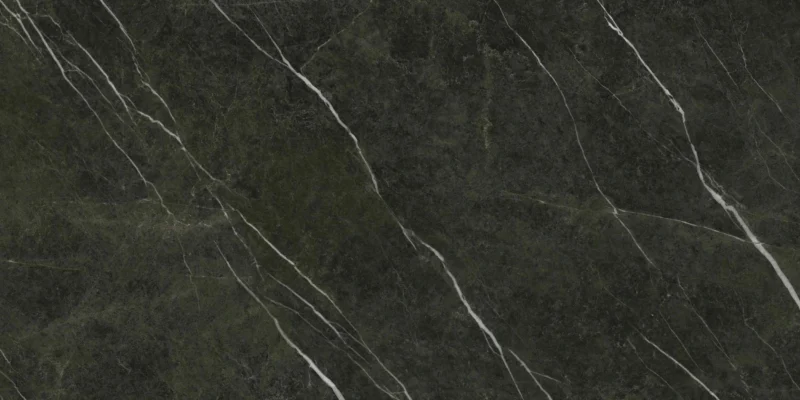

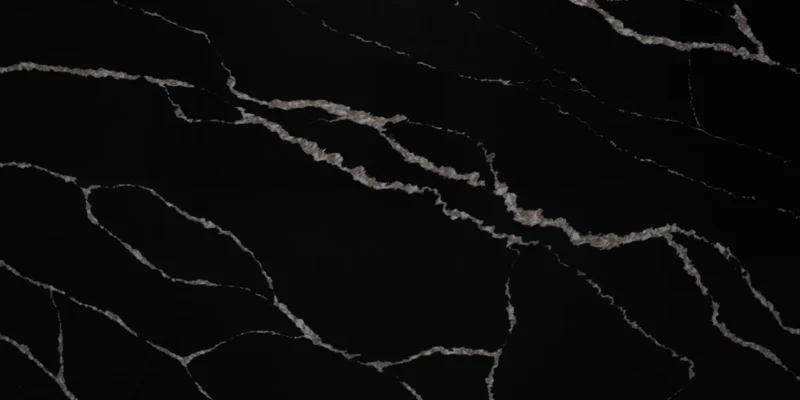
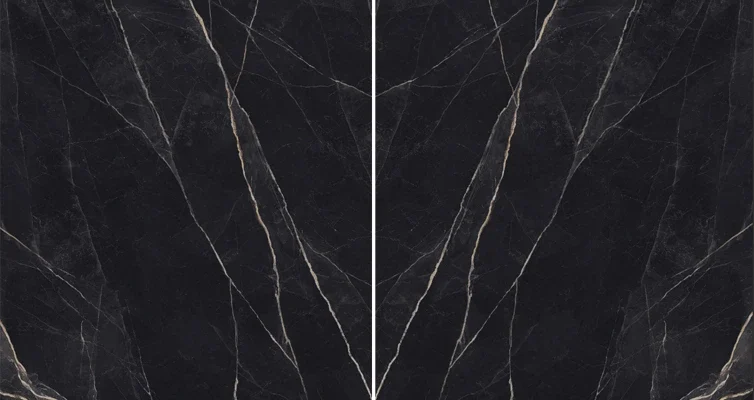





Installation cost covers more than placing fabricated stone on the cabinets. The scope may include delivery, lifting, positioning, seam assembly, levelling and final attachment.
Soapstone countertop sections are heavy and must be transported in a way that protects narrow areas, edges and cutouts. Delivery planning may be affected by:
A countertop section that cannot pass safely through the available access route may need to be divided, redesigned or fabricated with an additional seam.
Cabinets should be level, secured and structurally suitable before installation. Overhangs, dishwasher openings, sink cabinets and unsupported spans may require reinforcement depending on the design.
Support decisions should be based on the actual stone, section dimensions and project configuration. A universal overhang rule should not replace fabricator review.
If cabinets require correction after the installation team arrives, the work may fall outside the original countertop scope and delay placement.
Installation becomes more complex when the project includes:
Existing countertop removal should be identified in the quote. Removal can expose cabinet damage, uneven walls or plumbing conditions that were not visible beforehand.
Countertop installers do not necessarily disconnect or reconnect plumbing, electrical fixtures or gas appliances. These services may require licensed trades and should be confirmed before the project begins.
Coordination may be required for:
The countertop quote should state clearly which services are included and which must be arranged separately.
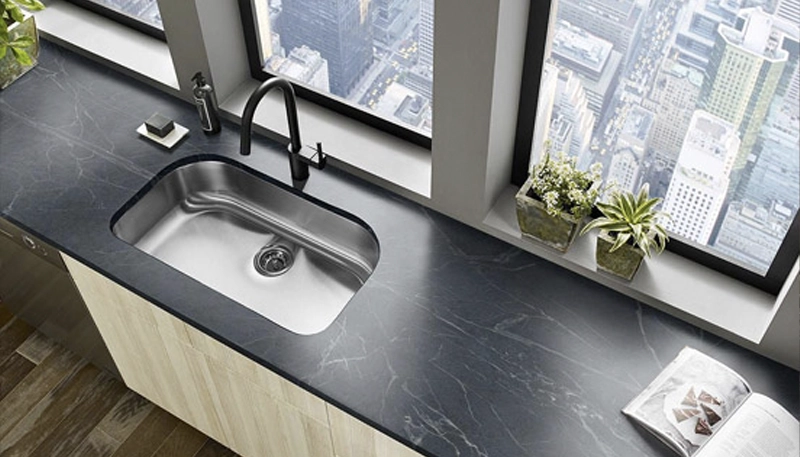
The way soapstone is used can influence material yield, fabrication and installation requirements. A small project is not always inexpensive if it requires specialized work, while a larger straightforward layout may use the slab efficiently.
A complete kitchen may include perimeter counters, sink and cooktop openings, several wall conditions and one or more seams. Cost depends on how efficiently all sections fit within the selected slabs.
Homeowners planning complete kitchen countertops should confirm whether the quote includes templating, fabrication, delivery, installation and removal of the existing surface.
A soapstone island may require one large uninterrupted section, additional support or coordinated seating overhangs. Oversized dimensions can affect slab selection, transportation and the number of people required for installation.
Waterfall ends and mitred edges increase fabrication beyond that of a standard kitchen island countertop.
A vanity typically uses less material than a full kitchen, but the project may still require a sink cutout, faucet holes, finished edges and backsplash pieces.
A small vanity countertop may sometimes use available remnant material, but matching colour, dimensions and cutout placement must still be confirmed.
Soapstone may be considered for fireplace surrounds, shelves, benches and custom architectural details. These projects are priced according to panel dimensions, fabrication, support and installation conditions rather than countertop area alone.
For fireplace stone work, the complete system must follow appliance clearances and use compatible substrates, adhesives and construction details.
| Project Type | Common Cost Variables |
|---|---|
| Full kitchen | Slab quantity, multiple cutouts, seams and wall conditions |
| Kitchen island | Oversized slab, overhang support, waterfall panels and delivery access |
| Bathroom vanity | Sink cutout, faucet holes, edge finish and backsplash |
| Fireplace or custom feature | Panel dimensions, substrate, heat-system requirements and installation details |
The next section compares soapstone cost with granite, quartz and other materials, then explains how to control the project budget and evaluate a complete quotation.
Soapstone should be compared with other countertop materials using the same project scope. A slab-only rate for one material cannot be fairly compared with a fabricated and installed price for another.
The selected slab, number of cutouts, edge details, seams, delivery conditions and installation requirements may have a greater effect on the final total than the material category alone.
Granite is available in a broader range of colours, suppliers and price levels. Commonly stocked varieties may provide more budget flexibility, while rare granite patterns or complex slab layouts can cost substantially more.
Soapstone availability is usually narrower, so pricing may be influenced by the number, size and location of suitable slabs. A soapstone project can cost more or less than granite depending on inventory, usable yield and fabrication scope.
For a broader performance comparison, see soapstone vs granite countertops.
Engineered quartz is offered across multiple product tiers, colours and manufacturers. Some standard quartz options may be easier to source, while premium designs, oversized slabs and complex mitred details can increase cost.
Quartz and soapstone also have different ownership characteristics. Soapstone is natural, develops patina and generally needs no penetrating sealer. Quartz provides greater pattern consistency but contains resin and should be protected from concentrated heat.
Marble and quartzite pricing varies widely according to slab rarity, origin, movement, dimensions and fabrication difficulty. A common marble may not cost the same as a premium bookmatched installation, while quartzite slabs sold under specialty trade names may carry very different prices.
Soapstone should therefore not be described as universally cheaper or more expensive. The comparison should use available slabs and equivalent fabrication requirements.
Material Comparison Principle
Compare complete quotations for the same layout, cutouts, edges, delivery and installation scope. Material names alone do not determine the final countertop cost.
Budget control begins before fabrication. Early coordination between slab selection, cabinet design, appliance specifications and site access can prevent revisions and inefficient material use.
Confirming an available slab allows the fabricator to evaluate dimensions, vein placement and usable yield. This is particularly important for oversized islands, coordinated backsplashes and projects requiring more than one slab.
Simple eased or lightly rounded edges generally require less fabrication than built-up, mitred or decorative profiles. They may also be more forgiving on soapstone’s softer exposed corners.
Every opening and joint adds planning and fabrication. The goal is not to eliminate all seams, but to place them according to slab dimensions, access, support and visual layout.
When reviewing proposals, confirm that each contractor is pricing the same scope. One quotation may include templating, cutouts and installation while another lists those items separately.
Ask whether the proposal includes:
Future additions may be difficult to match because natural slabs vary. If the project may later include a shelf, backsplash or adjoining counter, reserving suitable material during the initial fabrication may be worth considering.
A detailed quotation should identify the selected material and explain how the project moves from measurement to installation.
| Quote Item | What to Confirm |
|---|---|
| Material | Selected slab, thickness, quantity and reserved material |
| Measurement | Templating process and required cabinet readiness |
| Fabrication | Edges, cutouts, holes, seams and optional panels |
| Installation | Delivery, handling, placement and seam assembly |
| Additional work | Removal, disposal, cabinet corrections and separate trades |
| Exclusions | Plumbing, electrical, gas and appliance work not included |
A precise quote should also state how changes after templating are handled. Replacing a sink, cooktop or appliance model after fabrication planning may affect dimensions, scheduling and cost.
There is no reliable universal rate because published figures may include different services. A meaningful square-foot comparison must specify whether material, fabrication, cutouts, delivery and installation are included.
Not necessarily. Granite has a wider range of inventory and price levels, while soapstone pricing can be influenced by more limited slab availability. The selected slabs and project scope determine the actual comparison.
Installation cost depends on section size, weight, access, seams, support and site conditions. Soapstone is softer than granite, but it still requires careful professional handling around edges and cutouts.
Potentially. A suitable remnant may work for a small vanity or custom piece, but its dimensions, colour, condition and cutout placement must match the project.
Countertop-grade soapstone generally does not require penetrating sealer. Optional mineral oil or soapstone treatments are used to influence colour, not to provide structural or stain protection.
The proposals may use different slabs, quantities, edge details, cutouts, installation scopes or exclusions. Compare each line item rather than evaluating only the final total.
The most accurate soapstone countertop cost is based on the actual slab, confirmed measurements and complete project design. Before requesting a quote, prepare cabinet plans, approximate dimensions and appliance or sink specifications where available.
You can also review the pros, cons and care requirements of soapstone countertops before deciding whether the material fits your expectations.