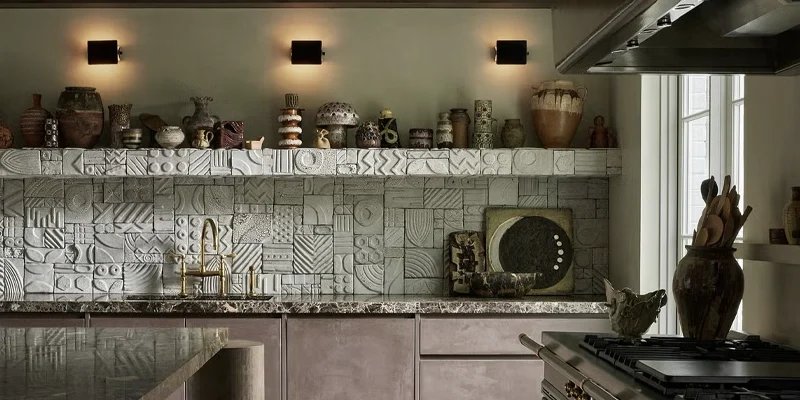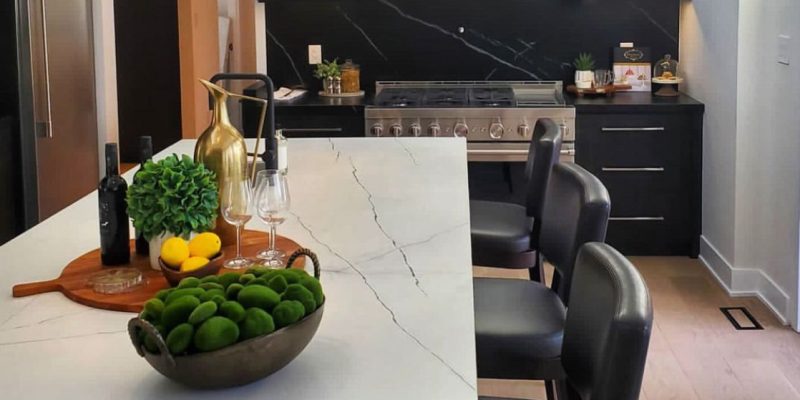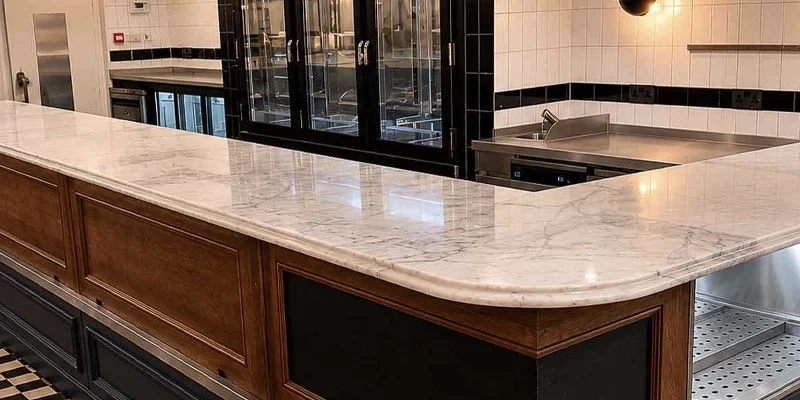
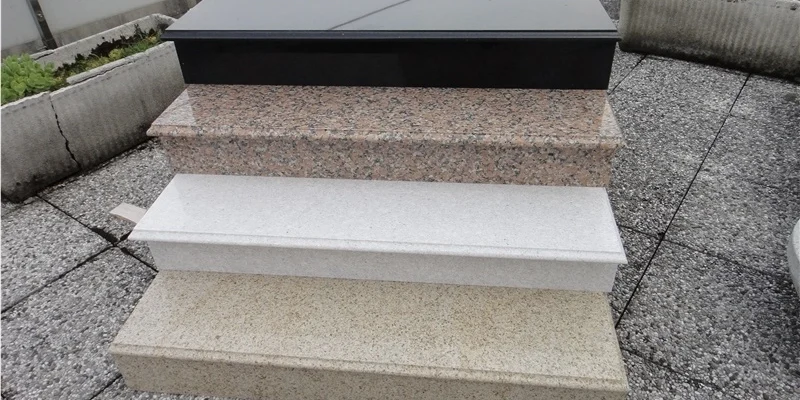
The best stone for stairs is not one material that works for every staircase. The right choice depends on whether the stairs are indoors or outdoors, expected foot traffic, moisture exposure, surface finish, tread and edge details, maintenance expectations and the performance of the exact stone or manufactured product.
Granite, marble, quartzite, porcelain and selected engineered surfaces can all be considered for stair applications, but they should not be treated as technically interchangeable. A material suitable for a dry interior staircase may require a different finish—or may not be appropriate at all—for exterior steps exposed to rain, snow and freeze-thaw conditions.
This guide compares common stone stair materials by application rather than declaring a universal winner. Material selection should ultimately be coordinated with the supporting staircase, fabrication requirements and intended finish before treads, risers or landings are produced.
Material Selection Principle
Choose stair materials from the exact stone or manufactured product, finish and application. Material name alone does not establish slip performance, exterior suitability, wear resistance or maintenance requirements.
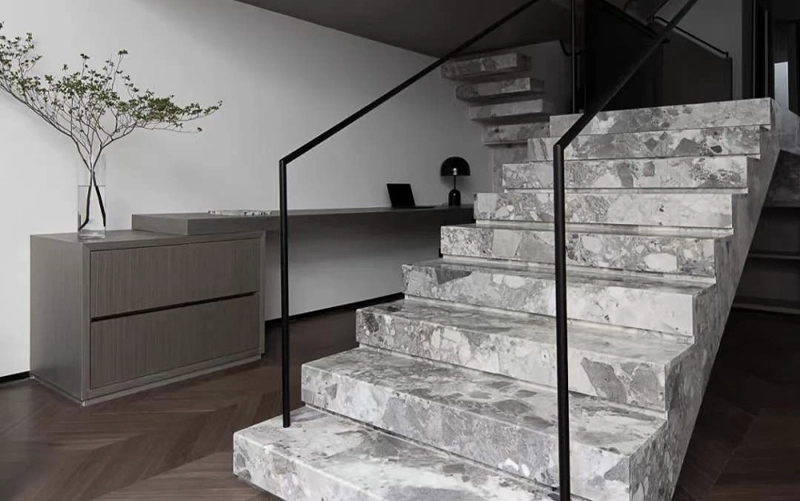
| Material | Often Considered For | Main Strength | Main Consideration |
|---|---|---|---|
| Granite | Interior and suitable exterior stairs | Strong wear and weathering potential | Exact stone and surface finish |
| Marble | Design-led interior stairs and selected applications | Distinct natural veining | Wear, etching, finish and exposure |
| Quartzite | Interior and selected exterior stairs | Natural movement with potentially strong physical performance | Stone identification and slab variation |
| Porcelain | Approved interior or exterior stair systems | Consistent appearance and textured options | Exact product and system approval |
| Quartz | Selected controlled interior applications | Predictable colour and pattern | Manufacturer approval and exposure limits |
| Slate | Selected textured stair applications | Natural layered texture | Cleavage and product variation |
| Soapstone | Specialty interior applications | Quiet matte character | Softer surface and visible patina |
This table is a screening tool rather than a specification. The exact product, finish, stair geometry and project conditions should be reviewed before a material is approved.
The material decision should begin with how the staircase will be used. Colour and veining matter, but they should follow the functional requirements of the stair rather than lead them.
Interior stairs generally operate in more controlled conditions, while exterior stairs may experience moisture, snow, ice, temperature changes and de-icing exposure. A stone that works well indoors should not automatically be carried outside without reviewing the exact product and finish.
Exterior application planning is covered separately in Teccorp’s outdoor stone steps and stairs guide.
A primary staircase serving several floors experiences different wear from a decorative stair used occasionally. Higher-traffic applications place greater importance on surface durability, edge condition and how the finish changes with use.
Surface behaviour can change when a stair becomes wet or contaminated. Exterior entrances, stairs near pools and other moisture-prone locations require different consideration from a dry interior staircase.
Polished, honed, textured and other finishes can change both appearance and underfoot behaviour. Slip performance should not be inferred from the stone name alone, and one finish should not be described as universally safe in every condition.
The selected material must also support the proposed tread dimensions, exposed edges, nosing detail and landing layout. Some designs create narrow sections or prominent exposed edges that require additional fabrication review.
Natural stone, porcelain and engineered surfaces can have different cleaning, sealing and repair considerations. The lowest-maintenance material is not necessarily the best design choice, but care expectations should be understood before the staircase is fabricated.
Granite is one of the primary natural-stone candidates for stair applications because many granite products are used successfully in heavily trafficked and exterior architectural surfaces. Its suitability for a particular staircase still depends on the exact stone, finish and project conditions.
Granite may be considered for:
Granite can be available in polished, honed, flamed, textured or other finishes depending on the material and supplier. The finish should be selected for the stair location and expected wet or dry conditions rather than aesthetics alone.
Many granite products are candidates for exterior use because of their physical characteristics and established use in paving and other exposed applications. However, exterior suitability should still be confirmed for the exact stone, finish and stair system.
Colour consistency, mineral movement, slab thickness, edge fabrication and surface texture can vary. The term “granite” should therefore not be used as a universal guarantee of slip resistance, weather performance or maintenance level.
Marble is often selected where the staircase is an architectural feature rather than only a circulation surface. Broad veining and tonal variation can create strong visual continuity across treads, risers and landings.
Marble can work particularly well in interior foyers, formal staircases and other design-led spaces where the natural pattern is intended to remain visible across several levels.
A polished finish can increase reflection and visual contrast, while a honed finish creates a softer appearance. Finish choice should also consider traffic, maintenance and the conditions in which the stair will be used.
Calcite-based marbles can react with acidic substances and may develop visible wear or patina over time. Homeowners should understand these characteristics before choosing marble for a heavily used staircase.
Marble should not be described as universally unsuitable outdoors, but exterior use requires greater scrutiny. The exact marble, climate exposure, finish, installation system and available performance data should be reviewed before it is selected for exterior stairs.
Quartzite can be considered for stair projects that require natural movement together with potentially strong wear characteristics. Its suitability depends on the actual stone rather than the commercial name applied to the slab.
Quartzite can display subtle mineral movement or broad directional veining. For staircases using several treads, risers and landings, the full slab should be reviewed so colour and pattern variation can be distributed intentionally.
Some quartzites may be considered for both interior and exterior applications when the exact stone, finish and performance characteristics suit the project. Exterior use should not be assumed from appearance or hardness alone.
The finish influences both visual character and how the stair performs under dry or wet conditions. A finish suitable for an interior feature staircase may not be the preferred choice for exposed exterior steps.
Materials sold under similar commercial names may not have identical geological or performance characteristics. Fabrication, care and exterior-use decisions should therefore be based on the actual supplied stone and available technical information.
Porcelain is a manufactured surface rather than natural stone, but it can be considered alongside stone materials for selected stair systems. It offers controlled colour and pattern, as well as textured surface options in some product lines.
Porcelain may suit modern interiors where consistent colour, stone-look patterns or a relatively controlled visual composition are priorities. The exact product should be approved for the intended horizontal stair application.
Some porcelain products are designed for exterior walking surfaces, but “porcelain” alone does not establish outdoor suitability. Product documentation should confirm the intended application, exposure and installation system.
Porcelain products can be manufactured with different surface textures. A textured appearance should not automatically be interpreted as universally slip-resistant; performance depends on the exact product and conditions of use.
Stair applications often expose front edges, side returns and landings. The selected porcelain system should support the required tread profile, edge treatment and fabrication details before the design is finalized.
Porcelain may be considered when:
Engineered quartz can provide predictable colour and pattern for selected interior applications, but it should not be treated as a universal stair material.
Quartz may be considered for controlled interior stairs when the manufacturer approves the product for the intended horizontal walking-surface application. Approval for countertops or vertical wall use should not automatically be extended to stair treads.
Quartz can be useful where the staircase needs to coordinate closely with other engineered surfaces in the interior. Its manufactured pattern can reduce some of the slab-to-slab variation found in natural stone.
The exact manufacturer and collection should be reviewed for:
Engineered quartz products can contain resins and other components that respond differently to UV exposure, temperature changes and exterior conditions.
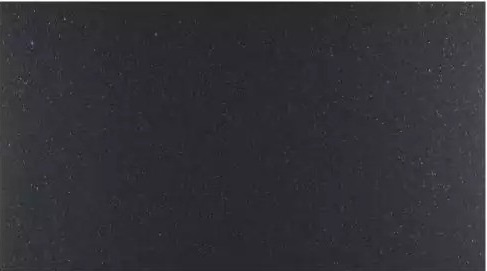

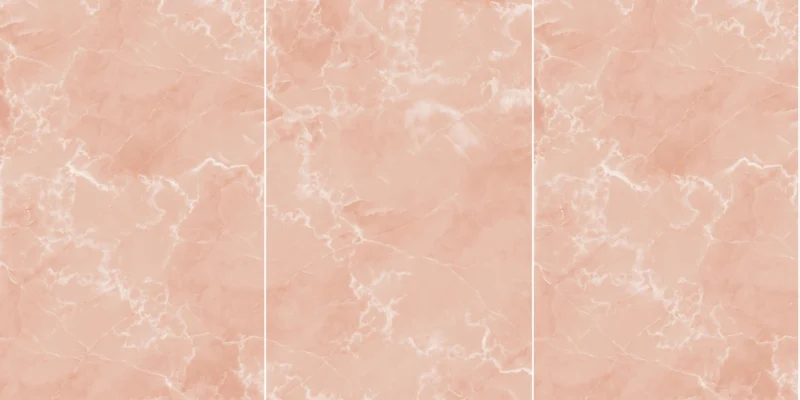
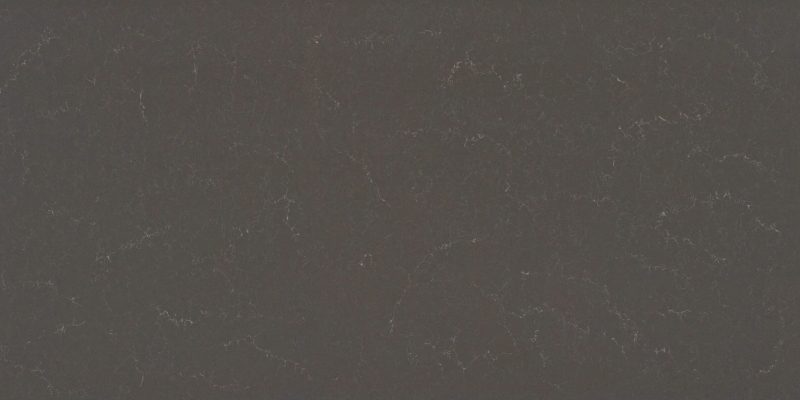
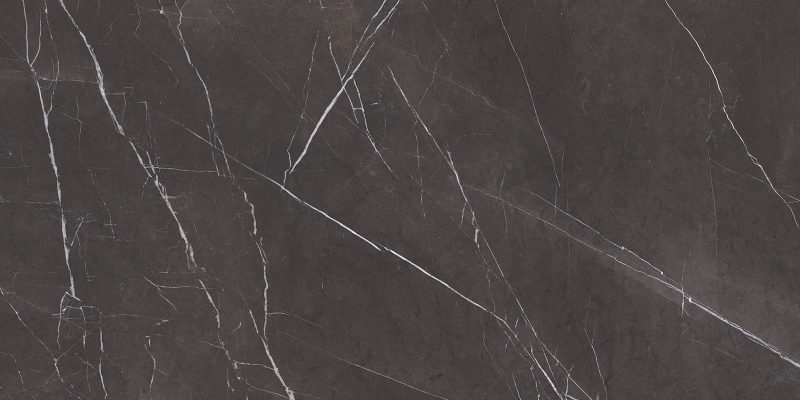
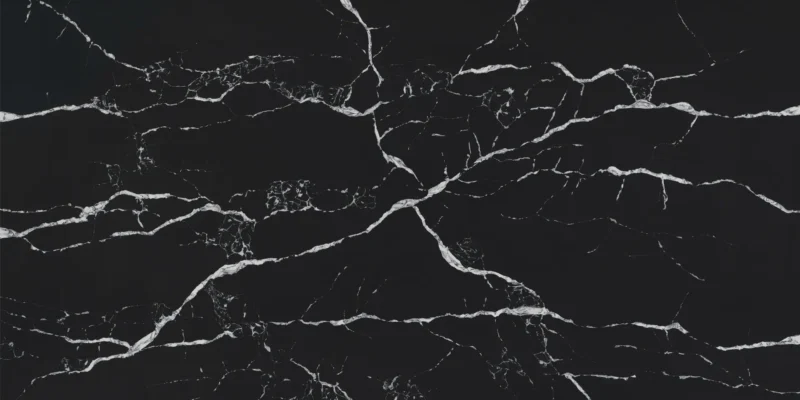
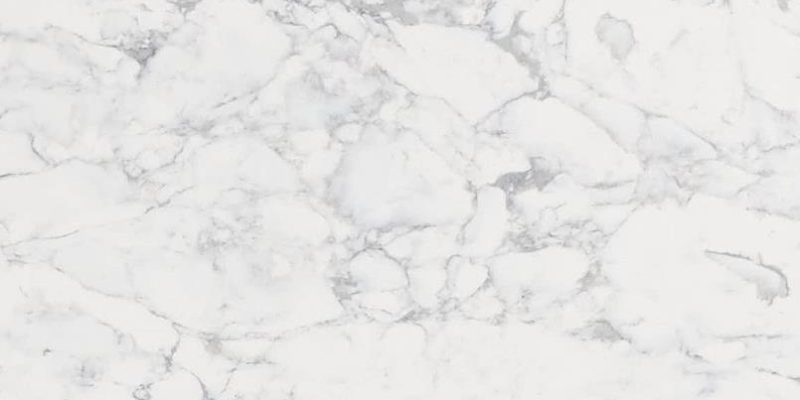
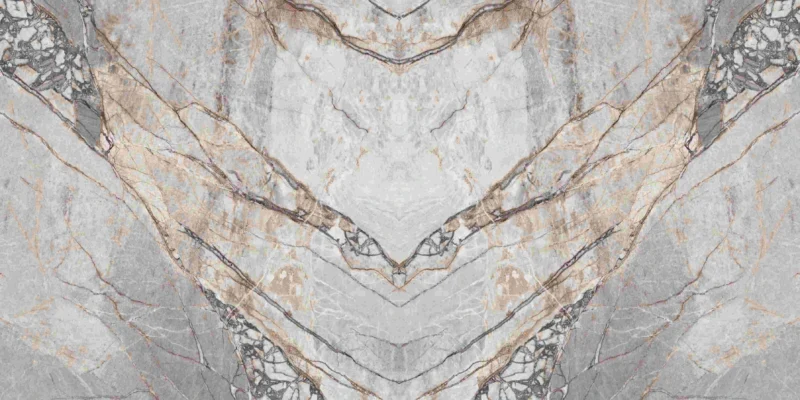
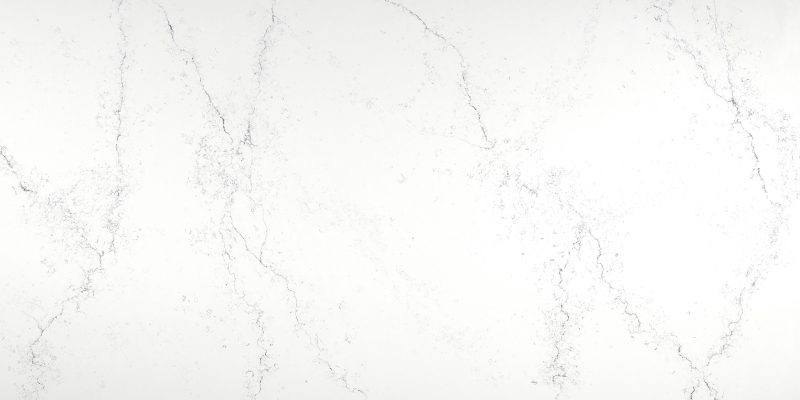


Quartz Note: A quartz surface that performs well as a countertop should not automatically be treated as an approved stair tread. Use the documentation for the exact product and intended application.
Slate and soapstone can provide distinctive natural appearances, but they are more specialized choices than granite, marble, quartzite or porcelain for stair applications.
Slate has a naturally layered structure and can offer textured visual character. Depending on the exact product, it may be considered for selected interior or exterior walking surfaces.
Cleavage, thickness variation, edge behaviour and abrasion should be reviewed before it is selected for fabricated stair treads.
Soapstone offers a quiet matte appearance and can develop a visible patina with use. Because it is generally softer than many granites or quartzites, scratching and surface change should be expected rather than treated as defects.
For that reason, soapstone is better considered a specialty design option than a default recommendation for heavily trafficked stairs.
The best stair material changes according to what the project needs most. The categories below identify strong candidates rather than universal winners.
Suitable granite, quartzite and approved porcelain products may be strong candidates for higher-traffic applications because they can offer useful wear characteristics when the exact material and finish are appropriate.
The final choice should still consider edge details, expected traffic, cleaning and the actual product data.
Marble and expressive quartzite can create strong architectural staircases where natural veining is part of the design. Granite can also provide distinctive mineral movement, while patterned porcelain may offer a more controlled interpretation.
Porcelain and approved engineered quartz can provide more consistent colour or repeated pattern than natural stone. This may be useful when the project requires close visual continuity across many stair components.
There is no universal best exterior material. Depending on the exact product and finish, suitable granite, quartzite and exterior-rated porcelain may all be considered.
Exterior performance also depends on drainage, supporting conditions, surface finish and winter maintenance, so material selection should be coordinated with the complete stair system.
For detailed outdoor planning, review Teccorp’s outdoor stone steps and stairs guide.
Some approved porcelain and engineered products may reduce certain natural-stone maintenance requirements, but no stair surface should be described as maintenance-free.
Natural stone maintenance also varies substantially by stone, finish, exposure and sealer system.
Granite, marble, quartzite and slate provide natural variation that cannot be reproduced exactly from one stair project to another. For these materials, the actual slabs should be reviewed before tread and landing layout is finalized.
Subtle granite, selected porcelain, restrained quartzite and specialty materials such as soapstone may suit interiors where the stairs should support the architecture rather than become the dominant visual feature.
Two staircases made from the same stone can perform and appear differently when the surfaces use different finishes. Finish selection therefore belongs in the material decision rather than being treated as a final decorative choice.
Polished surfaces can increase reflection and reveal colour and veining clearly. They are often associated with formal interior applications, but expected traffic and wet conditions should be considered before selection.
Honed stone creates a softer, lower-reflection appearance. It may also show wear, fingerprints or etching differently from a polished surface depending on the material.
Flamed, textured and other exterior-oriented finishes may be available for some stones and products. Their suitability should be confirmed for the exact material and stair environment.
The finish should be reviewed for:
No finish should be labelled universally “non-slip” without product-specific testing and consideration of the actual conditions.
The same stair project may place different demands on treads, risers and landings. Treads receive direct foot traffic, while risers and vertical faces can play a stronger visual role. Landings may display larger areas of the material and therefore make pattern, finish and slab variation more noticeable.
Using the same material for treads, risers and landings can create a unified staircase. This approach works especially well when the slab or product has enough usable material and the pattern remains balanced across horizontal and vertical surfaces.
A contrasting riser can reduce visual weight or connect the staircase with adjacent flooring, walls or cabinetry. The selected materials should still work together in thickness, edge detailing and maintenance expectations.
Landings often show more continuous surface area than individual treads. Strongly veined marble or quartzite may therefore require dedicated slab planning, while granite or manufactured products may create a more controlled visual field.
Open stair sides, front nosings and exposed landing edges can influence which material is practical. The stone or product should support the required fabrication without creating vulnerable or visually inconsistent details.
Detailed tread, riser and edge planning is covered in Teccorp’s stone stair installation guide.
Stone stairs should be considered within the complete interior or exterior material palette. Matching does not require using the exact same stone on every surface.
Warm, cool or neutral undertones can affect how the staircase relates to flooring, wall finishes, railings and surrounding stone elements.
A heavily veined staircase may compete with visually active flooring or feature walls. Conversely, a restrained granite or porcelain surface can support a more dominant architectural element nearby.
Glass, black metal, stainless steel and other railing systems can change how the stone colour and finish are perceived. Material selection should therefore be reviewed with the railing design rather than in isolation.
Natural and artificial lighting can alter colour, reflection and pattern visibility. Polished marble, honed granite and matte porcelain can appear significantly different under the same lighting conditions.
| Selection Factor | Interior Stairs | Exterior Stairs |
|---|---|---|
| Surface finish | Appearance, traffic and cleaning | Wet conditions, traction and exposure |
| Moisture | Usually more controlled | Rain, snow, ice and drainage |
| Temperature | Relatively stable conditions | Seasonal temperature changes and freeze-thaw exposure |
| Material approval | Horizontal stair use | Exterior stair and environmental suitability |
| Maintenance | Cleaning, wear and finish care | Cleaning, joints, winter maintenance and exposure |
The table highlights the main differences, but the exact product and project conditions remain controlling.
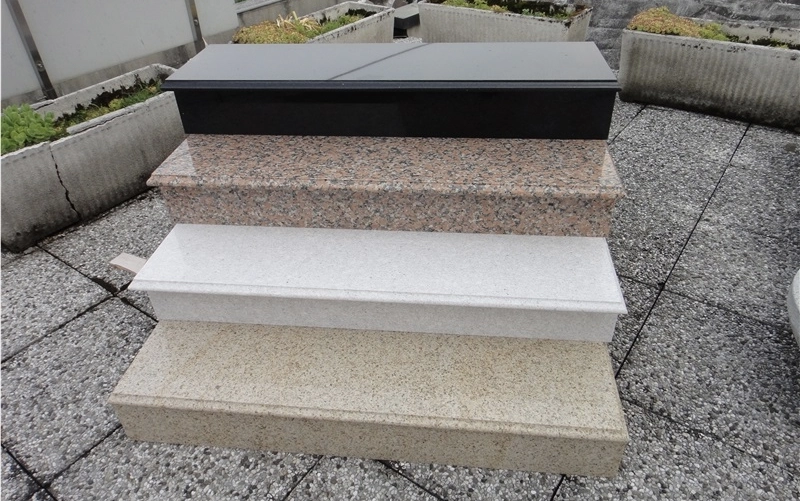
Material affects cost, but the slab or product price alone does not determine the complete stair budget.
Important variables can include:
A visually expensive material may sometimes use material efficiently, while a lower-cost slab with demanding vein alignment or poor yield may require more material. Cost should therefore be evaluated from the complete fabrication scope rather than a material name alone.
Selection Rule: Approve the exact material, finish and product documentation for the intended stair application rather than relying on generic assumptions about granite, marble, porcelain, quartzite or quartz.
There is no universal best stone. Suitable granite, marble, quartzite, porcelain and other approved products can serve different stair applications depending on location, traffic, finish, exposure and fabrication requirements.
Many granite products are strong candidates for interior and exterior stair applications because of their potential wear and weathering performance. The exact granite and finish should still be evaluated for the project.
Yes, marble can be suitable for stairs, particularly interior design-led applications. Wear, etching, finish, traffic and exterior exposure should be considered before selection.
Some porcelain products and stair systems are intended for horizontal and exterior applications. The exact product, finish, edge system and installation requirements should be confirmed before selection.
Only where the exact engineered quartz product is approved for the intended stair application. Approval for countertops or vertical surfaces should not automatically be interpreted as approval for stair treads.
There is no single exterior winner. Suitable granite, quartzite, exterior-rated porcelain and other approved products may be considered depending on finish, climate exposure, drainage, stair construction and maintenance requirements.
The best stair material is the one that suits the complete application. Interior or exterior location, expected traffic, surface finish, wet exposure, fabrication details and maintenance expectations should all be established before the final stone is selected.
For custom projects in Toronto and the GTA, Teccorp Stone can coordinate material selection with the proposed tread, riser and landing layout. Installation requirements and the supporting stair should also be reviewed before fabrication begins.