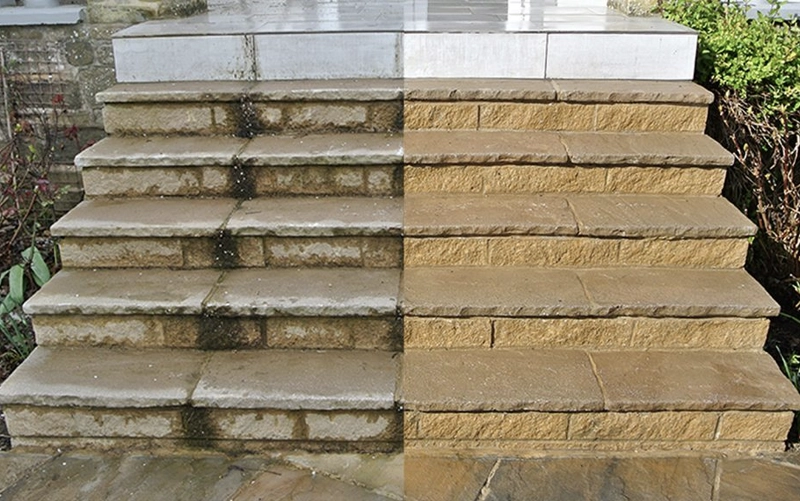
How to clean stone stairs depends on the exact material, surface finish and conditions of use. Granite, marble, quartzite, porcelain and engineered quartz should not automatically be cleaned with the same products or methods.
Routine care is usually straightforward: remove abrasive dirt and grit, use a cleaner approved for the surface, avoid unnecessarily aggressive chemicals and respond to spills before they spread. Problems begin when a cleaner that is appropriate for one material is assumed to be safe for every stone staircase.
This guide covers routine cleaning, spills, stains, sealing and ongoing maintenance for interior and exterior stone stairs. It also explains when a surface problem is no longer a cleaning issue and should be evaluated by a stone or installation professional.
Before Using Any Cleaner
Identify the exact stair material and finish. A product that is acceptable for one surface may dull, etch, stain or otherwise damage another.
| Situation | First Step | Avoid |
|---|---|---|
| Dust and grit | Remove gently before wet cleaning | Grinding dirt across the surface |
| Routine cleaning | Use a compatible neutral cleaner | Strong or unknown chemicals |
| Fresh spill | Blot promptly | Wiping the spill across a larger area |
| Unknown stain | Identify the material and likely stain source | Random stain-removal chemicals |
| Sealing question | Check the exact stone and existing treatment | Automatic annual sealing |
| Exterior dirt | Use material-appropriate cleaning | Assuming aggressive pressure or chemicals are universally safe |
Before choosing a cleaner, determine whether the stairs are natural stone, porcelain or an engineered surface. Even within natural stone, mineral composition and finish can change how the surface responds to cleaning products.
Many granites tolerate routine use well, but individual stones, applied sealers and surface finishes can respond differently to cleaning chemicals. Acidic household cleaners should not be assumed safe simply because the surface is granite.
Marble requires particular care around acidic products. Vinegar, lemon-based cleaners and other acids can chemically alter the surface finish and create an etch mark rather than an ordinary removable stain.
Quartzite is a siliceous natural stone, but commercial naming and individual stone composition can vary. Cleaning should still be based on the actual supplied material and finish rather than the word “quartzite” alone.
Porcelain is manufactured rather than natural stone. Cleaning and stain treatment should follow the instructions for the exact product, surface texture and stair system.
Where engineered quartz has been approved for the stair application, follow the surface manufacturer’s care instructions. Cleaning guidance intended for natural stone should not automatically be transferred to a resin-based engineered product.
For a detailed comparison of these materials, see Teccorp’s guide to the best materials for stone stairs.
Routine cleaning should remove abrasive debris and normal surface soil without unnecessarily attacking the stone or its finish.
Sand, grit and tracked-in debris can act as abrasives under foot traffic. Remove loose particles gently with a clean, non-abrasive tool before wet cleaning.
At entrances, suitable mats can also help reduce the amount of grit carried onto the stairs.
For natural stone, a neutral stone cleaner or another cleaner confirmed as compatible with the exact surface is generally preferable to aggressive household chemicals.
Use the cleaner at the concentration recommended by its manufacturer. More product does not necessarily clean better and can leave residue or streaking.
Use a clean soft cloth, mop or other tool appropriate for the stair surface. Avoid abrasive powders, aggressive scrubbing pads and damaged cleaning equipment that could scratch the finish.
Where the product instructions require rinsing, remove remaining cleaner rather than allowing repeated residue to build on the walking surface.
Drying helps reduce streaks and prevents unnecessary moisture from remaining on interior stair surfaces. The exact procedure should remain compatible with the selected stone or manufactured product.
The safest approach is not to create one universal list of products for every stone. Instead, avoid cleaners whose chemistry or abrasiveness has not been confirmed as compatible with the surface.
Products containing vinegar, lemon or other acids can etch marble and other calcium-carbonate-based stones. Acidic cleaners are also not a good universal recommendation for granite or quartzite because individual minerals, sealers and treatments may react differently.
Abrasive products can alter or scratch some polished, honed and other finished surfaces. A stain should not automatically be attacked with increasingly aggressive scrubbing.
A product labelled for general household use is not necessarily appropriate for natural stone, porcelain or engineered quartz. Check both the cleaner instructions and the surface manufacturer or stone-care guidance.
Excessive cleaner or soap concentration can leave film and streaks. Follow the recommended dilution and rinse procedure instead of increasing concentration in an attempt to improve cleaning.
Do not experiment with chemical mixtures. Cleaning chemicals should only be used according to their labelled instructions. In particular, bleach and ammonia must never be mixed.
Fresh spills should be handled promptly, but the first response should be gentle rather than aggressive. The goal is to remove the source without spreading it across a larger area or using a chemical that may damage the surface.
Blot liquid spills with a clean absorbent material. Wiping can spread the spill across a wider section of the tread or into surrounding joints.
After the excess liquid is removed, clean the affected area using a product confirmed as compatible with the exact stone, porcelain or engineered surface.
Once the surface is clean and dry, inspect it again. A remaining dark mark may indicate absorbed material, while a dull or lighter patch on marble or another acid-sensitive stone may be an etch mark rather than a stain.
If the mark remains, identify the likely source before applying a stronger cleaner. Oil, organic material, rust, biological growth and acidic spills can create different problems and may require different treatment.
Spill Response Rule: Blot first, identify the material and spill, then use a compatible treatment. Do not move directly from routine cleaning to aggressive stain-removal chemicals.
One of the most common stone-care mistakes is treating every visible mark as a stain. A stain and an etch mark are different problems and may require different solutions.
A stain usually involves material entering or discolouring the surface. Oil, food, beverages, rust and organic material can create different types of staining depending on the stone and exposure.
Effective treatment begins by identifying both the stair material and the likely stain source.
Etching is a chemical change to the surface finish, commonly associated with acidic contact on calcium-carbonate-based stones such as marble. The affected area may appear dull, lighter or different in reflection from the surrounding surface.
Cleaning alone may not restore an etched polished surface because the problem is a change in the finish rather than material simply sitting on top of the stone.
Repeatedly applying stain remover to an etched marble tread may fail because there is no remaining stain to remove. Likewise, polishing a true absorbed stain does not address the material below the surface.
Persistent or unclear marks should be evaluated before stronger chemical or restoration methods are used.
The basic principles of removing grit and using non-abrasive tools apply broadly, but cleaner selection and restoration concerns vary by material.
For routine care, use a cleaner compatible with natural stone and the existing surface treatment.



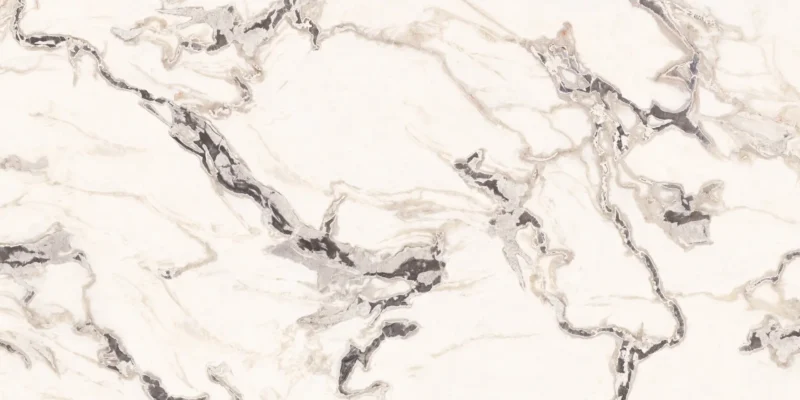
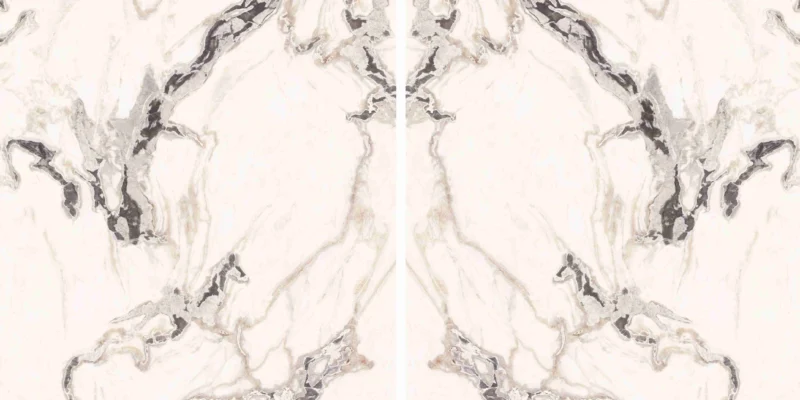


Granite should not be treated as chemically indestructible. Individual minerals, finishes and applied sealers can respond differently to strong cleaners.
Marble requires particular caution with acids. Vinegar, lemon-based cleaners and acidic household products can etch the finish.
Routine cleaning should use products suitable for marble, while dull spots or loss of polish should be evaluated as possible etching rather than repeatedly scrubbed as ordinary dirt.
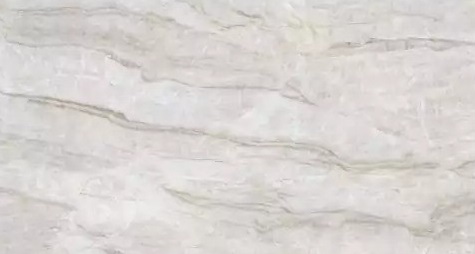
Quartzite stair care should be based on the actual supplied stone and finish. Use a compatible cleaner, remove abrasive grit and avoid assuming that every product sold commercially as quartzite has identical care requirements.
Porcelain care should follow the exact product manufacturer’s instructions. Textured porcelain may hold dirt differently from a smoother surface, while grout, joints and edge systems can have separate cleaning requirements.
Natural-stone sealing or stain-removal guidance should not automatically be applied to porcelain.
Where engineered quartz is approved for stair use, follow the manufacturer’s maintenance instructions. Resin-based surfaces can have different chemical and heat sensitivities from natural granite or quartzite.
A cleaner marketed for natural stone should not automatically be assumed compatible with every engineered quartz product.
Some natural stone stairs may benefit from an impregnating sealer, but sealing should not be treated as an automatic annual maintenance requirement for every stone.
An impregnating sealer can reduce the rate at which certain liquids enter some stones, but it does not make the surface completely stain-proof.
Spills should still be cleaned promptly even when the stone has been treated.
Stone density, porosity, finish, location and previous treatment can all affect whether sealing is useful. Some materials may require different products or may not need an additional sealer at all.
Advice such as “seal every year” is too broad for a stone stair guide. The appropriate interval depends on the exact stone, product, exposure, traffic and sealer manufacturer’s guidance.
Before applying another product, determine whether the stairs were previously sealed and which type of treatment was used. Layering incompatible products or repeatedly applying sealer without assessing the surface can create maintenance problems rather than solve them.
An exterior stair exposed to weather can have different maintenance conditions from a protected interior staircase. However, exterior exposure alone does not establish a fixed sealing schedule.
Sealing Principle: Treat sealing as a material- and product-specific decision. A sealer may improve stain resistance, but it does not replace appropriate cleaning, spill response or maintenance.
Outdoor stone stairs need routine attention because dirt, organic debris, moisture, snow and winter maintenance can change both appearance and walking conditions over time.
Leaves, soil, grit and other debris should not be allowed to remain on exterior treads for extended periods. Regular removal reduces abrasive dirt and helps make changes in the stone, joints or drainage conditions easier to notice.
Use snow and ice management methods compatible with the exact stone, surface treatment, joints and surrounding materials. De-icing products should not be assumed safe for every natural stone or installation system.
Periodically check tread edges, risers, landings and visible joints for movement, opening or deterioration. A recurring physical change should not be treated as a routine cleaning problem.
Persistent ponding or recurring moisture staining can indicate a site or installation condition that cleaning alone will not resolve. Exterior drainage and water-management planning are covered separately in Teccorp’s outdoor stone steps and stairs guide.
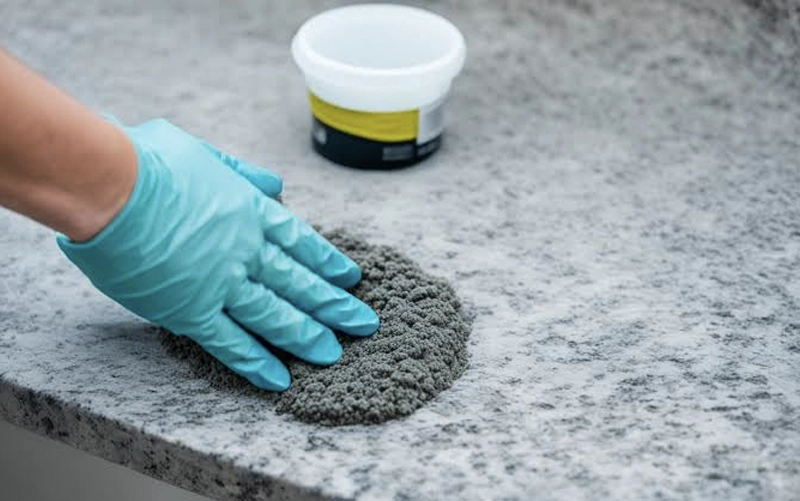
Algae, moss, mildew and other biological growth can develop on exterior stone, particularly in damp or shaded conditions. Treatment should be compatible with the exact stone and nearby materials.
Leaves, soil and other organic material can contribute to repeated surface growth. Keeping the stair clear and allowing the surface to dry appropriately can form part of ongoing maintenance.
Do not assume that a strong household chemical or aggressive cleaning method is appropriate for every exterior stone. Use a cleaner or treatment confirmed for the material and follow the product instructions.
If biological growth returns repeatedly in the same area, cleaning may be addressing the symptom rather than the underlying condition. Persistent moisture, shade or water movement around the stair may require further evaluation.
Not every change in a stone stair can be corrected through cleaning. Surface damage and physical movement should be distinguished from ordinary dirt or staining.
Minor wear may become visible over time, particularly on highly reflective finishes. Before attempting restoration, identify the exact material and determine whether the change is wear, residue, staining or etching.
Deep scratches, chipped nosings and damaged exposed edges may require professional repair or refinishing. Aggressive DIY polishing can alter the appearance of the affected area and create a larger visible difference.
An etched marble or other acid-sensitive stone has experienced a change in the surface finish. Routine cleaning will not necessarily restore the original reflection or polish.
A loose tread, moving component or opening joint is not a cleaning problem. The installation should be assessed before normal use and maintenance continue.
Routine cleaning can usually be handled with compatible products and non-abrasive methods, but some conditions require diagnosis or restoration rather than stronger cleaning.
Professional evaluation may be appropriate for:
Where the problem involves movement, supporting conditions or installation rather than the stone surface itself, an appropriate installer or construction professional may also need to be involved.
A useful maintenance plan responds to actual conditions rather than assigning the same fixed schedule to every material.
| When | Maintenance |
|---|---|
| As needed | Remove grit, dirt and debris |
| After a spill | Blot promptly and clean with a compatible product |
| During routine cleaning | Check for stains, residue and surface changes |
| Seasonally outdoors | Inspect edges, joints and recurring moisture conditions |
| When surface performance changes | Review cleaning products, finish and existing sealer |
| When physical damage appears | Determine whether repair or professional restoration is required |
There is no single cleaner for every stone stair. For natural stone, a compatible neutral stone cleaner is generally appropriate for routine care, while porcelain and engineered surfaces should follow their product-specific maintenance instructions.
Vinegar should not be used as a universal stone cleaner. It can etch marble and other calcium-carbonate-based stones, and acidic cleaners are not a good general recommendation for natural stone.
Remove grit gently and use a cleaner confirmed as suitable for marble. Avoid acidic products. Dull marks caused by acid may be etching rather than stains and can require refinishing instead of additional cleaning.
Some natural stones may benefit from an impregnating sealer, while others may not require one. The decision and maintenance interval depend on the exact stone, finish, exposure and sealer system rather than a universal annual schedule.
First identify the stone and the likely stain source. Different stains can require different treatment, and an etch mark should not be treated as if it were an absorbed stain. Persistent stains are better evaluated before stronger chemicals are used.
Keep exterior stairs clear of grit and organic debris, use material-compatible cleaning and winter-care products, and periodically inspect edges, joints and recurring moisture conditions. Physical movement or repeated water-related problems require more than routine cleaning.
Good stone stair maintenance is based on the actual material rather than a universal cleaning routine. Remove abrasive dirt, respond to spills promptly, use compatible products and distinguish stains or residue from etching, physical damage and installation problems.
For stone stair projects in Toronto and the GTA, Teccorp Stone can help identify the installed surface and coordinate appropriate care guidance for the selected material. Repairs, restoration or installation-related concerns should be evaluated according to the actual condition of the staircase.