The best materials for bathroom vanity countertops are not necessarily the same for every bathroom. Quartz, granite, marble, quartzite and porcelain can all be used to create custom vanity surfaces, but they differ in appearance, maintenance requirements, product consistency and fabrication considerations.
A frequently used family bathroom may prioritize straightforward routine care, while a powder room may allow more flexibility for a visually expressive natural stone. A primary ensuite with a long double vanity can introduce different priorities again, including slab pattern, sink placement and visual continuity across a larger surface.
This guide compares the main vanity countertop materials based on how they behave in a bathroom environment rather than declaring one material universally superior to the others.
Homeowners planning an actual custom vanity project can also review Teccorp Stone’s Vanity Countertops service for information about measurement, fabrication and installation across Toronto and the GTA.
| Material | Surface Type | Routine Sealing | Visual Character | Important Consideration |
|---|---|---|---|---|
| Quartz | Engineered | Generally not required | Controlled colour and pattern | Follow manufacturer guidance for heat and cleaning |
| Granite | Natural stone | Depends on the stone | Natural mineral variation | Absorption characteristics vary between slabs |
| Marble | Natural stone | Depends on the stone and finish | Distinctive natural veining | Can react with acidic substances |
| Quartzite | Natural stone | Product-specific | Natural movement and variation | Properties vary between individual stones |
| Porcelain | Manufactured | Generally not required for the slab surface | Controlled and stone-inspired patterns | Edge and cutout fabrication should suit the selected product |
This comparison is a starting point rather than a substitute for evaluating the exact slab or manufactured product. Two materials within the same broad category can have different finishes, appearance and care requirements.
A bathroom vanity surface has different priorities from a decorative wall finish. It surrounds sinks, supports everyday products and is regularly exposed to water, cosmetics, soaps and cleaning products.
When comparing countertop materials, several factors deserve consideration.
The area around a bathroom sink frequently comes into contact with water, soap, toothpaste, cosmetics and skincare products. The selected surface should therefore be evaluated for the way it responds to the products likely to be used in that bathroom.
Porosity also matters, particularly with natural stone. Different stones can absorb liquids differently, which is why sealing recommendations should be based on the actual material rather than one universal schedule.
Some homeowners prefer a surface that requires relatively straightforward routine care, while others are comfortable with the additional considerations associated with certain natural stones.
This does not automatically make a lower-maintenance material “better.” The appropriate choice depends on whether the homeowner’s expectations match the characteristics of the selected surface.
Natural stone can provide variation that makes each vanity visually individual. Manufactured surfaces generally offer greater control over colour and pattern consistency.
Neither approach is inherently superior. A strongly veined natural stone may suit a vanity intended to become a focal point, while a more controlled surface may work better where cabinetry, tile or other bathroom finishes already contain significant pattern.
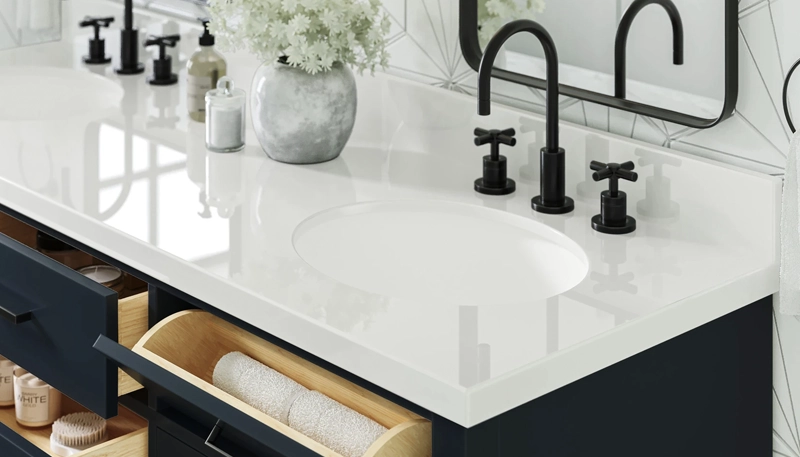
Vanity countertops often require sink cutouts, faucet holes, finished exposed edges and backsplash components. The selected material therefore needs to be considered not only as a flat surface but also in relation to the required fabrication details.
Highly customized sink or edge configurations should be reviewed with the fabricator before the final material decision.
A powder room used occasionally does not necessarily need the same material priorities as a frequently used family bathroom. Likewise, a large primary ensuite may place greater emphasis on slab movement and visual continuity across a long double vanity.
There is no universal “best” vanity material. The better question is which surface provides the most appropriate combination of appearance, maintenance and fabrication characteristics for the specific bathroom.
Quartz is an engineered surface and is frequently considered for bathroom vanities where consistent appearance and relatively straightforward maintenance are priorities.
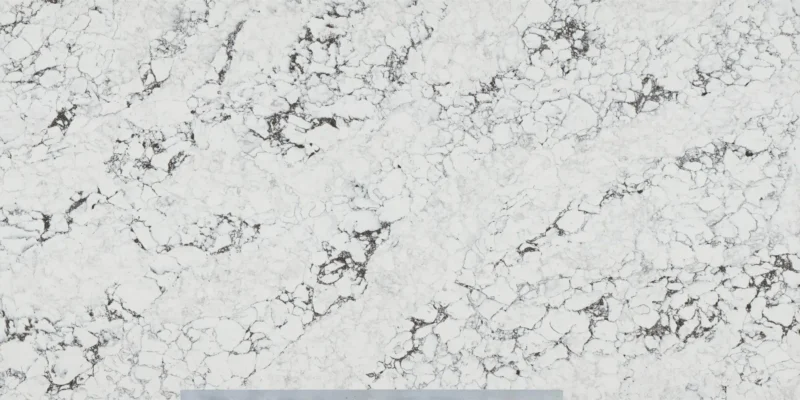
Many quartz products have non-porous surfaces and do not require routine sealing. They are available in a wide range of colours and patterns, from nearly uniform designs to surfaces intended to resemble marble or other natural stones.
Quartz can be particularly useful for:
Quartz should not be treated as universally resistant to every form of exposure. The selected manufacturer’s guidance should be followed for cleaning products and direct heat.
Hot hair tools should not automatically be placed directly on the surface simply because the countertop is quartz. Product-specific instructions remain important.
Quartz can also have a more controlled visual character than natural stone. For homeowners specifically seeking unpredictable natural movement and variation, granite, marble or quartzite may be more appropriate.
Granite is a natural stone with variations in mineral structure, colour and pattern from one slab to another. This individuality is one of its primary visual differences from engineered quartz.
Granite can work in contemporary, transitional and more traditional bathroom designs depending on the exact stone and surrounding materials.
Granite may be a strong candidate when:
Granite is a broad geological category, and different stones can have different absorption and maintenance characteristics. For that reason, statements such as “all granite must be sealed every year” are too general.
The actual slab and finish should determine whether sealing is appropriate and how frequently the surface should be evaluated.
Natural pattern variation should also be considered before fabrication. Where the stone contains strong movement, sink placement and the visible area of the slab can influence the appearance of the finished vanity.
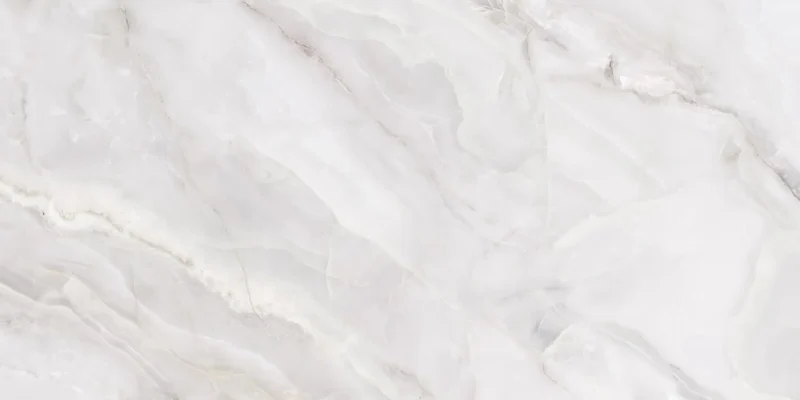
Marble is a natural stone valued for its veining, tonal variation and distinctive visual character. In bathroom vanities, it is often considered when the countertop is intended to contribute strongly to the design rather than function only as a neutral surface.
Different marbles can look substantially different from one another. Some have subtle linear veining, while others display stronger movement and contrast. This variation can make slab selection particularly important where the vanity is a prominent feature within the bathroom.
Marble can be a strong candidate for:
Marble is calcium-based and can react with acidic substances. This means some cleaners and everyday products can affect the surface if they contain ingredients that are unsuitable for the stone.
For this reason, marble should be selected with realistic maintenance expectations. It should not be described as maintenance-free, and the appropriate cleaning and sealing approach depends on the specific stone and finish.
Natural variation also means that a small sample may not represent the full appearance of a slab. Where possible, the visible pattern should be considered in relation to sink openings, countertop length and backsplash components before fabrication.
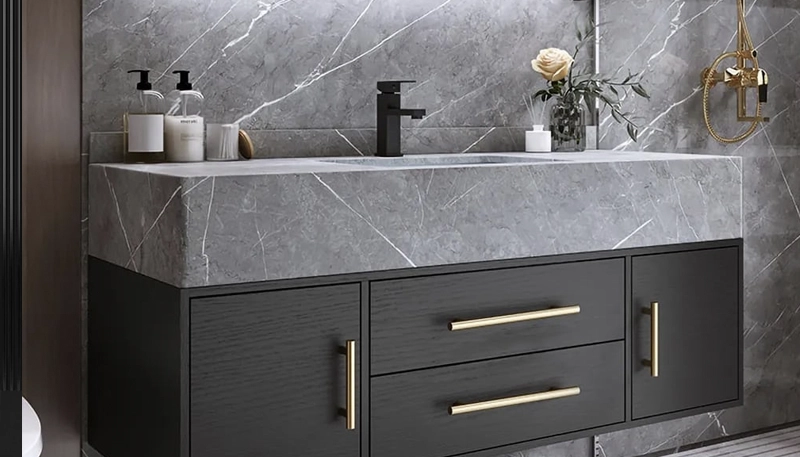
Quartzite is a natural stone that can provide distinctive movement, layered colour and strong visual variation. Certain quartzites can resemble marble in appearance, which makes the material appealing where homeowners want a natural-stone vanity with expressive veining.
Quartzite should still be evaluated as an individual stone rather than treated as a single uniform product category. Appearance, absorption characteristics and fabrication behaviour can vary between materials sold under the broader quartzite label.
Quartzite may be considered for:
The specific slab should be evaluated before purchase and fabrication. Broad statements such as “quartzite is always harder than granite” or “quartzite never needs sealing” are not useful selection rules because material characteristics can vary.
Where a quartzite has strong veining or directional movement, slab layout can also affect the finished vanity significantly. Sink openings and backsplash pieces may interrupt or continue visible patterns depending on how the material is positioned.
Porcelain slabs are manufactured surfaces that can provide controlled patterns, stone-inspired designs and relatively thin visual profiles depending on the selected product and fabrication system.
Porcelain can be particularly relevant to contemporary bathroom designs where clean geometry, restrained edges or coordinated slab surfaces are priorities.
Porcelain may suit:
Porcelain should be evaluated as a complete fabrication system rather than only as a surface pattern. Slab thickness, finished edges, sink openings and other details can influence how the material should be fabricated and installed.
Not every edge treatment or highly customized detail is equally appropriate for every porcelain product. The intended vanity configuration should therefore be reviewed before the material is finalized.
One of the most useful ways to narrow the material choice is to decide whether the project benefits more from the individuality of natural stone or the greater pattern control available from manufactured surfaces.
| Consideration | Natural Stone | Manufactured Surfaces |
|---|---|---|
| Examples | Granite, marble, quartzite | Quartz, porcelain |
| Pattern | Naturally variable and slab-specific | Generally more controlled and predictable |
| Slab Selection | Often important because each slab can differ | Still useful, especially for larger patterned designs |
| Sealing | Depends on the individual stone and finish | Routine surface sealing generally not associated with quartz or porcelain slab surfaces |
| Product Guidance | Stone-specific care is important | Manufacturer guidance is important |
| Design Character | Individual natural variation | Greater control over colour and pattern direction |
Granite, marble and quartzite can be appropriate when the homeowner values the fact that the finished vanity will reflect the characteristics of an individual slab. Natural movement, mineral variation and changes in tone can become part of the bathroom design.
This individuality also means that slab selection and pattern placement may deserve more attention than they would with a highly controlled surface.
Quartz and porcelain can be useful when the bathroom design requires more predictable colour or pattern. This may be important where the vanity must coordinate closely with cabinetry, tile or another predetermined finish.
Manufactured does not mean identical across every brand or product. Specifications, appearance, fabrication requirements and care guidance should still be reviewed for the exact surface selected.
Natural vs manufactured is not a quality ranking. The better category depends on whether the project benefits more from natural variation or controlled appearance, together with the homeowner’s maintenance and fabrication requirements.
A bathroom vanity countertop is rarely just a rectangular slab.
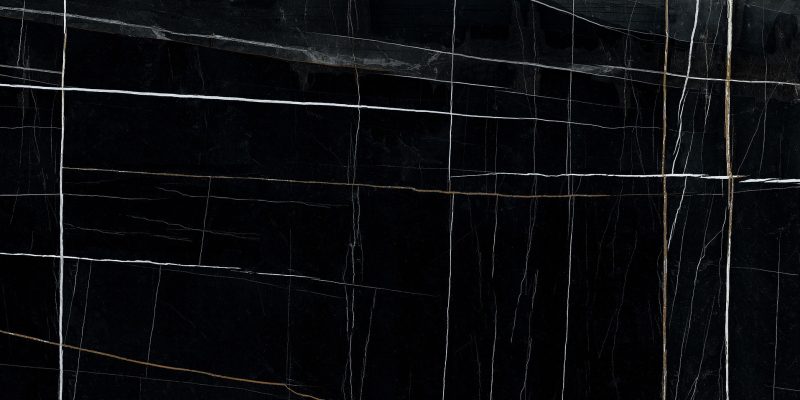
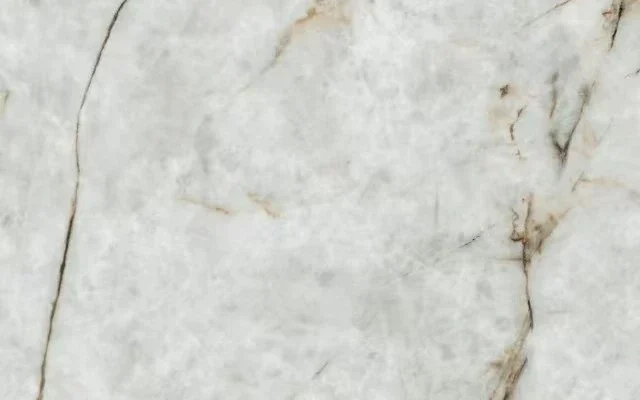
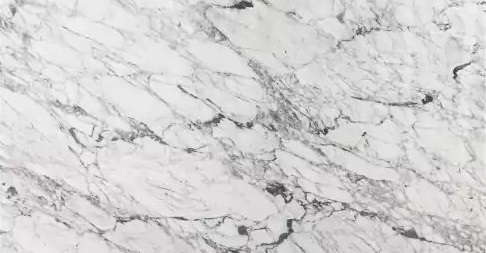






Relevant factors can include:
The material decision should therefore account for the intended vanity configuration before fabrication begins.
A dedicated comparison of these configurations will be covered separately in the planned Bathroom Vanity Sink Options: Undermount, Vessel & Integrated Sinks guide rather than expanding sink selection into a second topic within this article.
Edge design changes how the countertop looks and can also affect fabrication complexity. A simple eased edge, a more defined profile or a mitered detail can create very different visual proportions on the same vanity.
Material thickness, slab characteristics and fabrication requirements should be considered before a specific edge treatment is selected.
Restrained edge profiles can work with all major vanity material categories when appropriate for the product. They are particularly useful where the slab pattern, cabinetry or sink design is intended to remain visually dominant.
Mitered or other fabricated details can create a thicker visual profile, but suitability depends on the material and project. A heavier-looking edge is not automatically better and can appear disproportionate on a small vanity.
The countertop material may also influence how the vanity backsplash is designed. Using the same surface can create continuity, while a contrasting wall finish can allow the countertop to remain more visually distinct.
Where natural stone has pronounced veining, countertop and backsplash pieces can be considered together during material layout. For manufactured slabs with directional patterns, orientation may also affect the finished composition.
The backsplash design should ultimately respond to the bathroom rather than being selected solely because the same material is available.
A suitable material can still produce a poor result if the vanity dimensions, sink openings or visible pattern are not coordinated properly. Material selection and fabrication planning should therefore be treated as connected decisions.
Before finalizing a bathroom vanity surface, useful information includes:
Where final site dimensions are required, Teccorp’s countertop survey and measurement service provides additional information about documenting the vanity before fabrication.
The best bathroom vanity countertop material depends partly on where the vanity is installed and how frequently the space is used. A surface that works well in a lightly used powder room may not be the first choice for a busy shared bathroom, while a large primary ensuite may place greater emphasis on slab appearance and continuity.
For a frequently used family bathroom, quartz is often a practical material to consider because many engineered quartz products are non-porous and do not require routine sealing. The controlled pattern can also simplify coordination with cabinetry, flooring and wall finishes.
Porcelain can also be considered where the selected product and fabrication details suit the vanity design.
Granite remains an option for homeowners who prefer natural stone and are comfortable evaluating the maintenance requirements of the individual slab.
A powder room can provide more freedom to prioritize visual character because the vanity may receive less intensive daily use than a primary family bathroom.
Marble, quartzite and distinctive granite slabs can work particularly well where the vanity is intended to become a focal point. Quartz and porcelain remain appropriate when a more controlled appearance is preferred.
The key advantage of a powder room is not that one particular material becomes “best,” but that the design can sometimes tolerate a greater emphasis on appearance relative to intensive everyday use.
Primary ensuites often combine regular use with stronger design expectations. Quartz can provide consistency across longer countertops, while marble or quartzite can introduce natural movement where the vanity is intended to become an architectural feature.
Granite can also provide natural character, and porcelain may suit contemporary bathrooms where cleaner profiles and controlled patterns are priorities.
For a long double vanity, slab dimensions and visible pattern should be considered before the final material decision.
There is no material requirement specific to double vanities, but longer countertops make pattern continuity more visible. Quartz can provide relatively controlled movement, while natural stone may require more deliberate slab selection and layout.
The material should also work with two sink openings, the available slab dimensions and the intended edge and backsplash details.
| Priority | Materials to Consider First | Why |
|---|---|---|
| Straightforward routine care | Quartz, Porcelain | Manufactured surfaces generally offer controlled product specifications and typically do not require routine surface sealing. |
| Natural variation | Granite, Marble, Quartzite | Each slab can provide individual colour, mineral structure and pattern. |
| Controlled colour and pattern | Quartz, Porcelain | Manufactured patterns can make coordination with cabinetry and other finishes more predictable. |
| Expressive natural veining | Marble, Quartzite | Individual slabs can provide strong movement and visual variation. |
| Minimal or contemporary design | Quartz, Porcelain | Both can support controlled patterns and restrained visual detailing depending on the product. |
| Natural-stone character | Granite, Marble, Quartzite | Natural variation makes the finished surface specific to the selected slab. |
This table is intended to narrow the shortlist rather than declare an automatic winner. The exact product, slab and bathroom configuration should still determine the final selection.
For homeowners who prioritize controlled appearance and relatively straightforward routine care, quartz is often one of the first materials worth evaluating. Many products are non-porous, do not require routine sealing and are available in a wide range of patterns.
That does not make quartz universally superior.
Granite can be more appropriate when natural mineral variation is desired. Marble may be preferred when distinctive natural veining is central to the design and the homeowner accepts its care characteristics. Quartzite can provide expressive natural movement, while porcelain can be well suited to contemporary projects requiring controlled patterns or thinner-looking profiles.
The strongest material choice is therefore the one that best aligns four factors:
Decision rule: do not choose a vanity countertop because one material is described as “the best.” Choose the exact surface whose appearance, care requirements and fabrication characteristics best match the specific bathroom.
Start by deciding whether the vanity belongs to a frequently used family bathroom, a primary ensuite, a guest bathroom or a lightly used powder room.
Be realistic about cleaning habits and whether the characteristics of a particular natural stone fit those expectations.
Determine whether the bathroom needs a quiet surface that supports other finishes or a more expressive slab that becomes a focal point.
Single or double sinks, exposed edges, backsplash pieces and specialized details can affect fabrication. These requirements should be considered before the material is finalized.
Material names alone are not enough. Review the individual slab or manufactured product, its finish, specifications and care guidance before making the final decision.
A visually appealing slab may still be a poor match if its care requirements conflict with how the bathroom will be used.
Granites, marbles and quartzites can vary between individual stones. Manufactured products also differ between brands and product lines.
Statements such as “all natural stone must be sealed every year” oversimplify material care. Recommendations should reflect the actual stone, finish and condition.
Sink openings, edge treatments and backsplash components can affect whether a particular surface is appropriate for the intended design.
Luxury is a design outcome rather than a material category. A well-proportioned quartz vanity can be more successful than an expensive natural stone that does not coordinate with the bathroom.
For more design-focused inspiration, see Teccorp’s Luxury Bathroom Vanity Countertop Ideas.
Neither is universally better. Quartz can offer more controlled patterns and generally does not require routine sealing, while granite provides natural variation. The better choice depends on the selected products, desired appearance and maintenance preferences.
Marble can be appropriate where natural veining and stone character are priorities, but its sensitivity to acidic substances and its care requirements should be understood before selection.
Engineered quartz surfaces generally do not require routine sealing. Care instructions should still follow the selected manufacturer’s recommendations.
No universal rule applies to every granite. Sealing requirements depend on the individual stone, finish and absorption characteristics.
Yes, selected porcelain slab products can be suitable for vanity applications. The specific product, edge details, sink openings and fabrication method should be reviewed for the intended project.
Quartz and porcelain are often considered where straightforward routine care is a priority, but the exact manufacturer guidance and intended bathroom use should still be reviewed.
There is no material that automatically creates a luxury result. Marble, quartzite, granite, quartz and porcelain can all support refined bathroom designs when the surface, cabinetry, sinks and surrounding finishes are well coordinated.
The best bathroom vanity material is the surface that matches the way the bathroom is used, the homeowner’s maintenance expectations, the desired visual character and the required fabrication details.
Once the material shortlist is established, comparing actual slabs or products alongside the vanity dimensions and fixture specifications provides a more reliable basis for the final decision.
Teccorp Stone offers custom vanity countertop measurement, fabrication and stone-related installation services across Toronto and the GTA.