Durable countertops for busy kitchens must withstand repeated cooking, spills, moisture, cleaning, small appliances and daily activity around sinks, islands and exposed edges. Durability is not defined by hardness alone, and no countertop material is completely resistant to every form of damage.
A practical work surface should balance stain resistance, scratch performance, heat precautions, edge strength, maintenance and repairability. Its performance also depends on how openings, seams, overhangs and cabinets are designed beneath the material.
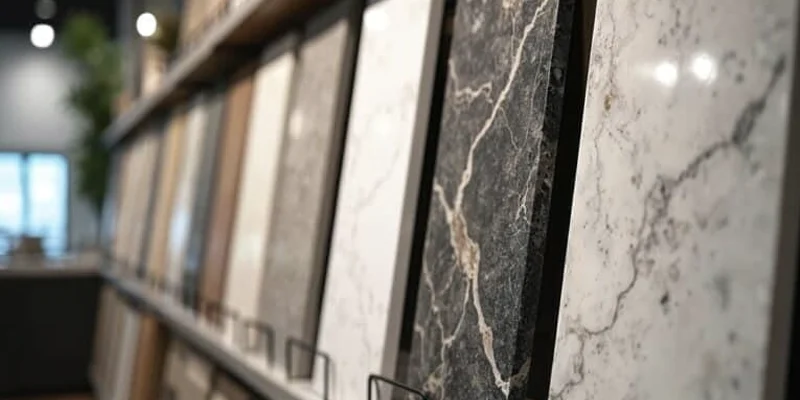
Quartz, granite, quartzite and porcelain can all work in active kitchens, but they do not respond identically to heat, impact, chemicals or long-term wear. The best option depends on the household’s cooking habits, acceptable maintenance and the types of damage most likely to occur.
This guide compares durable countertop materials by the factors that matter in real kitchens rather than assigning one universal winner.
For straightforward routine care: Quartz is commonly considered when low porosity and no routine sealing are priorities.
For natural stone and active cooking: A suitable granite slab can provide practical everyday performance with slab-specific care.
For natural movement and a focal surface: Correctly identified quartzite may suit demanding kitchens when its absorption and maintenance are understood.
For low absorption and architectural design: Porcelain can work well when edge construction, openings and fabrication are planned carefully.
The most durable choice is not necessarily the hardest material. It is the surface whose strengths and limitations match the household’s actual use.
The following comparison provides practical direction rather than an absolute ranking. Performance varies between products, slabs, finishes and fabrication details.
| Material | Stain and Moisture | Scratch Performance | Heat Precautions | Edges and Impact | Repair Consideration |
|---|---|---|---|---|---|
| Quartz | Low porosity and generally straightforward cleaning | Resists ordinary wear but is not scratch-proof | Protect resin from concentrated heat | Corners and narrow sections can chip under impact | Colour and pattern matching may limit invisible repairs |
| Granite | Varies by slab; sealing may be recommended | Generally practical for frequent kitchen use | Use trivets despite useful heat performance | Exposed corners and openings remain vulnerable | Some chips may be improved, but natural pattern matching varies |
| Quartzite | Depends on correct identification and absorption | Suitable slabs can perform well under regular use | Normal heat protection remains appropriate | Natural fissures and strong veins affect planning | Repairs may remain visible within expressive patterns |
| Porcelain | Low absorption for suitable products | Strong surface performance with normal precautions | Follow exact product and appliance guidance | Exposed edges and corners require impact protection | Printed designs and edge damage may be difficult to disguise |
A durable countertop remains functional and serviceable under the types of wear expected in the kitchen. One material may resist surface scratches effectively but require more stain maintenance. Another may have low absorption but require greater care around exposed edges.
Cooking oils, coffee, sauces, wine and water around sinks can test both the surface and its joints. Low absorption reduces the opportunity for liquids to enter the material, but spills should still be removed promptly.
Natural-stone performance varies by slab and finish. Sealing may reduce absorption in some stones, but it does not make them stain-proof or protect acid-sensitive materials from etching.
Scratch resistance describes only one type of wear. Cutting directly on the countertop may affect the surface, damage knives or leave metal transfer marks even when the material itself is relatively hard.
Cutting boards remain appropriate for every countertop. Abrasive cleaners should also be avoided unless approved for the exact surface.
Heat performance should account for hot cookware, countertop appliances and rapid temperature change. Engineered surfaces may contain resins, while natural stone, joints and finishes can still be affected by concentrated heat or thermal shock.
Trivets and protective pads reduce risk across all material categories and should be considered part of normal use rather than evidence that the countertop is unsuitable.
The centre of a broad countertop run is not exposed to the same risks as an island corner, sink rail or narrow section beside a cooktop. Concentrated impact can chip an exposed edge even when the surface performs well against ordinary wear.
Edge profile, thickness, opening geometry and underlying support should therefore be included in the durability assessment.
Durability also includes what happens after damage occurs. Minor chips, scratches, etching or stains may have different repair options depending on the material and finish.
A repaired area may remain visible, particularly on printed porcelain, uniform quartz or strongly veined natural stone. No surface should be purchased on the assumption that every type of damage can later be repaired invisibly.
Durability Principle
Compare the types of damage most likely in your kitchen instead of relying on a single hardness score or an indestructible marketing claim.
Quartz is frequently selected for active kitchens because suitable products offer low porosity, controlled patterns and no routine sealing. It can support families that want straightforward cleaning without the visual variation associated with natural stone.
Quartz may suit:
Browse available quartz countertop options.
Quartz contains binders that can respond to concentrated heat. Hot cookware should not be placed directly on the surface, and heat-producing appliances should be used according to product guidance.
The material is resistant to ordinary household wear but is not scratch-proof or impact-proof. Exposed corners, sink openings and narrow sections remain more vulnerable than broad supported areas.
Repair colour matching can also be difficult on uniform or directional patterns. Preventing chips and heat damage is generally more reliable than expecting an invisible repair later.
Granite may suit busy kitchens where natural variation, substantial appearance and practical everyday performance are priorities.
A suitable granite slab can work effectively across preparation counters, islands and cooking areas. Natural patterning may also make minor visual changes less noticeable than on a completely uniform surface.
Granite may appeal to households seeking:
Explore available granite countertop options.
Granite varies in absorption, density, mineral composition and natural features. Some slabs may benefit from sealing, while others may require less frequent treatment.
The complete slab should be reviewed for colour, fissures, pattern placement and the relationship between major features, seams and openings.
Granite should not be treated as indestructible. Heavy impacts near corners, sink rails and unsupported sections can still cause chips or damage, while a later repair may remain visible within the natural pattern.
Quartzite may suit active kitchens where homeowners want natural stone, pronounced slab movement and practical everyday performance. It is different from engineered quartz and should be evaluated according to the characteristics of the actual slab.
A suitable quartzite slab may work well for:
Explore available quartzite countertop options.
The quartzite label is sometimes used broadly in the stone market. Slabs with similar commercial names may differ in absorption, mineral composition and response to acidic substances.
Before approval, review:
Strong movement can create an effective focal point, but it may also make repairs, seams and pattern interruptions more noticeable.
Quartzite should still be used with cutting boards, trivets and prompt spill cleaning. A naturally hard surface is not automatically protected from edge impact, staining, thermal stress or damage around narrow openings.
Porcelain can provide low surface absorption, controlled design options and straightforward routine cleaning. It may suit busy kitchens where contemporary detailing, thin-looking profiles or coordinated countertop and backsplash surfaces are priorities.
Suitable porcelain products may offer useful resistance to common kitchen stains, moisture and ordinary heat exposure. Product documentation should still be reviewed because thickness, finish, backing and recommended applications can vary.
Porcelain may suit:
Browse available porcelain countertop options.
The broad surface and the exposed edge should not be evaluated as though they face identical risks. Corners, sink cut-outs and cooktop openings can be more vulnerable to concentrated impact than the centre of a supported countertop.
Porcelain fabrication should therefore address:
Some designs are printed mainly on the visible face. Edge treatment and repair expectations should be reviewed before fabrication because the pattern may not continue through the full slab body.
Minor edge damage may sometimes be improved, but matching a printed design or restoring a damaged corner invisibly may not be possible. Care around exposed island edges is particularly important in high-traffic kitchens.
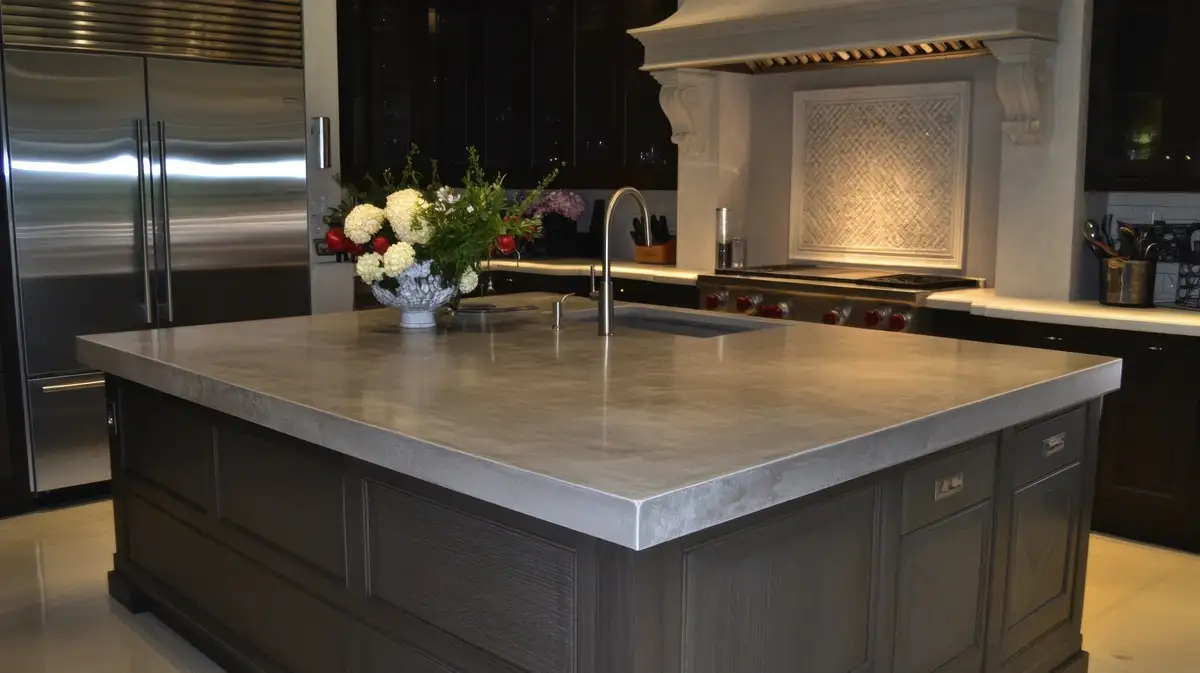
Marble, soapstone, solid surface and wood can still be used in active homes, but they involve different compromises from quartz, granite, quartzite and porcelain.
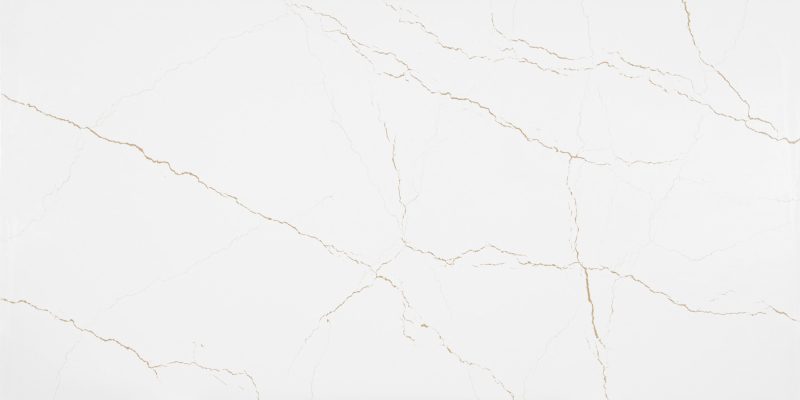
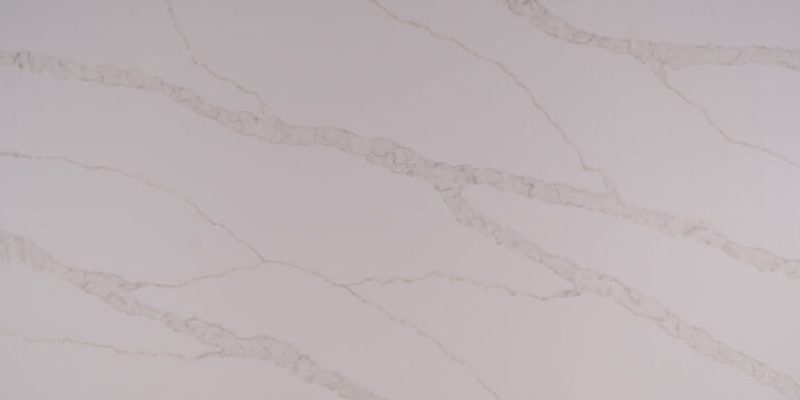
Marble offers natural veining and architectural character but can etch, stain, scratch and develop patina. It may suit a household that accepts visible aging and understands that sealing does not prevent acid-related etching.
Marble may be used selectively on a serving counter, feature island or lower-impact surface when its expected appearance is compatible with the project.
Explore available marble countertop options.
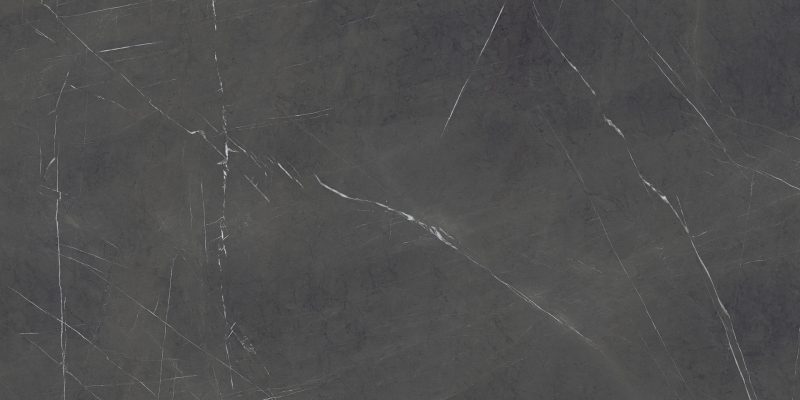
Soapstone has low moisture absorption and a matte natural appearance. Its softer surface may develop scratches and edge wear, which some homeowners accept as part of an evolving patina.
Solid-surface materials may provide visually continuous joints and certain refinishing possibilities. They generally require careful heat protection and may show scratches under demanding use.
Wood can be refinished and may provide a warmer preparation or serving surface.




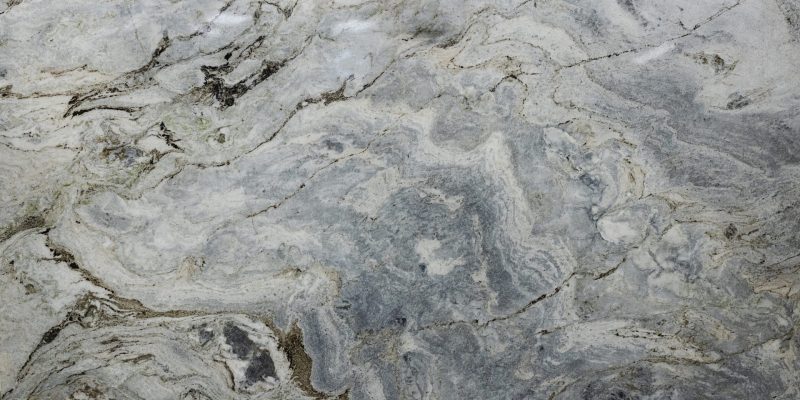



Material Selection Reminder
A surface can work in a busy kitchen even when it develops patina or needs additional care, provided those characteristics are understood before purchase.
Durability problems often occur at concentrated stress points rather than across the centre of the countertop. A material may resist ordinary surface wear while remaining vulnerable at corners, seams and narrow sections around openings.
Scratch performance depends on the material, finish and object contacting the surface. Cutting directly on the countertop should be avoided across all material categories.
Cutting boards protect the countertop and prevent premature dulling of kitchen knives. Abrasive pads and unsuitable powders should also be avoided unless approved for the exact product.
Island corners, seating edges and appliance returns receive more direct contact from cookware, stools and heavy objects. A rounded or restrained edge may reduce sharp exposure in busy circulation areas, but no edge profile is chip-proof.
Sink and cooktop openings create narrow rails and inside corners that require accurate fabrication and adequate support. Heavy impact or cabinet movement near these areas may create greater risk than ordinary use across a full countertop section.
Repair options differ according to the material and damage:
| Damage Type | Possible Response | Realistic Limitation |
|---|---|---|
| Small edge chip | May sometimes be filled or improved | Colour and pattern matching may remain visible |
| Surface scratch | Treatment depends on material and finish | Polishing may alter the surrounding sheen |
| Marble etching | Professional refinishing may improve the finish | Future acid exposure can create new etching |
| Heat or resin damage | Requires material-specific assessment | An invisible repair may not be achievable |
| Crack near an opening | Assess support, cabinets and the damaged piece | Repair may not resolve the underlying structural cause |
The possibility of repair should not replace prevention. Protecting exposed edges, using trivets and maintaining stable cabinets generally provides a more reliable durability strategy.
Material strength cannot compensate for unstable cabinets, unsuitable openings or unsupported overhangs. The countertop and the structure beneath it should be planned as one installation.
Base cabinets should be secure, appropriately level and complete before final measurement. Movement or height differences can place stress on seams, corners and openings.
Seams should respond to slab dimensions, cabinet support, access and pattern direction. A completed seam may remain visible, but its position should avoid unsupported or unnecessarily vulnerable areas.
Seating overhangs and extended surfaces should be reviewed according to material, thickness, cabinet construction and project-specific dimensions. Support should be resolved before fabrication rather than added after installation.
The exact sink and cooktop information should be confirmed before cutting. Changing fixtures after fabrication can affect clearances, support and the remaining material around the opening.
Review how cabinet design affects countertop installation before finalizing structural and fabrication details.
Installation Durability Rule
A durable material still depends on stable cabinets, correctly planned openings, supported overhangs and controlled seam placement.
The most suitable countertop depends on how the kitchen is used, where activity is concentrated and which forms of wear are most likely. A material that performs well for one household may create unnecessary maintenance or design compromises for another.
Households preparing several meals each day should prioritize practical cleaning, stain management, heat precautions and useful preparation space.
Quartz may suit families seeking low porosity and no routine sealing. Granite or correctly identified quartzite may appeal to homeowners who prefer natural stone and accept slab-specific care. Porcelain may suit kitchens where low absorption and coordinated architectural surfaces are priorities.
The final decision should also account for sink placement, appliance openings and the amount of uninterrupted work surface available.
In homes with children, countertops may experience frequent spills, craft materials, repeated cleaning and impact around seating areas.
Practical considerations include:
No countertop should be treated as a substitute for cutting boards, trivets or reasonable supervision around heavy objects.
Entertaining kitchens often include large islands, serving areas and surfaces visible from dining or living spaces. Durability should therefore include both daily performance and the ability to maintain a coherent appearance across several fabricated pieces.
Pattern scale, seam position and exposed island edges become especially important. A visually dramatic slab should be reviewed against sink openings, seating zones and the principal sightlines into the kitchen.
Review the guide to countertops for open-concept kitchens when the surface remains visible from adjoining rooms.
Quartz and suitable porcelain are often considered where straightforward cleaning and low absorption are priorities. These materials still require appropriate heat protection and care around exposed edges.
Natural stone can also provide manageable maintenance when the actual slab, finish and sealing recommendations align with the homeowner’s expectations.
| Household Priority | Possible Material Direction | Primary Detail to Review |
|---|---|---|
| Frequent cooking | Quartz, granite, quartzite or porcelain | Heat zones, stain exposure and preparation space |
| Minimal routine maintenance | Quartz or suitable porcelain | Heat precautions and edge construction |
| Natural-stone character | Granite or correctly identified quartzite | Slab variation, absorption and maintenance |
| Feature island | Expressive natural stone or controlled manufactured pattern | Slab placement, openings and exposed edges |
A durable countertop should be supported by simple habits that match the installed material. The care plan should be understood before purchase rather than introduced only after installation.
Inspect seams, sink junctions, exposed edges and supporting cabinets periodically. Natural stone should be assessed according to slab-specific sealing recommendations rather than a fixed schedule applied to every installation.
Changes in sealant, cabinet support or moisture exposure should be addressed before they place additional stress on the countertop.
A small chip, stain or loose joint should be assessed before the affected area becomes larger or exposes the supporting structure to moisture.
Repairs should be evaluated according to the material, finish and cause of damage. Cosmetic treatment alone may not resolve an underlying support or cabinet problem.
Care Planning Rule
The most durable countertop is one whose everyday precautions and maintenance requirements the household can follow consistently.
There is no single winner for every household. Quartz, granite, quartzite and porcelain can all perform well when the exact surface matches the kitchen’s use, maintenance expectations and fabrication conditions.
Quartz and suitable porcelain generally offer low absorption, but spills should still be cleaned promptly. Natural-stone stain performance depends on the actual slab, finish and sealing recommendations.
Heat performance varies by material and product. Granite and other natural stones may provide useful heat tolerance, but trivets remain appropriate for every countertop to reduce thermal and finish-related risk.
Yes. Scratch resistance is not the same as scratch-proof performance. Cutting boards and surface-appropriate cleaners should be used regardless of material.
Chip risk depends on material, edge profile, thickness, support and the location of impact. Exposed corners and narrow sections around openings are generally more vulnerable than broad supported areas.
Some chips may be filled or improved, but the repair may remain visible. Repairability depends on the material, pattern, finish and extent of damage.
No. Sealing may reduce absorption in some stones, but it does not make them stain-proof and does not prevent marble or other acid-sensitive materials from etching.
Yes. Cabinet stability, support, seam placement, opening geometry, overhangs and fabrication quality all influence long-term performance.
Quartz may suit households prioritizing controlled patterns and no routine sealing. Granite may suit homeowners seeking natural variation and practical performance with slab-specific care.
Yes, when the selected product, edge construction, openings and support are appropriate. Exposed corners should still be protected from concentrated impact.
A durable countertop should match the household’s cooking habits, cleaning preferences, design priorities and kitchen layout. Material selection should be reviewed together with edges, openings, seams, overhangs and cabinet support.
Before approving the surface, confirm the expected stain, heat, scratch and impact performance of the exact product or slab, along with realistic maintenance and repair expectations.
Compare Durable Countertops for Your Kitchen
Share your kitchen layout, household use, selected fixtures and material preferences to review the most suitable countertop direction.
Discuss Your Kitchen Project
Browse Countertop Materials
Explore Kitchen Countertop Services