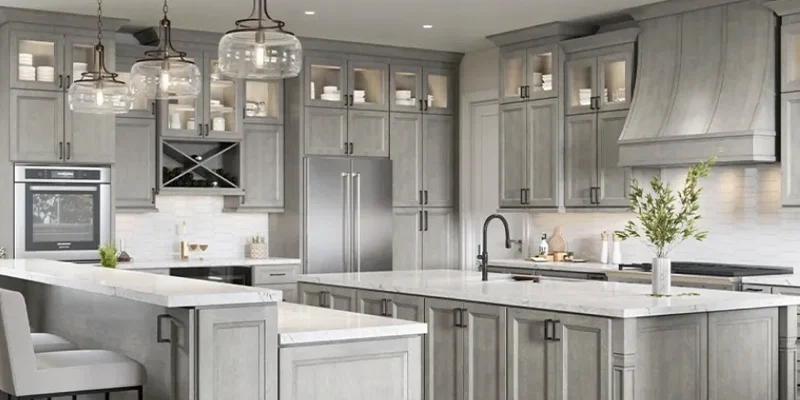
Granite countertops for high-traffic kitchens can provide strong everyday performance when the slab, finish, edge details and installation are selected for the way the kitchen is actually used.
In a busy Ontario home, the countertop may support meal preparation, hot cookware, family seating, entertaining and frequent cleaning throughout the day. Granite generally resists routine scratching and kitchen heat well, but it is not indestructible. Exposed edges can chip, sink and cooktop openings require careful fabrication, and sealing needs vary from one slab to another.
This guide explains how to specify granite for a high-use kitchen without relying on generic claims about durability. It covers slab selection, finishes, edge profiles, seams, cut-outs, maintenance and installation details that influence long-term performance.
Quick Answer
Granite is well suited to many high-traffic kitchens because it offers strong heat tolerance, good resistance to routine scratching and a durable natural-stone surface. The best result depends on choosing an appropriate slab and finish, protecting vulnerable edges and openings, and installing the stone on level, properly supported cabinets.
A high-traffic kitchen is not defined only by household size. It is a kitchen where several activities place repeated demand on the countertop throughout the day.
Typical conditions include:
The most vulnerable areas are not always the largest surfaces. Damage is more likely around exposed corners, narrow stone sections, fixture openings and unsupported overhangs.
Before choosing the slab or finish, identify where most activity occurs:
These zones may require different detailing. A decorative edge suitable for a quiet serving counter may not be the best choice beside a heavily used sink or family seating area.
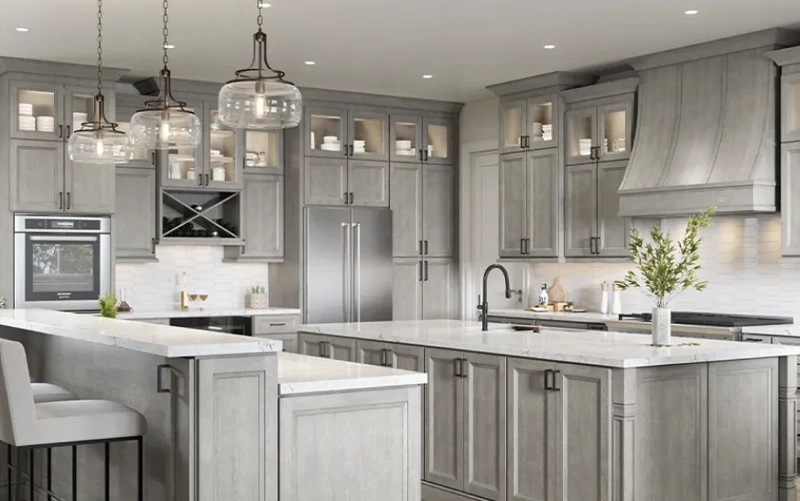
Granite is generally a strong option for high-use kitchens. It is a dense natural stone that usually offers good resistance to routine scratching and strong surface-heat tolerance.
Its practical advantages include:
However, Granite performance depends on more than the material name. Different slabs vary in mineral structure, absorption, pattern and natural characteristics.
Granite should not be described as scratch-proof, stain-proof or chip-proof.
Potential risks include:
These risks can often be reduced through appropriate slab selection, fabrication and installation.
| Performance Factor | Granite Performance | Planning Requirement |
|---|---|---|
| Routine scratching | Strong resistance in normal use | Use cutting boards to protect knives and finish |
| Heat | Generally strong surface tolerance | Use trivets to protect seams, sealer and nearby components |
| Impact | Dense but vulnerable at edges and openings | Choose practical edge details and proper support |
| Staining | Depends on absorption and treatment | Clean spills promptly and assess sealing by slab |
| Visible daily marks | Often concealed by natural movement | Consider colour, pattern and finish |
| Maintenance | Straightforward with suitable products | Avoid acids, abrasives and unnecessary sealer |
For a high-traffic kitchen, slab selection should consider performance, pattern and fabrication—not colour alone.
A small sample cannot show:
Reviewing the full slab allows the fabricator to assign stronger or more visually consistent areas to the most demanding countertop sections.
Medium and active patterns may conceal crumbs, water spots and small daily marks more effectively than very dark, uniform polished granite.
However, strongly directional slabs require more careful planning around seams and cut-outs. The pattern should not be interrupted unnecessarily by a sink, cooktop or poorly positioned joint.
Natural fissures, mineral concentrations and colour changes are not automatically defects. They should still be evaluated in relation to:
A visually attractive area may not always be the best location for a structurally demanding cut-out.
Slab Selection Rule
Choose granite according to the complete kitchen layout. Pattern, openings, seams and vulnerable sections should be reviewed before the slab is approved for fabrication.
The granite finish affects appearance, daily cleaning and how visible fingerprints, water marks and minor wear may become.
Polished granite has a reflective surface that strengthens colour and mineral contrast. It is widely used in kitchens because the smooth finish is relatively easy to wipe clean.
In a high-traffic kitchen, polished granite may:
Honed granite has a softer, lower-reflectivity appearance. It may suit kitchens where a matte surface is preferred, but oils, fingerprints and uneven cleaning can appear more noticeable on some colours.
Care requirements depend on the slab and finish. Honed granite should not automatically be described as lower maintenance than polished granite.
Leathered granite has a textured surface that may conceal fingerprints and provide a less reflective appearance. However, the texture can require more careful wiping around food residue and grease.
Before selecting a leathered finish, review how easily the exact surface can be cleaned and whether the texture is appropriate near food-preparation and sink zones.
| Finish | High-Traffic Advantage | Main Consideration |
|---|---|---|
| Polished | Smooth, familiar and easy to wipe | Dark slabs may show streaks and fingerprints |
| Honed | Soft, low-reflectivity appearance | Oils and uneven marks may remain visible |
| Leathered | Textured surface can conceal some daily marks | Texture may require more detailed cleaning |
Edge design affects both appearance and vulnerability to impact. In a busy kitchen, simple profiles are often easier to maintain and less exposed than highly detailed decorative edges.
Common practical choices include:
These profiles may be appropriate beside preparation areas, sinks and family seating because they avoid deep decorative grooves and highly projecting details.
Pay particular attention to:
No edge profile makes granite completely chip-proof. The goal is to reduce sharp, fragile or heavily exposed details.
Sink and cooktop openings interrupt the stone and create narrow sections that require accurate fabrication, handling and support.
The exact sink and cooktop models should be finalized before measurement and production.
Changing a fixture later may affect:
The sink zone experiences repeated exposure to water, dishes and impact. The installation should provide:
Heavy sinks should not rely only on adhesive connected to the stone.
Cooktop openings should maintain adequate stone width around corners and nearby seams.
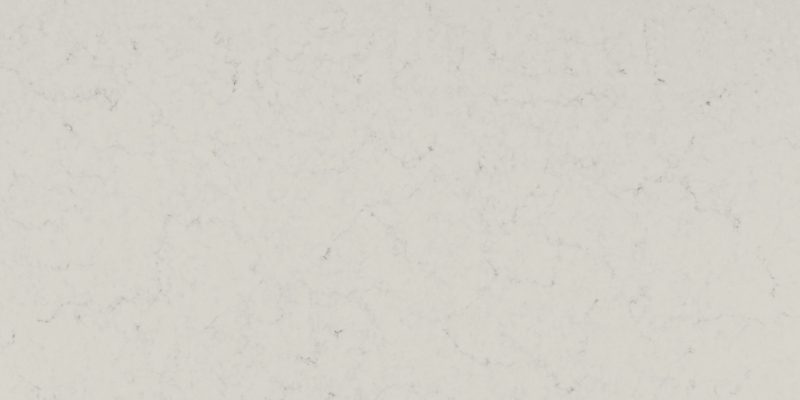


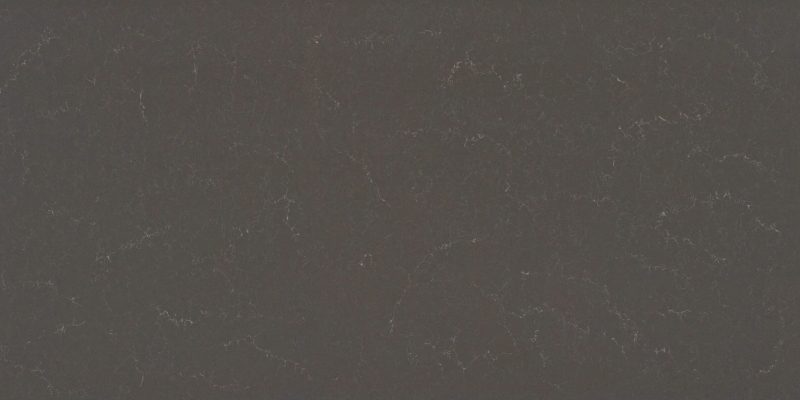












Cut-Out Rule
The stone around an opening is often more vulnerable than the centre of the slab. Fixture selection, cabinet support and fabrication quality directly affect long-term performance.
Seams may be necessary because of slab dimensions, countertop shape, access limitations or the size of the finished pieces.
A seam should be planned with:
Seams should not automatically be placed only where they are least visible. Structural support and safe handling remain equally important.
A professionally fabricated seam can be tight and visually controlled, but it should not be expected to disappear completely. Colour variation and strong mineral movement may make the joint more noticeable.
Granite generally provides strong surface-heat tolerance and can perform well beside ranges and cooktops.
Trivets are still recommended because very hot cookware may affect:
Trivets also reduce the risk of thermal stress from sudden or uneven temperature changes.
Provide useful countertop space beside the cooktop or range so hot cookware does not need to be placed on narrow edges, over seams or near seating zones.
Granite generally resists routine scratching better than many softer countertop materials. However, cutting directly on the stone is not recommended because it can damage knives and may eventually affect the finish.
Chipping is more likely at:
Use cutting boards, avoid striking edges with heavy objects and do not stand or sit on unsupported countertop sections.
Minor chips may sometimes be repaired, but the result depends on the colour, pattern, finish and location of the damage.
Granite is not uniformly porous. Absorption varies by slab, mineral structure, finish and any treatment already applied to the surface.
In a high-traffic kitchen, prompt spill removal is more important than following a fixed sealing calendar.
Pay particular attention to:
Blot spills before wiping them across a larger area, then clean with a product suitable for natural stone.
Some granite slabs benefit from a penetrating sealer, while low-absorbing granite may require little or no additional treatment.
The need should be assessed according to:
Heavy kitchen use alone does not prove that the countertop needs to be sealed more frequently.
Sealer does not make granite completely stain-proof, scratch-proof or chip-proof. It also does not repair dullness, remove an existing stain or strengthen unsupported stone.
Routine granite cleaning should remain simple and consistent.
Avoid routine use of vinegar, lemon cleaners, abrasive powders, steel wool and harsh bathroom or oven products.
For a broader comparison of cleaning methods, review TecCorp Stone’s stone countertop cleaning guide.
A cloudy area may be soap film or mineral residue, while a darker mark may indicate absorption. Chips, cracks and finish damage will not be corrected by stronger cleaning products.
When a mark remains after gentle cleaning and drying, identify the cause before applying a stain remover, polishing product or additional sealer.
A granite island in a high-traffic kitchen may support preparation, serving, seating and entertaining. The surface should not be overloaded with fixtures or unsupported extensions.
Before adding a sink or cooktop, confirm that enough uninterrupted countertop remains for preparation and serving.
Also review:
Overhang support depends on the granite thickness, projection, cabinet construction, openings and seam locations. Concealed steel support or brackets may be required.
Support should be planned before final measurement rather than added after installation.
Granite is heavy and rigid. It should be installed on cabinets that are stable, secured and level.
Before measurement, confirm:
The countertop should not be expected to correct uneven cabinets or structural movement.
Large islands and long countertop sections may be limited by doors, hallways, stairs, turns and ceiling clearance. A planned seam may be safer than an oversized piece that cannot be transported or positioned properly.
Review TecCorp Stone’s countertop survey and measurement service before fabrication.
Cost depends on the selected slab and complete fabrication scope rather than durability alone.
Main factors include:
Highly directional slabs may require additional material to maintain pattern continuity or avoid placing vulnerable characteristics around openings.
For detailed pricing factors, review the granite countertop cost guide.
Yes. Granite generally provides strong heat tolerance and good resistance to routine scratching. Its performance still depends on slab selection, edge design, support and installation quality.
Polished granite is often straightforward to wipe clean, but dark uniform slabs may show streaks. Honed and leathered finishes can conceal reflection but may require more detailed cleaning.
Granite usually resists routine kitchen scratching well. Cutting boards are still recommended to protect knives and preserve the finish.
Yes. Chips are more likely at exposed corners, decorative edges and around sink or cooktop openings.
Not necessarily. The need depends on the slab’s absorption, finish and existing treatment.
Granite has strong heat tolerance, but trivets are recommended to protect seams, treatments and nearby components.
Yes, provided slab dimensions, seams, fixture openings, cabinet support and delivery access are planned correctly.
Medium-tone and naturally patterned granite may conceal crumbs, fingerprints and minor daily marks more effectively than very dark, uniform polished surfaces.
Granite can perform effectively in a high-traffic Ontario kitchen when the complete system is planned—not only the stone colour.
Review the slab, finish, edge profile, openings, seams, overhangs and cabinet support before fabrication. These details often influence long-term performance more than general claims about granite durability.
Planning Granite Countertops for a Busy Kitchen?
Share your layout, island dimensions, sink and appliance models, and preferred granite style to begin reviewing fabrication and installation requirements.