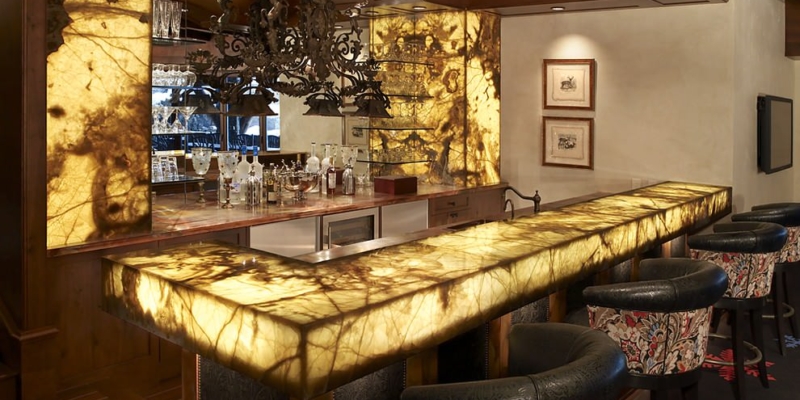
Cleaning onyx countertops safely requires gentle products, prompt spill removal and a clear understanding of what can damage the stone’s finish. Decorative onyx is valued for its translucency, layered colour and natural veining, but it is considerably more sensitive than granite, quartzite and most engineered countertop surfaces.
The loss of shine is not always caused by dirt or humidity. A dull area may result from cleaner residue, hard-water deposits, fine abrasion or an etch mark created when an acidic substance reacts with the stone. Each problem requires a different response, so applying a polishing product before identifying the cause may create uneven gloss or additional surface damage.
This guide explains how to clean onyx, protect its finish, evaluate sealing needs and determine when professional polishing or restoration is appropriate. The recommendations apply to onyx countertops, vanities, bars and other interior feature surfaces.
Quick Answer
Clean onyx with a soft cloth, warm water and a pH-neutral cleaner suitable for calcite-based natural stone. Remove spills promptly, avoid acidic and abrasive products, and dry wet areas to reduce residue. Sealing may help reduce staining, but it does not prevent etching. Dull or damaged finishes may require professional refinishing rather than household polishing products.
Considering Onyx for a Feature Surface?
Browse available onyx slabs and countertops or learn where onyx countertops make the most sense before selecting the material for a kitchen, vanity, bar or backlit installation.
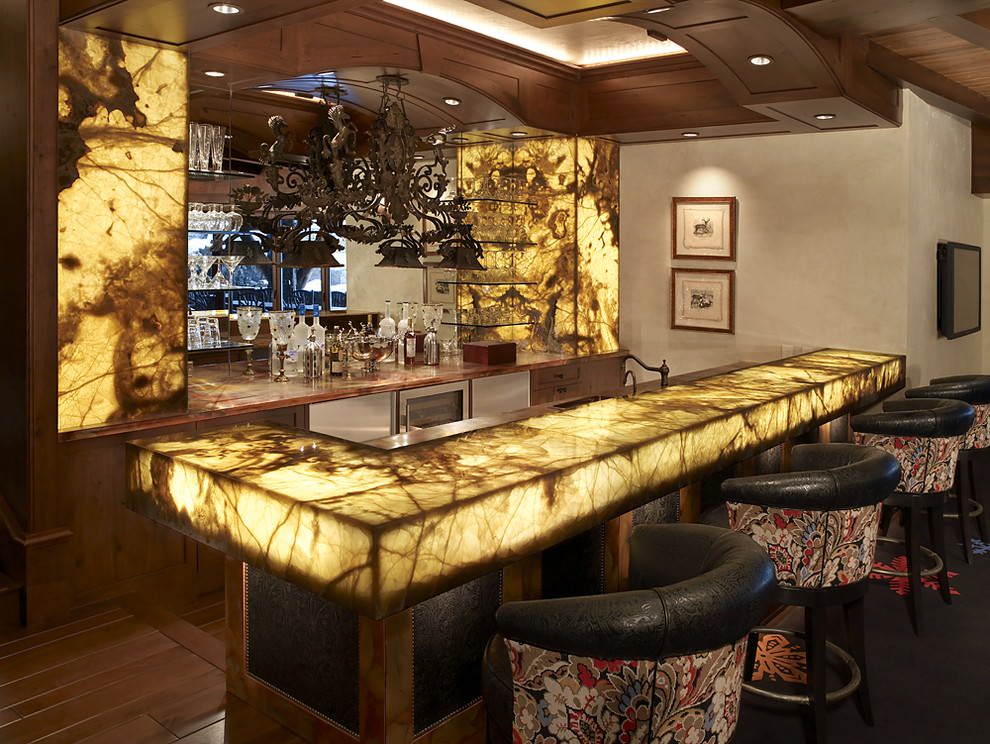
The decorative onyx used for slabs and architectural surfaces is a calcite-based natural stone. Its layered mineral structure can allow light to pass through selected areas, creating the translucency that makes onyx suitable for backlit bars, islands, vanities and wall features.
The same composition that creates this visual depth also makes onyx sensitive to acids, abrasion and impact. It should generally be treated more like a decorative finish than a heavy-duty kitchen work surface.
Onyx can scratch more readily than granite, quartzite and porcelain. Knives, rough-bottomed appliances, abrasive pads and objects dragged across the surface may leave visible marks or alter the sheen.
Its performance also varies between slabs. Natural veins, mineral layers, filled areas and reinforcement can influence how the material should be fabricated, installed and maintained.
Several forms of surface change are commonly described as dullness, but they do not have the same cause.
A sealer may reduce absorption and staining, but it cannot stop acids from etching onyx. Similarly, ordinary cleaning may remove residue but will not repair a finish that has already been chemically etched.
Common causes include:
Humidity alone is not usually enough to explain a dull countertop. In kitchens, bathrooms and bars, direct water exposure, condensation, cleaner residue and insufficient drying are often more relevant than the outdoor climate.
Routine cleaning should remove dirt and spills without abrading the finish or exposing the stone to acids. The safest process is simple and does not require aggressive chemicals.
Drying is particularly useful around sinks, faucets, soap dispensers and beverage areas because repeated evaporation can leave mineral deposits or visible water marks.
Blot liquid spills instead of immediately spreading them across the countertop. Remove acidic drinks, wine, coffee, oils, cosmetics and strongly coloured products as soon as reasonably possible.
After blotting:
If a dull mark remains after the surface is clean and dry, it may be etching rather than dirt. Repeated scrubbing will not remove an etched area and may make the damage more visible.
Do not use the following on natural onyx unless the product manufacturer and a qualified stone professional specifically confirm compatibility:
DIY polishing mixtures may temporarily change reflectivity without correcting the underlying damage. Uneven pressure or unsuitable compounds can create swirl marks, residue and inconsistent gloss.
Onyx installed near sinks, vanity basins or bar areas needs additional attention because water, soap and other products may remain beneath bottles, trays and small appliances.
Move these items periodically, clean beneath them and allow the surface to dry. Trays and coasters can reduce repeated exposure, but they should not trap moisture against the stone for long periods.
Damaged sealant joints, plumbing leaks and standing water should be corrected promptly. These conditions are installation or maintenance issues and should not be attributed only to seasonal humidity.
Before Applying Any Sealer or Polish
Make sure the onyx is completely clean and dry, then identify whether the visible issue is residue, staining, scratching or etching. Sealers, polishing products and restoration treatments serve different purposes and should not be used interchangeably. When the cause of dullness is uncertain, avoid repeated scrubbing or DIY polishing and ask a qualified stone professional to inspect the surface.
Safe cleaning is the foundation of onyx care, but cleaning alone cannot prevent every form of surface change. The next step is understanding when sealing may be useful, what it can realistically protect against and why it cannot stop acidic substances from etching the stone.
Sealing can help reduce the absorption of oils, water and strongly coloured liquids, but it does not make onyx waterproof, stain-proof or resistant to acidic etching. The appropriate treatment depends on the specific slab, finish, previous products and intended application.
Some onyx surfaces may already have been treated during fabrication or installation. Applying another product without identifying the existing treatment can create residue, uneven colour or changes in translucency.
A compatible penetrating sealer is designed to enter the stone’s pores and reduce the rate at which liquids are absorbed. This may provide additional time to clean spills before they develop into stains.
Depending on the product and surface, sealing may help reduce the risk associated with:
The sealer should be suitable for calcite-based stone and compatible with the desired colour, finish and translucency. Products that darken or enhance stone should not be used unless that visual effect has been tested and approved.
A penetrating sealer does not create a protective shield across the top of the stone. It cannot prevent:
Claims that sealing prevents etching are inaccurate. Etching is a chemical reaction with the stone itself, while sealing primarily addresses absorption.
There is no universal six-month or annual schedule for every onyx surface. The need for reapplication depends on:
A lightly used decorative wall panel may have different requirements from an onyx vanity or bar countertop. The surface should be evaluated rather than resealed automatically according to a calendar.
Warning signs that may justify professional assessment include rapid darkening after water contact, increased absorption around frequently used areas or uncertainty about the condition of the existing treatment.
Onyx installed near sinks, faucets, soap dispensers, beverage stations and cosmetics may receive repeated exposure to moisture and pigments. Seams, edges and openings should also be inspected for deteriorated sealant or gaps that allow water to reach the substrate.
Sealer cannot compensate for:
These conditions should be corrected directly instead of repeatedly applying surface products.
Sealing Rule
Use sealing to help manage absorption and staining—not to prevent etching. Confirm compatibility with the actual onyx and finish before treating the complete surface.
Maintaining shine is primarily about preventing damage rather than repeatedly applying polish. A clean surface, suitable products and limited abrasion usually provide better long-term results than frequent use of gloss-enhancing compounds.
Water marks are often caused by mineral deposits left after evaporation rather than by humidity itself. Soap film and excess cleaner can also reduce clarity and create a hazy appearance.
To reduce residue:
Where local water contains higher mineral levels, drying the countertop is especially useful around faucets and vanity basins.
Fine grit beneath an appliance or decorative object can act like sandpaper when the item is moved. Use protective pads where appropriate and lift objects instead of dragging them.
Cutting boards should always be used for food preparation. They protect both the stone and knife edges while reducing contact with acidic ingredients.
Onyx should also be protected from:
Use trivets beneath hot cookware and heat-producing appliances. Although the stone itself is mineral-based, concentrated heat can affect sealants, seams, adhesives, resin-filled areas and the materials supporting the slab.
Extra care is required around exposed corners, narrow countertop sections and sink or cooktop openings.


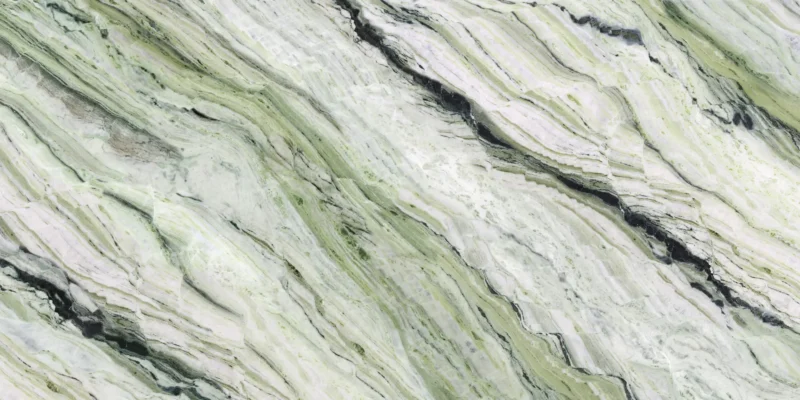
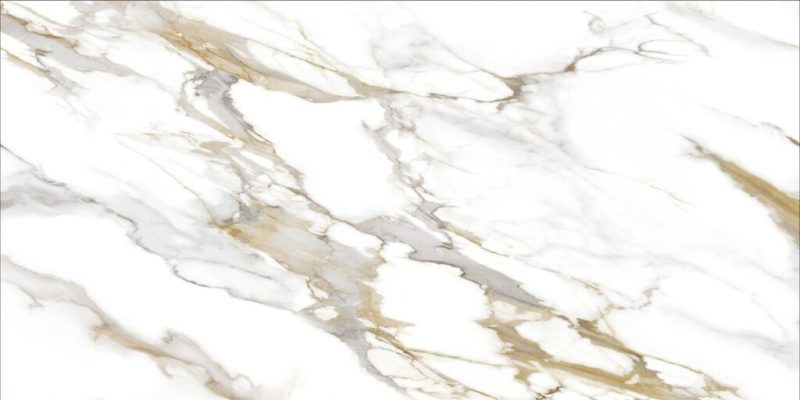


Polishing should not be the first response to every dull area. The surface must first be cleaned, dried and inspected to determine whether the problem is residue, etching, scratching or general wear.
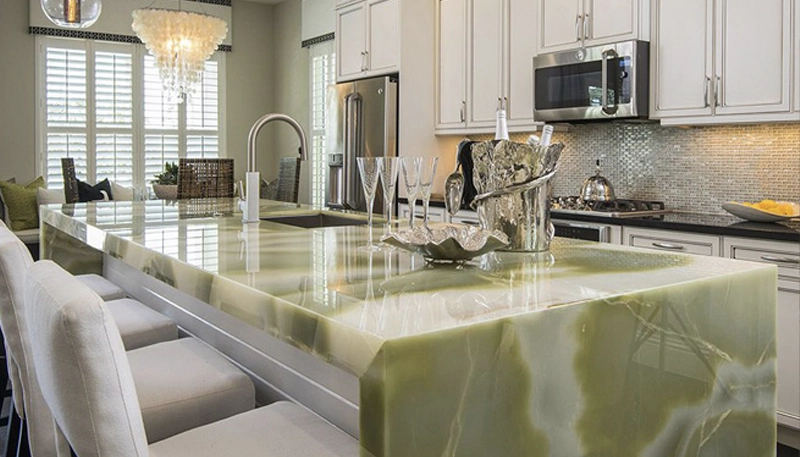
Cleaning removes surface dirt, soap film and compatible residues. Polishing mechanically refines the stone’s finish to restore a more uniform level of reflectivity.
If a mark disappears after cleaning and drying, polishing is unnecessary. If the area remains dull because the stone has etched or scratched, a restoration process may be required.
Generic countertop polish may leave a temporary coating that changes the appearance without repairing the stone. Products intended for granite, engineered quartz or furniture surfaces may not be appropriate for onyx.
Homeowners should avoid:
Incorrect pressure, grit or compound can enlarge the affected area and produce swirl marks or mismatched reflectivity.
Professional stone refinishing may be appropriate when the countertop has:
A restoration specialist can assess the stone, finish and damage before selecting a controlled abrasive sequence and compatible polishing compound.
Polishing cannot correct every problem. Deep chips, cracks, failed seams, loose sections or damage near unsupported cutouts may require repair, reinforcement or fabrication work.
Dark staining may also require a different treatment from surface refinishing. The cause should be identified before any restoration process begins.
Before Polishing Onyx
Do not assume every dull mark needs polish. Clean and dry the surface first, then determine whether the issue is residue, etching, scratching or staining. The correct treatment depends on the cause.
When regular cleaning and preventive care no longer restore a uniform finish, the next step is to evaluate whether the onyx needs localized treatment, complete refinishing or structural repair.
Restoring onyx begins with identifying the type and extent of the damage. Surface residue, etching, staining, scratches and structural damage require different treatments and should not be addressed with the same cleaning or polishing product.
Before attempting restoration, clean the surface gently, allow it to dry completely and inspect it under both direct and angled light. This makes it easier to distinguish between material sitting on the surface and an actual change in the stone’s finish.
A cloudy or hazy appearance may be caused by soap film, hard-water deposits, excess cleaner or a previous polishing product. In these cases, the stone may not need mechanical refinishing.
Start by:
Do not use acidic limescale removers on water deposits. Products designed to dissolve mineral buildup may also react with the onyx and create additional etching.
Etching changes the finish of the stone itself. It commonly appears as a dull, pale or matte area after contact with citrus, vinegar, wine, acidic cleaners or some cosmetic products.
Cleaning cannot remove an etch mark. Depending on its depth and the surrounding finish, restoration may require controlled honing and polishing to blend the affected area with the rest of the surface.
Localized DIY treatment can create a spot that is shinier or duller than the surrounding countertop. Professional assessment is recommended when:
A stain changes the colour of the stone because a substance has entered the surface. Common sources include oil, cosmetics, coffee, wine and strongly pigmented liquids.
The appropriate treatment depends on what caused the stain. A product suitable for an oil-based mark may not work on an organic or metallic stain.
Abrasive scrubbing should be avoided. It can change the surface finish without removing the absorbed material. When the source is uncertain or the stain is deep, a stone professional should identify the likely cause before treatment.
Fine scratches may be corrected during professional refinishing, particularly when they are shallow and distributed across the surface. The goal is to restore a consistent finish rather than polish each scratch individually.
Deep scratches, chips and edge damage may require filling, resin repair or more extensive refinishing. The repair may remain slightly visible because translucent onyx can reveal colour and structural differences more clearly than opaque stone.
Cracks, movement at seams, loose pieces or damage near sink and cooktop openings should not be treated as cosmetic problems.
These conditions may involve:
The cause should be assessed before filling or polishing the visible damage. Surface treatment alone will not correct an underlying support or installation problem.

Normal seasonal humidity is not usually the main cause of damage to an interior onyx countertop. Direct water exposure, condensation, standing moisture, plumbing leaks and unsuitable installation details are generally more important.
Onyx may receive repeated moisture exposure around:
These areas should be cleaned and dried regularly. Items that trap water against the surface should be moved periodically.
Onyx can be used in bathrooms and decorative wet-area applications, but the complete installation system matters. Waterproofing, substrate preparation, joints, drainage and ventilation cannot be replaced by applying more sealer to the stone.
Where onyx is used near showers or basins, inspect caulking and joints for deterioration and correct plumbing leaks promptly.
Normal ventilation helps control steam and condensation in kitchens, bathrooms and bars. Exhaust fans and range hoods should be used where appropriate, but a dehumidifier is not automatically required simply because the surface is onyx.
The practical priority is to prevent prolonged direct moisture and correct any installation or plumbing problem that keeps the stone or substrate wet.
Humidity and Onyx
Do not assume that every dull mark or stain is caused by the climate. Cleaner residue, acids, hard water, standing moisture and physical wear are more common explanations and require different solutions.
Use a pH-neutral cleaner specifically identified as suitable for calcite-based natural stone, or warm water with a small amount of mild soap. Avoid acidic and abrasive products.
No. Vinegar is acidic and can etch the surface, leaving a dull or matte mark.
Not necessarily. Sealing needs depend on the slab, finish, exposure, previous treatment and product used. The surface should be assessed instead of resealed automatically.
Yes. A penetrating sealer may reduce absorption and staining, but it cannot prevent acids from reacting with the stone.
First remove residue and identify whether the dullness is caused by etching, scratches or wear. Damaged finishes may require professional honing and polishing.
Onyx can be installed near sinks and in bathrooms when the material, substrate and waterproofing system are appropriate. Standing water, leaks and trapped moisture should still be avoided.
Some fine scratches can be reduced through professional refinishing. Deep scratches, chips or cracks may require filling, repair or structural assessment.
Maintaining onyx shine depends more on safe cleaning and damage prevention than frequent polishing. Use compatible products, keep wet areas clean and dry, and understand that sealing addresses absorption rather than etching.
When dullness remains after cleaning, determine whether the cause is residue, a stain, an etch mark or physical wear before choosing a treatment. Professional assessment is the safest approach for widespread damage, backlit surfaces and structural concerns.
Need Help with an Onyx Surface?
Discuss onyx slab selection, fabrication, installation or surface-care requirements for a countertop, vanity, bar or custom feature.