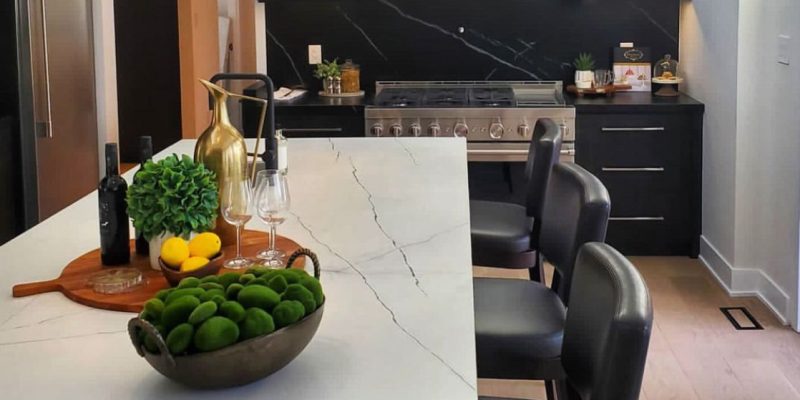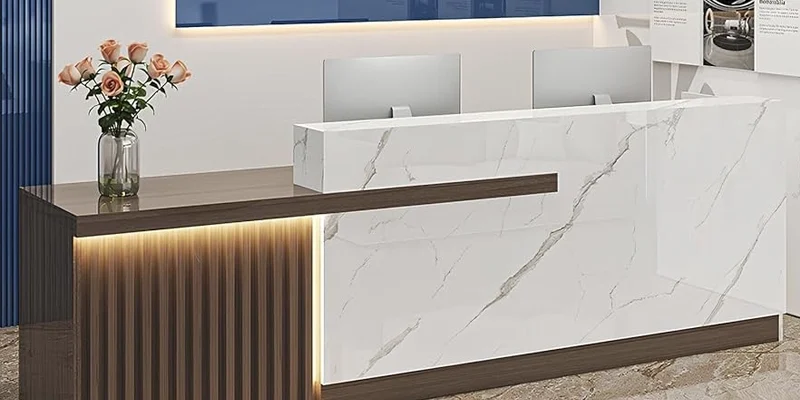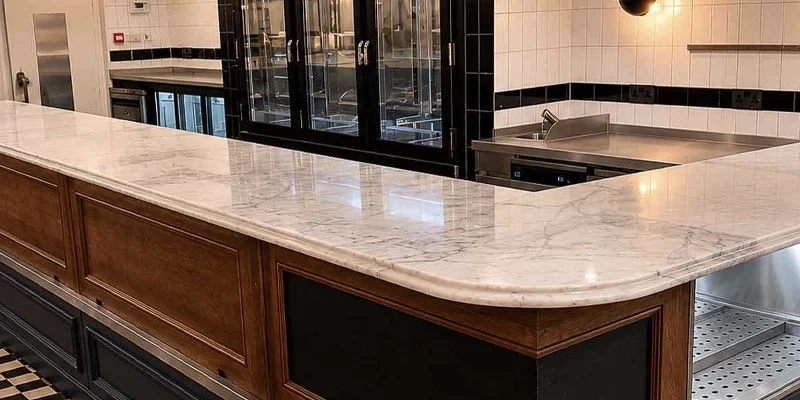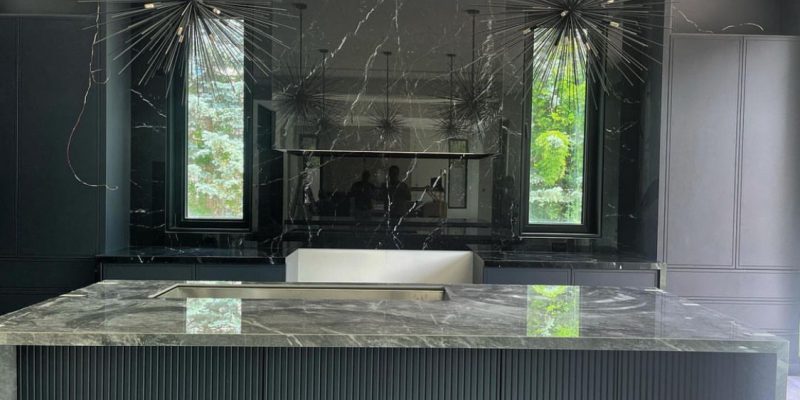
Knowing where to use onyx countertops is essential because onyx is selected for a very different reason than granite, quartz or porcelain. It is valued for translucency, layered colour and dramatic natural movement—not for resisting constant food preparation, impact or heavy daily wear.
Onyx works best when it is treated as an architectural feature rather than a general-purpose work surface. Backlit bars, powder-room vanities, reception desks, wall panels and carefully planned kitchen islands allow the stone’s visual qualities to remain prominent without exposing it to unnecessary stress.
This guide explains where onyx makes sense, where it is usually impractical and what must be planned before using it in a backlit or custom-fabricated installation.
Quick Answer
Onyx is best used for controlled, design-focused applications such as backlit bars, decorative islands, vanities, reception desks and feature walls. It is generally a poor choice for primary food-preparation zones, heavily used family kitchens and surfaces exposed to frequent acids, impact or abrasion.
Considering Onyx for a Custom Feature?
Browse available onyx slabs and countertops or review the complete guide to cleaning and maintaining onyx before finalizing the material and application.
Decorative onyx is a calcite-based natural stone formed through mineral deposition. Its layered structure produces colour transitions, flowing veins and areas that may transmit light.
These qualities make onyx visually distinctive, but they also make it softer and more sensitive than many conventional countertop surfaces. It can scratch, etch and chip more readily than granite, quartzite, porcelain or engineered quartz.
For this reason, onyx should not be selected according to the same criteria used for a high-performance kitchen worktop. Its value lies in how it interacts with light, colour and the surrounding architecture.
Translucency is the defining characteristic of many onyx slabs. Light can pass through selected sections of the stone, revealing internal layers and mineral movement that remain less visible under ordinary surface lighting.
The degree of translucency varies across each slab. Some areas may transmit light clearly, while dense veins or darker mineral sections may remain relatively opaque.
Before planning a backlit feature, the actual slab should be tested rather than assuming the entire surface will illuminate evenly.
Onyx is available in a broad range of colours, including white, cream, amber, gold, green, pink, red, brown and dark grey. Many slabs combine several tones within the same surface.
Common visual characteristics include:
The full slab should be reviewed before fabrication because a small sample cannot show the complete colour distribution or how veins will appear across a bar, island or wall panel.
Backlighting transforms onyx from a decorative stone into an illuminated architectural surface. Properly distributed light can emphasize depth and movement, while poor lighting can create bright spots, shadows and visible gaps.
A successful backlit installation requires coordination between:
Backlighting should therefore be designed before the slab is cut. Adding lighting after fabrication may limit the ability to achieve even illumination or conceal structural components.
Onyx performs most successfully in areas where visual impact is the priority and contact with food, acids, heavy objects and abrasive cleaning is limited.
Home bars and entertainment areas are among the strongest applications for onyx. These surfaces provide enough uninterrupted space to display the stone while allowing lighting equipment to be integrated beneath or behind it.
A bar should still be protected from wine, citrus, alcohol, metal tools and standing moisture. Trays, coasters and prompt spill removal are important because many common drink ingredients can stain or etch calcite-based stone.
Lighting and fabrication plans should also account for:
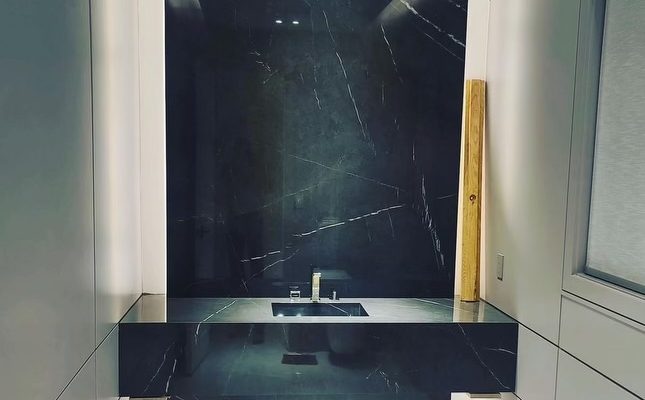
A powder-room vanity can provide a memorable application with relatively controlled use. Onyx works especially well where the stone is intended to complement decorative lighting, wall finishes and metal fixtures.
Compared with a heavily used family bathroom, powder rooms typically experience less contact with cosmetics, hair products and prolonged standing water. Even so, soap, acidic cleaners and pigmented products should be kept away from the surface.
For backlit vanities, sink placement and reinforcement require careful planning. Large or closely spaced cutouts can weaken delicate areas and interrupt light transmission.
Onyx can create a strong visual identity in reception areas, restaurants, hotels, boutiques and other design-led commercial spaces. Vertical or lightly used horizontal surfaces may provide greater visual impact with less physical wear than a full service counter.
Commercial installations should consider traffic flow, cleaning procedures, equipment contact and access for future lighting maintenance. Protective rails or more durable materials may be appropriate in areas exposed to luggage, carts or repeated impact.
Vertical onyx panels allow the stone’s colour and translucency to become visible without exposing it to the same level of abrasion, impact and food contact as a countertop.
Common applications include:
Large wall applications require careful slab layout because strong bands and colour transitions may continue across several pieces. Bookmatching can create a symmetrical pattern, but it increases the importance of slab sequencing, seam alignment and fabrication accuracy.
Lighting access should also be planned so electrical components can be inspected or replaced without dismantling the complete stone installation.
Onyx can be used for fireplace surrounds and decorative wall cladding when the complete assembly complies with the fireplace manufacturer’s clearance and temperature requirements.
The stone should not be assumed to tolerate every fireplace condition simply because it is a natural material. The installation must consider:
Onyx fireplace designs are most successful when the stone is used as a decorative surround rather than exposed directly to flame, extreme heat or uncontrolled temperature variation.
TecCorp Stone’s custom fireplace stone service can support measurement, layout and fabrication planning for suitable interior applications.
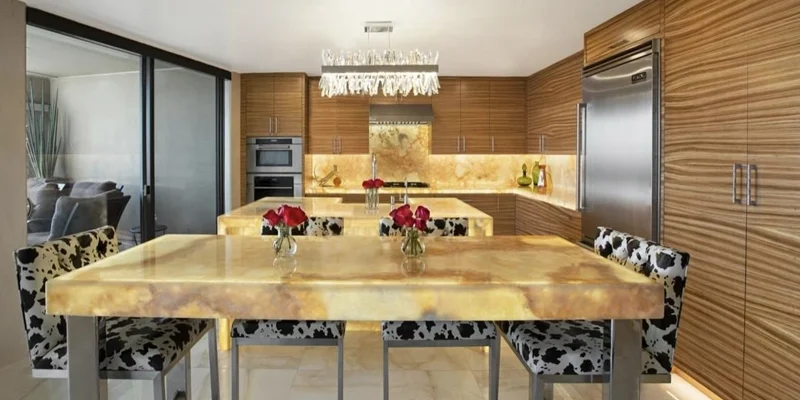
Onyx can be used on a kitchen island when the island is intended primarily as a design feature rather than the main preparation surface.
Suitable applications may include:
Using onyx only on the vertical faces of an island can deliver strong visual impact while allowing quartz, granite, porcelain or quartzite to handle food preparation and daily wear.
When onyx is used as the horizontal island surface, sink openings, cooktops, seating overhangs and heavy-use zones should be evaluated carefully. A simple uninterrupted surface is usually easier to fabricate and protect than an island with several large cutouts.
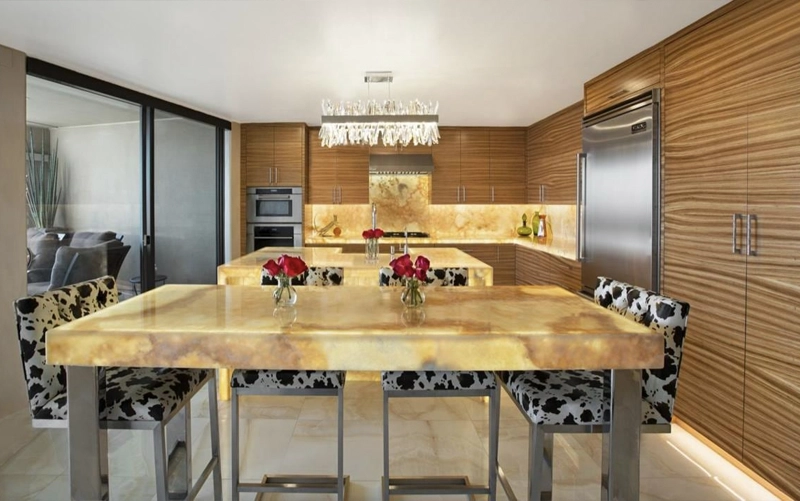
Onyx can be used in a kitchen, but the application should be selected carefully. It is not generally the best choice for a full kitchen exposed to frequent cutting, cooking, acidic spills and heavy appliances.
A low-use island may be suitable when the surface is primarily used for seating, serving or visual display. Cutting boards, coasters, trays and trivets should still be used to reduce contact with acids, heat and abrasive objects.
Households that use the island for daily food preparation, children’s activities or heavy appliances may find onyx difficult to maintain.
Onyx is often used for bars and beverage stations because these areas can support backlighting and dramatic slab movement. However, wine, citrus, coffee and alcohol can stain or etch the stone.
The design should include practical protection such as:
A mixed-material layout is often the most practical way to use onyx in a kitchen.




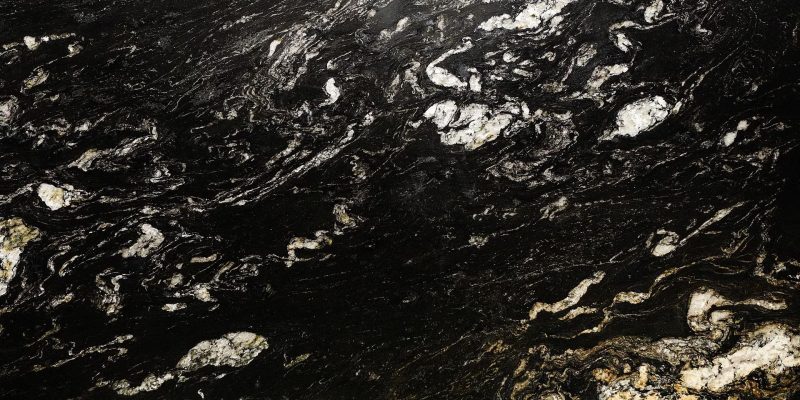


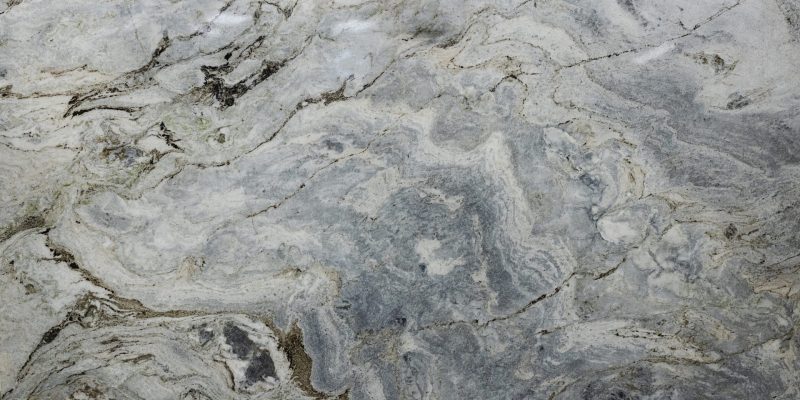



Common combinations include:
The materials should be coordinated by background colour, finish, thickness and vein scale. A strongly patterned onyx feature usually works best beside a quieter surrounding surface.
A full kitchen exposes countertops to repeated acids, oils, water, impact, heat and cleaning. Onyx can be installed in these conditions, but the maintenance burden and risk of visible damage are significantly greater than with more practical materials.
Full-kitchen onyx may be unsuitable when:
Onyx should generally be avoided in applications where high performance matters more than visual impact.
Areas used for cutting, mixing, citrus preparation, sauces and heavy cooking create frequent opportunities for etching, staining and scratching.
Exposed corners, unsupported overhangs and narrow stone sections near sinks or cooktops may be more vulnerable to chips and cracking. These areas require careful engineering and may be better served by a stronger material.
Surfaces used for homework, crafts, toys, snacks and daily family activity are likely to experience repeated impact, spills and abrasion. Onyx is rarely the most practical choice for these zones.
Onyx should be used cautiously near cocktail preparation, citrus stations, vinegar storage, cosmetics and acidic cleaning products. Sealing cannot prevent chemical etching.
Onyx should not be selected before the support, substrate, seams, lighting and site access have been reviewed. Its fragility and translucency can make fabrication or installation errors more visible and more difficult to correct.
Practical Use Rule
Use onyx where people will notice and appreciate it, not where the surface must tolerate constant food preparation, impact and aggressive cleaning.
Backlighting is one of the main reasons designers choose onyx, but the lighting system cannot be treated as an accessory added after fabrication. The slab, support structure, electrical components and lighting layout should be designed as one coordinated assembly.
Not every part of an onyx slab transmits light equally. Dense veins, darker mineral areas, filled sections and reinforcement may appear more opaque than the surrounding stone.
Before reserving material for a backlit installation, test the actual slab under controlled lighting. The review should identify:
A slab that looks balanced under normal room lighting may appear very different once illuminated from behind.
Uneven lighting can create hot spots, dark bands and visible equipment shadows. Light panels or LED modules should be positioned to distribute illumination as evenly as possible across the intended surface.
The design should consider:
The desired effect should also be clarified. Warm lighting can strengthen amber and gold tones, while cooler lighting may emphasize white, grey or green areas.
Backlit onyx may require a support system that is strong enough to carry the stone without blocking light unnecessarily. The substrate should be compatible with the stone, lighting system and intended application.
Large panels, bar fronts and waterfall features may also require reinforcement, concealed framing or carefully positioned joints. Support decisions should be made before fabrication because later changes may affect both structural stability and light transmission.
Seams become more visible when light passes through the stone. Differences in colour, vein direction, adhesive and panel alignment may be emphasized after illumination.
Bookmatching can create a symmetrical visual effect, but it requires compatible slabs, accurate sequencing and precise cutting. The homeowner or designer should approve the slab layout before fabrication begins.
LED drivers, wiring and control components may eventually require inspection or replacement. A backlit feature should therefore include a practical access strategy that does not require removing the entire stone installation.
Electrical coordination should be completed before final dimensions and fabrication are approved.
Onyx is not a direct substitute for every countertop material. Its main strength is visual impact, while other surfaces are generally selected for daily performance.
| Material | Primary Strength | Main Limitation | Best Role |
|---|---|---|---|
| Onyx | Translucency and dramatic visual depth | Sensitive to acids, scratches and impact | Backlit and controlled-use features |
| Marble | Natural veining and classic character | Can etch and develop patina | Design-focused countertops and features |
| Quartz | Low maintenance and pattern consistency | Limited direct-heat tolerance | Busy kitchen work surfaces |
| Granite | Natural variation and strong everyday performance | Slab-specific porosity and patterning | Primary preparation counters |
| Porcelain | Low absorption and coordinated surface designs | Fabrication and edge details require care | Countertops and vertical panels |
Onyx is a good fit for homeowners, designers and commercial clients who prioritize architectural impact and understand that the material requires controlled use.
Onyx is a strong choice when:
Onyx is usually a poor choice when:
It can be used selectively, but it is generally not the best material for a full high-traffic kitchen. Low-use islands, bar features and vertical panels are more appropriate.
No. Translucency varies across slabs and within individual sections. The actual material should be tested before lighting is designed.
Onyx is generally softer and more sensitive to impact, scratching and fabrication stress. Performance varies by slab and application.
Yes, particularly for powder-room vanities and decorative wall applications. Waterproofing, joints, cleaning products and standing water still require careful planning.
Quartz, granite, porcelain and quartzite can provide more durable work surfaces while onyx is reserved for a focal point.
Avoid using it in primary food-preparation areas, high-impact family counters and installations without proper support, layout or lighting coordination.
Onyx makes sense when the design calls for translucency, colour depth and a focal surface that will receive controlled use. It is especially effective in backlit bars, decorative islands, vanities, reception desks and feature walls.
It is less suitable when the project requires a low-maintenance, heavy-duty worktop. In those cases, onyx is often best combined with a more practical material rather than used throughout the entire space.
Planning an Onyx Feature in Toronto or the GTA?
Review available slabs and discuss translucency, backlighting, layout, fabrication and installation requirements for your project.