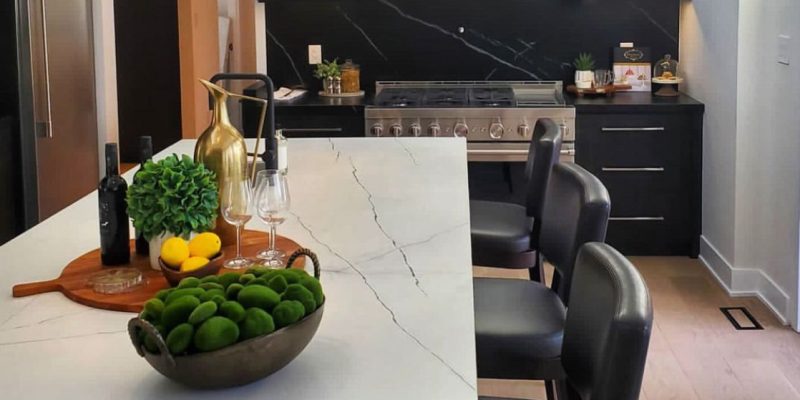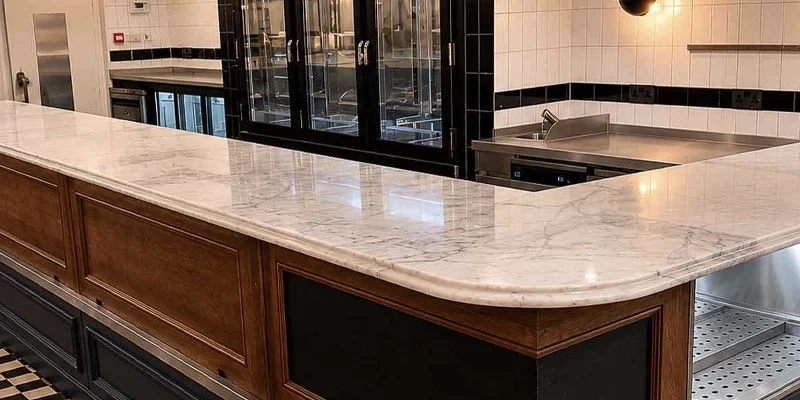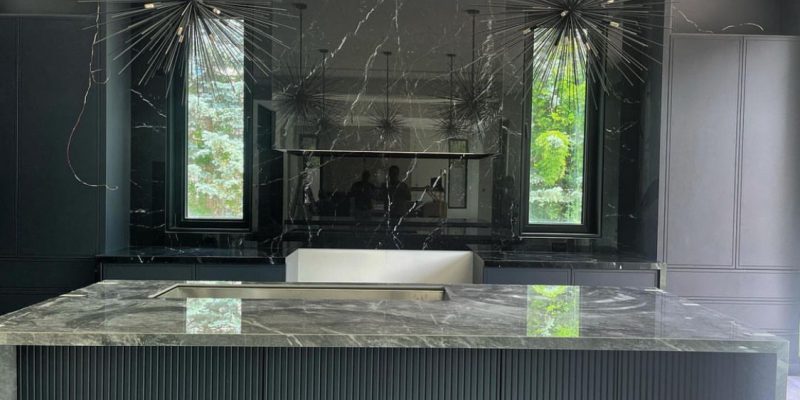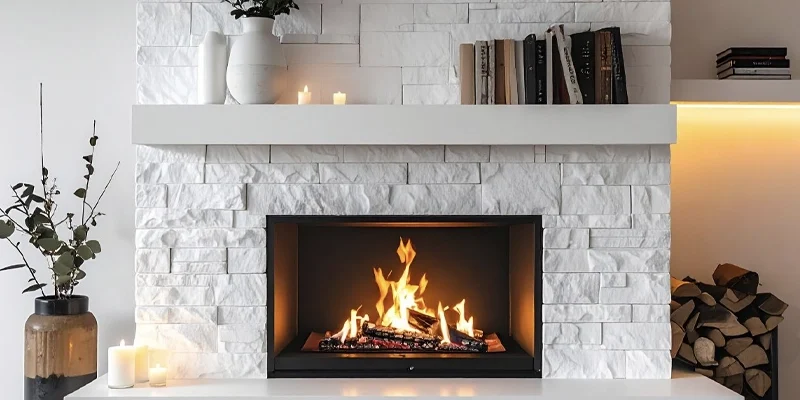
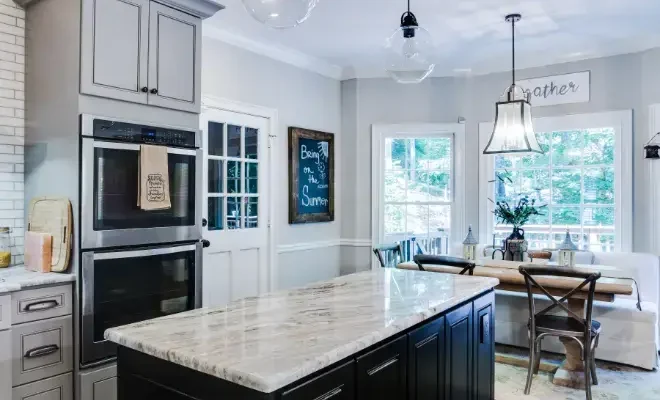
Luxury countertop materials can give an Ontario kitchen distinctive colour, natural movement, refined detailing and a stronger relationship with the surrounding cabinetry and architecture. However, a high-end result depends on more than selecting an expensive slab.
Material performance, maintenance expectations, slab dimensions, pattern placement, edge construction and fabrication quality all influence the finished project. A restrained quartz, carefully selected granite or large-format porcelain surface may create a more successful kitchen than a dramatic natural stone that does not suit the layout or household.
This guide compares the main materials considered for design-led kitchens in Ontario. It focuses on selection and suitability rather than project-specific installation services or unsupported claims about property value and return on investment.
Selection Principle
A luxury countertop should be selected for material quality, suitability and design coordination—not price, rarity or dramatic appearance alone.
A luxury countertop material usually provides one or more characteristics that contribute to a carefully designed kitchen:
These characteristics do not belong exclusively to natural stone. Quartz and porcelain can also support refined kitchens when the product, pattern scale and fabrication details are selected carefully.
A higher material price may reflect availability, slab variation, processing requirements or market positioning. It does not automatically mean the surface is more suitable for a particular kitchen.
A visually complex quartzite may be inappropriate for a room that already contains patterned flooring and detailed cabinetry. A restrained quartz or porcelain surface may create a more coherent and deliberate result.
The quality of the finished kitchen depends on how well the material works with the complete design rather than how much the slab costs.
Some kitchens use strong veining, contrasting islands or highly visible natural-stone movement. Others rely on warm neutrals, subtle texture, carefully proportioned edges and limited material transitions.
Both approaches can produce a high-end result. The correct direction depends on the cabinetry, lighting, flooring, room size and intended focal points.
Material selection should begin with the household’s practical requirements. Appearance should then be evaluated within those limits.
Important questions include:
The answers help distinguish between materials that look appealing initially and those that remain appropriate for the expected use.
Natural-stone samples cannot represent the complete slab. Granite, marble and quartzite may contain significant differences in veining, mineral features and colour distribution.
Strongly patterned quartz and porcelain should also be reviewed beyond a small sample because the complete design may repeat, change direction or interact differently with seams and cut-outs.
The approved material should therefore be evaluated at the scale required by the actual kitchen.
| Material | Main Visual Character | Maintenance Consideration | Important Limitation |
|---|---|---|---|
| Quartzite | Distinctive natural movement | Depends on the exact slab and finish | Correct identification and careful fabrication are important |
| Marble | Natural veining and developing patina | Requires careful spill and cleaner management | Acidic substances can etch the finish |
| Granite | Natural mineral variation | Sealing needs vary by slab | Exact future matching may not be possible |
| Quartz | Controlled colours and patterns | No routine sealing for most products | Resin can be affected by concentrated heat |
| Porcelain | Architectural and large-format designs | Low surface absorption | Edges and cut-outs require careful handling |
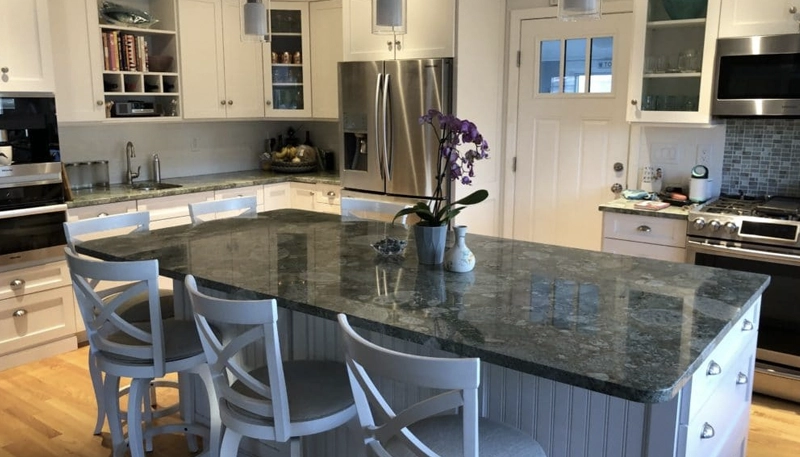
Quartzite can be considered for design-led kitchens where distinctive natural movement is a priority. Depending on the slab, it may contain soft linear veining, layered colour transitions or stronger mineral features that make each fabricated piece visually unique.
Its natural variation makes quartzite well suited to statement islands and larger uninterrupted surfaces, but the complete slab should be reviewed before fabrication. A small sample cannot show where prominent veins, colour changes or natural features will appear after cutting.
Quartzite should be identified carefully because commercial stone names do not always describe identical material properties. Absorption, finish, fabrication requirements and maintenance can vary between slabs sold under similar names.
Prominent movement should be positioned deliberately around sinks, cooktops, corners and seams. Dense slabs may also require additional cutting, polishing and handling considerations.
Explore available quartzite countertop options and review the complete slab before approving the cut layout.
Marble is often associated with high-end interiors because of its natural veining, colour depth and gradual development of patina. Its suitability depends on whether the homeowner accepts that the surface may change visibly through normal kitchen use.
Acidic foods, beverages and unsuitable cleaning products can etch the finish. Sealing may help reduce absorption, but it does not prevent this chemical reaction.
A full marble kitchen creates visual continuity, particularly when the selected slab has restrained movement. It also increases the number of areas exposed to food preparation, spills and regular cleaning.
Homeowners considering this approach should be comfortable with material-specific care and the possibility that the finish will develop differently in heavily used zones.
Marble can also be limited to a kitchen island, baking area, backsplash or another selected surface. This approach allows the natural movement to become a focal point while other countertop areas use a material with different maintenance requirements.
The relationship between marble and the secondary surface should be reviewed carefully. Their undertones, finishes, edge profiles and visual thickness should appear coordinated rather than accidental.
Browse available marble countertop options and evaluate the exact slab under the kitchen’s expected lighting conditions.
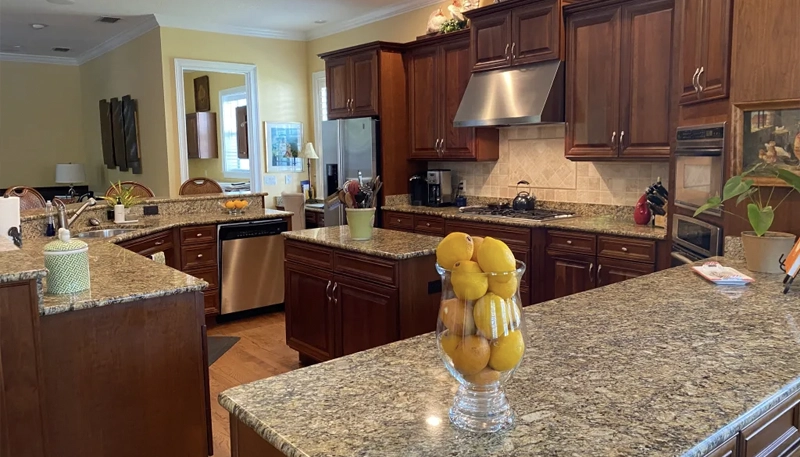
Granite offers natural mineral variation across a wide range of colours and pattern intensities. A carefully selected slab can support traditional, transitional or contemporary kitchens without relying on marble-inspired veining.
Some granite designs are quiet and consistent, while others contain strong movement, crystals or contrasting mineral areas.
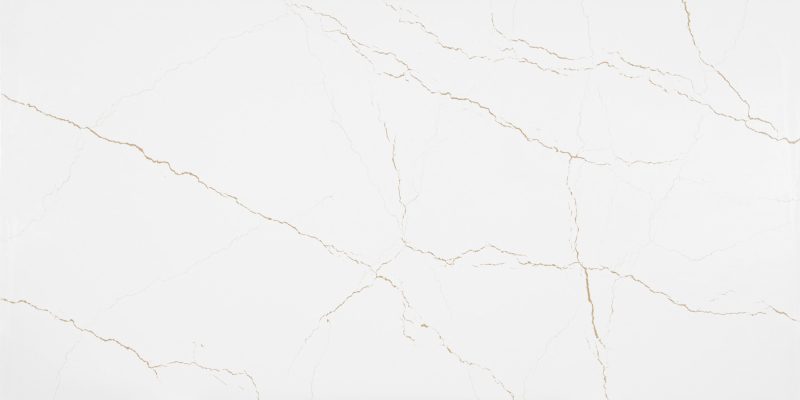



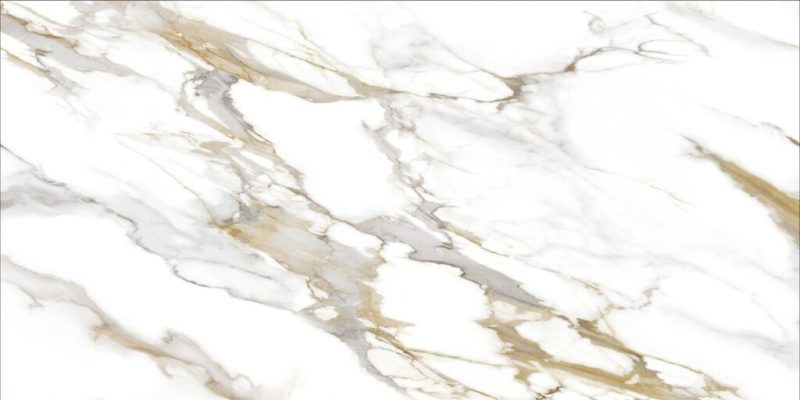



Trivets should still be used, and edges, corners, seams and cut-outs remain vulnerable to concentrated impact.
Maintenance requirements depend on the exact slab, finish and absorption. Some granite surfaces may benefit from sealing, but a fixed annual schedule should not be applied to every product.
Natural variation can also make future matching difficult. Homeowners planning several connected surfaces should confirm material availability and review how separate slabs relate to one another before fabrication begins.
Explore available granite countertop options and compare complete slabs rather than relying only on small samples or digital images.
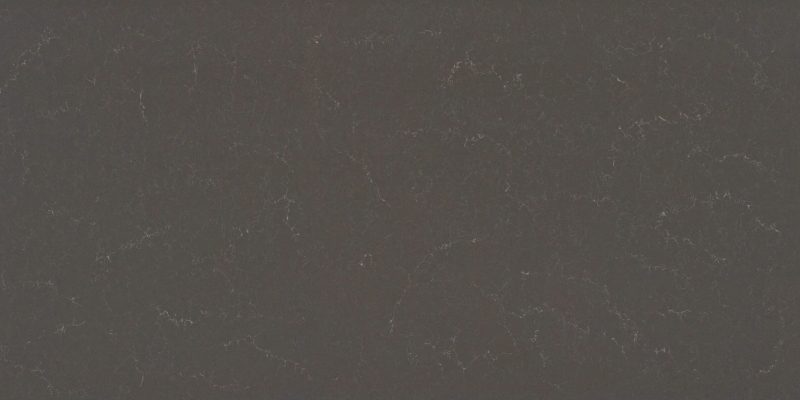
Quartz can support a refined kitchen when controlled colour, predictable patterning and relatively simple routine care are priorities. Its consistency may be useful for kitchens with several countertop sections or projects that require coordinated perimeter counters, islands and backsplashes.
Available products range from quiet solids and warm neutrals to stronger marble-inspired patterns. Subtle designs can complement detailed cabinetry, while expressive veining may become the primary visual feature.
Quartz is not heat-proof. Concentrated heat may affect the resin, so trivets should be used beneath hot cookware and product-specific guidance should be followed for heat-producing countertop appliances.
Directional patterns should be reviewed across the proposed cut layout. Major veins may require deliberate alignment around seams, corners, waterfall panels and appliance openings.
Explore available quartz countertop options and review the complete product pattern before selection.
Porcelain can support contemporary and architectural kitchens through large-format stone, marble and concrete-inspired designs. Its low surface absorption may also simplify routine cleaning.
Depending on the exact product and fabrication system, porcelain may be used for countertops, waterfall panels and coordinated slab backsplashes. This can create visual continuity across horizontal and vertical surfaces.
Porcelain edges, corners and areas around sink or cooktop openings require careful fabrication and impact protection. A slim visual profile does not eliminate the need for suitable cabinetry, support and edge construction.
Large pieces must also be evaluated against doorway dimensions, delivery routes and available installation space.
Explore available porcelain countertop options and confirm that the exact product is appropriate for each planned application.
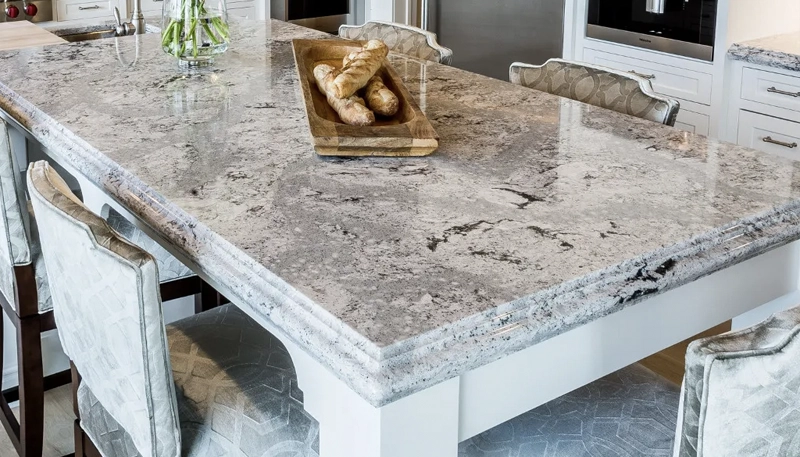
Natural stone offers unique variation, while engineered quartz and manufactured porcelain provide greater control over colour and pattern. Neither category is automatically more luxurious.
| Consideration | Natural Stone | Engineered or Manufactured Surface |
|---|---|---|
| Pattern | Unique movement and mineral variation | More controlled product designs |
| Selection | Full-slab review is important | Large product samples or layouts should be reviewed |
| Maintenance | Varies by stone and finish | Usually more predictable but still product-specific |
| Future Matching | Exact matching may be difficult | Availability may change between production runs |
The better choice depends on whether the project prioritizes individuality, controlled repetition, maintenance, pattern predictability or a particular architectural effect.
Material selection is only one part of a high-end countertop design. Edge profiles, visual thickness, slab placement and seam planning can significantly change how the surface appears after installation.
Simple eased and bevel edges can create a restrained result. Mitered construction may produce a thicker visual profile but requires additional fabrication and pattern alignment.
Review the guides to countertop edge profiles and countertop thickness before approving these details.
Seams may be required because of slab dimensions, kitchen geometry, cut-outs, access and safe handling. A professional seam remains visible at close range, so the objective is controlled placement and suitable pattern alignment rather than complete invisibility.
Strong veins should be positioned deliberately around sinks, cooktops, corners, backsplashes and waterfall panels.
A successful luxury kitchen normally uses a limited number of carefully coordinated decisions rather than every available decorative option.
No single material is universally the most luxurious. Quartzite and marble offer distinctive natural movement, granite provides mineral variation, quartz offers controlled patterns and porcelain supports architectural applications.
Not necessarily. Natural stone offers unique variation, while quartz may provide more predictable patterns and simpler routine care. The better option depends on the design and household expectations.
Marble requires awareness of acid-related etching and potential absorption. Homeowners who accept patina may still consider it appropriate for an active kitchen.
Yes. An island and perimeter counters can use different materials when their colours, finishes, thicknesses and visual roles are coordinated. Review the guide to mixing countertop materials.
A coordinated countertop may improve the perceived condition and appeal of a kitchen, but it does not guarantee a specific sale price or return on investment.
Cost depends on the exact product or slab, required quantity, fabrication details, cut-outs, edges, seams and installation complexity. Review the kitchen countertop cost guide for the main project-cost factors.
The right material should support the kitchen’s architecture, household use and maintenance expectations while remaining practical to fabricate and install.
Before approving a product or slab, review its complete pattern, finish, care requirements, edge construction, seam locations and relationship with the cabinetry and surrounding materials.
Comparing Luxury Countertop Materials?
Share your kitchen layout, preferred appearance and maintenance priorities for project-specific material guidance.
Discuss Your Countertop Project
Explore Kitchen Countertop Services