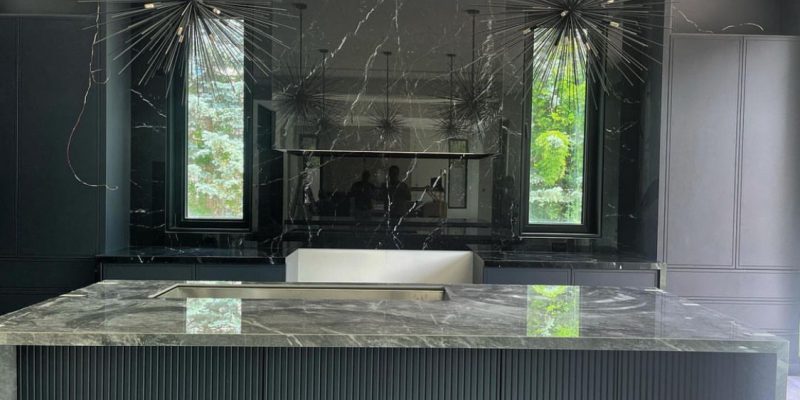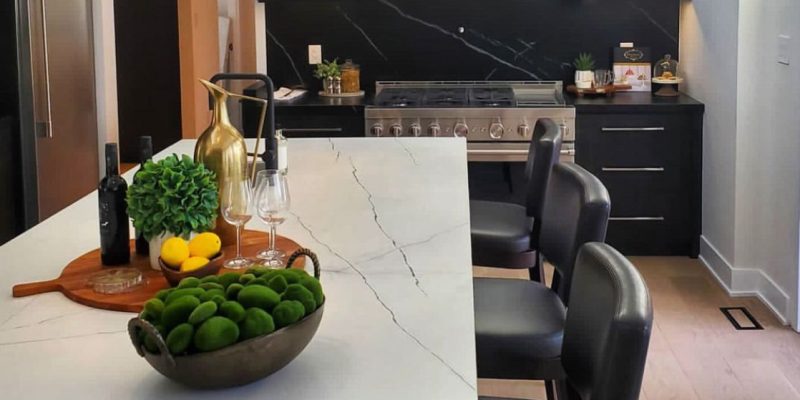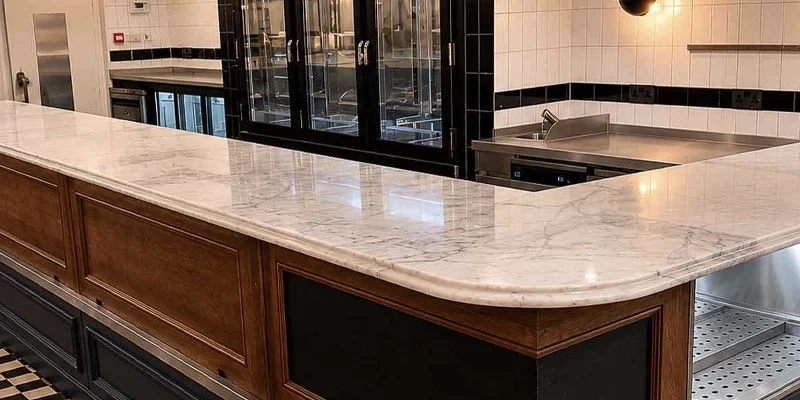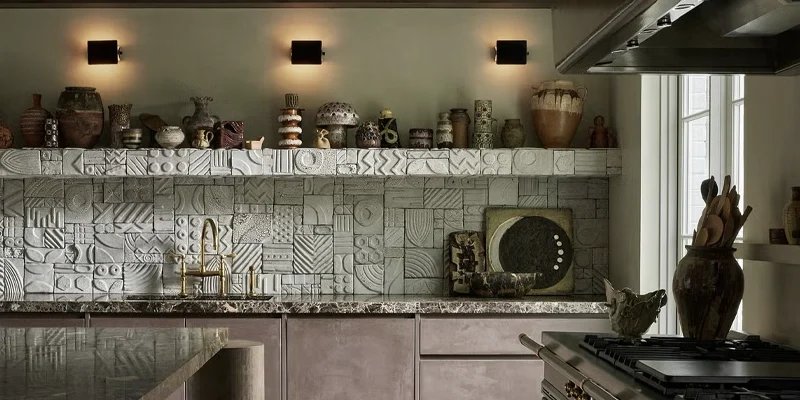
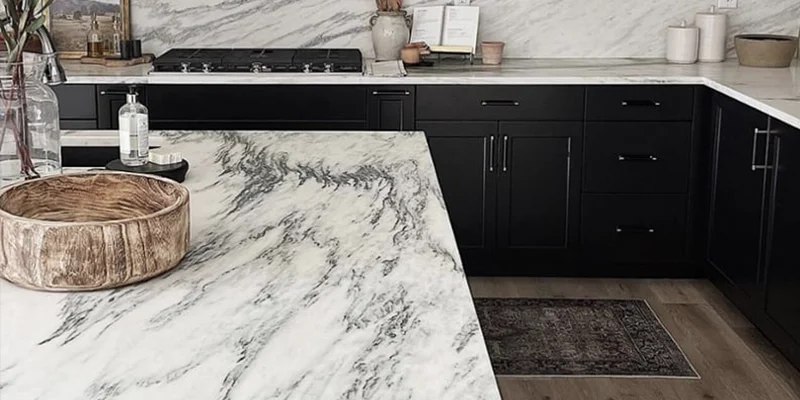
Marble countertop styles in Toronto range from softly veined, understated surfaces to dramatic slabs designed for statement islands, waterfall panels and full-height backsplashes. Natural marble remains a distinctive choice because each slab has its own background colour, mineral movement and vein pattern.
Choosing marble, however, requires more than selecting an attractive photograph or product name. The homeowner should consider the actual slab, the kitchen’s lighting, the scale of the veining, the selected finish and the amount of daily care the surface will require.
This guide explains the most recognizable marble styles, how polished and honed finishes affect their appearance and where natural marble works best. It also provides realistic care guidance for homeowners considering marble countertops in Toronto and the Greater Toronto Area.
Quick Answer
Marble is best suited to homeowners who value natural variation and are comfortable with gradual patina. Carrara offers softer movement, while Calacatta and Statuario-inspired styles create stronger visual impact. The final choice should be based on the full slab, intended application, finish and realistic maintenance expectations.
Planning a Marble Countertop Project?
Browse available marble slabs and countertops or compare the practical differences in the complete marble vs quartz countertop guide.
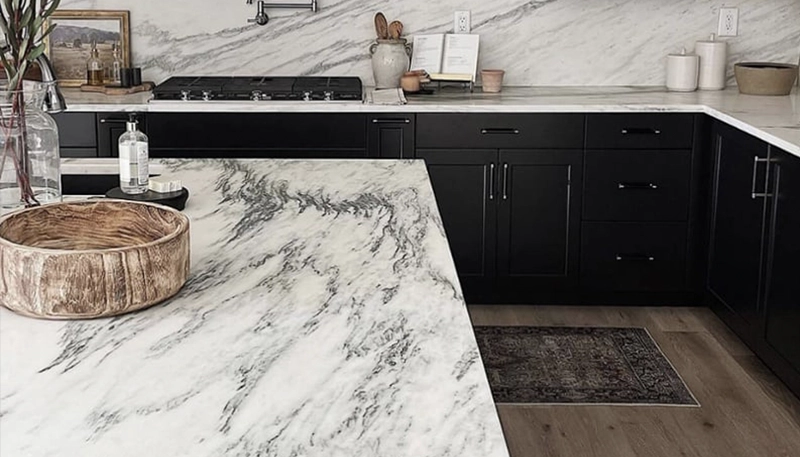
Toronto kitchen designs include everything from compact contemporary condos to large transitional and traditional homes. Marble can work across these different interiors because the material is available in a wide range of background tones and vein patterns.
Some homeowners prefer quiet marble with soft grey movement that supports the surrounding cabinetry. Others select bold slabs with broad veining for a large island or full-height backsplash.
The most common visual directions include:
The style name alone should not determine the final selection. Natural slabs vary substantially, and two pieces sold under the same commercial description may have different undertones, movement and visual intensity.
Fine veining often works well across multiple perimeter countertop sections because the pattern remains visually calm when divided by appliances, corners and cabinet runs.
Dramatic veining generally needs more uninterrupted space. Large islands, waterfall panels and slab backsplashes provide enough surface area for bold movement to remain visible.
In a smaller kitchen, one strongly patterned marble feature may create more impact than using the same bold material on every horizontal and vertical surface.
Marble should be evaluated together with the kitchen’s:
A slab that appears neutral in a warehouse may look noticeably warmer or cooler after it is installed beside cabinetry and flooring. Samples of the main finishes should therefore be compared directly with the full slab before fabrication.
Carrara, Calacatta and Statuario are among the most recognized names associated with white marble. These names describe general visual characteristics, but they do not guarantee one exact background colour or vein pattern.
Carrara marble is commonly associated with a soft white-to-grey background and fine, relatively subtle veining. Its quieter appearance can suit kitchens where the stone should complement the cabinetry rather than dominate the room.
Carrara-style marble is often considered for:
Some Carrara slabs contain darker grey movement or more concentrated veining than expected. Full-slab viewing remains essential.
Calacatta marble is generally recognized for a lighter background and broader, more dramatic veining. Individual slabs may include grey, beige or gold-toned movement.
Its stronger pattern can work well on:
Because the veining can be large and directional, layout planning is particularly important. Sink openings, cooktops and seams should not divide the most visually important areas without prior approval.
Statuario marble is usually associated with a light background and defined grey veining. It is often selected for design-driven projects where the stone is intended to become an architectural feature.
The commercial name should not replace slab inspection. Availability, vein scale, background tone and natural characteristics vary between individual pieces.
Material Identification
Quartz and porcelain products may use Carrara, Calacatta or Statuario-inspired names. Confirm whether the selected surface is genuine natural marble or a manufactured marble-look material.
The most suitable marble slab should coordinate with the complete room rather than matching only one cabinet door or online inspiration image.
Cool marble may contain blue-grey or silver movement and often coordinates with pure white, grey, navy, charcoal and chrome finishes.
Warm marble may include cream, beige, taupe or gold-toned details and can work naturally with oak, walnut, brass, bronze and warmer paint colours.
Undertone differences become more visible across large surfaces, particularly when the countertop meets a full-height backsplash or waterfall panel.
Fine veins create a quieter and more continuous appearance. They can be useful in kitchens that already include patterned flooring, detailed cabinetry or decorative tile.
Dramatic veins create stronger visual movement and are most effective when the slab has enough space to be appreciated. A large island may justify reserving the most expressive section of the slab as the main focal point.
Veining may run lengthwise, diagonally or in several directions. Before fabrication, the layout should show:
A professional countertop measurement and layout process helps connect the selected slab with the actual cabinet dimensions, cutouts and installation requirements.
The finish affects how marble reflects light, how strongly its colours and veins appear and how visible everyday surface changes become. Polished and honed marble can both work in Toronto kitchens, but neither finish prevents etching, staining or scratching.
Polished marble has a smooth, reflective surface that strengthens colour contrast and makes veining appear more pronounced. It is often selected for formal kitchens, statement islands, vanities and decorative applications where light reflection is part of the design.
A polished finish can make a smaller kitchen appear brighter, but it may also make etching more noticeable. When acidic foods or unsuitable cleaners react with marble, the affected area loses some of its reflectivity and may appear dull beside the surrounding surface.
Polished marble may suit homeowners who:
Honed marble has a matte or low-sheen surface. It creates a softer, more relaxed appearance and is frequently used in contemporary, transitional and European-inspired interiors.
Light etching and gradual patina may blend more naturally into a honed surface because it is already less reflective. However, honed marble can still show oils, fingerprints, moisture marks and changes in tone.
A honed finish should not be described as stain-proof or maintenance-free.

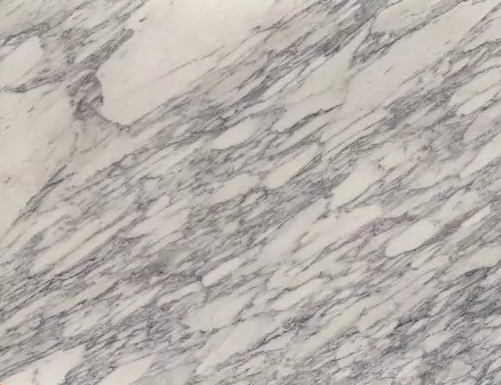
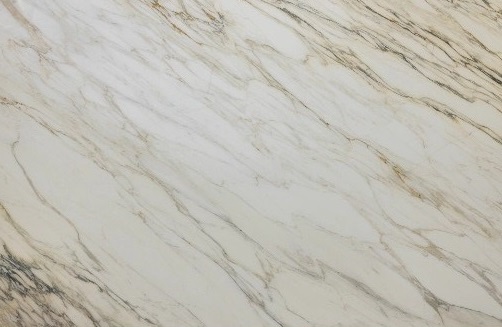
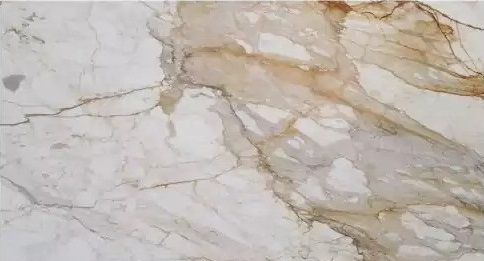
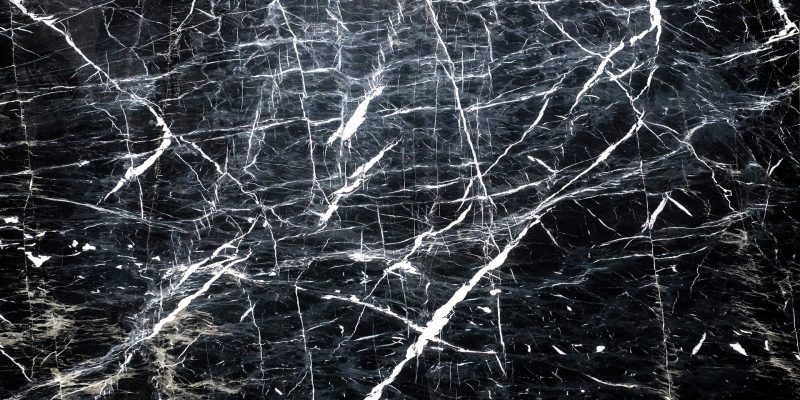
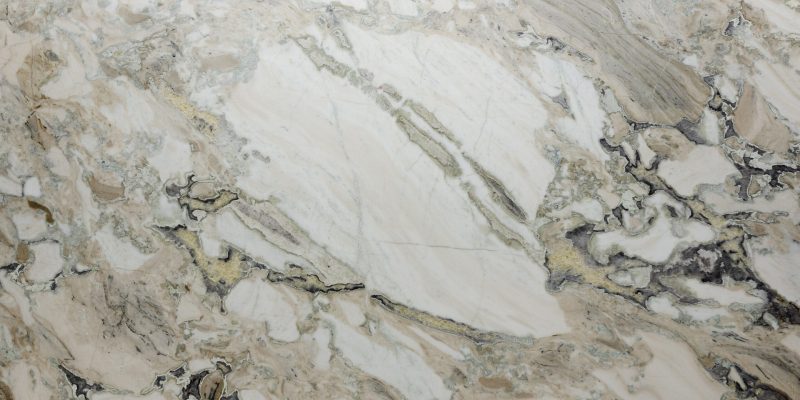


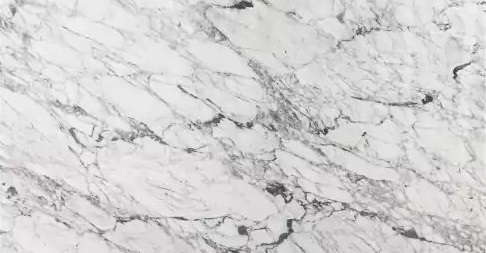


Neither finish is universally better. The decision should be based on appearance, lighting and the homeowner’s tolerance for visible surface changes.
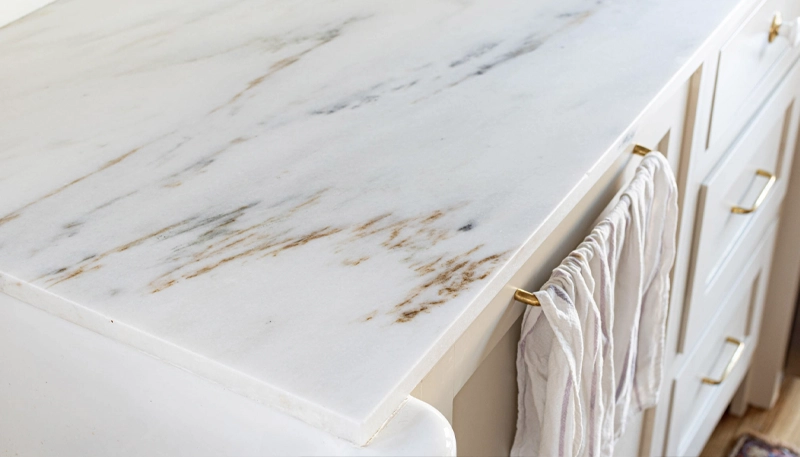
Marble can be installed across a complete kitchen, but selective use often provides a more practical balance between natural-stone character and daily maintenance.
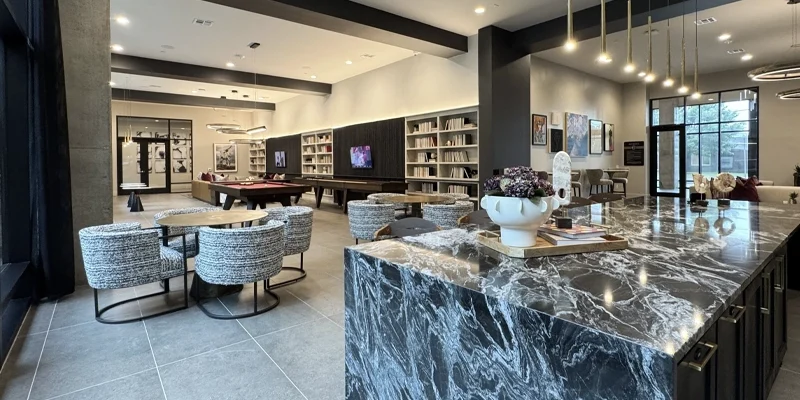
A large island provides enough uninterrupted surface area to display natural veining. Bold Calacatta or Statuario-style slabs are especially effective when the island is intended to become the visual centre of the room.
The layout should account for sink or cooktop openings, seating overhangs, potential seams and vein direction. When an island includes a waterfall panel, the horizontal and vertical pieces should be planned together before cutting.
TecCorp Stone’s kitchen island countertop service supports measurement, slab layout, fabrication and installation planning.
Subtle marble can create a continuous appearance across perimeter cabinets. These surfaces may experience regular contact with water, food, appliances and cleaning products, particularly around sinks and preparation areas.
Homeowners using marble throughout the kitchen should be comfortable cleaning significant spills promptly and using cutting boards and trivets.
A slab backsplash can display marble’s natural movement with less impact and abrasion than a horizontal work surface. It may be cut from the same slab group as the countertop or selected as a contrasting feature.
Outlet positions, wall dimensions, upper cabinetry and range hoods should be included in the layout because they can interrupt major veins.
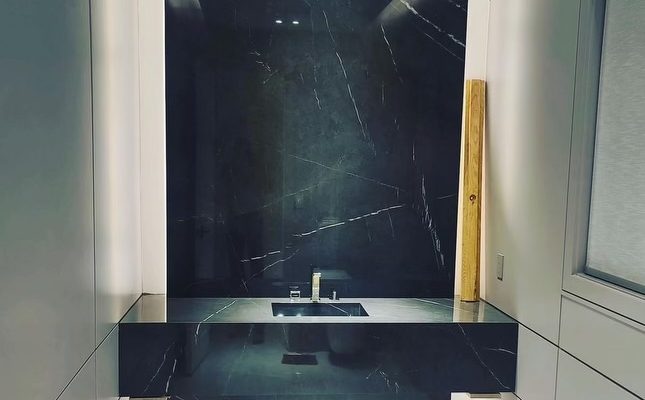
Marble also works well on vanities, fireplace surrounds and decorative wall surfaces. These applications allow the stone to become a focal point without exposing it to the same conditions as a heavily used kitchen preparation zone.
Bathroom marble should still be protected from unsuitable cleaners, standing water and strongly pigmented cosmetics.
Marble’s naturally cool surface is traditionally valued for pastry and dough preparation. A dedicated baking area can introduce genuine marble into the kitchen without using it on every countertop.
Protective boards should still be used for cutting, oils, acidic ingredients and hot cookware.
Marble care should focus on appropriate daily habits rather than a universal maintenance calendar. The exact requirements vary according to the selected slab, finish, porosity and treatment.
Lemon juice, vinegar, wine, tomatoes and other acidic substances can etch marble. Oils, coffee and strongly coloured liquids may stain if they remain on an absorbent surface.
Blot significant spills instead of spreading them across a larger area, then clean the surface with warm water, mild soap or a suitable pH-neutral stone cleaner.
Do not use vinegar-based cleaners, lemon products, abrasive powders or harsh multipurpose chemicals unless they are specifically approved for natural marble.
A soft cloth or non-abrasive sponge is generally more appropriate than rough pads that may change the finish.
A penetrating sealer may reduce liquid absorption and staining, but it does not stop acidic substances from reacting with marble. Even properly sealed marble can develop etch marks.
Sealing needs should be assessed for the actual countertop rather than assigned according to a fixed six-month or annual schedule.
Simple habits can reduce unnecessary wear:
Marble Care Reminder
Sealing can help reduce staining, but it cannot prevent etching. Homeowners should choose marble only when they are comfortable with natural patina and gradual surface changes.
A successful marble project depends on coordinating slab selection, measurement, layout, fabrication and site access before cutting begins. This planning is particularly important for large islands, directional veining, waterfall panels and projects requiring more than one slab.
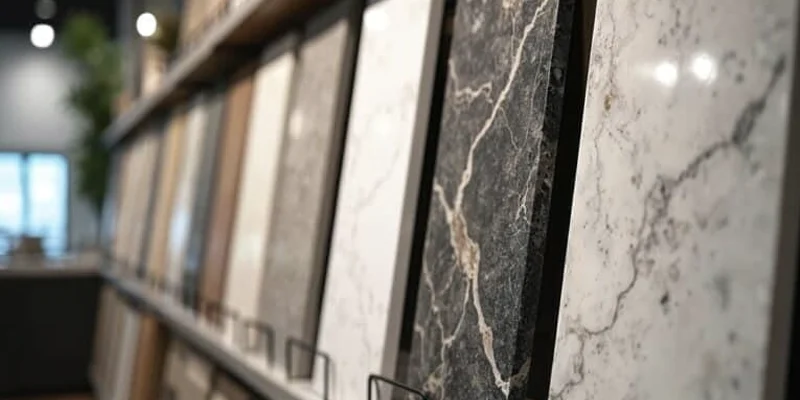
Small samples are useful for comparing general colours, but they cannot show the full pattern, mineral movement or natural variation of a marble slab.
Before reserving material, confirm:
The homeowner or designer should understand which areas will appear on the island, perimeter counters, backsplash and waterfall panels before fabrication begins.
Final countertop measurement should normally take place after the base cabinets are installed, secured and level. Sink, cooktop, faucet and appliance specifications should also be available before the fabrication layout is approved.
Changes made after measurement may affect cutout dimensions, seam locations, overhangs and the amount of material required.
Large countertop sections must be transported safely into the property. Toronto and GTA projects may involve elevators, narrow corridors, stair turns, loading restrictions or limited parking access.
Site planning should consider:
A countertop may fit within the slab dimensions but still require multiple pieces because it cannot be transported safely into the room.
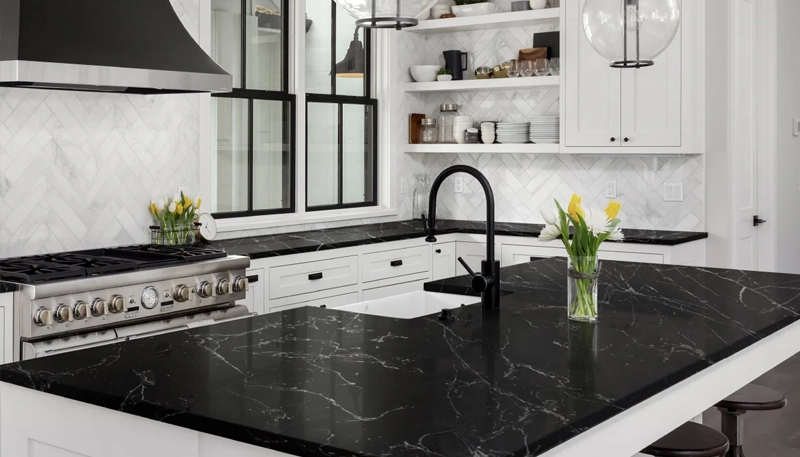
Marble countertop pricing should be based on the actual project rather than a universal square-foot estimate. The final quote may be influenced by:
A detailed quote should clarify which measurement, fabrication, installation and finishing services are included.
Yes. The main considerations are the household’s maintenance expectations, the intended application and tolerance for etching, staining and natural patina—not Toronto’s outdoor climate.
Carrara is generally associated with softer grey backgrounds and finer veining, while Calacatta commonly has a lighter background and broader movement. Individual slabs can vary considerably.
Polished marble provides greater reflection and contrast. Honed marble has a softer finish that may allow patina to blend more naturally. Neither finish prevents etching or staining.
Not necessarily. Sealing requirements depend on the slab, finish, porosity, previous treatment and sealer used. The actual surface should be evaluated instead of following a universal schedule.
Yes. Using marble selectively on an island, baking station, backsplash or feature area can balance natural-stone character with lower-maintenance perimeter surfaces.
It depends on the island dimensions, usable slab size, vein direction, structural areas, transportation limits and building access. Seam-free installation cannot be guaranteed for every project.
Marble is most appropriate for homeowners who value natural variation and understand that the surface may develop etching, minor scratches and patina over time.
The final choice should be based on the complete slab rather than the material name alone. Background tone, vein scale, finish, layout, intended use and site access all affect the completed result.
Before approving fabrication, confirm the slab reference, countertop measurements, vein direction, cutouts, seams, edge profile and installation requirements. Careful planning helps preserve the most attractive areas of the stone while reducing avoidable surprises during installation.
Planning Marble Countertops in Toronto or the GTA?
Compare available marble slabs and discuss measurement, layout, fabrication and installation requirements for your kitchen, vanity or custom stone project.