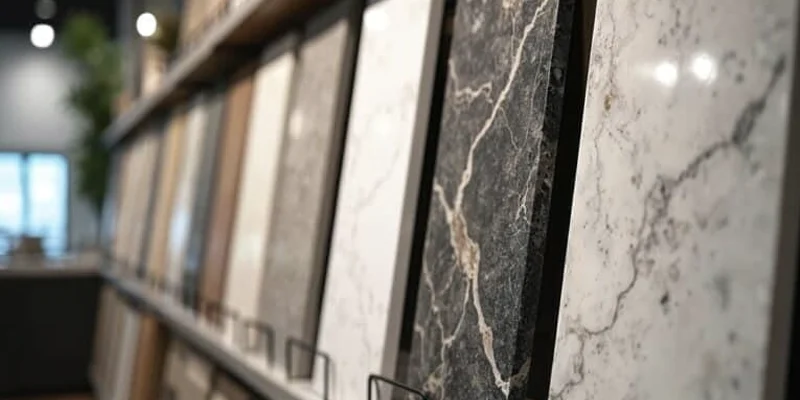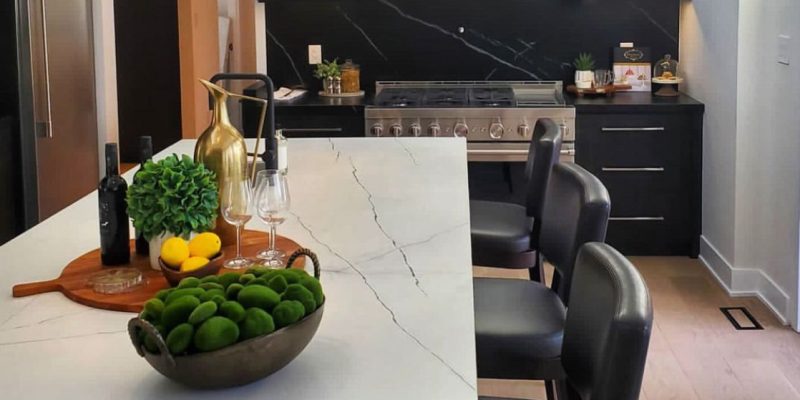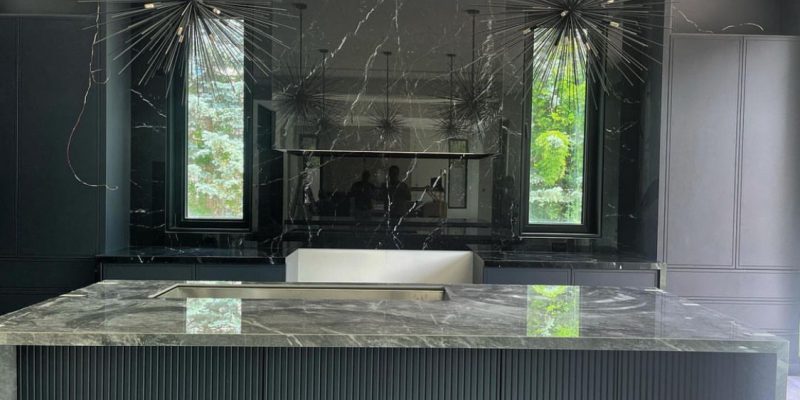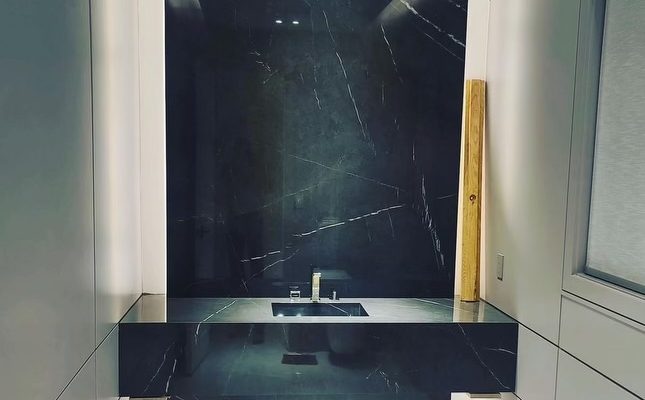
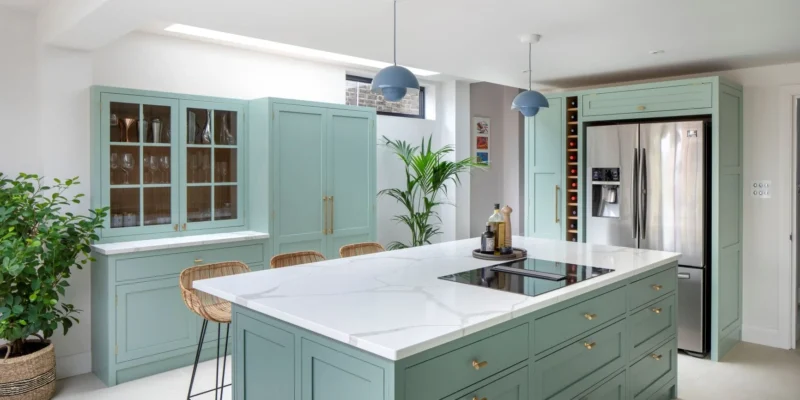
Choosing the best countertop for a kitchen island requires more than comparing colours and patterns. An island may function as a food-preparation surface, dining area, homework station, appliance zone and visual centrepiece—all within the same day. The selected material must suit that actual use while working with the island dimensions, cabinet construction and intended design.
For many busy households, quartz provides a practical balance of stain resistance, consistent appearance and straightforward routine care. Granite offers natural variation and good heat tolerance, while porcelain is frequently considered for contemporary and waterfall designs. Quartzite and marble can create distinctive natural-stone islands, but they require informed slab selection and realistic maintenance expectations. Butcher block offers a warm non-stone alternative where regular care is acceptable.
There is no universal material that is best for every kitchen island. This guide compares quartz, granite, porcelain, quartzite, marble and butcher block by daily performance, maintenance, design character and fabrication considerations so homeowners can make a project-specific decision.
Each countertop material has advantages and limitations. The most suitable option depends on cooking habits, maintenance expectations, desired appearance, slab dimensions and the island’s structural design.
| Material | Primary Strength | Important Consideration | Often Suited To |
|---|---|---|---|
| Quartz | Consistent appearance and relatively simple routine care | Requires protection from high heat | Busy family kitchens and low-maintenance islands |
| Granite | Natural variation and good heat tolerance | Slab characteristics and sealing needs vary | Cooking-focused kitchens and natural-stone designs |
| Porcelain | Heat, stain and UV resistance with a modern profile | Exposed edges require protection from hard impact | Contemporary islands and waterfall applications |
| Quartzite | Distinctive natural movement and strong surface performance | The actual stone must be identified and reviewed | Premium natural-stone and statement islands |
| Marble | Timeless natural veining and distinctive character | Sensitive to acidic substances, etching and visible wear | Design-led islands where patina is acceptable |
| Butcher Block | Warm appearance and potential refinishing | Requires regular protection from moisture, heat and wear | Breakfast bars and warm transitional designs |
A quick comparison can narrow the options, but the final decision should be based on the exact product and island design. Material names alone do not establish suitable overhangs, slab availability, edge construction or cutout requirements.
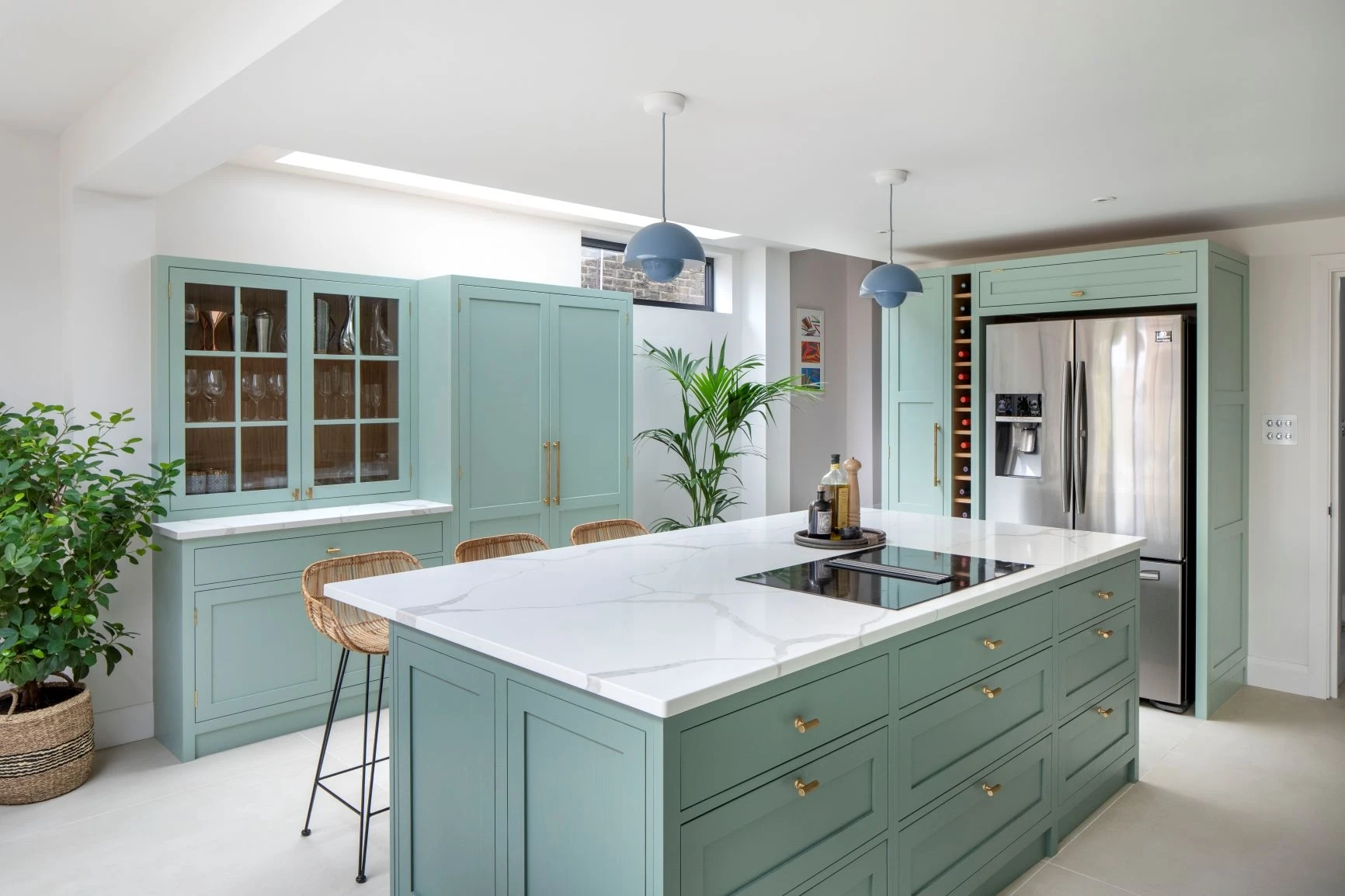
A perimeter countertop is supported along cabinets and walls, while an island is visible and accessible from several directions. This makes slab layout, edge quality, overhang planning and daily-use performance especially important.
Consider how often the island will be used for:
A heavily used island generally benefits from a surface that is easy to clean and compatible with the household’s maintenance habits.
Non-porous materials such as quartz and porcelain do not require routine sealing. Natural stone performance varies by material, finish and the individual slab.
An island with a cooktop, countertop oven, air fryer or other heat-producing appliance requires careful material and appliance planning.
Heat-resistant does not mean immune to every type of thermal stress. Trivets or insulated mats remain sensible precautions, and appliance clearances should follow the relevant manufacturer’s instructions.
Large kitchen islands may approach or exceed the usable dimensions of a slab. Before selecting a material, confirm:
A material available in a suitable slab format may produce a better island layout than another surface selected only for colour.
Islands frequently include seating overhangs and long exposed edges. The required support depends on the exact material, thickness, unsupported span, cutouts and cabinet construction.
No countertop category should be assigned one universal unsupported-overhang allowance. Product and fabrication requirements must be reviewed before the cabinet design is finalized.
Some homeowners prefer predictable care using mild soap and water. Others are comfortable with natural patina, periodic sealing or surface changes associated with use.
The best material is one whose care requirements the homeowner is willing to follow—not simply the surface that looks best in a showroom.
The island material should be reviewed alongside:
An island does not need to match the perimeter countertops. A contrasting material can work well when colour temperature, pattern scale and the surrounding finishes are coordinated.
Material-Selection Principle
Choose the material category based on performance and care, then select the exact slab based on dimensions, pattern, fabrication requirements and the approved island design.
Quartz countertops are a strong all-around option for kitchen islands where consistent appearance, stain resistance and relatively simple routine care are priorities.
Quartz is an engineered surface available in a wide range of colours and patterns, including restrained solids, concrete-inspired designs and marble-look veining. Product characteristics vary by manufacturer and collection, so the selected surface should be reviewed rather than relying only on general statements about quartz.
Quartz may suit an island because it offers:
These qualities make quartz particularly useful in family kitchens where the island is used for meals, food preparation and everyday activities.
Quartz contains binders that can be damaged by excessive or concentrated heat. Hot cookware and heat-generating appliances should be used with a trivet or appropriate insulated mat.
A cutting board should also be used. Quartz is scratch resistant under ordinary use but should not be treated as a cutting surface.
Additional considerations include:
Quartz is often appropriate for:
A dramatic quartz design may require more material than a quiet or uniform pattern. Waterfall panels, large cutouts and directional veining can affect slab yield and the number of pieces required.
The exact quartz product should therefore be selected before approving final seam or waterfall expectations. For project-specific feasibility, Teccorp Stone provides professional countertop survey and measurement for applicable island projects.
Quartz Island Planning Tip
If the island includes a waterfall end, review the full slab image or physical slab—not only a small sample. Pattern direction and usable slab dimensions determine how naturally the top and vertical panel can connect.
Granite countertops appeal to homeowners who want a natural surface with visible mineral variation. Every slab is different, making granite suitable for islands intended to become a distinct architectural feature.
Granite generally offers good resistance to heat and everyday wear, but performance varies between stones. The actual slab, finish and fabrication conditions should be reviewed before making design or maintenance commitments.
Granite may offer:
A large island can display more of the slab’s natural movement than a narrow perimeter countertop.
Important factors include:
Not every granite requires the same sealing schedule. Some dense stones need little additional treatment, while others may benefit from an appropriate penetrating sealer. Follow guidance for the exact slab and applied product rather than assuming annual sealing is mandatory.
Granite tolerates heat better than many resin-based surfaces, but a concentrated hot object can create thermal stress. A trivet remains the safer practice.
Granite is often appropriate for:
For a detailed material comparison, review porcelain vs. granite for kitchen islands.
Porcelain countertops are frequently selected for contemporary islands because they combine a restrained profile with resistance to heat, staining and UV exposure.
Porcelain slabs are available in stone-look, concrete-look, solid-colour and other printed designs. Surface appearance, body composition, thickness and edge characteristics vary by manufacturer and product.
Porcelain may offer:
Porcelain used for countertops may be available in 12mm, 20mm or other product-specific formats.
A 12mm surface can create a thin architectural appearance or be fabricated with an approved edge build-up.
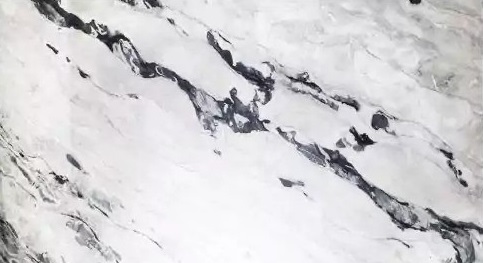

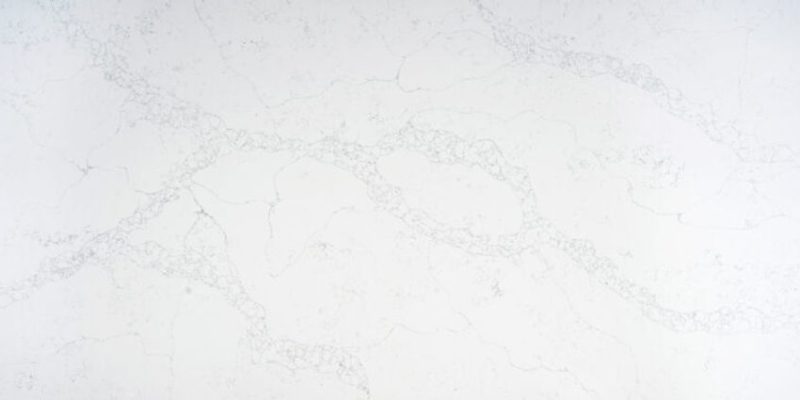

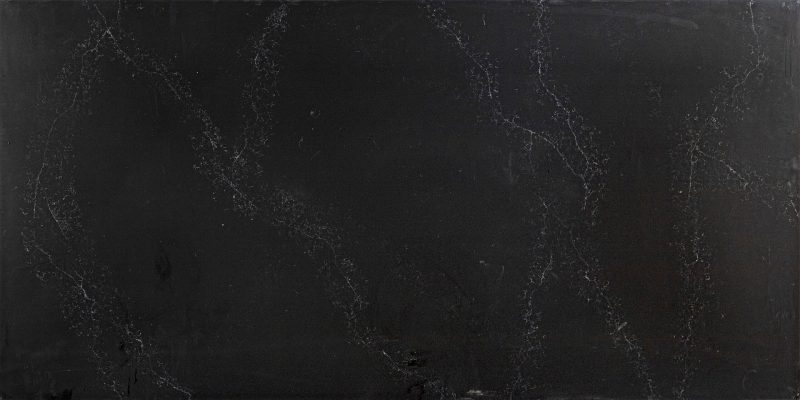



The selected manufacturer’s fabrication and installation requirements should determine:
Porcelain has a hard surface, but exposed edges can chip if struck by heavy objects. Edge selection, fabrication quality and careful installation are therefore important.
Other considerations include:
A cutting board remains recommended, and prolonged heat from countertop appliances should follow manufacturer care guidance.
Porcelain is often considered for:
Quartzite countertops are selected for their natural movement and potential for strong surface performance. Many slabs display marble-like veining while retaining the crystalline character of a silica-rich natural stone.
The name used in a showroom or supplier catalogue should not be the only basis for evaluating performance. Commercial stone names are not always consistent with geological classification.
Quartzite may provide:
Some materials marketed as quartzite may contain acid-sensitive minerals or may behave more like marble or dolomitic stone. If etching resistance is important, discuss the specific slab with the supplier and fabricator before purchase.
Additional considerations include:
Sealing may improve stain resistance but does not change the stone’s mineral composition or prevent acid etching in an acid-sensitive material.
Quartzite is often considered for:
Natural-Stone Selection Principle
Evaluate the actual granite, quartzite or marble slab—not only its commercial name. Mineral composition, finish, resin treatment, fissures and usable layout can affect both performance and fabrication.
Marble countertops create a distinctive island through natural veining and gradual surface character. Marble is best selected by homeowners who appreciate natural patina and understand that the surface may change with use.
Marble may offer:
Marble is primarily composed of acid-sensitive minerals. Lemon juice, vinegar, wine and other acidic substances can chemically dull or etch the surface.
A penetrating sealer may provide additional time to clean certain spills and improve stain resistance, but it does not prevent acid etching.
Homeowners considering marble should be comfortable with:
Marble may suit:
Marble is generally less suitable when the homeowner expects the surface to remain visually unchanged under intensive daily cooking.
Butcher block introduces natural warmth and a tactile surface that contrasts with stone perimeter countertops. It may be fabricated from maple, walnut, oak or other suitable wood species using different grain constructions and finishes.
Teccorp Stone specializes in stone and slab surfaces. Butcher block is included here as a comparison option for homeowners evaluating the broader countertop market.
Wood may offer:
Maintenance depends on the wood, construction and finish. Oil-finished butcher block commonly requires regular reapplication of a suitable food-safe maintenance product. Manufacturer schedules vary according to use, cleaning and household conditions.
Standing water and prolonged moisture can cause swelling, softening, staining or joint damage. Hot cookware should not be placed directly on the surface.
Homeowners should confirm:
Butcher block may work well for:
It may be less suitable for households seeking a surface with minimal maintenance or for areas where standing water is difficult to control.
Comparison Note
Butcher block can add warmth and may be refinished, but it does not provide the same moisture, heat or maintenance profile as quartz, granite, porcelain, quartzite or marble.
The following table compares the practical differences between the six materials covered in this guide. Individual products and natural slabs may perform differently from their general category.
| Material | Routine Care | Heat Precaution | Important Limitation | Often Best Suited To |
|---|---|---|---|---|
| Quartz | Low; no routine sealing | Use a trivet or insulated mat | Excessive or concentrated heat | Busy family and low-maintenance kitchens |
| Granite | Product-specific sealing and stone care | Use a trivet to reduce thermal stress | Natural variation and slab-specific characteristics | Cooking-focused and natural-stone kitchens |
| Porcelain | Low; no routine sealing | Follow appliance and surface guidance | Hard impact on exposed edges | Modern, thin-profile and waterfall islands |
| Quartzite | Depends on the stone and treatment | A trivet remains recommended | Commercial naming may not confirm mineral composition | Premium natural-stone statement islands |
| Marble | Careful cleaning and prompt spill response | Use a trivet | Etching, scratching and visible patina | Design-led islands where natural wear is acceptable |
| Butcher Block | Regular product-specific wood care | Protect from direct heat | Standing moisture and maintenance requirements | Warm seating areas and mixed-material kitchens |
Quartz and porcelain are strong candidates when spills, meals, homework and frequent cleaning are expected. The exact choice may depend on heat exposure, edge design and preferred appearance.
Quartzite, granite, premium porcelain and selected quartz can all suit a high-traffic luxury island. The correct choice depends on whether natural variation, minimal maintenance or architectural pattern continuity is the leading priority.
Granite and porcelain offer good heat tolerance, but trivets and manufacturer-recommended precautions should still be used. Cooktop clearances and cutout requirements must be coordinated separately from general surface performance.
Quartz and porcelain are commonly considered because neither requires routine sealing. Piece size, elevator access and exposed-edge protection may influence the final selection.
Quartzite, marble, dramatic porcelain and large-vein quartz can all create a focal point. Natural stone provides unique movement, while manufactured surfaces may offer more controlled pattern options.
An island does not need to match the perimeter countertops. A successful contrast considers undertone, pattern scale, cabinet colour, flooring and lighting—not simply whether two surfaces are different.
Before finalizing a material, compare the usable slab dimensions with the island size, cutouts and delivery path.
A seam may be required when:
Waterfall panels require additional material, mitred fabrication and pattern planning. Vein alignment and true bookmatching are not interchangeable and should be confirmed from the actual slabs.
For budget planning, review the complete guide to kitchen island countertop costs in Toronto.
Final Selection Principle
The best countertop is the material that fits the household’s actual use, care expectations, island design and selected slab—not the option with the strongest general marketing claim.
Quartz is a strong all-around choice for many households, but granite, porcelain, quartzite, marble or butcher block may be more appropriate for specific priorities.
Quartzite, granite and premium porcelain are strong candidates. Evaluate the exact slab, maintenance expectations, edge exposure and fabrication requirements.
Quartz provides consistency and minimal routine maintenance. Granite offers natural variation and good heat tolerance. The better option depends on use and design priorities.
Yes, selected porcelain products can work well for waterfall designs when fabricated and supported according to product requirements.
Properly identified quartzite generally offers stronger resistance to scratching and acids. Marble provides a different appearance but develops etching and patina more readily.
Not necessarily. Matching creates continuity, while a coordinated contrast can make the island a focal point.
Possibly. The answer depends on slab dimensions, cutouts, usable material, fabrication safety and delivery access.
Quartz and porcelain generally require little routine maintenance and no regular sealing. Product-specific care instructions still apply.
Teccorp Stone specializes in stone and slab surfaces. Butcher block is included in this guide as a broader comparison option.
The right island surface begins with clear priorities and project-specific information. Compare materials, review the actual slab or product and confirm dimensions, cutouts, edges, support and installation access before fabrication.
Choose a Material for Your Kitchen Island
Review available stone surfaces, confirm the island requirements and request a defined fabrication and installation quote.