Quartz countertop cost in Toronto depends on more than the advertised price of a slab. The installed project total may be influenced by the selected quartz collection, usable slab dimensions, kitchen layout, edge construction, sink and cooktop openings, seams, delivery access and installation conditions.
For preliminary budgeting, installed quartz countertop projects are often discussed within a broad range of approximately $75 to $140 or more per square foot. This should be treated as a planning range rather than a fixed quotation. The actual price must be calculated from the exact material, measurements and fabrication scope.
Two kitchens with similar countertop square footage can produce different totals. One may fit efficiently within a single slab and use a standard edge, while another may require an additional slab, prominent vein alignment, a large island, waterfall panels or more complex access.
This guide explains the difference between material and installed pricing, what may be included in a quartz countertop quote and which project decisions have the greatest effect on the final cost.
Broad installed planning range: Approximately $75 to $140+ per square foot.
Lower-complexity projects: Standard patterns, efficient slab use, simple edges and limited openings may remain closer to the lower end.
Higher-complexity projects: Premium collections, additional slabs, large islands, waterfalls, mitred edges and complex delivery conditions may increase the total.
Most important rule: Compare complete project quotations rather than relying only on an advertised square-foot rate.
The square-foot rate is useful for early budgeting, but it does not describe the complete project by itself. The final quote should identify the exact quartz product, measured area, slab quantity, edge details, openings, seams, delivery and installation scope.
Installed quartz pricing is often presented as one number per square foot, but that number may combine several different components. It can include material, fabrication and installation, or it may apply only to the countertop surface under limited conditions.
The following ranges provide a preliminary framework based on the current pricing structure used in this guide. They are not universal product classifications or guaranteed project rates.
| Planning Range | Possible Project Characteristics | Important Qualification |
|---|---|---|
| $75–$90 per sq. ft. | Selected standard collections, restrained patterns, efficient layout and simpler fabrication | Availability, minimum quantities and included services must still be confirmed |
| $90–$115 per sq. ft. | Broader design selection, more visible veining or additional fabrication details | The final total may change if the layout requires another slab |
| $115–$140+ per sq. ft. | Selected premium collections, large-scale patterns or higher-complexity fabrication | This range does not automatically include every edge, cut-out, removal or access requirement |
Terms such as standard, premium or designer quartz are not identical across every supplier or manufacturer. The exact product name and slab specification are more useful than relying only on a general pricing label.
A low advertised quartz price may refer only to material or to a limited package. It may not include every component required to complete the countertop.
A material-only price may exclude:
An installed price should be evaluated through the written scope attached to it. A higher square-foot rate may provide better value when it includes essential fabrication and installation items that another quotation lists separately.
Quartz Pricing Rule
Do not compare a material-only promotion with a complete installed quotation. Confirm the exact quartz product and every included or excluded project item.
Countertop quotations are not always structured in the same way. Some combine measurement, fabrication, delivery and installation within one total, while others separate individual items.
| Quote Component | What to Confirm |
|---|---|
| Quartz material | Product name, colour, finish, thickness, slab size and required quantity |
| Measurement or templating | Whether it is included and what conditions must be completed before measurement |
| Fabrication | Edge finishing, seams, pattern layout and included openings |
| Delivery | Property access, stairs, elevators, parking and delivery restrictions |
| Installation | Placement, seam joining and the limits of the installer’s responsibility |
| Existing countertop removal | Whether removal, disposal and possible cabinet or wall damage are included |
| Plumbing or appliance work | Whether disconnection and reconnection are excluded or require separate trades |
Written clarification is particularly important for sink cut-outs, faucet holes, cooktop openings, drain grooves, mitred edges, waterfall panels, backsplashes and removal of existing materials. These items should not be assumed to be included merely because a quote is described as installed.
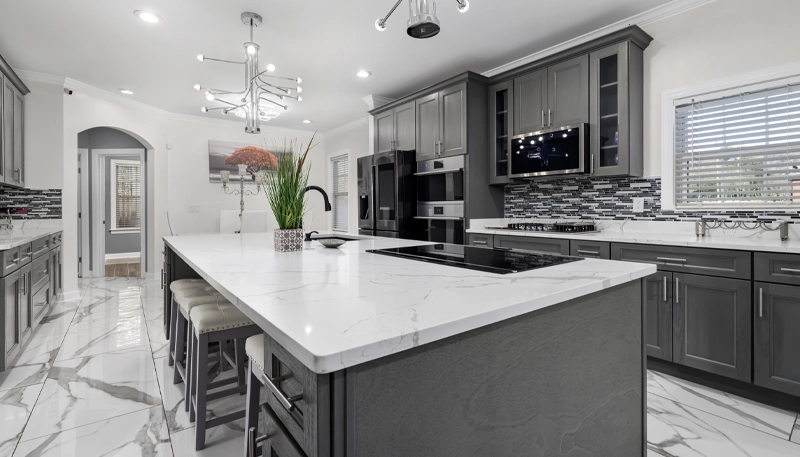
The final cost of a quartz countertop is determined by the complete fabrication plan rather than countertop area alone. Material selection establishes the starting point, but slab use, openings, edge construction, seams and site access can substantially change the project total.
The most important cost variables include:
These factors should be reviewed together. Choosing a less expensive quartz product does not always produce the lowest project total if its slab dimensions or pattern create inefficient material use.
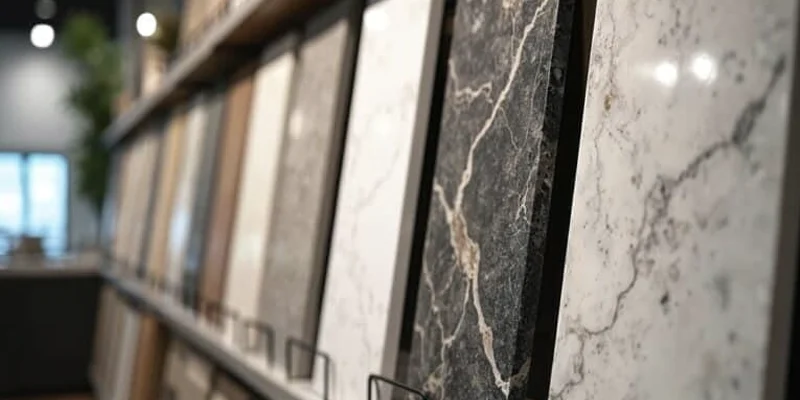
Quartz products are offered across different price levels, but the collection name alone does not explain the complete installed cost. Colour, finish, slab dimensions, availability and pattern complexity may all influence pricing.
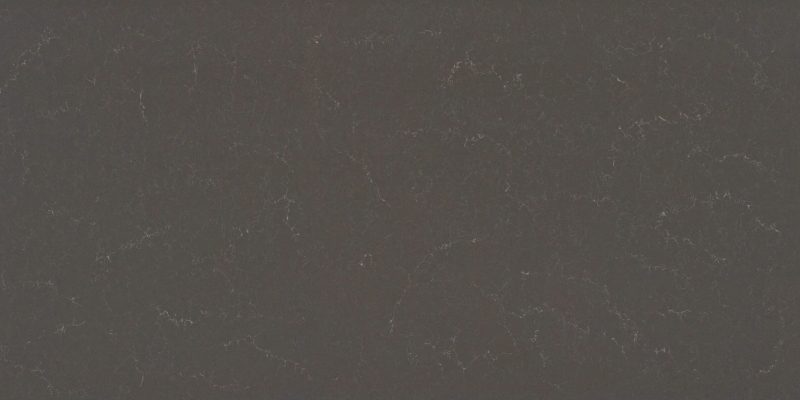
Quartz with a restrained or relatively uniform pattern may be easier to distribute across several countertop sections. It can reduce the amount of pattern-matching required around seams, corners and fixture openings.
This does not guarantee lower pricing, but it may simplify the fabrication layout compared with a highly directional design.
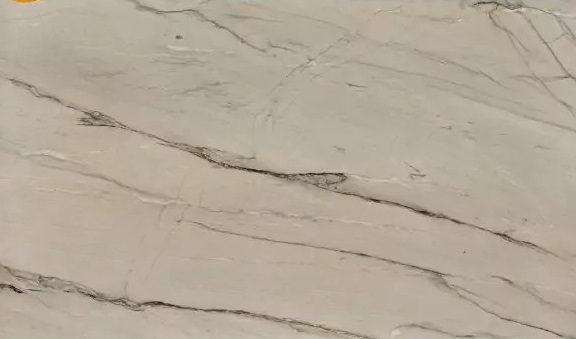
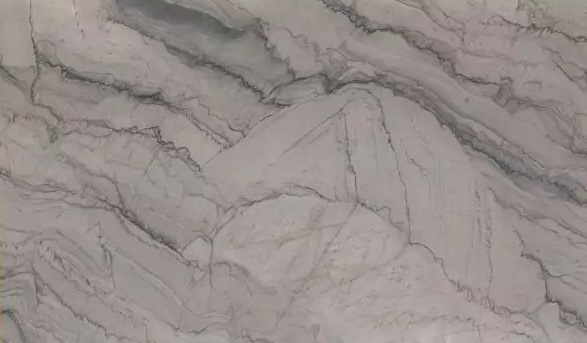
Quartz with long, prominent movement may require more deliberate slab positioning. The fabrication plan should identify which part of the pattern appears on the island, perimeter counters and any vertical panels.
A product with dramatic movement may cost more because of the material collection itself, but the project total can also increase when additional slab area is needed to preserve the intended pattern.
This distinction is relevant to searches such as “is Calacatta quartz expensive.” The answer depends on the exact product and layout. Some Calacatta-inspired quartz products sit within higher-priced collections, while others may remain within a moderate material range. Pattern placement and slab quantity can be as important as the collection label.
Different quartz products may be supplied in different slab formats. A larger slab can sometimes accommodate a long island or reduce seams, but it does not automatically produce a lower total.
Usable slab area may be reduced by trimming allowances, pattern positioning, damaged or unsuitable sections and the need to maintain safe material around openings.
Browse available quartz countertop options and confirm the exact slab format before relying on a preliminary square-foot calculation.
Slab yield describes how efficiently the required countertop pieces can be arranged within the usable material. It is one of the main reasons two kitchens with similar measured area may receive different quotations.
| Layout Condition | Possible Cost Effect | Reason |
|---|---|---|
| Straight perimeter runs | May support more efficient material use | Pieces may be easier to arrange within the slab |
| L-shaped or U-shaped kitchen | May require more layout planning or seams | Corners and directional pieces can reduce usable yield |
| Long island | May increase slab quantity or delivery complexity | The required piece may approach slab or access limits |
| Strong directional pattern | May produce more unused material | Pieces cannot always be rotated freely without changing pattern direction |
| Several small countertop sections | Can increase fabrication work despite limited area | Each section may require separate cutting, edging and installation |
Countertop square footage should therefore be considered alongside slab quantity. A project using 38 square feet of countertop may still require the purchase or allocation of more material than the finished surface area suggests.
Slab-Yield Rule
Ask how many slabs or material units the quotation assumes. The measured countertop area does not reveal how efficiently the pieces fit within the selected product format.
Quartz thickness and finished edge construction can affect material requirements, handling and fabrication. The appropriate choice depends on the selected product, cabinet support, visual design and manufacturer or fabricator requirements.
A simple eased or small bevel edge is often included within a standard fabrication scope, but this should be confirmed in writing. These profiles require less complex shaping than decorative or built-up designs.
Bullnose, ogee and other shaped profiles may require additional machining and finishing. Availability can also depend on the quartz thickness and product characteristics.
A mitred edge can create the appearance of a thicker countertop by joining horizontal and vertical quartz sections. This construction requires additional material, precision cutting and joint finishing.
The increased cost comes from more than visual thickness. It may include additional slab area, fabrication time, handling and corner alignment.
Review the main design options in the guide to countertop edge profiles and compare structural requirements in the countertop thickness guide.
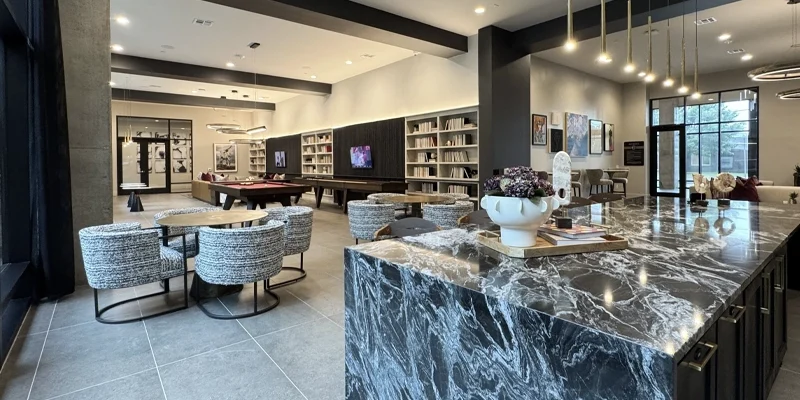
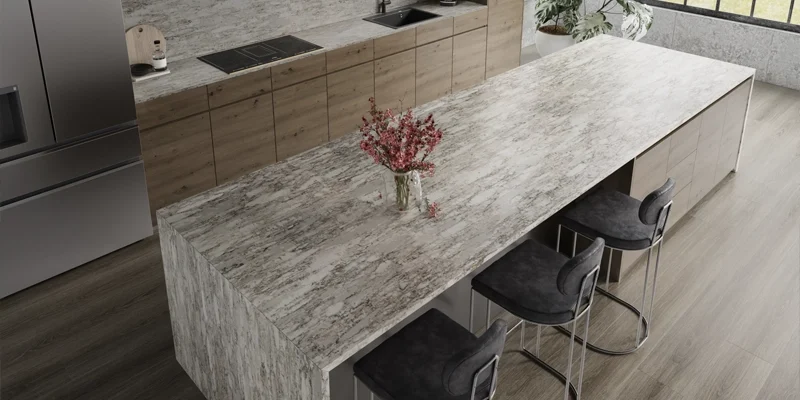
A kitchen island can represent a significant portion of the total quartz budget, especially when it is large, contains fixtures or uses one or more waterfall panels.
A large island may require a substantial uninterrupted piece. The exact slab dimensions, seam strategy and delivery route should be reviewed before assuming it can be fabricated from one slab.
A waterfall design extends quartz vertically down an island end. It increases material area and normally requires mitred fabrication, edge alignment and additional installation work.
Two waterfall ends require more material and fabrication than one.








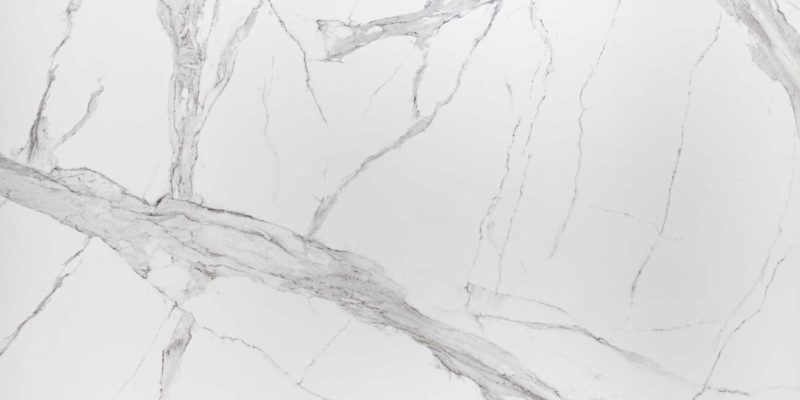
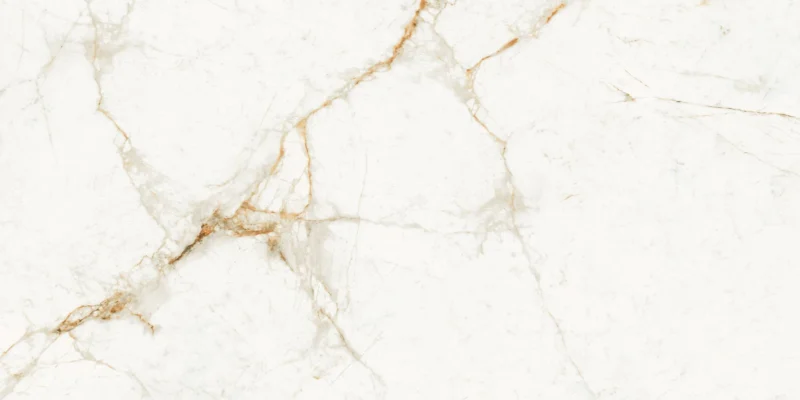


Extended seating overhangs may require support depending on their depth, material thickness and cabinet construction. Any brackets, framing or cabinet modifications should be identified separately from the quartz fabrication scope.
For related planning considerations, review the kitchen island countertop service.
Openings affect both fabrication labour and the amount of material remaining around vulnerable sections. The quotation should identify the number and type of included cut-outs.
Possible fabrication items include:
A standard sink opening may be priced differently from a farmhouse sink, multiple bowls or an unusual fixture. Final appliance and sink specifications should be available before measurement so openings are not based on approximate dimensions.
Cut-outs also interact with seams and pattern placement. Moving a sink or cooktop can change the piece strategy, while narrow rails around openings may require additional fabrication and support planning.
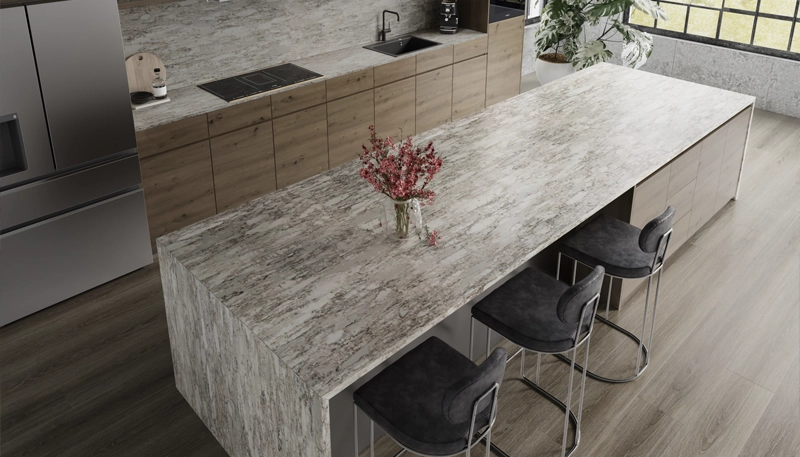
Property access and existing-site conditions can affect the installed cost of quartz countertops even when the material and countertop dimensions remain unchanged.
Toronto condo projects may require coordination with building management, elevator reservations, loading-area schedules, parking restrictions or approved delivery periods. These conditions can affect the number of installers required, the size of fabricated pieces and the time needed to move material safely into the unit.
Access should be reviewed before the slab layout is finalized. A large island piece that fits within the selected slab may still require a seam if it cannot pass through the building entrance, elevator, hallway or unit doorway.
Detached and semi-detached homes may also present access limitations. Narrow stairs, finished walls, tight turns and restricted entrances can influence piece size and delivery planning.
The route from the delivery point to the kitchen should be assessed for:
Removal and disposal of an existing countertop may be priced separately. The cost can depend on the material, attachment method, backsplash condition and the risk of damage to retained cabinets or walls.
Removing laminate is not identical to removing tile, granite or an existing engineered-stone countertop. Plumbing fixtures and appliances may also need to be disconnected by the appropriate trade before removal begins.
The written quote should identify whether it includes:
Hidden conditions cannot always be identified before removal. Existing cabinets may be out of level, damaged or modified in ways that become visible only after the old countertop is removed.
Quartz fabrication should be based on cabinets that are installed, secured and ready for measurement. Cabinet movement after measurement can create alignment problems during installation.
Before the project proceeds, confirm that:
For a broader overview of site preparation, review how to prepare your home for countertop installation.
A preliminary budget should combine countertop area with project complexity. Multiplying rough square footage by an advertised rate can provide a starting point, but it should not be treated as the final project total.
Measure the approximate length and depth of each countertop section. Include islands, peninsulas and any planned quartz backsplash or waterfall surface separately.
Determine whether the project is based on a restrained standard pattern, a selected premium collection or a large-scale directional design. The exact product should ultimately replace any general material category in the quotation.
Record the required sink, cooktop and accessory openings, edge profile, backsplash height, waterfall panels and seams. These details help distinguish a simple countertop package from a higher-complexity project.
Ask whether the proposed pieces fit efficiently within the selected slab format. A project can move into a higher budget level when a small dimensional or pattern change requires an additional slab.
Include removal, disposal, difficult access, building restrictions, support work and separate trade requirements. These costs may not be included in the quartz square-foot rate.
| Budget Level | Typical Planning Characteristics |
|---|---|
| Lower complexity | Efficient slab use, standard edge, limited openings and straightforward access |
| Moderate complexity | More visible patterning, several sections, island work and additional fabrication details |
| Higher complexity | Additional slabs, waterfalls, mitred construction, difficult access or extensive pattern alignment |
A standard 10×10 kitchen label is not enough to calculate quartz cost accurately. Kitchens described with the same room dimensions may contain different countertop lengths, islands, appliances and slab requirements.
Budgeting Rule
Estimate the complete fabrication scope, not only the room size. Countertop area, slab quantity and project details provide a more useful budget than a generic 10×10 kitchen figure.
The lowest total is not necessarily the least expensive complete project. Quotes should be compared line by line using the same material and design assumptions.
Confirm the following for every estimate:
If two quotes use different quartz products or slab quantities, their square-foot rates are not directly comparable. One proposal may also exclude items that another includes within the total.
Ask for clarification whenever a quote uses broad terms such as standard installation, premium quartz or basic fabrication without defining what those terms include.
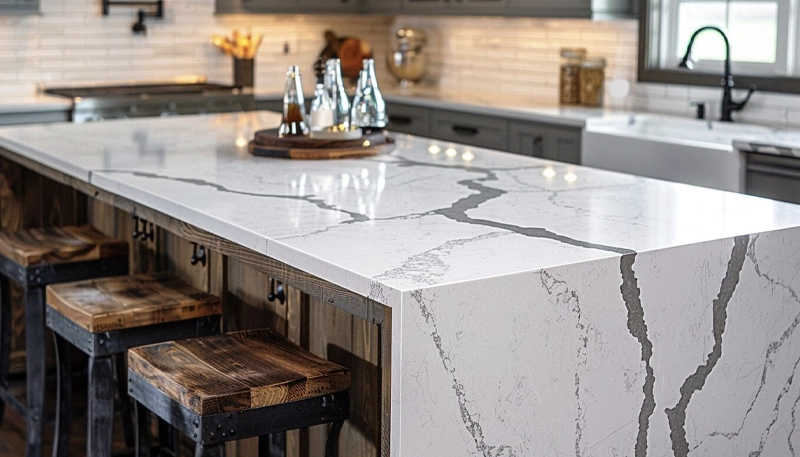
A broad installed planning range is approximately $75 to $140 or more per square foot. The final price depends on the exact quartz product, slab quantity, layout, fabrication and installation conditions.
A good price is one that reflects the complete project scope and the specified quartz product. A lower rate may not represent better value when fabrication, cut-outs, delivery or installation are excluded.
Some Calacatta-inspired products are included in higher-priced collections, but the name alone does not establish cost. Manufacturer, design, slab format, availability and pattern-layout requirements all affect pricing.
Installation cost may be included within a complete countertop quotation or listed separately. Confirm whether the proposal includes measurement, fabrication, delivery, seam joining and placement.
Pricing structures vary. Some quotes are based on finished countertop area, while others account for the slab or material units required for the project. Ask how unused material and additional slab requirements are handled.
Yes. A second slab may be required because of long pieces, a large island, directional veining, inefficient layout or the dimensions of the selected slab.
Pricing can overlap. Selected granite may cost less or more than selected quartz. The useful comparison is between the exact products and complete installed scopes rather than the material names alone.
Most engineered quartz products do not require routine sealing. Follow the care and installation guidance provided for the exact product.
Direct high heat should be avoided because quartz contains binders that may be affected by concentrated temperatures. Use trivets or heat-resistant pads.
Length alone is not enough to calculate the price. Depth, product, slab yield, edge, openings, delivery and installation scope must also be considered.
An accurate quartz countertop quotation begins with the exact material, project dimensions, fixture specifications and fabrication requirements.
When requesting an initial review, provide photographs, approximate dimensions, project location, preferred quartz styles, sink or cooktop details, island dimensions and any planned waterfall or backsplash surfaces.
Planning a Quartz Countertop in Toronto?
Compare the exact quartz product, slab requirements, fabrication details and installation scope before approving your project.
Discuss Your Quartz Project
Explore Quartz Countertops
Explore Kitchen Countertop Services