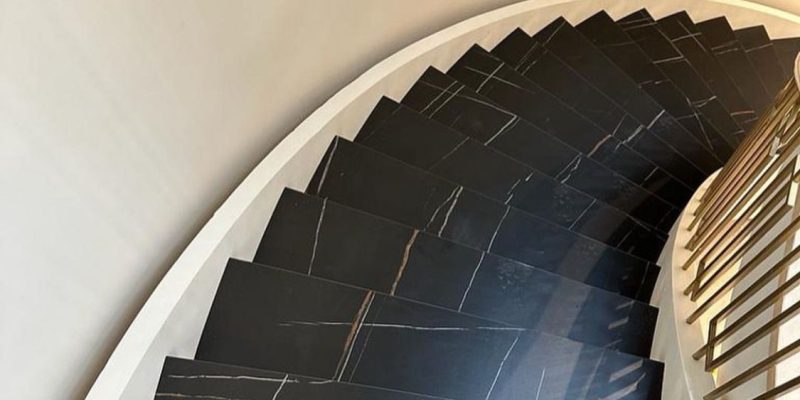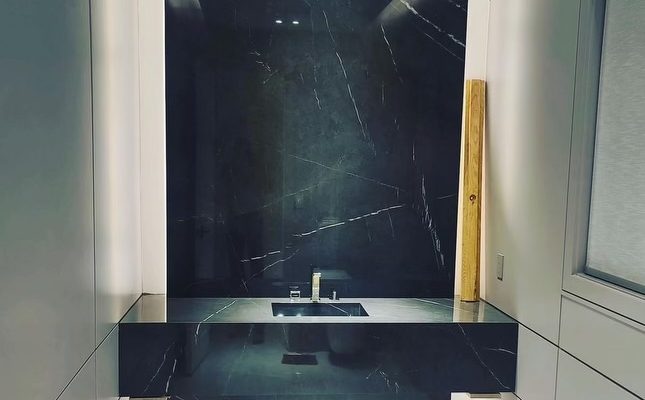
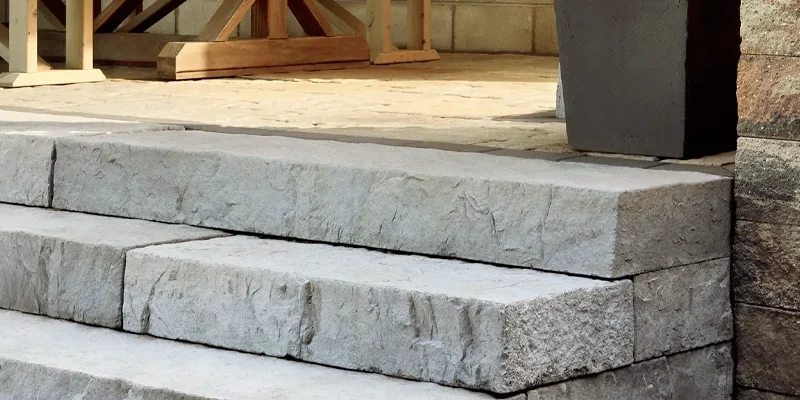
Stone stairs cost in Toronto can vary substantially because custom stair projects are not priced by the number of steps alone. Material selection, tread and riser dimensions, landings, fabrication details, existing stair conditions, installation scope and site access can all change the final project cost.
A useful stone stair quote should therefore explain exactly what is included. A price for stone treads only cannot be compared directly with a quote that also includes risers, landings, measurement, fabrication, installation or removal of an existing finish.
This guide explains how stone stair pricing is structured, which project details have the greatest effect on cost and what to compare before approving a quote for interior or exterior stone stairs in Toronto and the GTA.
Before Comparing Stone Stair Prices
Confirm whether each quote includes the stone, treads, risers, landings, measurement, fabrication, edge finishing, installation, demolition and required preparation. Two prices are only comparable when the project scope is comparable.
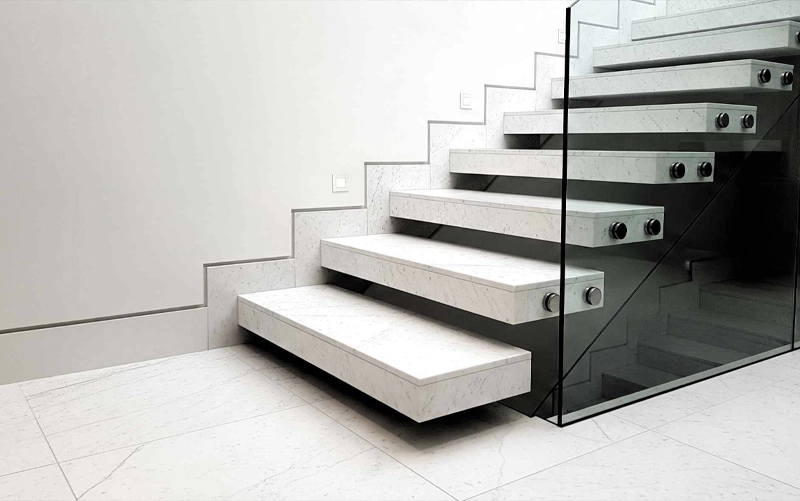
There is no reliable universal cost-per-step figure for custom stone stairs unless the scope behind that number is defined. A tread-only project, a complete tread-and-riser installation and an exterior stair renovation can represent very different amounts of material and labour.
| Project Type | Pricing Basis | Verified Planning Range |
|---|---|---|
| Interior stone stairs | Treads, risers, landings, material and fabrication scope | Add verified Teccorp range before publication |
| Exterior stone steps | Material, finish, dimensions, existing conditions and exterior scope | Add verified Teccorp range before publication |
| Existing stair recapping | Removal, substrate condition, new treads and risers | Add verified Teccorp range before publication |
| Treads and risers | Component quantity, dimensions, edges and material | Add verified Teccorp range before publication |
| Complex architectural stairs | Project-specific fabrication and coordination | Custom quotation |
Do not publish this table with placeholder ranges. Final pricing should come from current Teccorp project data with a clearly defined scope.
The most accurate way to understand stone stair cost is to break the project into the components and conditions that actually require material, fabrication and installation work.
Different granite, marble, quartzite, porcelain and approved engineered products can vary in price, availability, slab dimensions and fabrication requirements. Material price is important, but it is only one part of the finished stair cost.
A staircase with ten treads does not automatically cost twice as much as one with five. Tread width, depth, risers, landings and repeated versus irregular dimensions all affect material use and fabrication.
Wider stairs require larger fabricated components and may use slab material less efficiently. Oversized landings or deep treads can also affect slab quantity and handling.
Top and intermediate landings can add significant surface area. Large landings may require multiple fabricated pieces and additional pattern planning.
Simple exposed edges usually involve a different fabrication scope from more complex built-up, mitred or returned details. Open stair sides can also increase the number of visible edges requiring finishing.
Highly directional marble or quartzite may require selective cutting to achieve the intended vein orientation. This can reduce usable slab yield and increase material requirements even when the stone itself is not the most expensive option.
Exterior stairs may require different materials, surface finishes and project preparation because of moisture, drainage, winter exposure and existing exterior conditions. Exterior work should therefore not be priced automatically from an interior stair example.
Renovation projects may involve old tile, previous stone, deteriorated surfaces or stair geometry that must be corrected before final stone measurement. These conditions can create work outside the basic stone fabrication scope.
Large stone components must reach the staircase safely. Restricted entrances, finished interiors, upper floors and difficult exterior access can influence handling and installation planning.
Material categories should not be assigned a fixed cheapest-to-most-expensive ranking. Pricing changes with the exact stone, supplier, slab quality, availability, dimensions and amount of usable material required for the staircase.
Granite includes a broad range of colours, origins and price levels. Some products may be relatively accessible, while premium or less readily available granites can cost substantially more.
Marble pricing can vary widely by selection and slab quality. Strong vein matching or highly selective layout can also increase the amount of material required for a staircase.
Some quartzites occupy a premium material category, particularly when slabs have distinctive movement or limited availability. Fabrication and slab yield should be considered alongside the purchase price.
Porcelain stair cost depends on the exact product, format, edge system and whether the selected material is intended for the required stair application. Product cost alone does not represent the finished system.
Where an engineered quartz product is approved for the intended interior stair application, pricing depends on the manufacturer, collection, dimensions and fabrication scope.
For a detailed comparison based on application and performance rather than price alone, review Teccorp’s guide to the best materials for stone stairs.
Interior stone stair pricing depends on the amount of material being fabricated, the number and size of stair components, edge details, landings and the conditions affecting installation.
A simple tread-only application can have a very different scope from a staircase finished with matching treads, risers, landings and exposed side details.
Covering both horizontal treads and vertical risers increases the number of fabricated components and the total surface area of the project. The exact effect on price depends on dimensions, material and edge requirements rather than step count alone.
Top and intermediate landings can represent a significant portion of the material used in an interior staircase. Larger pieces may also require additional slab planning and handling.
Open staircases can require finished ends, returns or additional visible edge treatment. These details usually involve more fabrication than stairs enclosed between walls.
Finished flooring, narrow corridors, upper levels and limited handling space can affect the installation scope even when the staircase itself is relatively simple.
Detailed measurement, fabrication and installation planning is covered separately in Teccorp’s stone stair installation guide.
Exterior stone stair projects should not be priced by applying an interior stair rate to the same number of steps. Outdoor projects can involve different materials, finishes, site conditions and preparation requirements.
The selected stone or manufactured product should be appropriate for the intended exterior application. Product availability, surface finish and fabrication requirements can all influence project cost.
Front steps, porch stairs and other exterior stairs may involve existing concrete, previous tile or stone, deteriorated surfaces or uneven geometry. Required correction or removal work can affect the total project budget.
Exterior stair work may interact with landings, walkways, porches and surrounding drainage conditions. Significant drainage correction or supporting work should be identified separately from the basic stone scope.
Restricted exterior access and site conditions can affect material handling and scheduling. These factors should be reflected in a project-specific quotation rather than assumed to be identical across all outdoor stair projects.
For detailed exterior planning, see Teccorp’s outdoor stone steps and stairs guide.
Recapping or resurfacing an existing staircase can sometimes retain the supporting stair while replacing the visible treads, risers or previous finish. It should not automatically be assumed to be the lowest-cost option.
Old tile, stone or another surface may need to be removed before final measurements are taken. Demolition and disposal may be priced separately depending on the project scope.
Removal can expose uneven surfaces, deterioration or geometry that was not visible during the initial review. Corrective work may therefore affect the final cost after demolition.
New stone may have a different finished build-up from the previous surface. This can affect stair transitions, landings, flooring and railing conditions.
Recapping relates to the visible stair finish and should not be confused with rebuilding the supporting staircase.

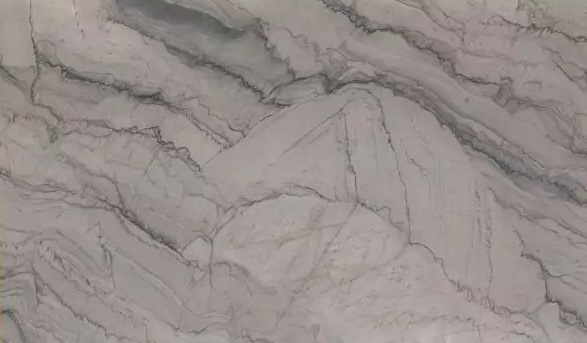







One of the most important questions when comparing stone stair quotes is whether the price covers only the horizontal treads or the complete visible stair finish.
| Scope | Typical Components | Cost Considerations |
|---|---|---|
| Treads only | Horizontal walking surfaces | Tread dimensions, exposed edges and material |
| Treads + risers | Horizontal and vertical stone components | Additional material, fabrication and alignment |
| Full stair finish | Treads, risers, landings and selected exposed edges | Complete component count, layout and edge scope |
For this reason, a quoted “price per step” is not meaningful unless the tread size and included components are clearly defined.
Stone stair fabrication is more than cutting a series of identical rectangles. Edge details, irregular dimensions, material pattern and exposed conditions can significantly change the amount of work and usable slab required.
A straightforward finished edge generally has a different fabrication scope from built-up, mitred, returned or other more complex visual details.
Stairs visible from one or both sides may require additional finished edges or returns. Enclosed stairs may require fewer visible edge treatments.
Curved, angled or dimensionally inconsistent stair components can require more individual measurement and fabrication than repetitive straight stairs.
Highly directional marble or quartzite can require selective slab placement. Prioritizing visual continuity may reduce material yield and increase the number of slabs required.
Landing dimensions can affect panel layout, seams and slab selection. A large landing should not be treated as a minor addition to tread pricing.
Cost Planning Tip: Compare the fabricated staircase cost, not only the slab price. Material yield, edge treatment and component layout can change the total even when the selected stone has a lower unit price.
Renovation pricing should distinguish the new stone scope from the work required to prepare the existing staircase.
Existing finishes may need to be removed before the supporting stair can be accurately assessed and measured. Removal, disposal and site protection should be identified in the quotation where applicable.
After demolition, the underlying stair may require correction before it is ready for new stone. The extent of this work cannot always be determined from photographs or measurements taken over the previous finish.
Stone treads and risers should not be priced as a substitute for structural repair. Significant cracking, movement, framing problems or reconstruction of the supporting staircase belong to a separate scope unless explicitly included.
A lower quote may simply include fewer services. Before comparing totals, review exclusions as carefully as the listed price.
Depending on the contractor and project, items that may be separate can include:
The actual exclusions should always be confirmed in the written project quotation rather than inferred from a general cost guide.
A useful quote should identify the selected material, number and dimensions of components, risers and landings, edge details, fabrication, installation and any known exclusions.
This makes it possible to compare contractors and project options on a like-for-like basis rather than comparing headline totals that represent different scopes.
Two quotations for the same staircase can show very different totals even when both contractors are pricing the same general project. The difference may come from scope rather than simply from one company charging more.
Before comparing stone stair quotes, check whether both proposals include the same:
One quote may be based on a general material allowance while another uses the exact selected slab or product. This can create a substantial difference before fabrication or installation is considered.
A quote covering only horizontal treads should not be compared directly with one that includes risers, landings and exposed side details.
Simple edges, complex profiles, vein matching and large landing pieces can represent different amounts of fabrication even when the overall staircase dimensions are similar.
One contractor may include demolition or preparation while another excludes it. Existing stair conditions should therefore be separated from the cost of the new stone components.
Cost control is most effective when decisions are made before fabrication. Reducing the project budget should focus on unnecessary complexity rather than compromising the supporting stair, material suitability or required project coordination.
A lower-priced slab is not automatically the least expensive finished option. Poor slab yield, additional material requirements or difficult fabrication can reduce the initial saving.
Complex built-up or highly detailed edges can increase fabrication. A simpler profile may reduce cost while still producing a clean architectural result.
Selective vein matching can be visually valuable, but requiring perfect continuity across every stair component may increase material waste. Pattern priorities should be identified early.
Late changes to railings, flooring or landings can require revised measurements or fabrication. Early coordination can reduce avoidable changes.
Knowing whether the project includes treads only, treads and risers, landings, demolition or recapping creates a more reliable budget than requesting a generic price per step.
The purchase price of the slab is only one part of the finished project cost.
For example, a higher-priced stone that allows efficient cutting and straightforward edges may use material more effectively than a lower-priced slab that requires additional pieces, extensive vein selection or difficult fabrication.
The relevant comparison is therefore:
Compare the finished fabricated project cost—not only the price of the slab.
Material quantity, usable slab yield, treads, risers, landings, edges and installation conditions should all be considered together.
A clear quote should make it possible to understand what is being purchased. Before approving a proposal, confirm the following items where applicable:
| Quote Item | What to Confirm |
|---|---|
| Material | Exact stone, product or allowance |
| Treads | Quantity and dimensions |
| Risers | Included or excluded |
| Landings | Included area and component layout |
| Edges | Nosing, exposed ends, returns and special details |
| Measurement | Whether final site measurement is included |
| Fabrication | Cutting and specified edge work |
| Installation | Included scope and site conditions |
| Demolition | Removal and disposal responsibilities |
| Exclusions | Structural, railing, electrical or related trade work |
Stone stair pricing depends on the exact material, number and dimensions of treads and risers, landings, edge details, fabrication, installation and existing site conditions. A reliable planning range should be based on current local project data with a clearly defined scope rather than a universal staircase price.
A per-tread price is only useful when the tread dimensions, material, edge treatment, fabrication and installation scope are defined. A large tread with exposed edges cannot be compared directly with a smaller standard component.
Not necessarily. Pricing varies by the exact granite or marble, availability, slab quality, required quantity, pattern selection and fabrication. Neither category is universally cheaper.
That depends on the quotation. Some prices may represent material and fabrication only, while others may include measurement and installation. The written scope should identify this clearly.
It can, when the supporting staircase can be retained and is suitable for the new finish. However, demolition, repairs, irregular geometry or railing changes can affect the cost. Recapping should not be assumed to be cheaper until the existing conditions are reviewed.
Not automatically. Exterior projects can involve additional considerations such as material suitability, surface finish, existing concrete, drainage conditions and site access, but the final comparison depends on the complete scope of each project.
A useful stone stair budget begins with a defined scope. Material, tread and riser quantities, landings, edge details, existing conditions, fabrication and installation should be established before different quotations are compared.
For custom stone stair projects in Toronto and the GTA, Teccorp Stone can prepare project-specific pricing around the selected material and documented stair requirements. Any demolition, structural work, railing changes or related trade responsibilities should be confirmed separately in the final quotation.