

Knowing the right questions to ask a countertop installer before hiring can reveal important differences between quotes that initially appear similar. Countertop installation is the final on-site stage of a much larger process involving measurement, fabrication, delivery, seams, cutouts, cabinet conditions and project access. If responsibilities are not clear before work begins, misunderstandings can surface when the countertop is already fabricated and changes are difficult to make.
The goal is not simply to find the installer offering the lowest price. Homeowners should understand who is responsible for each stage, what the installation scope includes, what conditions must be ready before the crew arrives, and how problems or changes will be handled.
This guide outlines the questions worth asking before you approve a countertop installation so that you can compare providers based on scope, coordination and accountability—not price alone.
Quick Advice: Before hiring, confirm who measures, who fabricates, who installs, what the quote includes, how seams and cutouts are approved, what site conditions must be ready, and who is responsible if the project changes after final measurement.
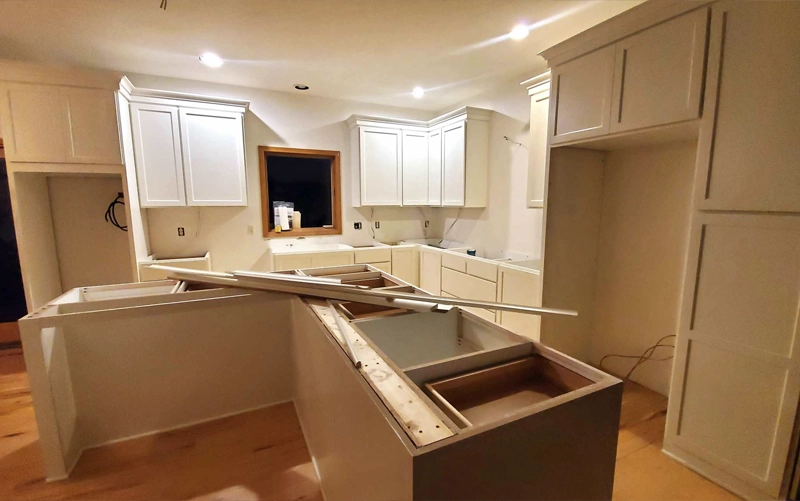
You do not need to ask dozens of technical questions before receiving a quote. Start with the issues that define responsibility and determine what will actually happen once the project moves forward.
| Question to Ask | Why It Matters |
|---|---|
| Who will measure, fabricate and install my countertop? | Clarifies whether the project is coordinated by one provider or divided between different companies. |
| What exactly is included in the installation quote? | Prevents comparisons between quotes that cover different scopes. |
| Who determines and approves seam locations? | Seams are affected by slab dimensions, layout, access and fabrication requirements. |
| What must be ready before final measurement and installation? | Cabinet, sink, appliance and site conditions can affect both fabrication and scheduling. |
| Who handles removal, plumbing, electrical or appliance connections? | These items may be included, optional or handled by separate trades. |
| What workmanship warranty or post-installation support is provided? | Clarifies what happens if an installation-related issue is identified afterward. |
One of the most important distinctions to establish is whether you are hiring only an installer or a company coordinating the complete countertop process.
Ask whether final measurement, fabrication and installation are performed within the same project workflow or assigned to separate providers.
This matters because the countertop installed in your kitchen is produced from measurements and fabrication decisions made earlier. If a fit, cutout or seam issue appears on installation day, you need to know which party is responsible for reviewing it.
For custom stone countertops, professional measurement usually takes place before fabrication. Teccorp Stone’s Countertop Survey & Measurement service covers this pre-fabrication stage in greater detail.
The word “installation” can describe different scopes. One installer may be responsible only for transporting and setting already fabricated pieces, while another quote may be part of a coordinated service that also includes templating, fabrication preparation, delivery and final installation.
Ask for the scope in writing rather than assuming that every countertop installation quote includes the same services.
Projects can change after the initial quote. Cabinet layouts may be adjusted, sink models may change or access conditions may turn out to be different from what was originally discussed.
Before hiring, ask who should receive those updates and at what point a change could require new measurement, fabrication revisions, additional cost or rescheduling. Clear communication becomes especially important once final measurements have been approved and fabrication has started.
Important Distinction: A countertop installer and a countertop fabricator may be part of the same company, but the roles are not identical. Fabrication concerns how the slab is measured, cut and finished; installation concerns how the completed pieces are delivered, positioned, joined and secured on site.
Ask whether the provider regularly works with the material and type of installation involved in your project. Quartz, granite, quartzite, marble and porcelain do not necessarily use identical fabrication, handling or installation methods.
The same applies to project geometry. Standard perimeter countertops, oversized islands, waterfall panels, full-height backsplashes and restricted-access properties can create different installation requirements.
Before comparing prices, ask the installer to identify what the quoted scope includes. Depending on the project, this may involve delivery, positioning countertop sections, seam work, securing the countertop, sink-related installation work and final adjustments.
The key is not to assume that an item is included simply because another installer includes it.
Exclusions can be just as important as inclusions. Ask specifically about existing countertop removal and disposal, plumbing reconnection, electrical or gas work, cooktop connection, wall repairs, backsplash work and cabinet modifications.
Some of these tasks may require separate trades or scheduling outside the countertop installation itself. Identifying them before signing helps establish a realistic project sequence and reduces surprises close to installation day.
Accurate measurement is one of the most important stages before countertop fabrication. Before hiring an installer or countertop company, understand who performs the final measurement, what must be ready beforehand and what happens if the project changes afterward.
Ask whether the company installing the countertop also coordinates the final measurement or digital template, or whether that stage is handled separately.
Final countertop dimensions should be based on the actual installed conditions rather than preliminary plans alone. Cabinet positions, walls, appliance openings, sinks, overhangs and other site conditions can influence the geometry used for fabrication.
For a deeper explanation of this stage, see Teccorp Stone’s What Is Countertop Templating? guide.
Ask for a clear readiness list before the measurement appointment. Depending on the project, the countertop provider may need cabinets to be installed and secured, appliance locations confirmed, sink information available and any structural or layout changes completed.
The exact requirements depend on the project, which is why assumptions should be avoided. Teccorp Stone’s Countertop Survey & Measurement service covers the measurement stage separately from installation.
| Ask Before Measurement | Why It Matters |
|---|---|
| Do the cabinets need to be fully installed? | Countertop geometry depends on the final cabinet positions and support conditions. |
| Which sink and appliance details must be confirmed? | Cutouts and surrounding dimensions may depend on approved product information. |
| Can the layout change after templating? | Changes after final measurement may affect fabrication, cost or schedule. |
Ask this question before approving final measurements. Changing cabinet positions, sinks, faucets, cooktops or countertop geometry after templating can affect information already used for fabrication.
A professional provider should be able to explain when a change can be incorporated, when a new measurement may be required and when the project schedule or quote could be affected.
Some of the most important installation details are determined before the pieces arrive at the property. Ask how seams, openings and structural requirements will be planned rather than waiting until installation day to discuss them.
Ask whether expected seam locations can be discussed before fabrication and what factors determine their position.
Countertop seams may depend on slab dimensions, countertop geometry, sink and cooktop openings, access, material pattern and installation conditions. The goal should not automatically be “no seams” or “the fewest seams possible,” because practical fabrication and installation constraints also matter.
For a more detailed explanation, see the Countertop Seam Placement Guide.
Ask when the installer or fabricator needs final sink, cooktop and fixture information and who is responsible for confirming the models.
These details can influence cutout dimensions and fabrication files. Replacing an approved product with a different model after fabrication has started may create problems even when the two products appear similar.
Large overhangs, islands and specific countertop configurations may require additional support.











The answer should be based on the material, dimensions and project conditions rather than a universal rule applied to every countertop.
Large islands and long countertop sections can create transportation and access constraints even when a slab is technically large enough to produce the desired piece.
Ask whether doorways, elevators, stairs, hallways and turning clearances have been considered. In some projects, site access can influence piece size or seam planning.
Useful Question: “Are there any fabrication or access conditions in my project that could affect seams, piece size or installation?” This often reveals project-specific issues that a generic installation checklist will not.
Before booking the project, clarify both the expected schedule and what needs to happen on installation day. A quoted installation date is only one part of the timeline; measurement, fabrication, material availability and site readiness can all influence when installation can take place.
Ask how the timeline is structured from final measurement through fabrication and installation rather than asking only for an installation date.
Also ask what events could change the schedule—for example, design revisions, material availability, site-readiness problems or changes made after templating.
Confirm how fabricated pieces will enter the property and whether the crew needs specific parking, loading or elevator arrangements.
For condominium and multi-unit properties, ask whether elevator reservations, loading windows, protective requirements or building access procedures need to be arranged in advance.
If this is a replacement project, ask whether removal and disposal of the existing countertop are included in the scope or must be completed separately.
Do not assume removal is automatically part of installation. It can affect scheduling, site readiness and the work required from other trades.
Ask specifically who disconnects and reconnects sinks, faucets, dishwashers, cooktops or other services affected by the countertop work.
A countertop installation crew should not automatically be assumed to perform licensed plumbing, electrical or gas work. Depending on the project and provider, these tasks may need to be coordinated separately.
Ask for installation-day requirements in advance. This may include clearing work areas, providing access, confirming that cabinets are ready and making sure any required disconnections or site preparations have been completed.
The purpose of asking is not simply to prepare the room—it is to identify dependencies that could prevent installation from proceeding as scheduled.

A countertop installation quote should make it possible to understand what you are paying for—not simply provide one final number. Before accepting an estimate, confirm the scope, exclusions and how changes will be handled if the project conditions differ from the original information.
Ask the installer or countertop company to identify the services included in the quoted price. Depending on the provider, the scope may cover only installation or may form part of a larger package involving measurement, fabrication, delivery and installation.
Items worth confirming include:
Do not assume two quotes are comparable simply because both use the term “countertop installation.” Teccorp Stone’s Kitchen Countertop Installation Cost guide explains how labour-only and more fully coordinated installation scopes can differ.
Ask what happens if site conditions, dimensions, appliances, fixtures or project details change after the quotation has been prepared.
A useful process should make it clear when additional work requires revised pricing and whether approval is needed before that work proceeds. This is especially important once final measurement has taken place because changes at that stage can affect fabrication as well as installation.
Rather than asking only whether the quote is “fixed,” ask which project conditions could change the scope. Examples may include difficult property access, additional countertop sections, revised cutouts, cabinet corrections, oversized pieces or work that was not included in the original quotation.
Quote Comparison Tip: Compare scope before price. A lower quotation is not necessarily less expensive if measurement, delivery, seams, removal or other required services are priced separately.
Before installation, understand what support applies if a problem is identified after the countertop has been installed.
Ask whether the installer provides a written workmanship warranty and what installation-related issues it covers. The length and scope can vary between providers, so avoid relying on assumptions or verbal descriptions alone.
A workmanship warranty should also be distinguished from any warranty offered by the stone or surface manufacturer. Material-related and installation-related issues are not necessarily handled by the same party.
Ask who becomes the point of contact after installation and how concerns should be documented. Knowing the process before the project begins makes it easier to distinguish between a material question, fabrication issue and installation concern if one arises later.
Do not ask for promises that every seam will be invisible or every existing wall will be perfectly straight. Instead, ask how the company evaluates concerns involving fit, alignment, seams or site conditions and what process is followed when corrective work may be required.
No single warning sign automatically proves that an installer is unsuitable, but several together should prompt closer review before you approve the project.
| Potential Red Flag | Why to Ask More Questions |
|---|---|
| The scope is not provided clearly in writing | You may not know which services are actually included in the quoted price. |
| Responsibility for measurement is unclear | Final dimensions directly affect fabrication and countertop fit. |
| Seams are dismissed without discussing the layout | Seam requirements depend on slab dimensions, geometry, access and fabrication planning. |
| You are told every service is included without exclusions being identified | Removal, plumbing, electrical or cabinet work may require separate coordination. |
| Changes after measurement are treated as insignificant | Changes to cabinets, sinks or appliances can affect already approved fabrication dimensions. |
| Warranty or post-installation support is unclear | You should know who reviews installation-related concerns after the project is completed. |
Before choosing between installers, compare each provider against the same set of questions rather than relying on price or sales presentation alone.
| Confirm Before Hiring | Installer A | Installer B | Installer C |
|---|---|---|---|
| Measurement responsibility is clear | □ | □ | □ |
| Fabrication and installation responsibilities are clear | □ | □ | □ |
| Included and excluded services are documented | □ | □ | □ |
| Seam and cutout planning has been discussed | □ | □ | □ |
| Site-readiness requirements are clear | □ | □ | □ |
| Access and scheduling requirements are confirmed | □ | □ | □ |
| Change-order process is explained | □ | □ | □ |
| Workmanship warranty / post-install support is clear | □ | □ | □ |

Ask who performs measurement, fabrication and installation; what the quote includes; how seams and cutouts are planned; what must be ready before installation; who handles removal or trade work; and what warranty or post-installation support applies.
Not necessarily, but responsibility should be clear. If measurement, fabrication and installation are handled by different providers, establish who is responsible for transferring approved dimensions and resolving fit-related concerns.
Yes. Seam placement may depend on slab dimensions, countertop geometry, sink and cooktop openings, structural support, access and installation conditions. Final locations should be discussed as part of fabrication planning.
Not always. Plumbing reconnection, electrical work, gas connections and appliance work may be included, optional or excluded depending on the contractor. Ask before scheduling installation.
Price should be compared together with scope. Determine whether measurement, fabrication-related services, delivery, seams, removal and other required work are included before deciding which quote offers better value for the project.
The provider should explain what installation workmanship is covered, how concerns are reported and what exclusions apply. Material warranties and installation workmanship warranties should be evaluated separately.
The most useful questions to ask before hiring a countertop installer are the ones that reveal responsibility. You should know who measures the project, who fabricates the countertop, what happens on installation day, which services are excluded and who responds if something does not go according to plan.
A clear written scope makes it easier to compare installers fairly and helps prevent assumptions about measurement, seams, removal, trade work and warranty coverage.
For projects requiring coordinated measurement, fabrication and installation, explore Teccorp Stone’s Custom Stone Fabrication Services or submit your project information for review.
Planning a Countertop Installation?
Share your project details, material requirements and installation conditions to receive a quote based on the actual project scope.