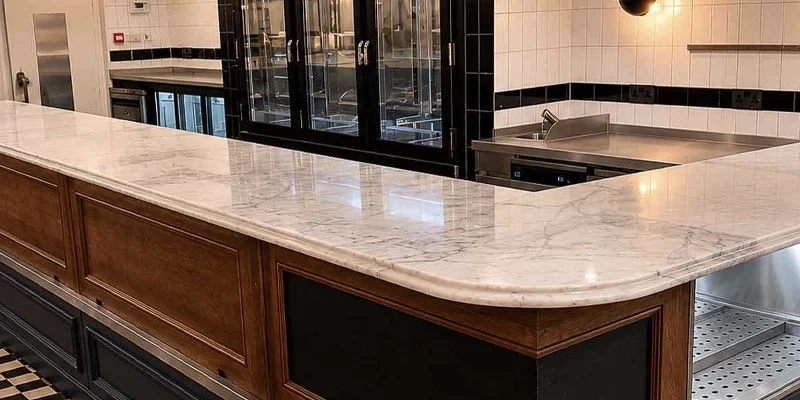
Knowing how to choose a stone fabricator is just as important as selecting the stone itself. A well-designed slab can still produce disappointing results if project measurements are incomplete, sink or appliance specifications are incorrect, visible patterns are poorly planned, or fabrication details are not coordinated with the final installation conditions.
For homeowners, the challenge is that fabrication quality can be difficult to judge before a project begins. Showroom displays, material samples and finished-project photographs are useful, but they do not reveal how measurements are confirmed, how slab layouts are planned, how openings and edges are fabricated, or how project changes are documented.
A better evaluation looks at the complete workflow. This guide explains what a stone fabricator actually does, which capabilities matter for different materials and projects, what questions to ask before hiring, and how to compare providers without relying only on price or promotional claims.
Homeowners planning custom countertops or architectural stone work can also review Teccorp Stone’s custom stone services for project-specific fabrication and stone-related installation applications.
Project Measurement | Material-Specific Fabrication | Quality Evaluation | Toronto & GTA Service
A stone fabricator converts slabs or manufactured surfaces into project-specific components. For a kitchen countertop, this may involve transforming the selected material into pieces that correspond to the cabinetry, sink, cooktop, wall conditions, edge design and other approved specifications.
For architectural applications, fabrication can also involve fireplace components, feature-wall panels, shower details, vanity tops, waterfall panels and other custom pieces.
The exact workflow varies by project, but the fabricator’s role can include coordinating information related to:
One important question to clarify early is which company is responsible for each stage of the project. A stone supplier may primarily sell slabs or surfaces. A fabricator produces the custom stone components. An installer places and secures those components at the project site.
Some businesses may provide several of these services, while other projects involve separate companies. Neither structure automatically produces better results. What matters is whether responsibilities, specifications and communication between each stage are clear.
Before hiring, homeowners should understand who is responsible for measurement, fabrication, delivery, installation and any work that falls outside the stone scope.
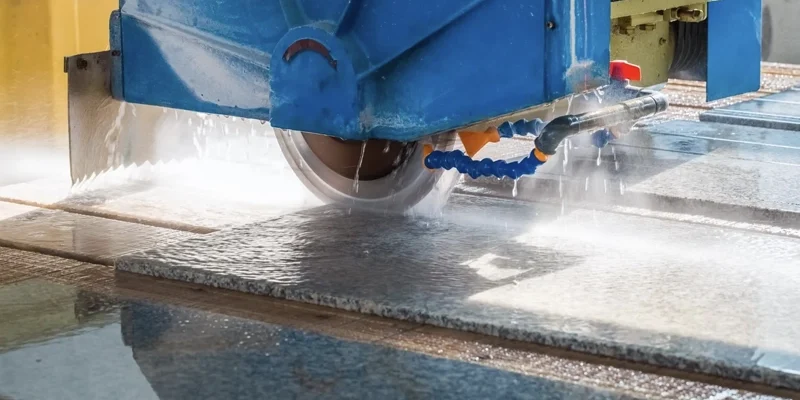
Modern fabrication can involve digital measurement data, production drawings, specialized cutting equipment and manual finishing. However, the quality of the completed work depends on more than the machinery used.
Accurate equipment cannot correct an incorrect sink model, outdated measurements or a poorly considered slab layout. A capable fabricator should therefore have a process for converting approved project information into finished components—not simply the ability to cut material.
A strong evaluation should focus on the fabricator’s process rather than a single claim such as years in business, advanced equipment or a large showroom. Each of those factors can provide useful context, but none independently demonstrates that a specific project will be managed well.
The fabricator should be able to explain when final measurements are taken, which site conditions need to be complete beforehand, and which decisions must be confirmed before affected components are produced.
For countertop projects, this can include cabinetry position, sink model, cooktop specifications, edge profile, overhangs and backsplash requirements. Teccorp Stone’s Countertop Survey & Measurement service provides additional context on the measurement stage and the project information that may influence fabrication.
A fabricator should understand that natural stone, engineered quartz and porcelain are not interchangeable materials. Their characteristics, available thicknesses, slab variation, edge treatment and product-specific requirements can affect how a project is planned.
This becomes especially important when working with less conventional applications or materials. Experience with standard kitchen countertops does not automatically establish the same capability with large-format porcelain walls, highly directional natural stone, bookmatched panels or complex waterfall details.
Where the selected material has significant veining or directional movement, homeowners should be able to discuss how the slab will be divided across the project.
Relevant questions may include where major patterns will appear, how adjoining pieces will relate visually, and whether important areas such as islands, waterfalls or feature panels need additional layout consideration.
Fabrication depends on information that can change during a renovation. Fixtures may be substituted, cabinetry may be adjusted and other project conditions may change after an initial discussion.
A useful fabrication process establishes how those changes are communicated and which version of the project information is considered approved for production.
Evaluation Principle: Do not judge a stone fabricator only by the showroom, equipment or lowest quote. Look for a process that connects accurate project information, material knowledge, fabrication decisions and clearly defined responsibilities.
Experience can be useful when comparing stone fabricators, but the number of years alone does not tell homeowners whether a company is well suited to a specific project. A fabricator may have extensive experience with standard kitchen countertops while having limited exposure to large-format porcelain, bookmatched wall panels, complex waterfall details or commercial architectural stonework.
The more useful question is whether the fabricator has experience with the material, application and level of complexity required for the project.
A homeowner planning a straightforward quartz countertop does not necessarily need the same fabrication background as someone planning a multi-slab natural stone island with waterfalls or a full-height feature wall.
Relevant experience can include projects involving:
Looking at comparable finished work can help homeowners understand whether the fabricator has dealt with similar design and production challenges before.
A small project can still require careful planning. A compact vanity with an unusual sink configuration, for example, may involve more fabrication detail than a large but simple rectangular countertop.
Complexity can come from:
The fabricator should be able to explain how those conditions influence measurement, layout and production rather than treating every project as a standard template.
Before installation, homeowners may not be able to inspect every production detail. However, they can still evaluate whether the fabricator has a process for controlling the factors that influence the finished result.
Useful indicators include accurate project information, thoughtful slab planning, appropriate material handling, consistent edge work, correctly prepared openings and a review process before installation.
Project photographs are useful for understanding style and general workmanship, but they do not always reveal the details that matter most in fabrication.
When reviewing completed work, look more closely at:
Homeowners who want a more technical framework can review Teccorp Stone’s guide to high-quality stone fabrication, which focuses specifically on measurement accuracy, slab planning, cutouts, edges, seams and quality control.
Modern CNC and digital fabrication equipment can improve repeatability and allow complex shapes or openings to be produced accurately. However, machinery only works with the information provided to it.
If project dimensions are incorrect, the wrong fixture specification is used, or the slab layout has not been properly planned, precise equipment can reproduce those mistakes just as accurately.

A fabricator should be able to explain how completed pieces are checked before they reach the installation stage. The exact quality-control process varies by project, but it may involve reviewing dimensions, openings, edge profiles, component identification and the relationship between adjoining pieces.
The important point is that installation should not be the first stage at which obvious fabrication discrepancies are discovered.
Accurate fabrication depends on accurate project information. One of the most useful ways to evaluate a stone fabricator is to ask how final measurements and fabrication-dependent specifications are confirmed.
For countertop projects, measurements should correspond to the cabinetry and surrounding conditions that will govern the final installation. If cabinets are moved, walls are altered or project dimensions change after measurement, the approved fabrication information may no longer match the site.
Homeowners should ask:
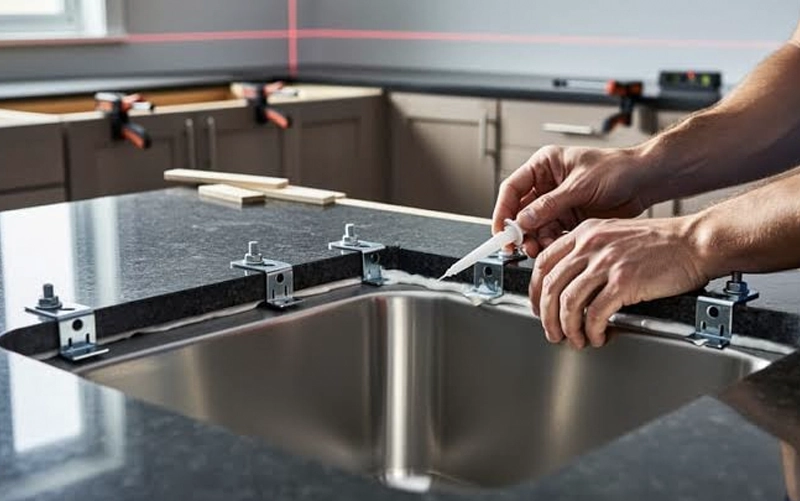
Sinks, cooktops, faucets and other components can directly affect the geometry of fabricated stone.










Relevant details may include:
Renovation projects often change. The important issue is not whether changes occur, but how they are controlled.
A professional workflow should make it clear which measurements, drawings, fixture specifications and design decisions are considered final for fabrication. This reduces the risk of different parties working from different versions of the project information.
Planning Check: Before fabrication begins, confirm which measurements, fixtures, edge details and other specifications are considered approved. Clear project information is one of the strongest safeguards against avoidable fabrication conflicts.
A stone fabricator should understand that different materials can require different production decisions. Natural stone, engineered quartz and porcelain differ in structure, slab behaviour, visible variation and product-specific requirements.
Homeowners do not need to become material experts, but they should be able to ask how the selected surface affects fabrication and installation planning.
Marble, granite and quartzite can vary significantly from slab to slab. Veining, mineral movement and other natural characteristics may influence how components are positioned and how visible areas are distributed across the project.
For this reason, a fabricator working with natural stone should be prepared to discuss the actual slab rather than treating every piece of a material category as visually identical.
Engineered quartz products can differ in composition, thickness options, pattern direction and manufacturer requirements. Fabrication decisions should therefore reflect the selected product rather than general assumptions about all quartz surfaces.
Large-format porcelain should not be treated as if it behaves exactly like granite, marble or engineered quartz. Product thickness, handling, cutting, edge details and installation requirements can differ between systems.
When comparing fabricators for a porcelain project, homeowners should ask whether the company has relevant experience with the specific type of application being planned.
Those still comparing material families can browse Teccorp Stone’s stone surfaces collection before narrowing the project to a specific slab or manufactured surface.
The best questions are the ones that reveal how the fabricator manages project information, materials, production decisions and responsibilities. Homeowners do not need highly technical answers, but they should receive clear explanations rather than vague assurances.
Useful questions include:
The purpose of these questions is not to find one universally “correct” workflow. Different companies may organize projects differently. The important issue is whether the responsibilities and approval points are clear before fabrication begins.
The lowest total price does not necessarily represent the same scope as a higher quote. Before comparing stone fabricators, homeowners should check whether each quotation includes equivalent materials, fabrication details and services.
Depending on the project, differences can involve:
A quotation is most useful when the inclusions and exclusions are understandable. Two prices that appear very different may become much closer once differences in material, fabrication details or installation scope are identified.
Homeowners should also avoid assuming that any service not specifically mentioned is automatically included.
Claims such as “perfect fit,” “invisible seams” or guaranteed outcomes should be evaluated carefully. Real projects involve material characteristics, site conditions and design constraints that can affect the finished result.
Clear explanations of process and scope are generally more useful than absolute promotional promises.
No single warning sign proves that a fabricator will produce poor work, but several issues should encourage homeowners to ask additional questions before approving a project.
If it is not clear who confirms final dimensions or when the project becomes ready for measurement, responsibility can become difficult to establish if site conditions later conflict with the fabricated pieces.
Producing sink, cooktop or other fixture-dependent components without the required approved information can introduce avoidable risk.
Not every project needs an elaborate slab-layout presentation, but a fabricator should be able to explain how major seams, directional patterns and visually important components are considered.
A quotation that does not distinguish fabrication, installation and work performed by other trades can make it difficult to compare providers or understand the final project responsibility.
CNC equipment and digital technology can support precision, but machinery should not be presented as proof of quality by itself. Measurements, specifications, material knowledge, finishing and quality control remain part of the evaluation.
Hiring Principle: A reliable evaluation focuses on how clearly the fabricator explains the project, documents important decisions and manages the transition from measurement to finished components—not on a single marketing claim.
The capabilities that matter most can change with the application. A company that is appropriate for a straightforward countertop may not necessarily be the best fit for every architectural stone project.
Kitchen projects often require coordination between cabinetry, sinks, faucets, cooktops, seams, edges and backsplashes. Homeowners specifically looking for countertop fabrication in the Toronto market can also review Teccorp Stone’s Countertop Fabricator Toronto guide.
Large wall applications place greater emphasis on panel dimensions, pattern placement, openings and the relationship between adjoining pieces. Teccorp Stone’s stone feature wall guide covers these design considerations in more detail.
Fireplace applications require coordination between the stone design and the requirements of the specific fireplace system. Projects focused on fabricated stone components around fireplaces can refer to Teccorp Stone’s fireplace stone work service.
Waterfalls, multi-piece islands, full-height backsplashes and other connected components increase the importance of measurement, layout and sequencing. Relevant experience with similar project complexity may be more useful than general claims about the total number of projects completed.
Look for a clear measurement process, relevant material experience, understandable project documentation, appropriate fabrication capabilities and clear responsibilities for installation and related work.
Not necessarily. Fabrication and installation are different stages, although one company may provide both. Homeowners should confirm who is responsible for each part of the project.
The project should be fabricated from reliable final measurements appropriate to the scope. Which party performs or verifies those measurements should be clearly established before production.
Relevant experience is useful because marble, granite, quartzite, engineered quartz and porcelain can require different planning and fabrication considerations.
Compare the scope as well as the total price. Check whether material, measurement, cutouts, edges, additional pieces, delivery and installation are included consistently across the quotations.
CNC equipment can support accurate and repeatable production, but it does not guarantee quality by itself. Accurate project information, material knowledge, finishing and quality control remain important.
Choosing a stone fabricator is ultimately about understanding how the company will manage the specific project—not simply selecting the lowest price, the largest showroom or the most impressive equipment list.
Homeowners can make a stronger comparison by looking at relevant project experience, measurement and approval procedures, material knowledge, fabrication quality, quote scope and the clarity of communication between fabrication and installation.
When these areas are defined before production begins, it becomes easier to compare providers on meaningful criteria and reduce avoidable uncertainty during the project.
Discuss Your Custom Stone Project
Share your project dimensions, photographs, material preferences and location with Teccorp Stone to discuss fabrication requirements and the appropriate next steps for your project.