CNC stone fabrication uses computer-controlled machinery to perform selected cutting, routing, drilling and machining operations on natural stone and manufactured slab materials. Instead of relying entirely on manually guided tools, the machine follows programmed digital geometry that defines where and how specific fabrication operations should occur.
This technology can support the production of kitchen countertops, islands, vanity tops, fireplace components, backsplashes and other custom stone pieces. But CNC should not be understood as an automated replacement for the complete fabrication process. Measurements, slab planning, material assessment, programming, tooling, finishing and quality review still require appropriate decisions before and after machining.
The distinction matters because CNC equipment can reproduce programmed geometry accurately, but it cannot determine whether the original project dimensions were correct, whether a seam is positioned appropriately or whether the selected machining strategy suits the actual material.
This guide explains how digital stone fabrication works, the main types of CNC equipment used in slab production, the operations these systems can perform and where skilled fabrication remains essential alongside automation.
Digital Production | Computer-Controlled Machining | Material-Specific Fabrication | Skilled Finishing & Quality Review
CNC stands for Computer Numerical Control. In stone fabrication, CNC equipment follows programmed instructions to move cutting or machining tools along defined paths.
Depending on the machine and project, CNC technology may be used for:
The key feature is not simply automation. CNC connects digital project geometry with controlled machine movement, allowing the same programmed dimensions to guide specific fabrication operations.
A CNC system can control factors such as tool movement, machining paths, cutting locations and selected production sequences. More sophisticated systems may control movement across several axes, allowing the machine to approach the material from different directions.
However, the machine is only executing instructions. The production file, tooling strategy and setup must still be appropriate for the material and project.
CNC equipment does not independently decide:
Those decisions belong to the broader fabrication workflow.
This is why CNC machinery should be considered a production tool rather than a substitute for stone-fabrication knowledge. Teccorp Stone’s guide to high-quality stone fabrication examines the wider quality factors that surround machining.
Before CNC machining begins, project information needs to be converted into production data that describes the required components. The exact software and workflow can vary between fabrication facilities, but the underlying sequence moves from geometry to machine instructions.
For countertop projects, production geometry may originate from approved measurements or digital templates. This information can define perimeter dimensions, corners, sink locations, cooktop openings, overhangs and other features that affect fabrication.
The accuracy of the CNC operation therefore begins before the machine is involved. If the source geometry does not match the intended project conditions, precise machining can reproduce the wrong dimensions just as consistently as the correct ones.
Homeowners interested in this earlier stage can review What Is Countertop Templating? or Teccorp Stone’s Countertop Survey & Measurement service.
Digital fabrication commonly involves software used to define component geometry and prepare machining instructions.
CAD—Computer-Aided Design—can be used to represent the required shapes and dimensions. CAM—Computer-Aided Manufacturing—can then translate production geometry into machining information appropriate for the equipment.
Depending on the system, the production setup may define:
Software can organize this information, but the production plan still needs to reflect the selected material and the actual fabrication requirements.
Stone materials do not all require identical machining conditions. The tooling and setup used for one granite slab may not be appropriate for a porcelain product or another stone with different characteristics.
Before machining, the fabricator may need to consider material type, thickness, component geometry, tool condition and the operations required by the project.
This material-specific setup is one reason broad statements such as “CNC cuts every stone the same way” are misleading.
Once the approved production information and machine setup are ready, CNC equipment can execute the programmed operations. Completed components still require review because digital machining is only one stage within the overall fabrication process.
Dimensions, openings, edge work and visible surfaces may need to be checked before the pieces move into additional finishing or installation preparation.
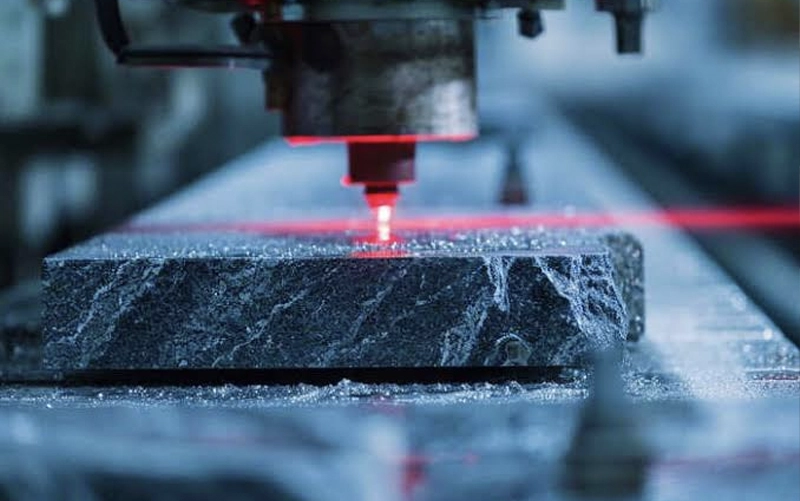
CNC stone fabrication does not refer to one single machine. Different equipment can perform different stages or types of machining, and fabrication facilities may use a combination of systems according to their production requirements.
CNC routers are commonly associated with detailed machining operations. Depending on the equipment and tooling, they may be used for sink openings, holes, curves, selected edge work and other component-specific details.
Their value lies in the ability to follow defined digital geometry repeatedly, but final results still depend on setup, tooling, material behaviour and subsequent finishing.
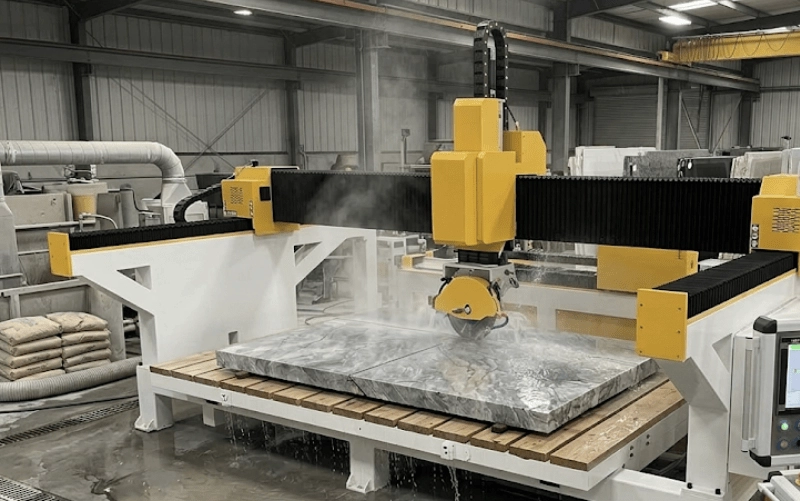
Computer-controlled bridge saws can be used for primary slab cutting and component shaping. Programmed movement allows cutting paths to follow approved production geometry while handling larger slab sections.
These systems may be particularly useful when a project contains several pieces that need to be produced from one or more slabs according to an established layout.
Multi-axis CNC equipment provides additional freedom of machine movement compared with simpler systems. Depending on the machine configuration, this can support more complex cutting angles, miter preparation or other geometries that require the tool to approach the material from different directions.
The presence of more axes does not automatically indicate better fabrication. The equipment must still be appropriate for the required operation, correctly programmed and used with suitable tooling and material knowledge.
Technology Principle: CNC capability should be evaluated by how appropriately digital data, equipment, tooling and skilled fabrication are combined—not simply by the sophistication of the machine itself.
CNC equipment can support several different machining operations during stone fabrication. The exact capabilities depend on the machine, tooling, software and selected material, so not every operation is performed in the same way across every fabrication facility.
One of the most fundamental operations is producing the overall geometry of the stone component. Digital production files can define straight runs, angled sections, curves and other perimeter details that need to match the approved project dimensions.
This can be particularly useful for countertops with irregular walls, non-standard corners, radius details or several adjoining pieces that need to relate to one another.
Sink and cooktop openings are among the most common CNC applications in countertop fabrication. The machine follows the approved opening geometry rather than relying on an approximate manual layout.
The relevant fixture information should still be confirmed before production. Different sink or cooktop models can require different cutout dimensions, corner conditions or clearances.
Accurate machining does not compensate for incorrect fixture information. If the wrong specification enters the production file, the CNC system can reproduce that error very precisely.
Depending on the project, CNC equipment may also be used for faucet holes, accessory openings, selected grooves, radius corners and other detailed machining operations.
These features should be coordinated with the larger countertop layout. A faucet hole, for example, may need to relate to the sink location, cabinetry below and available space behind the fixture.
CNC systems can support selected edge-shaping and miter-preparation operations. Mitered components are commonly associated with thicker visual edge details, waterfall panels and other applications where adjoining pieces meet at an angle.
Machine preparation is only one part of these details.


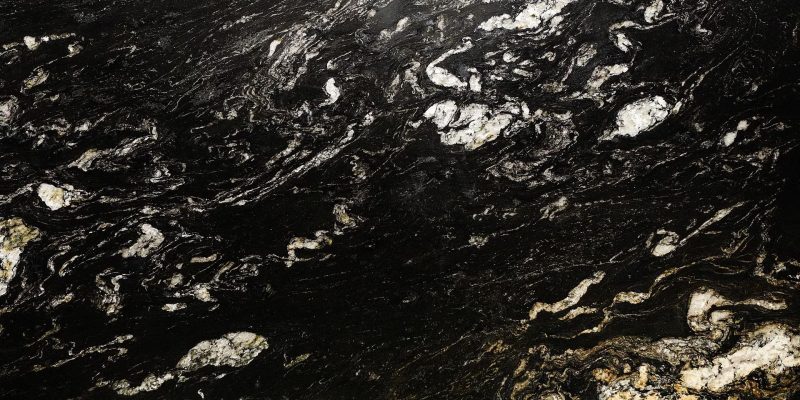






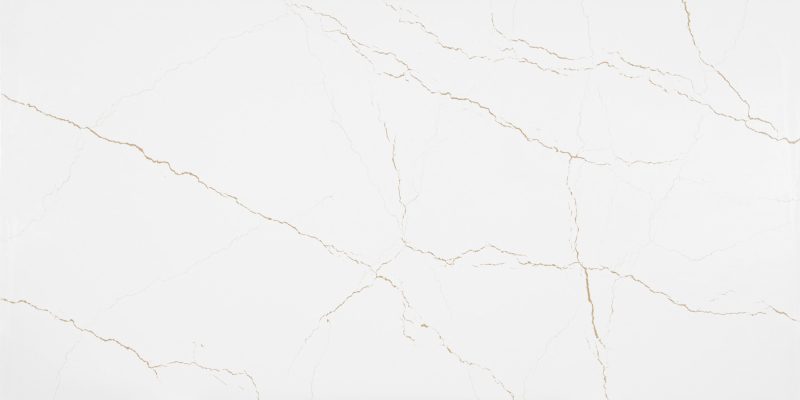
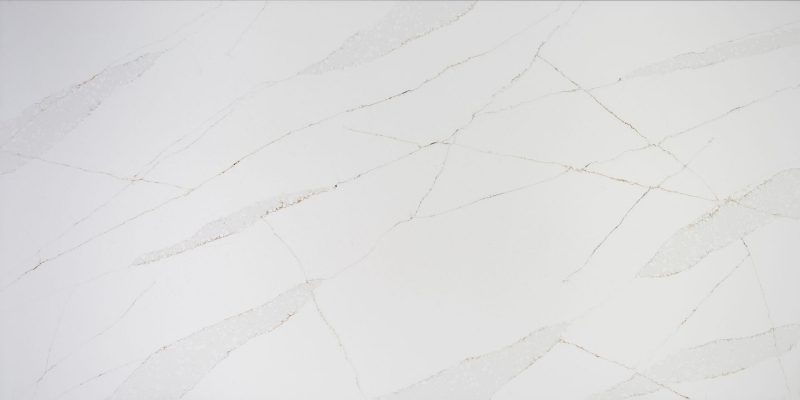
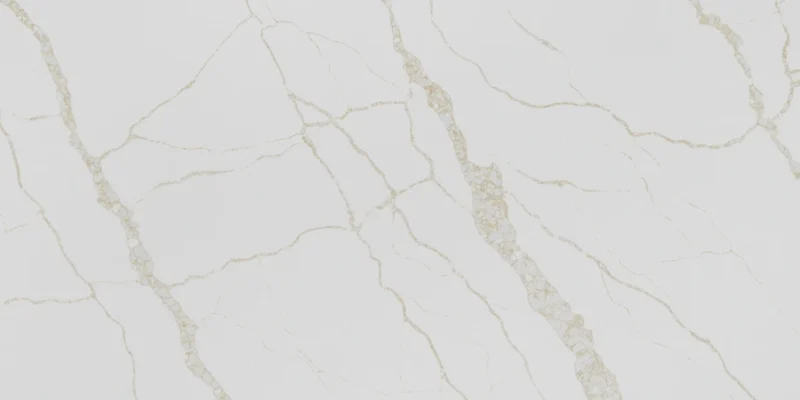
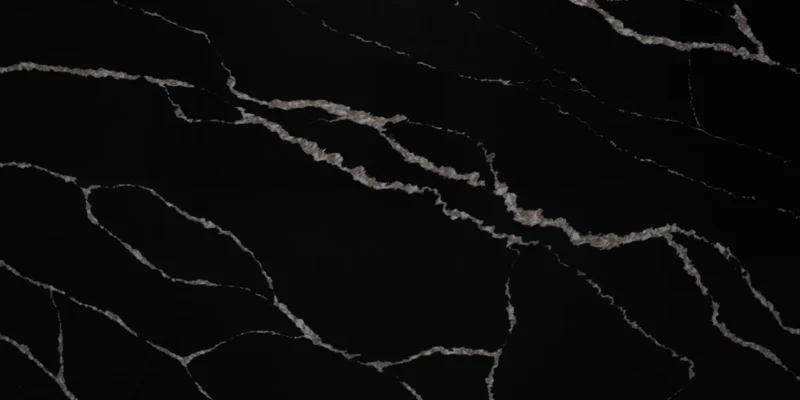
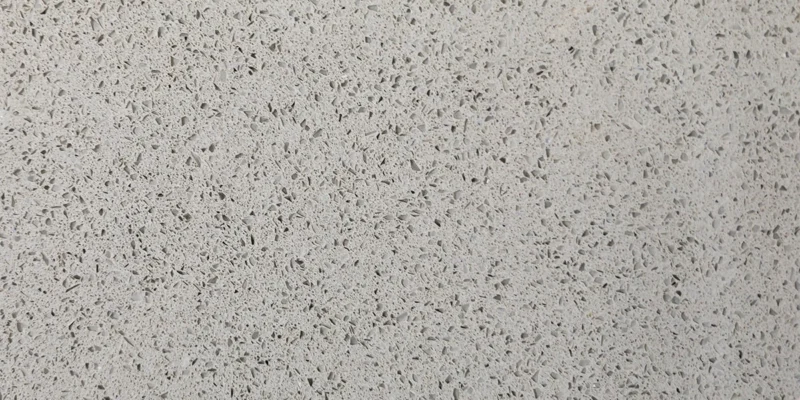



CNC technology can be used with a range of natural and manufactured slab materials, but the machining strategy should respond to the actual surface being fabricated.
Granite is a natural stone with slab-specific variation in mineral structure and pattern. CNC machining can support perimeter cutting, openings and selected edge work, while slab orientation and natural features still need to be considered separately during planning.
Marble can require careful handling and material-appropriate tooling, particularly where the project includes detailed openings, edges or highly visible components.
Its natural veining also means that CNC geometry should work within an already considered slab layout rather than treating the material as visually interchangeable across the entire slab.
Quartzite can vary between individual stones and should be machined according to the characteristics of the selected slab. Tooling, cutting strategy and finishing requirements may therefore differ from other natural materials.
Engineered quartz provides more controlled material characteristics than naturally quarried slabs, but fabrication should still follow the requirements of the selected product.
Pattern direction, product thickness, cutout guidance and other technical specifications can influence how CNC operations are programmed.
Porcelain should be treated as a distinct manufactured slab system. Thickness, edge construction, handling and cutout requirements can differ from both natural stone and engineered quartz.
CNC machining may be part of porcelain fabrication, but the overall strategy should follow the selected product and equipment capabilities rather than a generic stone-cutting routine.
Material Check: CNC is a production technology, not a universal machining recipe. Tooling, setup and fabrication strategy should reflect the actual stone or manufactured surface being processed.
CNC and manual fabrication are sometimes presented as competing methods, but modern stone production is usually better understood as a combination of digital machining and skilled manual work.
| Aspect | CNC Fabrication | Manual Fabrication |
|---|---|---|
| Geometry | Follows programmed digital paths. | Depends more directly on technician layout and tool control. |
| Repeatability | Useful where the same approved geometry must be reproduced consistently. | Can be effective for unique adjustments and skilled finishing. |
| Complex Machining | Can support detailed programmed operations. | May remain necessary for selected finishing, corrections or site-specific work. |
| Decision-Making | Executes programmed instructions. | Allows direct technician judgment during hands-on work. |
The practical question is therefore not whether CNC is always better than manual fabrication. It is whether the project uses the appropriate combination of digital production and skilled finishing for the material and design.
CNC equipment can perform highly controlled machining, but several critical fabrication decisions remain outside the machine itself.
If the source geometry is wrong or outdated, the machine cannot determine that the project conditions have changed.
Pattern direction, visible veining and the relationship between several pieces require design and material judgment before machining begins.
An edge, cutout or miter may be digitally possible without necessarily being appropriate for every slab or manufactured product.
After CNC machining, fabricated pieces may still require manual finishing, inspection and preparation before delivery or installation.
This is why the broader countertop fabrication process remains important. CNC is one production stage within that workflow rather than the complete workflow itself.
CNC stone fabrication is best understood as one stage within a larger production workflow. It becomes relevant after the project geometry, material, component layout and required machining operations have been defined.
A typical countertop fabrication sequence may involve:
The CNC stage does not replace the steps before or after it. Instead, it converts approved digital information into controlled machine operations.
For homeowners who want to understand the complete sequence rather than the machinery alone, the Countertop Fabrication Process guide explains how measurement, slab planning, machining, finishing and installation coordination fit together.
Two of the most useful characteristics of CNC fabrication are controlled geometry and repeatability. When the production information, setup and tooling are appropriate, programmed machining can reproduce defined shapes and locations consistently.
A CNC machine follows the geometry supplied to it. The quality of that geometry therefore matters as much as the accuracy of the machine itself.
Reliable production depends on several connected inputs:
When one of those inputs is incorrect, automation can reproduce the mistake consistently rather than correct it.
Digital machining can be particularly useful when several components share defined geometry or when a project contains repeated openings, edge details or related pieces.
This does not mean every component should be identical. Natural stone variation, slab layout and application-specific conditions may still require individual decisions even when the machining process is digitally controlled.
Fabrication quality also depends on how the pieces are planned, finished and evaluated after machining. Seam relationships, visible edges, surface condition and coordination with installation all remain important.
For that reason, CNC capability should never be used as the only measure of a fabricator. Teccorp Stone’s High-Quality Stone Fabrication guide provides a broader framework for evaluating workmanship.
Quality Principle: CNC technology can improve control and repeatability, but fabrication quality still depends on the accuracy of project data, material planning, setup, finishing and review.
CNC machining can support both residential and commercial fabrication where project geometry needs to be translated into precise physical components.
CNC equipment can be used for perimeter machining, sink openings, cooktop cutouts, faucet holes and selected edge operations in kitchen projects.
Large islands and waterfall components can still require separate slab-layout decisions before the machine receives its final production instructions.
Vanity tops may involve sink openings, faucet locations, edge details and smaller custom dimensions. CNC machining can support these features where appropriate to the material and production system.
Custom stone projects can also include fireplace components, wall pieces and other architectural elements. CNC may be used for selected shapes or machining operations, but vertical layout, support and installation requirements remain part of the wider project.
Commercial fabrication can involve reception counters, work surfaces or repeated components across several areas. Digital production can help maintain consistent geometry where the same approved dimensions need to be reproduced.
Projects extending beyond standard countertops can be explored through Teccorp Stone’s Stone Fabricator Toronto guide, while countertop-specific provider information is covered in the Countertop Fabricator Toronto guide.
CNC stands for Computer Numerical Control. It refers to machinery that follows programmed digital instructions to perform selected cutting, routing, drilling and machining operations.
No. CNC controls specific machining operations, but measurement, slab planning, programming, tooling, finishing, quality review and installation still require human input.
CNC can provide highly repeatable programmed geometry, but overall accuracy still depends on correct source data, setup, tooling and material handling.
Yes, CNC equipment can be used with many natural stones, but tooling and machining strategies should be selected according to the characteristics of the actual material.
Yes. Both materials can be fabricated with CNC equipment where the machine, tooling and production method are appropriate for the selected product.
No. Some components may still require manual finishing, inspection or adjustment after machining.
No. Seam placement is a planning decision influenced by project geometry, slab dimensions, access and visual considerations. CNC can machine the resulting pieces after that decision has been made.
No. Fabrication methods vary by project, material and facility. CNC is one production technology rather than a requirement for every application.
CNC stone fabrication has become an important tool in digital stone production because it can translate approved geometry into controlled and repeatable machining. Its real value appears when it is integrated with accurate project information, thoughtful material planning and skilled finishing.
For countertops and other custom stone components, the machine is only one part of the process. The project still depends on how well measurements, slab layout, openings, material requirements and installation conditions are resolved before and after machining.
Homeowners planning custom stone work should therefore evaluate CNC capability as part of a broader fabrication system rather than as a stand-alone guarantee of quality.
Plan a Digitally Fabricated Stone Project
Share your project dimensions, application and preferred materials with Teccorp Stone to discuss measurement, fabrication and machining requirements.