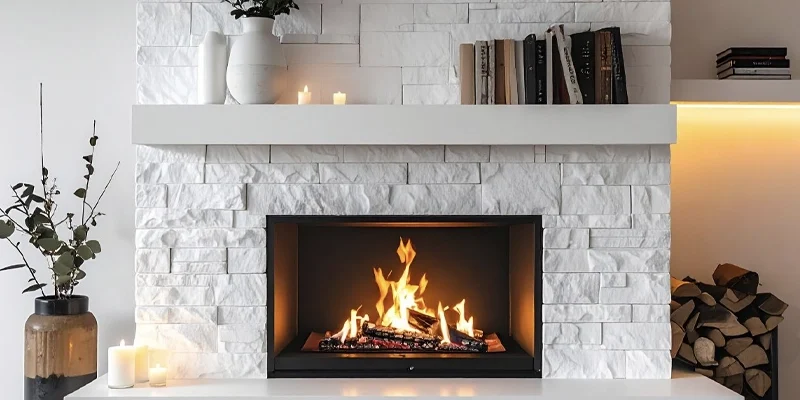
Choosing the best stone for fireplace surrounds requires more than comparing colours and patterns. The same material may perform differently when used as a decorative full-height wall, a fabricated mantel, an immediate firebox surround or a horizontal hearth. Fireplace type, heat movement, panel dimensions, edge details and manufacturer requirements must all be considered before a slab is selected.
Granite, marble, quartzite, porcelain, soapstone and engineered quartz each offer different advantages and limitations. Some provide distinctive natural movement, while others offer greater pattern consistency or thinner large-format panels. No single material is automatically the right choice for every electric, gas or wood-burning fireplace.
This guide compares the main fireplace surface materials according to their typical applications, appearance, fabrication requirements and care considerations. It focuses on the visible stone or porcelain finish rather than the installation of the fireplace appliance, venting, gas connections or internal fire-rated assembly.
Quick Answer
Granite, quartzite, porcelain, marble and soapstone may all be considered for fireplace applications, but the best material depends on where it will be installed. A hearth, immediate surround and full-height feature wall do not experience identical conditions. The selected surface must also comply with the fireplace manufacturer’s clearances, ventilation requirements and approved wall assembly.
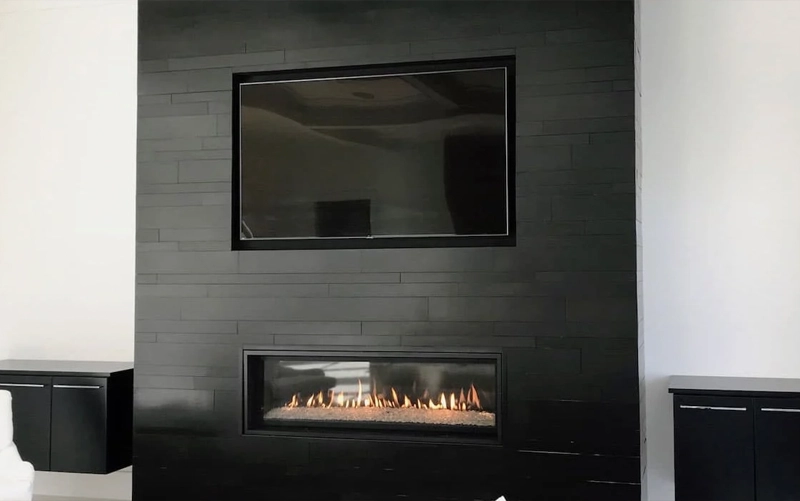
The term fireplace stone can describe several different components. A material used on a decorative wall several feet above an electric fireplace may not be exposed to the same conditions as a hearth positioned directly in front of a wood-burning firebox. Before comparing individual stones, the intended application must be defined.
A fireplace surround is the visible finish immediately beside and above the fireplace opening. It may consist of narrow framed pieces, larger slab panels or a continuous surface connected to the upper wall.
A hearth is the horizontal surface at the base of the fireplace. It may be flush with the floor, raised or fabricated as a projecting slab. Hearths can experience physical wear, cleaning products, ash or sparks depending on the fireplace type.
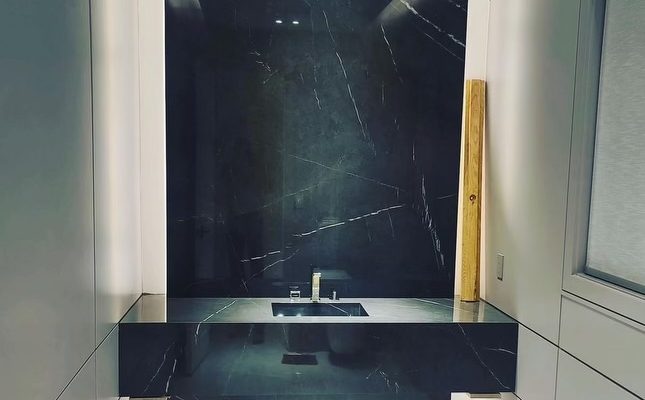
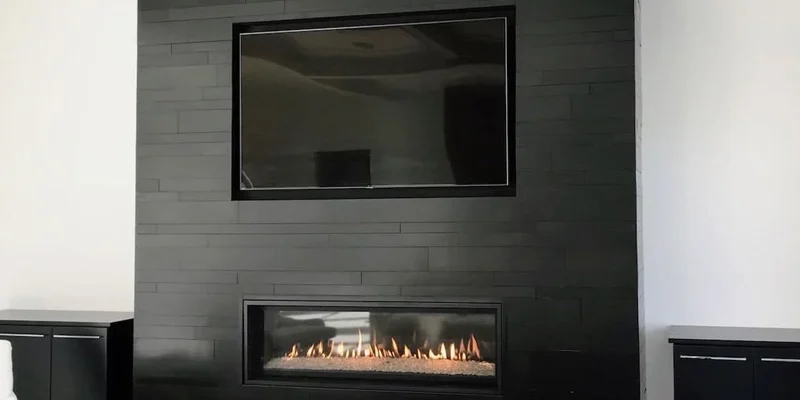
A full-height fireplace wall extends beyond the immediate surround and may continue to the ceiling. It is often used with linear gas or electric fireplaces, televisions, shelving and media units. Although much of this wall may be decorative, the area close to the appliance must still follow the fireplace manufacturer’s requirements.
Other fabricated components can include:
Electric, gas and wood-burning fireplaces do not transfer heat in the same way. Even two gas fireplaces can have different requirements depending on the model, glass configuration, ventilation system and location of heat outlets.
For this reason, a material should not be approved solely because it is commonly described as heat resistant. The project team should first confirm:
The stone or porcelain surface must then be evaluated for that specific position in the assembly. A product permitted on an upper decorative wall may not necessarily be approved directly beside the firebox or in a horizontal hearth application.
Long-term performance depends on more than the name of the stone. Slab condition, thickness, panel dimensions, cutouts, seam placement, substrate preparation and movement accommodation can all affect the finished installation.
A dense material can still be vulnerable if a large panel contains narrow sections or sharp internal corners. Similarly, an appropriate stone may develop problems when installed over an unstable wall, exposed to concentrated heat outside the approved design or rigidly connected to materials that move differently.
Important: The fireplace model should be selected before final slab measurement and fabrication. Appliance dimensions, ventilation and clearance requirements directly affect the surround opening, hearth layout and panel divisions.
The following materials can each serve a different design or functional role. Their suitability should be assessed according to the exact slab or product, fireplace type and installation location.
| Material | Visual Character | Typical Application | Main Consideration |
|---|---|---|---|
| Granite | Natural crystalline pattern with varied colour and movement | Surrounds, hearths and fabricated mantel components | Slab layout, finish and stress around cutouts |
| Marble | Distinctive veining and formal architectural character | Decorative surrounds and full-height feature walls | Etching, staining and finish-specific care |
| Quartzite | Natural movement that may resemble marble | Statement surrounds, hearths and slab walls | Individual slab properties and correct material identification |
| Porcelain | Controlled printed pattern and contemporary large-format appearance | Full-height walls and selected fireplace surrounds | Product-specific fabrication and fireplace approval |
| Soapstone | Soft matte appearance with darker, understated tones | Hearths, surrounds and traditional fireplace details | Surface scratching and expected patina |
| Engineered quartz | Consistent colour and manufactured pattern | Only approved, controlled-heat applications | Resin content, heat separation and manufacturer restrictions |
Granite is frequently considered for fireplace surrounds and hearths because it combines a dense natural structure with a wide range of colours and finishes. Its appearance can range from quiet, fine-grained surfaces to slabs with strong mineral contrast, making it suitable for both traditional and contemporary interiors.
Granite may be used for framed surrounds, horizontal hearths, mantel shelves and full-height slab walls when the individual slab, fireplace assembly and fabrication layout are suitable. It is particularly useful where the design calls for a durable horizontal component or a natural stone with less sensitivity to acidic household substances than marble.
Granite should not be described as immune to cracking or thermal stress. Large cutouts, narrow sections around a fireplace opening and concentrated heat can create vulnerable areas. Seam placement and internal-corner fabrication should therefore be planned before cutting begins.
Polished granite reflects light and emphasizes colour contrast, while honed or leathered finishes create a softer appearance. Textured finishes may conceal fingerprints but can require more detailed cleaning around soot or dust.
Where the design includes a thick-looking hearth or mantel, mitred returns can create visual depth without requiring a solid block of stone. Browse available granite slabs according to colour, movement and the dimensions needed for the fireplace layout.
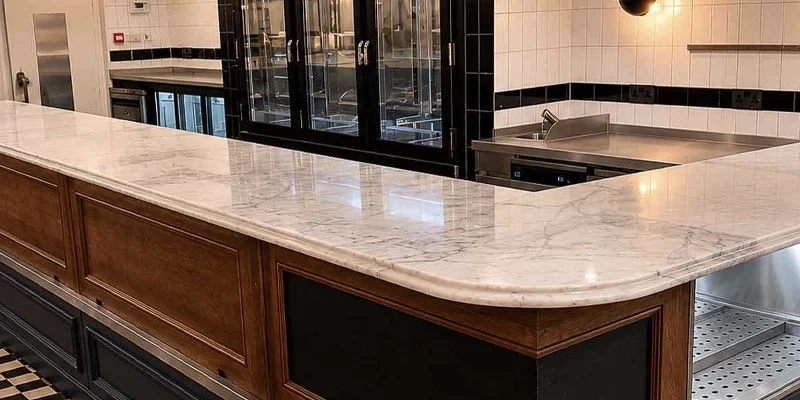
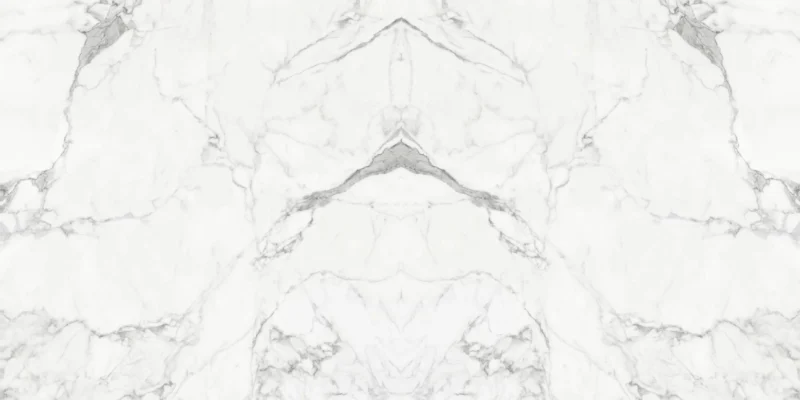
Marble is selected primarily for its veining and architectural character. It can create a formal framed surround, a bookmatched statement wall or a quieter honed feature in transitional interiors.
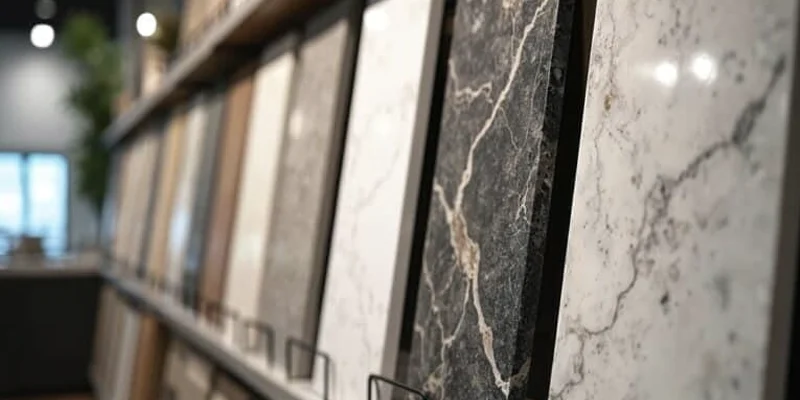
Each marble slab has natural variation. Slab selection is therefore important when the fireplace opening interrupts a prominent vein or when two panels are intended to create a mirrored layout. The final pattern should be reviewed across the full wall elevation rather than from a small sample alone.
Marble is generally better suited to visible surrounds and feature walls where its appearance can be appreciated and the application is consistent with the fireplace and stone supplier’s technical requirements.
Marble is acid-sensitive. Vinegar, acidic cleaners and some household products can dull or etch polished surfaces. A sealer may reduce absorption in some stones, but it does not make marble stain-proof or eliminate the need for compatible cleaning.
Honed marble may make minor etching less noticeable than a high-polish finish, although it can still absorb residue depending on the stone. Explore the marble slab collection with attention to finish, vein direction and expected care.
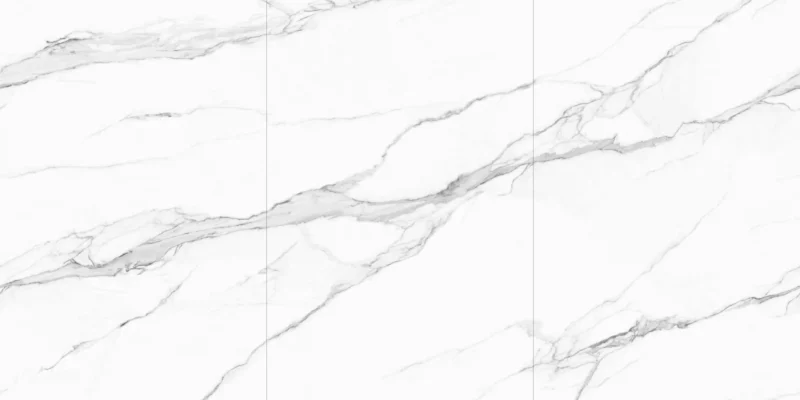
Quartzite is a natural stone that may combine strong mineral movement with a dense structure. Some slabs resemble marble visually, making quartzite attractive for homeowners seeking pronounced veining in a fireplace surround or feature wall.
Quartzite can be considered for surrounds, hearths and fabricated wall panels, but performance should not be generalized from the material name alone. Colour, mineral composition, fissures and surface finish vary between slabs.
Layouts with large firebox cutouts or long narrow sections require careful review.

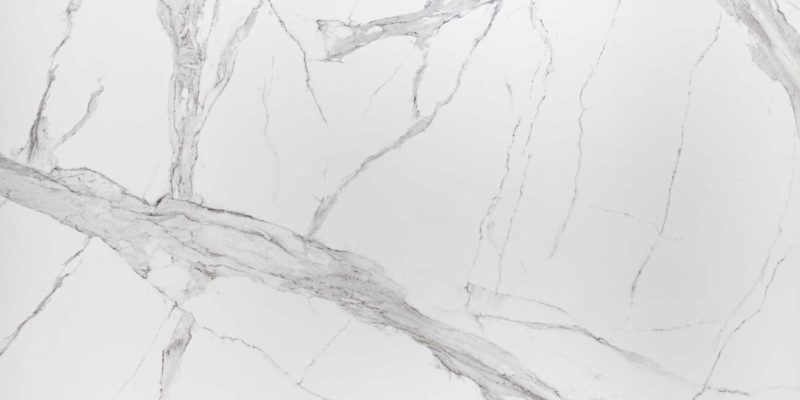

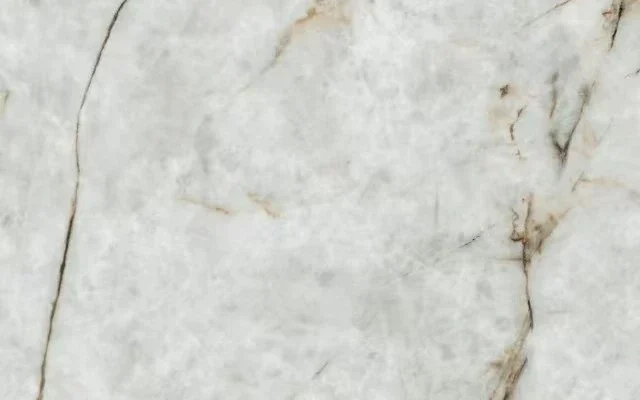
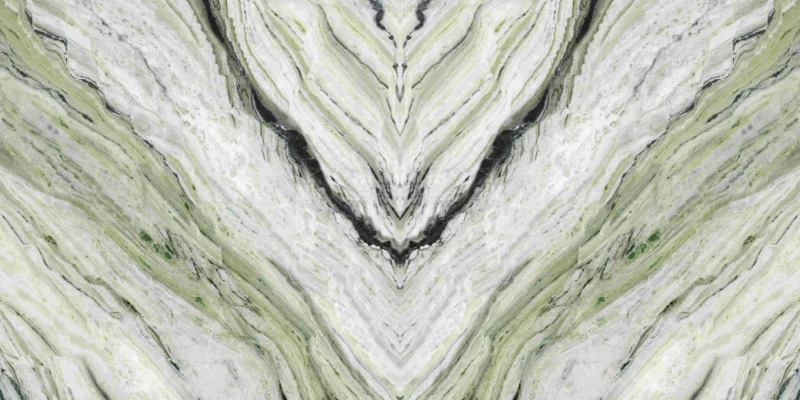
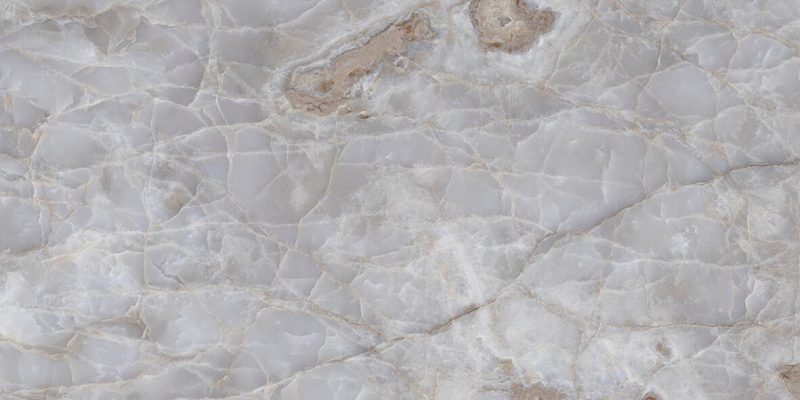
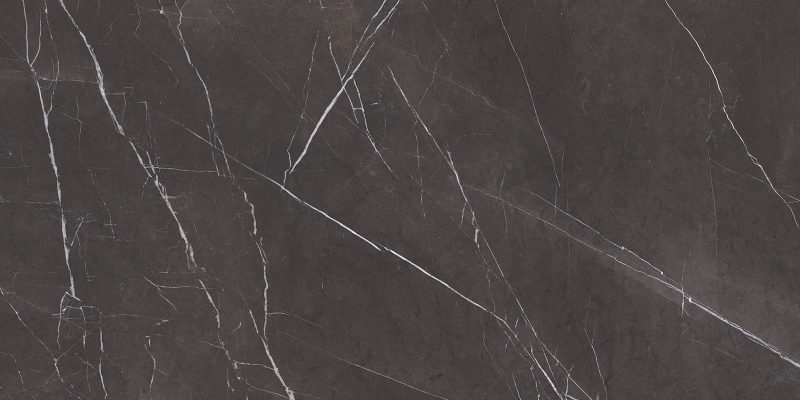




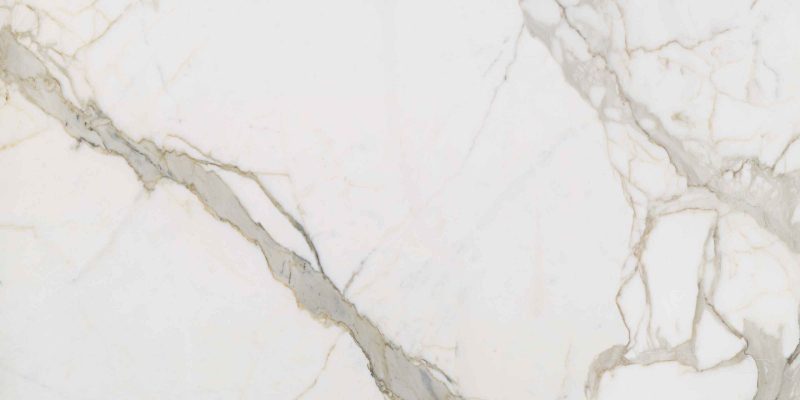
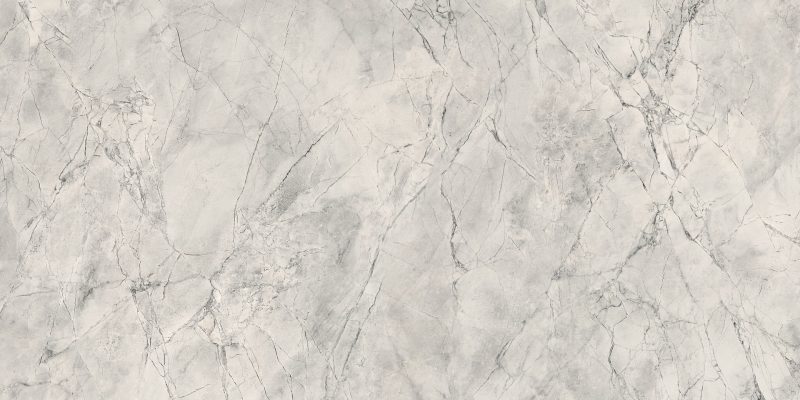
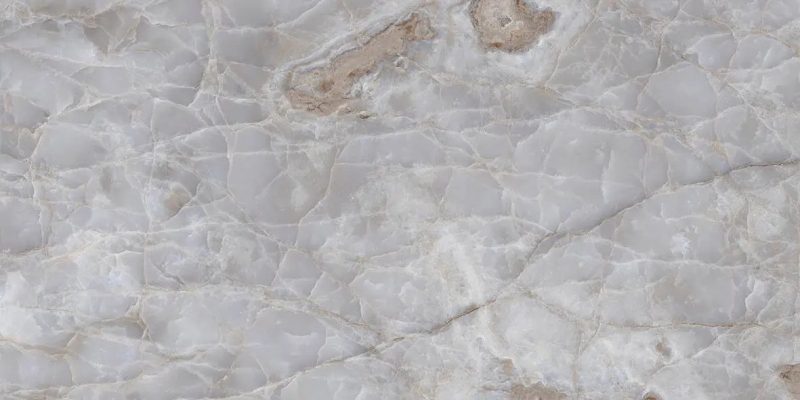



Some commercial materials are labelled quartzite even when their properties are closer to marble or another stone type. The exact slab should therefore be assessed rather than relying solely on a showroom label or visual appearance.
For statement installations, slab photographs or digital layouts can help determine how the veining will interact with the fireplace opening, seams and side returns. Available options can be reviewed in the quartzite collection.
Porcelain slabs are commonly considered for contemporary fireplace walls because they can provide large-format patterns, controlled colour and relatively thin panel profiles. They are often used with linear electric or gas fireplaces and full-height media walls.
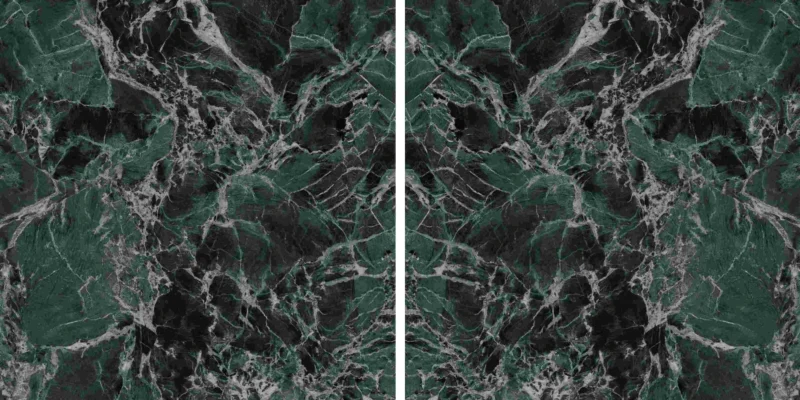
Porcelain collections may reproduce marble, concrete, limestone or metal effects. Coordinated faces can be arranged sequentially or in mirrored layouts, although cutouts and panel dimensions must be considered before the pattern is approved.
Because the printed face may differ from the exposed body, outside corners and visible edges often require mitred returns, compatible profiles or another planned transition.
Porcelain should not be approved for a fireplace based only on the general material category. The technical documentation for the exact product must be reviewed alongside the fireplace manufacturer’s clearance, ventilation and wall-construction requirements.
The porcelain finish does not replace fire-rated backing, required separation or appliance ventilation. For a broader review of vertical applications, see porcelain slabs beyond kitchens, or browse the current porcelain slab collection.
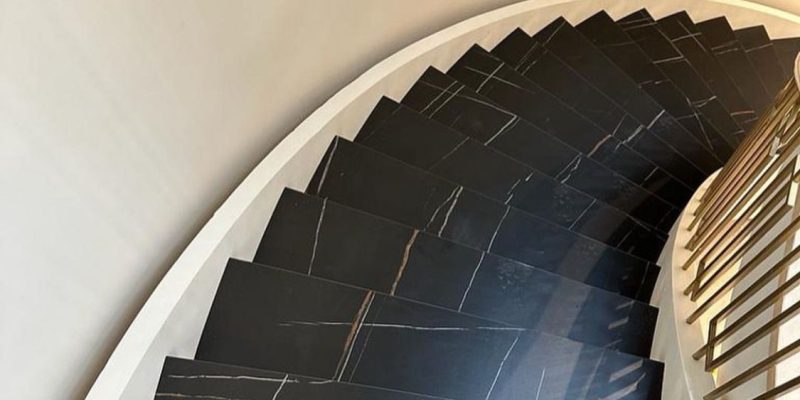
Soapstone has a smooth, matte appearance and a long history in heat-related applications. It may be considered for hearths, surrounds and traditional fireplace details where darker tones and a naturally evolving patina suit the design.
The surface is softer than granite and can scratch more readily. For some homeowners, marks and colour development become part of the material’s character; others may prefer a surface that retains a more uniform appearance.
Slate can provide a layered texture and restrained colour palette for hearths or framed surrounds. Quality and dimensional stability vary between products, so the exact slate should be assessed for the intended interior application.
Cleft surfaces create visible texture but may collect more dust than honed finishes. Thin or poorly selected pieces can also be vulnerable at projecting hearth edges, making thickness and edge design important.
Engineered quartz contains mineral aggregate combined with resins and pigments. Its consistent appearance makes it attractive for interiors that coordinate fireplace surrounds with countertops, but it should not be treated as a universal high-heat surface.
Quartz may only be considered where the specific quartz manufacturer and fireplace manufacturer permit the application. The approved clearance from the appliance, heat outlets and metal frame must be maintained, and the wall assembly must prevent exposure beyond the product’s permitted conditions.
General statements such as “quartz is safe around electric fireplaces” are not sufficiently precise because heat output and ventilation differ between models.
Quartz should not be specified in areas exposed to direct flame, concentrated heat or conditions outside the manufacturer’s published guidance. Where approval is uncertain, natural stone or an appropriate porcelain product may offer a clearer specification path.
Available engineered surfaces can be reviewed in the quartz collection, but final selection should follow written technical requirements rather than appearance alone.
Onyx is generally selected for visual impact rather than demanding heat-adjacent applications. Its translucency can support backlit fireplace feature walls, particularly with electric units or decorative installations where the material remains outside critical heat zones.
Onyx may be used on upper wall panels or decorative side features when the product, backing and fireplace layout permit it. It should not be presented as an alternative to granite or soapstone for every hearth or firebox-adjacent condition.
Backlighting requires coordination between the slab, light source, supporting panel and service access. Onyx is also more fragile and visually revealing than many other stones, so reinforcement, seam placement and edge details require careful planning.
The fireplace type helps define the heat conditions, but it does not select the surface automatically. The exact appliance manual, wall assembly and material documentation must still be reviewed before fabrication.
Electric fireplaces often allow greater design flexibility because they do not use direct combustion. Porcelain, natural stone and manufacturer-approved quartz may be considered for surrounds and media walls, provided warm-air outlets, ventilation and service access remain unobstructed.
Gas fireplaces can transfer heat through the glass, frame and upper wall cavity. Granite, quartzite, marble and suitable porcelain products may be considered according to their location around the unit. Mantels, televisions and combustible finishes must remain within the appliance manufacturer’s permitted layout.
Wood-burning systems may expose the hearth and immediate surround to more demanding conditions, including ash, sparks and greater temperature variation. Granite, soapstone and appropriately selected natural stone are commonly considered, but the approved firebox and hearth assembly must govern the final specification.
A polished finish emphasizes colour and reflection, while honed surfaces create a softer appearance. Textured finishes add depth but may retain more dust or soot. Finish selection should reflect both the design and the expected cleaning conditions.
Some natural stones may benefit from an appropriate penetrating sealer, depending on the material and finish. Sealing can reduce absorption but does not make stone stain-proof, heat-proof or maintenance-free. Porcelain and engineered quartz should follow their manufacturers’ care instructions.
Use a soft cloth and a cleaner compatible with the exact surface. Avoid vinegar or acidic cleaners on marble and other acid-sensitive stones. Persistent soot, scorching or unusual discoloration may indicate an appliance or ventilation issue rather than a routine surface-cleaning problem.
Before approving a slab or surface, confirm:
The final selection should balance technical suitability with appearance. A visually attractive slab is not the right choice if its dimensions, condition or approved use do not match the project.
There is no universal best material. Granite, quartzite, marble, soapstone and suitable porcelain can serve different applications depending on the fireplace, heat conditions and desired appearance.
Granite is commonly considered for hearths because of its dense structure and durability. The individual slab, thickness, edge design and approved fireplace assembly must still be reviewed.
Marble may be used where the fireplace and stone specifications permit it. Its finish and maintenance requirements should be considered, especially in areas exposed to residue or frequent cleaning.
Only where the quartz manufacturer and fireplace manufacturer approve the application and all required heat separation and clearances are maintained.
It depends on the stone and finish. Some natural stones may benefit from sealing, while others may not require it. A sealer does not eliminate routine care or protect against unsuitable heat exposure.
Material selection should begin with the fireplace specifications and continue through slab review, layout planning and fabrication. Explore the available stone surfaces or review Teccorp Stone’s fireplace service before finalizing the surround, hearth or feature-wall design.