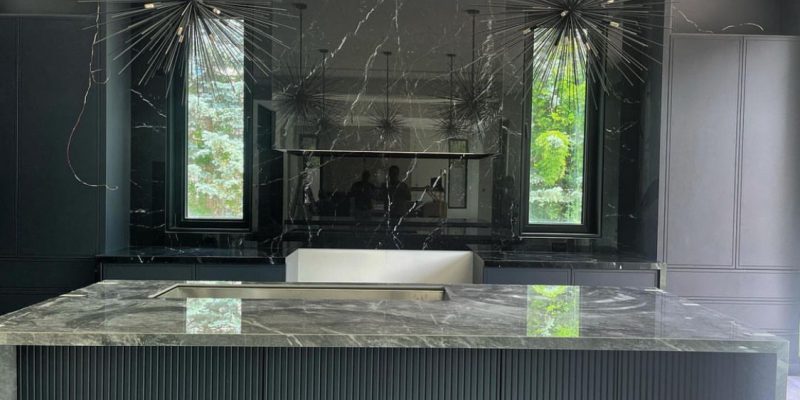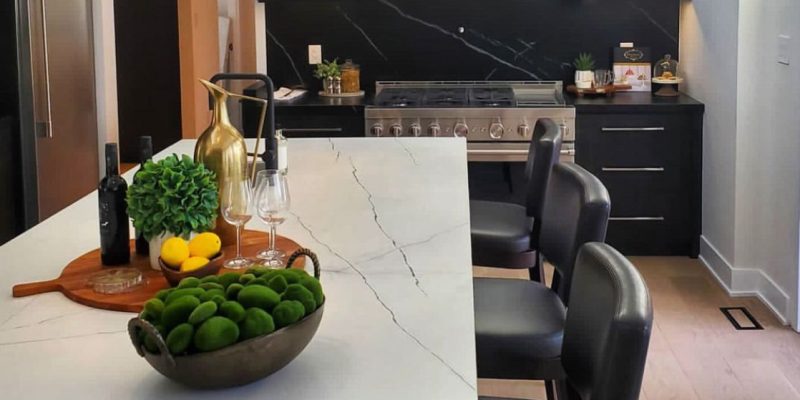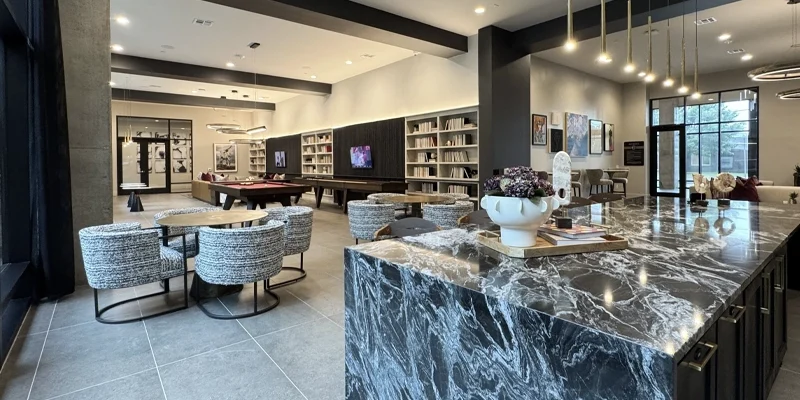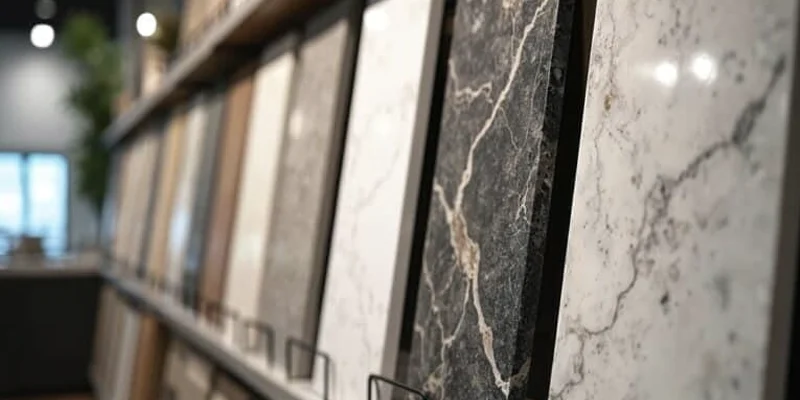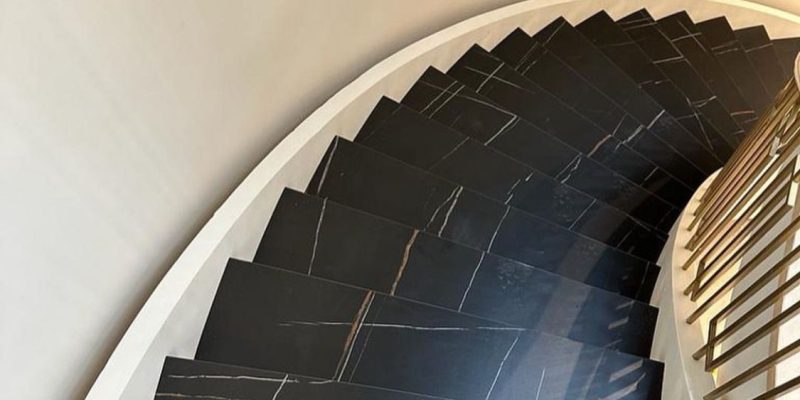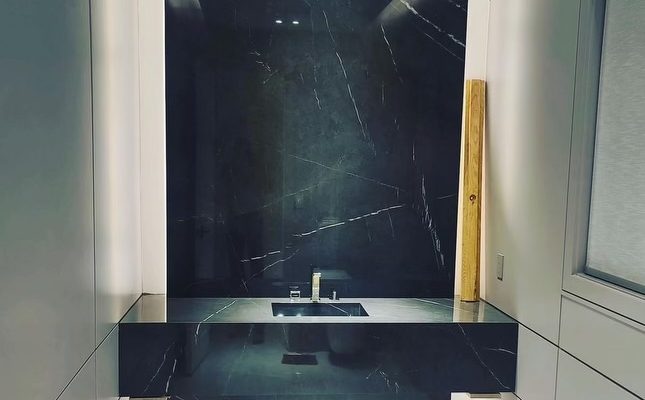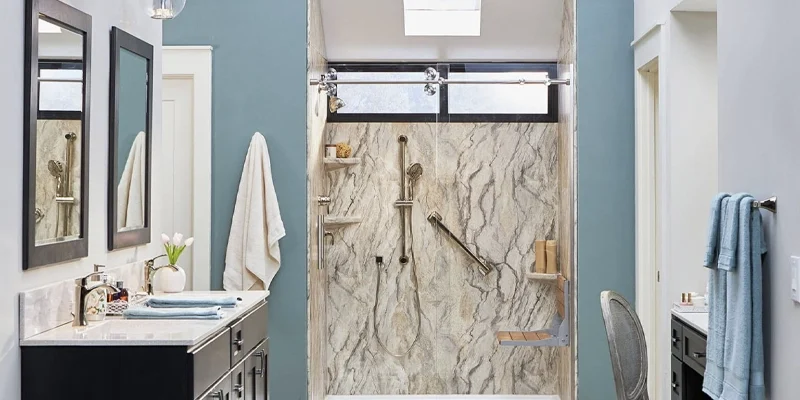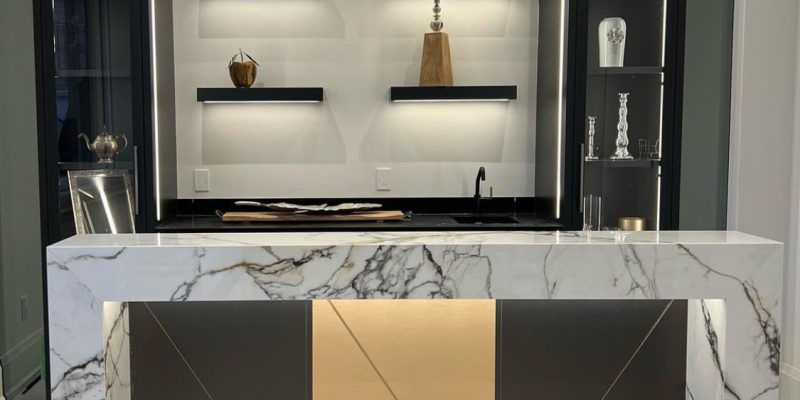
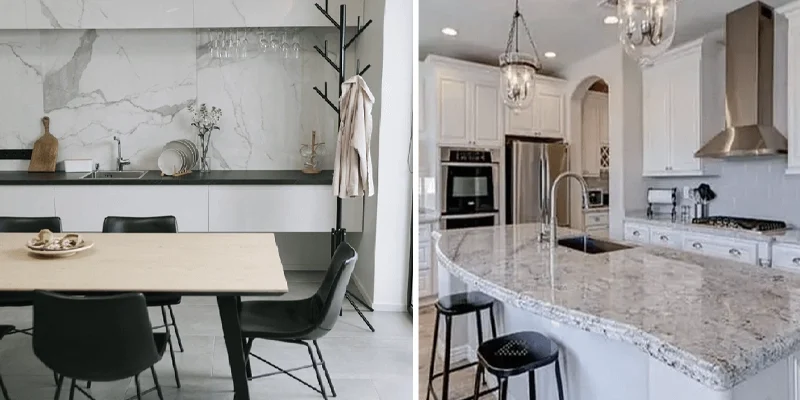
Porcelain vs granite countertops is a comparison between two durable surfaces with very different visual, fabrication and maintenance characteristics. Porcelain is a manufactured ceramic slab with very low water absorption and a controlled range of colours and patterns. Granite is a natural stone, so every slab contains its own mineral structure, movement and variation.
Neither material is universally better. Porcelain may suit homeowners who prefer a contemporary appearance, low routine maintenance and consistent slab designs. Granite may be the stronger match for buyers who value natural variation, substantial stone edges and the individuality of a quarried surface.
This guide compares porcelain and granite by appearance, durability, heat response, staining, maintenance, fabrication and relative cost to help Toronto and GTA homeowners choose the right countertop for their kitchen.
Quick Answer
Choose porcelain when you want very low water absorption, contemporary slab designs and the option of a slim architectural profile. Choose granite when you prefer genuine natural-stone variation, traditional slab depth and a surface whose appearance cannot be exactly duplicated. Both materials require professional fabrication, appropriate support and protection from concentrated impact.
The main difference is predictability versus natural individuality. Porcelain is produced in planned colours, finishes and printed designs. Granite is quarried from natural stone deposits, making every slab visually distinct.
| Comparison Factor | Porcelain | Granite |
|---|---|---|
| Material type | Manufactured high-fired ceramic slab | Natural igneous stone |
| Appearance | Controlled colours, patterns and finishes | Unique mineral movement and natural variation |
| Water absorption | Very low | Varies by stone and finish |
| Sealing | Generally does not require penetrating sealer | May benefit from sealing depending on absorption |
| Heat response | Strong material heat resistance | Strong natural-stone heat resistance |
| Primary vulnerability | Exposed edges, corners and complex cutouts | Natural fissures, absorption variation and slab-specific weaknesses |
| Typical profile | Slim or mitred architectural edges | Naturally substantial slab profile |
| Best suited to | Modern designs and low-maintenance priorities | Natural-stone character and one-of-a-kind surfaces |
The table presents general characteristics. Performance can vary according to the exact porcelain product, granite slab, edge design, support, fabrication and installation quality.
Understanding how each material is produced helps explain its appearance and behaviour in a kitchen.
Porcelain slabs are made from refined clay-based and mineral materials that are compacted and fired at high temperatures. Manufacturers use controlled production methods to create large panels in a range of colours, surface textures and printed patterns.
Depending on the collection, porcelain may reproduce the appearance of marble, concrete, metal or other architectural materials. The design is manufactured rather than created by natural geological variation.
Porcelain generally provides:
These characteristics do not make porcelain indestructible. Its hard surface can still be vulnerable at exposed edges, corners, narrow rails and cutouts if struck by heavy cookware or fabricated incorrectly.
Granite is a natural igneous stone cut into slabs and finished for countertop use. Its appearance is determined by mineral composition and geological formation rather than a printed or manufactured pattern.
Granite slabs can contain:
These features give granite its individual character. They also mean that performance and appearance should be evaluated using the actual slab rather than only a small sample.
Some granite varieties absorb more moisture than others and may benefit from a suitable penetrating sealer. Sealing requirements should be based on the specific stone and finish rather than a universal schedule.
Material Difference
Porcelain offers controlled product design and very low absorption. Granite offers authentic natural variation, but characteristics such as movement, fissures and absorption differ from slab to slab.
Appearance is often the clearest deciding factor because porcelain and granite create different types of visual character.
Porcelain is available in controlled patterns ranging from subtle solid colours to dramatic marble-inspired movement. This can make it easier to coordinate the countertop with cabinetry, flooring and wall finishes.
Porcelain may suit projects that require:
Pattern placement still requires planning. Printed veining may be directional, and continuity across seams or waterfall panels depends on slab layout and fabrication.
Granite provides a visual depth created by real minerals within the slab. Some varieties are relatively consistent, while others contain dramatic movement, contrasting crystals or large natural features.
Granite may suit homeowners who prefer:
Because no two slabs are exactly identical, customers should inspect and approve the actual material whenever variation, seams or pattern placement are important to the project.
Granite is the natural material and provides genuine geological variation. Porcelain can reproduce natural-stone imagery convincingly, but its pattern remains manufactured.
The better choice depends on whether the goal is authentic irregularity or controlled design. Homeowners who want predictable coordination may prefer porcelain, while those who value the individuality of natural stone may prefer granite.
The next section compares scratch resistance, edge chipping, impact behaviour and how each material performs around busy cooking and preparation areas.
Porcelain and granite both provide durable work surfaces, but they do not respond to damage in exactly the same way. Surface hardness, exposed edges, natural slab features and fabrication details all influence real-world performance.
Porcelain has a hard, wear-resistant surface that generally performs well against ordinary kitchen utensils and routine food preparation. Granite also offers strong scratch resistance because of its mineral composition.
Neither surface should be described as scratch-proof. Abrasive particles trapped beneath cookware, unglazed ceramic objects and improper cleaning tools may mark or dull some finishes. Cutting directly on either countertop is also discouraged because it can damage knives and expose the surface to unnecessary wear.
Porcelain’s primary vulnerability is often concentrated impact at an exposed edge, corner or cutout. A heavy pot striking the edge of a sink opening can cause a chip even when the broad countertop surface remains unaffected.
Granite edges can also chip, particularly around sinks, cooktops and unsupported overhangs. Natural fissures or mineral transitions may influence how the fabricator positions openings and seams.
For both materials, risk can be reduced through:
Granite may feel more substantial because it is commonly installed in thicker slab formats. Porcelain can be used in slimmer profiles, but thinner appearance should not be confused with poor performance.
Thickness alone does not determine durability. The selected product, substrate or cabinet support, cutout design, edge construction and installation quality are equally important.
Durability Summary
Both materials provide strong countertop performance. Porcelain offers a hard wear surface but requires protection at exposed edges and corners. Granite is also highly durable, although natural fissures and slab-specific characteristics must be considered during fabrication.
Porcelain and granite both provide strong material heat resistance and generally tolerate kitchen heat better than resin-based quartz. However, neither should be treated as a heat-proof landing surface.
Porcelain is manufactured by firing refined mineral and clay-based materials at high temperatures. The completed ceramic surface therefore performs well around normal cooking heat.
The slab is only one part of the installed countertop. Direct heat may still affect:
Granite is a natural igneous stone with strong resistance to ordinary kitchen heat. It does not contain the resin binder found in engineered quartz, but rapid or concentrated temperature changes can still create stress around fissures, seams, cutouts or repaired areas.
Yes. Stable, heat-rated trivets are recommended for both porcelain and granite. They protect the complete installation rather than only the visible material.
For a detailed three-material analysis, read the quartz vs granite vs porcelain heat resistance comparison.
Porcelain and granite differ more clearly in moisture absorption and sealing requirements.
Porcelain has very low water absorption and generally resists common household spills well. Most countertop-grade porcelain products do not require a penetrating sealer.
This does not mean spills should be ignored. Oils, sauces, coffee and strongly coloured foods should still be cleaned promptly, particularly around seams, sink joints and textured finishes.
Residue may also collect on the surface without penetrating the slab.
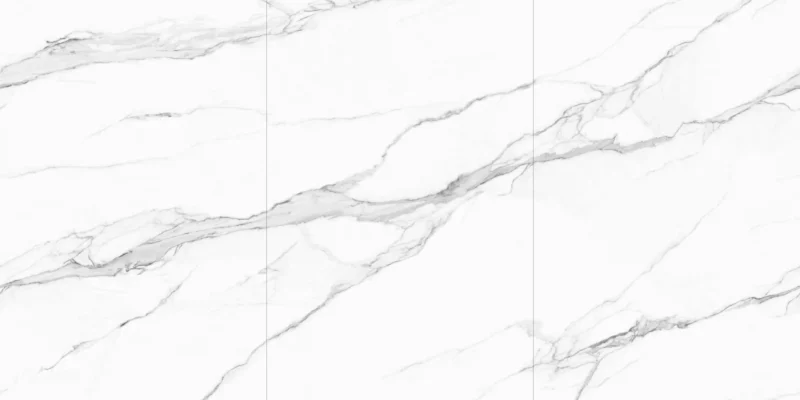
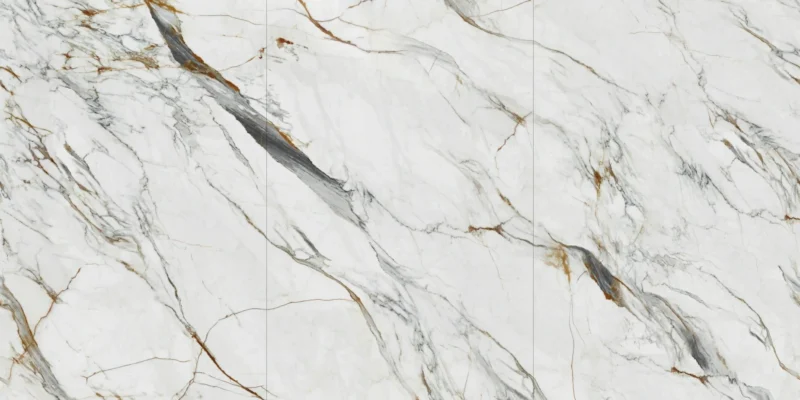
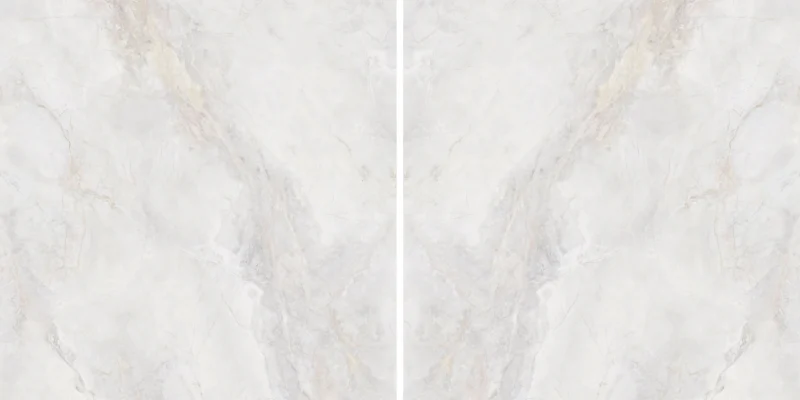
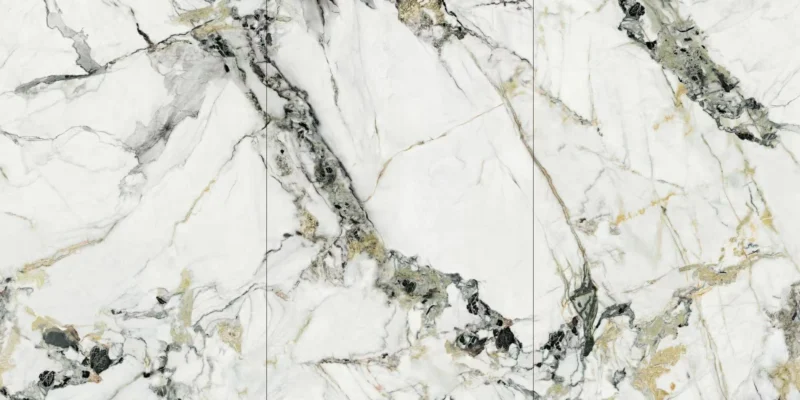

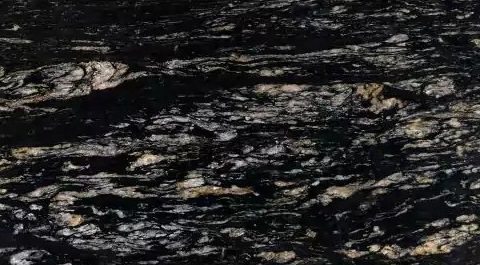
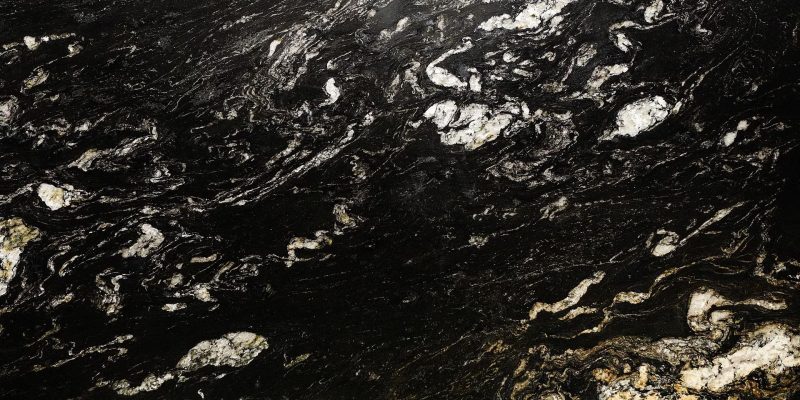
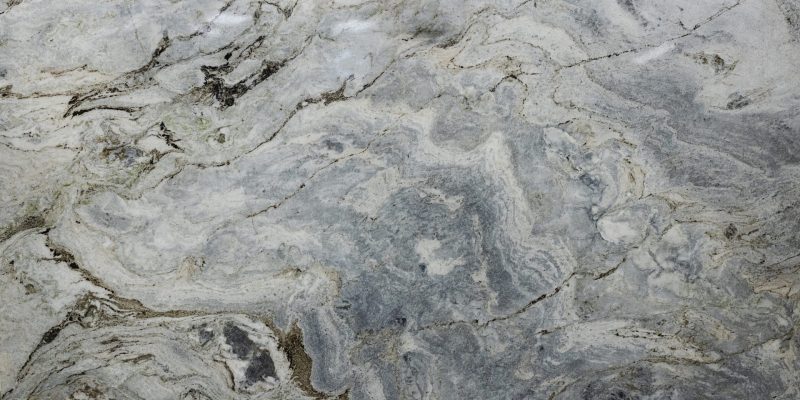



Granite absorption varies by stone and finish. Some slabs may benefit from a penetrating sealer, while denser varieties may require less frequent treatment or none under particular conditions.
There is no reliable universal sealing interval for every granite countertop. The decision should be based on:
A sealer can reduce absorption and provide more time to clean spills, but it does not make granite completely stain-proof.
Porcelain generally offers the simpler routine because of its very low absorption and lack of regular penetrating-sealer requirements. Granite can also perform well when the correct stone, finish and care process are used.
Homeowners who prioritize minimal sealing responsibility may prefer porcelain. Those who prefer granite’s natural character may consider occasional sealer assessment an acceptable trade-off.
Both materials can be maintained with straightforward daily cleaning. Harsh chemicals, abrasive pads and unsuitable specialty cleaners should be avoided unless approved for the exact product.
Routine porcelain cleaning generally requires warm water, a soft cloth and a mild cleaner. Textured finishes may need more attention because residue can collect within the surface texture.
Homeowners should:
Granite can usually be cleaned with a mild, stone-compatible product and a soft cloth. Strong acidic or alkaline cleaners may affect certain finishes or sealing systems.
Routine care should include:
Porcelain generally requires fewer material-specific maintenance decisions because it usually does not need penetrating sealer. Granite maintenance varies according to the slab and treatment.
Neither surface is maintenance-free. Seams, sink joints, caulking and repaired areas require attention regardless of the selected material.
Porcelain and granite require different fabrication strategies. The difference affects appearance, edge options, transport, cutouts and project cost.
Porcelain is available in different thicknesses depending on the manufacturer and collection. Thin-format slabs can create a clean architectural profile, while mitred construction can produce the appearance of a thicker edge.
Porcelain fabrication requires suitable equipment and careful handling around:
A thinner slab may weigh less than a thicker stone section, but large porcelain panels are not automatically easier or cheaper to install.
Granite is commonly selected for its substantial natural-stone profile. Depending on slab thickness and project design, it can support several traditional and contemporary edge styles.
Fabricators must review the actual slab for mineral movement, fissures and suitable placement of seams and openings. Edge details that remove significant material or create narrow projections should be evaluated carefully.
Neither material is universally easier. Granite requires natural-stone cutting, polishing and slab-specific planning. Porcelain requires ceramic-compatible tooling, controlled handling and precision around edges and cutouts.
The better result depends on using a fabricator experienced with the selected material rather than treating both surfaces as interchangeable.
The final section compares relative cost, identifies the better material for different kitchen types and answers the most common porcelain vs granite questions.
The installed cost of porcelain and granite countertops depends on the selected material, slab quantity, layout, fabrication details, delivery and site conditions. Neither material is universally more expensive.
Granite pricing varies according to colour, origin, rarity, slab quality and natural pattern. Porcelain pricing varies by manufacturer, collection, finish, thickness and panel format.
Price-per-square-foot figures are only useful when they represent the same scope. Homeowners should confirm whether material, measurement, fabrication, edges, cutouts, delivery and installation are included.
For detailed porcelain budgeting, review the porcelain countertop cost in Toronto guide.
Porcelain often suits contemporary spaces because it can provide slim profiles, large-format panels and controlled marble, concrete or solid-colour designs. Matching countertop, backsplash and waterfall surfaces may also be easier within the same collection.
Granite may suit designs that benefit from natural mineral depth, substantial edges and one-of-a-kind slab variation. It coordinates particularly well with cabinetry and interiors that emphasize natural materials.
Both materials can perform well in active kitchens. Porcelain generally offers very low absorption and limited sealing requirements. Granite provides strong natural-stone durability but may require occasional assessment of its sealer and absorption.
In either case, use cutting boards and trivets and protect exposed edges from heavy impact.
Porcelain’s slim appearance may complement compact modern kitchens, but large panels still require careful access and handling. Granite may require smaller sections or additional seams when elevator, hallway or doorway dimensions limit delivery.
Material selection should therefore be coordinated with the actual building access and countertop layout.
Porcelain is frequently selected for coordinated vertical and horizontal applications because manufacturers offer large panels and controlled patterns. Pattern alignment, mitred joints and specialist fabrication can increase project complexity.
Granite can also be used for waterfall islands, although natural variation and slab yield must be planned carefully.
Selected porcelain products approved by their manufacturers for exterior use may suit outdoor applications. Granite may also be appropriate for certain exterior projects.
Exterior suitability depends on the exact product, finish, substrate, adhesives, drainage, joints and complete installation system. It should not be assumed from the material name alone.
Final Recommendation
Choose porcelain for controlled design, very low water absorption and slim architectural applications. Choose granite for authentic natural variation, substantial stone character and a unique slab appearance. Base the final decision on the actual product, layout, fabrication requirements and maintenance preferences.
Neither material is universally better. Porcelain may be preferable for low absorption, controlled designs and reduced sealing requirements. Granite may be preferable for natural variation and authentic stone character.
Both provide strong scratch resistance, but neither is scratch-proof. Surface finish, abrasive debris and improper cleaning tools can affect either material.
Porcelain edges and corners can be vulnerable to concentrated impact. Granite can also chip, especially around openings, edges or natural fissures. Proper fabrication and careful use matter for both.
Porcelain and granite both provide strong material heat resistance. Trivets are still recommended to protect seams, adhesives, repairs and surrounding materials.
Most countertop-grade porcelain products do not require a penetrating sealer because they have very low water absorption. Product-specific care instructions should still be followed.
There is no universal schedule. Sealing depends on the granite variety, finish, absorption and product previously applied. Assessment should be based on the specific countertop rather than a fixed interval.
Either material may cost more depending on the selected product and project design. Porcelain mitres, waterfalls and large panels can increase fabrication cost, while premium granite slabs and complex pattern planning can increase granite cost.
Porcelain generally involves fewer sealing decisions. Granite maintenance depends more on the slab’s absorption and treatment, although routine cleaning for both materials is straightforward.
The best choice becomes clearer after comparing actual porcelain products and granite slabs alongside the kitchen layout, cabinetry, edge design and installation conditions.
TecCorp Stone provides material selection, measurement, custom fabrication and countertop installation for kitchens and islands across Toronto and the GTA.