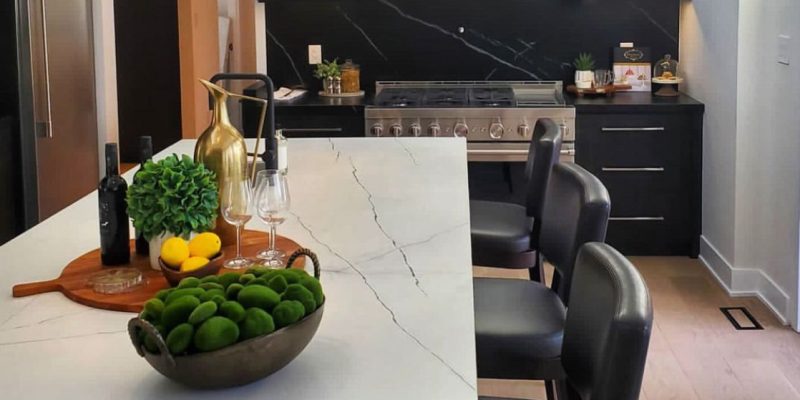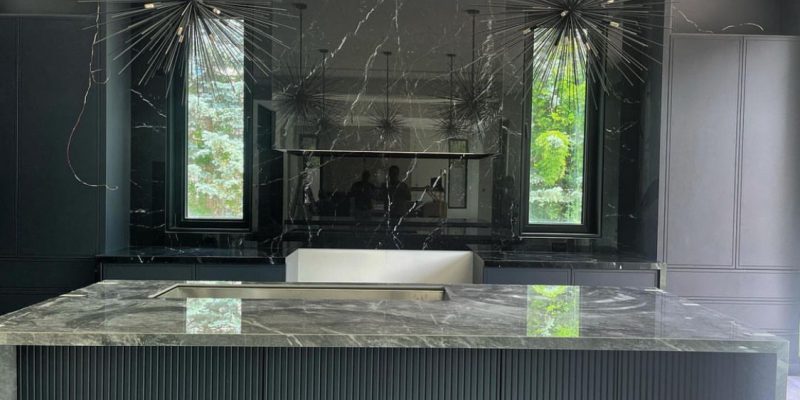
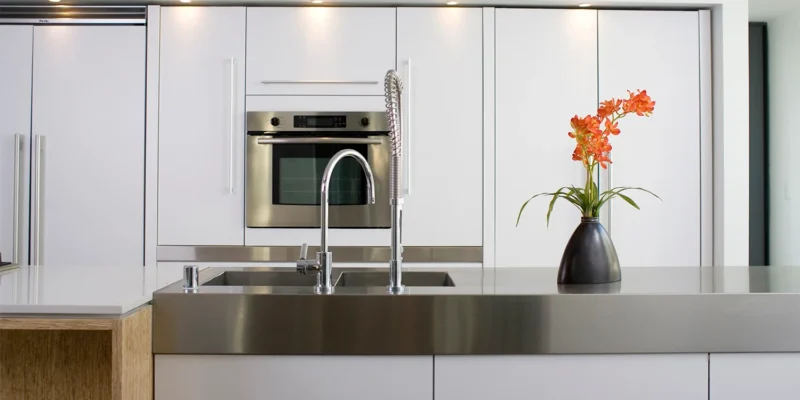
Stainless steel vs quartz countertops is a comparison between two durable but visually and functionally different surfaces. Stainless steel provides excellent heat tolerance, a hygienic non-porous work area and a distinctive professional appearance. Quartz offers broader design flexibility, strong resistance to common spills and a surface that generally shows fewer scratches, fingerprints and water marks during everyday residential use.
Cost is also an important difference. Custom stainless steel countertops can be as expensive as—or more expensive than—many quartz installations, particularly when the project includes welded corners, integrated sinks, special finishes or complex fabrication.
Quartz is available across a broader range of product and pricing levels, although the final cost still depends on slab selection, quantity, edge construction, openings, seams and installation conditions.
This guide compares cost, heat resistance, scratches, dents, maintenance, appearance and practical use to help Ontario homeowners decide which material better suits their kitchen.
Choose stainless steel when: Heat tolerance, integrated metal fabrication and a professional kitchen appearance are the main priorities.
Choose quartz when: You want greater colour and pattern choice, fewer visible fingerprints and stronger resistance to routine scratching.
Do not assume stainless steel is cheaper: Custom fabrication, welded seams, integrated sinks and special finishes can create a premium project cost.
Best overall residential fit: Quartz generally suits a wider range of home styles, while stainless steel serves a more specialised functional and visual role.
Stainless steel performs particularly well around heat and moisture, but scratches and dents become part of its appearance over time. Quartz usually retains a more controlled residential finish, although exposed edges can chip and concentrated heat may affect the material’s binders.
| Comparison Factor | Stainless Steel | Quartz |
|---|---|---|
| Heat tolerance | Excellent for normal kitchen use | Requires trivets and protection from concentrated heat |
| Scratches | Develops visible scratches and patina over time | More resistant to routine abrasion, but not scratch-proof |
| Impact | May dent under concentrated impact | Edges and openings may chip when struck |
| Visible marks | Shows fingerprints, water spots and wipe marks readily | Visibility depends on colour, finish and pattern |
| Design range | Primarily metallic, professional and industrial | Wide selection of colours and stone-inspired patterns |
| Best fit | Chef-inspired kitchens and specialised work zones | Primary kitchens, islands and broader residential styles |
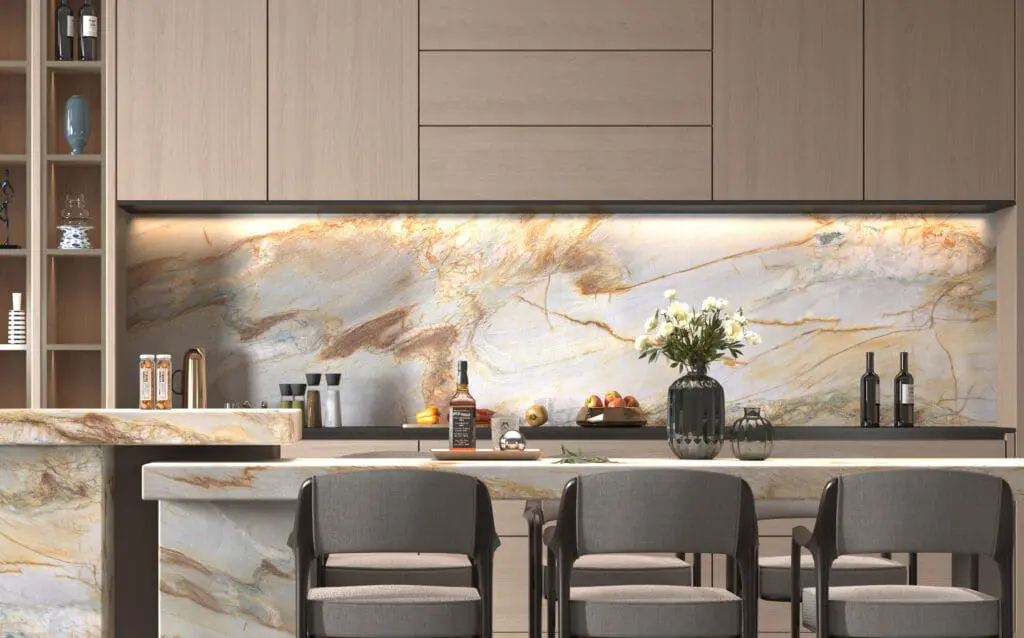
The cost of stainless steel countertops versus quartz depends on the complete fabrication scope. Stainless steel should not be treated as a basic metal sheet placed over cabinetry. Residential counters normally require a fabricated substrate, formed edges, welded or joined corners and precise openings.
Stainless steel costs can increase with:
Quartz costs are influenced by:
Based on the broad ranges used in the existing guide, stainless steel and quartz pricing can overlap. Those figures should be treated only as preliminary planning ranges until actual supplier and project quotations are available.
For quartz-specific pricing factors, review the quartz countertop cost guide.
Cost Comparison Rule
Compare complete fabricated and installed quotations. Custom stainless steel may cost more than expected, while quartz pricing depends heavily on slab selection and yield.
Both materials can support demanding kitchen use, but their visible ageing differs. Stainless steel remains functional as scratches and small marks develop, while quartz is generally selected to preserve a more controlled decorative appearance.
The better choice depends partly on whether the homeowner accepts a developing metal patina or prefers a surface that conceals routine wear more effectively.
Service Scope Note
This guide compares both materials for planning purposes. TecCorp’s linked collection and project services relate to quartz and stone countertops. Stainless-steel availability and fabrication should be confirmed with a qualified metal fabricator.
Heat performance is one of the strongest advantages of stainless steel. The metal can tolerate normal contact with hot cookware better than quartz and is commonly used in professional food-preparation environments for this reason.
However, heat can still transfer through stainless steel to the substrate, cabinetry or nearby materials. Extremely hot cookware may also cause temporary discolouration or affect adjacent sealants and joints. Safe handling practices remain appropriate.
Quartz requires greater protection from concentrated heat. Although it performs well under ordinary kitchen conditions, the resins or binders within the material may be affected by hot pots, baking trays and countertop appliances that generate sustained heat.
Trivets and heat-resistant pads should therefore be used on quartz. Clearance guidance should also be followed for air fryers, toaster ovens, slow cookers and similar appliances.
Heat-Performance Rule
Stainless steel has the practical advantage around heat. Quartz remains suitable for residential kitchens when hot cookware and heat-producing appliances are used with proper protection.
Stainless steel and quartz both resist daily use, but they show damage differently.
Stainless steel develops fine scratches through routine contact with cookware, utensils and cleaning tools. These marks may be especially visible on a new surface but can gradually form a more uniform patina.
The direction and visibility of scratches depend on the finish. Cleaning should generally follow the grain of a brushed surface, and aggressive abrasives should be avoided unless approved for the exact product.
Stainless steel may dent when struck by a heavy object, particularly when the metal is thin or inadequately supported. The gauge, substrate and fabrication method influence how the countertop responds to impact.
Small dents can be difficult to remove completely. This makes substrate construction and metal specification important parts of a stainless-steel quotation.
Quartz generally provides stronger resistance to routine scratching than stainless steel. It should not, however, be used as a cutting surface or cleaned with aggressive abrasive products.
Quartz is rigid rather than flexible. A heavy impact near an exposed edge, corner, sink opening or narrow section may cause a chip. Proper support and careful edge selection can reduce—but not eliminate—this risk.
| Damage Type | Stainless Steel | Quartz |
|---|---|---|
| Routine scratches | Common and often visible | Less likely during normal use |
| Heavy impact | May create dents | May chip exposed edges or openings |
| Visible ageing | Develops a patina of scratches and marks | Usually maintains a more controlled appearance |
Both materials offer relatively straightforward daily cleaning and generally do not require routine sealing. Their maintenance challenges are different.
Stainless steel resists many common kitchen spills, but fingerprints, water spots, grease and wipe marks can remain visible. A soft cloth and cleaner suitable for the selected finish are normally used for routine care.
Chloride-containing products, harsh abrasives and unsuitable metal cleaners may damage the finish or contribute to surface corrosion. Product-specific care instructions should be followed.
Quartz typically requires mild soap or a manufacturer-approved cleaner and a soft cloth.
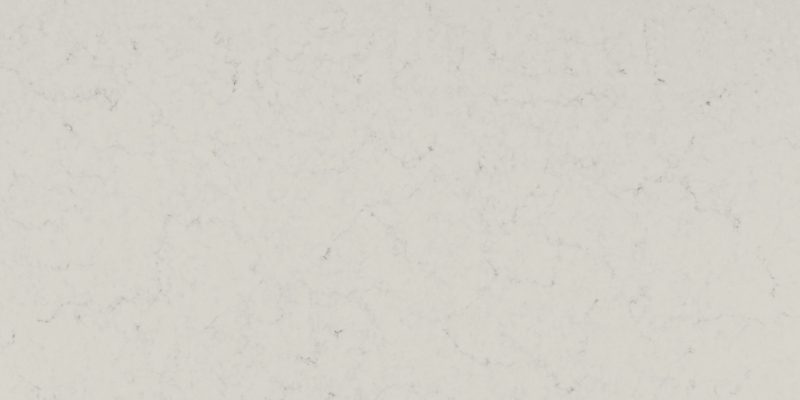

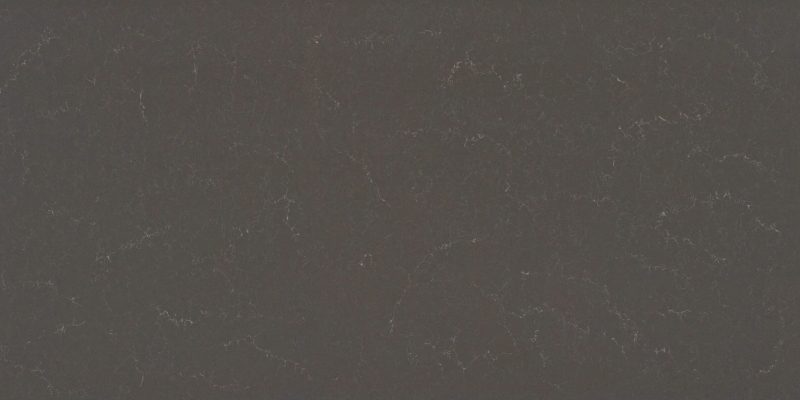

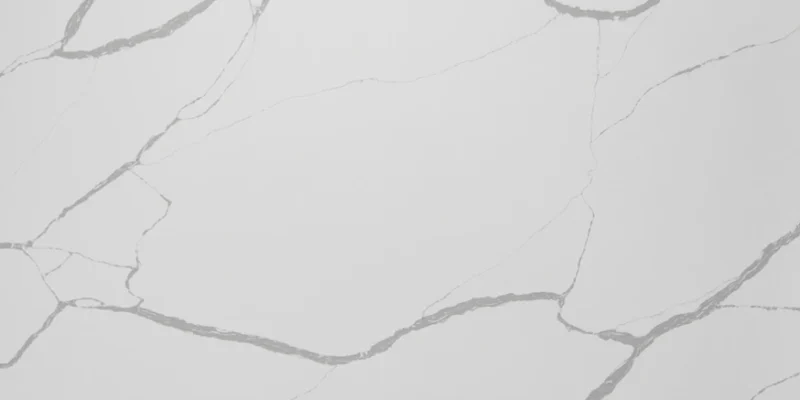





Quartz patterns can conceal fingerprints and minor marks more effectively than reflective stainless steel. Dark, polished quartz may still show dust, streaks or water marks more readily than lighter patterned products.
Both surfaces can be cleaned effectively, but neither should be described as automatically antibacterial or immune to contamination. Cleanliness depends on routine care, intact joints, appropriate food-handling practices and the condition of sinks and surrounding sealants.
Stainless steel creates a distinctive professional, industrial or minimalist appearance. It works particularly well with metal appliances, flat-panel cabinetry and contemporary interiors, but its visual character may feel too commercial for some homes.
Quartz provides a broader range of colours, finishes and patterns. Options range from restrained solid tones to marble-inspired movement, making quartz easier to coordinate with different cabinet, flooring and backsplash styles.
Stainless steel can also introduce strong reflections and visual brightness. Quartz usually provides a softer appearance, particularly in matte or subtly patterned finishes.
For open-concept kitchens, the decision is especially visible because the countertop becomes part of the adjoining living space. Stainless steel may function effectively as a specialised work zone, while quartz often integrates more easily across a large island or full kitchen.
Stainless steel and quartz require different fabrication methods, and those differences affect cost, appearance and installation planning.
Residential stainless-steel countertops are commonly formed over a suitable substrate. The metal specification, thickness, support, corner construction and finish should be confirmed before fabrication.
Custom options may include:
Long sections and integrated details may reduce visible joints, but fabrication quality strongly influences the final appearance. The quotation should identify the metal grade, gauge, substrate and treatment of seams or welded areas.
Quartz is fabricated from slabs after final measurements are confirmed. The layout must account for pattern direction, slab yield, seams, openings, edge profiles and access to the installation area.
Cabinets must be secured and adequately supported before measurement. Large islands, mitred edges and waterfall panels may require additional material and more complex handling.
Review the countertop installation preparation guide before final measurement and installation.
Installation Rule
Compare the complete fabrication specification. Stainless steel depends on metal gauge, substrate and welded details, while quartz depends on slab layout, support, seams and edge fabrication.
| Project Situation | Potential Fit | Reason |
|---|---|---|
| Chef-inspired work zone | Stainless steel | Strong heat tolerance and professional utility |
| Primary family kitchen | Often quartz | Broad design range and fewer visible scratches and fingerprints |
| Large open-concept island | Often quartz | Stone-inspired patterns integrate more easily with living spaces |
| Specialised preparation area | Stainless steel | Suitable where heat and moisture performance outweigh decorative variety |
| Mixed-material kitchen | Both | Stainless steel can define a work zone while quartz serves the main counters or island |
A mixed-material design can use stainless steel near a cooking or preparation area and quartz across the main kitchen. Thickness, edge details, colour and transitions should be coordinated so the combination appears intentional.
It can be. Custom stainless-steel countertops with integrated sinks, welded corners or specialised finishes may cost as much as—or more than—many quartz projects. Compare complete fabricated and installed quotations.
Both are durable in different ways. Stainless steel tolerates heat and moisture well but develops scratches and may dent. Quartz resists routine abrasion more effectively but can chip at exposed edges and requires heat protection.
Quartz generally shows fewer fingerprints and water marks. Stainless steel is straightforward to clean but often requires more frequent wiping to maintain a uniform appearance.
Stainless steel offers strong heat tolerance, but extremely hot cookware can transfer heat to the substrate and surrounding materials. Trivets remain a sensible precaution.
Most engineered quartz products do not require routine sealing. Follow the care instructions for the exact product.
Yes. Fine scratches commonly develop during normal use and gradually create a patina. The visibility of marks depends on the finish and lighting.
Yes. Heavy impact can create dents, particularly when the metal is thinner or inadequately supported.
Quartz generally suits a broader range of residential interiors. Stainless steel may be preferable for homeowners prioritising professional styling, heat tolerance or a specialised work area.
Yes. Combining stainless steel in a cooking zone with quartz on the island or perimeter can balance professional utility with residential design flexibility.
Choose stainless steel when its heat performance, integrated metal fabrication and evolving patina align with the project. Choose quartz when broader design choice, resistance to routine scratching and a more residential appearance are stronger priorities.
Compare exact materials and written scopes rather than relying on category-level assumptions. For quartz, confirm the selected product, slab quantity, edge, openings, seams and installation requirements.
Considering Quartz for Your Ontario Kitchen?
Review quartz styles, fabrication requirements and project details before requesting an installed quotation.
Discuss Your Quartz Project
Explore Quartz Countertops
Kitchen Countertop Services