Affordable kitchen countertops in Ontario do not have to mean choosing the cheapest surface or sacrificing professional fabrication. A well-planned countertop project can control costs through appropriate material selection, efficient slab use, a practical kitchen layout and a clearly defined installation scope.
For homeowners in Toronto and the GTA, quartz and granite are often among the strongest best-value options. Both materials are available in different price tiers, colours and patterns, allowing the project to be adjusted around the kitchen size, design requirements and available budget.
The final cost, however, depends on more than the material name. Slab quantity, countertop dimensions, edge profiles, sink and cooktop openings, island details, existing countertop removal and property access can all affect the quotation.
This guide explains how to plan an attractive and durable stone countertop while avoiding unnecessary fabrication and installation expenses.
Best-Value Countertop Planning
The most affordable project is not always the one with the lowest material price. A suitable slab, efficient layout and complete quotation can provide better long-term value than an inexpensive surface combined with unexpected fabrication or installation charges.
An affordable countertop should meet…
A compact condominium kitchen with a straightforward layout may require relatively little material and fabrication. A large kitchen with an oversized island, waterfall panels, premium edges and extensive vein matching may require additional slabs and more complex production—even when both projects use the same countertop brand.
For this reason, affordability should be evaluated according to the complete installed project rather than a single advertised price per square foot.
A well-planned budget may account for:
Homeowners comparing complete project budgets can also review our guide to kitchen countertop cost in Toronto.
Cost control does not require eliminating professional measurement, fabrication or installation. These stages determine whether the countertop fits the cabinetry, whether seams are positioned appropriately and whether sink and appliance openings match the final specifications.
Reducing essential production quality may create a lower initial quote but increase the risk of fit problems, weak support, poor seams, damaged material or additional work during installation.
A better approach is to simplify choices that increase cost without being essential to the kitchen’s function. For example, a standard edge profile may provide the desired appearance without the fabrication cost of a complex decorative or mitred edge.
Several project decisions determine whether a countertop remains within budget. Understanding these factors before material selection makes it easier to compare quotations accurately.
Quartz, granite and other stone surfaces are available across different price levels. A premium pattern, imported collection or highly distinctive natural slab may cost considerably more than a standard colour within the same material category.
Choosing an entry-level or mid-range collection from a suitable manufacturer can reduce cost while still providing professional fabrication and installation.
The number of slabs required can affect the final project cost more than small differences in price per square foot.
A kitchen layout that fits efficiently within one slab may provide better value than a layout requiring a second slab for a small additional section. Islands, backsplashes and strongly directional patterns can also affect material yield.
Slab planning should therefore be completed around the actual dimensions of the kitchen and the selected material.
Straight countertop runs with standard corners are generally more efficient to fabricate than layouts involving multiple angles, curved sections, mitred details or extensive pattern matching.
Complexity may increase when the project includes:
Simplifying one or more of these elements can reduce both material use and fabrication labour.
Standard eased or lightly bevelled edges are usually more economical than decorative, laminated or mitred profiles.
A visually thick countertop edge may require additional fabrication and material. Homeowners should compare whether this detail is important enough to justify the added cost across the entire kitchen or whether it should be limited to a focal area such as the island.
Each sink, cooktop, faucet or countertop accessory must be measured and fabricated accurately. Multiple or specialized openings may add production time and require additional reinforcement.
Final appliance and sink models should be selected before fabrication. Late product changes can result in modification costs or require sections to be re-fabricated.
Keeping suitable existing cabinets can significantly reduce the overall renovation budget. The cabinets must still be stable, secured, level and capable of supporting the selected countertop.
Replacement projects may also include demolition, disposal, backsplash removal, plumbing coordination or cabinet correction. These items should be identified in the quotation rather than discovered during installation.
For additional replacement planning, review our guide to kitchen countertop replacement cost in Toronto.
Condominiums and access-restricted properties may require elevator bookings, loading-dock coordination, parking arrangements or smaller fabricated sections.
Large countertop pieces may also require additional installers or alternative seam positions when they cannot be carried safely through the property.
Providing accurate access information before fabrication helps prevent unexpected changes to delivery, section sizes and installation scope.
The best-value countertop material depends on the kitchen size, selected collection, slab requirements and fabrication details. Two projects using the same material can have very different final costs if one requires additional slabs, complex edges or extensive custom work.
For many Ontario homeowners, selected quartz and granite collections provide the strongest balance of appearance, durability, maintenance and installed value.
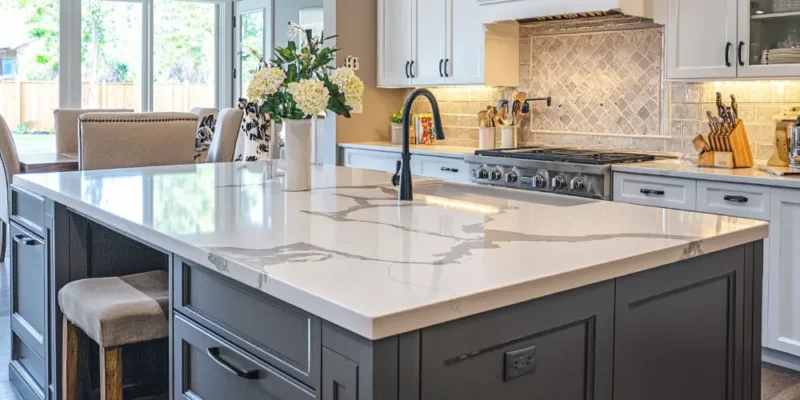
Quartz countertops are often a practical choice for homeowners who want consistent colours, predictable patterns and relatively simple maintenance.
Quartz is available across several price tiers. Standard colours, subtle patterns and commonly stocked collections may provide better value than premium marble-look designs, highly directional patterns or specialty finishes.
Quartz can be particularly suitable for:
To keep a quartz project affordable, homeowners should compare the complete slab requirement rather than focusing only on the advertised square-foot price. A slightly more expensive quartz that fits the kitchen efficiently may cost less overall than a lower-priced option requiring an additional slab.
Quartz normally does not require routine sealing, but it should still be protected from direct and prolonged heat.
Granite countertops can offer strong value when homeowners choose from readily available colours and slabs that fit the kitchen layout efficiently.
Granite provides natural variation, durable everyday performance and a distinctive appearance. Some commonly available granite options may be competitively priced compared with premium quartz collections.
Granite may be a good budget-conscious choice for homeowners who:
Because every granite slab is different, the actual material should be inspected before fabrication. Colour movement, mineral features, slab dimensions and usable areas can affect both appearance and material yield.
Porcelain can provide strong performance and contemporary design options, but it should not automatically be treated as the lowest-cost material.
Large-format porcelain supports thin profiles, waterfall panels and full-height backsplashes. However, specialized cutting, mitred fabrication, edge treatment and careful handling may increase the production cost.
Porcelain may provide good value when its design and performance advantages are important to the project, but homeowners should compare the complete installed quotation rather than assuming that a thin slab will always be less expensive.
For more information, review our guide to porcelain countertops in Toronto.
Marble and quartzite are generally selected for their natural movement, premium appearance and distinctive slabs rather than as entry-level budget materials.
They may still fit a controlled budget in a small kitchen, a limited countertop area or a carefully planned feature application.








Homeowners prioritizing affordability should normally compare quartz and granite first, then evaluate marble or quartzite only when the natural appearance is a major project requirement.
Smaller leftover slab sections may sometimes provide value for compact projects, depending on current availability, dimensions, colour and fabrication requirements.
Suitable applications may include:
A remnant is only useful when its dimensions, condition and pattern suit the required layout. Homeowners should confirm availability directly with the fabricator rather than planning the project around an unverified material.
The table below provides a general value comparison. Final cost depends on the selected slab or collection, kitchen dimensions, fabrication and installation scope.
| Material | Relative Cost | Maintenance | Best Value For | Budget Consideration |
|---|---|---|---|---|
| Quartz | Entry-level to premium | Low | Family kitchens, condos and predictable designs | Standard colours and efficient slab use usually provide better value |
| Granite | Value to premium | Material-specific | Natural stone appearance and durable everyday use | Available slabs and flexible colour selection can improve affordability |
| Porcelain | Mid-range to premium | Low | Modern profiles and large-format applications | Specialized fabrication can increase the installed cost |
| Marble | Usually premium | Higher | Statement areas and design-focused kitchens | Natural variation, maintenance and fabrication should be considered |
| Quartzite | Usually premium | Material-specific | Premium natural stone projects | Slab selection and fabrication complexity may increase cost |
Homeowners who need a broader comparison of durability, maintenance and appearance can review our guide to kitchen countertop materials in Ontario.
The most effective cost-saving decisions are usually made before final measurement and fabrication. Once the slab has been selected and production has begun, design changes may create additional expenses.
Standard quartz colours and readily available granite slabs may provide better value than premium patterns, rare natural stones or specialty finishes.
Flexibility with colour and pattern can make it easier to select a material that fits the kitchen efficiently and remains within budget.
An eased or lightly bevelled edge provides a clean appearance and is generally more economical to fabricate than decorative, laminated or mitred profiles.
Homeowners who want a thicker or more detailed edge can limit the upgraded profile to the island rather than applying it throughout the entire kitchen.
Waterfall panels can create a strong visual feature, but they require additional material, mitred fabrication and installation work.
Using one waterfall side instead of two, or reserving the detail for a highly visible end of the island, can reduce cost while preserving the design effect.
An oversized island may require a second slab, a planned seam or additional installation labour.
Before finalizing the island dimensions, homeowners should compare the design with the usable dimensions of the selected material. A small adjustment to island length or width may improve slab efficiency without affecting everyday function.
Additional sink openings, cooktops, pop-up outlets and countertop accessories increase fabrication requirements.
Necessary openings should be included, but decorative or non-essential cutouts should be reviewed carefully when the project has a strict budget.
Retaining stable and level cabinets can reduce the overall renovation cost. Before ordering the countertop, the cabinetry should be checked for damage, movement, unevenness and support requirements.
Cabinet correction should be completed before final templating. Installing over unsuitable cabinets can create fit and support problems that cost more to resolve later.
Cabinets, islands, finished panels, sinks and appliance specifications should be ready before final measurement.
Changing the layout after templating can affect countertop dimensions, seams, slab planning and fabrication. Clear decisions before measurement help reduce revisions and delays.
A low square-foot price does not necessarily represent the lowest complete project cost.
When comparing quotations, confirm whether each proposal includes:
Comparing the same project scope helps prevent an incomplete quotation from appearing less expensive than a properly defined installation.
Planning a Budget-Friendly Countertop?
Send your kitchen photographs, approximate dimensions and material preferences so the project can be reviewed around slab use, fabrication requirements and installation scope.
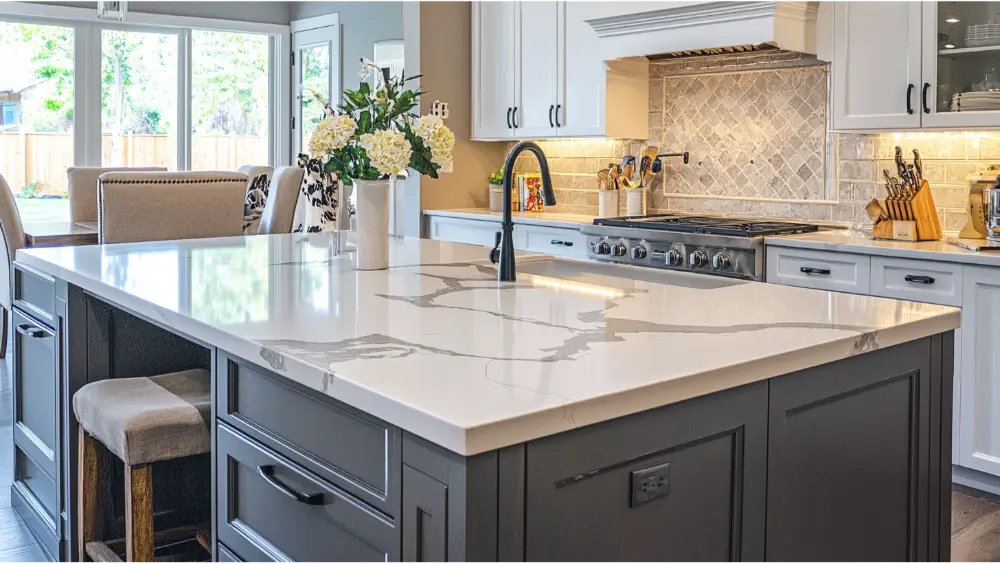
Kitchen countertop budgets vary according to material, slab use, fabrication details and installation conditions. The following examples show how design decisions can influence affordability without assigning fixed prices that may not apply to every project.
A compact condominium kitchen may include one or two straight countertop runs, a standard sink opening and a simple edge profile.
This type of project can remain budget-friendly when it uses:
Condo access requirements should still be confirmed in advance. Elevator bookings, restricted delivery times and limited carrying routes can affect installation planning even when the countertop area is relatively small.
A standard family kitchen may include perimeter countertops, an undermount sink, a cooktop opening and a practical work surface for regular cooking and daily use.
Good-value decisions may include:
For this type of kitchen, material durability and maintenance should be considered alongside initial cost. A surface that fits the household’s routine may provide better long-term value than the lowest-priced available option.
A kitchen island can increase preparation space, storage and seating, but it may also increase material and fabrication requirements.
To control the budget, homeowners can consider:
The island should be reviewed together with the perimeter layout so slab quantity, pattern direction and installation access can be planned as one project.
An affordable countertop project controls costs through planning. A cheap countertop quote may simply leave important services or responsibilities undefined.
A well-planned affordable project may use a standard material collection, simple edge profile and efficient slab layout while still including professional measurement, fabrication and installation.
A low quotation should be reviewed carefully when it does not clearly identify:
Missing scope can create additional costs after the material has been selected or the project has begun.
Professional measurement and accurate fabrication are not optional upgrades. They determine whether the countertop fits the cabinetry, appliances and walls of the completed kitchen.
Cost-saving decisions should focus on material tier, design complexity and project scope—not on eliminating the technical stages required for a properly fitted countertop.
Initial price is only one part of countertop value. Maintenance requirements, expected use, repairability and compatibility with the household should also be considered.
A suitable quartz or granite surface that performs reliably in the kitchen may provide stronger value than a lower-priced option that does not match the homeowner’s maintenance expectations or daily use.
Countertop quotations should be reviewed line by line so each contractor is pricing the same project scope.
The quotation should identify the material type, brand or collection where applicable, selected colour, finish and slab requirements.
For natural stone, confirm whether the quotation is based on the actual selected slab or a general material category.
The quote should explain which fabrication items are included, such as:
Professional templating, delivery and installation should be identified clearly. Ask whether additional handling charges may apply for oversized pieces, stairs, elevators, restricted parking or long carrying routes.
Existing countertop removal, disposal, sink disconnection, plumbing reconnection, electrical work and appliance installation may not be included automatically.
These responsibilities should be confirmed before accepting the quote so the project schedule and total budget remain clear.
The quotation should explain applicable exclusions, payment terms, taxes and workmanship warranty conditions.
Natural stone characteristics, cabinet movement, structural conditions, homeowner damage and work completed by other trades may be treated separately from countertop installation workmanship.
Entry-level quartz and readily available granite are often among the strongest affordable stone options. The lowest total cost depends on slab quantity, kitchen dimensions, fabrication and installation requirements.
Not always. Both quartz and granite are available across different price levels. A standard granite slab may cost less than a premium quartz design, while an entry-level quartz collection may provide better value for another project.
Choose a standard colour, use a simple edge profile, plan the layout around slab dimensions and avoid unnecessary waterfalls, mitred details or specialty cutouts.
Existing cabinets can often be retained when they are stable, secured, level and suitable for the selected countertop. Cabinet repairs or reinforcement should be completed before final measurement.
Remnants may work for compact kitchens or small countertop sections when the available piece has suitable dimensions, condition and pattern. Availability should be confirmed before planning the project around a specific remnant.
Standard eased or lightly bevelled edges are generally more economical than decorative, laminated or mitred profiles because they require less fabrication.
An island may increase the required countertop area and slab quantity. Oversized islands, waterfall panels, thick mitred edges and sink or cooktop openings can add further fabrication and installation costs.
A complete quote should identify the material, slab quantity, measurement, fabrication, edge profile, cutouts, delivery, installation, seams, removal requirements, exclusions and applicable taxes.
Not without comparing the complete scope. A lower quote may exclude measurement, cutouts, delivery, removal, access requirements or other services that will be charged separately later.
Every kitchen has a different combination of dimensions, material requirements, fabrication details and installation conditions.
Teccorp Stone helps homeowners across Toronto and the GTA compare suitable quartz, granite and other stone options while planning the project around material value, slab efficiency and practical design decisions.
Send your kitchen photographs, approximate dimensions, preferred materials and project location to receive guidance based on the actual scope of your countertop project.
Plan a Better-Value Kitchen Countertop
Share your kitchen layout, photographs and material preferences so our team can review suitable countertop options and fabrication requirements.
Browse available quartz countertops and granite countertops, or review our guide to kitchen countertop cost in Toronto for broader project budgeting information.