Are stone countertops worth the investment? They can be when the material, complete installed cost and expected ownership period align with the way the kitchen will actually be used. Their value should not be judged only by slab price or an assumed increase in property value.
A countertop can create several forms of value. It may improve daily preparation space, support a more coordinated kitchen design, reduce the likelihood of premature replacement or strengthen a buyer’s perception that the renovation has been completed carefully.
These benefits are not the same as a guaranteed financial return. A costly slab does not automatically increase the selling price by an equivalent amount, and a lower-priced surface may provide stronger overall value when it suits the kitchen and household more effectively.
This guide evaluates natural stone countertops—including granite, quartzite and marble—while comparing them with common engineered or manufactured alternatives such as quartz and porcelain. It focuses on practical value, buyer perception, maintenance, resale considerations and complete project cost without relying on unsupported ROI percentages.
More likely to be worthwhile: The kitchen layout is stable, the cabinets are suitable, the material matches daily use and the homeowner expects to keep the kitchen for a meaningful period.
Potential resale benefit: A well-coordinated countertop may strengthen buyer perception, but it does not guarantee a specific increase in selling price.
Best financial approach: Compare the complete installed scope rather than choosing the most expensive slab or the lowest material rate.
Less likely to be worthwhile: Cabinets or layouts will change soon, the project is a short-term cosmetic update or the selected material requires care the household will not maintain.
The word investment can describe several different outcomes. Keeping those outcomes separate prevents unrealistic expectations.
Daily-use value comes from the countertop’s contribution to food preparation, cleaning, seating and kitchen workflow. A surface that supports the household’s normal habits may provide meaningful value even when it does not produce a measurable resale return.
Ownership value reflects how well the countertop remains functional and visually acceptable during the period the homeowner expects to use it. Maintenance, repairability, cabinet stability and the possibility of future layout changes all influence this value.
The countertop occupies a large visible area and can connect cabinets, flooring, backsplash and adjoining rooms. Natural slab variation may provide individual character, while engineered patterns may offer greater consistency across several pieces.
A buyer may view a coordinated, well-maintained countertop as evidence that the kitchen has received thoughtful investment. This is a perception of renovation quality—not proof that the countertop’s full cost will be recovered through the sale.
Financial return depends on the property, complete kitchen condition, local market, timing and buyer priorities. No countertop material can independently guarantee a fixed ROI or selling-price increase.
Investment Value Principle
Decide which form of value matters most before comparing materials: daily use, design, ownership, buyer perception or financial return.
A countertop should be evaluated as part of the complete kitchen rather than as an isolated slab purchase.
| Value Category | What Creates Value | What Can Reduce Value | Question to Ask |
|---|---|---|---|
| Practical use | Useful preparation space, suitable maintenance and appropriate material performance | Surface limitations conflict with household habits | Does the material suit how the kitchen is used? |
| Design quality | Coordination with cabinets, flooring, lighting and layout | An expensive slab appears disconnected from the room | Does the surface improve the complete kitchen? |
| Ownership period | The countertop remains useful through the expected renovation cycle | Cabinets or layout will be replaced soon | How long will the current kitchen configuration remain? |
| Buyer perception | Good condition, broad compatibility and professional-looking execution | A highly personal design or visible installation problems | Would a buyer see a finished kitchen or another renovation task? |
| Financial proportion | The complete cost is appropriate for the kitchen and property | Material cost exceeds the practical renovation level | Is the countertop proportionate to the complete project? |
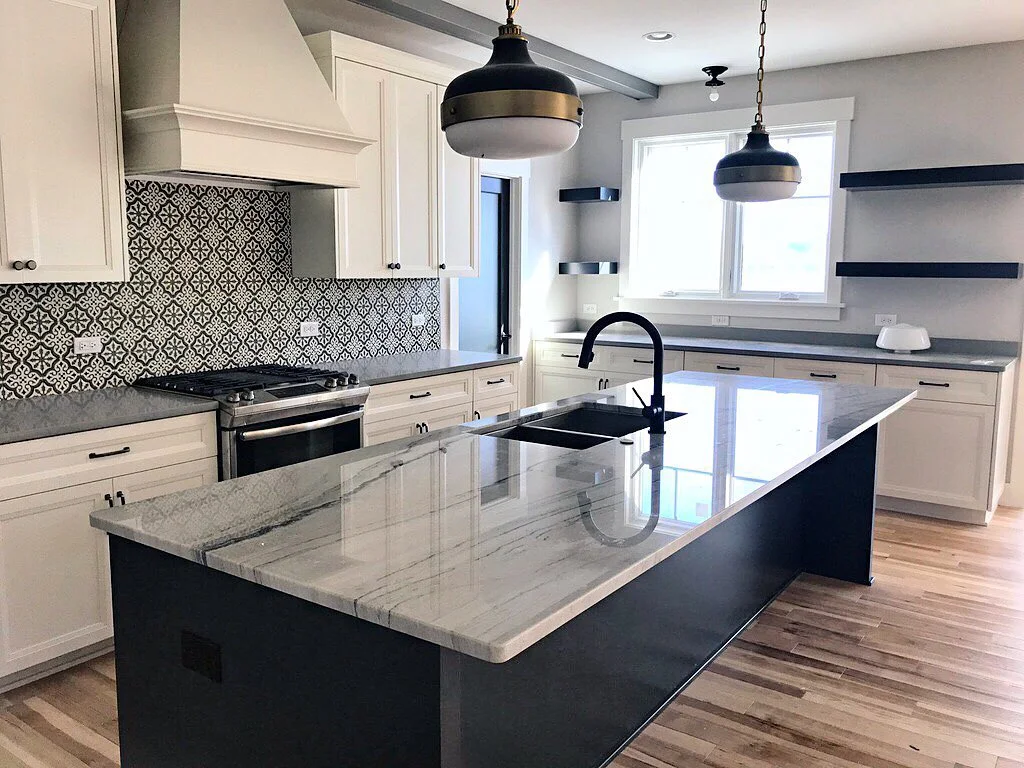
The material rate represents only one part of a custom countertop project. Final cost may also reflect slab quantity, measurement, fabrication, openings, edges, seams, vertical pieces, delivery and installation.
A simple perimeter counter and a large feature island can use the same material but require different amounts of slab and fabrication work.
The project review should include:
A lower material price does not necessarily produce a lower installed cost. Likewise, a premium slab does not automatically create stronger daily or resale value.
Review the kitchen countertop cost guide for the main variables affecting a completed project.
Countertop spending should not prevent essential cabinet repairs, functional lighting, suitable appliances or other work required to complete the kitchen properly.
A more restrained material installed over stable cabinets may provide better overall value than a premium slab installed within an incomplete or poorly coordinated renovation.
A countertop is more likely to feel worthwhile when it supports normal kitchen activity without creating maintenance demands the household did not expect.
Evaluate:
Quartz may provide value through controlled patterns and straightforward routine care. Granite and quartzite may provide natural character with slab-specific maintenance. Marble can provide strong design value when visible aging is accepted. Porcelain may suit projects emphasizing low absorption and coordinated architectural surfaces.
Review durable countertops for busy kitchens for a detailed comparison of stains, heat, scratches, edges and repairability.
Durability contributes to countertop value when the surface remains functional and visually acceptable through the homeowner’s expected period of use. It should not be reduced to a fixed number of years or a single hardness rating.
Long-term performance depends on the material, fabrication, cabinet support, installation and daily care. A durable slab can still develop problems when it contains poorly planned openings, unsupported sections or seams positioned over unstable cabinets.
Ownership value is influenced by how the surface responds to:
Quartz, granite, quartzite and porcelain can all provide practical long-term use, but their limitations differ. Quartz requires protection from concentrated heat. Natural stone may require slab-specific sealing and maintenance. Porcelain can provide strong surface performance while requiring careful edge and opening fabrication.
A well-maintained, appropriately selected countertop may provide more ownership and resale value than a more expensive surface with chips, failed joints or visible installation problems.
Durability should therefore include:
No material should be purchased on the assumption that every chip, crack, burn or pattern-related issue can later be repaired invisibly.
Maintenance affects both the daily ownership experience and the long-term value of the countertop. A surface may perform well technically but still feel like a poor investment when its care requirements conflict with the household’s habits.
Before selecting a material, confirm:
Engineered quartz generally does not require routine sealing, but it still requires suitable cleaners and protection from concentrated heat. Granite and quartzite care depends on the actual slab, finish and absorption. Marble may develop etching and patina even when maintained correctly. Porcelain is generally low in absorption, while its exposed edges and printed pattern may influence repair expectations.
Terms such as maintenance-free, stain-proof and heat-proof create unrealistic expectations. Low-maintenance surfaces still require cleaning, trivets, cutting boards and reasonable care around impacts.
A natural-stone sealing schedule should not be assigned only by material name. The actual slab and installed condition should determine whether treatment is needed.
Ownership Cost Principle
A countertop provides better long-term value when the household understands and accepts its cleaning, heat, sealing and aging requirements before installation.
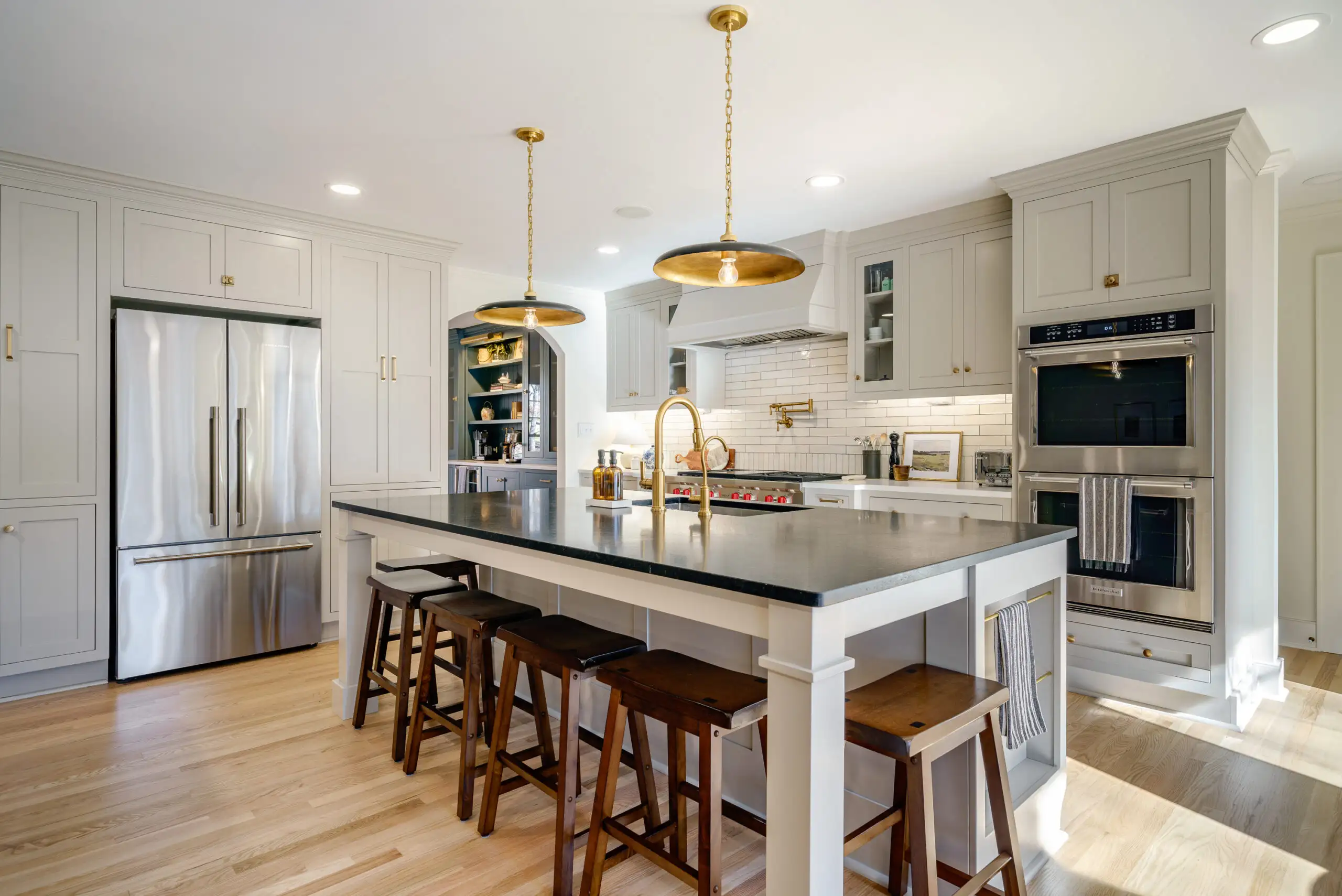
A countertop can influence how a potential buyer interprets the condition and completeness of a kitchen. This perceived value should be separated from a guaranteed increase in property price.
Buyers generally experience the kitchen as one coordinated environment. They do not evaluate the countertop independently from the cabinets, appliances, flooring, lighting and layout.
A countertop may improve the impression of the kitchen when it:
A buyer may interpret these characteristics as evidence that the renovation was planned carefully. However, the buyer may not assign the same monetary value to a premium slab that the original homeowner did.
Buyer perception may weaken when the countertop:
The material name alone does not determine perceived quality. A restrained, properly coordinated surface may appear more valuable than a costly slab installed within an incomplete renovation.
Neutral and bold countertops can both provide value, but they serve different renovation priorities.
Neutral surfaces may be easier to coordinate with several cabinet colours, flooring options and future décor changes. They may reduce the amount of personalization a buyer feels they must undo.
Neutral does not have to mean plain. Subtle movement, controlled veining and natural mineral variation can provide character without dominating the kitchen.
A strongly veined stone or expressive manufactured pattern can create a memorable focal point.





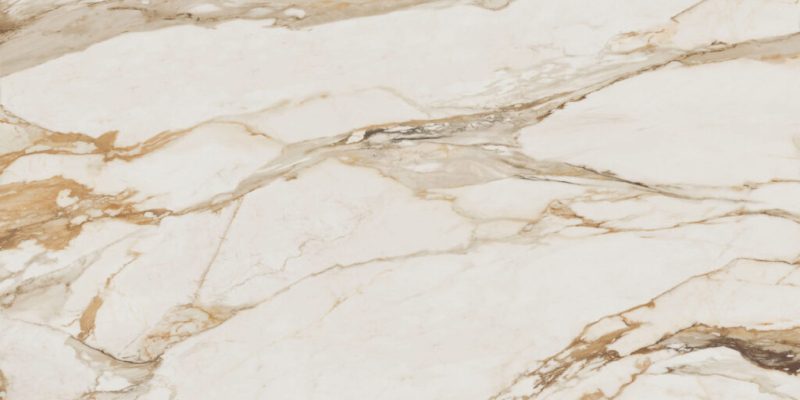



For a near-term sale, however, a highly distinctive surface may appeal strongly to some buyers and less to others. Its value depends on how successfully it relates to the cabinets, layout and architectural character of the property.
| Design Direction | Potential Advantage | Potential Resale Limitation | Best Fit |
|---|---|---|---|
| Quiet neutral | Broad coordination and easier future updates | May provide less visual distinction | Near-term resale or adaptable renovations |
| Soft natural movement | Adds character while remaining relatively versatile | Requires careful coordination with undertones | Balanced personal use and resale planning |
| Bold focal pattern | Strong identity and design impact | May appeal to a narrower buyer group | Longer ownership and design-led kitchens |
Review countertop colours that coordinate with modern kitchen cabinets when balancing personal design preferences with longer-term flexibility.
Stone and engineered countertops can contribute to a finished-looking kitchen and may strengthen buyer interest. That does not mean the project will recover its full cost or produce a predictable financial return.
Resale outcomes are influenced by:
A premium material may provide significant personal enjoyment without producing an equivalent increase in selling price. That can still represent a worthwhile investment for a homeowner planning to use the kitchen for a meaningful period.
For a near-term sale, the goal may be different: improve condition, reduce obvious buyer objections and create a coordinated renovation without overspending.
Resale Principle
A countertop may support buyer perception and marketability, but neither natural stone nor a manufactured surface guarantees a fixed resale return.
Natural stone and manufactured surfaces provide different forms of value. One category is not automatically a better investment than the other.
Granite, quartzite and marble are quarried materials with slab-to-slab variation. Their value may come from geological character, individual patterning and the ability to select the actual slab for the kitchen.
Natural stone may be worthwhile when the homeowner values:
Explore available granite, quartzite and marble countertop options.
Quartz and porcelain can provide more controlled colours, repeatable patterns and product-specific technical characteristics.
They may provide stronger value when the project requires:
Quartz still requires protection from concentrated heat. Porcelain requires careful planning around exposed edges, cut-outs and fabrication. Manufactured does not mean maintenance-free or damage-proof.
Explore available quartz and porcelain countertop options.
Replacing a countertop before selling can improve the appearance of a kitchen, but the project should be proportionate to the property, cabinet condition and remaining renovation scope.
The goal is usually not to install the most expensive material available. It is to reduce obvious buyer concerns and present a coordinated, functional kitchen without investing heavily in details that may not influence the final sale.
A new countertop does not correct damaged, unstable or visibly deteriorated cabinetry. Buyers may still interpret the kitchen as requiring renovation when the doors, drawers, panels or layout remain problematic.
Cabinet condition should be assessed before custom fabrication because the countertop is measured for the existing configuration and may not fit future cabinets.
Strong veining or an unusual colour may create significant design value for a long-term owner. For a near-term sale, however, an extremely distinctive surface may appeal to a narrower group of buyers.
A restrained design with compatible undertones may be easier to coordinate with the existing cabinets, flooring and backsplash.
A countertop replacement may provide limited value when surrounding finishes remain visibly incomplete or incompatible. Wall damage, outdated lighting, unfinished cabinet panels and poorly coordinated backsplash materials can reduce the impact of the new surface.
The material and fabrication scope should remain proportionate to the complete kitchen and property. Premium waterfall panels, elaborate edges or complex slab layouts may provide personal design value, but they do not guarantee a comparable resale return.
A countertop in good condition may not require replacement solely because another material is perceived as more valuable. Cleaning, minor repairs or smaller design updates may sometimes address the main buyer concerns more efficiently.
Changing sinks, faucets or cooktops during a pre-sale countertop project can expand the scope into plumbing, appliance, cabinet or wall work. These related requirements should be identified before the replacement is approved.
Review the guide to kitchen countertop buying mistakes before approving material, measurement and fabrication decisions.
Pre-Sale Renovation Rule
Prioritize condition, coordination and broad usability before premium material upgrades intended only to produce an assumed resale return.
Natural stone and manufactured slab surfaces are not automatically appropriate for every renovation. Their cost and custom fabrication requirements may exceed the value they provide when the surrounding kitchen or ownership plan is uncertain.
A higher-investment countertop may not be worthwhile when:
A short ownership period does not automatically make a new countertop inappropriate, but the project objective should be clear. Broad design compatibility, physical condition and controlled cost may matter more than premium slab character.
Custom countertops are produced for a confirmed layout. Installing them before cabinet, sink, appliance or wall decisions are settled can create avoidable rework and reduce the value of the purchase.
A material can be attractive and technically suitable yet still represent poor value when the homeowner does not accept its expected sealing, etching, heat precautions or visible aging.
Value depends on compatibility between the surface and the household—not only on material reputation.
Use the following framework before deciding whether a stone or manufactured slab countertop is appropriate for the project.
| Decision Area | Confirm Before Approval | Warning Sign |
|---|---|---|
| Project objective | Daily use, long-term ownership, design improvement or near-term resale | The purchase is based only on an assumed ROI |
| Kitchen condition | Cabinets, panels, layout and support are suitable | Cabinets may be replaced or modified soon |
| Material fit | Heat, stains, maintenance, aging and repair expectations | Selection is based only on appearance or prestige |
| Complete cost | Material, measurement, fabrication, openings, delivery and installation | Only the slab or square-foot rate is known |
| Design compatibility | Countertop coordinates with cabinets, flooring, backsplash and lighting | The surface dominates or conflicts with the room |
| Resale planning | Condition, broad appeal and proportionate spending | The material is expected to recover its full cost automatically |
Final Decision Rule
Stone countertops are more likely to represent good value when the kitchen configuration is stable, the surface supports daily use and the complete cost remains proportionate to the project.
They can be when the material matches the kitchen’s use, maintenance expectations, design and expected ownership period. The complete installed cost should be evaluated rather than the slab price alone.
No. A coordinated countertop may improve buyer perception, but property value depends on the complete kitchen, overall home condition, local market and quality of execution.
There is no universal winner. Granite or quartzite may suit homeowners seeking natural slab character. Quartz may suit those prioritizing consistency and routine care. Porcelain and marble serve different design and ownership priorities.
No. Natural stone offers unique variation, while quartz offers controlled patterns and generally does not require routine sealing. Value depends on suitability for the project rather than whether the surface is natural or manufactured.
No fixed service life applies to every countertop. Longevity depends on the material, cabinet support, fabrication, installation, maintenance and daily use.
Replacement may be reasonable when the existing countertop is damaged, visibly incompatible with the kitchen or likely to create a significant buyer concern. The project should remain proportionate to the property and broader renovation plan.
Neutral surfaces may appeal to a broader range of buyers and coordinate more easily with existing finishes. A bold surface can still work when it suits the property and complete kitchen design.
No. A higher material price does not guarantee stronger daily performance, broader buyer appeal or greater resale value.
Not necessarily. Existing cabinets may remain when they are stable, appropriately installed and compatible with the planned layout. Cabinets scheduled for replacement should generally be addressed before custom fabrication.
It may improve the room, but buyers and homeowners experience the kitchen as a complete space. Cabinet condition, lighting, layout, flooring and installation quality still influence the result.
Determining whether a stone countertop is worth the investment requires more than selecting a material. The kitchen layout, cabinet condition, daily use, ownership period and complete fabrication scope should be reviewed together.
Share project photographs, approximate dimensions, material preferences, cabinet information and confirmed sink or appliance details to support an initial project discussion.
Evaluate the Complete Value of Your Countertop Project
Compare material suitability, maintenance, design compatibility and fabrication scope before deciding which countertop represents the right investment.
Discuss Your Countertop Project
Explore Kitchen Countertop Services
Explore Granite Countertops