Yes, you can often replace a bathroom vanity countertop without replacing the cabinet—but only when the existing cabinetry remains suitable for the new surface. Cabinet condition, stability, dimensions, sink configuration and surrounding site conditions should all be reviewed before a replacement countertop is measured and fabricated.
Keeping the existing vanity cabinet can be a practical approach when the cabinetry still functions well and the renovation is focused on changing the countertop, sink or overall bathroom appearance. However, installing a new stone or manufactured surface over unsuitable cabinetry can create fit, support or alignment problems.
This guide explains what should be checked before deciding to retain an existing vanity cabinet and when replacing or modifying the cabinetry may be the better approach.
For homeowners planning a custom replacement surface, Teccorp Stone’s Vanity Countertops service covers custom measurement, fabrication and stone-related installation across Toronto and the GTA.
In many bathroom renovation projects, replacing only the countertop is possible. The existing cabinet does not automatically need to be removed simply because the vanity surface is being updated.
The decision depends on whether the retained cabinet can provide an appropriate base for the proposed countertop and whether the new sink, faucet and backsplash configuration can work with the existing layout.
| Existing Condition | Keeping the Cabinet May Be Reasonable | Further Work May Be Needed |
|---|---|---|
| Cabinet Structure | Cabinet is stable and in suitable condition | Movement, damage or deterioration is present |
| Dimensions | Existing dimensions suit the proposed vanity layout | New sink or countertop design conflicts with cabinet dimensions |
| Level & Alignment | Cabinet provides an appropriate installation base | Significant alignment or level issues need correction |
| Sink Layout | Proposed sink works with the available cabinet space | Sink location or size conflicts with drawers, doors or interior structure |
| Overall Design | Cabinet style and condition still suit the renovation | Cabinet function or layout no longer meets the project requirements |
The old countertop itself should not be used as the only evidence that the cabinet is suitable. The current cabinetry and site conditions should be assessed for the new project.
Retaining the cabinet is most practical when the existing vanity remains structurally suitable and its dimensions work with the proposed countertop and fixtures.
Conditions that support keeping the existing cabinet can include:
These conditions should be considered together. A cabinet can look visually acceptable while still requiring adjustments before a new countertop is installed.
Before investing in a custom replacement countertop, inspect the cabinetry that will remain underneath it.
Cabinet components affected by significant deterioration, movement or previous damage should be evaluated before countertop fabrication. A new surface should not be expected to correct underlying cabinet problems.
The interior of the sink cabinet can be particularly important because plumbing connections and previous leaks may have affected cabinet materials.
Visible signs that deserve attention can include:
The presence of cosmetic wear alone does not necessarily mean the cabinet must be replaced, but conditions affecting stability or support should be addressed before installing a new countertop.
A custom countertop relies on the cabinet or another approved support system beneath it. Significant movement, instability or alignment problems can affect the finished installation.
The countertop should not be treated as a method for correcting major cabinet problems. If the cabinet requires significant adjustment, repair or modification, that work should be addressed separately before installation.
Quartz, granite, marble, quartzite, porcelain and other slab materials are fabricated to defined dimensions. Their performance depends partly on appropriate support and project conditions.
The exact support requirements depend on the material, product, countertop geometry and project design rather than one universal rule.
Do not use a new countertop to hide an unsuitable cabinet. If the existing vanity has significant stability, condition or support problems, those issues should be resolved before the replacement surface is fabricated and installed.
Keeping the cabinet also means accepting much of its existing footprint. The new countertop can be custom fabricated, but the underlying cabinet still influences the overall vanity dimensions.
Important measurements include:
A replacement surface should be measured from the current vanity and surrounding site conditions rather than simply copying the removed countertop.
This creates an opportunity to review details such as:
Where reliable fabrication dimensions are required, Teccorp’s countertop survey and measurement service provides additional information about documenting existing conditions.
Often you can, but the new sink must work with both the replacement countertop and the existing cabinet.
A different basin can affect:
A larger or differently positioned sink should therefore be evaluated before the countertop is fabricated.
The differences between basin configurations are covered in more detail in Bathroom Vanity Sink Options: Undermount, Vessel & Integrated Sinks.
Keeping the cabinet is not always the most practical option. Cabinet replacement or modification may make more sense where the existing vanity no longer supports the intended bathroom design or function.
Examples can include:
The decision should be based on the condition and usefulness of the existing cabinet—not simply on whether it is technically possible to place another countertop over it.
Retaining cabinetry can reduce the scope of a renovation, but it should not compromise the functionality or installation conditions of the new vanity.
Where the cabinet requires extensive repair or alteration to support the intended design, comparing that work with a more complete vanity replacement can provide a clearer basis for the decision.
Replacing the countertop while keeping the cabinet usually requires the existing surface to be removed without unnecessarily damaging the cabinetry that will remain. The removal process depends on the old countertop material, how it was attached, the sink configuration and any backsplash or wall connections.
Before removal begins, the project should clarify:
The cabinet may appear suitable while the old countertop is still in place, but removal can expose conditions that were not visible during the initial review.
These can include:
If significant issues are discovered, they should be addressed before the new countertop is installed rather than concealed beneath the replacement surface.
In some projects, the existing sink may be suitable for reuse. This depends on the sink condition, dimensions, mounting type and whether it works with the new countertop material and planned layout.
Before deciding to retain the sink, consider:
Reusing a sink should therefore be treated as a project-specific decision rather than an automatic way to simplify countertop replacement.
Often it is possible to change the sink while retaining the cabinet, but the new basin must fit both the countertop and the available cabinet space below it.
A wider or deeper basin may interfere with drawers, cabinet partitions, plumbing or other internal components. The sink should therefore be evaluated against the existing vanity before the new countertop cutout is approved.
Switching from one basin configuration to another can affect fabrication requirements. For example, an undermount sink uses a finished countertop opening, while a vessel sink typically requires a different opening and may change the faucet arrangement.
Sink options are compared in detail in Bathroom Vanity Sink Options: Undermount, Vessel & Integrated Sinks.
Yes, but a new faucet can affect the countertop if its drilling requirements differ from the existing configuration.
Possible changes include:
Final faucet specifications should be confirmed before the replacement countertop is fabricated whenever the fixture requires openings in the surface.
Keeping the cabinet does not mean keeping the old countertop layout. Sink, faucet and backsplash details can often change, provided the new configuration remains compatible with the existing cabinetry and project conditions.
A replacement vanity countertop may interact with an existing backsplash, side splash, tile or other wall finish. Whether those elements remain depends on their position, condition and relationship with the new countertop.
Where existing tile or another wall finish remains suitable, the new countertop may be fabricated to meet the current wall condition. Final dimensions should reflect the actual finished surfaces that will remain in place.
If the original vanity includes a separate stone backsplash, removal may expose the wall behind it. A new backsplash can then be fabricated as part of the replacement countertop project where required.
A larger stone backsplash introduces additional material and coordination with mirrors, outlets, faucets and lighting. It should be defined before fabrication rather than treated as an installation-day addition.
The existing cabinet may remain unchanged while the walls around it are not perfectly straight or square. A replacement countertop should therefore be measured against the current site rather than assumed to fit based on the old top.
Relevant conditions can include:
These conditions are one reason custom measurement remains important even when the cabinet itself is not being replaced.
Even when the existing vanity cabinet is staying in exactly the same location, the new countertop should be based on verified dimensions for the replacement project.
Previous gaps, oversized overhangs or wall-fitting compromises do not need to be reproduced automatically in the replacement surface.
A different basin size or position can affect the countertop geometry and the relationship between the sink, faucet and cabinet below.
Removing, adding or changing backsplash pieces can alter how the countertop should meet surrounding walls.
Edge profiles, sink openings and other details should reflect the selected replacement surface rather than simply copying the previous countertop.
For the broader workflow from measurement through installation, see the Bathroom Vanity Countertop Installation Guide.
Yes. The replacement surface should be evaluated together with the existing cabinet and intended vanity configuration.
Quartz, granite, marble, quartzite and porcelain can have different product characteristics, thickness options and fabrication requirements.

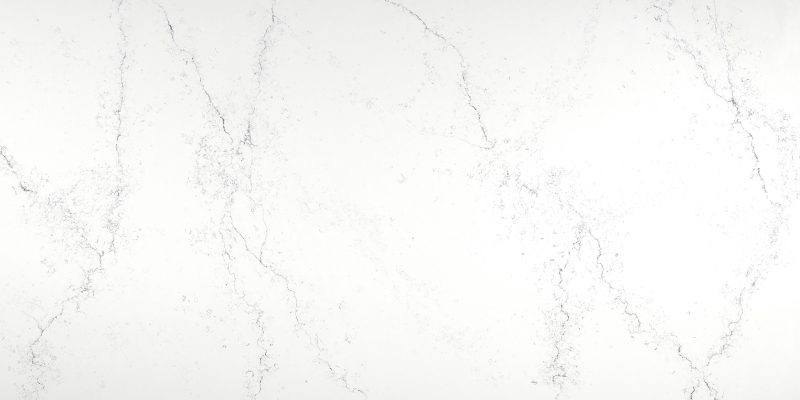



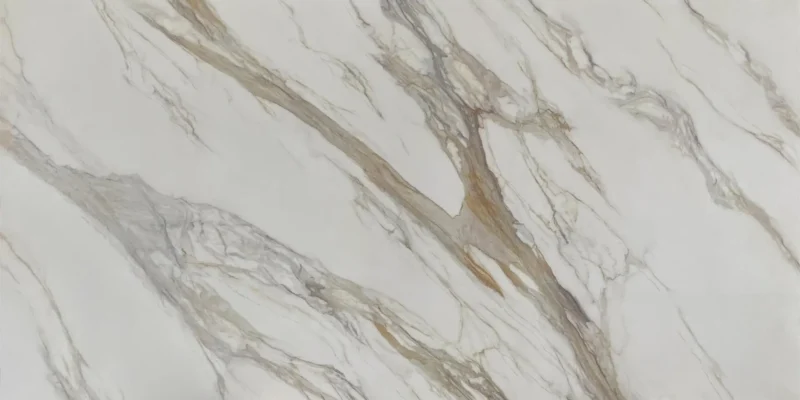





The exact slab or manufactured product matters. The project should account for:
For a full comparison of the main surface categories, see Best Materials for Bathroom Vanity Countertops.
The answer depends on the actual cabinet, countertop material, dimensions and support configuration. A generic statement that an existing cabinet can support any replacement stone surface would be inappropriate.
The retained vanity should be suitable for the approved countertop system. Where additional support, cabinet modification or structural work is required, that work should be identified before installation.
Minor or major cabinet changes should not automatically be assumed to be part of countertop fabrication or installation.
Modification may become relevant where:
The responsibility for this work should be clarified separately within the renovation scope.
Replacing a countertop often affects the sink and plumbing, but stone countertop work and plumbing work are not automatically the same scope.
Depending on the project, plumbing-related work may include:
These responsibilities should be established before countertop removal and installation.
A custom replacement countertop project can include measurement, fabrication and stone-related installation according to the documented scope. However, the following should not automatically be assumed to be included:
Clarifying these responsibilities before work begins helps separate the countertop project from the other trades involved in the bathroom renovation.
Keeping the cabinet does not mean ignoring it. The retained vanity becomes the foundation of the new countertop project and should be reviewed accordingly.
The strongest replacement projects coordinate the existing cabinetry with the new:
When these elements are compatible, replacing only the countertop can provide a focused bathroom update without requiring an unnecessary cabinet replacement.
Keeping the existing cabinet can be a practical option when the vanity still provides suitable support, storage and dimensions for the planned bathroom update. However, retaining cabinetry should not become a goal by itself if the existing vanity no longer works for the project.
The decision is best made by comparing the condition and usefulness of the current cabinet with the changes required for the new countertop.
| Project Condition | Replace Countertop Only | Consider Replacing the Vanity |
|---|---|---|
| Cabinet Condition | Stable and suitable to remain | Significant deterioration or instability |
| Storage & Layout | Current layout still works | Storage or configuration no longer meets the project needs |
| Sink Configuration | Proposed sink fits the existing cabinet | Desired sink conflicts substantially with cabinet structure |
| Vanity Size | Existing dimensions remain appropriate | Bathroom design requires a significantly different vanity size |
| Required Modification | Limited changes are required | Extensive repair or modification would be necessary |
The better option is the one that creates a suitable foundation for the finished vanity rather than the one that preserves the largest number of existing components.
Before ordering a replacement surface, use the following checklist to determine whether retaining the cabinet remains appropriate.
If the cabinet passes the condition, layout and support checks, replacing only the countertop may be a practical option. If several major modifications are required, compare that scope with replacing the vanity before committing to the countertop.
Keeping suitable existing cabinetry can avoid the cost of purchasing and installing a completely new vanity cabinet, but it does not make the countertop portion of the project free from normal custom fabrication costs.
A replacement countertop can still involve:
Additional cabinet repair, plumbing or wall work may also affect the wider renovation budget where required.
For a detailed explanation of how these variables affect pricing, see the Bathroom Vanity Countertop Cost Guide.
The fact that a cabinet supported the old countertop does not prove that it is appropriate for every new surface or sink configuration. Current condition and project requirements should be reviewed.
The replacement surface should be based on verified current conditions. Previous fitting compromises, gaps or inaccurate dimensions should not automatically be reproduced.
A larger or deeper sink may interfere with drawers, internal cabinet components or plumbing even when it appears to fit the countertop dimensions.
Countertop removal can expose cabinet or wall conditions that need attention. Responsibilities and project sequence should be understood before the old surface is removed.
Countertop fabrication and installation do not automatically include plumbing disconnection, modification or reconnection. That scope should be confirmed separately.
If retaining the vanity requires major repairs, substantial internal changes or significant modification to achieve the intended layout, compare that work with replacing the cabinet rather than assuming retention remains the better option.
Often yes, provided the existing vanity cabinet remains stable, suitable for the proposed countertop and compatible with the new sink and layout. The cabinet and current site conditions should be reviewed before fabrication.
Not automatically. Cabinet replacement may be unnecessary when the existing vanity remains suitable. Replacement becomes more relevant where condition, dimensions, support or layout no longer meet the project requirements.
Only if the existing cabinet width, internal layout, plumbing arrangement and proposed countertop can support the double-sink configuration. Many cabinets designed for one basin may require substantial changes, so the actual vanity should be evaluated first.
It may be possible where the selected countertop material, sink and cabinet configuration support the required opening and installation details. The sink should be confirmed before countertop fabrication.
Potentially, if the sink remains suitable and can be coordinated with the replacement countertop. Its dimensions, condition and mounting configuration should be confirmed before the new surface is fabricated.
Yes. The replacement countertop should be based on verified current cabinet and site conditions rather than simply assuming the previous countertop dimensions are correct.
These materials can be used in replacement projects where the specific surface, countertop geometry and existing cabinet/support conditions are appropriate. The project should be evaluated for the actual material rather than assuming universal compatibility.
Yes. The backsplash can often be redesigned independently of the cabinet, but its dimensions, wall conditions and interaction with mirrors, faucets and other fixtures should be resolved before fabrication.
Sink removal and reconnection commonly interact with plumbing, but plumbing work is a separate scope unless specifically included in the project agreement.
Full replacement may be more appropriate when the existing cabinet is significantly deteriorated, unstable, poorly sized for the intended bathroom, incompatible with the desired sink layout or requires extensive modification to remain usable.
Replacing a bathroom vanity countertop without replacing the cabinet is often possible, but the decision should be based on the condition and suitability of the existing vanity rather than the desire to preserve it at all costs.
A suitable retained cabinet can provide the foundation for a new quartz, granite, marble, quartzite, porcelain or other custom vanity surface. The new countertop should still be measured and fabricated for the current cabinet, approved fixtures and surrounding site conditions.
For replacement vanity countertop projects across Toronto and the GTA, Teccorp Stone can review the existing conditions, material selection and stone-related fabrication requirements for the proposed project.