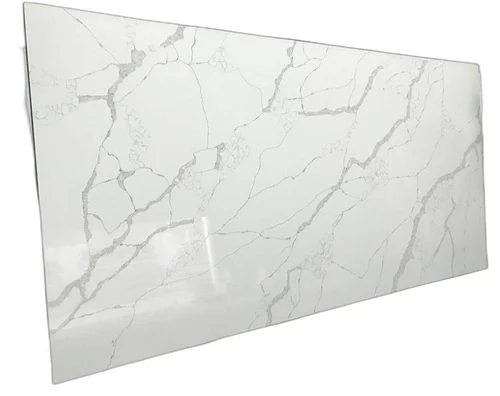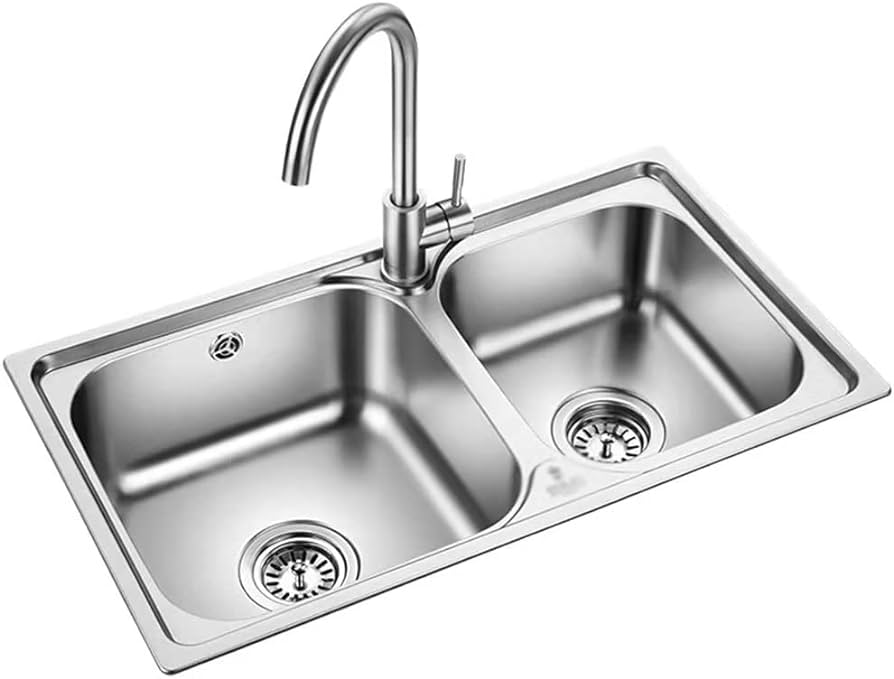
Welcome to the Tec Corp Stone Inc. Shop! Explore our extensive selection of premium stones, from elegant marble to durable granite. Whether you’re planning a renovation or a new build, find the perfect materials to elevate your space. Shop now for high-quality stones and bring your design dreams to life.
Showing 49–60 of 95 results


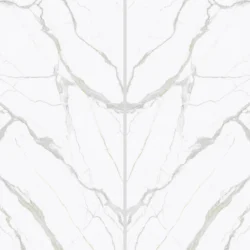
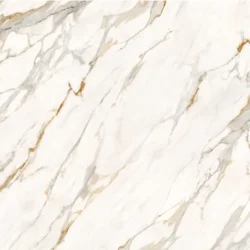

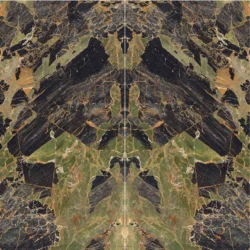






Browse the available porcelain slabs below to compare marble-inspired, stone-inspired, concrete and architectural designs. After selecting a preferred surface, TecCorp Stone can coordinate professional measurement, slab layout, in-house fabrication and installation according to the kitchen, cabinetry and site conditions.
20+ Years of Experience | In-House Fabrication | Professional Measurement | Toronto & GTA Installation
Product suitability, availability and fabrication requirements vary by manufacturer, collection and project layout. Final specifications should be confirmed before ordering material.
Choosing a porcelain countertop requires more than matching a colour sample to the cabinetry. Each product should be assessed according to the countertop layout, slab dimensions, finish, thickness, exposed edges, openings and intended application.
A design that works well for a full-height backsplash may have different fabrication and support requirements when used for a kitchen island with seating, an undermount sink or two waterfall panels. Reviewing these details before ordering helps identify a slab that supports both the visual concept and the practical requirements of the project.
| Selection Factor | What to Review | Why It Affects the Project |
|---|---|---|
| Slab dimensions | Usable panel size and required section layout | Influences seams, islands, waterfalls and material yield |
| Pattern scale | Full-slab movement, direction and focal areas | A small sample may not represent the finished countertop |
| Surface finish | Polished, matte, satin or textured appearance | Affects reflection, touch and routine cleaning |
| Thickness | Nominal slab thickness and finished edge design | Influences support, mitres, cutouts and visual profile |
| Exposed edges | Slab-body colour and permitted edge construction | The face design may not continue through the full body |
| Application | Countertop, island, waterfall, backsplash or vanity | Each use creates different opening, support and access conditions |
The exact manufacturer documentation should be reviewed before a product is approved. Support systems, edge details, allowable applications and fabrication instructions can vary between porcelain collections.
Porcelain slabs are available in marble-inspired, natural-stone, concrete, metal-effect and solid architectural designs. This range allows homeowners and designers to coordinate the countertop with cabinets, flooring, wall finishes and other materials used throughout the kitchen.
Before selecting a product, review the full slab or an accurate full-panel image. A small showroom sample may not reveal:
A polished finish can increase reflection and emphasize marble-inspired veining or colour contrast. It may work well where the countertop is intended to create a brighter or more formal appearance.
Surface care should follow the guidance for the exact collection because cleaning recommendations can differ between polished products.
Matte and satin finishes provide less reflection and can support contemporary, minimalist and softly textured interiors. They should be viewed under lighting similar to the completed room because daylight, under-cabinet lighting and overhead fixtures can change how the colour appears.
Fingerprints, oils and cleaner residue may also be more visible on some dark or low-sheen finishes.
Textured surfaces can add depth to stone-inspired or architectural designs. They may be suitable for selected countertops and vertical applications when the product is approved for the intended use.
Surface texture can retain grease or cleaning residue more readily than a smooth finish, so care requirements should be reviewed before ordering.
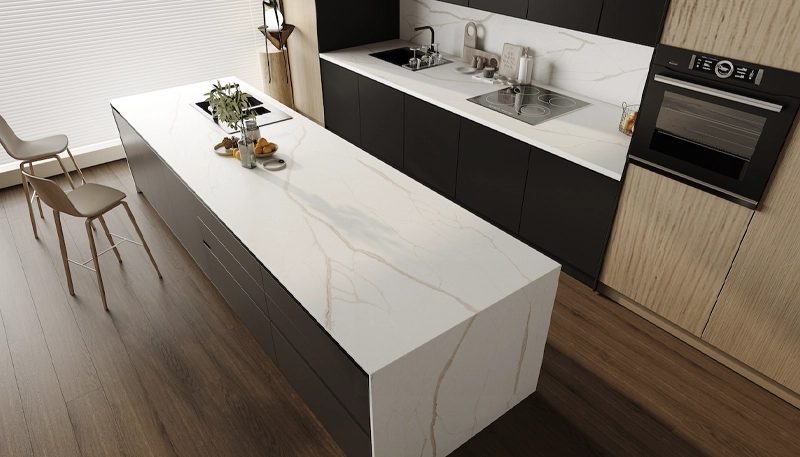
Porcelain can be used for preparation, sink and cooking areas when the selected product, cutouts and support system are suitable for the kitchen layout. Sink openings, cooktops, appliance edges and outside corners should be identified before fabrication begins.
Large-format slabs can create visually continuous island surfaces. Island planning should consider slab size, seating overhangs, sink or cooktop openings, pattern direction and delivery access.
Projects involving custom dimensions or seating can be coordinated through TecCorp Stone’s kitchen island countertop service.
Waterfall panels extend the porcelain vertically from the island surface. This application requires accurate mitres, finalized cabinet dimensions, finished flooring and coordinated pattern placement.
Porcelain panels can continue the selected design from the countertop onto the wall while reducing repeated grout joints. Outlets, windows, cabinets and range-hood clearances must be measured before the panels are fabricated.
Learn more about coordinated wall applications through the kitchen stone backsplash service.
Selected porcelain products may also be used for vanity tops, wall panels and other custom interior surfaces. Sink openings, narrow sections and exposed edges still require project-specific fabrication planning.
Product Selection Takeaway
Select porcelain by reviewing the complete slab, finish, thickness and intended application together. The best-looking sample is not necessarily the best product for every edge, opening, island or installation condition.
Homeowners still deciding whether the material fits their project can review the detailed guide to porcelain countertop advantages, disadvantages and best uses.
Porcelain countertop products are available in different nominal thicknesses, finishes and slab formats. These specifications affect the visual profile, edge construction, support, cutouts and fabrication plan, but thickness alone should not be treated as a measure of overall quality or durability.
A thinner porcelain slab can create a slim architectural profile, while a mitred edge can produce the appearance of a thicker countertop. The appropriate detail depends on the selected product, slab-body colour, surface design, cabinetry and intended application.
Before ordering, confirm:
A mitred edge may improve visual continuity where the face design does not continue through the full slab body. It also requires additional material, accurate cutting, suitable adhesive and careful joint alignment.
Homeowners evaluating slim slabs can review the dedicated guide to 12mm porcelain countertop thickness, edges and support.
Countertop-grade porcelain generally has very low water absorption and performs well against many common kitchen spills. Coffee, tea, wine, oils and sauces are less likely to penetrate the porcelain body than they are with more absorbent materials.
Porcelain should still be described as stain resistant rather than completely stain-proof. Dried food, grease, metal transfer, hard-water minerals and cleaner residue can remain visible on the surface, particularly on textured or dark finishes.
Seams, caulking, adhesives and repaired areas may also respond differently from the porcelain slab. Detailed cleaning and sealing guidance is available in the article explaining whether porcelain countertops stain.
The porcelain material generally offers strong heat resistance, which can make it suitable for active cooking areas and kitchens with heat-producing appliances.
Trivets remain advisable because the completed installation contains more than the slab. Seams, adhesives, repairs, appliance components and surrounding cabinetry may not tolerate concentrated heat in the same way as porcelain.
Homeowners comparing surfaces by heat performance can review the dedicated quartz, granite and porcelain heat-resistance comparison.
Porcelain provides a hard, wear-resistant surface that can perform well under routine kitchen use. It should not be described as completely scratch-proof or damage-proof.
Cutting boards remain recommended, and cookware or metal tools may leave visible transfer marks. The areas most vulnerable to concentrated impact are generally:
The complete guide to porcelain countertop pros, cons and best uses provides a broader decision-making comparison without duplicating the product-selection role of this category page.
Performance in Context
Porcelain’s low absorption, heat performance and wear resistance are strongest across the broad slab surface. Edge design, cutouts, seams, support and fabrication quality determine how successfully those benefits carry into the completed countertop.
Porcelain countertop installation begins before the selected slab is cut. Final cabinet conditions, sink and appliance models, edge details, support, section sizes and property access should be confirmed during project planning.
Professional fabrication may include:
Large-format porcelain requires suitable cutting equipment and handling procedures. A contractor experienced with ordinary tile installation may not necessarily have the equipment or workshop experience required for countertop slabs.
Cabinets should be installed, secured and level before fabrication-ready measurements are completed. The exact sink and cooktop specifications should also be available because changing fixtures after cutting can affect the remaining material around an opening.
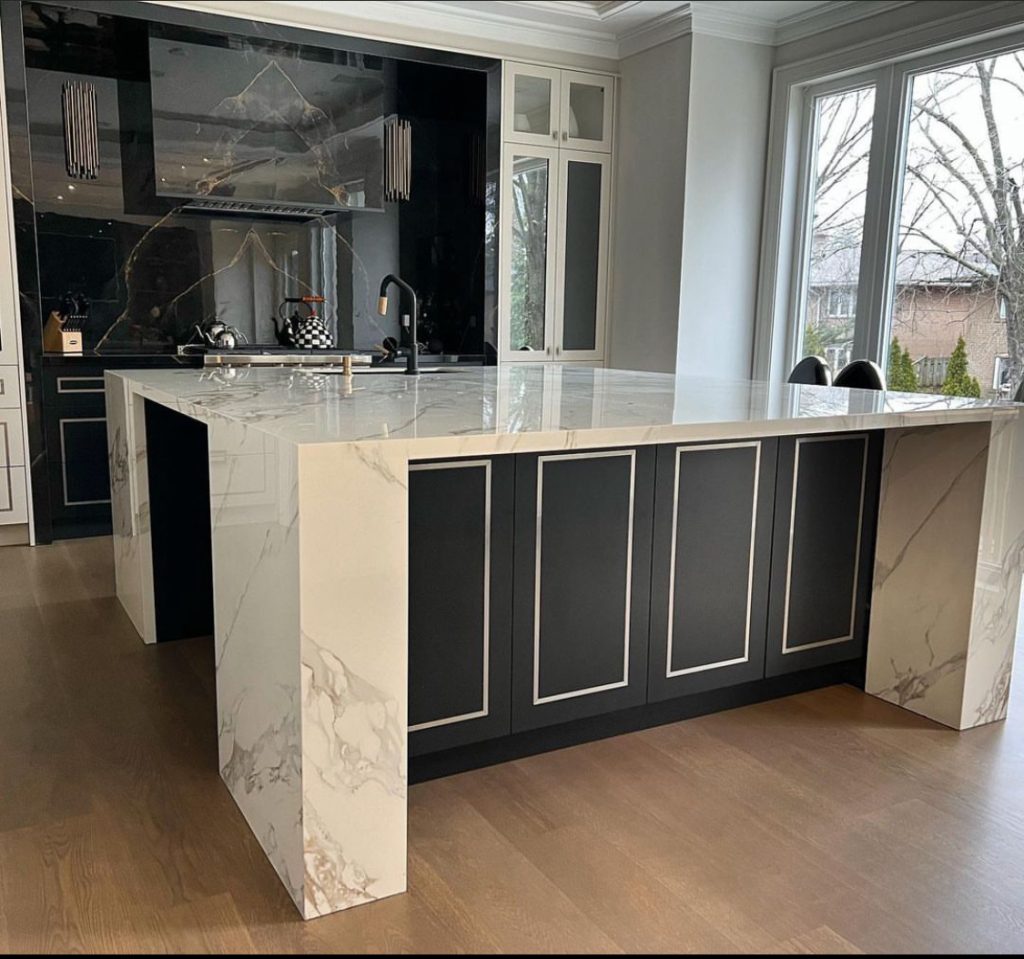
For detailed technical preparation, review the complete porcelain countertop installation guide. Homeowners ready to plan a project can also explore TecCorp Stone’s professional kitchen countertop measurement, fabrication and installation services.
Porcelain countertop pricing depends on the completed project rather than the slab name or countertop area alone.
Quotation factors may include:
A thinner slab does not automatically produce a lower completed cost. Mitred edges, substrate, additional panels or complex cutouts can materially affect the quotation.
For a complete budgeting explanation, review the guide to porcelain countertop cost and 12mm versus 20mm project factors.
Quote Comparison Tip
Compare quotations using the exact porcelain product, slab quantity, edges, openings, support, delivery, fabrication and installation scope—not a material rate alone.
The final section provides concise comparisons with quartz and granite, explains TecCorp Stone’s porcelain services and answers the most important commercial questions before requesting a quote.
Porcelain, quartz and granite can all be suitable for residential countertops, but they support different design and performance priorities. The right choice depends on the kitchen layout, preferred appearance, maintenance expectations, heat exposure, edge details and fabrication requirements.
Porcelain generally provides stronger material heat resistance, very low water absorption and options for slim profiles, large-format panels and coordinated waterfall or backsplash applications.
Quartz offers consistent patterns, a broad product selection and familiar fabrication options for many indoor kitchens. Because quartz contains resin binders, it requires greater protection from direct and prolonged heat.
Neither material is universally better. Review the complete porcelain vs quartz countertop comparison for a detailed evaluation of heat, maintenance, edges, design and daily use.
Porcelain offers controlled surface designs, very low absorption and slim architectural applications. Granite provides authentic natural variation, mineral depth and strong material heat performance.
Granite characteristics, absorption and sealing needs vary by slab. Porcelain generally requires greater attention around exposed edges, complex cutouts and specialist fabrication.
For a complete material comparison, review the dedicated porcelain vs granite countertop guide.
Material Comparison Takeaway
Choose porcelain when its low absorption, heat performance and large-format design options directly support the project. Quartz or granite may be more suitable when their appearance, fabrication options or material characteristics better match the kitchen.
A porcelain countertop project requires coordination between product selection, measurement, slab layout, fabrication, support, handling and installation. TecCorp Stone manages these stages through one project-specific workflow for residential and custom projects across Toronto and the GTA.
TecCorp Stone brings more than 20 years of hands-on industry experience to countertop replacements, condominium kitchens, custom homes, islands, mitred edges, waterfall panels and coordinated slab backsplashes.
Every project is assessed according to the selected porcelain product, cabinet layout, openings, support requirements and property access rather than a single standard detail.
Verified site measurements help identify wall conditions, cabinet alignment, appliance clearances, overhangs, seams and section sizes before the porcelain is cut.
In-house fabrication allows the measurement, slab-layout, production and installation teams to work from the same approved project information. This supports coordinated planning for:
Not every porcelain slab is suitable for every countertop layout. TecCorp Stone reviews available thicknesses, finishes, slab dimensions, body appearance and manufacturer requirements before fabrication details are finalized.
Homeowners ready to move beyond product selection can review the complete kitchen countertop measurement, fabrication and installation service.
Eligible TecCorp Stone installations are supported by a lifetime workmanship warranty according to the approved project scope, applicable exclusions and warranty terms.
Yes. Countertop-grade porcelain can provide very low water absorption, strong material heat resistance and good surface-wear performance when the product and fabrication details suit the kitchen.
They generally resist household staining well. Dried residue, metal transfer, hard-water deposits and discolouration around seams or repairs can still occur.
Most countertop-grade porcelain does not require penetrating sealer. Follow the care instructions for the exact product and finish.
Yes. Exposed edges, outside corners, cutouts and narrow sections can chip under concentrated impact even though the broad surface is hard and wear resistant.
Porcelain generally performs well around heat, but trivets remain recommended to protect seams, adhesives, repairs and nearby cabinetry.
Yes, subject to slab dimensions, support, openings, overhangs, edge construction and safe delivery access.
They can be when the selected product is approved for countertop use and the support, cutouts, edges and overhangs are designed correctly.
Cost depends on the selected product, slab quantity, edges, openings, waterfalls, support, access, fabrication and installation requirements. A project-specific quotation is necessary.
TecCorp Stone provides porcelain slab selection, professional measurement, in-house fabrication and installation for suitable projects across Toronto and the GTA.
To begin planning, provide the project location, approximate dimensions, kitchen photographs and information about the preferred porcelain slab, sink, cooktop, island, waterfall panels or backsplash.
Final specifications and pricing can be confirmed after the selected product, layout, support, openings, material quantity and installation conditions have been reviewed.
Start Your Porcelain Countertop Project
Send TecCorp Stone your project details, approximate measurements and preferred porcelain design for product guidance and a project-specific quotation.

At Tec Corp Stone Inc., we pride ourselves on delivering exceptional craftsmanship and unmatched quality. With years of experience in stone fabrication, our dedicated team ensures every project is executed with precision and care. We offer personalized service, innovative solutions, and a commitment to customer satisfaction. Choose us for your stone needs and experience the Tec Corp Stone Inc. difference.